


What is AI Copywriting? Definition, Tools & Examples

Skip ahead
What is AI Copywriting?
Humans have been writing copy since the advent of marketing. Contrary to popular belief, creating convincing copy isn’t child’s play. It demands strong dedication, command of language, and knowledge of the brand.
AI has made this daunting task a bit easier. AI copywriting is the use of artificial intelligence tools to generate written content. From catchy ad headlines to full blog posts, emails, and product descriptions, AI can write it all.
In simple terms, it’s like having a digital writing assistant that understands your brand’s tone and creates copy that reads like a human.
AI copywriting tools use natural language processing and machine learning to mimic a brand's voice. Think of it as a collaboration where you provide the direction, and the AI outputs full paragraphs within seconds.
This is why businesses today care about AI copywriting tools because they bring these three huge advantages:
- Speed: What once took hours can now be done in minutes.
- Scale: Teams can create content for multiple clients and campaigns simultaneously.
- Personalization: AI can tailor custom messages for different audiences, making every email or ad more relevant.
But will copywriting be replaced by AI in the future? That is a debate for later, but we know that AI cannot function properly without human guidance. It's not replacing writers, it's teaching them to work smarter, not harder.
Table of Contents
How AI Copywriting Works?
Why AI Copywriting Matters for Businesses?
Use Cases of AI Copywriting
Top AI Copywriting Tools
How to Write Effectively With AI Copywriting?
Pros and Cons of AI Copywriting
Ready to Try AI Copywriting for Your Business?
AI Copywriting FAQs
How AI Copywriting Works?
AI copywriting tools rely on the power of artificial intelligence that is trained on massive collections of online text. These collections include articles, ads, and marketing copy. It knows which copy will work and which won't.
These systems learn patterns in language, tone, and structure. It allows them to generate text that sounds natural and context-aware.
Here's a brief breakdown of what happens behind the scenes:
- Training on large datasets: AI models study millions of sentences to understand how humans write and express ideas.
- Understanding context: Using Natural Language Processing (NLP), the system breaks down your input prompt and identifies intent, tone, and desired outcome.
- Generating responses: Next, AI uses Large Language Models (LLMs) to predict which words or phrases should follow, creating text that feels purposeful and cohesive.
You must have used predictive text on your phone while messaging. The tiny AI in your keyboard knows what word you may use next. AI in copywriting is the same concept, but on a far more advanced scale.
Instead of suggesting the next word, AI tools can now write complete sales pages, emails, and blogs perfectly tailored to your brand voice.
Platforms like Sintra's Brain AI take this process even further. It doesn't just generate random text; it analyzes brand tone, learn from your past content, and helps create copy that fits your business's personality.
This is how AI is truly affecting copywriting today. It's evolving from basic automation to intelligent, brand-aware creativity.
Why AI Copywriting Matters for Businesses?
AI copywriting has quickly become a game-changer for marketers, entrepreneurs, and creators who need to produce content fast without compromising on quality. It is almost a necessity at this point because, from writing ad campaigns to product descriptions and newsletters, AI is helping businesses work smarter.
Its biggest advantage is efficiency. What used to take hours of brainstorming can now be done in minutes, freeing up time for strategy and creative direction.
We all know the struggles of a small business or a new startup. They need to scale their businesses, but their budget doesn't allow them to hire a large team. This is where AI helps them in running multiple social media ads, email sequences, or landing pages while maintaining brand consistency. AI ensures your tone and messaging style stay uniform across every platform.
It shouldn't be a surprise to find that AI copywriting tools work in almost every industry now. Real estate agents use it to write listing descriptions, while e-commerce stores use it to write product copy. Marketing agencies generate blog posts for clients, and even freelancers are using it to handle more projects in less time.
So, is AI taking over copywriting? Not entirely. AI is actually transforming it. The best results come when human creativity meets AI efficiency. Together, they create smarter, faster, and more efficient content.
Use Cases of AI Copywriting
Now that we understand what copywriting with AI really means, it's time to see how it's being used in the real world. Businesses of all sizes are discovering how an AI copywriter can simplify their daily workflows.
In the next sections, we'll explore specific examples of how AI copywriting tools are transforming marketing, e-commerce, and client communications. And how teams are using them to save time while producing higher-quality content.
Marketing Across the Board
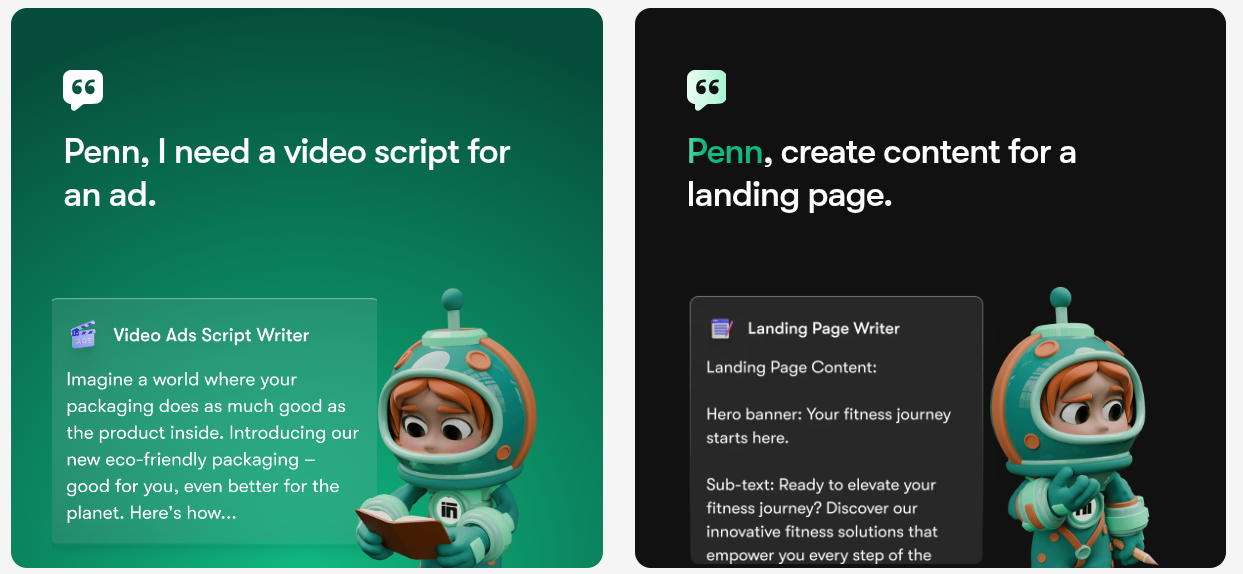
Let's have a look at Penn, Sintra AI's very own AI copywriter. Penn can whip up ad headlines, landing page copy, blog intros, and product descriptions in seconds. It's like having a full marketing team on standby, keeping your brand voice intact.
Powered by Brain AI, Penn understands what AI copywriting is at its core. It doesn't just string words together; it blends data-driven precision with emotional appeal. It knows how to write persuasive, conversion-oriented messages that align with your unique brand tone.
Whether you're launching a new product, scaling an eCommerce business, or running global ad campaigns, Penn acts as a 24/7 creative partner that helps you communicate faster and more effectively.
Social Media Captions & Posts
You cannot avoid the benefits of the best AI copywriting tools in social media marketing. It may have started as an entertainment and personal-use platform, but social media has played a significant role in sales over the years. And AI copywriting has completely changed how brands manage their social media presence.
Instead of brainstorming caption after caption. Businesses can now use copywriting AI to instantly create engaging posts, catchy taglines, and platform-specific hashtags. These tools analyze tone, trends, and audience behavior to deliver content that befits the brand.
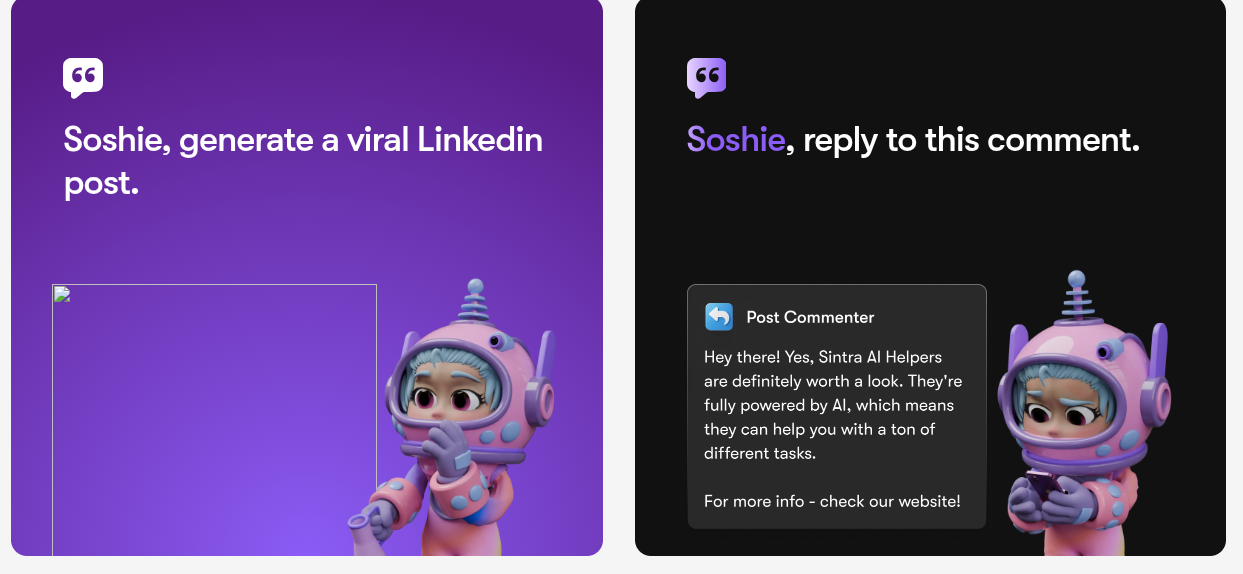
With Sintra AI's Soshie assistant, brands get more than just a caption generator. Soshie acts as a full-fledged AI social media manager, capable of drafting posts, optimizing them for engagement, and even scheduling them for peak visibility. This means you can maintain a consistent posting rhythm without spending hours planning or doubting what to post.
For those managing multiple clients, this kind of automation is a game-changer. It ensures every caption feels fresh, authentic, and aligned with the brand's tone. No matter what the scale of your business is, you will find your copy persuasive in its own way. It is the perfect example of what copywriting with AI looks like when creativity meets smart automation.
Customer Engagement & Support Copy
There was a time when communication was only meant for humans. No one could imagine a machine talking like a human. But AI is reshaping how businesses communicate with their customer. Instead of relying solely on manual replies and pre-written templates, companies are now using copywriting AI to generate personalized, friendly, and on-brand responses.
This shift asks and answers a big question - how is AI affecting copywriting? To be precise, it is affecting quite positively. It is not replacing human writers; it is enhancing their abilities. It frees them from repetitive communication tasks, so teams can focus on strategy and empathy.
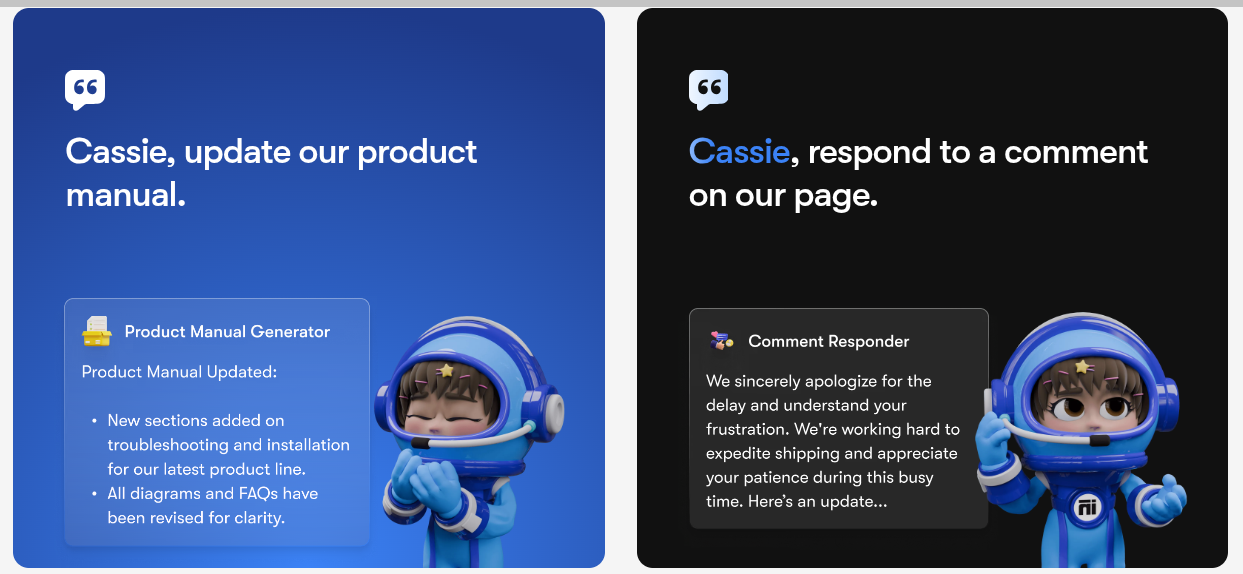
Cassie, Sintra'a, another AI assistant, can draft ready-to-use FAQ responses, chat scripts, and email replies. It analyzes your company's tone, FAQs, and past communication history to ensure no customer query goes unanswered and that support teams operate efficiently without burning out.
Cassie analyzes incoming messages using natural language processing (NLP) to understand intent and emotion. Then, she pulls a customized database of brand-approved information to generate accurate, empathetic, and relevant replies. Over time, Cassie continues to learn and improve her response quality and her understanding of context.
Rather than asking whether AI will replace copywriters, Cassie proves that AI is here to empower human teams. It saves their time, reducing manual workload, and ensuring every customer feels heard and valued.
Email Marketing & Campaigns
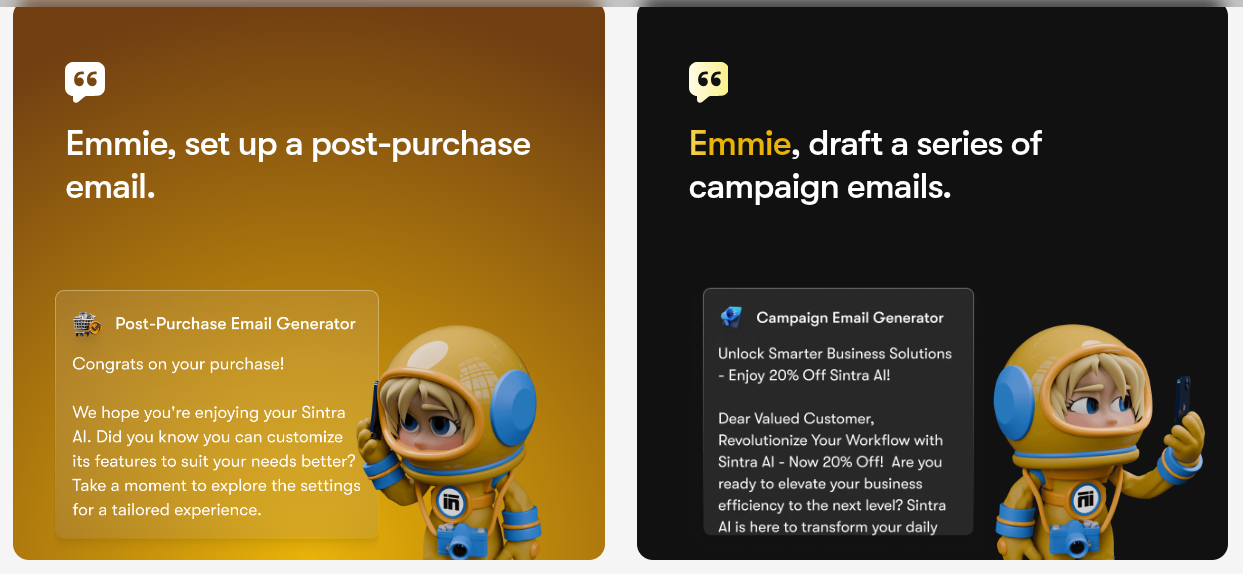
A good AI copywriter should know how to write emails that don’t just get opened but actually get read. Sintra AI’s Emmie is just the assistant you need for this. She understands that every line in an email counts — from the subject line that grabs attention to the call to action that seals the deal.
Emmie uses Brain AI, Sintra’s intelligent core system, to analyze audience behavior and past campaign data, ensuring that each message feels timely, relevant, and tailored for the reader.
Here’s how Emmie works: She studies your email performance metrics. She learns the open rates, click-throughs, and engagement to determine what resonates most with your audience. Then, she automatically generates optimized subject lines, A/B test variations, and even complete campaign sequences.
Emmie's real magic lies in personalization. She uses insights to recommend tone, product mentions, and even sending times that best suit your subscribers' habits.
Product Descriptions & eCommerce
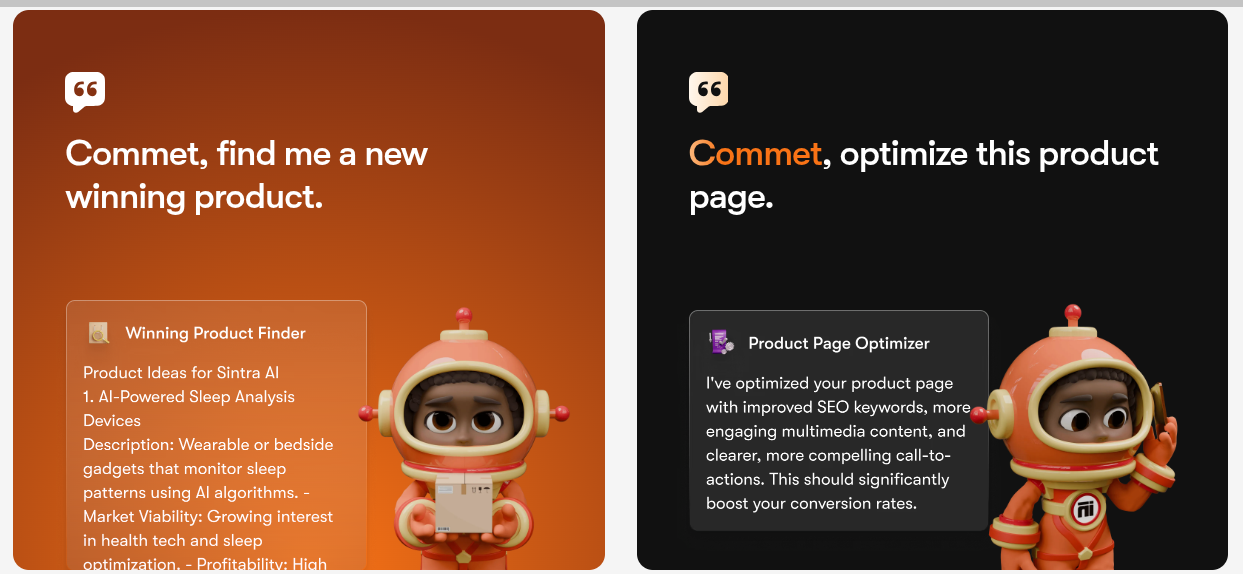
AI is a huge time saver for product descriptions and e-commerce copy. It can generate titles, bullet points, full descriptions, meta tags, and ad variations at scale. It also helps A/B test different angles, localize copy for new markets, and maintain a consistent tone across thousands of individual product listings.
For retailers, this means faster launches and better SEO. A small online store can use AI to turn a supplier sheet of 100 products into individual product pages in an hour. Larger merchants use AI to personalize descriptions by audience segment, boosting conversions and saving significant manual work.
Meet Commet, Sintra AI's eCommerce assistant. It uses artificial intelligence for copywriting to craft SEO-friendly product copy that aligns with your brand voice and conversion goals. You give it product facts and audience cues, and it returns optimized titles, descriptions, and short bullets. And meta tags are ready for upload.
Commet creates ad cop variations so you can test quickly across channels. If you're still wondering which AI copywriting tool is best for eCommerce, Commet is your answer for scale and consistency.
SEO & Web Copy
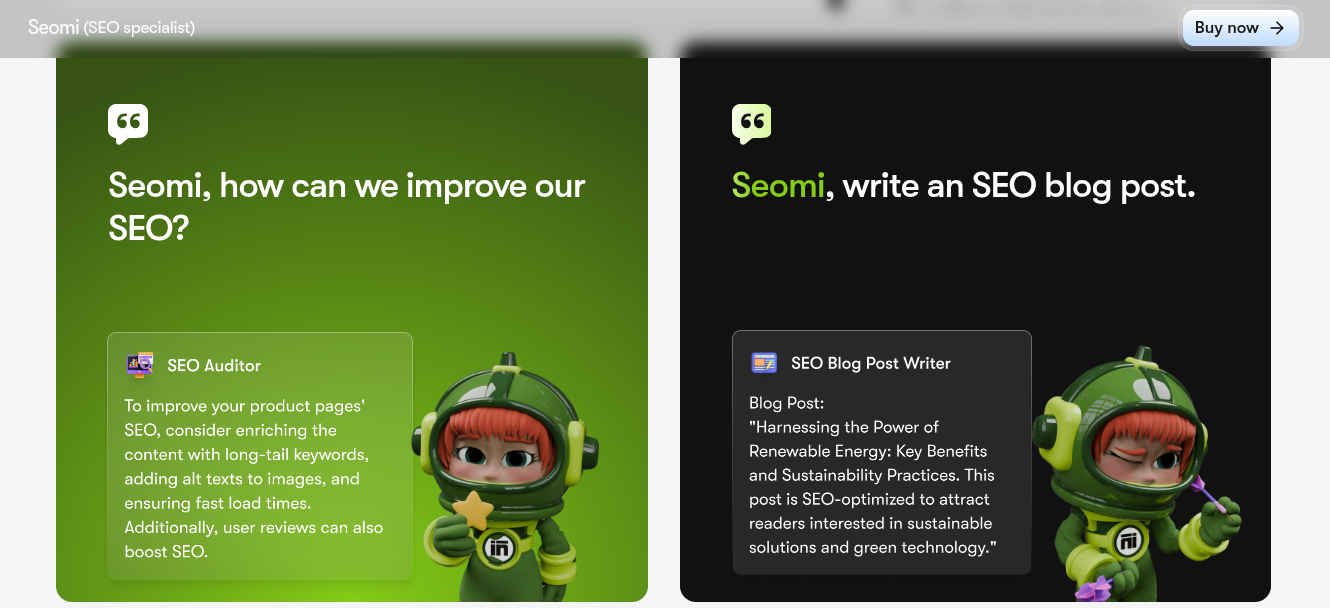
Brands have completely revolutionized how they handle SEO and website copy using AI. Instead of manually writing dozens of meta descriptions or struggling with keyword placement, copywriting AI now handles the heavy lifting. It can quickly draft landing page copy, blog introductions, and on-page SEO. It ensures that the content isn't just keyword-stuffed but aligned with user intent.
This is where Seomi, Sintra AI's SEO specialist, comes. Acting like a trained AI SEO expert, Seomi understands search intent, analyzes competition, and crafts optimized content that sounds natural. Whether it's writing homepage copy, meta titles, or optimizing existing blogs, Seomi keeps your websites fresh, improves search rankings, and maintains a consistent tone across every page.
Top AI Copywriting Tools
When it comes to content creation, knowing which is the best AI copywriting tool can save hours of trial-and-error. There are all kinds of tools out there offering different features, but not all are built equally.
In this section, we will explore the best AI copywriting tools for different needs so you can find the right fit for your workflow and goals.
1. Sintra AI - Role-Based AI Copywriter
When considering which AI is best for copywriting, Sintra AI proudly stands out as the leading AI copywriter of 2025. Unlike most tools that focus on a single content type, SIntra takes a role-based approach with a suite of dedicated AI helpers designed for specific business functions. Each helper is trained immaculately for its role, so you can use exactly the helper you need:
- Emmie - Email marketer
- Soshie - Social media manager
- Penn - Copywriter
- Commet - eCommerce
- Seomi - SEO specialist
Brain AI powers all these helpers with contextual relevance and brand alignment across all platforms and tasks.
Sintra's ecosystem is perfect for small businesses, freelancers, and marketing agencies that need scalable content without the hassle of multiple apps. Plus, the platform's AI tools integrate with your existing workflow, letting you work with your ideas and publish copy in minutes.
The following are some of the features that Sintra AI has to offer:
- Role-specific AI assistants for email, SEO, eCommerce, and social media.
- Brain AI personalization for brand tone and consistency.
- Multi-language support for global audiences.
- Integrations with CRMs, analytics tools, and publishing platforms.
- Real-time collaboration for teams.
Sintra AI is undoubtedly the best AI copywriting tool out there. However, there is a slight learning curve due to the number of available assistants. And you will need to invest in a premium plan to access full features. But the price is totally worth the help Sintra AI can provide your business.
2. Jasper AI - Best for Marketing and Long-Form Copy

Jasper AI is one of the most popular AI copywriting tools and platforms. It is especially popular among marketers and content creators who need blogs, ad copy, and promotional text fast. Jasper is known for its ready-to-use templates that simplify writing tasks. Its integration with Surfer SEO helps optimise long-form articles for search engines without manual keyword research.
However, while Jasper is a strong contender for the best AI for general copywriting, it doesn't offer the role-based structure that platforms like Sintra AI do. It generates impressive copy but lacks the deep personalization of Brain AI.
Here's what Jasper AI has to offer:
- 50+ content templates for ads, blogs, and social media posts.
- Surfer SEO integration for on-page optimization.
- Browser extension for quick copy generation
- Collaboration features for teams and agencies.
Jasper AI works best for marketers who prioritize speed and structure. But if you want a more personalized, brand-aware AI writer, Sintra AI still holds the upper hand.
3. Copy.ai - Best for Quick Short-Form Copy
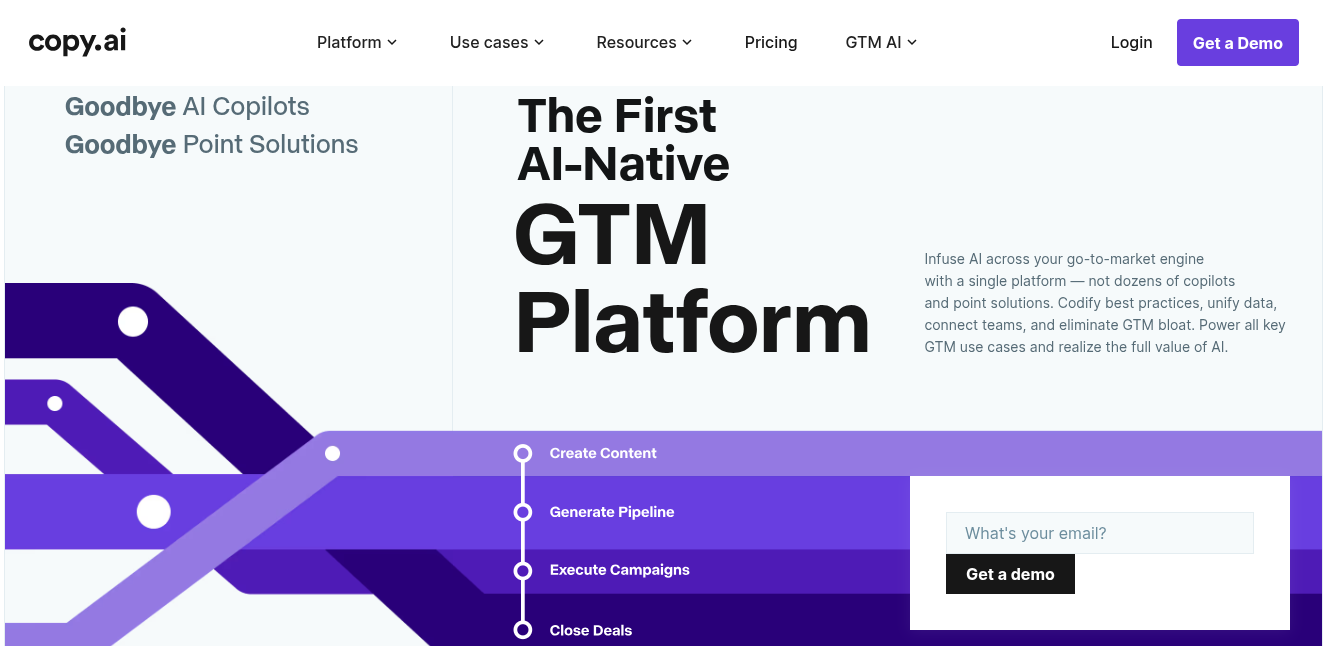
Copy.ai is one of the most beginner-friendly tools in AI Copywriting. It is best known for producing short-form content —such as social media captions, ad variations, and product descriptions—in seconds. Its simplicity makes it ideal for freelancers and small business owners who want instant ideas without diving into complex setups.
With a clean interface and over 90 templates, users can create catchy one-liners, taglines, or call-to-actions at the speed of lightning.
Here's a list of what Copy.ai can do for you:
- 90+ templates for ads, captions, and taglines.
- One-click copy generation for social media and eCommerce.
- Freestyle mode for flexible writing prompts.
- Chrome extension for in-browser use.
While Copy.ai shines in speed and accessibility, it tends to produce generic, surface-level copy that often lacks personality or emotional tone. It doesn't match the capabilities of Sintra's Brain Ai, which adapts content to your brand's style, audience, and long-term communication goals.
4. Writesonic - Best for Fast, Multilingual Content Creation
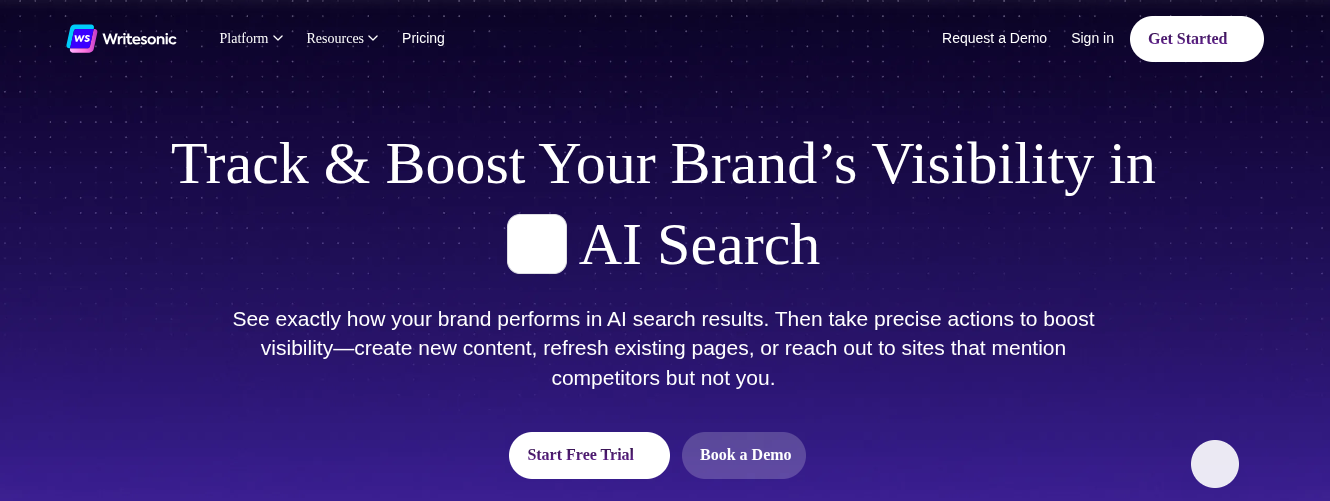
Writesonic is one of the most flexible AI copywriting software. It is built to help marketers, agencies, and entrepreneurs create a wide range of content. Its biggest strengths are speed and multilingual support, making it an excellent choice for global businesses that need quick turnarounds.
This platform uses advanced natural language generation to produce AI content that sounds polished and natural. It can make variations of a copy in multiple languages while maintaining the tone and intent. Here's what it can do more:
- AI writer for blogs, landing pages, and ads.
- Multilingual support across 25+ languages.
- SEO optimization and Surfer SEO integration.
- Built-in chatbot, Chatsonic, for interactive writing.
- API access for custom workflows.
While Writesonic is great for its flexibility, it cannot be compared to Sintra's Soshie, Emmie, and Seomi. Sintra AI's role-based model makes it an all-in-one platform, while Writesonic functions as a generalist. This means it can do many things well, but doesn't craft its copy deeply for specific business functions or strategies.
5. Hypotenuse AI - Best for eCommerce Product Descriptions
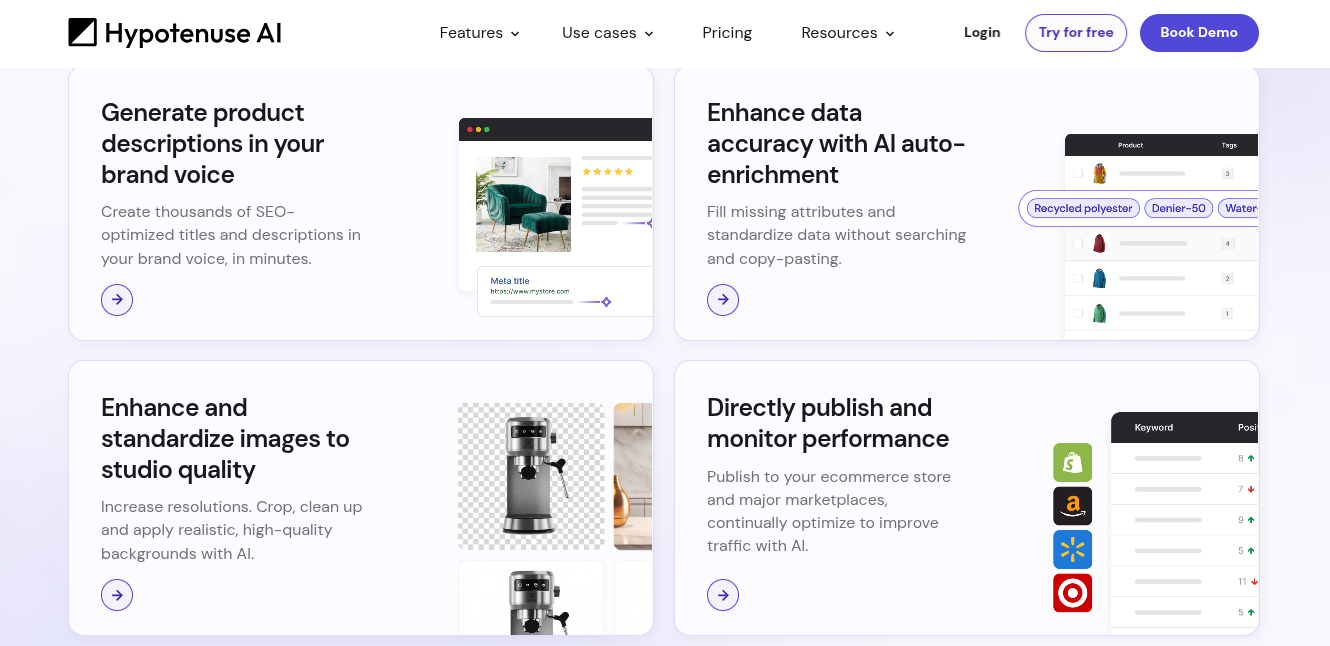
Hyotenuse AI has made a name for itself in the e-commerce niche as one of the best AI copywriting tools. It specializes in generating SEO-optimized product descriptions, ad copy, and blog content with minimal input. You just have to upload your product catalog or connect your Shopify store to get it working. It will produce hundreds of keyword-rich descriptions that maintain a consistent brand tone.
Its biggest advantage is the keyword optimization and scalability, which is perfect for stores managing thousands of Stock Keeping Units (SKUs). A clothing retailer can automatically generate detailed descriptions for every item in its catalog, without writing a single line by hand. This saves enormous time while keeping the content SEO-friendly and on-brand.
In short, Hypotenuse can do:
- AI-powered product descriptions and ad copy.
- Keyword optimization and bulk content generation.
- Shopify integration for automatic uploads.
- Built-in plagiarism checker.
- Image caption generation for eCommerce visuals.
Hypotenuse AI excels at eCommerce writing, but it operates within a narrower focus. Compared to Sintra AI's Commet helper, which offers a broader role-based ecosystem, Hypotenuse lacks the cross-functional power of an all-in-one business assistant. It is still great for online sellers, but Sintra AI takes the stage as the one that delivers the full package.
How to Write Effectively With AI Copywriting?
No matter how smart the copywriting AI tools are, they still need a bit of human direction to produce truly engaging content. Think of AI as your creative assistant—fast, tireless, and adaptive. But it is not a mind reader; it cannot know what you want your content to sound like unless you tell it.
To get the best results, you need to guide it with clarity, context, and oversight. Here's how you can write effectively with the best AI copywriting tools:
- Start with clear prompts: Be specific about your goals, tone, and audience. Instead of saying "write a caption," try "write a friendly Instagram caption promoting a new coffee blend to cafes."
- Upload brand assets: Tools like Sintra's Milli perform best when they have access to your brand voice, product details, and key selling points. This helps personalize every output.
- Edit for tone and accuracy: AI can make mistakes, especially when it comes to factual data. Human reviews ensure emotional factor, authenticity, and factual accuracy.
- Experiment with variations: Generate multiple outputs and combine the best lines or angles.
- EEAT principles: Always fact-check, refine with expert input, and maintain your brand’s credibility. AI drafts quickly, but your expertise makes it trustworthy.
Does that mean AI will replace copywriters? Not quite. It is a collaboration, not a competition. The best results come when AI handles the heavy lifting and you fine-tune the strategy and voice that make the content feel human.
Pros and Cons of AI Copywriting
AI copywriting tools have completely changed how brands create content, whether it's product descriptions or ad campaigns. But this trade-off comes at a cost. Let's take a look at what goes well and what doesn't when it comes to AI copywriting tools:
Pros:
- Speed & Efficiency: AI tools can generate hundreds of words in seconds, freeing teams to focus on strategy instead of staring at a blinking cursor.
- Consistency Across Channels: Maintaining a unified tone across emails, ads, and web copy becomes effortless.
- Scalability: Whether you're launching 10 or 10,000 SKUs, AI enables you to deliver consistent, high-quality copy at scale without a massive content team.
Cons:
- Risk of Generic Text: Without proper creative control, AI outputs can sound repetitive or lifeless, missing the emotional spark that connects with audiences.
- Lack of Originality: Because many tools draw on existing language patterns, the content can sometimes feel too predictable.
- Potential Copyright Issues: AI-generated text trained on existing data may accidentally echo copyrighted material, posing a legal risk for brands.
How Sintra AI Solves This?
Sintra AI bridges the gap between automation and authenticity. Its Brain AI deeply understands brand identity, while role-based helpers—Copywriter, Strategist, and Editor — collaborate to produce content that feels human, creative, and truly on-brand.
Ready to Try AI Copywriting for Your Business?
You may have wished for a content team that works 24/7, never misses a deadline, and actually understands your brand. If so, it is time to meet your AI employee team.
With Sintra AI, you don't just get a single copy tool; you get an ecosystem of intelligent AI helpers designed to think, write, and optimize together.
Start by exploring Penn, your dedicated AI copywriter. See how seamlessly it collaborated with strategists, editors, and brand assistants within Sintra. Together, they'll help you create compelling copy that's not only created fast but also feels right on point with your brand.
Check out Sintra's flexible packages for every helper and even the entire team. You can also start right now by making an account and letting Sintra AI be the virtual assistant you've always needed.
AI Copywriting FAQs
1. What is copywriting with AI?
AI copywriting uses AI-powered tools at its core. These tools are used to create written content, such as ads, blogs, and social posts. AI analyzes data and language patterns to generate persuasive text that reads like a human.
2. How does AI copywriting work compared to human copywriting?
AI tools use machine learning to analyze large datasets of writing examples and predict which words or phrases work best. Humans combine creativity, strategy, and emotion when creating copy. AI handles speed, structure, and consistency, while humans guide it in the right direction.
3. Will AI replace copywriters in the future?
Not likely. While AI automates parts of writing, it lacks emotional intelligence and cultural context. The future is about collaboration with AI, with humans guided creativity.
4. What types of content can AI copywriting tools create?
AI tools can produce a wide range of content, including:
- Blog posts and web copy
- Social media posts and captions
- Product descriptions and email campaigns
- Landing pages and SEO content
5. What are the limitations of AI copywriting tools?
AI tools often produce generic or repetitive text. They lack a deep understanding of the brand and require human editing for tone and accuracy. AI tools can also raise concerns about originality or copyright.
6. Which AI content writer is best?
Honestly, it depends on your goals. For general content, tools like Copy.ai and Writesonic perform well. But if you want an integrated solution with role-based helpers and brand-aware intelligence, Sintra AI is among the top tools.
Related articles
.jpg)
.jpg)
.jpg)

Want a mystery discount on your order?

PlayOS, Inc.
All rights reserved