Top 15 Best AI Software for Small Business in 2026


Table of Contents
While you are trying to grow your business, you are also dealing with customer emails, social media posts, inventory tracking, and payroll.
Business executives spend an average of 16 hours per week on manual administrative work, which is equal to two full working days. They use this time for activities like invoicing, data entry, scheduling, and expense logging. These are tasks that a computer could finish in a matter of minutes.
What’s the good news? AI workers compared to freelancers show that AI software for small businesses has shifted from expensive enterprise AI tools to desktop solutions that are equally efficient for teams of five and fifty. There is no need for a massive budget or a technical degree.
This guide presents 15 of the best AI tools for automating busy work, improving marketing results, handling customer support, and making data-driven decisions in small businesses. These platforms have become critical to remain competitive in the year 2026 due to the emergence of artificial intelligence.
Top 15 Best AI Software for Small Business in 2026
The right AI tools alter the way small business operations are carried out. We have categorized these by what they can offer your business, like marketing, customer service, data analysis, and productivity. They all solve specific problems without consuming your time anymore. When looking for the best AI tools for automation, pay attention to the core features they are offering.
AI Software for Marketing & Sales

- Sintra Soshie: Manages your entire social media profile while you focus on your business. AI Social media manager Soshie develops social media posts, plans campaigns across multiple platforms, and writes social media captions that reflect your brand voice. It also creates marketing materials and oversees email outreach, without spending 10 hours weekly on it.
This AI assistant is a full-fledged social media management platform with core features such as content scheduling, engagement monitoring, and automated responses. It leverages AI to analyze audience behavior and select the optimal posting time to reach as many people as possible. It also features video creation for short-form content on various platforms.
Perfect for: End-to-end social media and email campaign automation.
- Jasper: It is an AI-powered writing assistant that can generate insights, ad copy, product descriptions, and blog posts within seconds. It knows your brand voice, so do not expect that typical AI-generated content. It has both free versions and paid plans starting from $39/month.
Jasper helps you create marketing materials quickly when funds are limited and the deadline is near. It is one of the best AI tools with advanced templates for different platforms. This AI assistant helps your content rank higher in search engines and enables you to compete with big fish.
Perfect for: Small businesses that need professional copywriting services.
- HubSpot: An AI-powered CRM, which monitors customer interactions, predicts lead closures, and automates repetitive tasks such as follow-up emails. The AI-powered features interpret customer data to reveal exactly where to put your marketing efforts.
HubSpot is a sales tracking and marketing automation platform that also scales your business intelligence. The system delivers valuable insights into customer behavior patterns and helps you identify trends in your sales pipeline. It also provides advanced analytics to measure campaign performance and ROI across all channels.
Perfect for: Sales tracking and marketing automation without losing real opportunities.
- Canva Magic Studio: Introduces generative AI on your design projects. Generate images, adjust graphics for various platforms, and produce professional graphics without hiring a designer. The AI-powered version proposes designs that align with your content and brand colors.
You can generate social media posts and even presentations within minutes rather than hours. The platform also lets you transform an existing image into new variations and styles for different marketing needs.
Perfect for: Small business ventures that require high-quality images but lack design experience.
AI Software for Customer Support

- Sintra Cassie: Your 24/7 customer service representative who never takes sick leave. Cassie responds to frequently asked questions, handles the live chat, and forwards complex questions to your team. It learns from past interactions to improve customer service in the long run and relieve you of the burden of responding to similar inquiries over and over again.
This AI for customer support serves several channels without increasing the headcount. The AI-powered features include natural language processing, sentiment analysis, and the ability to answer customer questions with context-aware responses that feel personal.
Perfect for: Small business owners who handle customer inquiries daily.
- Intercom: This AI assistant is in charge of handling customer messages by email, chat, and social media. It answers questions in real time with your knowledge base and only routes time-consuming tasks to human agents when needed. The platform integrates with most existing tools and learns from every interaction to facilitate long-term responses.
Intercom ranks among the best AI tools for customer engagement that keep your support team focused on complex issues requiring human judgment.
Perfect for: When you need to scale customer support but do not have to hire more staff immediately.
- Zendesk: It's an intelligent ticket routing with automated responses driven by AI agents that will not miss a request. The system analyzes customer interactions to identify recurring issues and proposes solutions before customers even request them.
It secures sensitive data processing support functions and provides analytics on team performance and customer satisfaction trends. The platform generates insights from support tickets to help you continuously improve service quality.
Perfect for: Firms with large volumes of tickets and small teams in the current setup.
- Freshdesk: It's a multi-channel support automation designed to fit the tight budgets of SMBs. This tool compiles the online reviews, email tickets, and chat messages into a single dashboard. The AI-powered chatbots respond to basic questions, and your team addresses more complicated problems that require human opinion.
Freshdesk also allows the easy monitoring of response time and resolution rates. Among so many AI tools available for support, Freshdesk stands out for affordability and ease of use.
Perfect for: Businesses that handle support inquiries across multiple channels simultaneously.
AI Software for Data Analytics & Insights
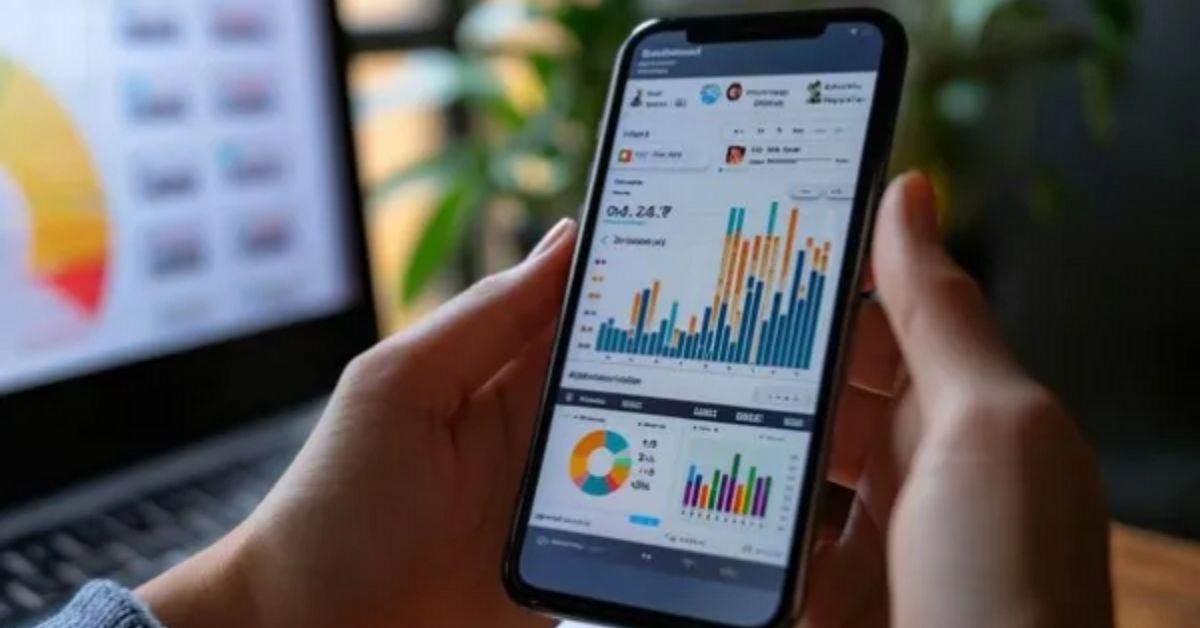
- Sintra Dexter: Business intelligence in real time without spreadsheet headaches that cost hours. Dexter converts raw customer data into actionable insights, makes predictions, and automatically tracks KPIs. It explains the numbers in simple English so that you can make informed decisions without technical expertise.
This AI data analyst is good at analyzing data from multiple sources and generating forecasts and patterns for strategic planning. The platform stays up to date with your latest data feeds and helps you track search trends relevant to your industry.
Perfect for: Small business leaders who require fast responses to their data.
- Tableau AI: It is an AI-powered analytics platform that produces interactive dashboards that automatically update throughout the day. It generates insights from sales data, web traffic, and customer behavior patterns without human effort.
It identifies trends you would never have noticed and even recommends actions based on what other businesses like yours are doing successfully. This ranks as one of the best AI platforms for visualization that empowers small businesses to understand complex datasets quickly.
Perfect for: Firms prepared to make decisions beyond the set of basic spreadsheets.
- Google Analytics AI: Anticipated insights into website visitors and customer behavioral patterns on all your digital properties. The platform employs generative AI to predict traffic trends, conversion rates, and user engagement metrics.
It can be easily combined with other tools in your marketing stack and includes suggestions for increasing site performance and conversion rates. The system tracks how your content performs across search engines and provides relevant keyword recommendations for SEO optimization.
Perfect for: Knowing what drives performance on your websites and landing pages.
AI Software for Productivity & Collaboration

- Notion AI: It's an all-in-one workspace for writing, summarizing, and organizing information for whole teams. The AI writing assistant writes documents, composes meeting notes and reports, and handles task management without switching between different AI tools.
It is linked to Microsoft Teams and other team collaboration solutions you already have in place via version control and team permissions. The platform requires minimal technical skills to install and tailor to your team's needs. Notion AI ranks among the best AI tools for knowledge management and documentation.
Perfect for: Teams tired of assembling scattered data among too many applications.
- ClickUp AI: A visual project management tool that proposes priorities in tasks and manages the workflow automatically according to deadlines. The AI-powered features anticipate project progress, identify bottlenecks when they are still issues, and automatically generate follow-up tasks. It has a user-friendly interface with a simple learning curve that easily fits the way your team performs.
ClickUp handles project management and task management with a comprehensive suite of automation features. The platform also supports high-quality audio recordings for voice notes and team updates.
Perfect for: Small businesses that deal with complicated projects and have scarce resources.
- Trello AI: It automates routine tasks that eat up planning time, such as frequent assignments and deadline reminders. The AI assistant observes the team's workflow patterns and proposes changes to eliminate friction. It is used for repetitive tasks that do not add complexity or require many training sessions, thereby slowing down project management.
Trello integrates well with other tools in your productivity stack, making it one of the best AI options for visual task tracking. The platform includes features powered by Browse AI technology for smart card suggestions and automated workflows.
Perfect for: Teams that do not need to give up their existing system configuration in favor of automation.
How to Implement AI Software in Your Small Business?
Selecting an AI software for a small business is not the complete route to success. What about adopting it and integrating it into your existing setup? Yes, that's the half challenge you have to deal with. That is where the majority of small business owners come to a halt.
You've signed up for the tool. Now what? What is your strategy to get your team on board? Where do you start?
This is the roadmap that will actually work for small businesses taking the first step into using AI tools.
When you look at different AI tools, remember that the best AI tools are the ones solving your specific problems, not just the most popular options.
Step 1: Identify Pain Points
Take a look at the time-consuming tasks your team is battling with, and that effort is not directly generating any revenue for your business. Business owners would prefer to devote more time to marketing and strategic planning, but they now spend 35% of their time on day-to-day operations and 19% on administrative tasks.
Afternoons wasted on customer service emails? Evenings being sucked up by social media? Is data entry killing Productivity? Start there. The best AI tools do not address generic issues; they resolve specific problems.
Step 2: Choose Compatible Tools
Select AI software for a small business wisely. Make sure the AI-powered tools you are considering are easy to integrate with your existing tools. For example, when using Gmail and Google Calendar, select an AI tool that integrates with them, like Vizzy - the Google Calendar scheduling assistant. It is a waste of time to combat incompatible systems. The majority of AI-powered tools have a free trial. The secure way is to test their compatibility with your system before signing up for paid plans. Or look for free AI tools to test functionality before moving to premium versions.
Step 3: Start Small with Pilot Projects
Do not automate every task at a time. Select a painstaking workflow and assess outcomes. Measure specific metrics, such as time savings per week, faster response time, or KPIs. The documented results from SMEs using AI are compelling - it cuts admin tasks by 60% and meeting-minute drafting by 4x, with gains including 35,000 work hours saved annually at one company, 25%+ productivity boosts, and RFPs cut from three weeks to two hours. This provides you with actual evidence before scaling up and helps identify what needs to change and what should remain constant. The best AI implementations start small and scale based on results.
Step 4: Train Your Team
Show your team how AI agents can simplify their jobs and not complicate them. Talk about the benefits that they will get: less work and more meaningful projects. The idea is to boost productivity and eradicate burnout, not to substitute human workers with machines. AI is used to handle the increased load without increasing working hours. The best AI tools complement human skills rather than replace them.
Step 5: Optimize and Scale
Review performance monthly. What's working? What needs tweaking? What AI-powered features do you not use but would like to have? Adopt the one that delivers and drop down which is not working for you. The best AI tools are developed based on their results, not their hype. The technical expertise is a major concern for many small business owners. The majority of the current AI tools are tailored to non-technical customers and have user-friendly interface options and simple installation procedures, so scale it!
Conclusion: Choosing the Right AI Software for Small Business Success
AI software for small businesses is no longer optional in the year 2026. Your rivals have already adopted these AI tools to streamline operations, increase marketing automation, improve decision-making, and provide better customer service than before.
The key to success is to implement the right AI tool on the most cursed workflow, which is eating up not just time but a lot of effort. Similarly, it's not necessary to automate every difficult repetitive task all at once. Implement one at a time, check progress, and move to the next.
If you want a cost-effective solution for time-consuming tasks, Sintra's all-in-one workspace is suitable for your business. This way, you don't have to buy different AI tools, and also skip the adoption and testing of each AI tool separately.
With so many AI tools in the market, Sintra stands out by combining the best AI capabilities in marketing, support, and analytics into one platform. The core features cover everything from generative AI content creation to business intelligence reporting.
It does not require a huge budget or a tech team. You want software that does not require constant babysitting, is compatible with what you are already using, and delivers quantifiable outcomes.
Forget wasting your weeks on activities that do not expand your business. Get started Sintra's AI employees and experience what it feels like to have automation work the way it is supposed to.
FAQs
What is the best AI software for small businesses in 2026?
Your needs determine the best AI tools. Platforms like Sintra offer complete solutions for marketing, customer support, and data analytics. All-in-one AI software for small businesses delivers better ROI than multiple subscriptions. Look for AI-powered tools with core features that match your workflow challenges.
Are there free AI tools for small businesses?
Yes. Free AI tools exist with limited features on platforms like Canva, HubSpot, and Google Analytics. However, paid plans unlock advanced features like automation workflows, AI-powered chatbots, and detailed analytics needed to scale. Test free AI tools first before investing in premium AI tools.
How much does AI software cost for small businesses?
Basic AI tools cost $10- $40 per user per month. Full platforms range from $99 to $500 per month, depending on features and team size. The investment pays for itself through time saved on repetitive tasks and improved marketing results. The best AI tools provide transparent pricing and scalable plans.
How do I pick the right AI tool for my business?
Identify your biggest time drain or revenue blocker. Choose AI software for a small business that integrates with existing tools, offers easy setup, and delivers measurable results within 30 days. Test free AI tools versions first. The best AI tools have core features aligned with your business priorities and require minimal technical expertise.
Related articles