Business Planning for Business Owners With AI Employees


Table of Contents
Business planning is how a business owner sets goals, tests assumptions, and chooses the next move. For most business owners, the most useful plan fits on one page. Review its numbers monthly, its assumptions quarterly, and the whole plan once a year. AI Employees can draft that plan, check its numbers, and prepare every review for you. You make the calls.
This guide covers planning a business with AI Employees. It is for business owners who keep the whole plan, every number and hunch, in their heads.
What is an AI Employee for business planning?
An AI Employee is software that handles one business role for you, within your rules. For planning, that means drafting your plan, checking its numbers, and preparing each review. It arrives pre-built for that job, so you only teach it your business. It keeps your goals, numbers, and documents in Brain AI, a memory you can see and edit. It researches markets, models numbers, and prepares reviews inside the tools you connect. Every pricing, hiring, and spending decision stays with you. Over time it learns your preferences and corrections, and proposes work it can take on.
A business plan template gives you blank headings. An AI Employee fills them from your numbers, then keeps the plan current.
You may also see them called AI workers. We say AI Employees because each one holds a role, not a single task.
Buddy, the AI Employee for planning
Buddy is Sintra AI's AI Business Growth Strategist. He writes business plans, checks pricing, and pressure-tests ideas before you bet on them.
| Part | What it covers for Buddy |
|---|---|
| Inputs | Your goals, numbers, documents, and notes in Brain AI, plus the tools you connect |
| Outputs | Business plans, competitor research, pricing checks, SOPs, and scheduled automations |
| Limits | He advises and argues. You always make the final call |
What is business planning for business owners?
A business plan is a document. Business planning is the habit of keeping that document true as the business changes.
The US Small Business Administration names 2 plan formats: traditional and lean startup. A traditional plan follows a standard structure and can run to dozens of pages. Lenders and investors commonly request it. A lean startup plan sums up the key points on one page. The SBA says it can take as little as one hour. It also suggests lean if you plan to change and refine your plan regularly.
A strategic plan sets direction for the next few years. An operating plan turns that direction into tasks, owners, and budgets for the next quarter. That is where planning meets implementation. Most business owners need both. Both fit on one page.
| Term | What it means |
|---|---|
| Business plan | The written case for what the business does, for whom, and how it makes money |
| Lean plan | A one-page version of the business plan |
| Strategic plan | Goals and direction for 1 to 3 years |
| Operating plan | The tasks, owners, and budget for the next 90 days |
| Strategic initiative | A time-bound project that moves one strategic goal |
| Assumption | A belief the plan depends on, such as a rebooking rate |
| Rolling forecast | A forecast you update monthly with real numbers |
Why plan at all?
Writing a formal plan makes a new venture more likely to become viable. Entrepreneurs who write formal plans are 16% more likely to achieve viability than identical non-planners. Francis Greene and Christian Hopp published that finding in Harvard Business Review in July 2017.
About half of new US business locations are still open after 5 years. Of locations opened in the year to March 2020, 51.3% were open in March 2025. That figure comes from US Bureau of Labor Statistics data.
A plan does not guarantee survival. A plan shows you sooner which assumption is failing, while you can still change course.
The one-page plan: 5 parts that drive decisions
A useful one-page plan has 5 parts: goals, assumptions, numbers, bets, and review dates. Each part feeds a decision. If a line never changes a decision, cut it. Copy the table below as your one-page business plan template.
Here is a worked example: a 2-chair dog grooming studio planning its next 12 months.
| Part | What you write | Example: a 2-chair dog grooming studio | Who drafts it |
|---|---|---|---|
| Goals | 1 to 3 outcomes for the year | Fill both chairs 4 days a week by June | You, with Buddy |
| Assumptions | The beliefs the plan depends on | Regulars rebook every 6 weeks. A $5 price rise keeps 9 in 10 of them | Buddy lists them. You confirm |
| Numbers | Revenue, fixed and variable costs, margin, break-even, and cash | Monthly revenue target, rent, supplies, margin per groom, and grooms needed to break even | Dexter, from your exports or QuickBooks |
| Bets | 2 or 3 tests that move a goal | Launch a puppy package. Add a Saturday slot | Buddy, with Soshie for the launch posts |
| Review dates | When each part gets checked | Numbers monthly. Assumptions every quarter | Dexter's scheduled report and Buddy's questions |
Every assumption needs a signal you can watch. Here, it is the rebooking rate. When regulars rebook later than every 6 weeks, the price bet gets an early review.
Always keep a cost line. Split fixed costs like rent and insurance from variable costs like shampoo and towels. Then work out your break-even point: the sales that cover every cost. Margin per groom sets that number.
Good assumptions start with research. Buddy researches your market, audience, and competitors for you. Then test each assumption with real customers through short surveys, interviews, or a small offer. Buddy covers the desk research. You run the customer conversations. The SBA also lists free federal data on demographics and industries.
Use that research to write your unique value proposition: why customers pick you over the alternatives.
Which AI Employee handles each planning job?
Planning splits across 4 Sintra AI Employees: Buddy, Dexter, Vizzy, and Gigi. Each one owns a different part.
| Planning job | AI Employee | What you get | What you decide |
|---|---|---|---|
| Business plan and strategy | Buddy, AI Business Growth Strategist | A full plan covering market, audience, competitors, pricing, and next steps | Which goals and bets go in |
| Competitor and price research | Buddy | Who you're up against, what they charge, and what they're missing | Your final price |
| Numbers and forecasts | Dexter, AI Data Analyst | P&Ls, cash flow forecasts, expense breakdowns, and product margins | Which forecast you plan around |
| Recurring reports | Dexter | Reports on a schedule you choose: daily, weekly, monthly, or yearly | What to act on |
| Goals and workload | Gigi, AI Personal Coach | Goal tracking, a routine with rest, and a second perspective when you're stuck | How much you take on |
| Systems and SOPs | Buddy | Standard Operating Procedures and scheduled automations | Who runs each process |
Buddy hands finished plans to the AI Employees who act on them. Marketing plans go to Soshie, website changes to Commet, and sales plans to Milli. He can also ask Gigi to plan your days so you don't burn out. The plan becomes daily work.
Dexter reads your numbers from uploads, finance emails, or tools like QuickBooks. He feeds forecasts back to Buddy. Strategy starts from real figures.
How to build your plan with Buddy
Buddy builds a plan through questions, then writes it from your answers and documents. Expect real effort up front. One user described it like this.
"The prompts and questions it asks are actually valuable. They force you to think deeper and build out your company knowledge base properly. It's a lot of work upfront, but it does pay off over time." Sintra AI customer, on Reddit
These 5 steps take you there.
- Load Brain AI first. Buddy works from your Brain AI, its Brand Kit, knowledgebase, and memory, plus the tools you connect. Upload last year's numbers, your price list, and any old plan.
- Answer his questions. Buddy asks questions to fill the gaps. Then he writes a full plan covering your market, audience, competitors, pricing, and next steps.
- Start lean. Build the one-page version first. Expand to a traditional plan only when a lender or investor asks for one.
- Ask him to argue. Buddy will disagree with you, and that's the point. If your prices are too low or the plan has a hole, he tells you why.
- Book the revisions. Most business owners report spending a full day on a comprehensive plan. Then they revise it at regular intervals.
"I built a website that is BEAUTIFUL and customized to my liking in a couple short hours and built my business plan in a day! I'm not leaving." Sintra AI customer
Sintra AI Employees have created over 1.9M documents and run 7.5M web searches.
"I know about medicine, and helping people lead healthy lives. I do not know anything about business, marketing, copywritting . . . Sintra AI fixed that. I have a detailed business plan and a detailed marketing plan." Acupuncturist and Sintra AI customer
How to make a decision with AI Employees
Big decisions deserve a scorecard, not a gut call at 1am. Score each big decision from 1 to 3 on impact, cost, reversibility, evidence, and confidence.
- Impact. What changes if it works?
- Cost. What does it cost to try?
- Reversibility. Can you undo it within a month?
- Evidence. What facts support it?
- Confidence. How sure are you, honestly?
A scorecard total of 13 or more out of 15 means act. From 9 to 12, run a small test first. Below 9, gather evidence.
A test becomes a new bet on your one-page plan. It gets a signal and a date. The result feeds the next monthly review. Price changes work well as tests. Buddy checks competitor prices first, and the test shows what customers accept.
Here is the studio's price decision.
| Question | Input from AI Employees | Score |
|---|---|---|
| Impact | Dexter models margin per groom at the new price | 3 |
| Cost | Nothing to try, but some regulars may leave | 3 |
| Reversibility | The old price can return next month, with some lost trust | 2 |
| Evidence | Buddy's competitor check shows nearby studios charge more | 2 |
| Confidence | Rebooking data covers only 4 months | 1 |
| Total | 11: test it on new bookings first |
Buddy's ideas can also turn into bets that pay off quickly. One user had surplus stock and asked Buddy what to do with it.
"I had excess product of this dog paw shampoo and Buddy's idea was to bundle it with the lip balm, and I sold it all. Buddy sometimes annoys me, because we argue about prices. I'll say, 'that's what I'm selling it for,' and he'll come back with, 'no, it's too cheap, you've got to sell it for this.'" Sintra AI customer
When a decision feels too big, or you're too close to it, bring it to Gigi. She talks it through with you, back and forth, until the next step feels clear. Then score it.
How to review your plan with AI Employees
An unreviewed plan is a wish list. Set a rhythm. Let your AI Employees prepare each check, so your time goes on the decisions.
| Rhythm | What you check | What your AI Employees prepare | Your call |
|---|---|---|---|
| Weekly | Bookings, enquiries, and cash | Dexter's scheduled report from your connected tools | Is anything off track? |
| Monthly | Plan against actual results, including break-even | Dexter compares the numbers. Buddy explains the gaps | Which bets to keep or change |
| Quarterly | Assumptions and prices | Buddy pressure-tests each assumption and rechecks competitors | Keep, change, or drop each assumption |
| Yearly | Goals and business model | Buddy redrafts the plan from the year's results | Next year's goals |
Dexter's scheduled report feeds the monthly check. Each number lands next to the assumption it tests, so you see which bet is slipping.
Use a rolling forecast, not an annual one. Dexter forecasts from your historic data. Each month, ask him for a best case, a base case, and a worst case.
"So Buddy has one job: every morning at 10 a.m., ask me 10 business development questions. It's become a real back-and-forth and a standing appointment on my calendar now." Sintra AI customer, one-person business
What to check in your AI Employees' planning work
- Sources. Ask Buddy where each market figure came from. Verify anything you'd repeat to a lender.
- Assumptions. Each one is written down, with the signal that would prove it wrong.
- Numbers. Dexter's figures match your books and bank statements.
- Dates. Every figure carries the month it describes. Old data makes confident plans look right.
- Fit. The plan sounds like your business, because Buddy draws on Brain AI.
What stays yours
Prices, hires, loans, and contracts stay yours. AI Employees research, draft, and pressure-test. You decide and own the result.
Other kinds of business planning
Financial and marketing plans sit inside the one-page plan. Dexter covers the numbers. Buddy drafts the marketing plan with Soshie.
Tax, succession, and continuity planning need a qualified professional beside your plan. AI Employees can prepare the meeting notes.
Free help exists too. The SBA offers free business counseling through its network of resource partners.
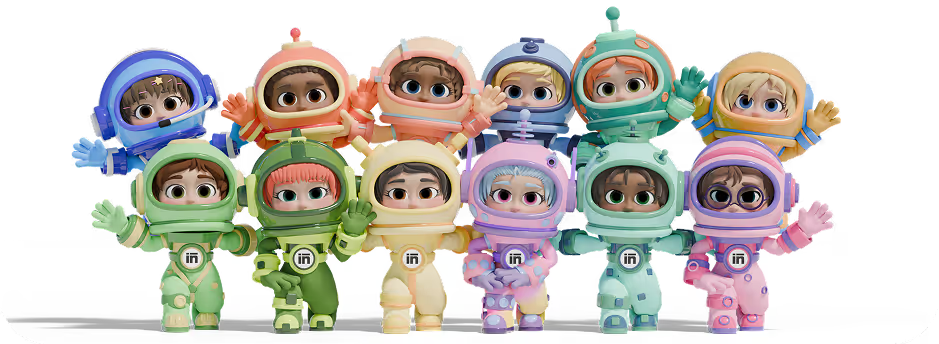
For every role beyond planning, see our AI Employee guides or meet all 12 AI Employees.
FAQ
How do I start business planning as a business owner?
Write a one-page plan with goals, assumptions, numbers, bets, and review dates. Then check it against results monthly. Buddy can draft version one.
What should a business plan include?
A traditional business plan covers 8 core sections on the SBA's list. They start with an executive summary, company description, market analysis, and organization and management. Then come the service or product line, marketing and sales, funding request, and financial projections. A lean plan fits on one page.
What is the difference between a business plan and a strategic plan?
A business plan explains what the business does and how it makes money. A strategic plan sets goals and direction for the next 1 to 3 years. Both fit on one page.
Can AI write my business plan?
Yes, Buddy can draft a full business plan from your answers and documents. Check the assumptions and numbers before a lender or partner sees it.
How often should I review my business plan?
Review your numbers monthly, your assumptions quarterly, and the whole plan yearly. A short weekly check on bookings, enquiries, and cash catches problems while they are still small.
Is a one-page business plan enough?
A one-page plan is enough to run most businesses day to day. Lenders and investors commonly request a traditional plan, so expand it when you seek funding.
Do AI Employees make business decisions for me?
No. AI Employees research, draft, and pressure-test your options. You make the final call on prices, hires, and spending.
Meet Buddy, the AI Business Growth Strategist, and start your one-page plan.
Related articles