Best AI for Website Design (Beyond One-Time Page Builders)

.avif)
Table of Contents
Quick Answer: What is the Best AI for Website Design?
The selection of the best AI for website design depends on what stage of website development you are on. For instance, ongoing agent-based systems like Sintra offer continuous improvement by iterating existing content, automating user interactions, and more. Whereas website builders, such as Wix, are excellent for businesses launching a site from scratch.
HubSpot reports that 93% of web designers use AI in their design cycle. Most of these AI tools launch stunning websites almost immediately, using templates and automated layouts. Today, the idea of going live no longer scares businesses.
The problem: These AI web designers are only functional until launch. Once the site is running, SEO dies, content becomes unclear, and you lose conversions.
To avoid this, it's ideal that you, as web designers, look beyond one-time builder setups and look for AI that continuously manages and maintains the running site. Keep reading to learn more about how to choose the best AI for website design, even after launch.
Best AI Website Design Tools by Use Case
Still confused about which AI website design tool to choose? Here is a quick rundown of different types of tools by use cases you might find helpful.
Best AI for Launching a New Website From Scratch
Traditional developer-focused builders help you keep a site up and running from scratch. These tools combine hosting, domain management, and some design tools to build a website page by page.
Most modern builders have no-code features like drag-and-drop editors, editable templates, and basic eCommerce functionality to promote products and services. With these tools, you can design layouts with unique visuals in minutes.
Here are some top website builders for beginners.
- Wix ADI and 10Web - Best for quick prototypes and a conversational interface that lets you generate a site and customize it.
- Hostinger - known for its 4-click no-code website generator.
- Durable - Offers instant setups with built-in bundle business tools.
- Dorik - Quick AI site generation with CMS membership and code export supported.
Ideal For: SaaS and eCommerce startups or local businesses with no web presence, existing websites, or brand assets needing fast yet professional sites.
Best AI for Improving an Existing Website Over Time
AI web design tools are focused on improving an existing website. Instead of rebuilding the web design, these tools use NLP and data analytics to optimize, restructure, and iterate. By analyzing behavior patterns, navigation trends, and SEO metrics, these platforms aim to enhance user experience.
Businesses employ such platforms to engage users and turn them into leads over time. Here are some popular AI for existing web design to improve your site.
- Hotjar - Offers heatmaps, session recordings, and user interviews to analyze visitor behavior and friction points.
- Sintra.ai - Multi-agent system that reinforces your brand messaging via clear, structured, and conversion-ready content.
- Alli AI - An SEO tool that optimizes existing content by updating meta tags, copies, and page descriptions.
Ideal For: Established businesses that want their website to grow with the company. Marketing teams want to improve engagement and conversion.
Best AI for Conversion-Focused Website Design
Conversion-focused AI web design tools are built on CRO (conversion rate optimization) principles and AI. These tools use AI to analyze user behavior in real time, recommend layout changes, and suggest copy based on what is actually driving clicks. Modern web builders also prioritize personalization by showing visitors the content they want, boosting conversions.
- Unbounce - Known for custom landing page variants (Smart Traffic) for individual visitors.
- WebWave - Offers non-restricted adjustable layouts for different screen sizes.
- Uizard- Turns your hand-drawn sketches into an interactive UI prototype in minutes.
- Framer AI is good at creating sophisticated layouts and offers better developer handoff than competitors.
- Canva websites are mobile responsive and look stunning across devices.
Ideal For: Businesses that want their website to generate leads and drive action (sales, sign-up, etc.).
Best AI for SaaS and Content-Heavy Websites
The entire point of SaaS websites is to explain complex products and guide users to drive action. Hence, AI web design tools for these websites focus on crafting simplified guides, writing compelling copy, and rewriting high-quality blogs. Unlike traditional builders, these tools use AI to analyze user behavior and optimize content accordingly.
Moreover, SaaS and content-heavy web designers adapt content for different devices, turning multi-page complex structures into responsive layouts. Key AI web design tools in this area include,
- Surfer AI - Offers real-time content scoring and optimization suggestions to improve search engine ranking.
- Framer AI - Best for modern responsive multi-page layouts with custom code support.
- Relume and Uizard - target early design stages like sitemapping, wireframing, and prototyping for custom web structures in minutes.
Best AI for e-Commerce Website Optimization
E-Commerce businesses use performance-first AI web design builders. These tools focus on how well your store performs, as the purpose is to turn traffic into revenue. Features, such as personalized browsing experience, adaptive filters, product discovery, and predictive analytics, combine to help these tools improve user experience and maximize revenue.
Here are some popular AI web design platforms for e-Commerce businesses.
- Shopify Magic - Known for purpose-built online stores with AI-driven inventory management and product descriptions.
- Hostinger - Offers an intuitive AI website generator that sets up your e-Commerce store with AI-generated visuals and texts.
- Maze - A design platform with product discovery and design features that test prototypes with real users.
Best AI for Teams Without In-House Web Staff
When it comes to teams without the in-house web staff, an ideal website builder sounds like an easy-to-use, prompt-to-site generator. With fewer resources, your AI should handle ongoing roles, such as content editors, support writers, or e-Commerce managers.
Here are a few popular options you might like to try.
- Durable AI's thorough questionnaires help solo entrepreneurs with more targeted outputs.
- 10Web AI to restructure existing websites within the WordPress ecosystem.
- Surfer AI to refine, iterate, and readjust content according to the content.
- Canva's thousands of free templates can build one-page and multi-page websites.
Choosing the Right AI Website Design Tool for Your Stage
There are thousands of AI web builders, but don’t fall for the over-hyped fancy features. Here is a checklist you should follow when choosing one.
- Conversion Capability: The sole purpose of web design is to drive action in leads or sales. If your AI designer is not capable of optimizing elements for conversion, skip.
- Accuracy and Customization: Ask yourself, how accurate is your AI web builder in understanding the prompt and working on it? Does it allow for customizing basic elements like colors, fonts, structure, etc?
- Ease of Use: Most traditional AI web builders worked via a no-code interface and drag-and-drop elements. This way, even non-technical employees can make amends.
- Copy Quality: The quality of your copy matters a lot. Evaluate whether the AI-written copy is persuasive and tailored to the target audience.
- Design Quality: Check whether the visual templates are aesthetically pleasing, modern, and conversion-focused, or simply flashy clutter.
- Features and Integration: Not all AI tools integrate into your existing workflow. Your choice should be carefully considered. Check if your desired web designer can connect with project management platforms, CRM, etc.
- SEO Performance: Your web builder should have basic to advanced SEO functionality, depending on the design stage. Do an audit and see if the site can help you rank better.
- Scalability: The best AI for website design grows with your business assets. A static website that cannot adjust to an expanding user base or market trends is a dead liability.
What “AI Website Design” Really Means Today?
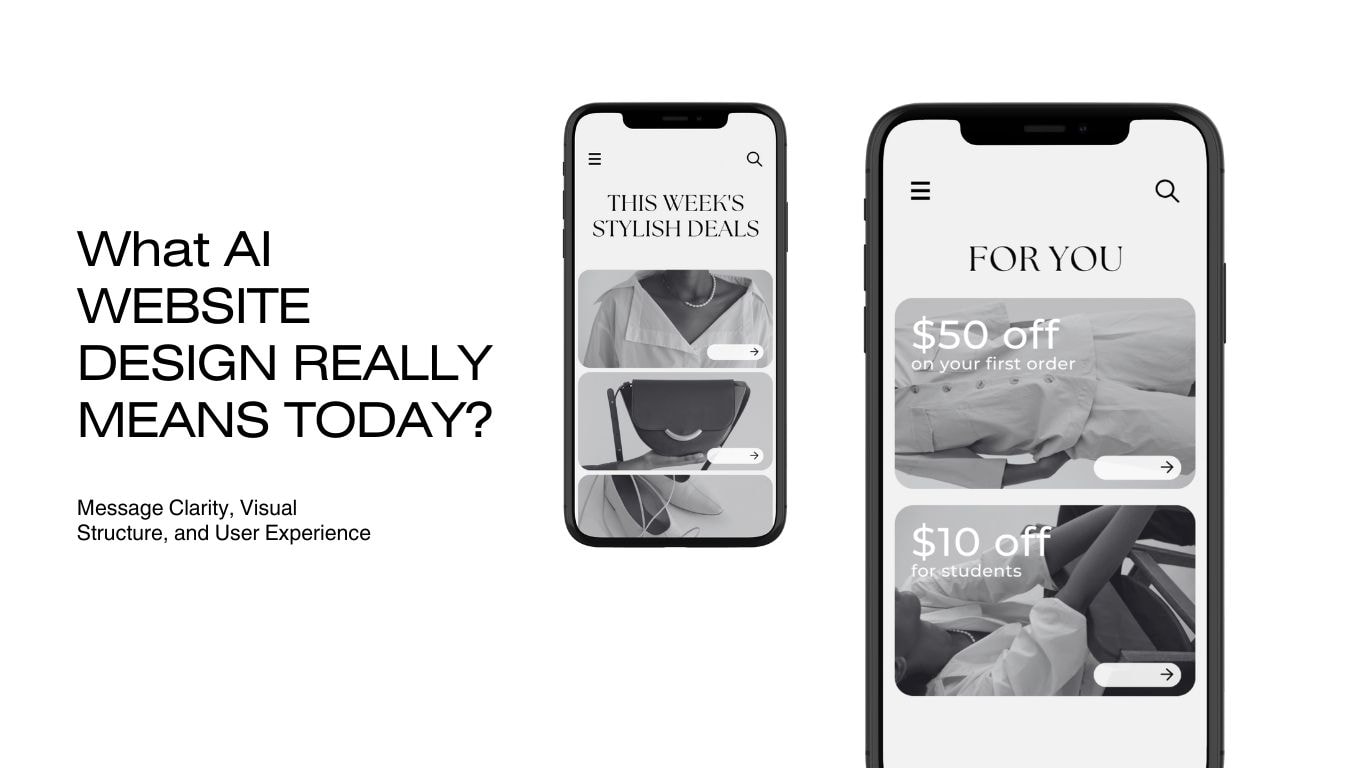
AI website builders produce website designs with AI via automated templates, visual emphasis, and easy drag-and-drop features. However, today, design has outgrown these elements. In 2026, artificial intelligence will contribute to the entire website cycle, from wireframes to layout, personalization, and performance monitoring.
The AI website builder market is expected to reach $20.1 billion by 2033, with a compound growth rate of 31.1%. Here is what AI website design really means for designers today.
AI Website Design Is No Longer Just About Layouts
Early AI website tools relied heavily on generating layouts with visually compelling templates, color patterns, and fonts. But that’s not enough today. Layouts alone do not determine the performance; rather, it depends on factors such as
- SEO-ready design
- Conversion relevance
- User experience
- Accessibility
Modern AI website builders have integrated SEO optimization tools to make sure your website is responsive and well-structured. These platforms improve ranking components, such as headings, internal links, alt texts, meta tags, and more.
Conversion-focused designs are yet another prevalent shift in AI web design. AI studies where users pause, do not sign up for forms, etc. Accordingly, it adjusts the design. For instance, it makes the checkout page easy for online payments or shows a trust badge when a user feels confused about the next step.
Beyond that, AI is also moving toward inclusive designs. With this capability, businesses introduce layouts that are accessible from smart devices, regardless of screen size. These tools also add ARIA tags to improve accessibility for screen readers.
Modern Website Design Is About Communication and Clarity
Today, AI website designers put clear content structures over colors, visuals, and grids. This is because communication with users matters more than ever.
A well-designed website demonstrates clear messaging and guides users about what the brand stands for, its services, and why it matters. All elements, from headline to navigation menu, content, and visuals, are designed for user understanding and action.
What we’re heading to is anticipatory design. Simply put, AI uses thousands of tested user behaviors to predict what users need. So, instead of making users hunt for specific information, the site puts it forward, reducing communication friction and making them stay longer.
Thankfully, features like AI chatbots for website design, text generators, and AI image optimization tools help businesses simplify website building at every step. Businesses are widely using these tools to write homepage copy, create visuals, build content hierarchy, and more.
Design Happens After Launch, Not Before It
In 2026, AI web design enables websites to adapt to visitors’ behavior, company size, and interaction trends.
Today, launching is not enough. The real web design begins with personalization once it starts interacting with users. Your website tracks the following.
- How does someone browse - scroll fast or slow?
- Do they click images first or go through the text?
- Do they abandon the page after 10 seconds, or stick to complete reading?
Based on this performance data, AI for website design optimizes accordingly.
Think of it like a bookstore. Everyone coming will see the same homepage. But the user with a knack for crime thrillers will get suggestions for mystery novels, while a cooking enthusiast will get recipe book recommendations.
Beyond content, AI adaptive interfaces go further to change layouts, add new pages for better navigation, include call-to-actions, and even change the color scheme based on real-time signals.
The best part? Businesses don’t have to redo the entire website. Just integrate real-time analytics, and it will tell you what to change: new pages, content, etc.
Why “Looks Good” Is Not the Same as “Works Well”?
In 2026, website functionality matters more than aesthetics. A beautifully designed AI website can fail if it does not load or deliver the desired results.
Aggressive design tactics are getting worn out. If you, as a business, are still relying on flashy banners, pop-ups, and countdown timers, it’s not benefiting you in the long run. The looks may bring users to your page, but they are not enough to engage them further.
AI website design tools now rely on relevance, clarity, and organization. Instead of traditional A/B tests that take weeks to evaluate just two variants, we are moving to AI-powered micro testing. These tests use micro interactions (scroll depth, click hesitation, etc.) to understand user behavior in real time and adapt accordingly.
The results: navigation feels natural, users are satisfied, and they stay longer.
The Shift From AI Page Builders to AI Design Systems
Another big shift in 2026 is how designers use AI tools for website design, not for individual pages but to maintain and improve the entire website.
It’s no longer a shortcut that relied once on template intelligence, no-coding manual input, or a ready-to-launch website. Rather, AI, today, is a collaborative partner that helps you at every stage, from suggesting layouts to testing colors and automating repetitive tasks.
That’s not it. Modern AI website designers are getting involved in strategy and planning. They can analyze heatmaps, content density, and viewport to improve content hierarchy, navigation across devices, and overall user satisfaction.
The Problem With One-Time AI Website Builders
While excellent at helping designers launch a website from scratch, AI-driven website builders do have some limitations.
They Optimize for Launch Day, Not Long-Term Performance
Traditional free AI website builders worked by mixing and matching prebuilt templates. It gives you a polished site quickly, but this convenience comes at the cost of flexibility. Not only can you not control the design aspects, but it also lacks long-term performance.
Once the site is up and working, the AI does not add value for users. It offers no performance optimization, no adaptive interface, or data-driven insights for user satisfaction. Your website may look finished, but it does not improve with user interaction.
Website Copy Freezes While the Business Evolves
Your no-code-generated website may stop at launch, but the business keeps moving forward. Ideally, as new products launch and prices adapt to changing market trends, your website copy should also adjust. But that’s not the case.
Early AI website copywriters lack lived experiences. This means they cannot produce high-value copy that addresses business objectives and aligns with conversion triggers. And, you end up with outdated copy that misleads users about what the business offers, creating a trust deficit.
Design Becomes Fragmented as Pages Are Added
At some point, you will expand your website by adding new landing pages, sections, or services. But the problem is that AI web design tools will choose from design patterns from existing templates. Hence, the results may look visually clear but emotionally flat, lacking brand identity.
Brand identity is built from nuance with carefully crafted visuals, consistent messaging, and considered typography. But automated generators lack this. Without a consistent hierarchy, your site looks fragmented and reduces conversion opportunities.
Builders Don’t Handle Ongoing Design Decisions
AI web designers are built on standard templates for faster deployment. This launch-and-forget mindset focuses on the initial setup and not on the long-term strategy. Hence, such one-time builders are not equipped with iterative features that help businesses improve over time.
Visual Quality Hides Structural Problems
Most AI website designers are concerned about aesthetically stunning sites. But the problem is, visuals alone do not guarantee conversions. Often, these overpowering visuals can mask structural inconsistencies, such as weak CTAs, poor content hierarchy, and more. This graphic design-centric approach may help bring traffic, but the unclear messaging does not translate into conversions.
Why Growing Teams Outgrow One-Time AI Builders
Growing businesses demand sites that they can scale and optimize with new launches, structural updates, and market trends. However, one-time AI website builders only produce static websites. Here is why such teams outgrow one-time builders.
- As the content volume and traffic grow on your website, AI struggles to maintain speed and clarity.
- One-time web builders produce generic designs based on templates and do not allow for deep contextual understanding, crucial for personalizing user experience.
Website Design as an Ongoing System (Not a Layout)
Your web design is not a one-time marketing product that you abandon after launching. It is a living system that requires continuous updates, optimization, and consistency. Here is why you should treat your AI website design as an ongoing system and not just a visual template.
Why Do Most Websites Start to Decay After Launch?
Most websites die with structural inactivity. Businesses invest money in an AI website and then abandon it after the launch. No content updates, no technical updates, no security patches! After a few months, the site displays broken links and stale content.
Design as Maintenance, Not Just Creation
Website design planning never stops. Think of it as an ongoing responsibility that grows with your business. As your products evolve, the need for updated copy, refined page structures, and new offer shifts becomes more important.
Those who undermine it reach stagnation. Think of a company that has launched the initial pages: About us, Services, and Contact Information, and that’s it. No follow-up content and no updated page structures!
Without fresh content and technical updates, even the search engines won’t recognize it. And what you will end up with is a dead website that does not interest visitors.
Consistency Across Pages Is a Design Function
Consistency in web design refers to the coherence of visual, content, and functional elements across pages. User experience mostly stems from consistency in your website design. Visitors naturally feel at ease with consistent colors, buttons, and a familiar font on individual pages.
By focusing on these things, you can reinforce brand identity, build user trust, and improve conversion rates. Here are some best practices to improve consistency in your AI website design.
- Implement brand-relevant style guides.
- Regularly review and audit website performance.
- Establish clear content guidelines.
Iteration Is What Turns Design Into Performance
Content iteration means improving your website's existing content over time and not treating it as a one-time, post-it-and-forget-it responsibility. Rewriting sections of your blogs, adjusting CTAs, and refining your brand messaging across website pages is crucial for its performance.
AI website design tools use performance metrics and user feedback to consistently refine content. Such a practice helps marketers get ranked in SEO systems, get high conversions, and offer users a better experience.
Why Static Layouts Fail Growing Businesses?
A static layout refers to a website built on individual HTML files, prebuilt, prewritten, and served directly to the user’s browser as they are stored. They may have better speed, but static layouts are not built for scalability, complex user interactions, and dynamic content delivery.
To give you an idea, these layouts do not have advanced features like dashboards, personalized directories, shopping carts, etc. Hence, growing e-Commerce businesses requiring custom functionality see little value in AI web builders. Here are some reasons a service business would prefer dynamic over static layouts.
- Regular updates demand manual modification of HTML/ CSS files.
- Adding content to the pages requires editing individual files.
- Static layouts show the same content to every user with no personalization.
- These layouts do not include features such as complex search, user accounts, or third-party integrations.
- AI web builders demand manual intervention for SEO performance.
The Missing Layer Between Design and Growth
Growth-driven design, or GDD, is a website design approach that focuses on using data analysis and user behaviors to continuously improve design after the launch. And, this ongoing launch pad site system is the missing layer between design and growth.
Such systems transform static one-time websites into living assets that contribute to your marketing over time. Here is how.
- Growth-driven web design starts running immediately, so you have a shorter launch time.
- There is no guesswork with GDDs. These systems run on ongoing user behavior, market trends, and regular security updates.
- Search engines appreciate websites that are regularly updated, load quickly, and offer a seamless user experience.
- GDD adapts to your business's growing demands, be it shifting focus, scaling rapidly, or adding new services.
Why Is Sintra the Best AI for Website Design Over Time?
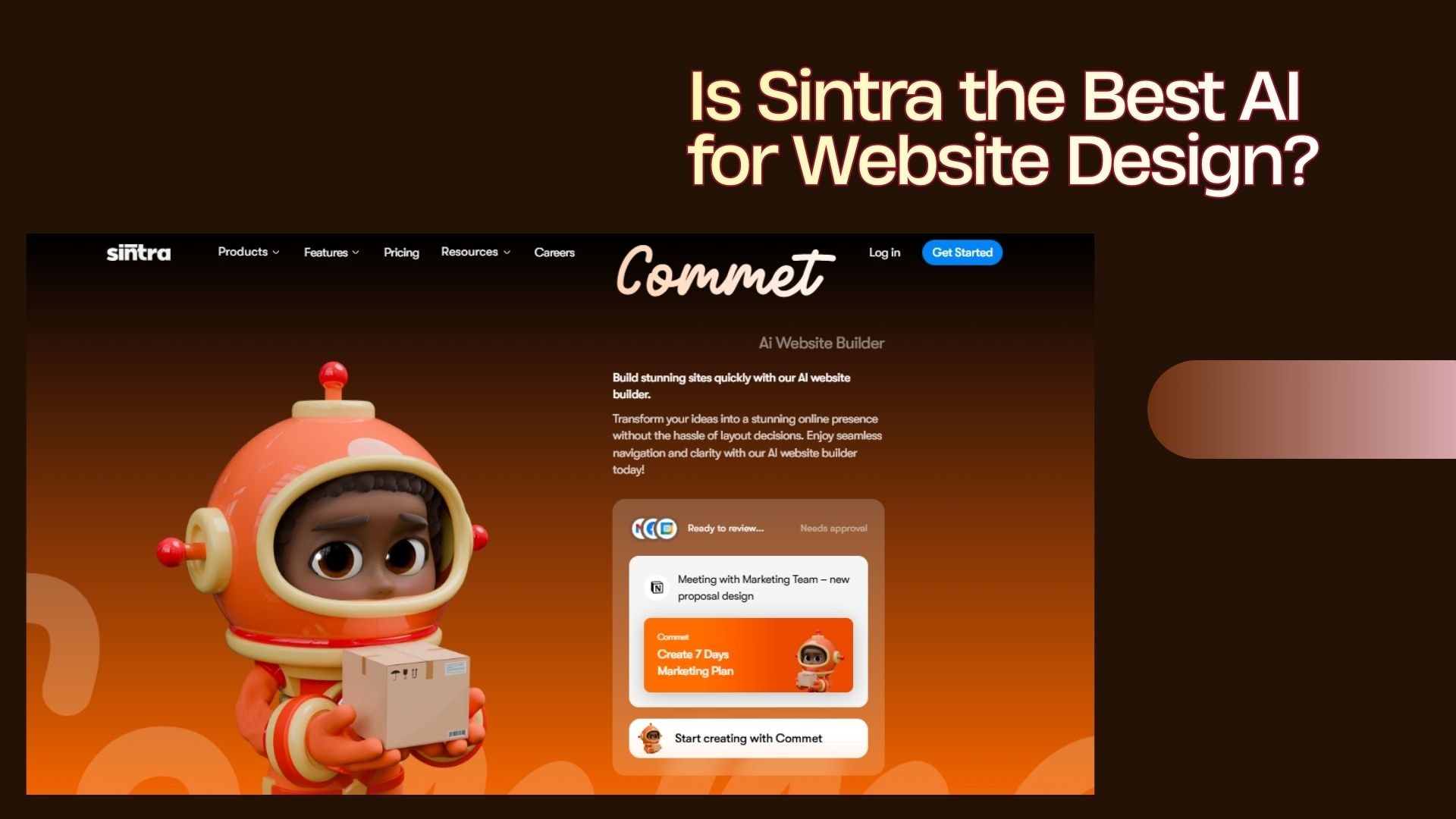
Having a website is not about launching it; rather, it is about turning it into a growing asset that aligns with your business over time. Though not clearly a builder in the traditional sense, Sintra’s specialized AI employees keep the websites effective after launch, and here is why.
Sintra Is Built for Websites That Already Exist
Beyond building websites from scratch, businesses can use Sintra.ai to maintain already existing web designs, all thanks to its multi-agent system.
Unlike generic chatbots, its role-based agents are industry experts, such as Seomi for SEO, Commet for e-Commerce, and Penn for content writing. When connected with a shared knowledge base, these agents help you optimize and automate various parts of web design while keeping the brand voice and context intact.
Here is how you can improve existing AI web designs using Sintra.
Seomi is an SEO specialist who helps you
- Conduct regular website audits and detect technical glitches (slow loading, poor mobile performance, etc).
- Analyze and improve on-page SEO elements, including meta tags, heading titles, keyword density, and more.
Penn, Sintra's AI copywriter, is capable of
- Updating outdated and underperforming content on your site with better keyword positioning, brand messaging, and more.
- Identify the missing topics by comparing the existing blogs with the competitor’s content.
- Produce high-quality content, be it product descriptions, blog posts, landing pages, and more.
Commet, the eCommerce specialist from Sintra, is built to
- Improve product copy, CTAs, and listings to improve conversion.
- Answer your customers’ queries 24/7 to reduce bounce rates.
Design Through Copy, Structure, and Messaging
Your website design, for Sintra, is more than just visual aesthetics. It focuses on making the website functional and user-friendly through structure, clarity, and hierarchy.
For starters, its role-based agents ensure the content serves a clear purpose: conversion, engagement, or communication. It uses pre-optimized templates to present information in a structured and decluttered layout.
Commet, the AI website designer, also gives visual hierarchy equal weightage. It uses contrasting colors and bold font to highlight key information and help users search for what they want.
Beyond clarity, Sintra’s agent personalization is focused on driving user action. As you feed business information into the Brain AI, the agents produce highly tailored content with strong CTAs. These factors combined help businesses convert visitors into leads.
Consistency Across Pages With Shared Memory
Sintra’s AI web design is built on a centralized, shared memory called Brain AI. This knowledge base stores all your documents, brand assets, URLs, style guides, product pages, and FAQs. With this information, Sintra’s web designer maintains the context throughout the site structure, content, and other design decisions.
This knowledge space is a shared data pool for Sintra’s agents. The best part: it never stops learning. As you interact with the agents and feed information into the system, the memory updates, understanding your needs and preferences.
Role-Based AI Helpers Replace Ongoing Website Tasks
With AI helpers’ automations, running a business may not need a labor-intensive workforce. Think of them as your always-available digital Sintra employees that handle the repetitive and time-consuming workflows. So, whether it is content management, SEO optimization, or customer support, Sintra’s automations do most for you.
Let’s say you are a startup and don’t have the finances to recruit enough sales reps. Simply add your information to the shared memory, enable Cassie (the customer support agent), and integrate it with your third-party work platforms. It is available 24/7 to answer your customers’ queries, update FAQ pages, and respond to emails.
What’s even better about Sintra’s AI web design tools is the use case function. These are one-click micro tools designed to perform specific business tasks with minimal input. So, without lengthy and complex prompts, you can pick one from the interface and forget about the rest.
Continuous Improvement Instead of One-Time Output
Sintra’s AI website builder, Commet, treats website designs as ever-evolving. Unlike static website makers that rely on manually editing the HTML/ CSS files, Commet’s conversational interface helps businesses with continuous content refinement and user-centric optimization.
For instance, static builders do not have brand memory like Brain AI to understand business data and user behavior. In comparison, Sintra maintains a brand inventory that updates as your company expands, suggesting regular updates. This memory also helps the agents proactively anticipate users’ needs and act on them.
Why Sintra Outperforms AI Website Builders Long Term?
Unlike the traditional static AI website builders,
Sintra’s AI employees see your website as a living asset that grows with the business. Here is why it wins over traditional static AI website builders in the long run.
- Prevents content decay by automatically suggesting and refining content based on relevance, changing market interests, and users’ interests.
- Reducing inconsistency by maintaining a unified brand message, tone, and overall visuals.
- Improving strategic alignment by constantly adapting the website to your business objectives and SEO requirements.
Sintra vs AI Website Builders (Wix, Webflow, Brizy)
Between Sintra and AI website builders, there are no winners or losers because they serve different purposes in website design. Let’s see how.
The Core Difference: Building Pages vs Running a Website
For starters, the purpose of AI website builders like Wix, Brizy, and Webflow is to build the foundation. These tools are designed to help you craft layouts, write copy, add visuals, and insert relevant pages from user prompts. Businesses use AI site builders to speed up the design process and help non-designers launch sites almost immediately.
But once the site is up and working, they don’t readjust brand messaging, update content as user behavior changes, and optimize existing pages for advanced SEO. For instance, Wix has improved its SEO capabilities but still struggles with Core Web Vitals. This is where Sintra enters.
Sintra is an intelligent multi-agent system organized to maintain the website post-launch. It takes the focus off the launch and shifts it to the improvements. With Sintra, businesses aim to manage daily activity on their website - content iteration, copywriting, customer support, and more.
What AI Website Builders Are Best At?
AI website builders excel where your aim is speed and efficiency.
- Beginner-Friendly Setup: Most AI website makers are designed with non-technical users in mind. With drag-and-drop elements and conversational prompts, non-designers can get websites without coding knowledge.
- Fast Site Creation: AI web designers give you a fully-functional website live in hours. All you need to do is provide some basic information about your business, answer a few questions, and that’s it. Durable can generate a one-page website in 30 seconds, based only on your business name and type.
- Automated Content Generation: AI builders use templates to automatically create headlines, homepage, paragraphs, CTAs, and even images. This saves time and updates content regularly.
- Built-in Templates: Templates, such as SEO and mobile-responsive layouts, help businesses rank on search engines and improve user experience. For instance, Framer AI is great at high-end animated and customizable sites.
Where AI Website Builders Fall Short Over Time?
Though helpful in the initial stages of website designing, AI web builders have a few limitations. Understanding where small businesses actually invest in AI helps put this in context - the top use cases are marketing and promotions at 46%, payroll at 44%, and accounting at 42%, with marketing automation one area where small businesses actually lead larger ones in AI adoption.
- No Brand Identity: Brand identity mostly depends on unique visuals and content. And that’s where AI web designers lack. The copy sounds bland, and the visuals are basic.
- Template Dependence: Most AI-driven solutions mix and match templates to design a website. This means your design is restricted. You may change colors or add logos, but it does not allow for deeper customization, specific to your audience.
- Accessibility: AI-generated websites demonstrate accessibility issues, such as mismatched colors, missing alt texts, bloated code, etc.
- Lack of Continuous Optimization: Most AI website builders struggle with Core Web Vitals, which eventually influence their SEO. Your web design cannot stand out with just basic optimization practices, such as page titles and meta tags.
- Difficulty with Advanced Interactions: Modern websites are interactive. Small businesses often use live chats, a booking system, and forms to communicate with users. But AI builders have limited user modules to pick from.
How Sintra Complements Any Website Builder?
Sintra is an intelligent operational layer on top of your AI web designers. It differentiates a launched website from a running website. Once your AI web designer has built a website and it’s live, employing the multi-agent system is the next step.
Good news: It’s a no-code platform, so you can use it without even touching layouts. Here is how Sintra’s agents handle it.
- Refines outdated content with new offers, optimized product pages, and conversion-ready landing pages.
- Use shared memory to ensure all visuals and content build brand identity with consistent tone and styling.
- Analyze on-page content and offer suggestions based on performance data.
- Simplify user interactions with easily-accessible customer support agents, FAQs, and forms.
Visual Design Vs Conversion-Focused Design
AI web designers like Wix and Brizy truly master visual design. Their intuitive drag-and-drop elements, templates, and visual choices give you a stunning website. Many undermine it, but aesthetic choices influence your visitors' psychology.
They may not actively evaluate your font, colors, or white spaces, but it is in their subconscious. Visual designs build credibility and show visitors how reliable you are. If your landing page has hard-to-read text and dark background colors, it’s not getting traffic.
However, this is only one side of the coin. Beyond graphic design, your site needs structure, clarity, and hierarchy. This improves your conversions and reduces bounce rate. And, Sintra excels at this.
Its writing agents produce copy that communicates value, has clarity, and reflects the brand's objectives. With Sintra, you are not simply writing. You are adjusting content and highlighting navigation buttons based on user intent. So, users can search for what they want without any fluff.
Which Option Is Right for You?
Both Sintra and AI website builders serve you at different stages of the website development cycle. So, the choice depends on where you are and what you need.
An AI-driven website designer might be a better choice for new businesses, brochure sites, or anyone without existing preferences. This works best if,
- You want a running website in less time from scratch.
- You don’t have existing brand assets (visuals, documents, etc) and want the AI document generator to take care of it all, from layouts to colors and templates.
- You are building the website page by page and want better visual control.
Established businesses, website owners, and marketing teams would prefer Sintra for its focus on adaptability. You may choose Sintra if,
- The goal is to maintain an existing website for better engagement and conversion.
- You intend to improve the website continuously with better structure, clarity, and consistent brand messaging.
- You prioritize long-term performance and want the website to adapt to user behavior, changing market trends, etc.
Using Sintra and a Website Builder Together
To build the most effective website, you don’t have to choose; rather, combine both. AI builders can help you set the foundation. This includes producing visuals, creating layouts, generating pages, and getting the site working. Once done, Sintra handles the rest. It adds value to your existing system by working toward clarity, consistency, and iteration.
Who is Sintra Best For?
Sintra, as an advanced business solution with specialized agents and a shared knowledge base, benefits the following use cases.
SaaS Teams Managing Live Websites
Content is the pillar when it comes to running an updated SaaS website. However, constant content iteration with different formats (product pages, FAQs, pricing updates, etc) can be overwhelming. However, Sintra takes this cognitive load off you and handles copy that resonates with the audience, and that aligns with your brand messaging.
Businesses With Existing Websites That Need Improvement
Sintra is also a better choice for established businesses that have existing brand assets and traffic yet struggle with clarity and conversion. Its smart writing assistants analyze your site content, identify why it is not aligned with user intent, and suggest adjustments accordingly. With a stronger CTA and clearly written offers, your visitors actually convert.
Lean Teams Without Dedicated Website Staff
Small marketing teams without dedicated content editors, copywriters, or web managers appreciate Sintra’s automations. Its smart agents fill these roles by connecting to your brand’s knowledge base and automating routine repetitive tasks, such as updating copy, optimizing content for conversion, etc.
Content-Heavy and Multi-Page Websites
As your website grows and becomes content-heavy, maintaining consistency becomes a struggle. This is where Sintra helps. It's shared business knowledge that helps agents readjust multi-page web designs to your goals and voice. This way, everything seems cohesive, from clear content hierarchies in blogs to uniform terminology in user guides.
Founders and Marketers Focused on Conversion
Business owners and marketers use Sintra as an optimization partner that helps them turn their websites into reliable, growing assets. It continuously updates CRO-focused elements, including value proportions, CTAs, and page structures to drive action and revenue.
Teams That View Website Design as an Ongoing System
Sintra is excellent for teams that view their website design as a dynamic, ongoing system. Accompanied by the mindset, Sintra’s operational infrastructure helps them improve over time.
When You Should Use a Traditional AI Website Builder Instead?
While Sintra helps keep your site living, it might not be the best alternative to traditional AI website builders. Businesses might still prefer old-school AI web designers in the following scenarios.
- Startups with no existing brand assets and a running website will love the prompt-to-site generation tools to get started from scratch.
- Establish businesses needing a fast MVP (Minimal Viable Product). Traditional tools help them immediately get a live website and test business ideas.
- Marketers needing static and simple brochure sites and portfolios will also appreciate traditional designers.
- Traditional web designers are a great choice for local businesses that aim to establish a web presence and not dig for conversions.
Ready to Build a Website That Improves Over Time?
Here it is - everything to know about how to build and maintain a website design. If you are already past the first step, prioritize long-term performance. Do an audit, identify weaknesses, and readjust.
Sintra’s digital workforce can help you do this. Employ its AI SEO agent for better search engine visibility or e-Commerce AI agent to simplify user interactions and drive action.
So, get started with Sintra today and see how it works.
Best AI for Website Design FAQs
What is the best AI for website design right now?
The best AI for website design depends on your needs, skills, and the stage you are at in the web cycle. Non-designers with no business assets would prefer traditional web builders that produce live sites from prompts in minutes. In contrast, growing businesses with an existing website opt for multi-agent systems that help them automate routine website maintenance tasks, like content management.
Is AI website design only about visuals and layouts?
No. AI website design goes beyond visuals and layouts. Today, website designs are more dynamic, characterised by SEO optimization, UX personalization, and content management.
Can AI improve an existing website without rebuilding it?
Of course. AI automation tools can improve an existing website. Instead of rebuilding, these platforms help with constant improvements, such as updated content, structural hierarchies, SEO optimization, and better user interactivity.
How is Sintra different from AI website builders?
Sintra is an advanced agent-based business solution that works by improving your existing website over time. Unlike one-time AI builders, it’s digital employees store your business data in a centralized knowledge base, integrate with your work tools, and automate repetitive website maintenance tasks, such as writing, structural adjustments, etc.
Is Sintra a replacement for web designers?
No, Sintra is not a complete replacement for website designers. Instead, it is the operational layer on top of your web designers that focuses on improving the structure and messaging.
Related articles