Will AI Replace Sales Jobs? What the Future of Selling Looks Like


Table of Contents
You’ve seen the headlines: “AI is replacing salespeople.” “Automation is taking over the pipeline.” Still, as a sales professional, you have sales targets to hit, clients to close, and a team to lead through change. The noise around artificial intelligence and automation is loud but short on strategy. The adoption is already well underway - machine learning and RPA are the most popular sales automation technologies, with 70% and 55% adoption among pioneers respectively.
If you’re a sales rep, SDR, or revenue leader, your concern should be how to stay valuable as AI technology, predictive analytics, and AI-powered tools modify the future of sales, just as the future of SEO is being rewritten by the same wave of automation.
This article focuses on what’s changing now in the sales industry. You’ll see which parts of the sales process AI can streamline, such as lead scoring, forecasting, and follow-ups. Also, you will need to check which areas still depend on human sales professionals with emotional intelligence.
Will AI Replace Sales Jobs?
AI will not completely replace sales jobs.
It is transforming what typical sales positions look like. The main risk is how quickly repetitive tasks and data entry are being automated by AI systems.
Research from major firms like the World Economic Forum shows how AI is reshaping the workforce:
- 80% of U.S. workers will see at least 10% of their tasks affected by AI, and 19% may see half or more of their work automated.
- 30% of total work hours in the U.S. could be automated by 2030.
- 92% of organizations plan to increase AI investment in the next three years, yet only 1% consider themselves fully AI mature.
- In sales, 95% of seller research workflows will begin with AI by 2027, up from less than 20% in 2024.
- 41% of sellers say AI has already reduced time-consuming tasks, and 10% may hold multiple jobs by 2028 due to time savings.
More companies are increasing budgets for AI tools to gain an advantage in prospecting, customer insights, and hiring. AI systems can process thousands of leads, conversations, and records instantly, streamlining sales processes and enabling sales reps to focus on higher-value interactions.
It’s now part of both sales automation and talent acquisition. The same AI staffing agencies and recruiters that help companies find top AI talent also guide how sales teams use automation to grow.
can automate many parts of the sales process, but it cannot replace human expertise or human intuition. AI vs data analysts works the same way — and in both cases, humans still win where empathy, context, and connection matter most.
AI in Sales: What It Can Do for Sales Teams Today?
AI is transforming how sales teams operate.
It takes over repetitive tasks, improves accuracy through data analysis, and provides AI-driven insights that shorten the sales cycle. The result is faster decisions, smarter customer interactions, and more time for closing deals.
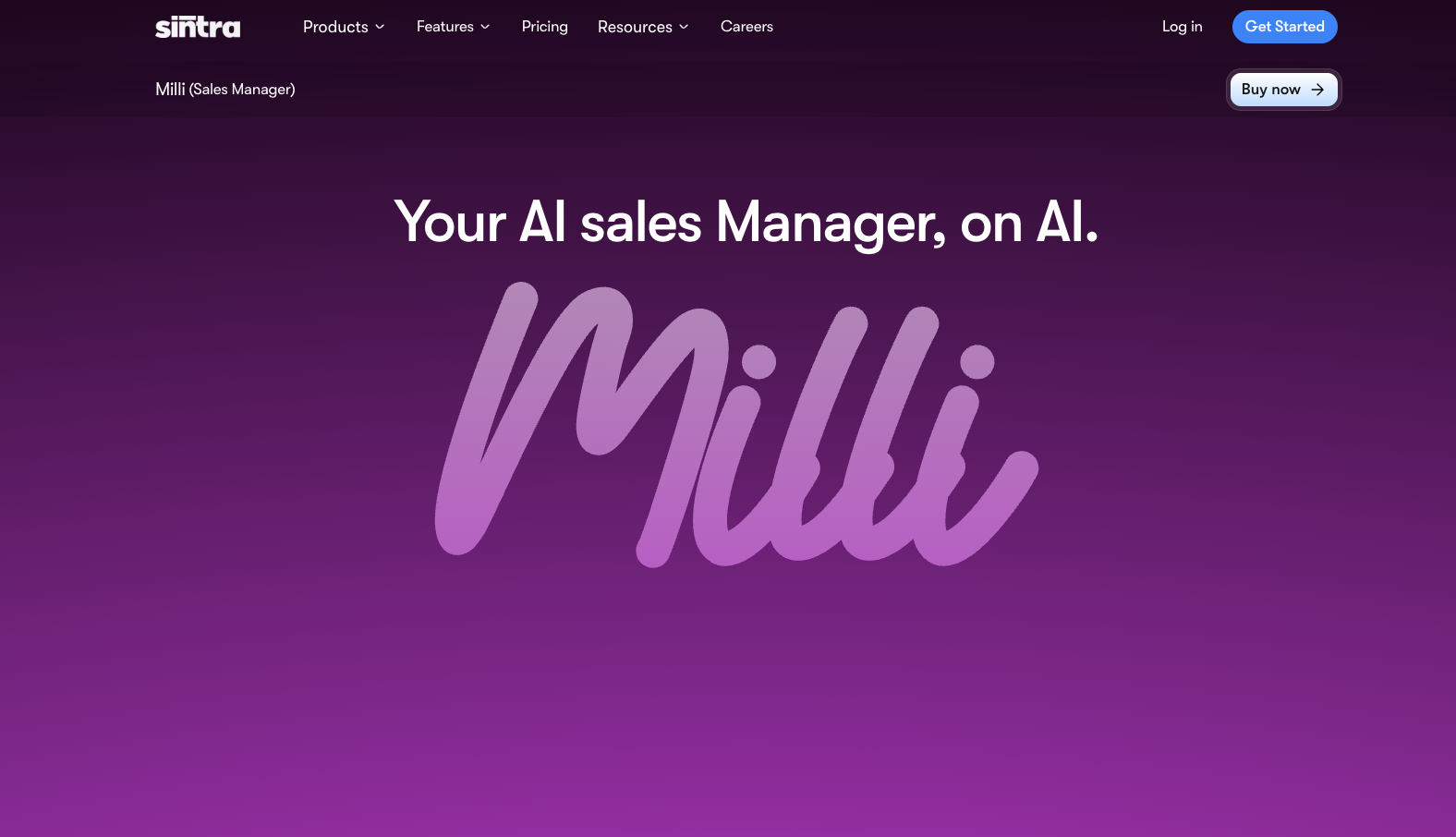
The most effective sales representatives combine AI efficiency with human interaction, creativity, and strategic thinking. For teams looking to bring this automation into daily operations, Sintra’s AI sales manager helps streamline lead generation, forecasting, and outreach in one platform using modern AI sales tools.
Here are some key use cases:
Lead Qualification and Outreach
Finding qualified leads takes time.
Sales reps spend hours generating leads, sending cold emails, and chasing unresponsive prospects. This slows the pipeline and limits growth in most sales roles.
AI helps by automating time-consuming tasks. It reviews customer data, ranks prospects by intent and fit, and automates outreach. This gives hybrid sales teams more time to focus on real customer interactions that move deals forward.
Here’s how AI and sales teams share the work:
Role of AI:
- Scores and ranks lead using behavior, engagement, and CRM data.
- Detects buying signals such as website visits, replies, or downloads.
- Sends personalized outreach messages to increase response rates.
- Test email versions and timing to improve performance.
Role of the Sales Team:
- Reviews AI-qualified leads to confirm fit and priority.
- Adjusts tone and message to match each prospect.
- Builds trust through direct communication and meaningful customer relationships.
- Uses AI insights to prepare better questions and outreach timing.
AI for sales reps enables finding the right buyers faster and focusing on building strong customer relationships that lead to sales success.
Emails, Follow-Ups, and Customer Responses
Following up with every prospect takes time.
Many reps lose deals not because the lead wasn’t interested but because the timing or response lagged. Managing hundreds of emails, reminders, and messages quickly becomes unmanageable for even experienced human sales reps.

At Sintra, we have an AI bot named Emmie that serves as your go-to AI email assistant. It helps manage outreach, automates follow-ups, and replies to simple customer inquiries, essentially acting as a virtual secretary for your entire sales communication. Emmie keeps communication active while giving sales professionals more time to focus on relationship building and closing deals.
Role of AI:
- Sends automated follow-ups based on buyer behavior or set schedules.
- Suggests message timing and subject lines using engagement data.
- Handles routine tasks and chat responses for basic questions.
- Flags warm leads that respond or show new activity.
Role of the Sales Team:
- Reviews AI-managed threads and steps in when a human touch is needed.
- Adds personalized context in messages to move conversations forward.
- Handles objections, negotiations, and custom requests.
- Uses AI insights to plan next steps or re-engage quiet prospects.
AI-powered tools help sales teams streamline sales processes, improve customer satisfaction, and maintain strong customer relationships while allowing sales professionals to apply human touch where it matters.
Forecasting and Sales Insights
Accurate forecasting is one of the hardest parts of the sales process.
Many teams rely on outdated spreadsheets, leading to missed targets and poor resource planning.
AI improves how sales teams forecast and analyze performance. It reviews historical data, current pipeline health, and customer behavior to predict outcomes with more accuracy. It helps leaders make better decisions through AI-driven insights and predictive analytics.
Role of AI:
- Analyzes deal data, engagement trends, and sales velocity to forecast results.
- Detects early signs of stalled or at-risk deals.
- Creates real-time dashboards with performance metrics.
- Identifies patterns across regions, products, or reps to guide strategy.
Role of the Sales Team:
- Reviews AI forecasts and adds context based on current client conversations.
- Adjusts plans or resources when AI insights show changing conditions.
- Uses AI reports for sales training, coaching, and improved decision-making.
- Combines data analysis with market knowledge for a better strategy.
By integrating AI technology with human expertise, sales teams can build modern sales strategies that stay ahead of the competition.
Personalization at Scale
Every buyer wants to feel understood. But creating personalized messages for hundreds of prospects takes time that most sales professionals don’t have.
AI makes personalization scalable. It analyzes customer data, buyer behavior, and previous sales interactions to craft messages tailored to each prospect’s needs. This helps sales reps and marketing teams deliver relevant outreach that builds meaningful customer relationships and increases customer satisfaction.
AI-powered tools handle personalization at scale, but human reps still provide emotional intelligence, intuition, and context. Together, they create a balance between efficiency and empathy, a foundation for sales success in the future of sales.
Data Analysis and Continuous Improvement
Sales performance depends on understanding what works and what doesn’t.
Without structured data, sales teams rely on guesswork to plan outreach or adjust their sales strategies.
AI helps by tracking every step of the sales process. It reviews calls, emails, and deal outcomes to identify what drives success. These AI-driven insights give sales professionals and account executives a clearer view of how to improve performance.
Role of AI:
- Monitors conversion rates, engagement, and pipeline activity in real time.
- Finds patterns that explain why deals are won or lost.
- Highlights trends by product, region, or customer type.
- Suggests adjustments to improve efficiency and close rates.
Role of the Sales Team:
- Interprets AI reports and applies human expertise to make better decisions.
- Uses insights for coaching, sales training, and improved execution.
- Combines human intuition with data analysis to refine outreach.
- Builds stronger customer relationships and adapts to customer needs.
AI empowers sales teams to streamline sales processes, integrate AI tools, and improve how they operate. Yet, only humans can apply emotional intelligence, judgment, and strategic thinking to ensure long-term customer satisfaction.
What AI Can’t Replace in Sales?

AI is powerful, but it still depends on human sales professionals to guide and interpret it.
The concept of sales is bound to automation or logic. It’s about timing, trust, and understanding people. Even the best AI systems need human expertise to guarantee that sales interactions stay authentic.
AI can analyze trends, but only humans can decide what matters most. That’s why the best sales professionals use AI to enhance, not replace, human connection and intuition.
Here’s where human skill remains irreplaceable in sales roles.
Building Trust and Emotional Connections
Every sale starts with trust. AI can evaluate tone or predict sentiment, but it cannot build meaningful customer relationships. Trust is built through empathy, honesty, and credibility, things only humans can deliver.
Buyers decide based on how they feel about the person selling, not just data. AI cannot sense hesitation, frustration, or emotion in a customer’s voice. Only human interaction creates strong customer relationships and drives sales success.
Handling Complex Negotiations and Objections
AI can predict deal outcomes or suggest next steps, but real negotiations require human intuition. Deals involve emotion, context, and subtle signals that AI cannot fully understand.
Experienced sales reps and account executives know when a buyer is hesitating, when to offer a discount, and when to reframe the discussion.
Understanding Unspoken Buyer Motivations
Most purchase decisions are emotional. AI can analyze customer behavior, but it cannot explain why people buy.
A skilled salesperson listens for tone shifts and hesitation that don’t appear in dashboards. Human sales reps use intuition and empathy to uncover hidden motives behind buyer behavior. AI operates through data; humans read between the lines.
Creative Problem Solving and Strategy
AI can analyze outcomes, but people create strategies. Every deal and customer challenge is different, requiring creativity, flexibility, and human expertise.
Sales professionals use AI-driven insights to spot opportunities but rely on experience to craft personalized approaches. This balance of automation and creativity defines modern sales strategy and ensures the human touch remains crucial.
The Skills That Will Future-Proof Your Sales Career
AI is reshaping sales jobs, but not eliminating the need for people. The sales professionals who adapt the fastest are those who combine technology with human ability.
Here are the key skills that will future-proof your career and help you thrive in the modern sales industry:
Data Literacy
AI tools depend on data, but people must interpret it. Sales professionals who understand metrics like conversion rate, pipeline velocity, and engagement score can guide AI systems and make informed decisions.
Emotional Intelligence
AI replaces sales tasks, not human empathy. Emotional intelligence helps sales reps listen actively, build trust, and strengthen customer relationships.
Strategic Thinking
AI provides data, but only humans can connect insights to business goals. Strategic thinking allows sales leaders to align AI-driven training and insights with measurable sales success.
Collaboration with AI Systems
AI works best when people know how to guide it. Learning to integrate AI, prompt systems effectively, and validate AI-powered recommendations gives sales reps a competitive edge.
Creative Problem Solving
AI excels at automation, but not innovation. Human sales professionals use creativity and intuition to design unique outreach strategies, handle complex buyer behavior, and respond to change.
Conclusion – AI Is Transforming Sales, Not Replacing It
The next era of sales belongs to professionals who combine AI technology with human expertise, especially as the rise of AI employees continues to reshape how teams are structured and how work gets done.. AI can process customer data and automate outreach, but only humans can build relationships, understand emotions, and close deals.
Build new skills like prompt writing, automation, and data interpretation. Learn how to work with AI tools, not against them, to create future-proof sales strategies.
If you want a simple way to begin, explore AI Helpers. These AI employees help sales teams with automating time-consuming tasks, managing customer inquiries, and improving workflow efficiency. They enable human sales professionals to focus on customer interactions, relationship building, and achieving sales success.
AI will continue to transform the sales process, but it’s the partnership between people and technology that drives growth, builds strong customer relationships, and defines the future of sales.
FAQs
How is AI changing sales?
AI is changing sales by handling repetitive tasks like lead scoring, data entry, and follow-ups. It helps sales reps use customer data to make better decisions and respond faster. This gives human sales professionals more time to focus on building relationships and closing deals.
Is AI the future of sales?
AI is a big part of the future of sales. It helps sales teams work faster, automate tasks, and improve customer interactions. Still, people remain essential for understanding emotions, solving problems, and building trust with customers.
What sales jobs are safe from AI?
Jobs that depend on human skills like empathy, communication, and strategy are safe from AI. Roles such as account executives, relationship managers, and sales leaders need human connection and intuition that technology cannot replace.
Related articles