Best AI Website Builder for Small Businesses

Table of Contents
Quick Answer
There is no universal "best" AI website creator for small businesses because the right choice depends on whether you want a quick site launch or a complete AI-powered growth system. However, the following are the top performers in 2026:
- Sintra AI: Best for small businesses that want an AI team to build, optimize, maintain, and grow the website automatically.
- Wix AI: Best for fast, beautiful design automation with strong built-in SEO and e-commerce tools.
- Squarespace: Best for premium templates, clean design, and strong built-in SEO.
If you are searching for the best AI website builder for small businesses, chances are you are tired of expensive developers and forever long launch time. The good news? You do not have to hire developers or have coding skills to make a website now.
In this blog, we will discuss AI-powered website builders that can turn your idea into a website without a single line of code. This is not something new or limited - it is a massive shift.
In 2026, the AI website builder market is projected to reach $6.3 billion, with 98% small businesses now using AI-enabled tools. However, the reality is that choosing the right tool is not very simple. It depends on your goals and objectives for your business.
To help you choose the right one, we tested numerous AI website builders based on what actually drives results for small businesses. The list is based on content quality and brand consistency, built-in SEO and optimization, scalability as revenue grows, real integrations with business tools, workflow automation beyond the site, and long-term support with memory.
Let's dive straight in and have a look at some of the top AI website builders of today's market.
Best AI Website Builders for Small Businesses (Compared)
The AI website builder is an excellent option for multiple reasons. Whether you want a fast launch, strong design, eCommerce, or full business growth automation, each tool is specialized in one way or another.
The following table gives you a clear idea of the comparison between our top picks. Each serving your business uniquely. In the same list, Sintra AI is the only one that acts as an AI team rather than an individual tool.
| Tool | Content Quality | SEO Readiness | Scalability | Integrations | Workflow Automation | Long-Term Support | Free Plan Available? | Transparent Pricing (2026) |
|---|---|---|---|---|---|---|---|---|
| Sintra AI | High – brand-consistent AI copy, role-based helpers | Strong – built-in SEO tools + AI optimization | High – scales with business ops | High – Gmail, CRM, Slack, social | Very High – full workflow automation | Excellent – team memory & updates | No (trial only) | $97/mo standard; $15–$48/mo discounted |
| Wix AI | Very High – strong AI design + copy | Very Strong – Wix SEO Wiz, AI meta tags | High – unlimited pages, e-commerce | High – 300+ apps, payments, CRM | Medium – basic AI flows | Very Good – regular updates | Yes (limited) | $17–$159/mo (Core to Business Elite) |
| Squarespace | Excellent – premium templates + AI copy | Very Strong – built-in SEO, clean code | Medium-High – good for small–mid | Medium – 100+ extensions | Low-Medium – limited automation | Excellent – long-term focus | No (trial only) | $16–$49/mo (Personal to Commerce) |
| Shopify Magic | Good – product-focused AI copy | Strong – Shopify SEO tools | Very High – e-commerce scaling | Very High – 8,000+ apps | High – checkout & inventory AI | Excellent – enterprise-ready | No | $39–$2,300+/mo (Basic to Plus) |
| GoDaddy AI | Medium – quick AI-generated sites | Medium – basic SEO tools | Medium – small business focus | Medium – GoDaddy ecosystem | Low – basic site setup only | Good – support included | Yes (limited trial) | $9.99–$29.99/mo + domain fees |
| Durable AI | Good – fast AI site generation | Medium – basic SEO features | Medium – small business sites | Low-Medium – basic integrations | Medium – AI content & scheduling | Good – growing platform | Yes (limited) | Free limited; $12–$80/mo (paid) |
Sintra AI – Best for Content-Driven Website Growth
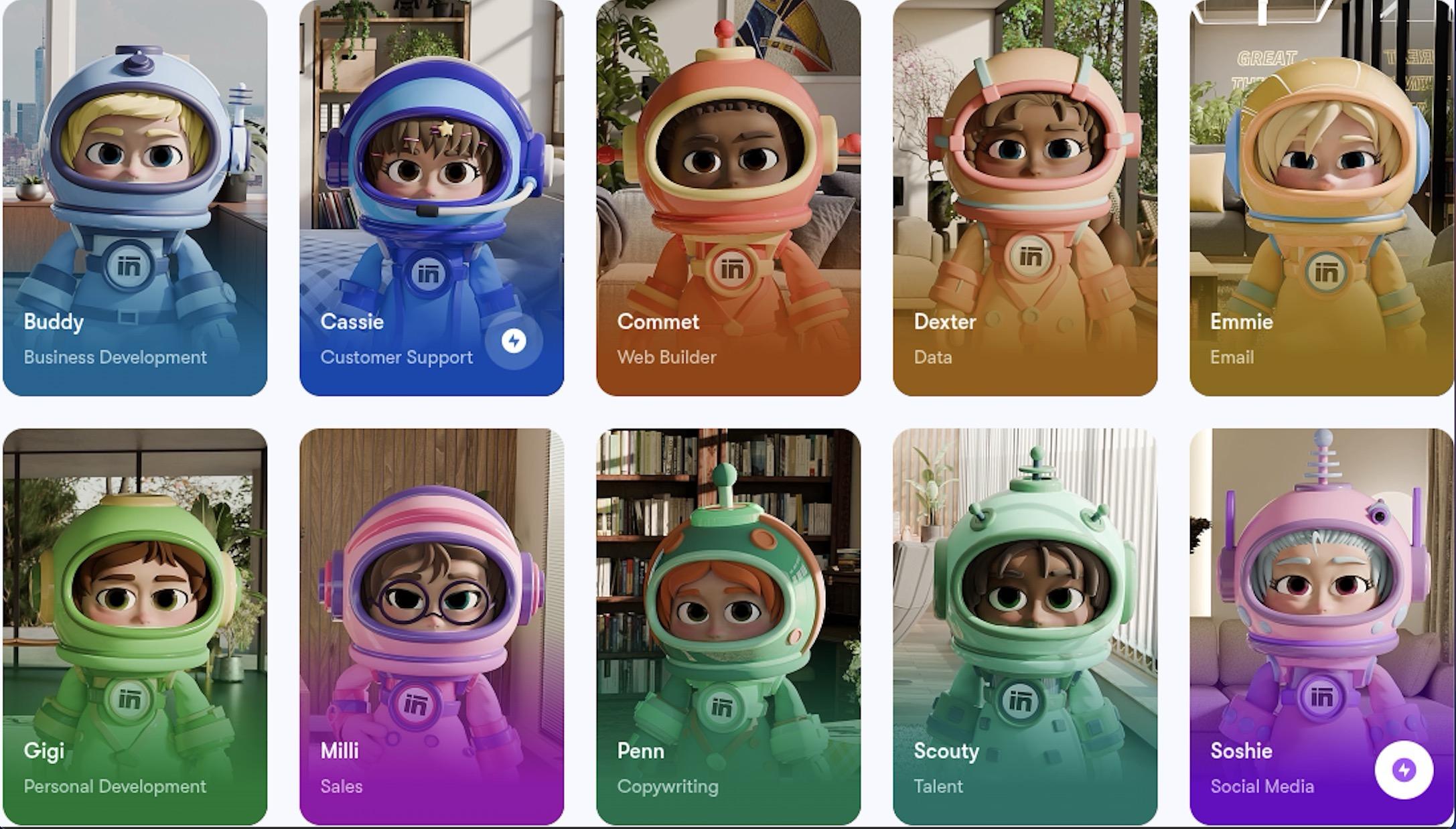
Sintra AI is not just a drag-and-drop page builder. It works more like an AI web development system for building, improving, and managing business websites.
Its website builder runs through Commet - an AI website assistant. You can ask Commet to generate a website using natural language, then review the preview, make changes, and shape the site around your business goals.
What makes it stronger is Brain AI. It pulls from your stored business context, such as brand details, product information, tone, files, and goals, so the website does not feel like a generic template.
Sintra can also support the work around the site. Other AI helpers can help with homepage copy, landing page structure, service pages, product descriptions, FAQs, blog content, SEO improvements, customer support, and ongoing updates.
That makes Sintra a strong fit for businesses that want more than a quick website draft. It helps you build the site, keep the message consistent, and continue improving the content after launch.
Pros of Sintra AI
- Conversion-focused content generation
- AI-powered team workflows
- Long-term scalability with memory
- Automated marketing and operations
- Built-in SEO and eCommerce support
Cons of Sintra AI
- No drag-and-drop builder
- Limited visual design control
- Requires an external website platform
- Separate hosting and setup needed
- Split workflow between tools
Wix AI – Best for Fast Visual Website Creation
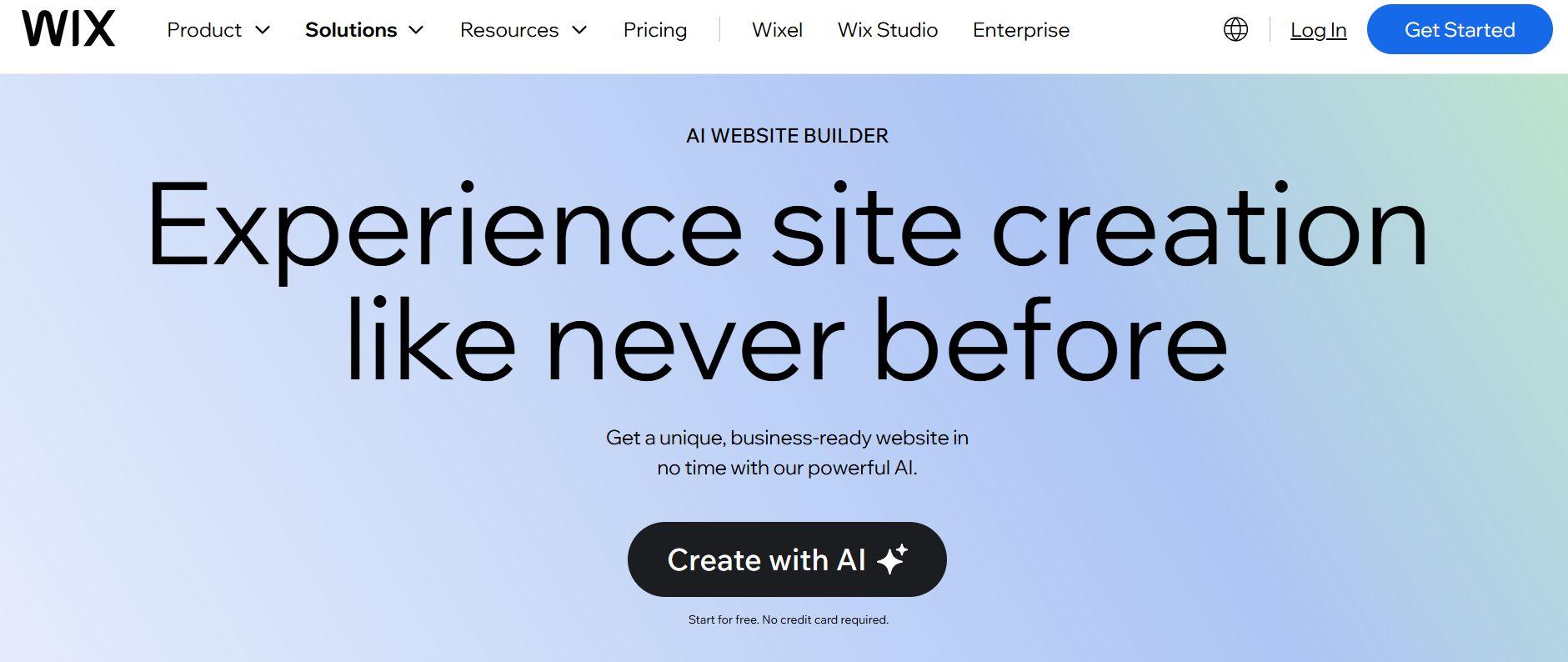
Wix AI is one of the easiest and free AI website builders for basic sites. Its website builder allows users to create a website quickly through a conversational interface.
It uses AI to create a full website in minutes. All you have to do is answer a few questions about your business, and it generates a complete layout, color scheme, images, and copy based on templates.
Wix AI focuses primarily on layout and template generation. The AI creates a strong first draft of the site's structure and look, with good built-in SEO tools and basic copy suggestions.
For small businesses wanting a quick, attractive online presence with easy editing, Wix AI is a top choice. It is a great platform for non-technical individuals and founders who prioritize design speed over full automation.
Pros of Wix AI
- Fast website setup
- Large template library
- Beginner-friendly editor
- Drag-and-drop customization
- Free plan available
Cons of Wix AI
- Limited scalability for large sites
- Basic content automation
- Limited marketing automation
- Manual conversion optimization is needed
- Restricted advanced integrations
Squarespace – Best for Design-Focused Brands
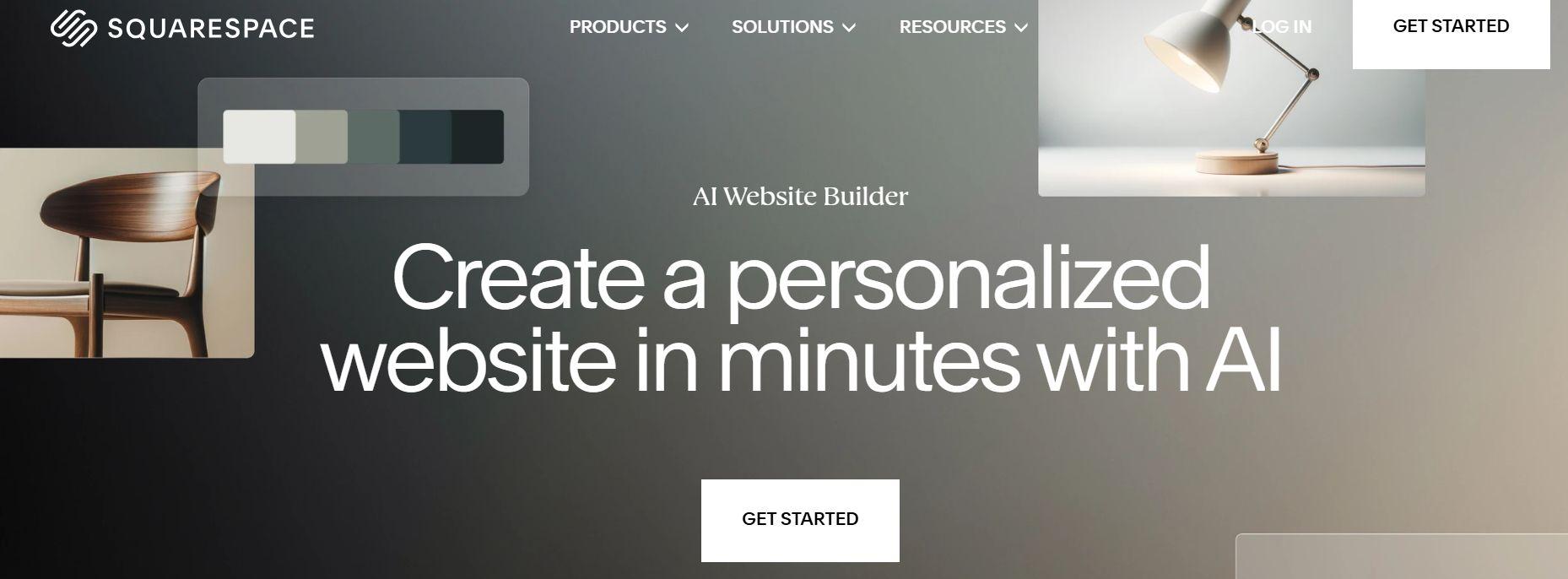
Among modern website builders, Squarespace has built its reputation around polished design. It stands out for its layouts that feel clean, structured, and visually consistent without requiring a designer.
Squarespace’s templates prioritize typography, spacing, and imagery, making it ideal for creative and service-based brands. Its Blueprint AI delivers high-quality design, while the editor lets users adjust sections, colors, and content blocks without breaking the layout, helping maintain brand consistency as the site grows.
Squarespace offers a free trial with no credit card required and excels for portfolios, creative brands, and visual storytelling. While it focuses less on automation, its design-first approach ensures a professional, polished website from day one.
Pros of Squarespace
- Premium design templates
- Strong visual branding controls
- Built-in ecommerce features
- Ideal for creative industries
- Clean, structured editor
Cons of Squarespace
- Limited AI functionality
- Manual content scaling
- Basic workflow automation
- Requires external tools for growth
- Limited for complex operations
Shopify Magic – Best for E-commerce Stores

Shopify Magic brings AI directly into the process of building and managing an online store. Unlike a general AI website builder, Shopify’s tools are designed specifically for product-based businesses. The AI can generate product descriptions, suggest content for store pages, and assist with tasks that typically slow down new ecommerce launches.
The platform also acts as a practical AI website maker for store owners who want to move from idea to a functioning shop quickly. Shopify's real strength lies in its ecommerce-first structure. Inventory management, payments, shipping settings, and storefront customization are already integrated into the platform.
Inventory management, payments, shipping settings, and storefront customization are already integrated into the platform. This makes it especially useful for businesses that prioritize selling products rather than building a content-heavy website.
Pros of Shopify Magic
- Strong e-commerce infrastructure
- AI-assisted product content
- Secure payment system
- Scales with growth
- Large app ecosystem
Cons of Shopify Magic
- Focused mainly on e-commerce
- Monthly subscription costs
- Extra transaction fees with third-party gateways
- Limited flexibility for non-store pages
- Less suited for content-heavy sites
GoDaddy AI Website Builder – Best for Simple Business Sites
GoDaddy is designed for business owners who want a working site online quickly without learning complex tools. It focuses on speed - the AI asks a few questions and automatically generates a site layout, basic content, and design structure.
This onboarding flow is particularly useful for small businesses such as consultants, restaurants, and service providers. Instead of designing pages manually, the AI suggests layouts, widgets, and text based on the type of business being created.
GoDaddy’s main advantage is simplicity. Hosting, design tools, and basic marketing features are packaged together, which allows entrepreneurs to focus on launching their business rather than managing a complex website setup.
Pros of GoDaddy AI Website Builder
- Fast, simple setup
- Bundled domain and hosting
- Beginner-friendly interface
- Ideal for brochure-style sites
- Built-in basic marketing tools
Cons of GoDaddy AI Website Builder
- Limited advanced SEO
- Constrained content scaling
- Not suited for complex sites
- Basic design customization
- Limited marketing automation
Durable AI – Best for One-Click Website Generation

Durable AI can generate a complete website in just a single click after a few prompts about your business. It automatically drafts page layouts, copy, and basic design elements, letting founders get online immediately.
This is an ideal website creator for businesses that want a functional site in minutes, which can be lightly edited for branding or personal preferences. Durable AI's focus is on instant results and speed, making it perfect for testing ideas, launching landing pages, or creating small business websites on a tight timeline.
Pros of Durable AI
- One-click website creation
- Fast content and layout generation
- Beginner-friendly, no coding needed
- Lightweight and efficient
- Quick testing and iteration
Cons of Durable AI
- Limited customization
- Not ideal for long-form content
- Basic marketing automation
- Minimal third-party integrations
- May outgrow small businesses
What Is an AI Website Builder?
An AI website builder is a tool that uses artificial intelligence to create websites with minimal manual design or coding. Instead of designing all the elements of a website by hand, the AI generates layouts, copy, images, and structure for you.
These AI website makers combine machine learning and automation to speed up the process and reduce the technical barriers to launching a site. Many also include options for SEO optimization and mobile-friendly layouts, making it easier for beginners and non-technical users to publish professional websites quickly.
However, business owners should review ownership terms regarding content and data used for AI training.
How Does an AI Website Builder Work?
Here is how a typical AI web builder works:
Step 1: Answer a few setup questions
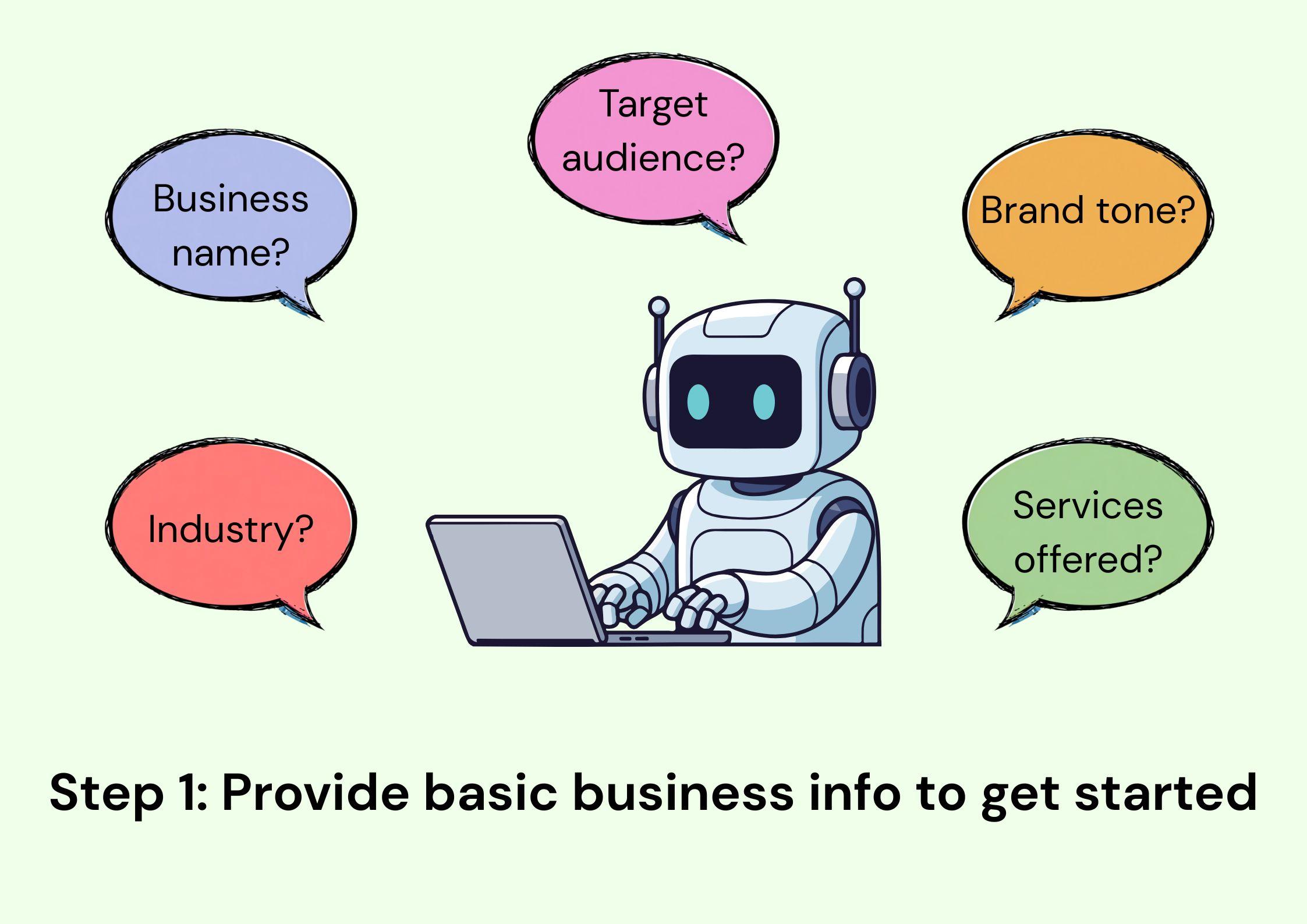
You begin by entering basic information about your business. The AI asks about your industry, services, goals, target audience, and preferred brand tone.
Step 2: AI analyzes your business type
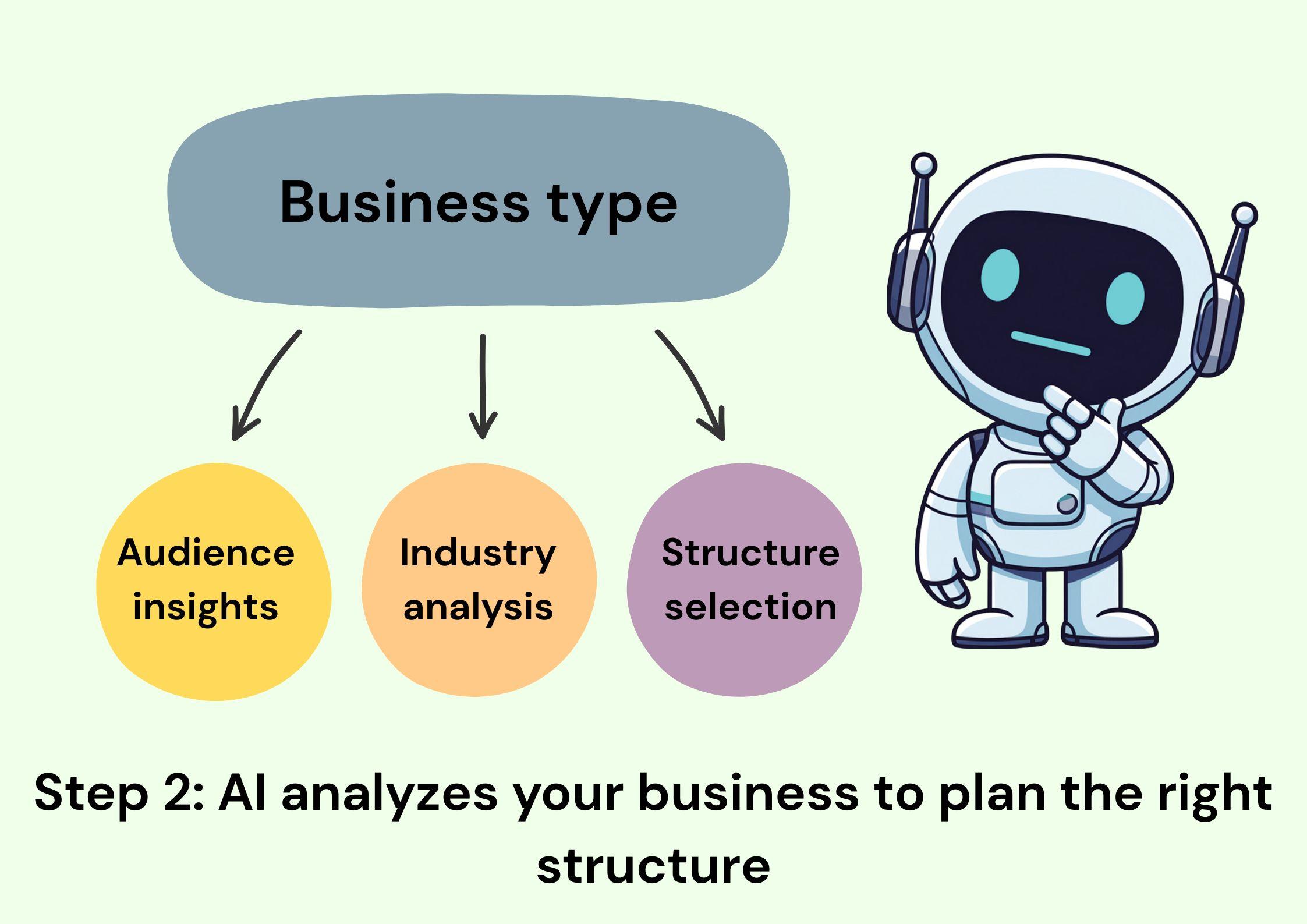
The system uses that information to determine the most relevant structure for your site. It selects suitable layouts, sections, and navigation based on what similar businesses typically need.
Step 3: Automatic layout generation
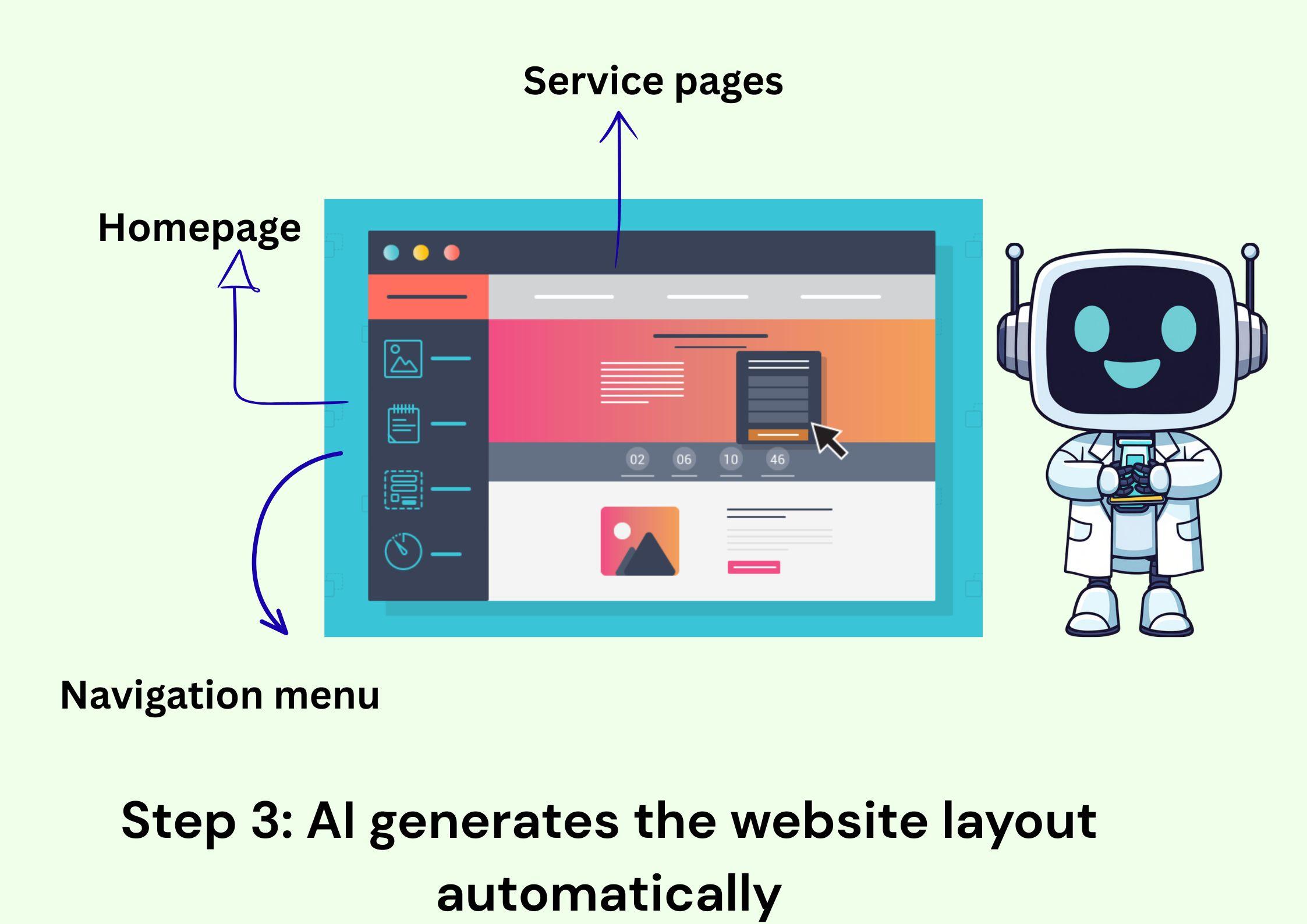
The AI website builder generates the page framework. This usually includes a homepage, service or product pages, contact sections, and navigation menus.
Step 4: Content blocks are filled automatically
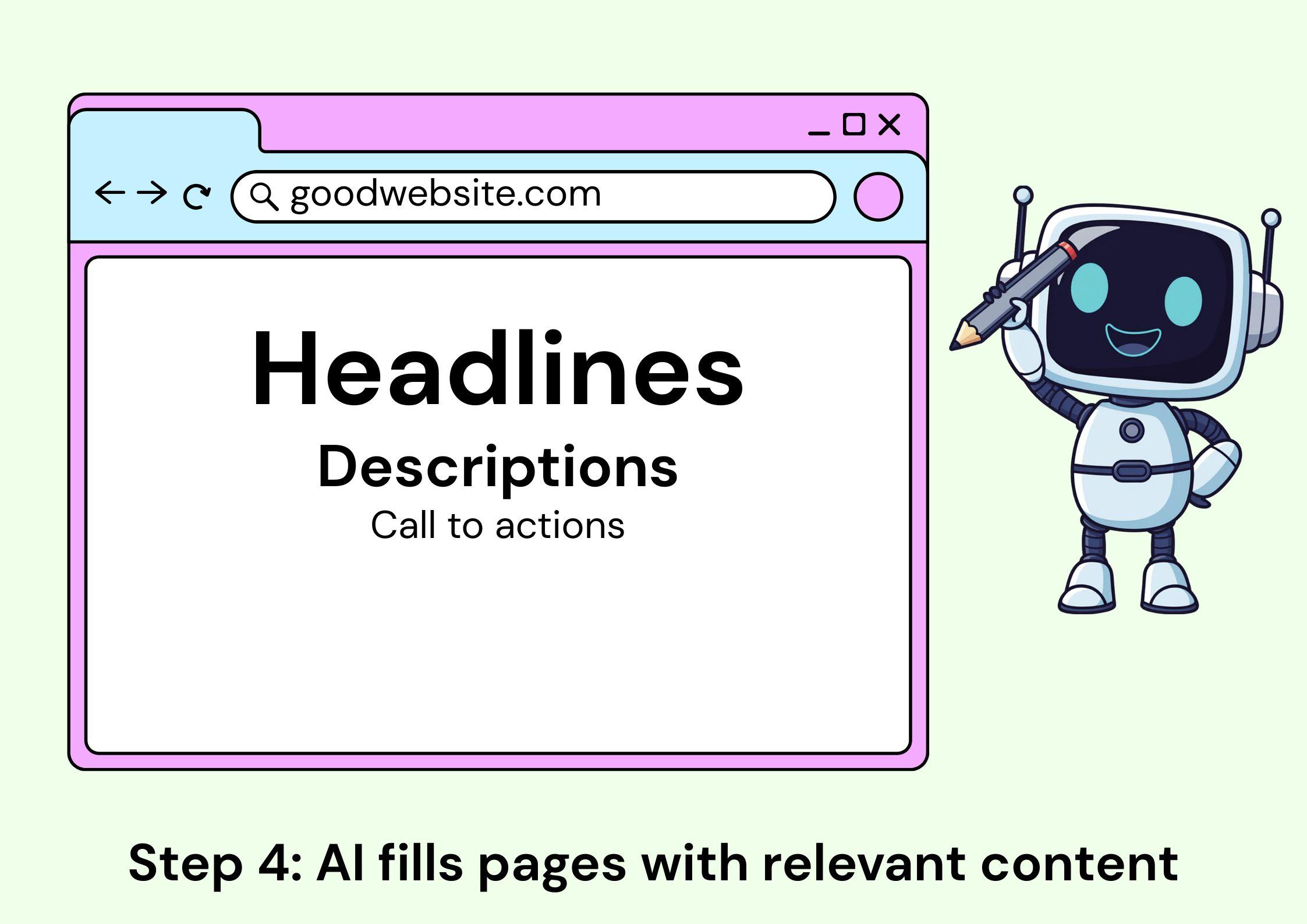
The tool populates each section with starter content. Headlines, descriptions, calls-to-action, and placeholder images are inserted to match the business category and messaging style.
Step 5: Design and branding adjustments
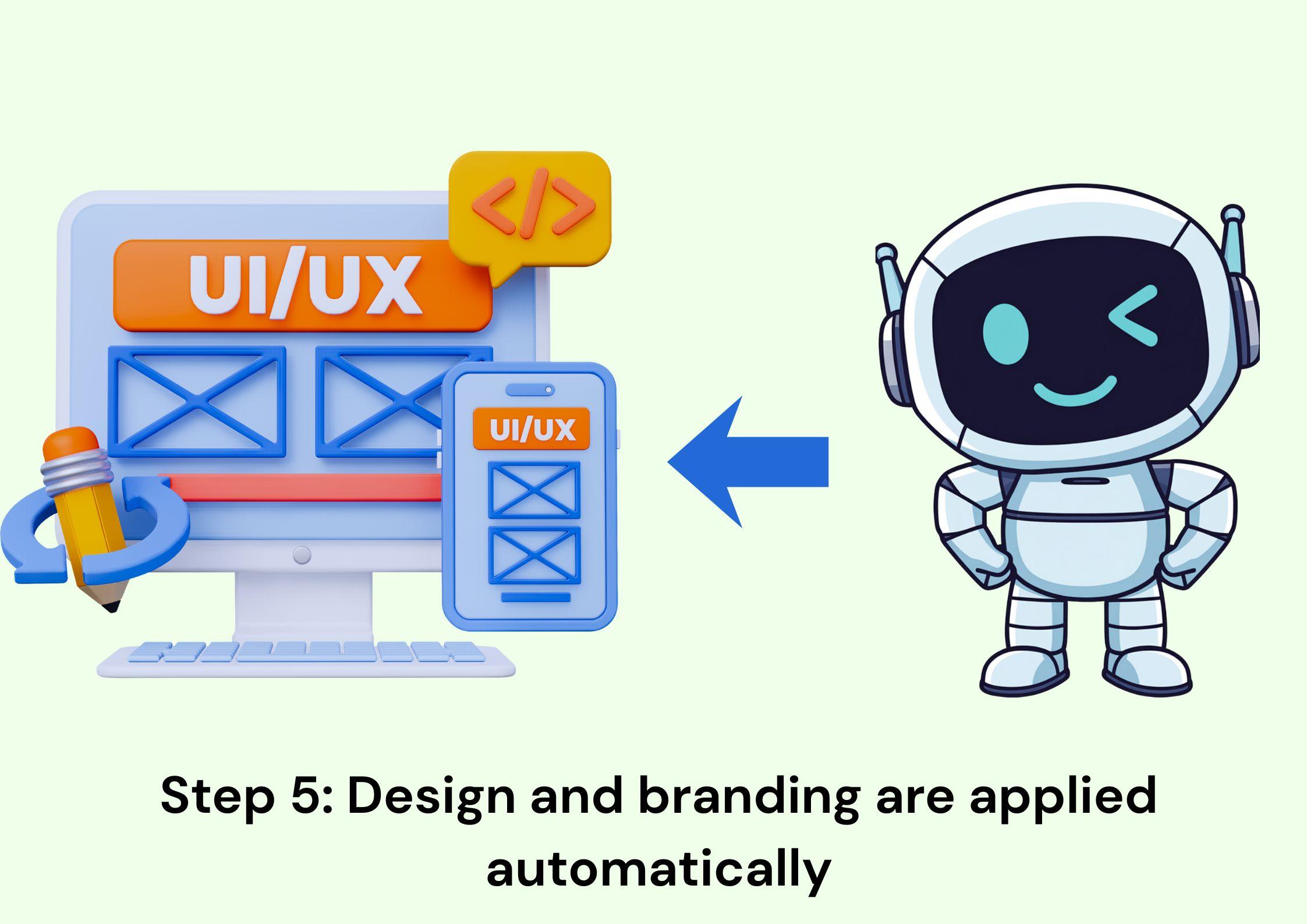
The AI applies color palettes, typography, and layout styling. Ease of customization is important, requiring builders to allow easy editing of AI-generated sites without coding.
What Can an AI Website Builder Automatically Create?
An AI website builder is a tool that generates most of a website’s core structure and content automatically, based on your inputs. It can produce homepages, service pages, product pages, navigation menus, and content blocks without manual design work.
The AI also fills these pages with basic copy such as headlines, descriptions, and CTAs. All these remain aligned with your brand and goals, saving you the effort of writing from scratch.
While these sites are fully functional, AI website builders primarily focus on layout and structure rather than deep automation. However, some tools do offer branding elements and SEO-friendly structures to make the site ready to publish with minimal editing.
AI Website Builder vs Traditional Website Builder
Traditional website builders like WordPress, Wix, or Squarespace rely on manual drag-and-drop editing. Users select templates, arrange sections, and write their own content. This gives full visual control but can be time-consuming and requires design, copywriting, and technical skills.
An AI website builder, on the other hand, automates much of this process. It generates layouts, pages, navigation menus, and even basic copy headlines, descriptions, and CTAs, based on your inputs. This makes setup much faster, reduces repetitive work, and allows even beginners to launch a functional website quickly. Adoption is growing fast - 8.8% of U.S. small businesses were using AI in production by August 2025, up from 6.3% just six months earlier, and small businesses now lead in nearly half of 17 documented AI use cases, especially marketing automation.
The most important feature of AI website builders is its long-term application. While the traditional builders stop at the launch, the AI website builders continues to provide support and updating content regularly.
However, human review is still important for fine-tuning copy, ensuring brand voice, adjusting SEO, and confirming design choices. By combining automation with careful oversight, AI website builders provide a balance of speed, ease, and quality that traditional builders can struggle to match.
Limitations of Most AI Website Builders
Even the best AI website builders have clear boundaries. Most tools focus on generating layouts, page structures, and basic copy, which is sufficient for launching a site quickly. However:
- They rarely handle ongoing content needs like blog publishing, long-form articles, or continuous SEO optimization.
- They offer limited automation for marketing campaigns, email sequences, and customer support workflows.
- Additional tools or manual intervention are required for scaling.
This makes it clear that most AI website builders are best suited for getting a website up and running quickly. However, building pages is not enough as your business grows. The need extends to an AI solution like Sintra AI that manages your workflows, improves customer management, and scales operations more efficiently.
What Small Businesses Actually Need From a Website Builder
When considering how to create a website, colors and fonts matter til the design is done. But once the basic structure takes a form, clarity and messaging matter the most. No matter how catchy the website is, no clarity means no conversions.
Small business owners need tools that provide structure, content guidance, and automation without overwhelming technical details. Let's explore more through the eyes of a business owner and see what they actually need from their tools:
Clear Messaging That Explains What the Business Does
Homepage clarity is one of the most important aspects of an online business. Visitors should immediately understand what the business offers and why it matters. Many DIY sites struggle to comply with this since they are more focused on aesthetics rather than messaging.
Instead of vague slogans like "We do it all!" consider writing "We provide eco-friendly packaging solutions for your brand." This approach immediately communicates purpose and benefit for the visitors.
Conversion-Focused Page Structure
Small businesses need a structure that guides visitors naturally through information and encourages action. This includes clear CTAs, strategically placed social proof, FAQs, and trust signals like reviews and certifications.
A visually appealing site may look perfect, but if it can't convert your visitors, its is as good as nothing. The best AI for website design balances aesthetics with strategy. It suggests logical page flow and section hierarchy based on industry norms. However, you may still need to review content placement to ensure it aligns with your brand.
SEO-Ready Content From Day One
Search engine visibility is one of the most important aspects of expanding a business online. You cannot afford to stay invisible. A good AI web builder encourages accurate, fact-based content while integrating keywords strategically.
These tools set up clear headings, place keywords naturally, and even generate meta titles and descriptions. Such AI website builders also handle internal linking automatically. This connects related pages, making it easier for search engines to crawl your site and for visitors to navigate it.
Ongoing Content and Blog Support
You may have launched a website, but it must never remain stagnant. Growth comes from consistently adding content such as blog posts, product updates, and campaign materials. Your AI helper should be able to add new pages quickly while keeping tone and messaging consistent.
For example, a local cafe could regularly post seasonal menus, special offers, and coffee brewing tips, all while linking back to core pages. This approach helps you make a website that grows alongside your business, keeping readers engaged and search engines happy.
Integrated Marketing and Customer Support Workflows
A website's success depends on the channels it is connected with. A website builder can link email campaigns, social media channels, and customer support tools, creating a seamless workflow.
By using an AI website maker, any update to the main website will reflect across campaigns, saving time and reducing errors. These tools help small businesses stay organized, maintain operational efficiency, and scale their outreach. With time, connected workflows drive better engagement, repeat visits, and sustainable growth.
A System That Grows With the Business
A smart website builder like Sintra AI doesn't stop at launch. It helps you add new pages, update content, and integrate marketing tools seamlessly. The focus is always on long-term execution, not just creating a website.
The right AI builders offer small businesses flexibility, scalability, and AI support that evolves with your needs. This ensures your online presence can scale efficiently while staying professional.
How We Evaluated the Best AI Website Builders
We tried and tested a range of website builders to see which ones actually support real business needs. Instead of focusing only on design, we evaluated how well each tool performs in everyday management and long-term growth.
Here is the criteria we used:
- Content quality: We reviewed how well each platform generates website copy, service pages, and blog content.
- SEO readiness: We checked whether the platform sets up proper heading structure, metadata, and keyword placement.
- Scalability: A good platform should grow with your business. We looked at how easily users can add new pages, blogs, and marketing content over time.
- Integration and automation: Evaluated connections with email marketing tools, CRM systems, ecommerce platforms, and knowledge bases.
- Workflow support: Assessed whether they help manage content updates, campaigns, and customer interactions.
- Free Plans and Pricing Transparency: Many tools promote a free AI website builder, but not all free plans are useful. We reviewed what each tool actually includes and whether the free tiers offer real value before upgrading.
AI Website Builder vs AI Website Growth System
An AI website builder focuses on creating the initial site that includes layouts, pages, and basic content. But an AI website growth system goes one step further. It supports SEO, marketing, content updates, and operational workflows.
The key difference is more strategic rather than technical. AI website builders stop at launching a site quickly, while a growth system focuses on long-term growth and continuous optimization.
What an AI Website Builder Typically Does
A typical AI website builder is designed to simplify the initial process of creating a website. They are particularly helpful for those who can't code or has minimum technical knowledge.
Most tools start by asking as few questions, generating a basic layout, and organizing basic navigation automatically. The main focus of these builders remains on quickly launching a functional website instead of implementing automation.
What an AI Website Growth System Adds
An AI website growth system builds on the foundation of what the AI builder creates. Instead of stopping at page creation, it helps generate blog posts, optimize content for SEO, create FAQs, and produce new landing pages as your business evolves.
In short, a traditional AI website builder will leave you after launching the website, but an AI growth system like Sintra's AI helpers will stay with you as your business grows. It continuously executes by automating social media planning and content updates while staying consistent across platforms.
One-Time Setup vs Continuous Optimization
Your business's long-term success depends on what happens after the site goes live.
Websites need regular updates such as new content, improved messaging, and answers to common customer questions. This helps businesses track performance, refine CTAs, and adjust pages to improve conversion rates.
Continuous optimization keeps a site relevant and competitive. Instead of staying static, the website evolves alongside customer needs, marketing campaigns, and business goals.
Why This Distinction Matters for Long-Term ROI
The difference between a simple builder and a growth system has a real financial impact. Many AI website builders help businesses launch quickly, but ongoing marketing, content updates, and optimization often require additional tools or outside help.
An AI creator designed for continuous support can reduce these costs. It helps businesses produce content regularly, keep messaging consistent, and respond to customer needs without relying heavily on external agencies.
This distinction matters for companies focused on sustainable growth.
How to Choose the Best AI Website Builder for Your Business
Choosing the right AI website builder isn't always the most popular one; it's the one that fits your business goals the best. Small businesses should look beyond flashy templates and colorful themes and focus on tools that support growth, scalability, and long-term strategy.
Let's take a closer look at the factors that affect your choice of website builder:
Define Your Primary Goal: Design Speed or Business Growth?
You should ask yourself: "Do I need a quick site or a platform that grows with my business?" Some free AI website builders focus on fast layouts that are perfect for pop-up shops or event pages.
Other tools prioritize messaging, SEO, and scalability, making them ideal for blogs, e-commerce, or service businesses. Choosing between speed and long-term growth helps filter options and ensures you pick the right website builder for your business.
Evaluate Content and Copy Quality
Most AI website builders produce generic text, while a growth-driven tool delivers conversion-driven messaging with clear service pages and strong CTAs.
You should be able to test real use-cases like readability, tone, and engagement. Your choice of tools should be able to turn visitors into customers, and that heavily depends on the content of your website.
Assess SEO Capabilities From Day One
A good website sets up proper heading hierarchies, generates meta titles and descriptions, and places keywords naturally, even before the launch.
Look for a tool that supports scalable blogs and content updates. A strong AI web builder ensures your site remains search-friendly as it grows, giving you visibility from day one.
Consider Integrations and Workflow Automation
Modern websites do more than display information. They connect with email, CRM, e-commerce, and knowledge base tools. A web builder that supports these integrations reduces manual work and keeps data consistent.
A good AI web builder relies on streamlining operations, automating repetitive tasks, and ensuring marketing and sales, and must support workflows that run smoothly.
Compare Pricing, Free Plans, and Scalability
AI website builders are free, but often require payment for custom domain usage and additional features. A free AI website builder can work for testing or tiny projects, but growing businesses usually outgrow them quickly.
Your last approach before choosing an AI website builder should be to compare features, upgrades, and long-term costs. The best free AI website builder balances usability with potential growth. The free tier should clearly show what you gain by upgrading. Transparent budgeting helps avoid surprises as your site scales.
Ready to Build and Grow Your Website With AI?
For small businesses that want more than a collection of templates, Sintra AI offers a practical, growth-focused solution. It doesn’t just create pages—it handles SEO-ready content, automated updates, and integrated workflows that scale as your business expands.
Using AI for building a website means that designing, marketing, and content management are streamlined. It means giving you more time to focus on your products, services, and customers. It is only natural that you choose tools that ensure your website stays professional, consistent, and search-friendly.
Get ready with Sintra AI and take the next step to see how easy growth can be.
Best AI Website Builder FAQs
What is the best AI website builder for small businesses?
The best option depends on your goals, not popularity. Tools like Sintra AI are among the best AI website builder businesses, offering automation and integrated workflows designed for long-term growth.
Is there a free AI website builder that actually works?
Yes, some free AI website builders let you experiment or launch simple sites. However, free plans often limit templates, storage, branding control, and advanced features.
How does an AI website builder differ from a traditional website builder?
AI website builders automate layout design, content generation, SEO setup, and even marketing integrations. Traditional builders rely on manual setup and content creation.
Can AI build an entire website with content included?
Yes, advanced AI tools can generate pages, service descriptions, blog posts, and metadata. They produce structured, factual, and conversion-focused content ready for publishing.
Which AI website builder is best for e-commerce?
For online stores, look for AI platforms with built-in product pages, payment gateways, inventory management, and marketing tools. Tools like Shopify Magic offer features tailored to e-commerce growth while keeping SEO and content updates simple.
Related articles