How to Build a Website With AI?

Table of Contents

Today, 67% business owners use AI website builders to launch their sites, and rightfully so. These tools are fast, cost-effective, and beginner-friendly for building static websites. However, this is just the beginning.
The effectiveness of modern websites depends on their accessibility, optimization, and conversion potential. This calls for businesses to invest time and money in maintaining growth-driven sites, characterized by regular content management, SEO updates, data analytics, and adaptability.
Thankfully, specialized AI agents do that for you. These agents, trained on your business knowledge and industry practices, automate routine maintenance processes. Let’s learn more about how to build a website with AI that ranks on search engines and converts visitors.
Quick Answer: How to Build a Website with AI?
One of the most effective ways to build a website with AI is to use a combination of AI web builders and AI agents. An AI site builder uses text prompts to generate a ready-to-launch website layout, visuals, and pages. To maintain the website post-launch, AI agents help automate routine maintenance tasks, such as content management, UX optimization, and customer support.
Is There an AI Website Builder?
Yes, there are AI website builders that can help you generate a professional website in minutes without needing to understand coding languages. These tools work by interpreting your prompts and understanding your preferences regarding style and functionality. Let’s understand more about what it means to have an AI-driven website builder for businesses.
What People Mean When They Ask About an AI Website Builder?
Typically, when business owners, marketing teams, and startups ask about an AI website creator, they already have clear expectations. A tool that can create functional and responsive sites in minutes, from prompts. No design skills! No coding!
Here are some key characteristics they are looking for to keep the site ready for launch.
- Instant site generation from a prompt.
- Automated content generation (visuals, copy, blog posts, etc).
- Customizable color palettes, layouts, and more with drag-and-drop editors.
- Basic SEO elements, such as meta tags, headings, and page titles.
That said, once your site is launched and running, you may no longer find these AI web creators. This is because maintaining a site demands advanced interactivity, SEO optimization, and personalized content iteration, which these tools are not built for.
How AI Website Builders Actually Work?
AI website builders combine natural language processing, machine learning algorithms, and generative AI to build websites from written prompts. To create a website using AI, you have to answer a few questions from the builders.
- What do you want the site to be (blog, online store, or a portfolio site?
- How do you define the site intent?
- Who are you trying to attract with the site?
- Do you have existing brand visuals or marketing assets?
- What pages do you need to include (homepage, about us, services, etc)?
Based on these responses, it analyzes your website's intent, functionality, and style preferences. And within minutes, you will see the entire layout, including the desired sections, visuals, and features.
Think of it as getting a pizza. But instead of choosing every element (crust, topping, sauce, etc), someone asks you questions about your taste and gets your pizza ready.
What an AI Website Builder Can Do Well?
The best AI website builder excels at jobs requiring speed and efficiency.
- Ease of Use: Most AI web designers have a drag-and-drop interface with no-code customization. With a simple and guided process, even non-technical users can benefit from them.
- Fast Site Creation: AI can build websites in minutes. It will ask you a few questions, and that’s it, your site is live and running. Modern AI website builders also provide templates that are customizable to fit various needs.
- Affordability: AI-driven builders cut development costs significantly by eliminating the need for professionals, be it developers, copywriters, or UX designers.
- Automated Content Generation: No more delays to get persuasive copy. AI can automatically produce content in a few clicks, from blogs to homepage, call-to-actions, and even images.
- Built-in Responsiveness: AI website layouts are adjustable to the user’s device (mobile, tablet, or desktop). Mobile optimization makes sure your AI-generated sites look good on mobile devices. Most AI builders do this automatically.
What an AI Website Builder Cannot Do?
AI website builders might be helpful for startups starting from scratch. However, they are not equipped to keep your sites running in the long run. Let’s see why.
- No Business Identity: AI web builders use templates to build generic layouts (visuals and content). These layouts may look attractive, but they are inadequate to differentiate your business from others.
- Lack of Strategic Planning: AI builders do not think strategically. It cannot guide your content strategy or UX plan, factors crucial to turning visitors into leads.
- SEO Refinement: Most AI websites have basic SEO functions. Unfortunately, these tools do not update your site with Google’s rapidly changing algorithms. And, if your site is not accessible to users on search engines, there is no point.
- Customer Support: AI builders handle static websites. The moment you think of integration, complex user interactivity, such as proprietary booking systems, inventory management, and authentication, these tools fail.
- Ongoing Maintenance: Static AI web builders do not support scalability. If you aim for long-term growth with constant iteration, optimization updates, and conversion-ready designs, it’s time to look beyond these builders.
Why This Question Matters More Than Ever?
Today, the SaaS and e-Commerce market is changing rapidly. Today, brand identities, user satisfaction, and conversion are more relevant than ever. Quite the opposite, the core functionality of AI web builders is to launch a website, and not treat it as an ongoing business system.
Hence, modern brands are questioning whether they still need AI web builders.
The answer: Yes. These tools are crucial for designing and launching your websites. Yet, you need to add another operational layer for maintenance, as even the best website builders can't help with this. Platforms that actually help you iterate content, improve search engine ranking, reinforce branding, maximize conversion, and more.
What AI Website Builders Actually Do?
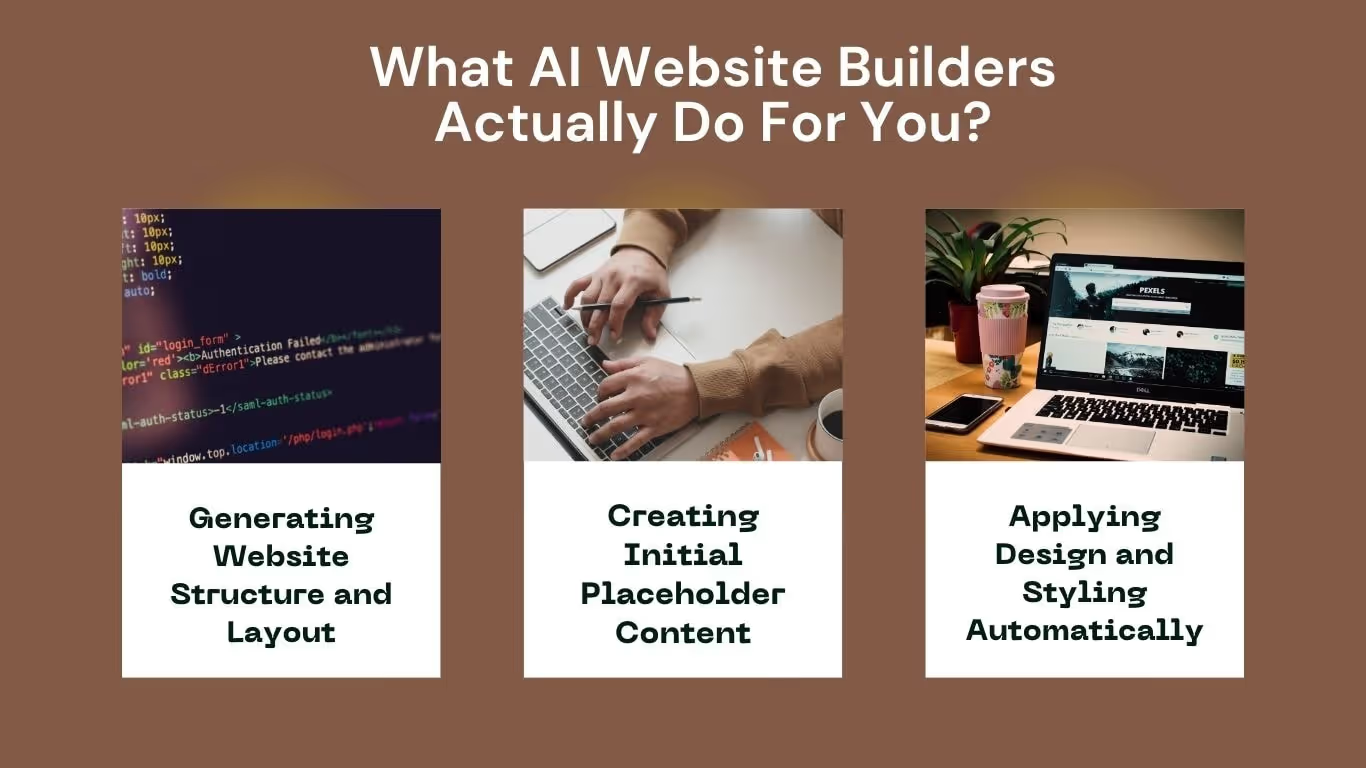
Before jumping into using AI website builders, it’s crucial to understand what these tools can and cannot do.
Generating Website Structure and Layout
AI website builders start by asking you questions about style preferences and business goals. Based on your responses, these tools use existing templates, plan the site structure, and can function as a schema creator. It considers your page requirements (one or multi-page) and navigation flows.
Let’s say you own a cafe and want a running website immediately. An AI-driven site builder will interpret your prompt, generate a menu, a reservation section, and a contact form. In minutes, you will get a stunning, functional website that you can tweak later.
Creating Initial Placeholder Content
Another key characteristic of AI website creators is automated content generation. These tools use Gen AI to populate pages with headlines, bullets, CTAs, paragraphs, and homepage copy.
For instance, a cafe site might have a placeholder reading, “Perfect Brew, Roasted Locally, and Served Fresh.” It helps beginners eliminate the guesswork and get new ideas and inspirations from well-structured pages.
However, the AI-produced content is generic, drawn from broad NLP patterns and existing datasets. To reinforce your brand identity and sound different from competitors, deep customization is crucial.
Applying Design and Styling Automatically
Beyond content and layout automation, AI website designers also maintain visual hierarchy in line with your style preferences.
It uses existing templates to select colors, white spacing, images, and font styles for the layout. Startups without existing brand assets can also use these tools to include stock images relevant to their industry. This automated styling process helps you maintain consistency without spending any effort.
The only drawback is that these visuals are template-dependent and build on broader aesthetics, rather than brand-specific colors. The output will be a visually cohesive site, but generic and similar to thousands of other sites available online.
Connecting Basic Website Features
Most AI website builders also come with integrated, ready-to-use e-Commerce and marketing tools to make launching seamless.
For instance, service businesses can use booking systems to schedule appointments. An online SaaS store can set up product pages, suggest pricing layouts, and write product descriptions. Such features use drag-and-drop editors. This way, you can get professional user interactivity without manually editing code.
The trade-off is that these features are limited to common use cases. You may set up a product page, but it won’t trigger multi-step automations for subscription models or specific shipping rules. Businesses that only want standard user interactive features won’t be affected by this.
Publishing the Website Quickly
Speed is inarguably the strongest suit of AI website builders. Once you are satisfied with the site layout, content, and visuals, the next step is publishing. Unlike traditional web builders, this won’t take you more than a few clicks.
With these builders, you do not have to stress over technical infrastructure or shop for hosting providers. It does everything, from connecting a domain to providing hosting and employing security certification.
Where AI Website Builders Stop?
Today, website creation is no longer limited to template intelligence and no-code input. With modern businesses adjusting to the market’s rapid evolution, maintaining a website demands more than tools focused on ready-to-launch creation.
As your business grows, so should your website. This means continuously iterating content, employing advanced user interactivity, and updating optimization practices - all to reinforce your brand identity and improve conversions. This is where your AI site builders stop.
The Limits of AI Website Builders
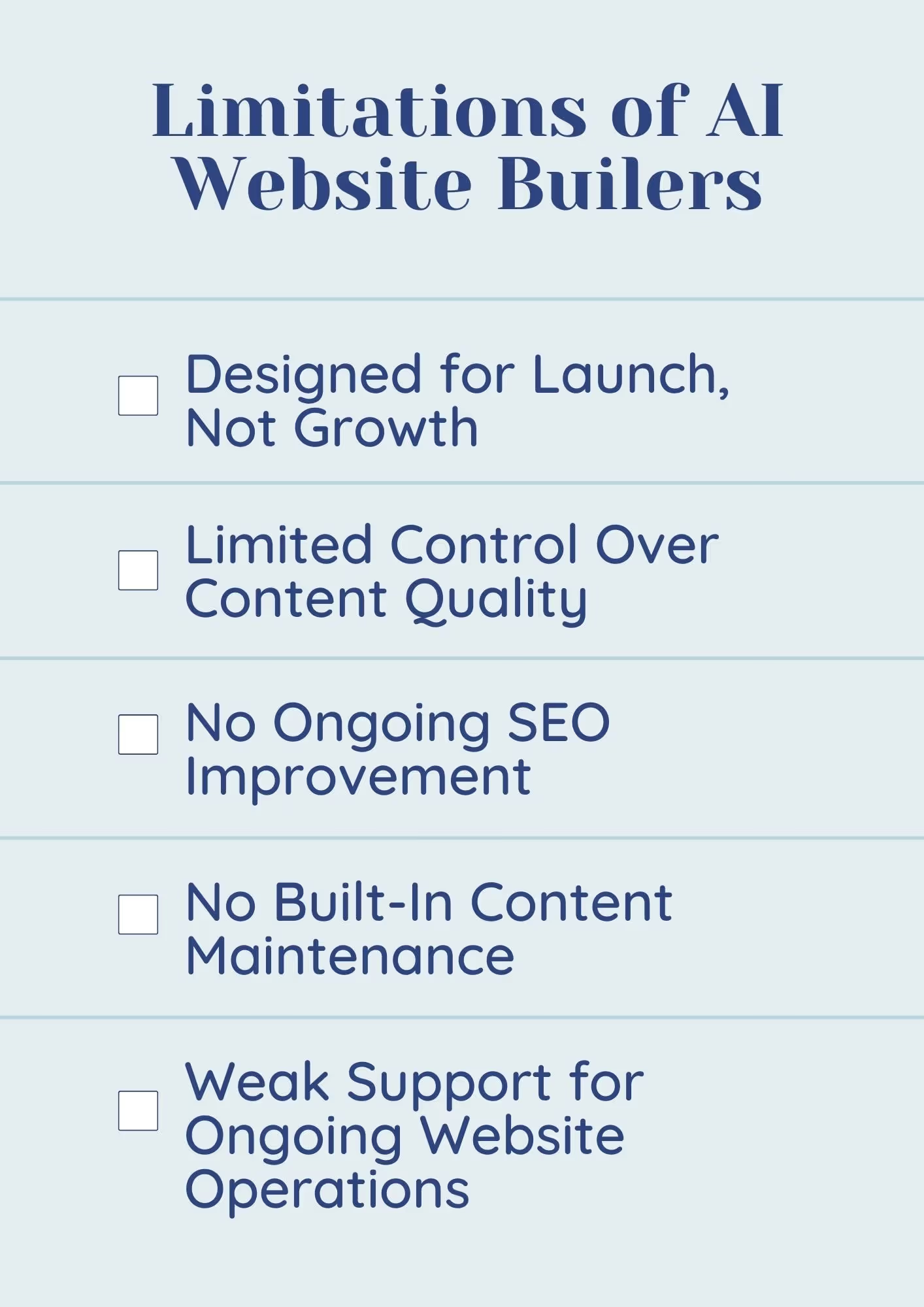
AI website builders are great at generating a visually appealing website from your prompts instantly. However, they stop once your site is live and do not add value in maintaining the site. Here is why.
AI Website Builders Are Designed for Launch, Not Growth
Website designs are never done. They are ongoing systems that grow with your business. As you expand your product base, try to reach a wider audience, or shift business focus, the need for updated copy, message refinement, and regular optimization becomes crucial.
However, AI for website builders is not meant for it. They last till the launch. Once the site is live, the rest lies with the business owners.
Limited Control Over Content Quality
AI website builders produce content in minutes, but this convenience comes at the cost of losing your brand identity. AI works on patterns within the existing datasets, which means it misses the subtleties of your brand’s tone, audience, and goals.
The result: the content on your site sounds generic and bland. And, when your site fails to communicate your message and values to the visitors, the business loses trust and conversions.
Little to No Ongoing SEO Improvement
The focus of the AI-driven site builders is to have a stunning site live as soon as possible. What businesses lose in the process is visibility on search engines. Some may have basic SEO features, such as meta tags, headlines, and page titles. This is not enough to keep up with Google’s rapidly changing algorithms.
Plus, these web builders rely on outdated content. Rarely will you see them refining and adjusting content to the changing market dynamics and user intent. The absence of fresh and value-driven content makes your site invisible to search engines.
No Built-In Content Maintenance
Most AI-driven builders have no mechanism to automatically update content with changing business dynamics. Naturally, discount offers, pricing, and product descriptions have a shelf life and need you to update them regularly.
Unfortunately, the builders are unable to do so. And, the burden of content maintenance lies with the owner.
A few expensive AI site builders have built-in content maintenance for businesses. Even with these, hallucinations and generic messaging remain a hurdle.
Weak Support for Ongoing Website Operations
The job of an AI website builder stops at the launch. These tools rarely help businesses with incoming FAQs, customer queries, or operational tasks (such as monitoring user interactions, tracking broken links, analyzing user intent, etc).
For instance, if a visitor submits a query on a contact form about the brand’s shipping policy, these builders have no embedded mechanism to draft a reply. Human reps or separate AI agents must be there to help the visitors.
Why These Limits Matter for Real Businesses?
The core functionality of AI website builders is to generate a static website. While they are faster and more efficient for static sites, their capabilities do not translate into scalability, optimization, and conversion. And, modern businesses thrive on these factors.
These growing businesses are trying to reinforce their brand identity, so they can market their products and their value to visitors. Similarly, brands today are shifting toward strategic conversions, characterized by simplifying user interactivity and advanced optimization. Hence, they prefer role-based AI employees over AI builders.
Building a Website With AI Helpers, Not Just a Builder
Websites are no longer static. They are growing business assets that demand regular maintenance in security updates, content iteration, and optimization. For this, you need to look beyond AI website builders and think about employing an AI team of specialized helpers.
Why a Website Needs Ongoing AI Maintenance?
Ongoing website maintenance refers to the process of regularly updating and optimizing a website so it stays visible, accessible to users, and secure. This process differentiates an effective site from one that’s quietly draining your money and resources. With AI adoption among U.S. small businesses jumping from 47% to 68% in just one year, the way customers find and interact with websites is changing fast — making regular maintenance more critical than ever.
Key elements of website maintenance include,
- Constantly updating website content.
- Conducting security checks.
- Running data analytics to improve accessibility and user experience.
- Optimization updates for visibility on AI and search engines.
The benefits of regularly maintaining a website are as follows.
- Faster load times with no lags.
- Protection against cyberattacks and vulnerabilities.
- Better visibility on search engines.
- Better engagement and conversion potential.
Using AI to Write and Improve Website Copy
Businesses use AI writers for two purposes: writing content and strategizing iteration. Be it landing pages, productive descriptions, or shorter paragraphs, these tools can produce fresh content in minutes.
The best part: these tools can adapt to your brand tone, style, and messaging, so content no longer sounds generic.
Beyond writing, AI copywriters audit your site for gaps in the existing content against user intent and trending industry topics. Once done, these helpers then use Gen AI to make structural adjustments for clarity and conversions.
Keeping Website Content Consistent at Scale
With AI agents, you do not need to manage large content teams. These agents run on shared memories that store brand guidelines, documentation, and SEO guidelines. Using this memory as a reference, AI agents analyze content strategy, set goals, and scale content production.
For instance, an e-commerce brand employs AI writers to replicate product descriptions and user guides in multiple local languages. This will help the brand reach a broader audience without increasing the staff.
Updating Content Without Rebuilding the Site
AI agents can also help you rewrite and repurpose existing content over time to improve user interaction and search visibility. These tools use performance metrics and feedback loops to understand user intent and changing market dynamics, and readjust the content accordingly. What’s better is that, unlike traditional web builders, these tools don’t need to interfere with your website code.
Handling Website Tasks Builders Don’t Cover
AI agents can also automate other repetitive manual tasks that eat up your employees' day, from drafting product descriptions to answering user queries. Businesses treat them as their digital employees that take over the time and energy-consuming tasks, so employees can focus on strategy and growth.
Let’s say a SaaS startup cannot afford a big sales team and employs AI agents to support customer queries on the site and across other channels. Such helpers are available 24/7 and accurate, as all the responses are derived from the shared business knowledge space.
Replacing Website Roles With AI Agents
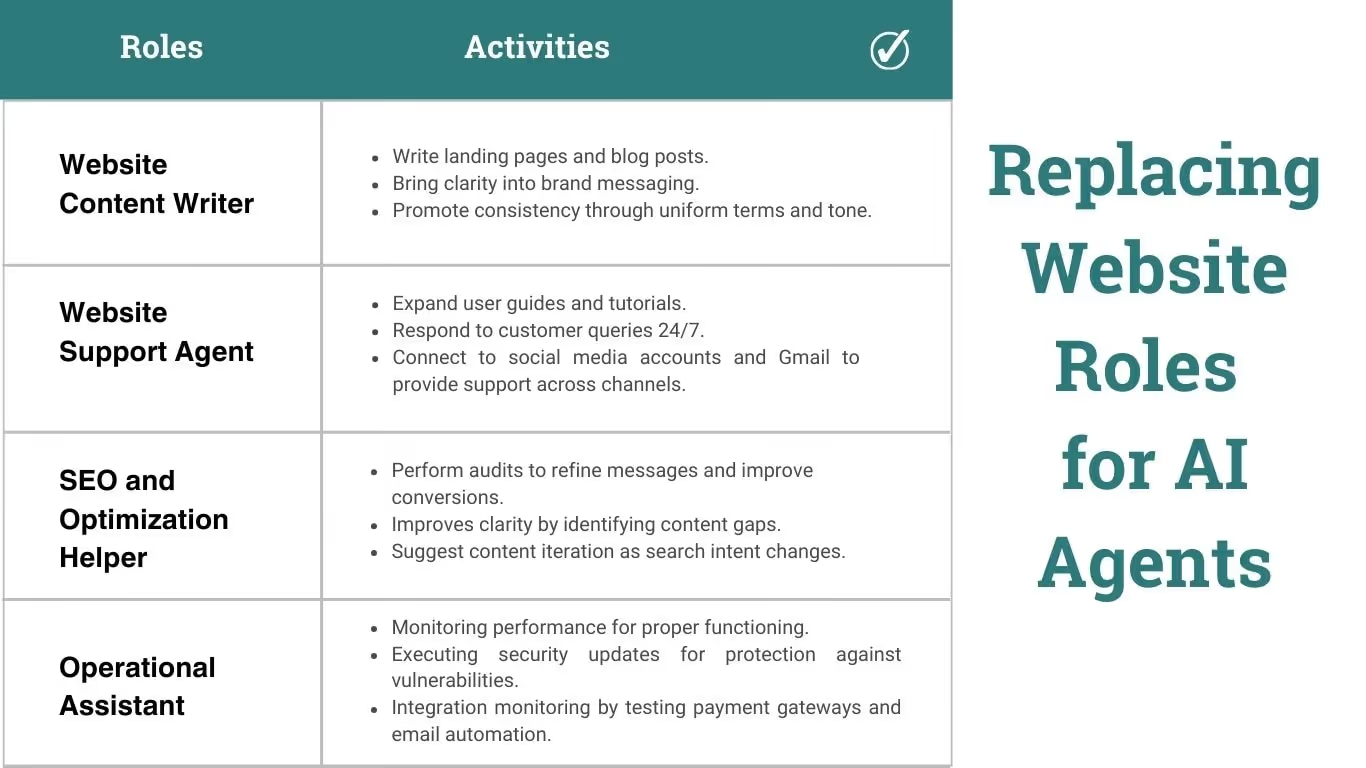
Building a site might be easy, but keeping it effective is not. Once the site is successfully launched, businesses shift their focus to finding the right talent to maintain their websites. Unfortunately, finding expertise in multiple domains is expensive and time-consuming.
This is where role-based agent systems enter. Think of these agents as your digital AI employee responsible for routine website maintenance. They optimize for SEO, produce brand-specific copy, respond to customer queries, regularly audit websites for conversion suggestions, etc.
What makes them better than having multiple separate AI tools for each job is their cross communication. All these agents share a common knowledge base that stores your business data. So, whatever task you automate, it is consistent with your brand.
The Website Roles Most Businesses Struggle to Hire
Once the site is launched, it requires continuous care from specialized people. The problem: these roles (SEO analysts, copywriters, content writers, web managers, etc.) are too expensive for full-time employees or too fragmented for freelancers to perform. Hence, small to mid-size startups or marketing teams find it difficult to recruit.
For instance, hiring an SEO specialist can be out of reach for small teams. And if they opt for freelancers, they might offer price flexibility, but coordination between all roles becomes overwhelming. Content needs SEO input to rank, SEO requires technical website maintenance, and copy relies on both the content and SEO.
AI as a Website Content Writer
Maintaining a site means a regular flow of content in product descriptions, blog posts, and iterative copy. AI content writers handle this for you, reducing delays while keeping brand messaging intact. Here is what these AI content writers can help you with.
- Refining outdated copy with pricing adjustments, product descriptions, and more.
- Write landing pages and blog posts from simple prompts.
- Bring clarity into brand messaging via stronger headlines and CTAs.
- Promote consistency through uniform terms, tone, and value offers.
However, human oversight remains crucial, as these AI writers cannot replicate personal experiences or expertise.
AI as a Website Support Agent
Customers' queries cannot wait. And, waiting for human reps to handle answers during business hours means delaying sales and losing customers. Thankfully, AI agents help you resolve queries and answer FAQs immediately according to your business-specific policies. And, they never sleep.
Here is what you can employ these customer agents for.
- Expand user guides and tutorials as customers come up with new queries.
- Respond to customer queries 24/7 without any supervision.
- Identify gaps in existing support articles and update documentation according to business policies.
- Connect to social media accounts and Gmail to provide support across channels.
- Ensure accuracy for each question by connecting to the business knowledge base.
AI as an SEO and Optimization Helper
AI SEO agents help you adjust your brand’s messaging to changing user behaviors and search algorithms. As markets become saturated and competitors try to lead, these tools can help you refine content and improve your site’s performance.
Beyond traditional SEO, AI agents go deeper into anticipating the users’ needs and suggesting alternatives. These agents use predictive algorithms and real-time behavioral data to determine whether visitors can find what they need, whether the copy is persuasive enough, etc.
The following are some key areas where AI SEO helpers can benefit marketing teams.
- Perform audits to analyze how to refine copy messages and improve conversions.
- Improves clarity by identifying content gaps and confusing terminology.
- Suggest content iteration as search intent changes.
- Employ performance analytics to monitor how different sections on your site perform in engaging and converting visitors.
- Integrating social media links into websites to enhance visibility and user engagement.
AI as an Operations Assistant for the Website
Maintaining a site goes beyond content generation and SEO updates. It involves a wide variety of recurring operational tasks, from inventory management to technical maintenance and analytics tracking. And, AI agents help you with just that.
Modern role-based agents automate this routine, repetitive behind-the-scenes workload, so your team doesn’t have to stress about doing it manually. This way, your website remains functional, secure, and user-focused, while you focus on growing the business.
- Monitoring performance (tracking Core Web Vitals, fixing broken links, etc.) to ensure that your site is functioning properly and loading quickly.
- Executing security updates to make sure the website is protected against vulnerabilities.
- Integration monitoring by testing payment gateways, contact form delivery mechanism, and email automation.
- Updating inventory by regularly checking product listings, availability, price changes, etc.
- Employing analytics tools to track website traffic and user engagement.
AI Website Maintenance Without Developers
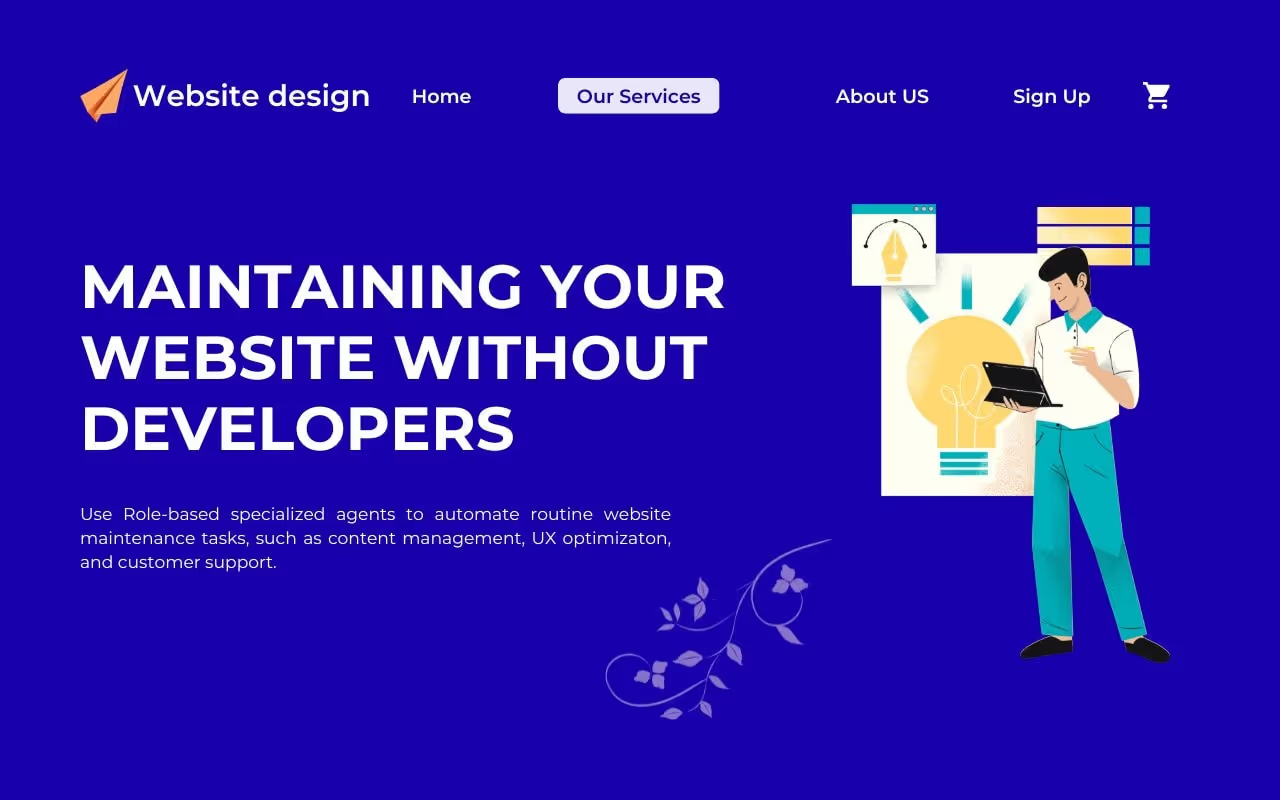
Contrary to popular belief, you can maintain a business website without having developers for everyday maintenance. Yes, it’s true that you need developers to help with security, coding, and hosting-relevant jobs. However, hiring for a full-time permanent role might be overwhelming for small marketing teams and startups.
Here are some ways managing an effective site is doable, even without a developer.
Why Website Maintenance Feels Difficult?
Managing a website without a developer team is time-consuming, especially if you are not actively involved. The effort your staff should be putting into tasks relevant to the business growth goes to operational tasks, such as iteration, updates, and more.
Beyond this, your employees’ skills matter, even if you have a system of modern website maintenance services designed to help you perform regular tasks on your own. Your staff may not have the same level of expertise as a professional, and it reflects in your site.
To avoid this, most companies outsource the maintenance tasks. However, it only adds to the problem. Outsourcing tasks to multiple separate freelancers means constant back-and-forth, which can impact communication and work efficiency.
Using AI to Update Website Content Safely
The solution to maintaining a website without technically sound professionals: Role-based AI agents trained on a shared knowledge base.
Among all, the most useful is the AI website content writer. This purpose-based helper can help you create compelling and optimized content that drives traffic, improves ranking, and converts visitors. The best part: it does not alter your site code or design, so even non-technical employees can build confidence to use it to the business's benefit.
Improving Clarity and UX Copy With AI
Maintaining a website is more than just writing stuff. Rather, it is about designing your words to build the experience the users desire. Designing with words demands clarity, consistency, and persuasion. And today, Generative AI website assistance can replicate these elements. It can
- Simplify complex language so that users can understand the message.
- Set various readability levels to accommodate different target visitors.
- Establish hierarchies using headers, bullet points, and other structural elements.
- Enable AI-driven vocal transcription and image alt descriptions to improve accessibility for physically-impaired visitors.
- Regularly review and refine content to maintain higher accessibility for users.
- Tag and categorize content on the site for better searchability.
B2B teams view Gen AI as a core driver of commercial performance, as it attracted $33.9 billion in global private investment in 2024. This way, you can employ AI to improve existing copy, structures, and CTAs. And, you do not have to redesign the pages from scratch.
Keeping Information Up to Date Automatically
Content update refers to the process of updating existing content on your site with new data, visuals, and structure. Regular content updates improve the relevance and search visibility of your business to both search engines and AI overviews. With updated information, you can also customize your website to match your brand's personality and style.
AI simplifies this process by automating the content updates. AI writers scan your site for outdated data, facts, and research, and alert you to publish fresh content. These tools can also suggest topics that align with emerging market trends and are covered by competitors, so you can iterate on existing blogs accordingly.
That’s not it. You can also use role-based AI to add depth to your existing content. For this, these writers identify knowledge gaps in your blogs and recommend real-world examples and case studies to add value for your readers. Plus, backed by a business knowledge space, AI makes a conscious effort to differentiate your business from competitors.
When Do You Still Need a Developer?
While AI is useful in maintaining your website, there are some tasks only developers can help you with. Generally, companies prefer having developers perform regular audits on websites to keep up with the technicalities. These professionals help you with
- Reviewing code for sites (JavaScript, HTML, XML, etc).
- Evaluating user interactive elements, such as navigation menus and graphics.
- Testing and debugging web applications.
- Troubleshooting for user experience, low traffic, and constant lags.
The AI Website Operations Stack
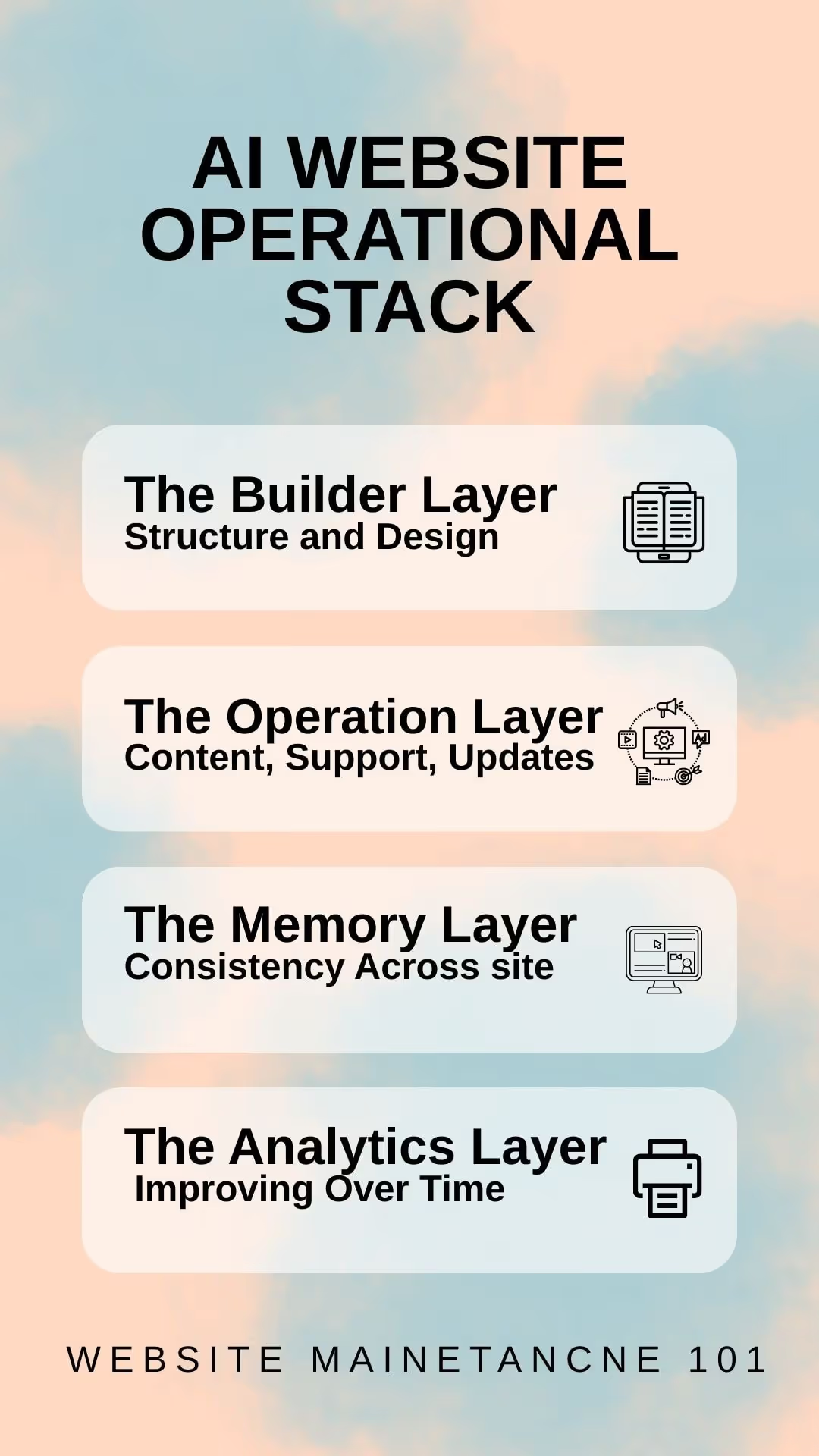
As websites are moving from static assets to marketing reality, businesses are building a growing stack of operational AI tools. Gauss reports that around 93% of web designers have incorporated AI tools in their web workflows.
Let’s break down the AI website operational stack and see how it helps reduce operational cost, improve user experience, and establish brand identity.
A Modern Website Is a System, Not a Project
AI websites no longer rely on template-ready static layouts and ready-to-launch visuals. Rather, it is an interconnected system, designed to help businesses attract, engage, and convert potential customers.
Today, businesses view their sites as marketing assets and not a one-time project. To maintain these assets, brands need to put in continuous effort in almost every aspect: content generation, structure, SEO optimization, conversion-focused design interactivity, and accessibility.
The Builder Layer: Structure and Design
At the bottom of the stack are AI website builders. These site builders lay the foundation of your website, including the layout, visuals, and pages. Businesses use these tools to design the website and get it ready for launch almost immediately.
Unlike traditional websites, the AI-driven builder layer remains the same, even when you update elements post-launch. This is because AI tools rely on pre-designed templates and structured data models to produce a frozen layout and not code.
The AI Operations Layer: Content, Support, and Updates
Once the site goes live, businesses allocate the AI-driven operational layer. The purpose of this layer is to handle routine maintenance tasks, such as content creation, customer support, and more.
Here, you will find purpose-based multi-agent systems focused on constant web improvements. These AI employees, trained on specialized domains (copywriting, SEO optimization, etc.), automate repetitive manual tasks, so you can focus on strategy and planning.
Let’s say your sales reps spend most of their time answering customer queries. And, this leaves them no time for revenue growth.The solution: specialized AI agents for sales reps. Such agents connect to your workflow and support customers via FAQs, a 24/7 answer mechanism, and email responses.
The Memory Layer: Consistency Across the Website
Then comes the memory layer or knowledge base developed to help your operational AI employees maintain clarity and consistency across the web. An AI knowledge base, such as Brain AI, centralizes your business data for AI agents to interpret, process, and act in sync.
This layer acts as a single business playbook that stores crucial information, from digital assets to documentation, workflows, business goals, and more. Through this mechanism, businesses can connect their AI site helpers to work platforms, including socials, web services, and more.
Here is why having a memory layer in your website maintenance operational stack is crucial.
- Produce highly personalized answers that get to the user’s pain point immediately.
- Establish a cohesive and consistent tone across the website. This helps make sure the information shared with users is accurate.
- Establish consistent brand messaging to reinforce brand identity across the pages.
- Workflow orchestration where AI agents coordinate across channels, all connected to the knowledge space.
The Analytics Layer: Learning and Improving Over Time
The fourth layer of your operational web stack is the web analytics layer. It aims to measure and analyze how well your website design, structure, visuals, and content achieve their intended goal. Simply put, these analytics help businesses evaluate how their website interacts with visitors, engages them, and converts them.
In this layer, AI web analytics are digging for insights into user behavior, speed, SEO ranking, and more. Understanding these factors can help businesses make informed decisions: adapting their content strategy, adjusting brand messaging, and improving UX optimization for maximum revenue.
Why This Stack Replaces Traditional Website Teams?
There is no doubt that human freelancers bring creativity and nuances to your website design. However, outsourcing multiple people for separate domain work can be an inconvenience and a communication nightmare for businesses.
The solution: An AI-driven operational web stack.
This system acts as a cohesive digital team of specialized AI helpers performing their routine tasks, while staying true to business information. Here is why this system might be better than outsourcing.
- Agents communicate with each other and share context, which improves accuracy.
- One easy no-code setup that manages everything.
- Domain specialization that helps businesses handle tasks in various domains.
- As the business expands, businesses can add extra agents without complex integrations.
- Agents can better adapt to faster market shifts, changing business needs, and shifting goals.
Ready to Run Your Website With AI?
There you have it - all about how to generate and maintain a website with AI. AI-driven website builders are an excellent choice for beginners needing to lay the foundation of their site from scratch. However, this is just the beginning. To make the site effective for visibility, conversion, and accessibility, AI agents are mandatory.
Role-based multi-agent systems like Sintra are even better as they provide domain specialization, cross-agent communication, and scalability. These agents replace ongoing roles, saving you time, effort, and resources.
So, get started with Sintra today and see how it works for you.
How to Build a Website with AI FAQs
What is the best way to build a website with AI?
One of the best ways to build a website with AI is to combine an AI-driven website builder with advanced operational agents. The AI web builders help you design the foundational elements (layout, visuals, copy). Whereas the role-based agents will handle routine maintenance tasks like content management, SEO optimization, etc.
Are AI website builders free to use?
Yes, users can start building websites for free with many AI website builders. However, to fully embed customizable visuals, prototypes, and other advanced features, you may need a paid version.
Can AI manage website content after launch?
Yes, specialized AI agents can help you generate, repurpose, and rewrite website content post-launch. Businesses can generate different styles of content, from copy to CTAs, user guides, and long blog posts, with consistent brand messaging.
Do AI websites replace developers and designers?
No, AI website tools cannot replace developers and designers. That said, AI is constantly helping professionals automate routine tasks, such as content management, UX optimization, and customer support.
Is AI good for maintaining a website long-term?
Yes, AI tools are highly effective in maintaining your website's performance long-term. These tools automate regular operational tasks, including content production, SEO optimization, security updates, and customer support. This way, your site remains visible, accessible, and conversion-focused.
What is the difference between an AI website builder and AI agents?
An AI website builder is a specialized tool that generates websites (layout, visuals, and copy) from your prompts. Whereas AI agents are proactive AI setups developed to think, strategize, and take action in a specific domain. AI web builders create static websites, while agents help in maintaining these sites.
Related articles
.avif)
.avif)

.avif)