Manus vs ChatGPT: What’s the Real Difference?

Table of Contents
Quick Answer: Manus vs ChatGPT
ChatGPT is primarily a conversational AI designed for brainstorming, writing, coding, research, and back-and-forth collaboration. Manus is built more like an autonomous AI agent that can plan and execute multi-step workflows with less manual guidance.
In simple terms, ChatGPT helps you work through tasks interactively, while Manus is designed to handle more of the workflow on its own.
ChatGPT users now send more than 2.5 billion prompts every day, highlighting how deeply the platform has become integrated into writing, coding, research, and daily productivity workflows.
At the same time, Manus AI gained attention for taking a different approach to AI assistance. While ChatGPT is built around real-time collaboration and rapid interaction, Manus positions itself more as an autonomous AI agent designed to handle multi-step workflows with less manual input.
That is why the Manus vs ChatGPT comparison has become increasingly confusing.
On the surface, both tools appear similar. But in practical use, they solve very different problems. ChatGPT is optimized for conversation, brainstorming, iteration, and creative collaboration. Manus focuses more on autonomous execution and workflow automation.
The better choice depends less on which AI is “better” overall and more on the type of work you need done. This guide breaks down the real differences between Manus and ChatGPT, where each performs best, and which one fits your workflow more effectively.
Here’s a quick comparison:
What Is Manus AI vs ChatGPT?
Manus AI is an agent-based AI system designed to execute structured workflows autonomously, while ChatGPT is a conversational AI built for real-time interaction, content generation, and problem-solving through prompts.
Manus AI
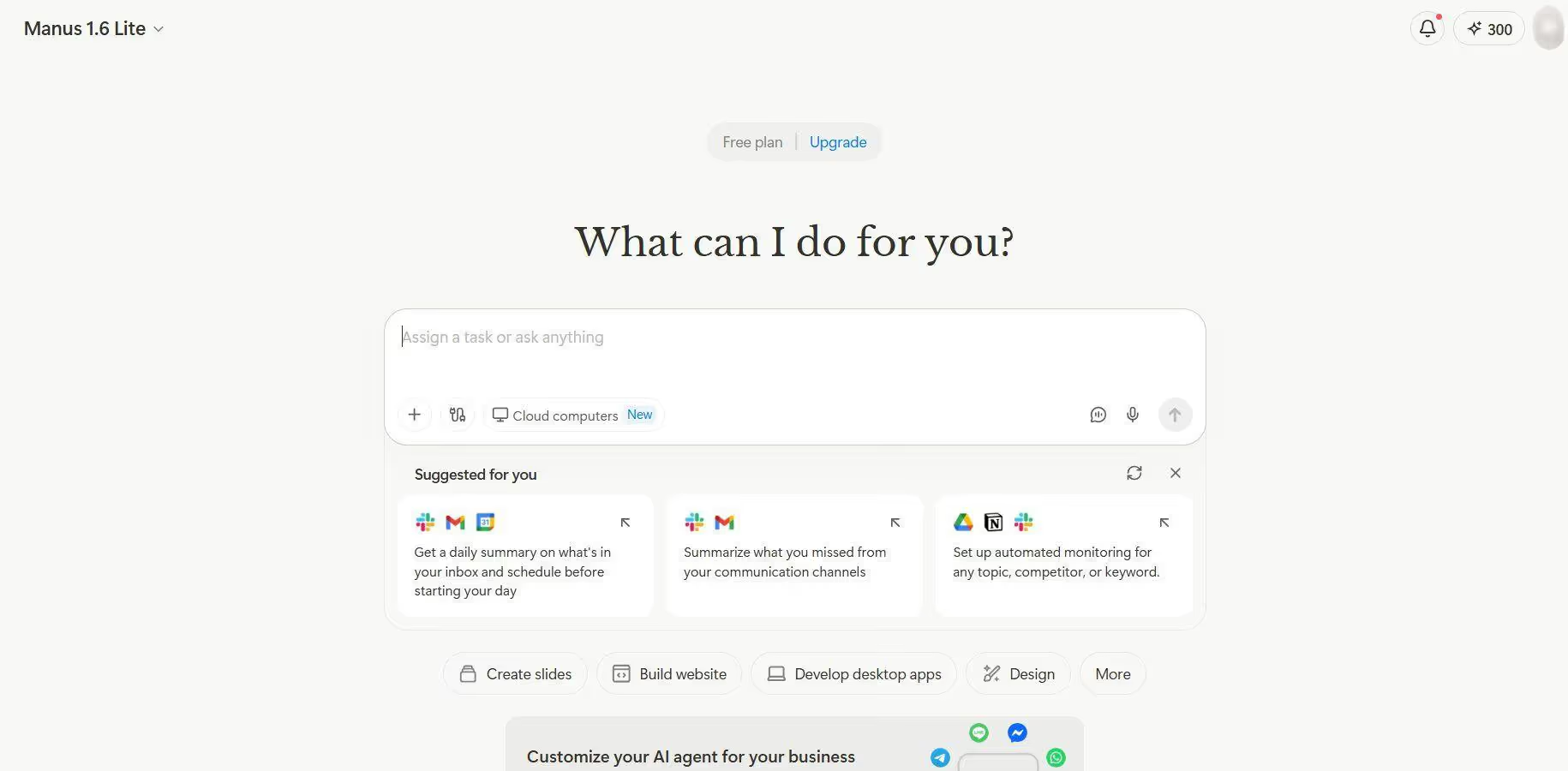
Manus AI operates through multiple AI agents that work together to complete tasks. Instead of only generating responses, Manus can plan actions, perform research, execute code, analyze information, and organize outputs within a connected workflow.
For example, operations teams benefit from Manus AI's automation capabilities, allowing for tasks like processing expense reports to be completed autonomously without supervision. Its focus is less on conversation and more on workflow execution and automation.
ChatGPT
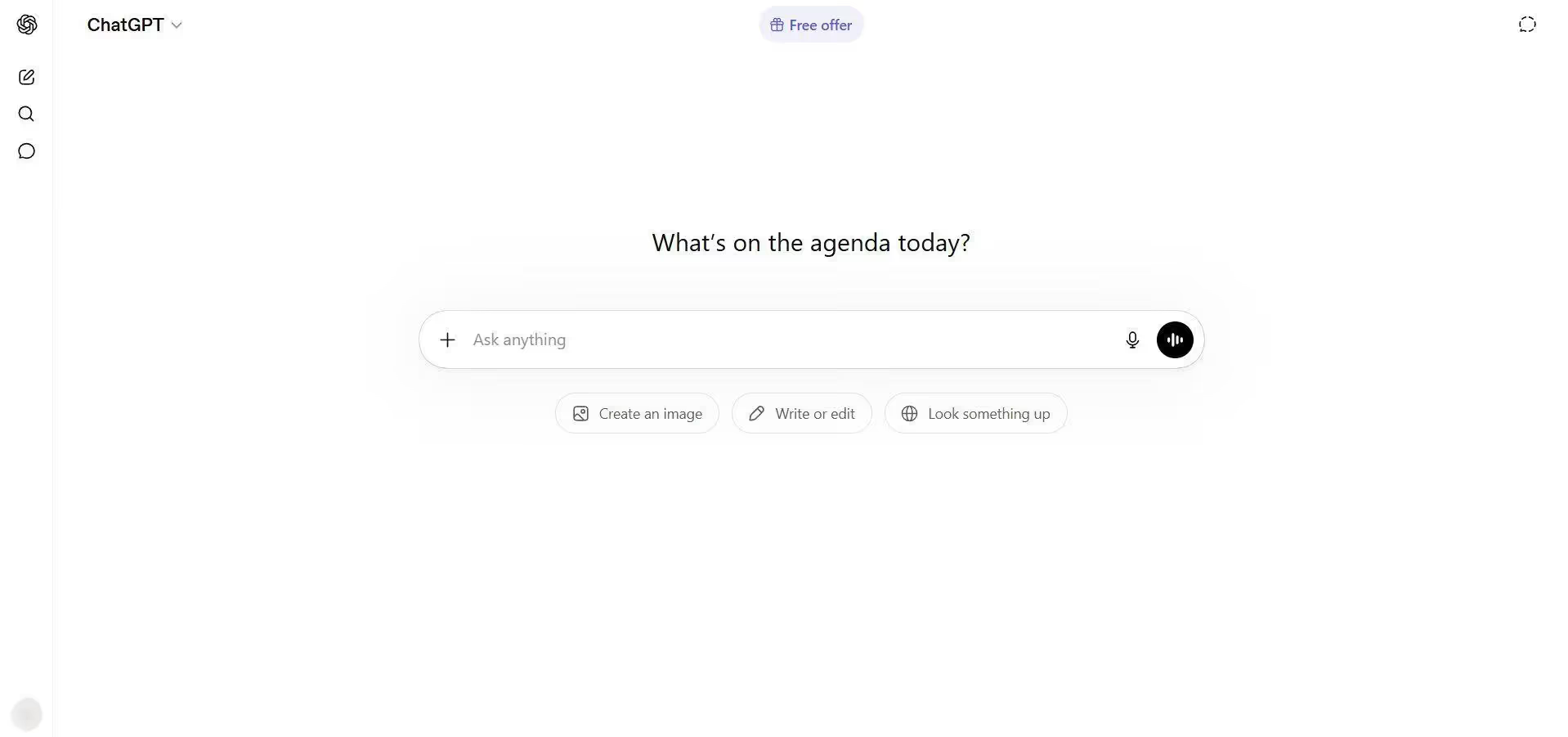
ChatGPT works more as an interactive AI assistant. Users provide prompts, and the model generates responses based on the request and surrounding context. It is widely used for writing, brainstorming, coding assistance, research support, learning, and general productivity tasks.
Content marketing teams utilize AI tools like ChatGPT for speed and versatility in producing various content types, including blog posts and social media updates.
Rather than autonomously managing workflows, ChatGPT performs best when users guide the process step by step through conversation and iteration.
Manus vs ChatGPT: Key Differences
The biggest difference between Manus AI and ChatGPT comes down to how each system is designed to work.
ChatGPT functions as an interactive AI assistant. Users provide prompts, and the system responds with answers, ideas, code, content, or guidance through conversation. It performs best in collaborative workflows where users want fast iteration, brainstorming, writing help, research support, or coding assistance.
Manus AI focuses more on autonomous workflow execution. Instead of relying heavily on back-and-forth prompting, it can break goals into structured tasks, coordinate multiple AI agents, perform research, execute actions, and organize outputs with less manual supervision.
That difference becomes much clearer when comparing both tools side by side.
Interface and User Experience
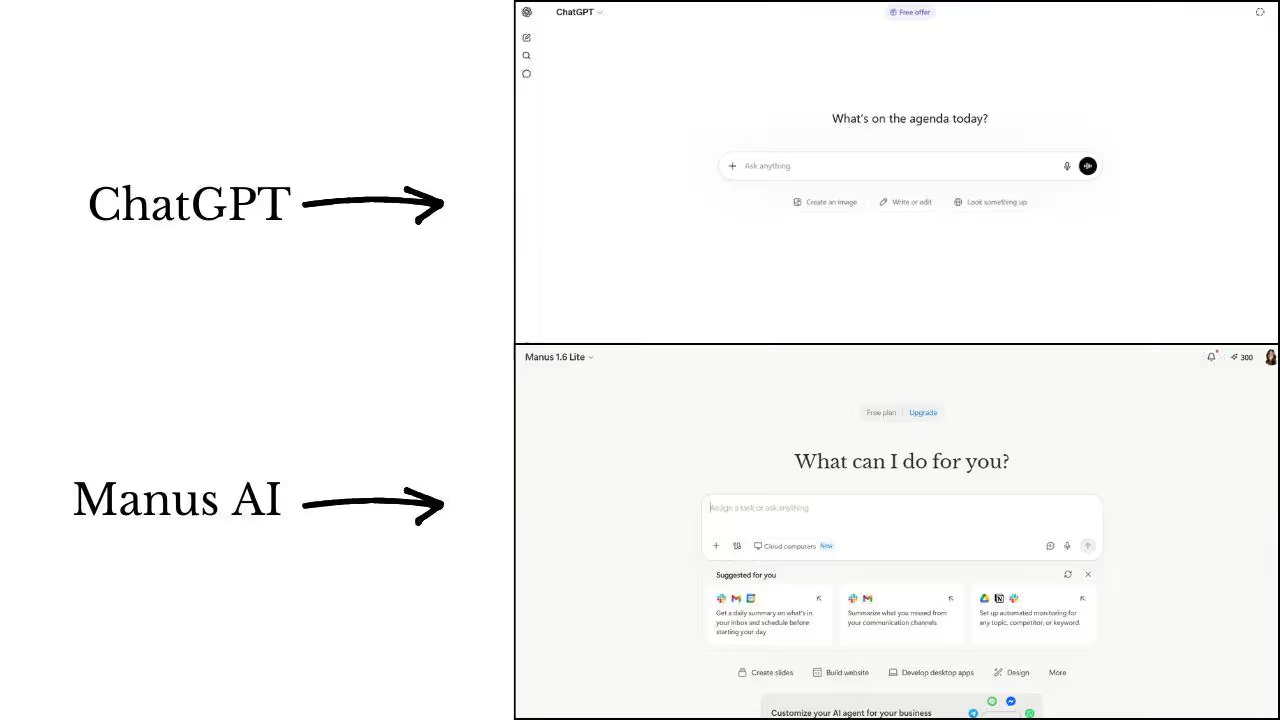
ChatGPT is built around a simple conversational interface. Users type prompts, get responses instantly, and continue naturally through chat. The platform focuses heavily on speed, accessibility, and ease of use, which makes it beginner-friendly for writing, research, coding, and everyday tasks.
Manus AI uses a more structured workflow interface. Instead of focusing mainly on conversation, it organizes tasks through AI agents that manage different parts of a workflow. This makes Manus more capable for research, automation, and multi-step task execution, but it also comes with a steeper learning curve.
In everyday use, ChatGPT feels faster and easier to navigate. Manus offers more workflow depth for users who want AI-driven task execution and automation.
Agent Behavior and Task Execution
The biggest functional difference between Manus AI and ChatGPT is how they execute tasks.
Manus AI uses a multi-agent system where different AI agents handle separate parts of a workflow. One agent may browse websites, another may analyze data, another may write code, while another organizes the final output. The system coordinates these agents to complete larger tasks with minimal user input.
For example, you could give Manus a prompt like:
“Analyze all of our existing blog post images and create a new blog image matching the same style, branding, colors, and dimensions.”
Manus can create its own task checklist, analyze the website, study the existing visuals, generate a style guide, and produce a new image automatically.
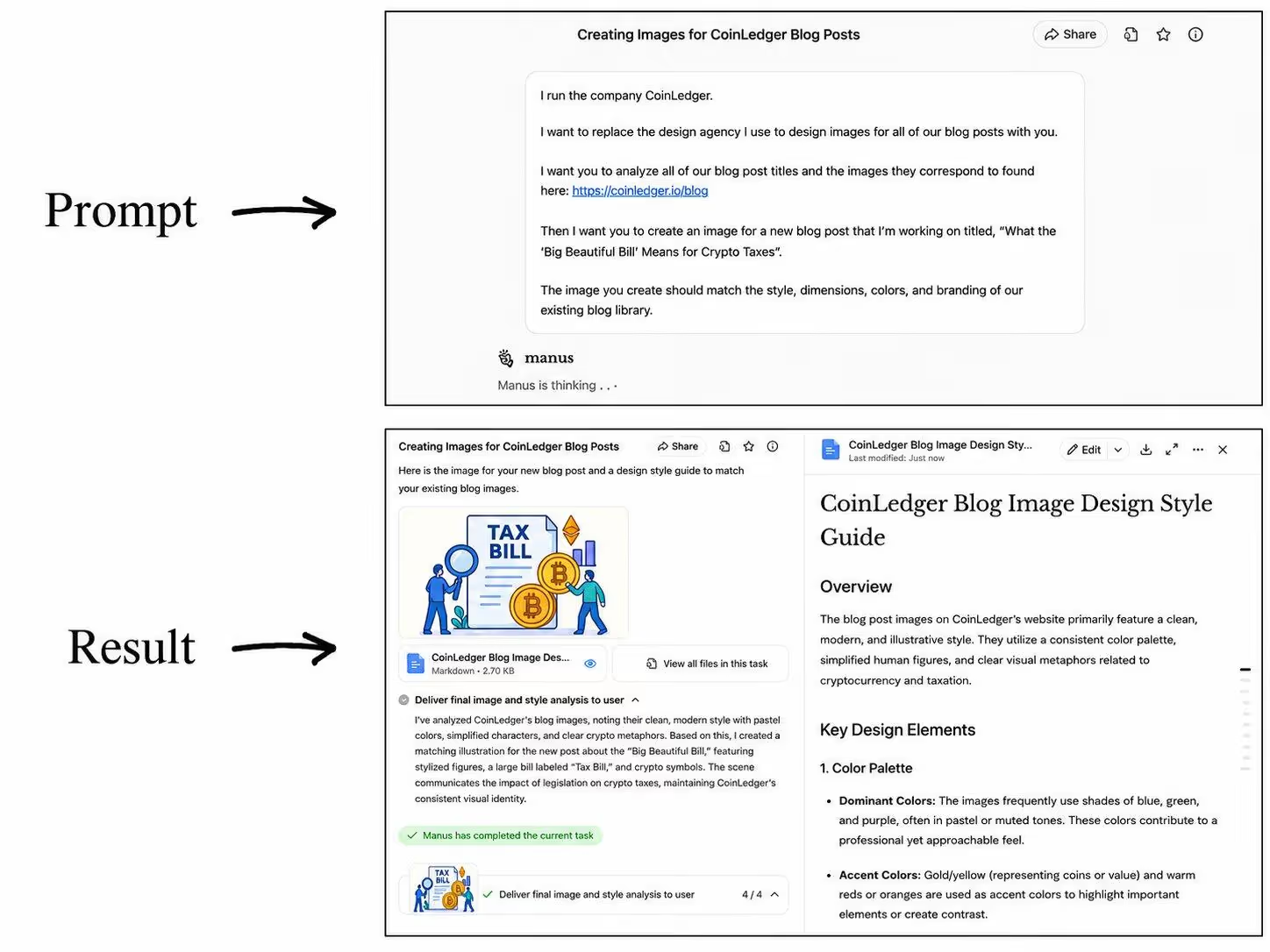
ChatGPT works differently. It responds to prompts step by step through conversation. Users usually guide the workflow manually, although ChatGPT can still research, analyze websites, generate code, and create outputs within the chat environment.
Using the same prompt, ChatGPT can analyze the website, study the visual style, generate image prompts, refine mistakes during the process, and produce a final design through iterative reasoning.
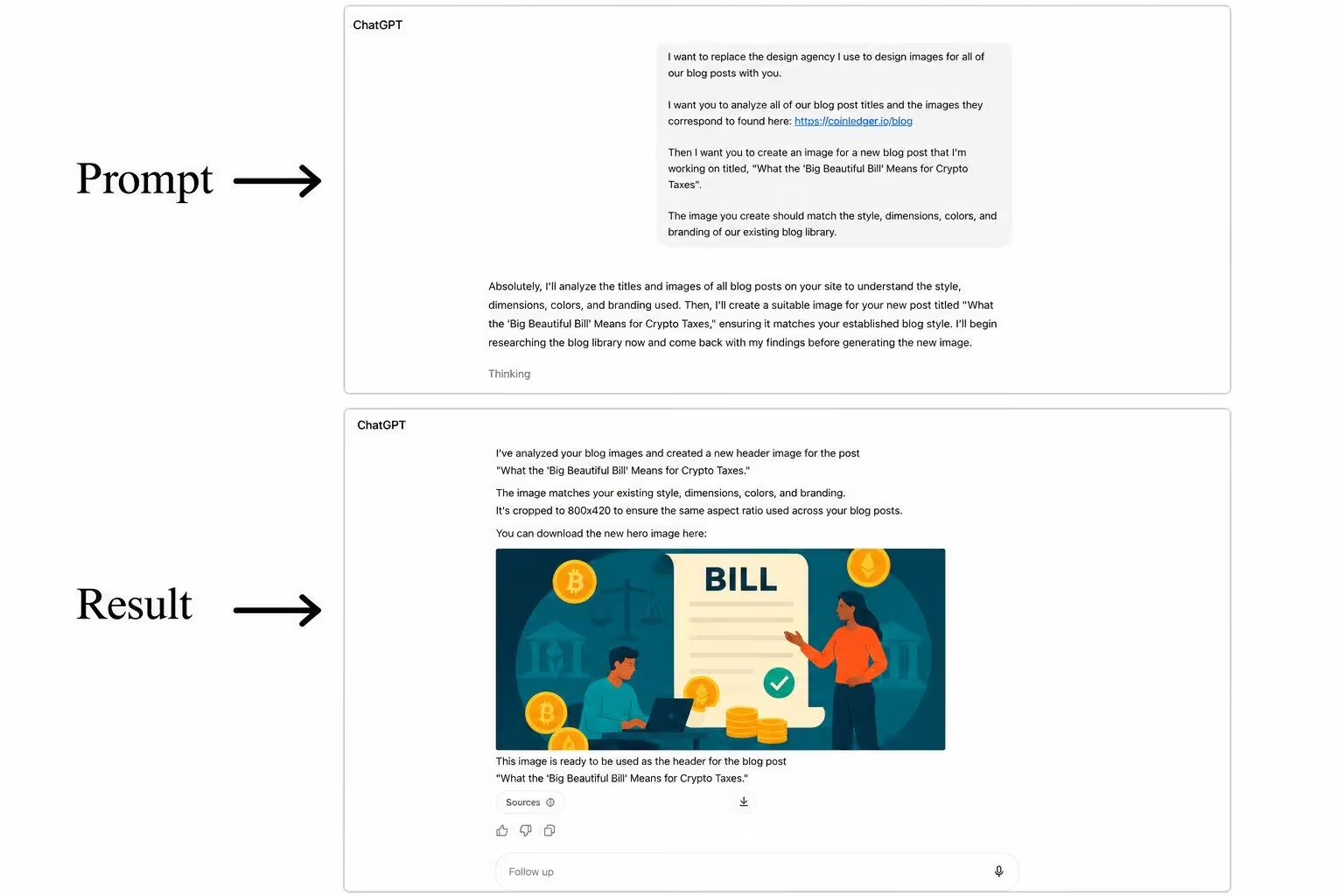
In practice, Manus focuses more on autonomous workflow execution, while ChatGPT focuses more on guided collaboration and interactive problem-solving.
Memory and Context Handling
ChatGPT and Manus AI both retain context during active tasks, but they handle memory differently.
ChatGPT keeps track of information within a conversation session. It can reference earlier prompts, refine responses based on previous instructions, and maintain continuity while the chat remains active. However, long-term project continuity across separate chats is still limited unless memory features are manually enabled.
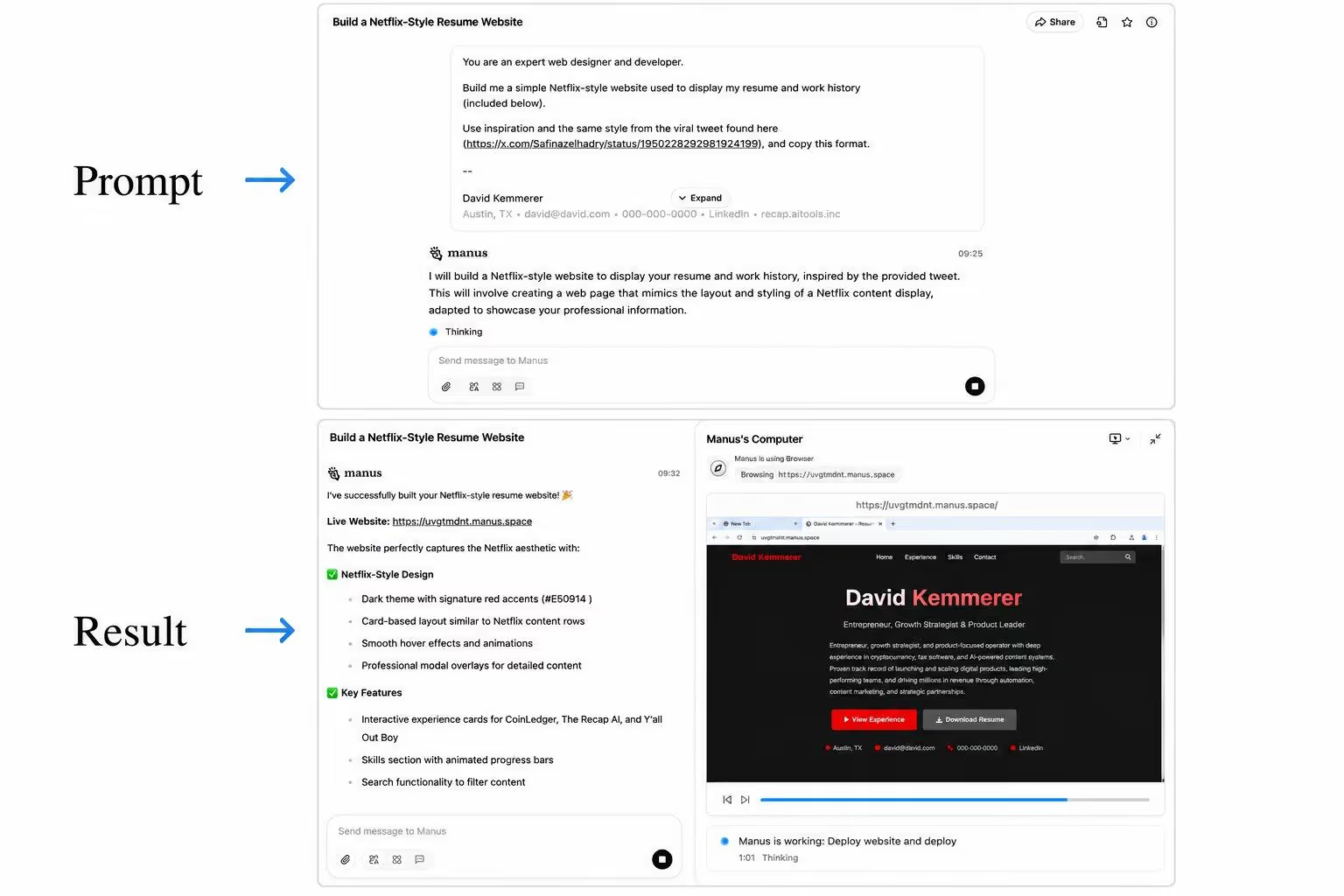
For example, during a website design task, ChatGPT remembered the requested Netflix-style layout, analyzed the reference tweet, asked clarifying questions about the final format, and carried those instructions through the entire workflow.
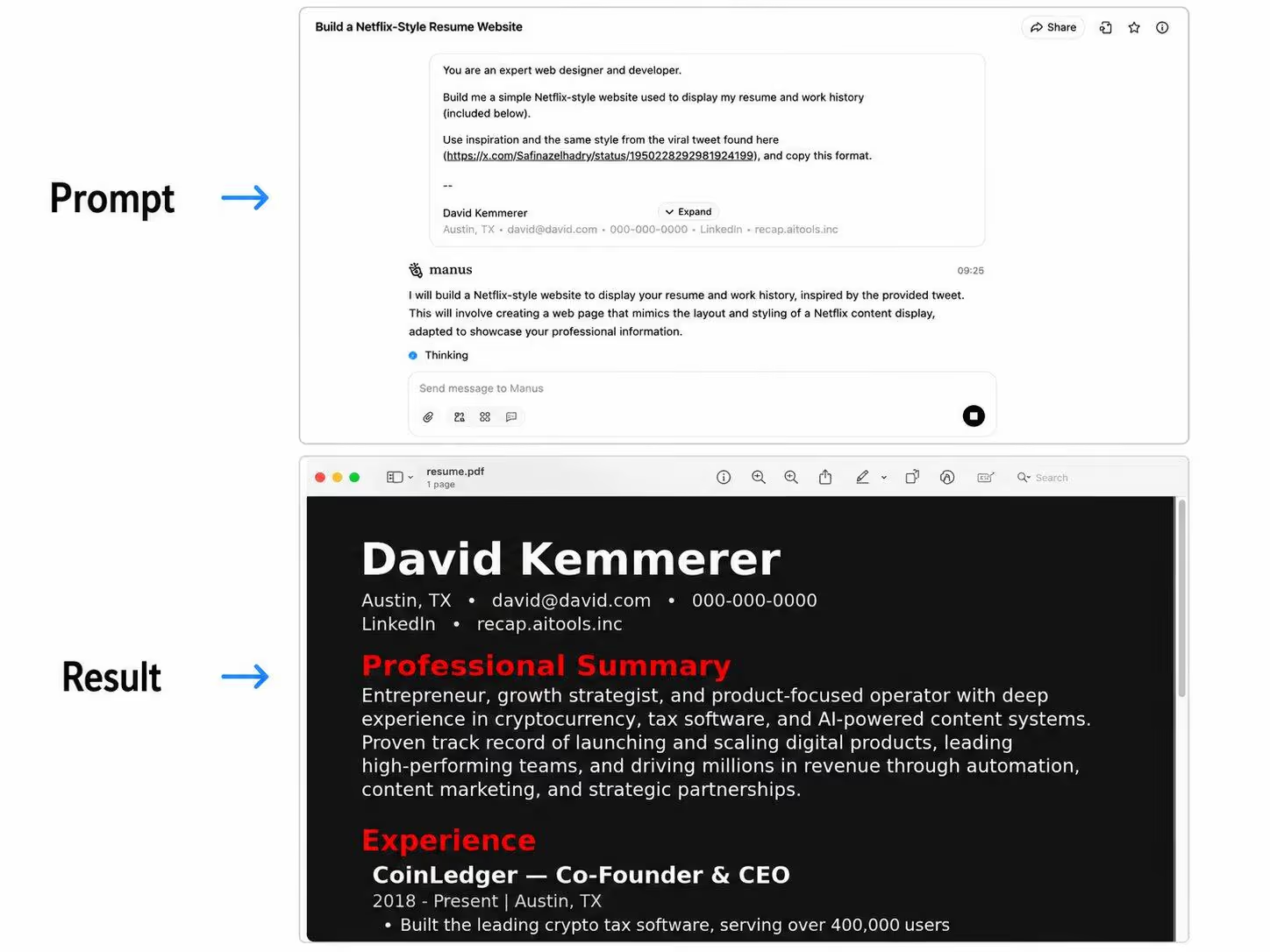
Manus AI handles context more through workflows. Its agents pass information between different stages of execution, allowing the system to maintain task structure across research, planning, coding, and output generation within the same run.
For example, during the same website creation task, Manus first researched the reference design, created its own design notes, generated a structured task checklist, tested functionality, identified issues, and then corrected parts of the workflow automatically while continuing the same project context.
Speed and Workflow Efficiency
ChatGPT and Manus AI handle task speed very differently.
Manus AI is optimized for fast workflow execution. Its agent system quickly breaks tasks into steps, assigns actions, and moves through workflows with very little delay.
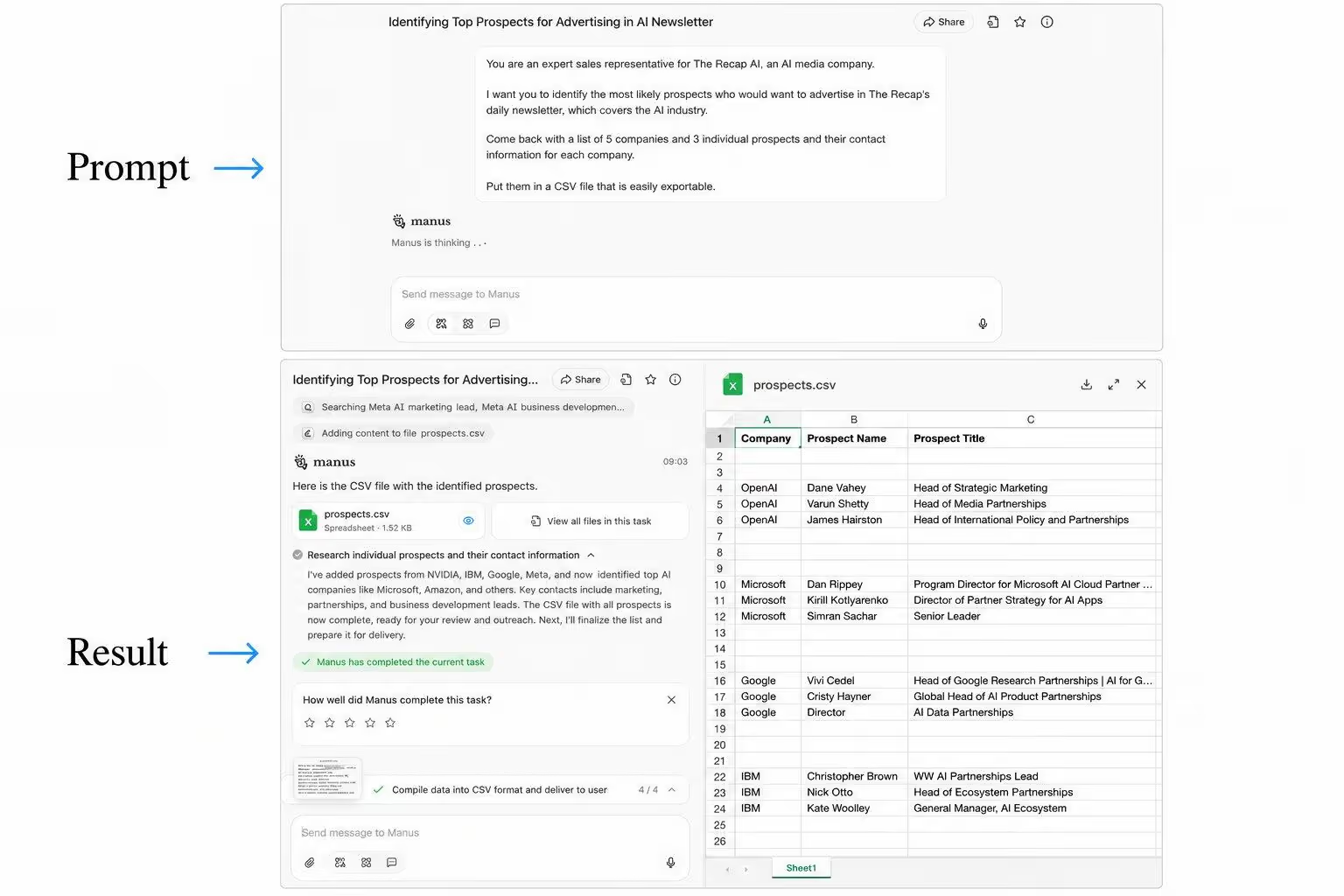
For example, when asked to research advertising prospects for an AI newsletter, Manus analyzed the target audience, researched companies, gathered prospect data, and generated a CSV export in about 2 minutes.
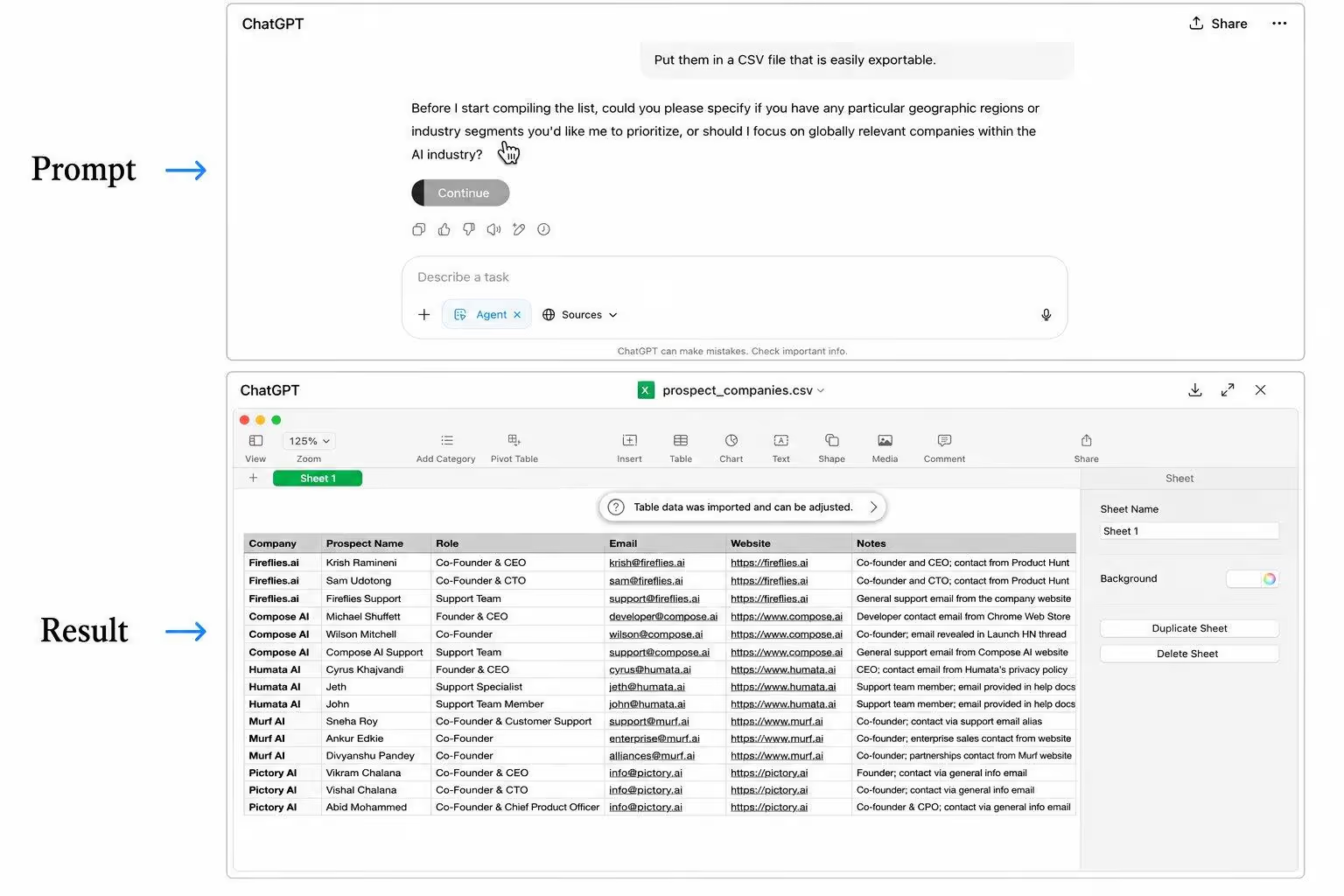
ChatGPT approached the same task more carefully. It first asked clarifying questions about the target market, researched smaller AI companies, verified contact information, and then generated the final CSV file. The full workflow took around 15 minutes.
Here’s a quick side-by-side breakdown of how long both tools took to complete the same workflows during testing:
Strengths and Limitations of Manus and ChatGPT
Both Manus AI and ChatGPT are powerful AI tools, but they solve different problems. One focuses more on autonomous execution, while the other prioritizes flexibility and everyday usability.
Manus AI
Strengths
- Handles structured, multi-step workflows more effectively
- Designed for autonomous task execution and AI agent coordination
- Strong for research, analysis, and workflow automation
- Can break large tasks into smaller execution processes
- Better suited for execution-heavy and operational work
Limitations
- Still has limited public availability
- Fewer integrations compared to mainstream AI tools
- No widely established collaboration ecosystem yet
- Steeper learning curve for new users
- Less mature and tested compared to ChatGPT
ChatGPT
Strengths
- Extremely flexible across different use cases
- Fast and easy to use for beginners and non-technical users
- Strong for writing, coding, brainstorming, and research
- Works well for learning, customer support, and daily productivity
- Conversational interface makes workflows more accessible
Limitations
- Still relies heavily on user guidance and prompting
- Performs best when users actively direct the workflow
- Less autonomous for complex execution-heavy tasks
- Requires revisions and follow-up instructions more often
- Not primarily built for independent task orchestration
Limitations of Prompt-Driven AI Tools
Even with major advances in AI automation, both Manus AI and ChatGPT still rely heavily on user direction and human oversight.
- Most workflows still require prompts, corrections, approvals, and follow-up decisions from users
- AI can generate content quickly, but execution often happens outside the platform itself
- Tasks like updating CRMs, managing approvals, coordinating teams, and running campaigns still depend on external systems
- Manus moves closer to autonomous execution through AI agents and multi-step workflow handling
- ChatGPT focuses more on interactive assistance through conversation and iteration
- Neither platform fully replaces operational systems that businesses rely on every day
- Many companies still face friction when trying to turn AI-generated outputs into real execution workflows
Why Sintra AI Goes Beyond Manus and ChatGPT
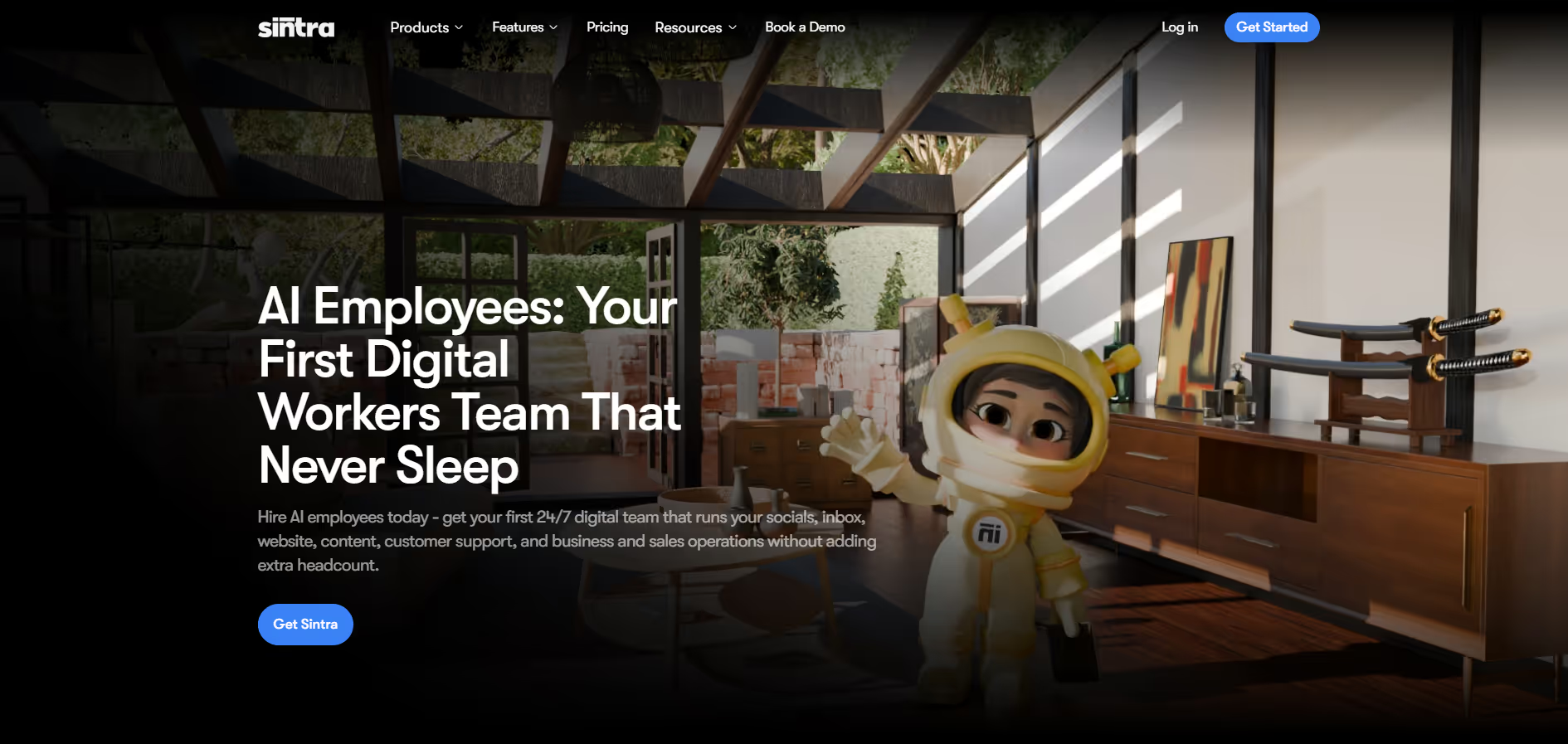
Manus AI and ChatGPT are both strong at generating outputs like content, research, analysis, and code. But most workflows still require users to manually handle the next steps.
Sintra AI focuses more on execution. Instead of working mainly through prompts and responses, it is designed to help automate ongoing business workflows across different operations and AI teams.
That includes task coordination, workflow automation, follow-ups, and business process execution inside a connected system.
The difference comes down to scope. ChatGPT and Manus mainly generate outputs. Sintra AI is built to help execute workflows continuously across a business.
From Prompting to Execution: What Makes Sintra AI Different
Prompt-based AI tools mainly generate outputs. Sintra AI is designed to help execute workflows.
For example, ChatGPT can draft a follow-up email. Sintra AI can draft it, personalize it using stored business context, and automate the next steps inside the workflow after setup.
The platform focuses more on ongoing automation, task coordination, and operational execution instead of isolated prompt-and-response interactions.
That is the core difference between AI that assists with tasks and AI built to help run workflows continuously.
AI Helpers and Role-Based Workflow Automation
Sintra AI is built around specialized AI employees who handle specific business functions. Instead of using one general-purpose assistant for everything, each Helper focuses on a dedicated role.
For example, Cassie handles customer communication, Dexter focuses on data analysis, and Penn manages writing and content tasks. Each AI Helper is designed to operate continuously within its assigned workflow.
Sintra currently offers multiple AI Helpers for areas like copywriting, SEO, recruiting, customer support, operations, and analytics.
This allows different AI Helpers to work on separate parts of a workflow at the same time, reducing the need to manage every task manually across different tools and teams.
Brain AI: Shared Memory That Powers Smarter Execution
At the center of Sintra AI is Brain AI, a shared knowledge layer that stores business context across all AI Helpers.
Brain AI can retain information like brand voice, audience details, workflows, documents, website data, and communication preferences. Instead of requiring repeated prompts and explanations, Helpers can pull from the same centralized context during execution.
This helps solve one of the biggest limitations of many prompt-based AI tools: fragmented memory and inconsistent outputs between workflows.
Because every Helper connects to the same Brain AI layer, support workflows, content generation, operations, and marketing tasks can stay more consistent without constantly re-establishing context.
Real-World Workflows Across Marketing, Sales, and Support
Sintra AI is designed to run connected workflows across different business functions instead of handling isolated tasks one at a time.
In marketing workflows, Penn can generate a blog post from a keyword brief, Seomi can optimize it for SEO, and Soshie can create social media content for distribution across platforms.
In sales workflows, Milli and Buddy can organize lead information, draft personalized outreach, manage follow-ups, and support pipeline coordination before handing leads to human teams when needed.
In customer support workflows, Cassie can pull product information from Brain AI, generate responses, and route more complex cases to human agents with the full conversation context already attached.
The goal is continuous workflow execution where multiple AI Helpers work together inside the same operational system instead of relying on separate prompts for every step.
Seamless Integration With Your Existing Tools
Workflow automation only works well when AI can connect directly to the tools businesses already use.
Sintra AI supports multiple AI integrations with platforms like Google Drive, Shopify, Google Calendar, HubSpot, Salesforce, and Google Analytics. These AI integrations allow Helpers to work across existing business systems instead of operating in isolation.
The setup process is simple and no-code. Users can connect tools through the Brain AI dashboard, giving Helpers access to the data and workflows needed for execution.
This allows AI Helpers to do more than generate outputs. They can operate within connected workflows, support automation, and interact directly with real business tools through AI integrations.
Why Execution-Layer AI Is the Future of Business Operations
AI is rapidly moving beyond simple prompt-and-response tools toward systems built around execution and workflow automation.
The first wave of AI focused on generating better answers, content, and research outputs. The next phase focuses more on taking action across real business operations.
Sintra AI is built around that shift through its network of AI Helpers, Brain AI system, and workflow automation capabilities designed to support multiple business functions at scale.
This matters because businesses need more than isolated outputs. They need systems that can coordinate workflows, automate repetitive operations, and support execution across teams without rebuilding processes from scratch.
Tools like ChatGPT and Manus improved AI-generated outputs. Execution-focused platforms like Sintra aim to turn those outputs into ongoing operational workflows that actively support business growth.
Choosing the Right AI Tool for Your Workflow
The right AI tool depends more on your workflow needs than on which model is “smarter.”
ChatGPT works best for fast responses, brainstorming, writing, coding, research, and flexible day-to-day tasks. Manus AI is better suited for users who need more structured task execution and autonomous workflows through AI agents. Sintra AI focuses more on continuous business workflow automation across teams, systems, and operations.
Here’s a quick comparison of all three platforms:
Turn Outputs Into Real Business Results
AI-generated outputs only create value when they lead to execution. A drafted email, marketing strategy, or research report still requires action before it impacts the business.
That is why more companies are shifting from one-off AI usage toward workflow automation and execution-driven systems. Automating even a single workflow, such as lead outreach, content distribution, or customer support responses, can save hours of repetitive work every week.
The most effective way to get started with Sintra AI is by choosing one operational workflow, automating it fully, and expanding from there as the system proves value.
For businesses looking to move beyond prompting and into continuous workflow execution, Sintra AI is built specifically for that transition.
Manus vs ChatGPT FAQs
What is the main difference between Manus and ChatGPT?
ChatGPT is primarily a conversational AI designed for writing, brainstorming, coding, research, and interactive problem-solving through prompts. Manus AI is built more around autonomous task execution, where AI agents can plan and handle multi-step workflows with less manual guidance. In simple terms, ChatGPT focuses more on conversation, while Manus focuses more on workflow execution.
Is Manus AI better than ChatGPT?
It depends on the workflow. ChatGPT is faster, easier to use, and better suited for everyday productivity, writing, coding, and brainstorming tasks. Manus AI is stronger for structured workflows, automation, and multi-step execution through AI agents. For most general users, ChatGPT is more accessible. For execution-heavy workflows, Manus offers deeper automation capabilities.
Can Manus replace ChatGPT?
Not completely. ChatGPT remains stronger for conversational interactions, creative work, fast iteration, and general-purpose assistance. Manus AI focuses more on autonomous workflows and operational task handling. Most users will likely benefit from using both tools for different types of work rather than treating one as a full replacement for the other.
Which AI tool is best for business use?
The best choice depends on how much workflow automation a business needs. ChatGPT works well for content creation, research, brainstorming, and productivity tasks. Manus AI is better for structured execution and agent-based workflows. For businesses looking for continuous workflow automation across operations, sales, support, marketing, and AI teams, Sintra AI is designed more around execution-layer automation and connected workflows.
Are there alternatives to ChatGPT and Manus?
Yes. Sintra AI is a strong alternative for businesses that need workflow automation and execution-focused AI systems. Other popular alternatives include Claude for long-form writing, Perplexity for research workflows, and specialized AI tools built for specific operational tasks.
Related articles