How to Build an Automated Sales Funnel in 9 Steps With AI

Table of Contents
Quick Answer: How Do You Build an Automated Sales Funnel With AI?
Building an automated funnel with AI comes down to 9 steps: define your ideal customer and goals, centralize your data, set up lead-capture points, automate qualification, personalize outreach, run nurture sequences, integrate your tools, analyze performance, and keep optimizing.
AI ties these steps together by scoring leads, sending the right message at the right time, and learning from every interaction. The result is a system that runs around the clock, treats each prospect personally, and gets sharper with every cycle. You don't need a big team or a complex tech stack; you need clean data, the right tools, and a clear sequence.
Most businesses lose customers without ever knowing why. Leads sign up, get a generic email, never hear back at the right moment, and quietly disappear. The sales team blames marketing, marketing blames the product, and meanwhile, money keeps walking out the door.
An Automated Sales Funnel fixes the leak at the source by guiding every prospect through the right steps without anyone having to chase them manually. Sintra's AI team makes this kind of system possible without a tech background.
Manual follow-ups, scattered tools, and guesswork can't keep up with how buyers shop today. People expect fast replies, relevant offers, and content that fits where they are in their decision-making. We'll walk through nine clear steps to build an AI-driven funnel that captures attention, qualifies leads, personalizes outreach, and improves itself over time.
What Is an Automated Sales Funnel and How Does It Work?
An automated sales funnel is a structured system that guides potential customers from awareness to purchase without manual follow-up at each step, using tools such as email sequences and chatbots. It takes the buyer's journey, from first click to closed deal, and runs it on autopilot, with AI making decisions along the way.
Here's what makes the AI version different from a regular funnel:
- Personalization at every touchpoint: AI reads behavioral signals (pages visited, emails opened, time on site) and adjusts messaging for each lead.
- Smart timing: Instead of fixed schedules, AI sends messages when each lead is most likely to engage.
- Predictive scoring: AI flags leads ready to buy and routes them to sales immediately.
- Continuous learning: Every interaction trains the system to perform better next time.
Example: If a lead visits your pricing page twice in a week, AI can trigger a personal outreach within minutes, long before a human rep would notice. That kind of speed matters: automated systems can respond to an inquiry within 5 minutes, which is the critical window when conversion rates are highest.
This whole process runs through intelligent marketing funnel software, and tools like Sintra's AI employees handle the heavy lifting so your team can focus on closing deals.
Key Components of an Automated Sales Funnel
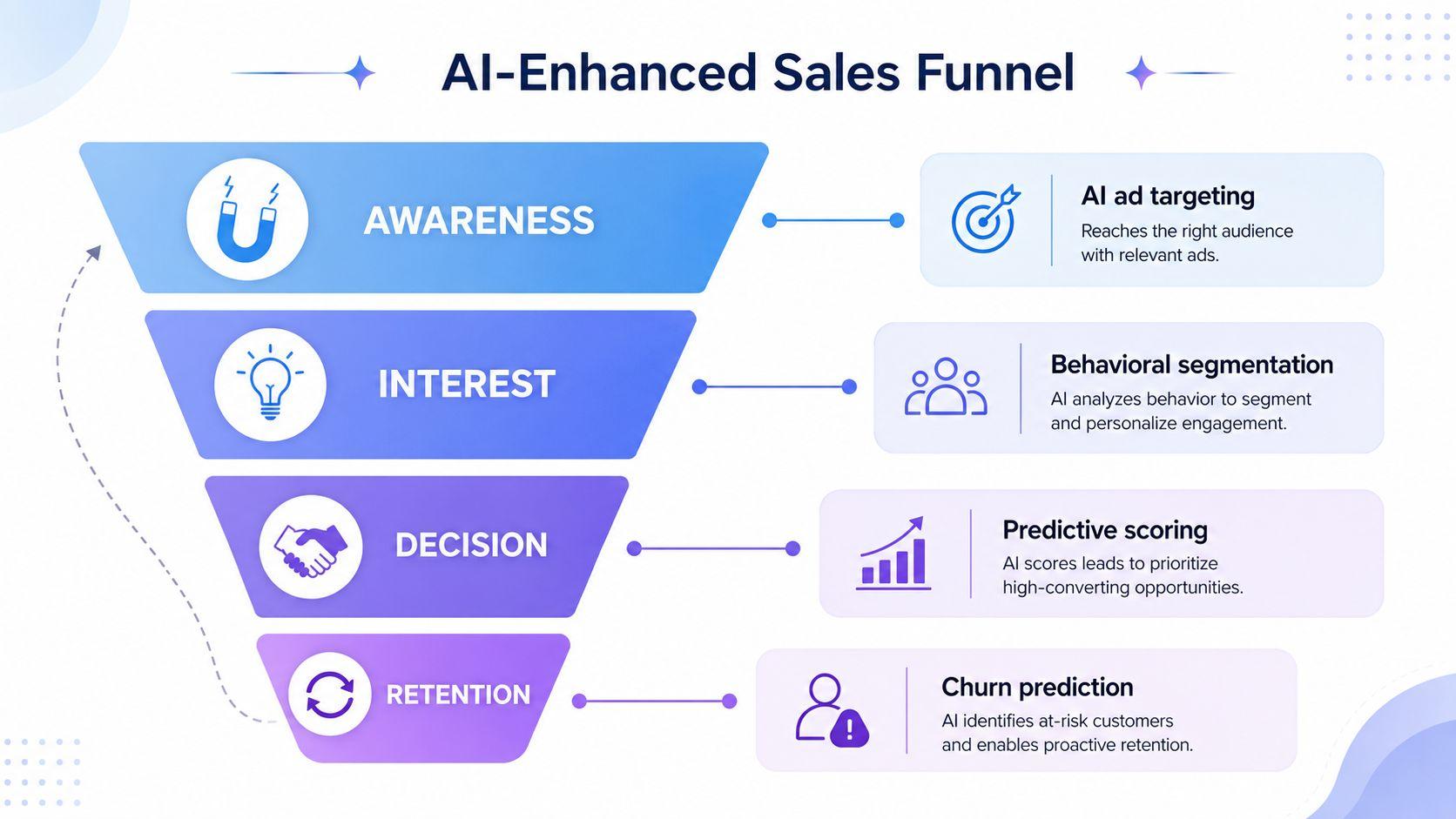
An automated funnel is a sequence of connected stages, each playing its own role. Skip one stage and the whole system weakens. The next four sections break down what happens at each stage and how AI plugs in.
Awareness Stage (Top of Funnel)
This is where prospects first hear about your brand, through ads, blog content, social posts, or search results. AI helps by reallocating ad budgets toward audiences that actually convert, surfacing your best-performing content, and filtering out vanity traffic that looks good in reports but never buys. For example, an AI-driven ad bidding system can shift spend away from a low-converting demographic and double down on the segment driving 80% of signups, without anyone having to manually pull the lever.
Interest & Consideration Stage (Middle of Funnel)
At this stage, leads know you exist but aren't ready to commit. They're comparing options and reading reviews. AI handles this stage through:
- Lead nurturing: Sending the right content based on what each lead has already consumed.
- Behavioral segmentation: Grouping leads by industry, behavior, or funnel stage.
- Content recommendations: Pushing the next-best piece automatically.
A practical example: if a lead visits your pricing page twice, AI can automatically send them a comparison guide that addresses common objections, without anyone on your team lifting a finger.
Decision Stage (Bottom of Funnel)
When a lead is close to buying, they need a reason to choose you over a competitor. AI helps with personalized offers, automated demo scheduling, and intent-based timing. For example, when a lead opens the same pricing email three times in a day, AI can flag them as high-intent and notify a sales rep within minutes. That speed often decides whether the deal closes or goes cold.
Retention & Loyalty Stage (Post-Funnel)
The funnel doesn't end when a deal closes; retention is where profit really builds. AI keeps customers engaged through automated onboarding, churn prediction, and tailored upsell triggers that reflect how they use your product. For example, when a customer's usage drops 40% over two weeks, AI can spot it and trigger a re-engagement email or a check-in from customer success before they cancel.
Step-by-Step Guide to Building an Automated Sales Funnel With AI
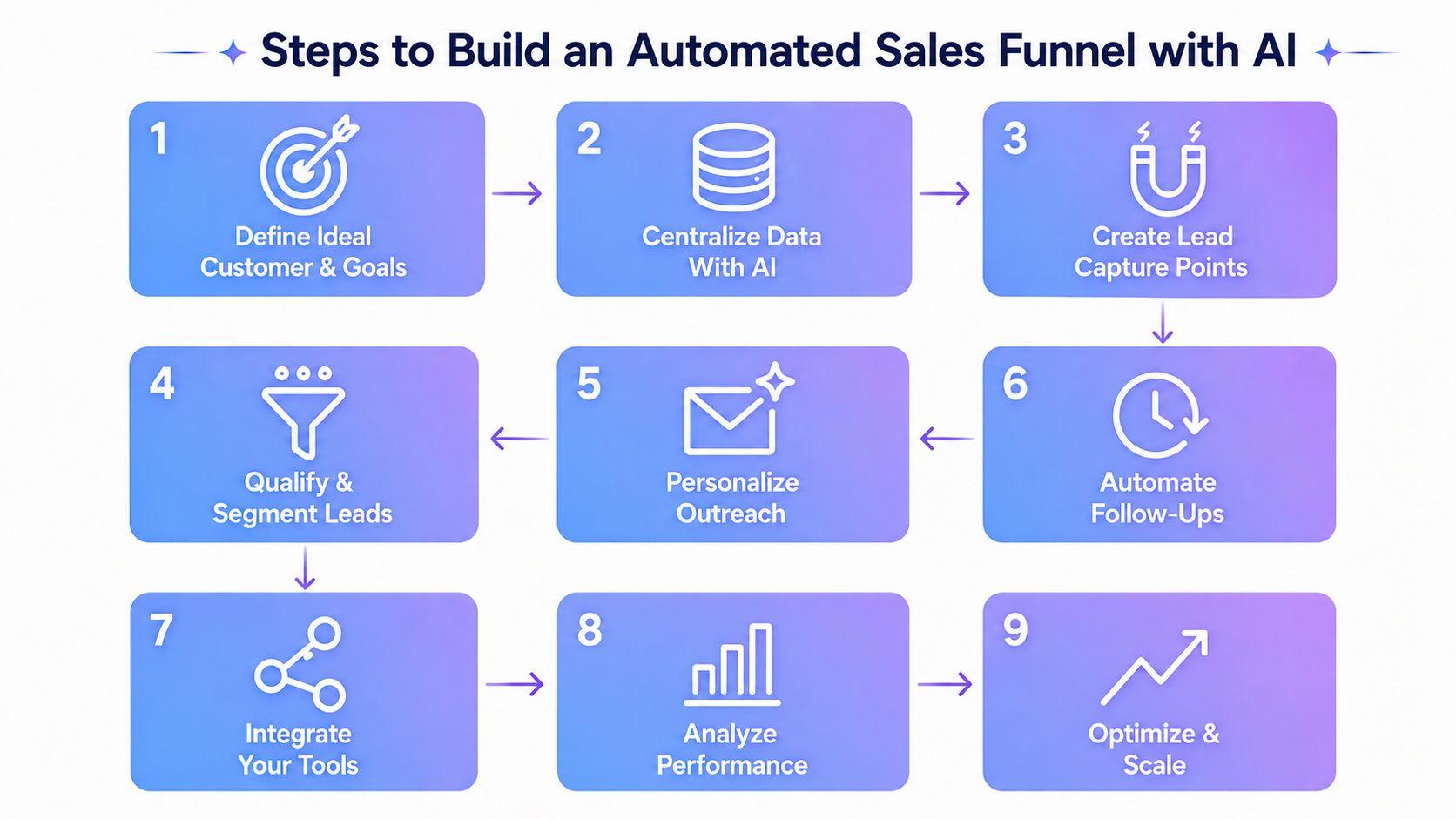
What follows is a nine-step build in which each step feeds the next. By the end, you'll have a connected, AI-powered system that runs from first touch to closed deal, and keeps improving with use.
Step 1: Define Your Ideal Customer and Funnel Goals
If you're looking to create an automated sales funnel, the foundation begins here. AI can only personalize what it understands, and it understands what you feed it. Before touching any tool, get two things right:
- Know your customer: Skip the vague persona. Define behavioral traits, pain points, and the exact moments where similar customers drop off.
- Set clear funnel goals: Each stage needs a measurable outcome, whether awareness, qualification, conversion, or retention.
Vague goals lead to vague automation. For example, a SaaS company targeting SMB ops managers might set a goal of booking a demo within 7 days of trial signup. That one specific goal then shapes every email, every chatbot script, and every retargeting ad that follows.
Case Study: HubSpot reported that Eastridge Workforce Solutions used clearer ICP definitions and funnel goals to increase qualified leads and sales productivity through automation. Read more on HubSpot's customer case studies.
Step 2: Build a Centralized Data System With AI
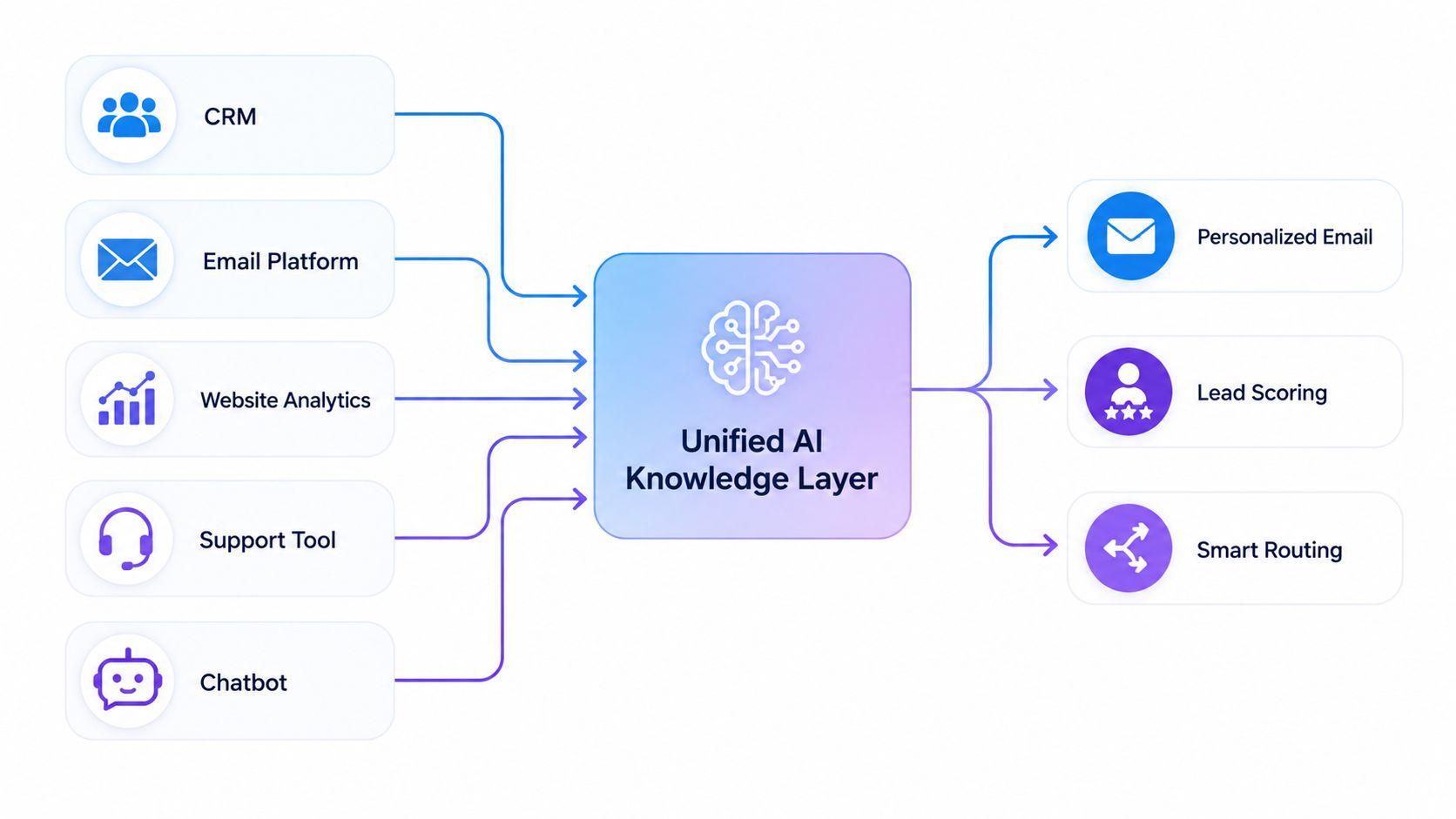
A funnel is only as smart as the data behind it. When customer data is spread across five disconnected tools, AI can't connect the dots. A centralized system stores customer behavior, interaction history, business context, and product information in one place, so every automated action sees the full picture.
Sintra's Brain AI is a good example: it learns your business once and passes that context to every automated interaction afterward. Without this layer, a lead who visited the pricing page, opened two emails, and submitted a support ticket gets treated like a cold contact. With it, that same lead gets recognized as a hot prospect and routed accordingly.
This matters because continuous feedback from automated systems helps you identify exactly where prospects are dropping off, allowing you to refine specific funnel stages. That feedback only works when all your data lives in one place.
Step 3: Create High-Converting Lead Capture Points
A lead capture point has two jobs: attract the right person and reduce friction so they actually convert. Key elements:
- A focused landing page: One clear offer, no distractions.
- A short form: Ask only what's necessary.
- A specific lead magnet: A checklist for ops managers pulls different leads than a generic ebook.
This is where AI earns its keep. It can test headline variations, optimize form length based on completion data, and identify which entry points attract the highest-quality leads rather than just the highest volume. For example, AI might spot that leads from one specific blog post convert 3x better than paid traffic, which would shift your budget and content strategy.
Case Example: Unbounce's Conversion Benchmark Report found that AI-optimized landing pages convert significantly better than non-optimized versions across industries. See the data at the Unbounce Conversion Benchmark Report.
Using AI Chatbots for Lead Capture & Qualification
AI chatbots act as a 24/7 entry point into your funnel, replacing static forms with conversation. They reduce friction by skipping long forms, qualify leads in real time with the right questions, and automatically route them to the correct segment.
For example, a visitor lands on your pricing page. A chatbot asks about their team size and use case. Based on the answers, it either books a demo with sales or drops them into a self-serve nurture track, all without anyone on your team getting involved.
Step 4: Automate Lead Qualification and Segmentation
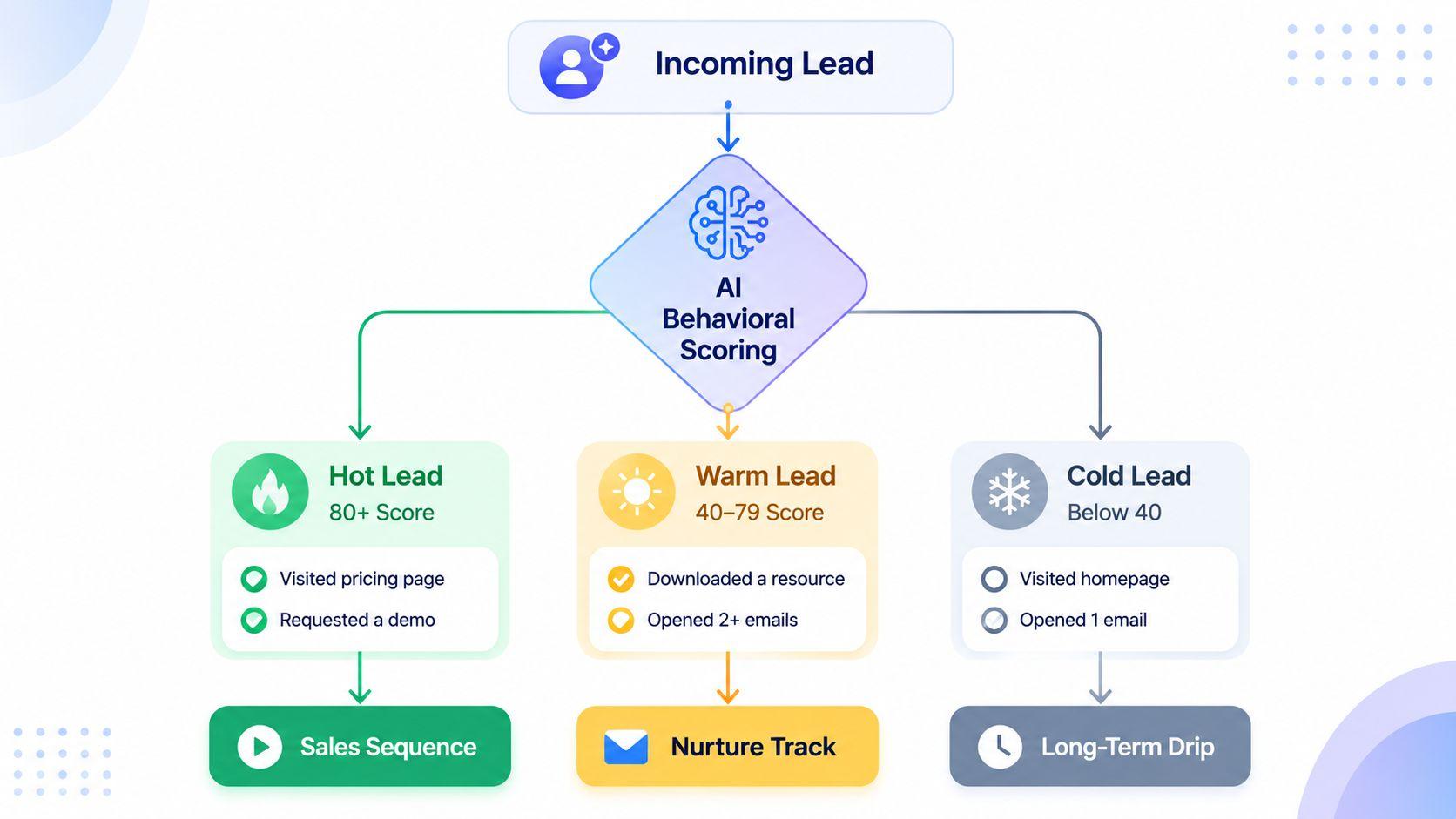
Not every lead deserves the same follow-up. AI scores leads based on behavioral signals, including pages visited, emails opened, content downloaded, and time spent on pricing pages. High-intent signals trigger fast outreach; low-intent leads go into a longer nurture track.
Segmentation then splits leads into groups by industry, company size, behavior, or funnel stage, so each group gets messaging that actually fits.
Example:
- A lead who downloads a case study and visits the demo page twice is routed straight to a sales sequence.
- A lead who has only opened one email is sent a softer educational sequence.
This kind of sorting matters because businesses that implement marketing automation see a 451% increase in qualified leads, and most of that lift comes from finally treating different leads differently.
Step 5: Personalize Outreach With AI-Generated Content
Personalization at scale is something manual funnels can't do, and it's AI's clearest advantage. Personalized outreach looks like:
- Emails that reference the lead's industry.
- Messages timed to when the lead is most active.
- Offers that match their funnel stage.
AI automatically generates these variations using data collected in earlier steps. For example, a lead in eCommerce gets a case study about cart recovery; a lead in SaaS gets one about trial-to-paid conversion. Same product, completely different message. Tools like Sintra's AI sales agent handle this kind of output at volume.
This matters because 72% of B2B customers expect personalized content, and automated funnels can consistently meet this demand across thousands of prospects.
Success Story: Mailchimp's email benchmarks show that segmented and personalized email campaigns drive significantly higher open and click rates than generic blasts. See the data at Mailchimp Email Marketing Benchmarks.
Step 6: Set Up Automated Follow-Ups and Nurture Sequences
Most leads don't convert on first contact, and the follow-up is where deals are won or lost. A nurture sequence is a series of touchpoints spaced by behavior, not just calendar days. If a lead opens email one but ignores email two, the sequence adapts, perhaps with a different subject line, a different offer, or a pause before the next send.
Three elements make sequences work:
- Timing: Sent when the lead is most engaged.
- Relevance: Content matches where they are in the funnel.
- Persistence without annoyance: AI knows when to pull back.
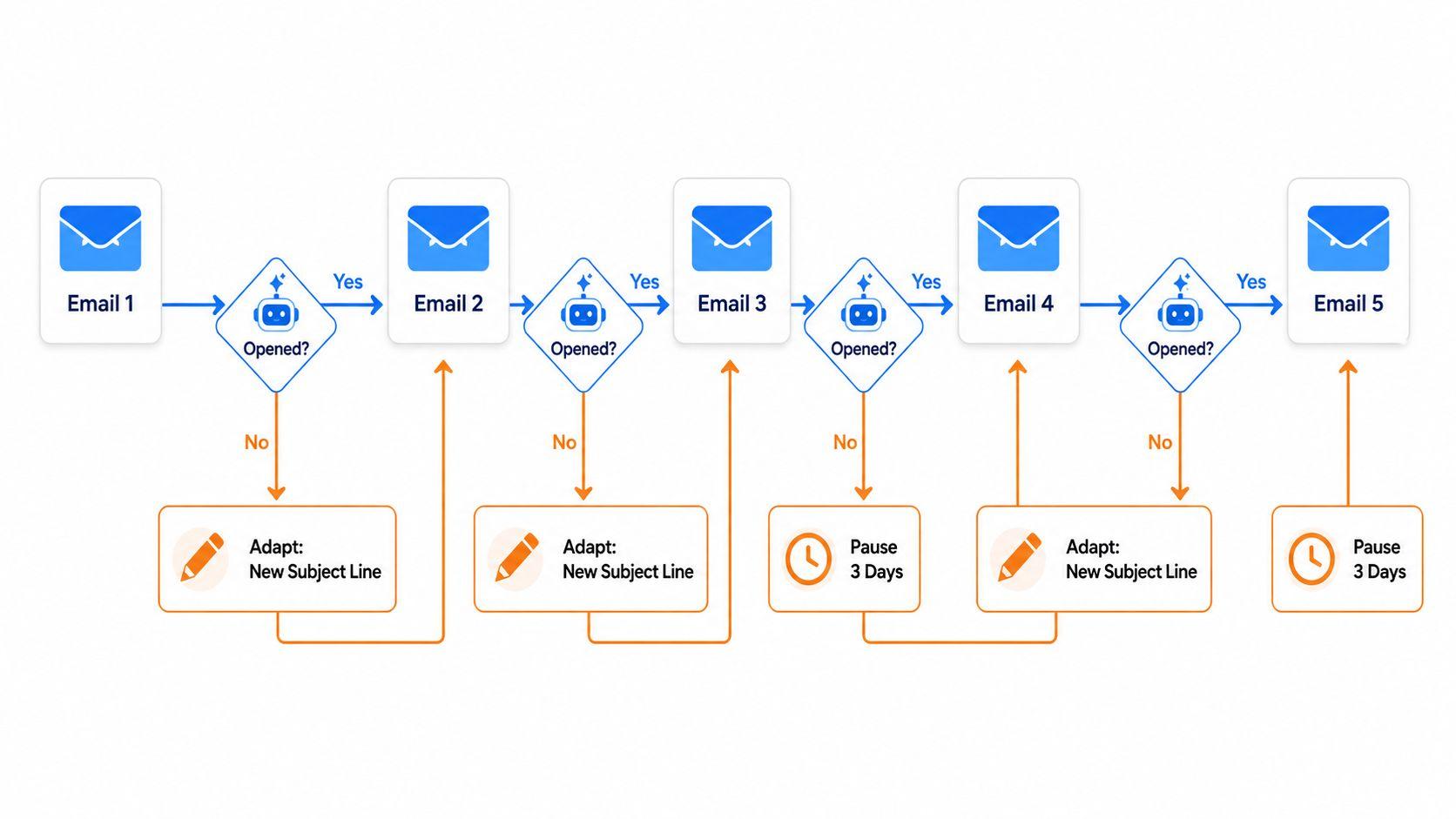
Example: A 5-email sequence where each message unlocks only after the previous one is opened keeps engagement high without overwhelming cold leads. And because automation ensures that every lead is nurtured systematically, conversion rates rise significantly compared to manual follow-ups.
Step 7: Integrate Your Funnel With Existing Tools
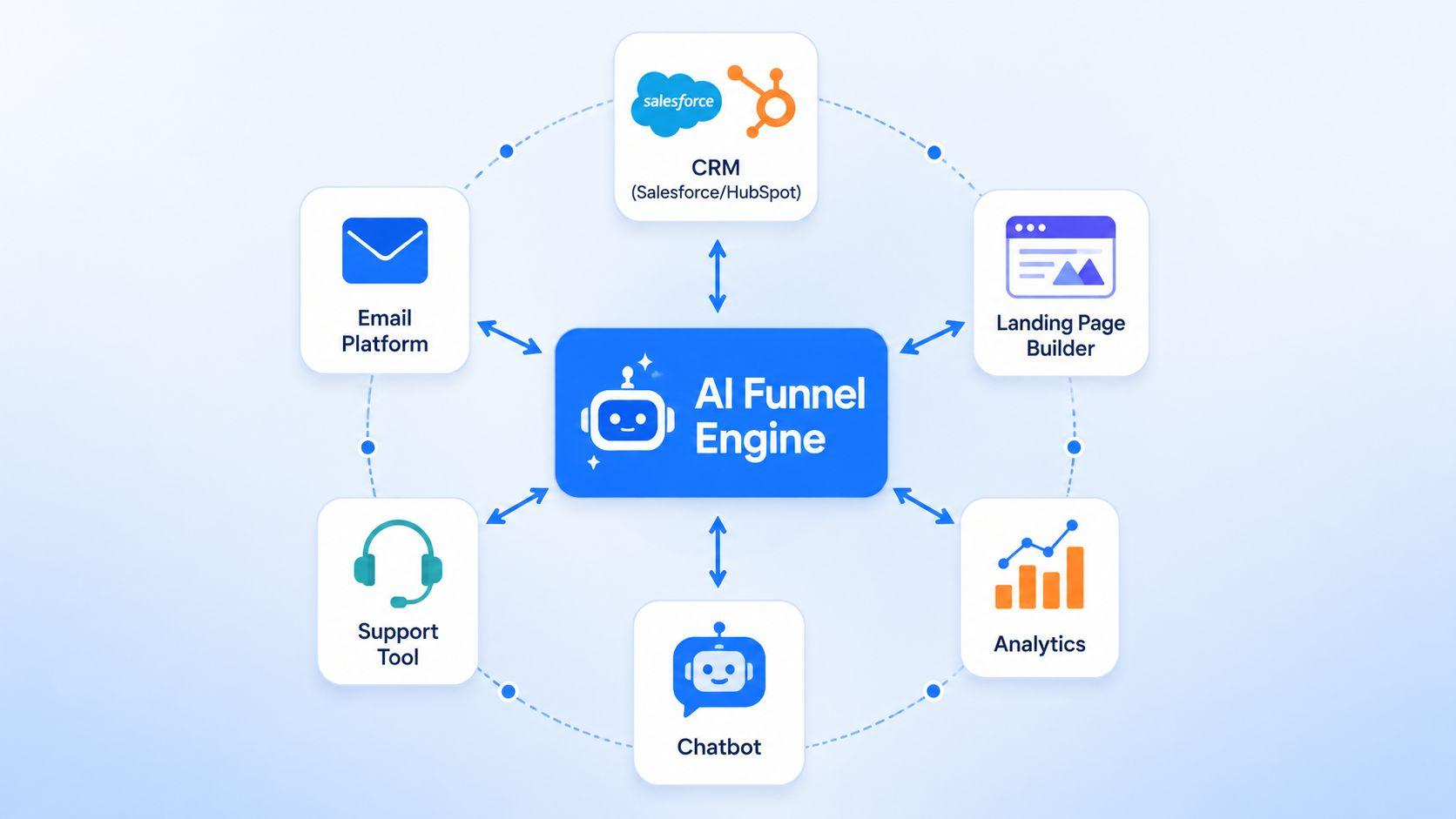
A funnel only works as a system when its tools communicate with each other. Integration turns a collection of separate tools into one workflow:
- Your CRM knows when an email was opened.
- Your email platform knows when a deal was closed.
- Your support tool knows when a customer hits a problem.
The most critical connections are CRM to email, email to landing pages, and analytics back to the whole system. Platforms like Sales Funnel, Salesforce, and other sales funnel CRM solutions make it easier to centralize pipeline data and trigger the right actions at the right time. The goal is zero manual handoffs; data flows automatically, actions trigger automatically, and nothing falls through the gaps because someone forgot to update a spreadsheet.
This matters because sales funnel software centralizes lead capture, follow-up automation, pipeline management, and reporting, enabling teams to manage the entire customer journey from one system. Sintra's AI integrations plug into the tools your business already uses, so you don't have to rebuild from scratch.
Step 8: Analyze Funnel Performance With AI Insights
A funnel without measurement is just guesswork at scale. AI tracks what humans often miss, not just conversion rates, but where leads drop off, which messages drove re-engagement, and what behavioral patterns predict a close.
Key metrics worth watching at each funnel stage:
- Entry point conversion rate
- Email open and click rates
- Lead-to-demo rate
- Time-to-close
What makes AI analysis different from a standard dashboard? It doesn't just report what happened; it surfaces why and suggests what to adjust. For example, AI might flag that leads from a specific traffic source have a 40% lower close rate despite converting well at the top of the funnel, pointing to a targeting misalignment worth fixing.
This kind of analysis matters because AI-powered forecasting can reach 96% accuracy compared to roughly 66% for human predictions, a gap big enough to change how you allocate budget and people. Sintra's AI for data analysis, Dexter, is built specifically for this kind of work.
Key Metrics & KPIs to Track in an AI Sales Funnel
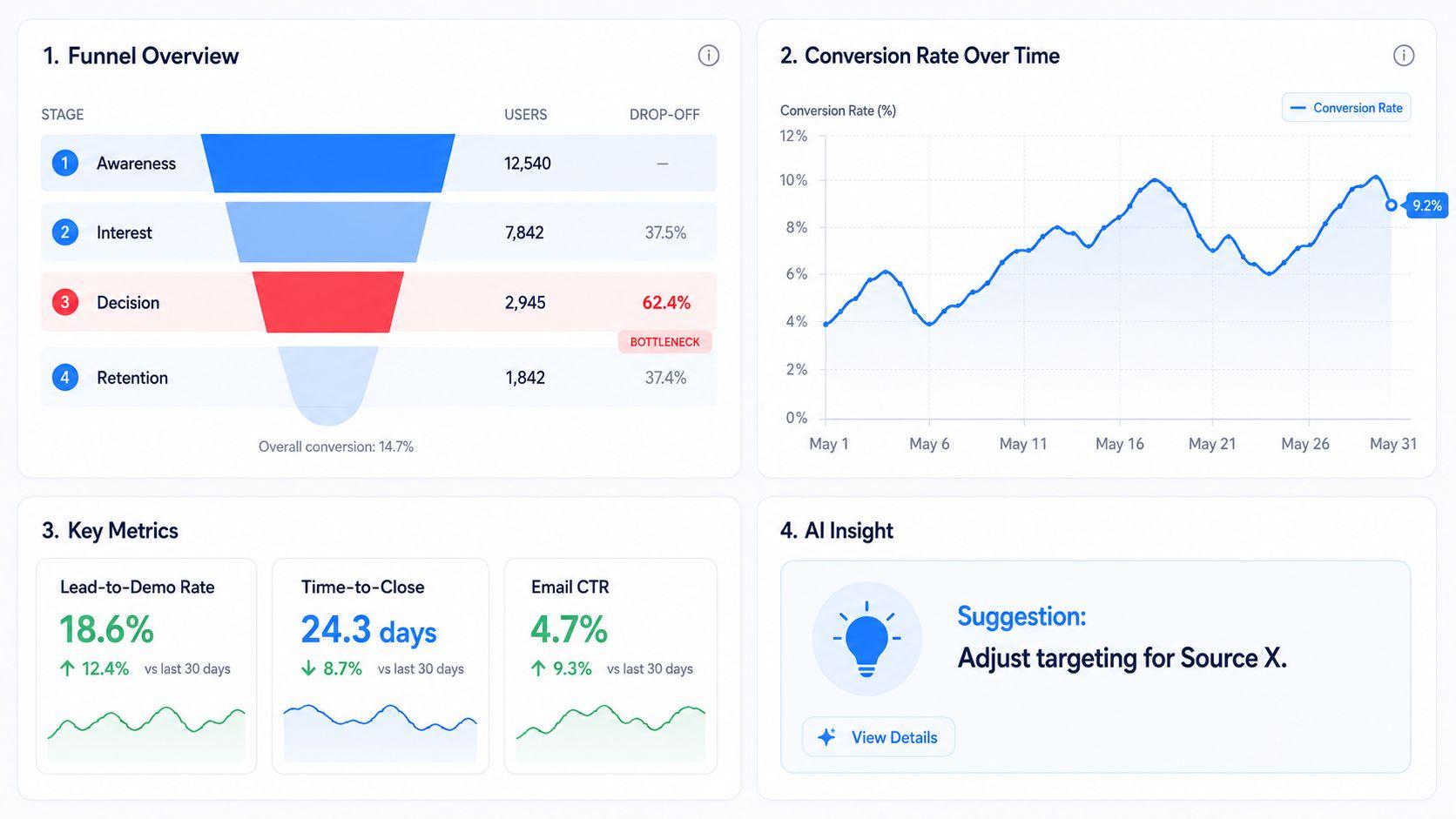
These are the metrics that actually predict performance, not vanity numbers:
- Conversion rate per funnel stage
- Cost per lead (CPL)
- Customer acquisition cost (CAC)
- Lead-to-customer ratio
- Time-to-close
- Funnel velocity
- Email open and click-through rates
- Customer lifetime value (CLV)
Step 9: Continuously Optimize and Scale Your Funnel
Building the funnel is step one. The real advantage compounds over time as AI learns what works. There are two phases:
- Optimization: Use performance data from Step 8 to test and refine individual elements, such as subject lines, landing page copy, and sequence timing.
- Scaling: Replicate what works across new channels, audiences, or product lines without rebuilding from scratch.
One practical scaling example: a funnel that converts well for inbound leads gets adapted for a cold outreach channel using the same sequence logic but different entry messaging. The broader point is that an AI funnel doesn't just save time today; it gets measurably better every cycle.
Revenue growth for companies investing in AI-powered funnels can range from 10% to 20% increase in sales ROI and revenue uplifts of up to 10%. Case Study: ActiveCampaign's customer stories show businesses scaling from a few hundred to tens of thousands of automated contacts while maintaining engagement rates. See examples at ActiveCampaign Customer Stories.
Re-Engagement & Retargeting Automation
The funnel isn't finished when a lead goes cold. Re-engagement is where AI quietly recovers revenue. It tracks leads who dropped off (didn't open the last three emails, abandoned a cart, ghosted after a demo) and triggers personalized retargeting through ads, SMS, or a different email angle.
Example: AI identifies a lead who downloaded a whitepaper 60 days ago but never converted, then automatically serves a retargeting ad with a customer case study from the same industry, bringing them back into the active funnel without any manual effort.
Real-World Example: An Automated Sales Funnel in Action
Let's walk through what this looks like end-to-end. Imagine a B2B SaaS company selling project management software to mid-market operations teams.
Step 1–3
The company defines its ICP as ops managers at companies with 50–500 employees. They launch a LinkedIn ad targeting that audience, driving traffic to a focused landing page with an AI chatbot.
Step 3–4
The chatbot asks two qualifying questions: team size and current tools. A qualified lead is routed; an unqualified one is added to a long-term nurture list.
Step 5–6
The lead enters a segmented email nurture based on their industry. AI sends them content matched to ops-team pain points, adjusting timing based on when they open emails.
Step 7
The lead visits the pricing page twice in 48 hours. AI flags this as a high-intent signal and automatically books them into a demo with the right sales rep.
Step 8
AI tracks engagement throughout the deal cycle, flagging the deal as high-priority based on behavior patterns the rep wouldn't have caught manually.
Step 9
After the deal closes, automated onboarding kicks in. AI monitors product usage and triggers an upsell sequence three months later when the customer adds two new team members.
The entire journey runs in the background. The sales team only steps in at the demo and close; everything else happens automatically.
Common Mistakes to Avoid When Building Automated Sales Funnels
The biggest mistakes in automated funnels usually come from doing too much, doing it too generically, or not having enough connection between systems.
Example: A company sending the same welcome email to every new signup, regardless of industry or company size, loses leads that would've converted with a more relevant first message. Good sales funnel software prevents that by reading signals and automatically adjusting the message.
Best AI Tools for Sales Funnel Automation
The right tool stack depends on which stage of the funnel needs the most help. Some businesses want an all-in-one platform; others have a stack they're already invested in and need point solutions to fill specific gaps. Many teams also benefit from building custom sales funnels tailored to their specific audience, product type, and sales cycle rather than relying on a one-size-fits-all template.
How to choose: all-in-one platforms work best for businesses that want a unified context across every stage. Point solutions fit teams already invested in a specific stack who just need to add intelligence to one piece. For most solopreneurs and small teams, starting with an all-in-one platform saves the integration headache and gets results faster.
Benefits of AI Sales Funnel Automation
AI in the funnel isn't theoretical. The outcomes show up in time saved, conversion rates, headcount efficiency, and decision speed. Here's what businesses actually see.
Save Time on Repetitive Tasks
AI handles lead scoring, follow-ups, segmentation, and reporting on autopilot. Sales professionals save an average of 2 hours and 15 minutes per day through automation, freeing up time to focus on high-value activities.
Example: A sales rep who used to spend 2 hours each morning manually qualifying leads now opens their laptop to a pre-ranked priority list; AI has already scored every new lead overnight and ordered them by likelihood of closing.
Increase Conversion Rates Through Personalization
Personalization driven by behavioral data converts better than generic blasts. Personalization in sales funnels enhances customer engagement and conversion rates by tailoring interactions based on individual customer behavior and preferences.
McKinsey research has shown that personalization can lift revenue by 10–15% on average, with top performers seeing even higher gains. See the full report at McKinsey on Personalization.
Scale Without Adding Headcount
AI lets businesses handle 10x the leads without hiring 10x the staff. A three-person team running an AI funnel can process 50,000 leads a month with the same consistency as a 30-person team would deliver manually. Businesses that implement automation in their sales processes can scale their revenue without proportional increases in headcount, making growth more sustainable.
This is also why automation can lower customer acquisition costs (CAC) by up to 25% through more efficient lead targeting and relationship building; you're getting more output from fewer people.
Get Real-Time, Actionable Insights
AI surfaces what's working and what isn't in real time, not in a monthly report. Instead of reacting to last month's numbers, you can adjust today's campaign mid-flight. Automated sales funnels provide measurable insights into customer behavior and campaign performance, allowing businesses to refine their strategies over time for better results.
Example: A campaign launches Monday morning. By Tuesday afternoon, AI flags that one ad creative is converting 4x better than the others. You shift the budget that same day instead of finding out three weeks later.
Why Use AI for Sales Funnel Management?
The core problem with manual funnels is that they break under volume. A human team can nurture 50 leads. AI can nurture 50,000 with the same consistency. Manual funnels depend on timing, memory, and bandwidth, three things humans run out of fast. AI funnels run on behavioral triggers, real-time data, and continuous learning.
Three specific advantages stand out:
- Scalability: Add zeros to your lead count without adding people.
- Personalization at scale: Every lead gets messaging that fits them, even with thousands of leads.
- Performance visibility: You see what's working as it happens, not weeks later.
The numbers back this up. Businesses utilizing automation often see a 14.5% increase in sales productivity and a 12.2% reduction in marketing overhead. Skipping AI in your funnel isn't a safe choice; it's a slow leak that competitors are already plugging.
Sintra's AI business assistant helps teams tie all of this together who don't have the time or budget to stitch tools together themselves.
Manual vs AI Funnels: What Changes at Scale
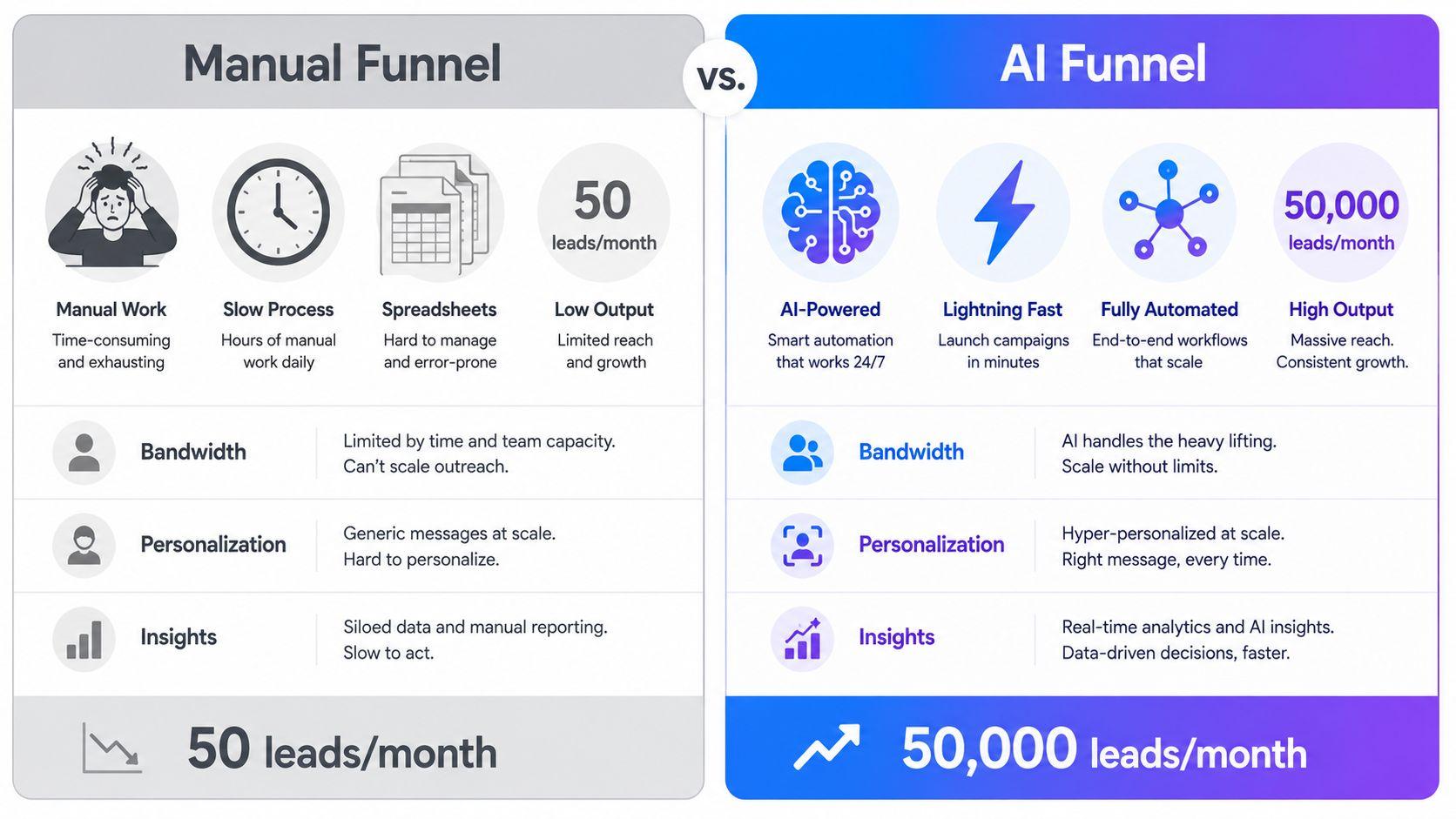
Manual funnels rely on someone remembering to send the follow-up. AI funnels trigger automatically based on behavior. The difference shows up immediately past a few hundred leads; manual processes start dropping signals, while AI keeps each interaction consistent regardless of volume.
Scalability: Handle More Leads Without More Work
A small team using AI can match the output of a much larger manual team. Going from 50 leads a month to 50,000 doesn't mean hiring 100 new people; it means scaling the system that's already running. Automation in sales funnels allows businesses to scale their marketing and sales processes without increasing payroll, making growth sustainable and efficient.
Personalization at Scale With AI
AI uses behavioral data and other information to tailor messaging for each lead. For example, two leads sign up the same day, one from healthcare, one from retail. AI sends them different welcome emails, case studies, and demo invitations, all without anyone having to write two separate sequences.
Smarter Decisions With Real-Time Funnel Insights
AI surfaces bottlenecks and optimization opportunities instantly. If your lead-to-demo rate suddenly drops on Wednesday, you'll know on Wednesday, not when the monthly report lands. That faster visibility means faster fixes and fewer leads lost while you figure out what's broken.
Ready to Automate Your Sales Funnel With AI?
Building an AI-powered funnel doesn't have to mean stitching together ten tools and hiring a developer. Sintra AI brings every step we've covered, including lead capture, qualification, personalization, follow-up, integration, and analytics, into one platform that's built for solopreneurs, small businesses, and growing teams. You get the power of an enterprise-grade funnel without the enterprise complexity, and your AI employees keep working while you sleep.
If you're ready to stop losing leads and start scaling without burnout, get started with Sintra AI and put your funnel on autopilot.
Automated Sales Funnel FAQs
How does AI improve a sales funnel?
AI improves a sales funnel by personalizing every interaction, automatically scoring leads, sending messages at the right time, and learning from each touchpoint. It catches signals humans miss, like a lead visiting pricing twice in one day, and acts on them immediately. Over time, the funnel keeps improving as AI learns which messages, timing, and offers actually convert.
How much does it cost to build an automated sales funnel?
Costs vary widely. A basic AI funnel using affordable tools can run $100–$500 a month for small businesses. Mid-market setups with multiple integrations typically cost $1,000–$5,000 monthly. All-in-one platforms like Sintra AI bundle most needs into one subscription, which usually works out cheaper than stitching together five separate tools.
What's the difference between a click funnel and an automated sales funnel?
A click funnel is a sequence of pages designed to guide someone toward a single action, such as a landing page leading to a checkout. An automated sales funnel is broader: it includes lead capture, qualification, nurture sequences, follow-ups, and post-purchase engagement, all automated. A click funnel is one piece of a full automated sales funnel.
What's the difference between a sales funnel and a marketing funnel?
A marketing funnel focuses on attracting and educating prospects, building awareness and interest. A sales funnel picks up from there, focusing on qualifying leads, handling objections, and closing deals. They overlap heavily, and in most modern setups, especially those using marketing funnel automation, they run as one connected system rather than two separate processes.
Can small businesses use automated sales funnels effectively?
Yes, small businesses often see the biggest gains because they have the least time to manually chase leads. With the right tools, a solo founder or three-person team can run a funnel that handles thousands of leads with the same consistency as a much larger company. Starting with an all-in-one AI platform is usually the fastest path to results, even without a technical background.
Related articles


.avif)