Comparing ChatGPT 4 vs 5

Table of Contents
Quick Answer: What Is the Difference Between ChatGPT 4 and GPT-5?
GPT-5 is an advanced large language model from OpenAI, an upgrade from GPT-4. Compared to the previous version, GPT-4, the ChatGPT-5 series offers noticeable improvements in reasoning, context retention, instruction following, agentic workflows, coding, and complex queries. Whereas GPT-4 is designed for casual routine questions, content creation, and multimodal data interpretations.
GPT-4 is still a capable and cost-effective alternative for everyday productivity tasks, such as data summarization, web search, QnAs, and writing. For technical workflows and data-intensive tasks, ChatGPT 5 is a better choice.
AI chatbots have come a long way from text-only answer assistants to advanced reasoning engines with multimodal capabilities. One of them is a pioneer, ChatGPT. Since its introduction in 2022, GPT models have changed how people perceive work. Today, it can write, analyze, synthesize, and communicate on your behalf.
Recently, OpenAI announced the fifth version of its renowned GPT model, GPT-5. It’s better in reasoning, context handling, memory retention, and technical problem-solving. As more of its new variants are added to ChatGPT and the older GPT-4 gets retired, many are wondering: GPT 5 vs 4: which is better?
To answer this, here is an in-depth GPT-5 vs GPT-4 comparison guide based on performance, speed, accuracy, reasoning, and content creation. Here is a quick side-by-side GPT5 vs GPT4 comparison.
ChatGPT 4 vs GPT-5: Performance, Reasoning, Coding, and Usability Compared
GPT-4 vs GPT-5; which is better? Here is an in-depth comparison between ChatGPT 4 and ChatGPT 5 based on performance, reasoning, coding, speed, and content creation. Keep reading to know which suits your workflow better.
Reasoning and Problem-Solving Abilities
The most obvious and meaningful shift from GPT-4 to GPT-5 was its reasoning capability. GPT-5 was built for deeper, multi-layered reasoning compared to GPT-4, which mostly relied on linear, surface-level responses that are fast and do not involve multi-step logic.
GPT-5 acts as a unified system that answers your complex and casual queries using a real-time router. Once you enter the prompt, the router accesses which variant (thinking or basic) to use, based on the conversation type, prompt complexity, and intent. This router is trained on real signals (response rates, user intent, measured correctness, and improvements).
Further, the GPT-5 has a native chain-of-thought reasoning. Meaning, it breaks down complex problems into smaller steps, thinks through each, and forms answers. You will also notice that, in thinking mode, the AI might ask you for clarifications and take longer before responding. Hence, it naturally excels at coding, strategy, planning, and problem-solving.
This architectural shift makes GPT-5 a smarter and more efficient alternative than predecessors, including GPT-4. It showed significant gains in performance benchmarks against the GPT-3 and GPT-4. For instance, it scored 24 on the Artificial Analysis Intelligence Index, compared to GPT-4 that scored 13 on this index. The GPT-5.5 (xHigh) stands at 60 score, behind Claude Opus 4.8 max with 61 score.
Moreover, the GPT-5 has significant improvements in multimodal capabilities. This model not only reads images, but also interprets and analyzes them, identifies patterns, makes logical inferences, and solves problems. In the MMMU (Massive Multi-Discipline Multimodal Understanding) benchmark, GPT-5 scored 84.2% (without thinking mode) and 74.4% (with thinking mode). Both these scores are higher than GPT-4o’s 72.2% scores.
Another benefit of GPT-5 over GPT-4 is that it has reduced hallucinations quite effectively. This means you do not have to constantly verify and fact-check responses. In long fact concepts and production traffic errors, GPT-5 showed around 84% improvement over predecessors ChatGPT versions like o3 and o3 mini. With GPT-4, hallucinations are a limitation, which is why human review becomes crucial.
Coding and Developer Experience
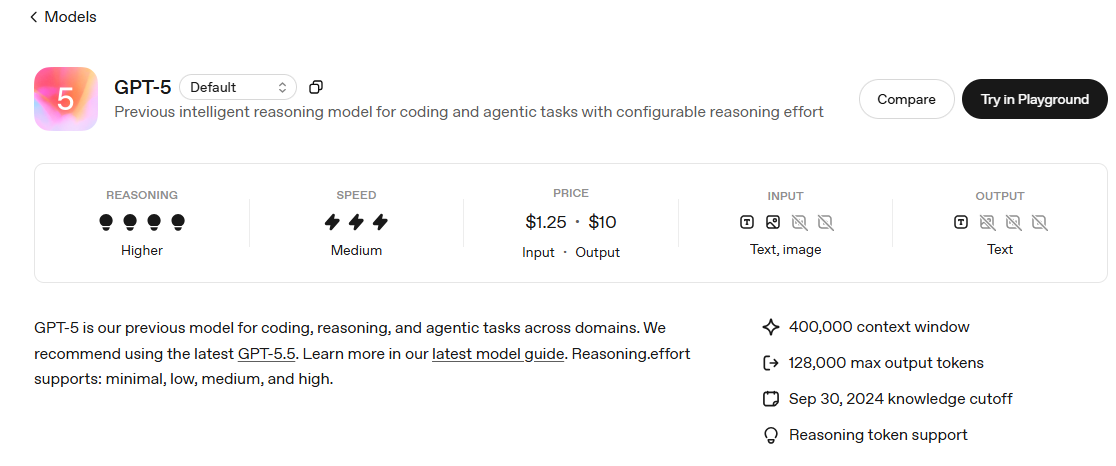
Thanks to multi-step reasoning and better context awareness, GPT-5 stands superior in coding and developers’ experience. It can write high-quality code, generate front-end UI, debug large-scale repositories, and execute a long chain of tools. You can also create visually pleasing web designs and apps with this model. Compared to ChatGPT-4, GPT-5 has refined and human-like design elements (spacing, typography, buttons, etc).
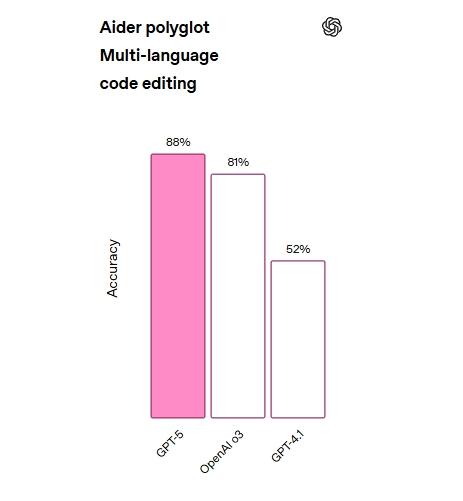
OpenAI illustrated that this state-of-the-art model performs better than previous versions in coding benchmarks. It scored 74.9% on the SWE-bench verified against o3 with 69.1% and, GPT-o with 30.8%, and 88%.

GPT-5 also scored higher on Aider Polyglot (88%) compared to GPT-4.1 (52%) and OpenAI o3 (81%).
What’s better is that the GPT-5 model is collaborative and adaptable to your instructions. Developers can use its APIs to include detailed instructions and upfront action explanations between tool calls for workflow automation. OpenAI has trained GPT-5 on real-world coding tasks with startups and enterprises. For instance, Cursor described it “as the smartest model used” and “even has a personality”.
For developers, OpenAI has launched GPT-5, GPT-5 mini, and GPT-5 nano APIs. This way, in-house developers can fine-tune performance, latency, and cost according to their business workflows. Unlike the complete ecosystem that includes both reasoning and non-reasoning models, GPT-5 APIs only have reasoning models, which are better tuned for developers.
Another useful feature OpenAI has added to the API is the verbosity parameter (values: low, medium, and high). With this, developers have better control over the answer’s length and response time.
Context Window and Memory Handling
GPT-4 vs GPT-5: Which is better at handling context? The answer: ChatGPT's latest model, GPT-5, excels at memory-driven tasks, such as context retention, complex reasoning, and processing a large volume of text. Unlike GPT-4, it shows better cross-session memory and long-conversation consistency.
For starters, GPT-5 has an approximate 1M-token context window, compared to a 128 K-token window of GPT-4. With this, academicians and corporate officials can upload lengthy PDFs, research papers, project documents, and so on. Meaning, it can retrieve information from extensive repositories with better accuracy. OpenAI expanded the maximum token limit of the new variant GPT-4.1 to 1M-tokens. Still, the GPT-5 sustains better at handling context with extensive documents.
Moreover, compared to GPT-4’s traditional file processing mechanism, GPT-5 has a revolutionary memory-like behaviour that transfers through a real-time routing system. Using this, the AI remembers your preferences in lengthy conversations, regardless of the variant being used.
Let's say you have a long conversation with the chatbot that exceeded the limit of that specific model’s reasoning capacity. This real-time router will automatically direct your conversation to the GPT-5 Mini version. While doing so, it keeps the context and details intact, so the chat feels smooth and maintains continuity.
Another advantage GPT-5 has over GPT-4 in contextual awareness is its previous_response_ID in the API. With this function, developers using the GPT-5 API can send the IDs of the AI’s previous responses to the next request. Result: the AI can recall what it already created or responded with, rather than interpreting this conversation from scratch. This improves consistency and relevance across conversations.
Whereas, GPT-4 often struggles with the “lost in the middle’ phenomenon. Once you ask it to retrieve data from the middle of the document or long chats, there’s a high chance it will hallucinate and fabricate data. Hence, it cannot be trusted in high-stakes context tasks
Speed and Natural Interactions
When it comes to speed and casual conversations, GPT-4 is a clear winner. Some variants like GPT-4o and GPT-4 Mini are known for being highly responsive. You ask them a casual query, and their response is almost instant. However, they lack a deeper understanding and often lag with extensive prompts.
In comparison, GPT-5 feels slower, but it’s intentional. ChatGPT-5 is built for structured, multi-layered, and in-depth conversations. It has a deep research and thinking mode that pauses to brainstorm and process data for complex problems.
But the good thing about this model is that it has adaptive speed. For routine tasks, the GPT-5 nano and turbo respond faster. Whereas GPT-5.5 Pro uses its thinking mode to delay the responses deliberately. This way, it can dig deeper into sources, retrieve relevant data, and form answers with better accuracy.
Overall, GPT-4 shows significant performance gains when put to the test against GPT-5. For reference, GPT-5 nano produces roughly 90 output tokens, compared to GPT-4 omni that produces around 17 output tokens. Whereas the GPT-4.1 Mini produces 88 output tokens per second, against GPT-5.5, which has 57 output tokens per second. The GPT-5 variants show a higher number (such as GPT-5 nano produces 170 output tokens per second.
Everyday Productivity and Content Creation
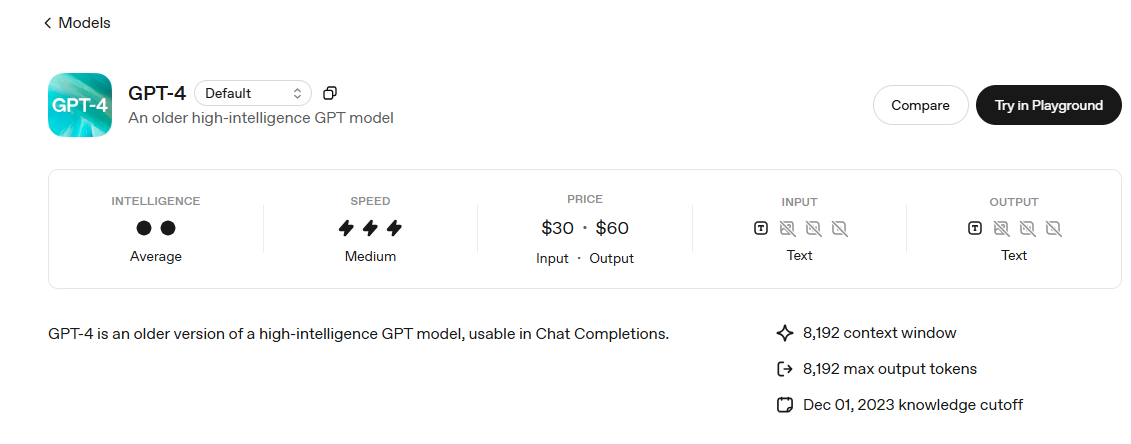
Chat GPT-4 vs 5: Which can write content better? The answer: neither, as both have distinct advantages. GPT-5 has a more structured logic when writing, whereas GPT-4 truly shines in freedom and narrative writing.
GPT-4 is popular for being conversational, warm, and traditionally creative. You can clearly see that its responses have improved vocabulary and semantic nuances in producing stories, writing scripts, and developing narratives. Hence, naturally, marketers use it for social media captions, outreach emails, ad copy, scripts, and so on.
In comparison, GPT-5 focuses on clarity and precision. Its produced content appears more tight, direct, formal, and context aware. Yet, it feels like the AI is using a template, which works well for business communications, technical documents, SEO-heavy blogs, and factual writing.
Similarly, in everyday productivity, both ChatGPT-4 and ChatGPT-5 serve varying purposes. For instance, GPT-5 has native chain-of-thought reasoning, meaning it is more capable at analyzing documents, multi-layered brainstorming, and parsing codebases.
Moreover, GPT-5 has a better memory persistence than GPT-4. This allows the AI to tailor its responses, specific to your workflows and preferences. However, because it’s made for deeper thinking, GPT-5 can get slower.
GPT-4, however, feels instant and conversational. Most professionals use it for producing marketable content, casual QnAs, drafting emails, and summarizing basic documents.
GPT-4 vs GPT-5 Pricing: Is the Upgrade Worth It?
Free users can access the latest GPT models, including the GPT-5.5 Instant and GPT-5 Thinking Mini within ChatGPT. Once you cross the threshold of the latest GPT-5 versions, OpenAI silently switches you to older models from the GPT-4 series. However, as of now, the older models are officially retired from the ChatGPT free tiers.
Here is a quick rundown of the ChatGPT-4 vs 5 models and their pricing within ChatGPT.
- Free version with limited access to GPT-5.5 Instant and GPT-5 Thinking Mini.
- Go tier (starts at $8 per month) with more access to GPT-5.5 Instant and GPT-5 Thinking Mini.
- Plus tier (starts at $20 per month) with advanced reasoning GPT-5.5 Thinking.
- Pro tier (starts at $100 per month) with Pro Reasoning GPT-5.5, unlimited GPT-5.3.
As for business, OpenAI has different API versions for both GPT-5 and GPT-4. The GPT-5 ones are more expensive.
Limitations of Both GPT-4 and GPT-5
While useful, GPT- and GPT-5 comes with some limitations, especially when you are using this AI to regulate group operations. Here is all you need to know before using either of these ChatGPT versions.
AI Models Still Need Human Oversight
No doubt, ChatGPT's latest model, GPT-5, is more mature and accurate than GPT-4, and does not hallucinate with every other query. However, none is error-free. You need to understand which model lacks where and take action accordingly.
For instance, when you ask a query that requires the GPT-4 to retrieve information from the web, there’s a high chance it will hallucinate. Especially when the topic is niche or specific. GPT-5, however, has a higher hallucination rate when it is working with memory alone without internet connectivity. Both models tend to confidently fabricate data and make false claims.
A Stanford study found that general-purpose chatbots like ChatGPT hallucinated on 58-82% of legal research queries in 2023. In a highly public case based in New York, a lawyer faced sanctions for citing ChatGPT-invented fictional cases in a legal briefing. GPT-4 and GPT-5 both carry this risk. And, it amplifies in high-stakes situations.
Meaning, you must place a human employee to oversee every response and fact-check, especially in industries like finance, technology, healthcare, and so on. OpenAI has publicly acknowledged that its models, trained through reinforcement learning, may appear confident even when their internal reasoning is uncertain. Hence, it's a signal that the AI’s tone is not a reflection of its accuracy or sincerity.
While a challenge, it’s not a complete deal breaker. You can still use these AI models, but with extra steps. Treat the output as a rough draft rather than the final piece. Verify the facts mentioned in the responses, see if they are backed by evidence, and only use the answers when you are completely satisfied.
ChatGPT Is Not a Complete Business System
ChatGPT is a useful product, whether you are using GPT 4 or GPT 5. With this AI, you can summarize documents, generate ideas, plan conversations, and answer casual queries. However, you must not mistake it as an all-around solution for businesses. This is where most professionals encounter problems.
ChatGPT was built for individual assistance. It does not have any idea about how businesses run or who is responsible for what tasks - who approves proposals, who drafts content, and so on. It’s not a drawback, but a structural design of a general-purpose chatbot. With no built-in memory of your competitors, target audience, past projects, decisions, or brand voice, ChatGPT cannot execute entire task sequences with context intact.
With ChatGPT, every chat starts fresh, from scratch, with no sense of your content requirements, client guidelines, style preferences, and more. All your outputs stay in the chat window, unless you manually move them through tools.
Hence, businesses or teams using ChatGPT must take necessary steps, such as establishing governance systems to validate outputs, fact-check responses, and build standardized prompts. This means extra work but optimal usage for a group of people. Without this work, teams end up with inconsistent output and constant context switches.
As a manager dealing with more than one person, you must consider this gap when using general-purpose AI chatbots. As soon as you grow from one person, the demand for defined roles, shared context, and task sequences becomes more important. Here, the AI is not replacing the content calendar, project management tool, or CRM. But rather, offering assistance to execute these tasks.
Who Should Use GPT-4 vs GPT-5?
ChatGPT-4 or ChatGPT-5: the right AI model depends on what it actually serves and not on which is more impressive. Hence, before you choose, you must consider the type of workflows, the complexity of tasks, and the budget. Here are a few common areas where both ChatGPT versions are used, but for different purposes.
GPT-5 for Developers, Analysts, and Technical Teams
GPT 5 is a clear winner for technical tasks like debugging, coding, refactoring, and data analysis.
For starters, it is trained on real-world coding tasks, which translates into its ability to navigate edge cases and unexpected situations. This is especially crucial for teams conducting repository analysis, making business decisions, and dealing with sensitive information.
GPT 5 also stands out in instruction following. GPT 4 often needs details and carefully worded prompts to produce a relevant response. GPT-5 does not. Developers can tailor their API to adjust answer length, response time, and business preferences for a personalized experience.
In practice, this means streamlining complex tasks such as transcribing directly from source codes, technical planning across multiple workflows, and producing structured reports.
Researchers also used GPT-5 to handle brainstorming, multi-step searches, and synthesising information across extensive documents.
GPT-4 vs GPT-5 for Marketers and Content Creators
ChatGPT-4 holds better when it comes to routine content work. It can write product descriptions, draft compelling social media captions, generate blog ideas, and so on. The good thing is that it offers almost instant responses without any friction. Meaning, solo creators, macro influencers, and freelancers with fewer resources can use it to streamline the repetitive content work.
However, GPT 4 struggles with context when it comes to lengthy conversations and extensive document uploads. Here, GPT 5 is your savior. It lets you upload project details, brand specifications, and client guidelines.
With improved context and memory retention, GPT-5 produces more accurate content that aligns with your brand value and stays consistent across pieces. This approach works better for project managers managing multiple campaigns across multiple channels, needing assistants for bulk content with the same voice.
GPT-5 also stands out when it comes to ideation. Its thinking mode and deep research help you explore fresh ideas and draft content briefs according to your target audience, market positioning, and product placement. This AI can also give you different messaging frameworks, channel recommendations, and format suggestions, based on market research and comparative analysis.
Overall, GPT-4 is a good start for teams with financial restrictions and straightforward content requirements. With this version, you can produce drafts, generate outlines, and build narratives. Whereas GPT-5 is the next step for anyone requiring better research, brand alignment, and messaging.
GPT-4 vs GPT-5 for Business Owners and Operations Teams
When it comes to enterprise or team use, the right model between ChatGPT 5 vs 4 depends on what actually suits your work. And, it’s useless to see which model scores higher on performance benchmarks.
Imagine a small team with fewer resources managing routine tasks such as transcribing meeting notes, summarizing documents, responding to customer questions, and drafting emails. For this team, GPT-4 is more than enough. It is quick, conversational, and prevents friction. This team does not need to upgrade to GPT-5, as the work is predictable and template-driven.
As soon as your workflow gets complex, upgrading to GPT-5 makes sense. It has native multi-step reasoning, which means it’s excellent at tasks like converting raw data into polished presentations, synthesizing data into long reports, and using tools. Such tasks, when automated, easily save you hours of effort and time. Let’s say an executive drafting vendor reviews, making client proposals, drafting emails, and analyzing data can benefit from GPT-5.
That said, businesses should be clear about one thing: GPT 4 or GPT 5, neither can execute tasks on its own. You cannot rely on ChatGPT to connect to your workflows and perform multi-step task sequences autonomously. You cannot depend on this AI to make business decisions. And, it still requires human oversight for sensitive, high-stakes responses.
The Best Alternative for Turning AI Into Business Execution
The GPT transformer engine is built for an intelligent assistant. But intelligence alone cannot execute routine operations. Sintra AI closes this gap between intelligence and execution. Here is how.
How AI Helpers Handle Daily Business Work?

Sintra AI is an upgrade from a general-purpose chatbot to a complete, all-around package. It is an advanced AI business solution with 12 specialized role-based employees, trained across business functions. Emmie is your Email marketer, Seoshi manages your social media, Penn takes care of your copywriting tasks, and so on.
The idea behind these employees: delegate entire task sequences, instead of getting help from individual AI tools. Humans simply assign work to the special helper and leave the rest to AI.
In practice, this translates into growth. Imagine a startup is using Sintra AI to launch a marketing campaign for their newly launched product. Every helper is assigned a task.
- Dexter is busy doing competitive analysis and brainstorming fresh campaign ideas.
- Vizzy is drafting the marketing plan.
- Penn is updating the website copy and landing pages.
- Seoshi is writing social media captions and building visuals.
- Cassie is on your social media accounts, answering customer queries and updating FAQs sections on your website.
Once everything is set, Seoshie schedules the posts, and there you have it. The entire task sequence is taken care of, without your interference, in a single step. No consistency issues, no context switches, and no juggling between tools.
That’s not it. This AI tool also has use cases. These use cases are day-to-day tasks that take a lot of your time. It can be “summarize all emails I received from XYZ recipient”, or “analyze the project performance from visitors, clicks, and conversions”, or “document the project progress so far”. Good thing: instead of lengthy prompts, these use cases just need a click.
Why Does Brain AI Matter for Context and Consistency?
Standalone AI chatbots often struggle with context. With every new conversation, you have to feed them business data, client guidelines, project documents, lengthy prompts, and so on. You can do it at the individual level. But as soon as you scale, it’s an inconvenience for the entire team. Everyone is prompting differently, which is not only taking resources but also resulting in inconsistencies and tone shifts.
Brain AI saves you from this hassle. It is your business’s digital brain that carries all your brand details, from style preferences to client guidelines, previous projects, past decisions, and so on. Whenever you task the helpers with something, they connect with Brain AI to pull context and execute operations just as your business requires. All helpers share the same context and the same brand information.
The result: everything stays on-brand and consistent, without having you explain instructions every single time. For a startup that is handling customer communication, client communication, content production, HR, and marketing, Brain AI matters a lot.
What’s even better about this digital space is that it learns about your business as you interact with the helpers. It will generate weekly surveys to get to know your objectives, goals, vision, etc. And, it supports up to five different workspaces. Meaning, you can support as many as five businesses, without one interrupting the other.
AI Integrations and Workflow Automation
What differentiates a useful AI output from a useless one is the tools it connects to. If an email assistant drafts a message for the client or generates a project proposal, but these outputs sit in a chat window, your business is missing out. The time your employee will spend manually copy pasting these messages can go into growth and planning.
This is where integrations come in. Integrations or connecting tools bridge the gap between AI assistance (from AI chatbots) and actual execution. Sintra has third-party AI integrations that connect to common tools your business already runs on. This includes Gmail, Google Drive, Notion, LinkedIn, Instagram, Notion, Slack, Microsoft, Shopify, and more. Through these connections, the AI helpers access your data and act on it.
What does it look like in practice? Once Seoshie is done creating visuals and captions for your social media, it also connects to your account and posts them directly. You do not have to switch between platforms.
Setting up these integrations is equally easy. You navigate to the Brain AI space, press connect, and enter your login details. Your digital employees take care of the rest.
ChatGPT 4 vs 5 vs Sintra AI: Key Differences
Both GPT and Sintra AI have different design philosophies. One is built for assistance while the other is for execution. Here are a few key differences between these AIs you must be mindful of before using one.
Intelligence vs Execution
GPT-4 and GPT-5 are built for intelligence. They offer exceptional help in generating content, synthesizing data, summarizing documents, and reasoning through complex problems. They help you be better at your job with fewer resources. However, ChatGPT is not capable of executing tasks independently.
Unlike ChatGPT 4 or 5, Sintra AI focuses on execution. It connects to your tools, runs in the background, builds autonomous work sequences, and updates the system. All without needing constant human feedback, validation, or careful prompting. Plus, it’s a no-code platform, meaning anyone from your team can use it without prior technical experience.
Memory and Context Retention
A few AI chatbots like ChatGPT are built around memory that stays across sessions. However, this memory is selective and randomly selected. ChatGPT treats you working at a marketing firm and liking apple pies the same way. It cannot attach priority to memories. The result: inconsistent outputs.
In comparison, execution tools like Sintra AI make sure your tasks are aligned with business goals, the content stays on-brand, and customers' queries are resolved with user resources. With shared knowledge and expertise, a marketing agent and social media manager perform consistently, just like human employees.
Collaboration
ChatGPT is a general-purpose AI chatbot. It acts alone. You ask a query, and it responds. Sintra works differently. It has twelve specialized helpers in different business domains, all of which communicate with each other. This role-based setup means no one has to use a clean slate for every task - copywriting, ideation, data analysis, and so on. Once you enable a trigger, the tasks run in parallel, and all the helpers are acting toward the same goal.
Scalability and Growth
ChatGPT generates a draft, but Sintra AI modifies it and posts it directly to the relevant channels. This sums up their difference. This execution tool uses AI integrations to connect to your tools, access business data, and act accordingly. So, instead of sitting in a chat window, the output actively moves without extra effort. For businesses aiming to scale, this means sustainable and gradual growth.
Here is a quick rundown of GPT-4 vs GPT-5 vs Sintra AI comparison for anyone still confused about which AI to use.
Ready to Turn AI Into Real Business Output?
There you have it - the in-depth GPT-5 vs 4 comparison, based on performance benchmarks, coding, speed, content creation, reasoning, and memory retention. Both models excel in different dimensions. Where ChatGPT's latest 5 series excel in multi-step reasoning, complex tasks, research, and analysis, GPT-4 helps you with creative storytelling, casual queries, and instant responses.
However useful, ChatGPT versions are best for individual use, especially the free tiers. If you expect to use these free tools for business or team use, expect to do a lot of extra work. Or, upgrade to an all-encompassing AI automation solution like Sintra AI. Its multi-agent setup helps you streamline reasoning and non-reasoning tasks with better accuracy and consistency.
Get started with Sintra AI today and see how it works for you.
ChatGPT 4 vs 5 FAQs
What is the difference between ChatGPT 4 and GPT-5?
GPT-5 is an upgrade of GPT-4, with better context handling, multi-step reasoning, and smarter automatic routing. GPT-5 retains prompt details across lengthy conversations, excels at technical tasks like coding and data analysis, and solves complex problems. In comparison, GPT-4 is a faster alternative for content creation and casual conversations.
Is GPT-5 better than ChatGPT 4 for coding?
Yes, GPT-5 is significantly better than ChatGPT 4 in coding. It has a thinking mode,a larger context window (up to 1M-tokens), and multi-step reasoning capabilities that enable complex logic and process large repositories. You can use it to parse codebases, debug complex code, refactor, and more.
Does GPT-5 have better memory than GPT-4?
GPT-5 does have better memory on paper, thanks to its larger context window that has 1M tokens compared to 128K tokens of GPT-4. However, according to user experience, it does not make a difference in routine tasks. It can process lengthy documents, retain some details, and forget some, similar to GPT-4.
Which ChatGPT version is best for business use?
The right ChatGPT version for your business depends on your workflow requirements, type of tasks, complexity of tasks, and size of the team. For small teams, the ChatGPT Business plan is a good start, as it gives you access to advanced models and shared workspaces. Whereas ChatGPT Enterprise is a better option for established organizations with custom GPTs and better administrative controls.
Can ChatGPT automate business workflows?
Yes, ChatGPT can automate workflows, but to an extent. It is mainly a conversational assistant that can help you generate content, answer queries, produce images, and synthesize data. However, it has third-party connectors and agentic workflow capabilities that can help you automate some task sequences.
Related articles


.avif)