AI Ecommerce Personalization: Boost Sales & Engagement with Automation

Table of Contents
To boost sales and engagement in ecommerce through AI tools for sales performance, use AI personalization to tailor product recommendations, dynamic content, and offers for each shopper. The scale of what's possible is proven - Amazon's AI recommendation engine drives roughly 35% of total revenue, about $38 billion a year, through cross-selling and upselling, and AI personalization has been shown to lift repeat purchases by 44%. AI can analyze browsing and purchase behavior in real time so your store shows the most relevant products and messages without manual segmentation.
Generic experiences fail to capture attention or drive conversions. Shoppers expect curated feeds, timely suggestions, and offers that match their interests. AI personalization helps ecommerce teams deliver experiences that feel individual, increasing click-through rates, average order value, and repeat purchases.
This article explains how AI personalization works in ecommerce, where automation fits into your customer journey, and practical ways to implement personalized shopping experiences that grow revenue and keep customers coming back.
What Is AI E-commerce Personalization?
AI personalization e-commerce involves adjusting your website's content for every visitor. It analyzes customer data, such as browsing behavior and location, past purchases, and browsing device, to tailor results, offers, and searches in real time.
Consider this scenario: A customer purchases running shoes. The next visit, instead of a generic homepage, they see athletic socks, fitness trackers, and water bottles. You’ve successfully captured their interest at this point.
AI-powered systems surpass standard "people also bought" concepts. They use machine learning and natural language processing to predict customer preferences based on previous purchases. It focuses more on search results as artificial intelligence analyzes terms. For example, if a customer searches for "waterproof" items, the system knows they are most likely looking for outdoor gear and adjusts the search results.
The end product is a personalized shopping experience. It is what modern consumers expect. E-commerce retailers in developed markets are using artificial intelligence solutions and shooting past competitors who still rely on more traditional methods.
Why Personalization Matters in Modern E-commerce?
Your competitors are doing this, and if you aren’t, you’re losing customers.
A store that shows every customer the same deal makes them work harder to find what they want. Customers will leave and buy from a store that makes it easier to see what they want.
Using AI personalization makes a visible difference, with conversion rates increasing by up to 15%. It is a concrete improvement, which means 15 more sales for every 100 visitors.
Effective personalized product recommendations drive sales since customers buy what they see. Present customers with something they desire, and they will purchase. Present customers with random options, and they will leave.
You are not just improving your metrics; you are retaining customers. When customers feel valued because your store "gets" them, they return, spend more, and even refer their friends.
If you ignore this, your sales are likely going to more customer-centric stores.
How AI Powers Personalization in E-commerce?
AI technology collects real-time data and makes informed decisions.
Here's how it works: AI models monitor user behaviour on your website. They observe every product click, every search query, and every page they scroll through. Machine learning identifies patterns, such as which products people buy, when certain types of customers make purchases, and which images capture more attention.
AI Algorithms based on natural language processing can comprehend queries. For instance, “winter boots size 9 wide”; the AI system knows the buyer is not asking for sandals and other narrow-fit shoes. It precisely captures what the customer needs in real time.
AI does this all in mere milliseconds. Imagine you have a customer who lands on your online store.
- Your system remembers their purchase and browsing history.
- Their records are compared with those of similar customers to predict future purchases.
- It guesses what items the user is likely to buy.
- It modifies the page without the user even realizing it.
It all happens without any delays or setups. It is like marketing automation processes that handle repetitive tasks in your sales funnel. An AI sales funnel generator helps streamline and optimize each stage for better conversions.
Types of AI-Powered Personalization
- Personalized product recommendations: It displays items based on what people have purchased or browsed. A customer who bought a laptop should be shown laptop bags and laptop mice, not random electronic items.
- Dynamic content: Allows homepages to change depending on who visits. New customers might see the message "New here? Get 10% off!" while recurring customers might see "Welcome back! Check out new arrivals!"
- Personalized search results: For example, a customer who searches for "phone case" and has bought iPhone accessories should see iPhone cases first. A customer who bought Android accessories should see Android cases first. This way, content personalization helps customers based on their user preferences.
- AI-powered chatbots: They use past order details to answer customer questions in real time. For example, a customer asks, "Where's my package?" and the bot responds with tracking details. This way, bots deliver personalized interactions and anticipate customer questions.
- Dynamic pricing: It refers to showing different offers to customers based on their spending habits. A price-sensitive customer will receive discount offers, while a premium customer will see higher-priced offers. That is how AI systems act intelligently and dynamically optimize pricing.
Real-World Examples of AI Personalization
Amazon generates about 35% of its revenue from recommendations. When a customer views a camera, the system also displays bags, memory cards, and tripods because the AI system knows photographers buy these items together.
Sephora's chatbot asks you five questions about your skin type and preferences, after which it displays products that match your requirements. This enables brands to get fewer returns and more repeat purchases.
Spotify creates playlists based on the songs you’ve already listened to. E-commerce stores do the same thing with products. It suggests items based on your shopping habits even before you realize you want to buy them.
Stitch Fix sends you clothing boxes tailored by AI-driven personalization. Their system analyzes your style based on the feedback you provide on your previous boxes. That’s hyper-personalization. Each box is different because every customer is different.
These AI Personalization e-commerce examples showcase the same goal. They eliminate the need for customers to search for items by showing them exactly what they would buy.
Key Benefits of AI E-commerce Personalization
- Higher Conversion Rates: When you show the products they really want, they go ahead and purchase them instantly. Retailers that use AI personalization to their advantage report a 10% to 30% uplift in conversion rates. That means they get 10 to 30 additional sales per 100 visitors.
- Increased Average Order Value: The personalized recommendation system can easily find the perfect product for the user, which is, in fact, an add-on. For instance, if a person buys a camera, he or she will probably be suggested lenses, not some random products. More items in a shopping basket mean more income from one customer.
- Better Customer Satisfaction: No one really wants to go through hundreds of irrelevant products to find what they need. AI-powered search and recommendation systems help users find the right product in just a few seconds. Providing the best online shopping experience means less frustration, more customers, and more return visits.
- Smart Marketing: Don't keep sending the same email to everyone on your list. The AI tools automatically do audience segmentation. It scans your contacts and sends emails based on past behavioral data. The email regarding cart abandonment lists exactly what was left in the cart. On the other hand, browse abandonment emails offer similar products with relevant deals.
- Reduced Bounce Rates: People stay longer on your website when the landing page displays the dynamic content that prompted them to click your ad. A generic page can cause traffic to be lost even before visitors scroll down.
- Improved Product Discovery: AI models recommend products by analyzing deep patterns in user behavior. For example, a user who has just purchased gardening tools may not be aware that you sell outdoor furniture until the AI provides relevant recommendations.
5 AI E-commerce Personalization Strategies
AI personalization works best when it is applied across the entire customer journey, not just on product pages. From the first visit to repeat purchases, each interaction is an opportunity to tailor the experience. Below are five practical strategies you can implement to increase conversions, average order value, and retention.
1. Product Recommendations Based on Real-Time Behavior
Use AI to track clicks, searches, scroll depth, and purchase history to generate relevant recommendations instantly. Instead of generic “related items,” the system compares a visitor’s behavior with similar customer profiles to predict what they are most likely to buy next. For example, if someone views running shoes multiple times, show socks, fitness gear, or waterproof jackets instead of random apparel. Real-time adjustments increase click-through rates and basket size without manual segmentation.
2. Dynamic Homepage and Category Page Personalization
Your homepage should not look identical to every visitor. AI can adjust banners, featured products, and promotional messages based on whether the shopper is new, returning, price-sensitive, or premium-focused. A first-time visitor might see a welcome discount, while a loyal customer sees new arrivals in categories they previously browsed. This reduces bounce rates and keeps customers engaged longer by showing them what matters immediately.
3. Personalized Search and Navigation
AI-powered search uses natural language processing to understand intent behind queries like “winter boots size 9 wide” and filters results accordingly. It also prioritizes products based on past purchases and preferences. If a user typically buys iPhone accessories, search results automatically surface compatible products first. This shortens the time to purchase and improves customer satisfaction because shoppers find what they want faster.
4. Cart, Checkout, and Offer Personalization
AI can personalize offers at critical decision points such as cart and checkout. For price-sensitive shoppers, it may trigger a limited-time discount. For high-value customers, it might suggest premium add-ons or bundles instead of discounts. AI also reduces cart abandonment by sending automated reminders with relevant products or incentives. These dynamic interventions increase conversion rates without damaging brand value.
5. Post-Purchase and Retention Personalization
Personalization should continue after checkout. AI analyzes purchase frequency, product categories, and engagement patterns to trigger reorder reminders, cross-sell emails, or loyalty rewards. For example, if a customer buys skincare products every 60 days, the system can send a reminder before they run out. Retention-focused personalization increases lifetime value and builds stronger brand loyalty over time.
Overcoming Challenges in AI Personalization
- Data Privacy Concerns: Tracking is something that people worry about. Be honest and transparent about what customer data you collect and the reason. Allow them to opt out. Comply with GDPR and CCPA regulations. Trust is established through transparency.
- Integration Complexity: Your website, CRM, email platform, and analytics should all be able to share data. AI technology is most efficient when everything is linked. Choose one integration to start with, demonstrate its effectiveness, and then proceed. Trying to connect everything at once should be avoided.
- Avoiding Over-Personalization: You may go too far with it. Ads for items a person has already bought can make them feel uncomfortable. Establish limits on how frequently you show the same recommendations. AI models should be allowed to know when it is time to disengage.
- Data Quality Issues: Poor data equals poor recommendations. If your data collection includes duplicate customer profiles, outdated information, or missing details, your AI will offer the wrong products. Make sure your data is clean first.
- Cold Start Problem: New visitors lack a history. How is it possible to personalize? Use the information that you have—their location, device, and how they came to your site. Ask a few questions at the beginning. AI-powered chatbots can collect user preferences in 30 seconds through an efficient personalization process.
How Sintra.ai Bots Simplify E-commerce Personalization?
It costs you valuable time to create a personalized shopping experience for your buyers, a time that you actually do not have. You are busy with inventory management, support ticket handling, and advertising.
Who would have hours to deal with complex AI tools?
Sintra's AI team handles the boring, repetitive work that underpins personalization. These AI employees designed to accomplish e-commerce tasks.
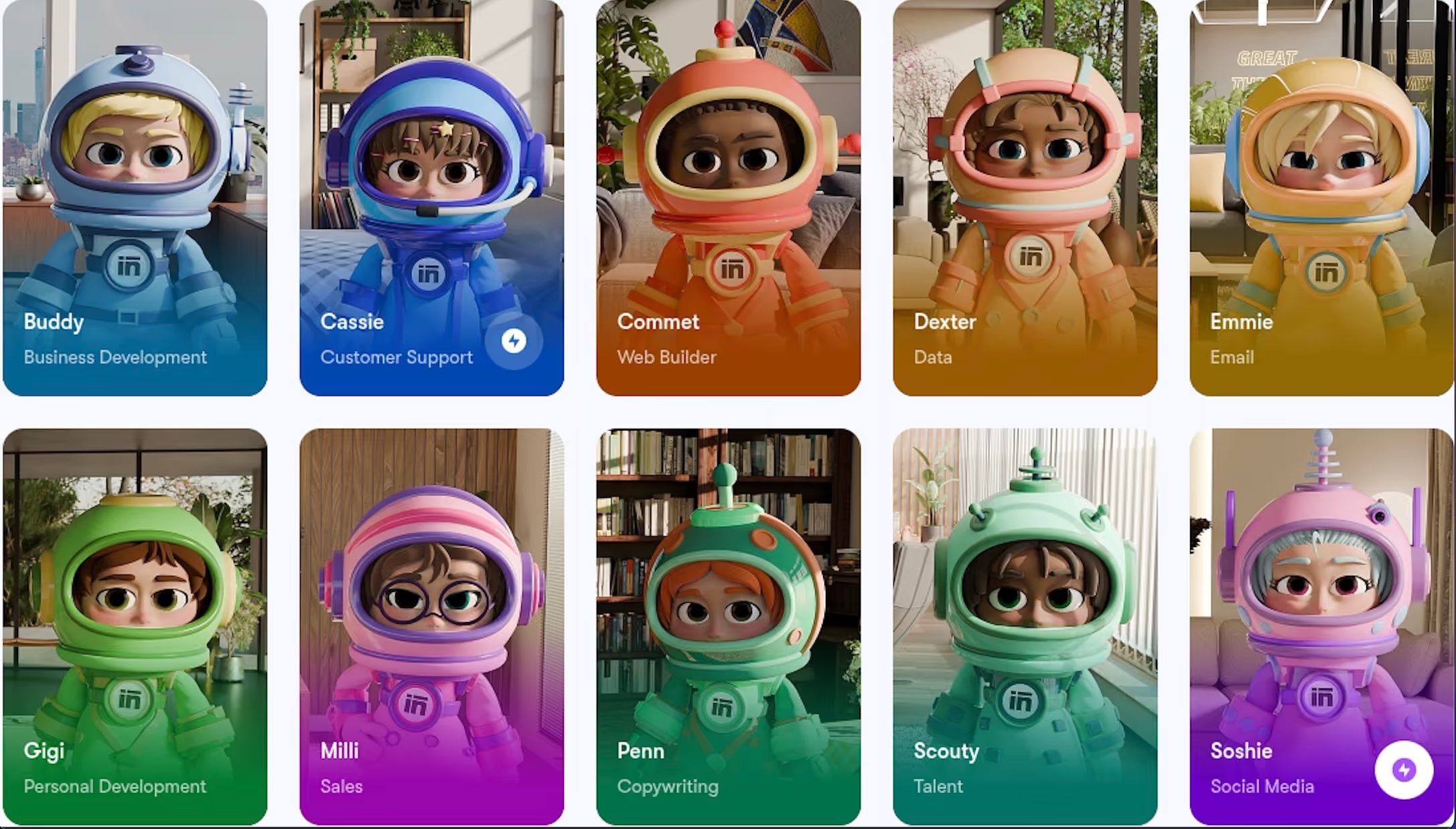
Commet
Commet is your one-stop AI e-commerce assistant. It tracks your store's performance, manages inventory, and proposes optimizations for high-performing products. One online shop automated store checks and product updates with Commet, saving 12 hours a week. It alerts when items are in stock, features trending products on the home page, and even recommends what to sell together based on consumer behavior —transforming data into a practical approach to provide personalized search experiences.
Seomi
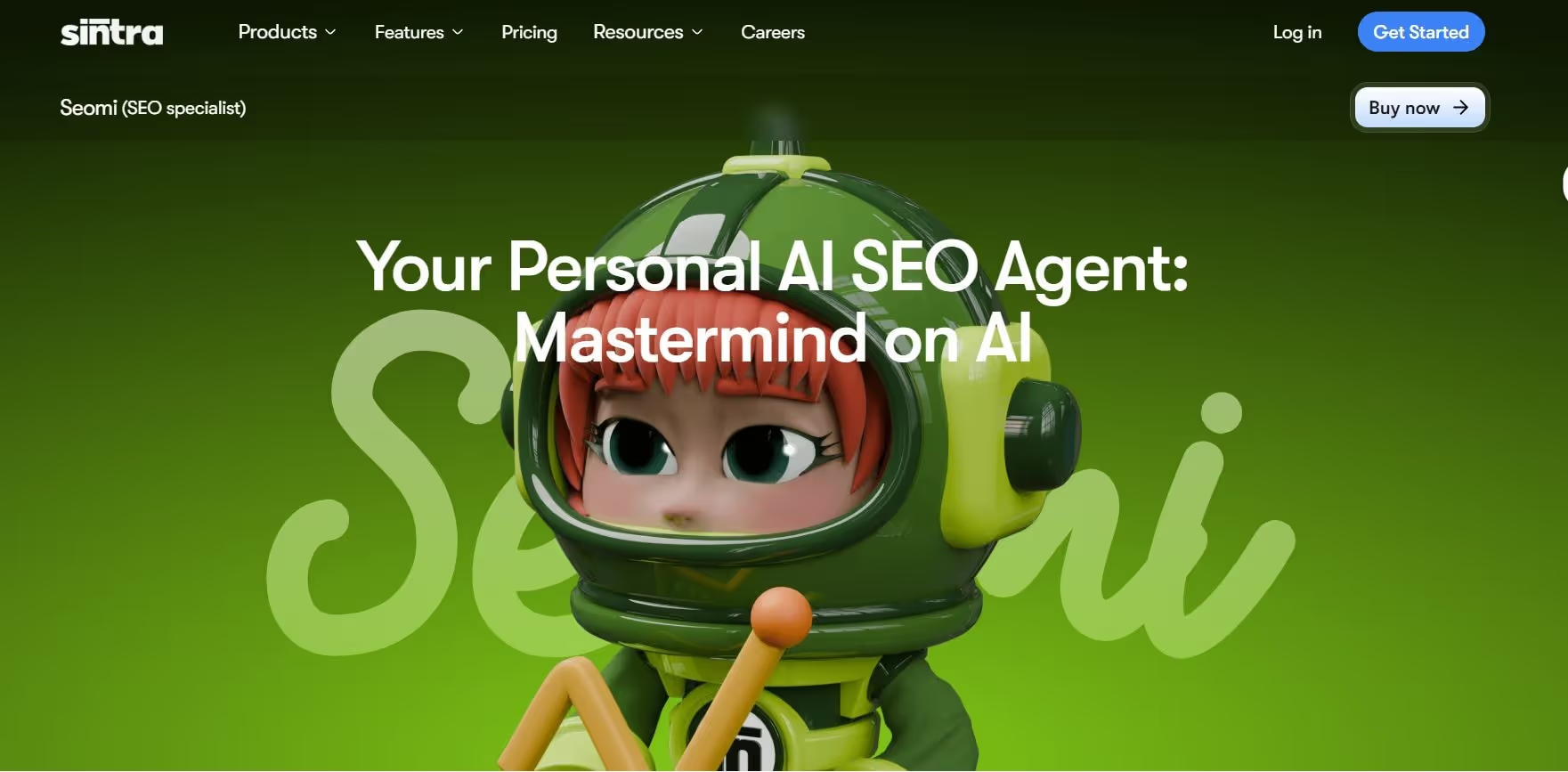
Seomi (SEO Specialist) helps your personalized search to be visible in Google. She inspects your product pages for the right keywords, finds issues, and automatically monitors your rankings. One local business that used Seomi saw a 35% increase in organic traffic over three months by fixing the problems Seomi identified daily. The more traffic you get from Google, the more people you will have to personalize for.
Emmie
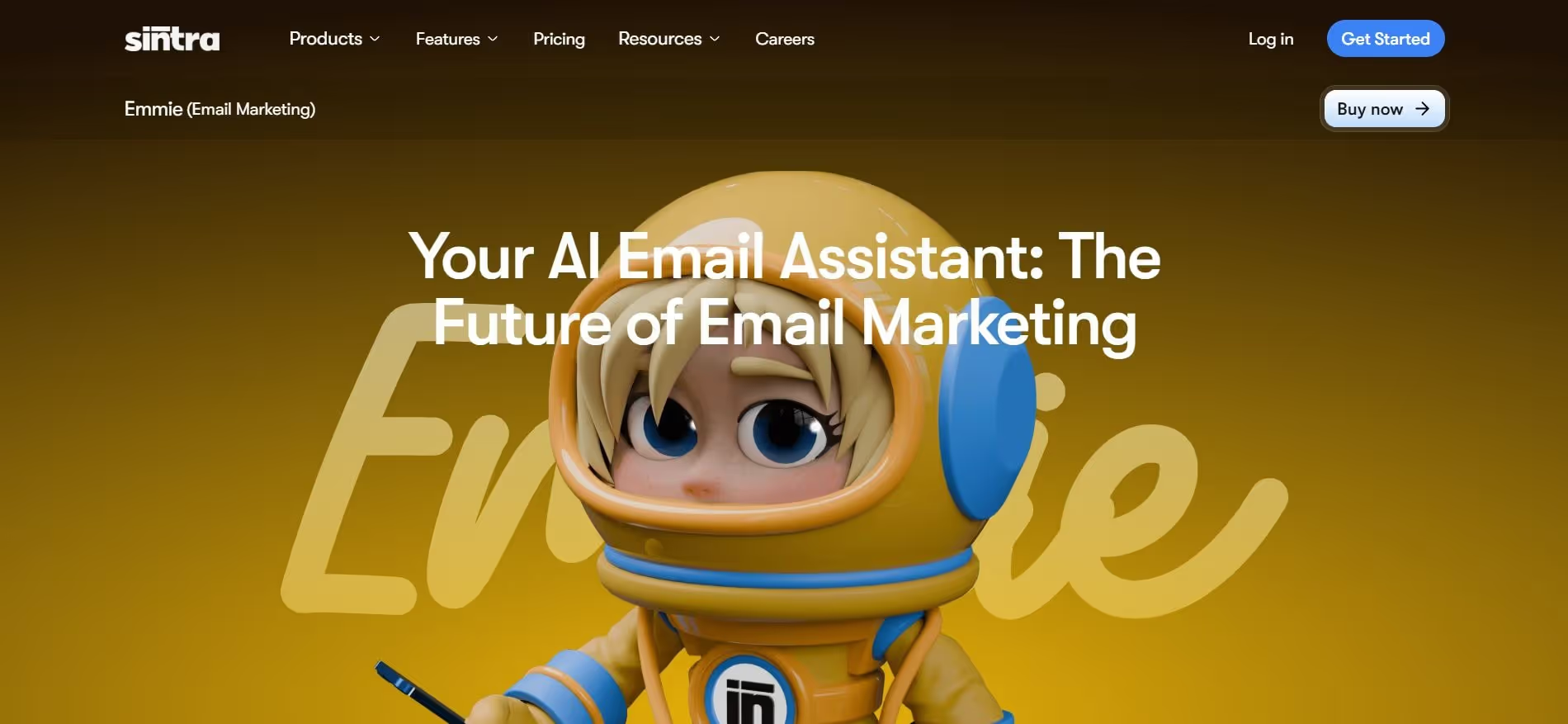
Emmie creates personalized interactions at scale. You just provide her with customer data, and the system generates targeted emails based on which groups have browsed and bought specific items. A solo store owner who automated emails for 1,000 subscribers saw a 40% increase in open rates because the dynamic content was exactly what each individual wanted.
Buddy
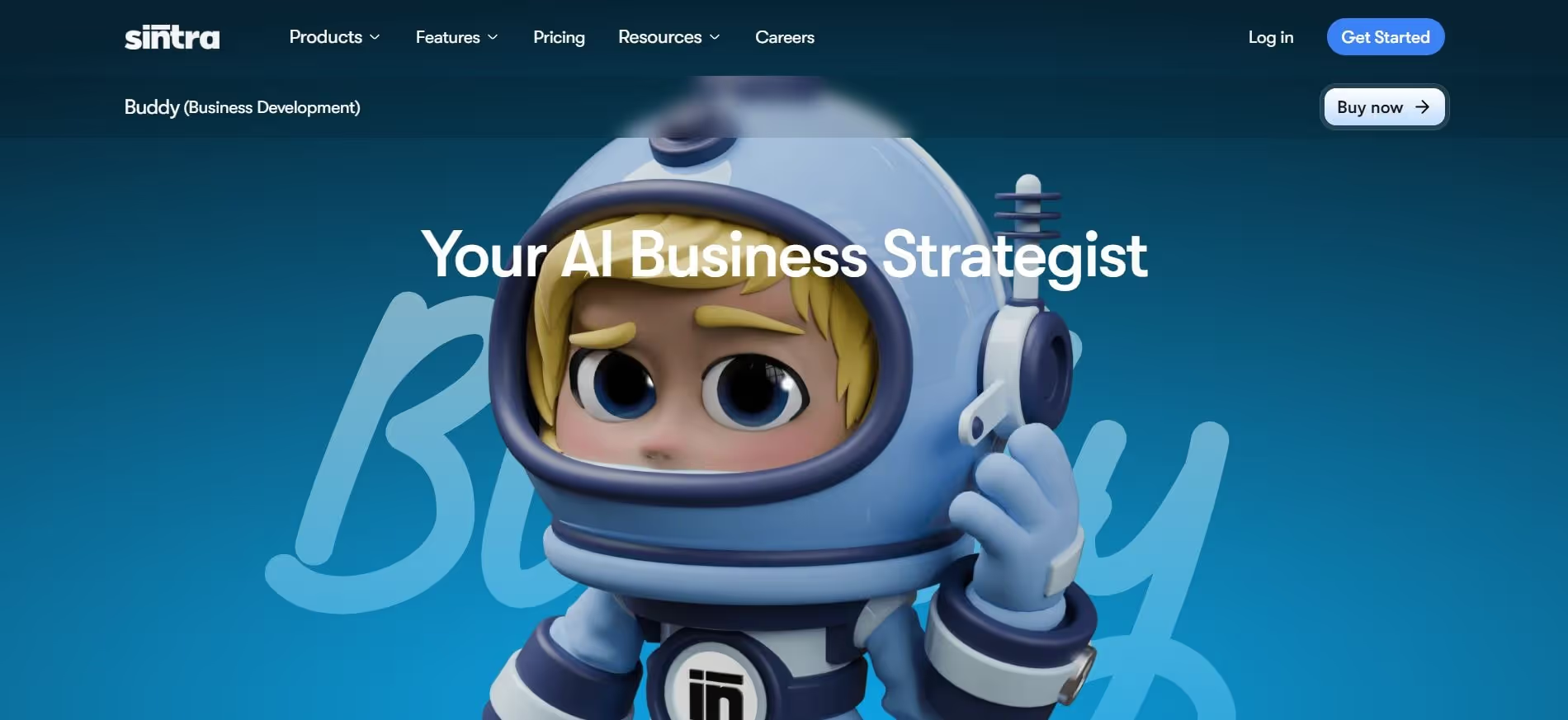
Buddy is responsible for outreach and follow-ups. For ecommerce teams that partner with, or seek support from, the influencer industry, Buddy writes personalized emails and initiates follow-ups without any human intervention. A small business seeking partners on LinkedIn found 50 potential partners each week, resulting in 30% more responses without spending any hours on cold emails.
Cassie
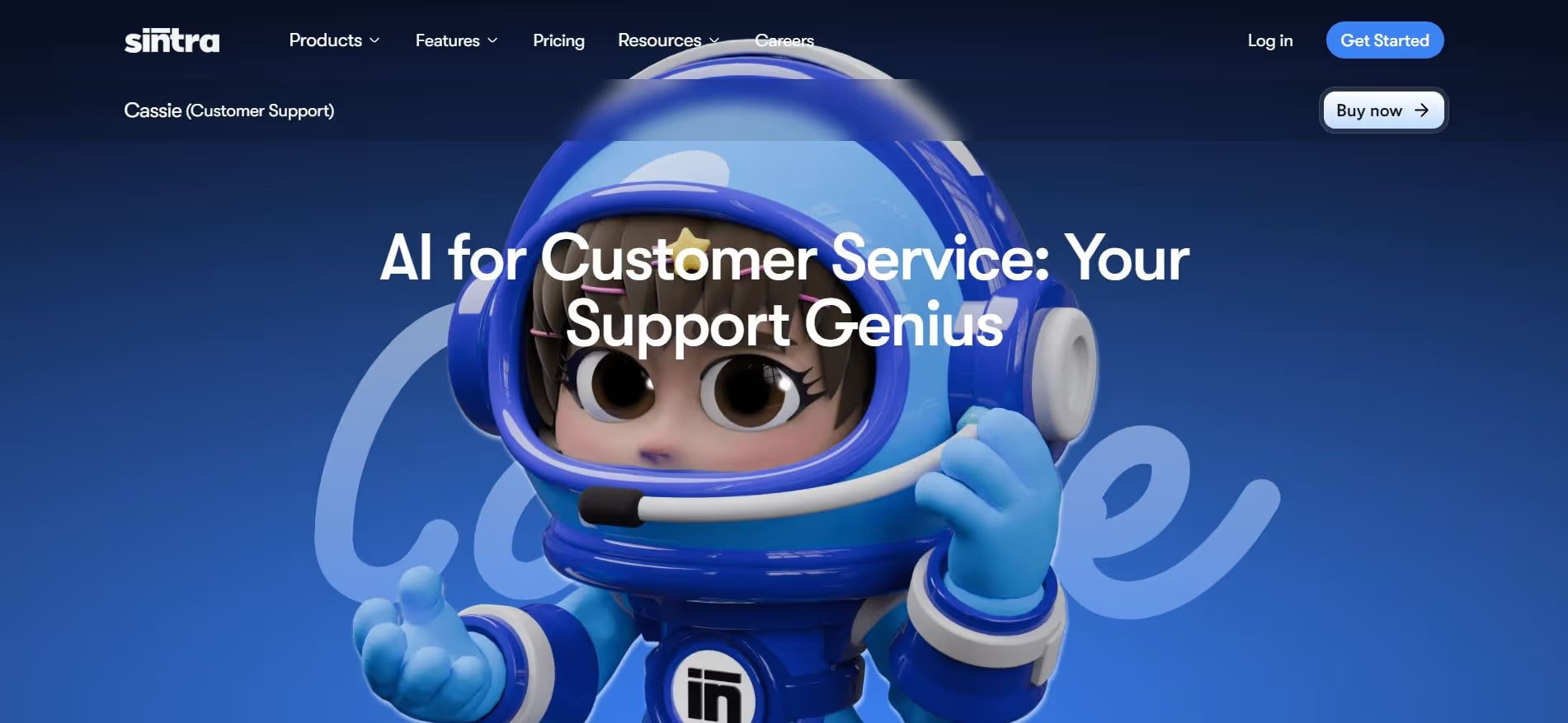
Cassie (Customer Support) is an AI agent that remembers customer conversations. It tracks queries, collects user data, and delivers personalized search results for frequently asked questions. A support team that automated 80% of its tickets, cutting its response time from several hours to just a few minutes, is one example of their success.
Dexter
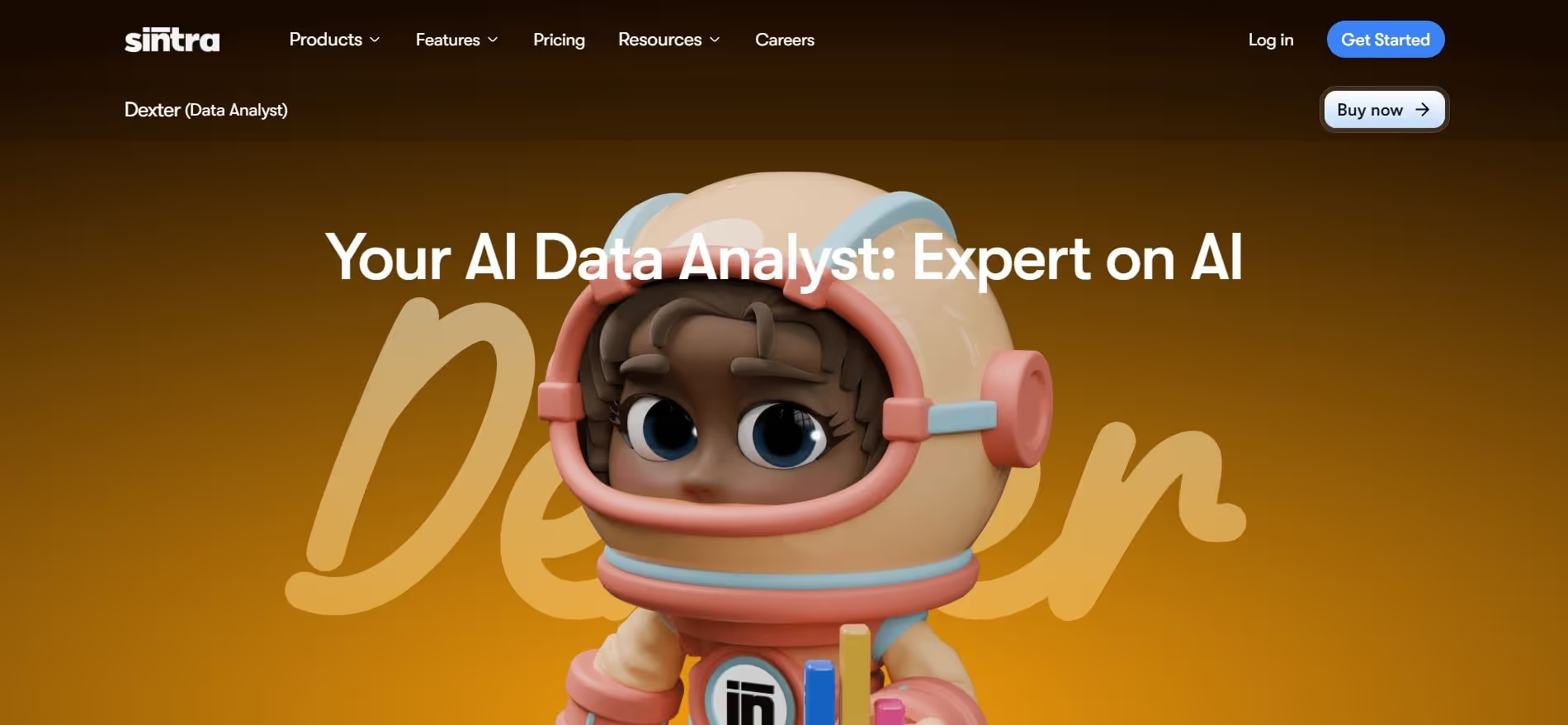
Dexter (Data Analyst) analyzes customer data and behavior to spot trends. It comes up in the weekly reports, which highlight the personalization strategies that boost sales. A startup that intended to use it actually did, and then identified customers on the verge of leaving; it automatically initiated win-back campaigns, which in turn led to a 25% retention uplift.
Milli
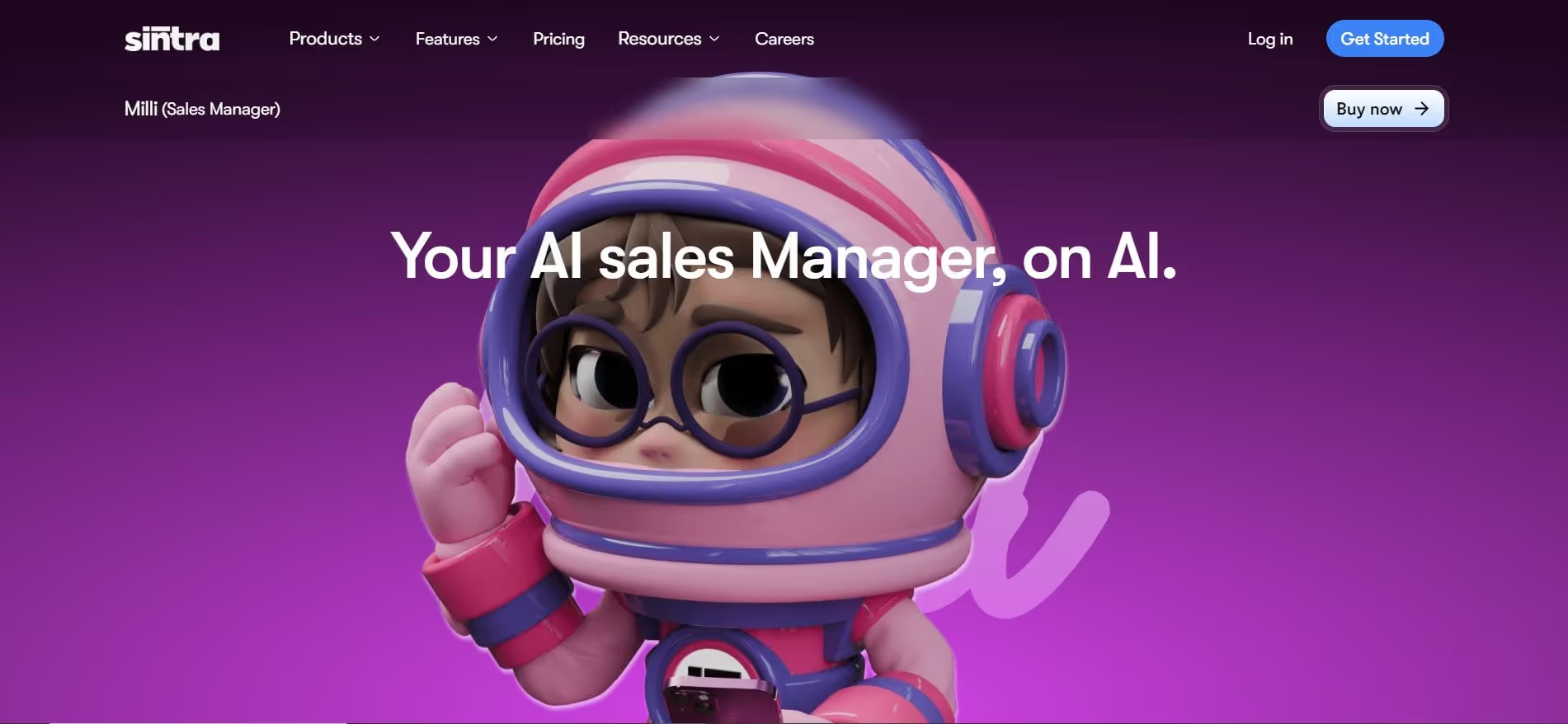
Mili (Sales Manager) is in charge of your sales pipeline and lead generation from your e-commerce platforms. Using CRM data, it prepares personalized recommendations for sales outreach, thereby easing the work of small teams by focusing on hot leads and accelerating 20% of their deal closures.
Penn
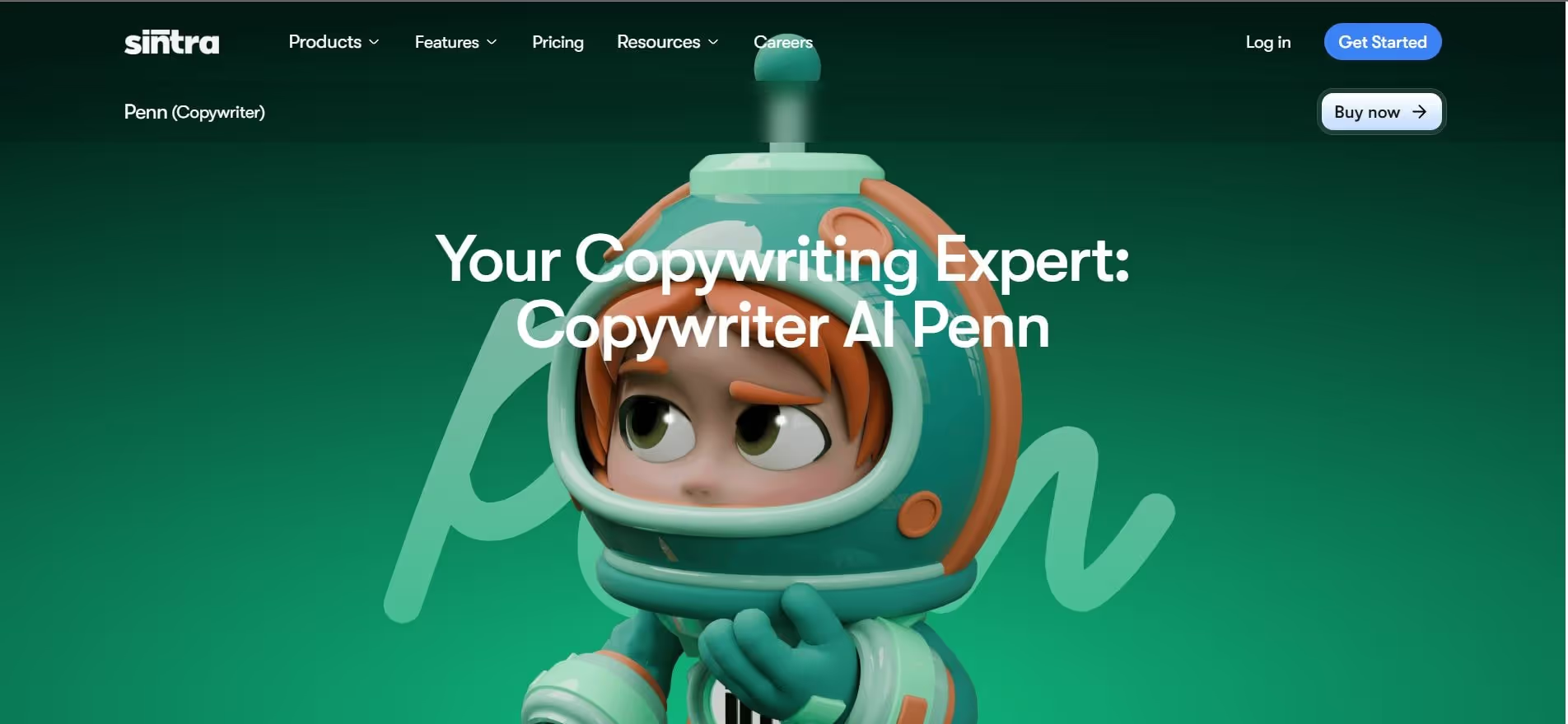
Penn (AI copywriter) generates blog content, creates snappy ad copy, and creates social posts. All of these are in line with your keywords. An agency completed a marketing job that required 10 posts per week using Penn and eventually saw a 15% rise in traffic. It is due to the content that was not only SEO-friendly but also consistent with the brand voice.
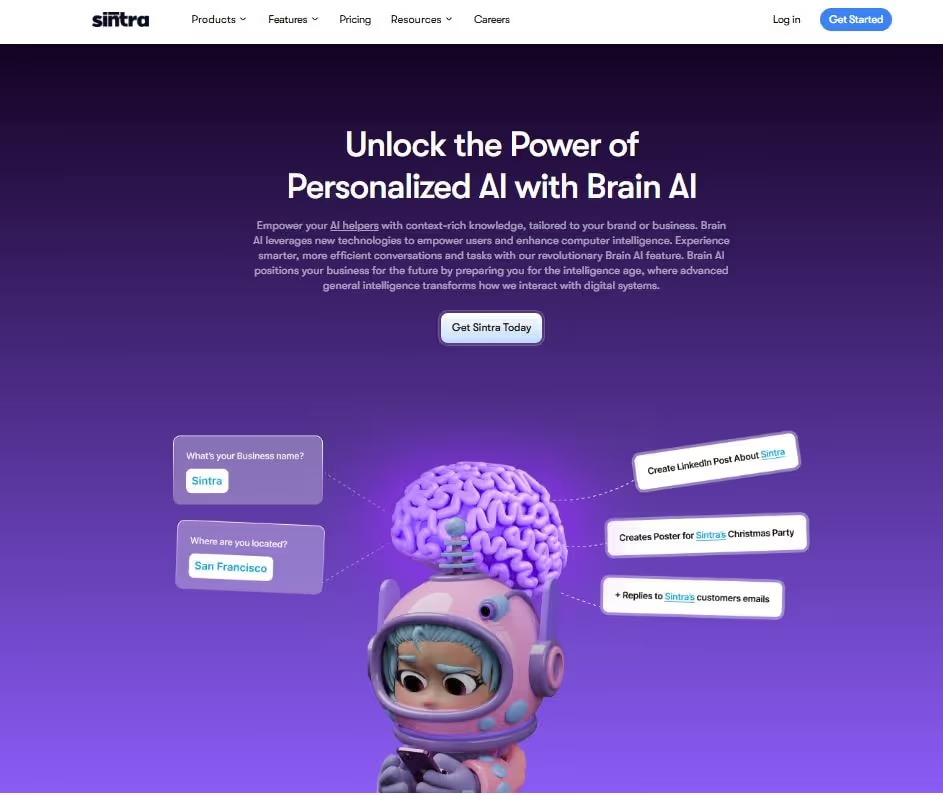
These bots are linked via Sintra's Brain AI hub, which takes data from your files and configurations to deliver correct results.
Interested in having all the advanced features? Check out Sintra. Experiment with just one bot (Seomi for quick SEO results), then add more as you see what gets you the best results. Users can save 10-15 hours per week on tasks required for AI-driven e-commerce personalization. It gives them more time for marketing strategies and less for busywork.
Measuring the Impact: KPIs and Best Practices
Use these metrics to gain insights into the effectiveness of AI E-commerce personalization:
Conversion Rates: Counting how many visitors buy before and after you implement AI personalization. Break it down to see where it helps most: new vs returning customers, and mobile vs desktop visitors.
Average Order Value: Does content personalization increase the average order value? Monitor your AOV and the click-through rate for recommendations. In case they do not purchase after clicking, your suggestions are wrong.
Customer Engagement: Track time spent on site, pages per visit, and bounce rates. The presence of good dynamic content keeps individuals browsing. Flat engagement indicates that your personalization isn't working.
Retention & Repeat Purchase Rate: Do customers feel valued, which coaxes them to return? Over 70% of consumers say that personalized experiences make them more likely to repurchase. Monitor the number of repeat buyers within 30, 60, and 90 days.
Email Performance: To monitor AI-driven personalization in emails, track open rates, click rates, and revenue per email. Compare the personalized emails with the general ones; the difference should be noticeable.
Product Discovery: Do people find new categories useful for them from your product recommendations? Keep track of purchases in that category for a customer who has never made a purchase.
Actionable tips for Ongoing Optimization:
- Test everything: A/B test recommendation styles, homepage layouts, and email subject lines to determine which performs better. If anything is performing better than before, keep it unchanged; if not, change your strategy.
- Segment strategically: Don't treat all buyers the same. Organize your customer data into categories, such as high spenders, first-timers, and at-risk customers, and tailor individualized approaches to each.
- Update your information consistently: AI models learn from fresh data. Update recommendations by adding new products, adjusting to user preferences, and updating customer preferences.
- Know when to balance AI with humans: AI chatbots respond better to large datasets. However, tricky issues require real human intervention. Know when to pass the baton.
- Watch out for bias: AI models learn from historical data and can create the same old patterns. Make sure your AI-powered personalization strategies do not exclude or generalize certain customer groups.
- Combine AI with your intuition: Patterns are just data analysis, but you understand your customer needs and your brand. Make decisions based on AI tools, but don’t let it be the only factor in making decisions.
Frequently Asked Questions
How does AI improve customer experience in online stores?
With AI-powered personalization, customers see relevant content, products, and offers based on their individual click, search, and purchase histories. Buyers appreciate AI assistance in quickly locating their desired items and avoiding lengthy scrolling.
AI-powered chatbots provide instant responses to customer questions by referencing their order histories. Personalized experiences in search results ensure customers can access the most relevant products without lengthy searches.
What types of data are used for e-commerce personalization?
AI models analyze customer data such as their browsing history, purchase history, search queries, device history, geolocation, and time spent on site pages. Some even check user interactions (opens, clicks, etc), social media activity (likes, shares), and item interactions (wish lists, carts). This data analysis helps to predict customer preferences.
Are there privacy concerns with AI-powered personalization?
Yes, there are privacy concerns, especially regarding tracking customer activity on e-commerce platforms. It is recommended to clearly state the data points being tracked and their purpose. A customer should be free to opt out of tracking. Personal data tracking should comply with GDPR and CCPA. Personalization without a data-tracking opt-out builds trust, while tracking without consent breeds distrust.
How can small businesses implement AI personalization?
To start, use integrated AI tools on e-commerce platforms. AI Personalization applications are available on Shopify, WooCommerce, and BigCommerce. Start with a limited set of features, like personalized product recommendations or AI-powered chatbots, then expand. These automation bots simplify setup without needing developers.
What are the main benefits and challenges of AI in e-commerce?
The main advantage of AI is improved customer engagement, which, in turn, improves key e-commerce KPIs such as conversion rate, average order value, and marketing ROI. Challenges include system connectivity, data collection setup, privacy, and non-invasive recommendations.
How can Sintra.ai help automate personalization workflows?
Sintra.ai automates all the ordinary and repetitive tasks of AI ecommerce personalization; analysing customer data, drafting customer support content, segmenting emails, and performing SEO checks. The bots connect with your systems via Brain AI and free up 10-15 hours of manual tasks per week. It is advised to start with a single bot and incorporate additional ones as you notice improved KPIs.
Related articles

.avif)