AI in Employee Engagement: The Complete Guide

Table of Contents
To improve employee engagement with AI, organizations must adopt tools that automate routine tasks, deliver real-time insights, personalize communication, and help managers act on workforce needs through proven ways to increase customer engagement.
AI can analyze sentiment, predict burnout risk, tailor learning paths, and provide around-the-clock support, all of which help teams feel more supported, valued, and productive while freeing HR to focus on strategy rather than administration. The productivity spillover is measurable across functions - 87% of IT workers report faster issue resolution with AI, 85% of marketing and product users report faster campaign execution, 75% of HR pros report better employee engagement, and 73% of engineers report faster code delivery.
Employee engagement has shifted from manual surveys and meetings to data-driven, intelligent systems that understand behavior and sentiment. Traditional approaches are no longer enough in fast-moving workplaces where personalization and responsiveness matter. AI excels at processing large volumes of feedback and interactions quickly, providing leaders with actionable insights using customer engagement strategies that work.
In this guide you’ll learn how AI agents help boost engagement, real use cases for HR, and what to consider when implementing these technologies in your organization.
What Is AI in Employee Engagement?
The fusion of AI and employee engagement indicates the use of advanced algorithms to empower the workforce for the day-to-day tasks. Simply put, it is the use of machine learning to simulate human cognition in machines.
Think of enhancing employee engagement with AI as the automation of knowledge-oriented operations. This can be complex data analysis, inter-team communication, pattern learning, clustering, and more.
The Role of AI in Employee Engagement
Gone are the days when employees put all their efforts into a task for days and even weeks. Workspaces today run on a human-in-the-loop principle where real people and AI work in collaboration for informed decision-making.
Research suggests that the more employees engage in routine processes, the more they are open to using AI. When implemented, it can not only benefit employees in a professional capacity but also in personal growth.
However, to make the most of this technology, you must know where to use it. Always remember the rule of thumb: AI excels best where volume is massive.
Let's say you are a retail business running almost everything, from web to social media. The big datasets coming from all these channels in the form of messages, tickets, and customer feedback need automation.
How AI Helps in Employee Engagement?
AI in employee engagement refers to automating routine tasks, providing data-driven insights for informed decision-making, and helping managers improve job satisfaction for workers. It also employs advanced algorithms to personalize development paths for employees, so they can excel at what they do.
Generative AI vs Traditional AI
Traditional employee engagement is the pre-digital approach to improving job satisfaction and productivity in the workforce. It includes techniques such as two-way communication, verbal praise, non-personalized rewards, and conservative employee recognition programs.
However, these tactics no longer work in a competitive workspace, as the fast-paced operations demand accelerated solutions. They cannot understand sentiments and only dig through surface-level information. Plus, traditional solutions cannot serve the teams aiming to scale.
Hence, companies are now shifting to generative AI agents for enhancing employee engagement. It uses machine learning and advanced technology like clustering, predictive analysis, and sentiment understanding to improve productivity, job satisfaction, and communication.
In a nutshell, gen AI is crucial for maintaining a positive work culture, making employees feel valued, and promoting a collaborative mindset. Moreover, the automation of daily operations like onboarding, performance management, and more frees up space for more strategic tasks.
High-Impact AI Use Cases That Actually Move the Needle
Today, companies see AI as a technology favored for enhancing employee engagement and supporting people-oriented strategies. Here are some practical and realistic ways you can use AI and employee engagement to drive excellence in workspaces.
Personalized Comms & News Digests
Personalized employee communication is crucial for meeting your business goals. Too much data can overwhelm workers. And expecting that they know every minor detail is more foolish. This is where AI inclusion in employee engagement solutions should be put to the test.
AI-powered content curation helps managers produce news digests for individual employees. These platforms segment the employees by their job roles, language, and behavior to narrow down relevant updates. It is then delivered to the employees with clarity, while saving time.
Imagine a busy hospital environment where clinical staff, especially nurses, are always busy. In a hectic and swamped schedule, you can’t expect them to read through entire email digests. So, a good strategy would be to employ AI that would send shift alerts to their mobile phones.
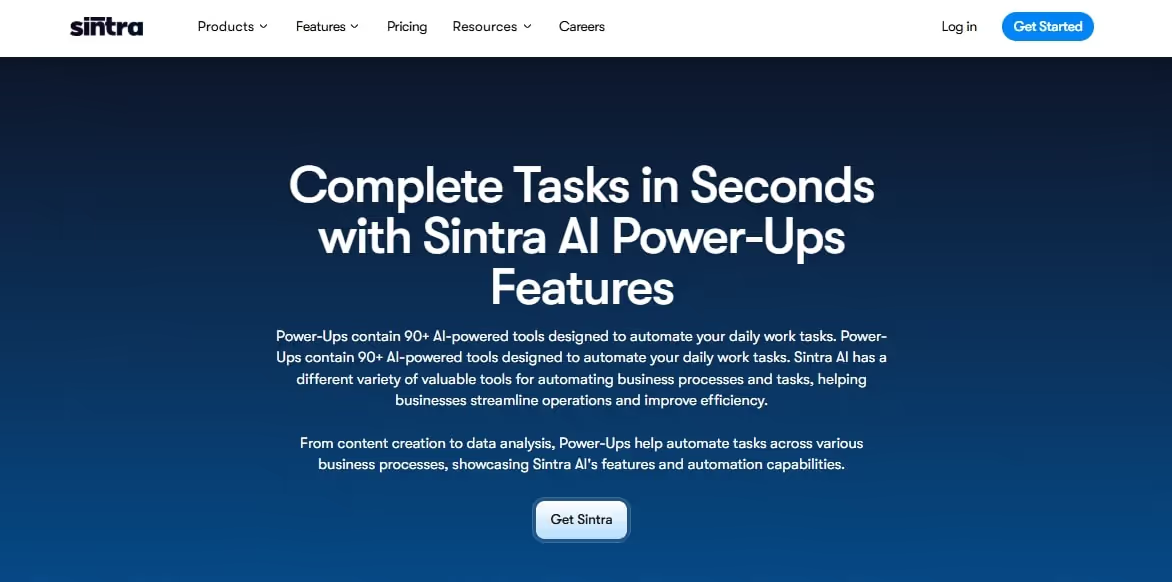
Today, AI goes beyond automation. For instance, Sintra's integrations enbale your staff to be productive. These tools are designed to streamline tasks like generating hyper-personalized outputs and giving feedback. So, you can continue to grow in a work setup.
Always-On Employee Support
Imagine having 24/7 support for routine tasks. AI does precisely that by answering employees' questions and simplifying HR operations, from onboarding to clearing payroll processing, and streamlining customer interactions.
For instance, a technical employee requires a quick clarification on the leave policy. With AI, he does not have to wait for an HR, and can simply access it from anywhere, anytime. This quick assistance, when accurate and safe, empowers reps with a sense of accessibility.
Plus, having a response around the clock for administrative queries helps professionals focus on strategic tasks. Let’s say, in this scenario, the HR doesn’t have to help every individual of the company with leave policy and can spend this time on building a positive work culture.
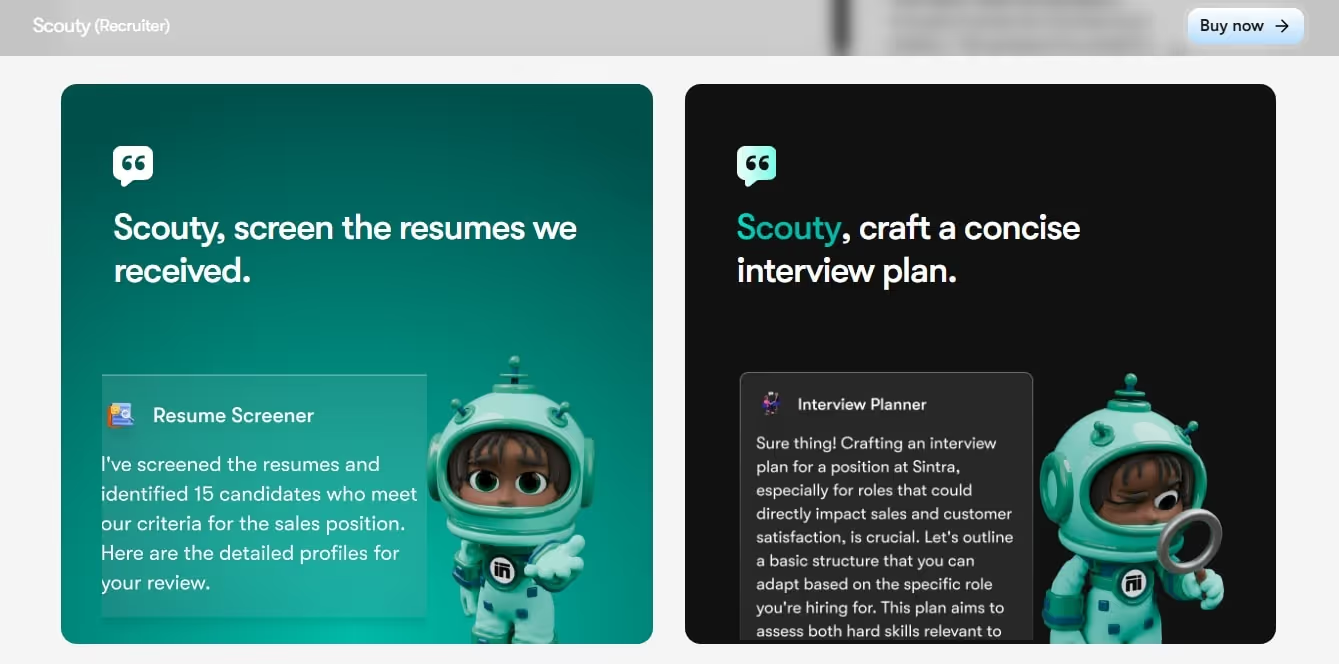
Meet Scouty, Sintra's AI recruiter. Trained on hundreds of thousands of data points from recruiters, this AI helper knows how to draft job descriptions, narrow down resumes for outreach, and plan interviews. You can also employ it to produce onboarding material for the new joiners.
Real-Time Feedback, Sentiment & Actioning
Unconscious biases are deadly for workforce productivity. But AI has solved it. Today, automated agents are capable of enhancing employee engagement with real-time feedback that is objective and consistent. It does not care about interpersonal relations and works toward improvement.
You can use AI tools to analyze employees’ surveys, chat interactions, and anonymous feedback for continuous learning. It gives you insights into morale dips, creative burnouts, and other issues. When in doubt, allocate a human to review results and avoid any scope for error.
Let’s say, many employees across departments were having difficulty navigating dashboards. An AI data agent can use clustering to track the issue - a lack of data literacy. Now, HR can solve this through training. A manual analysis would’ve taken weeks to recognize the problem.
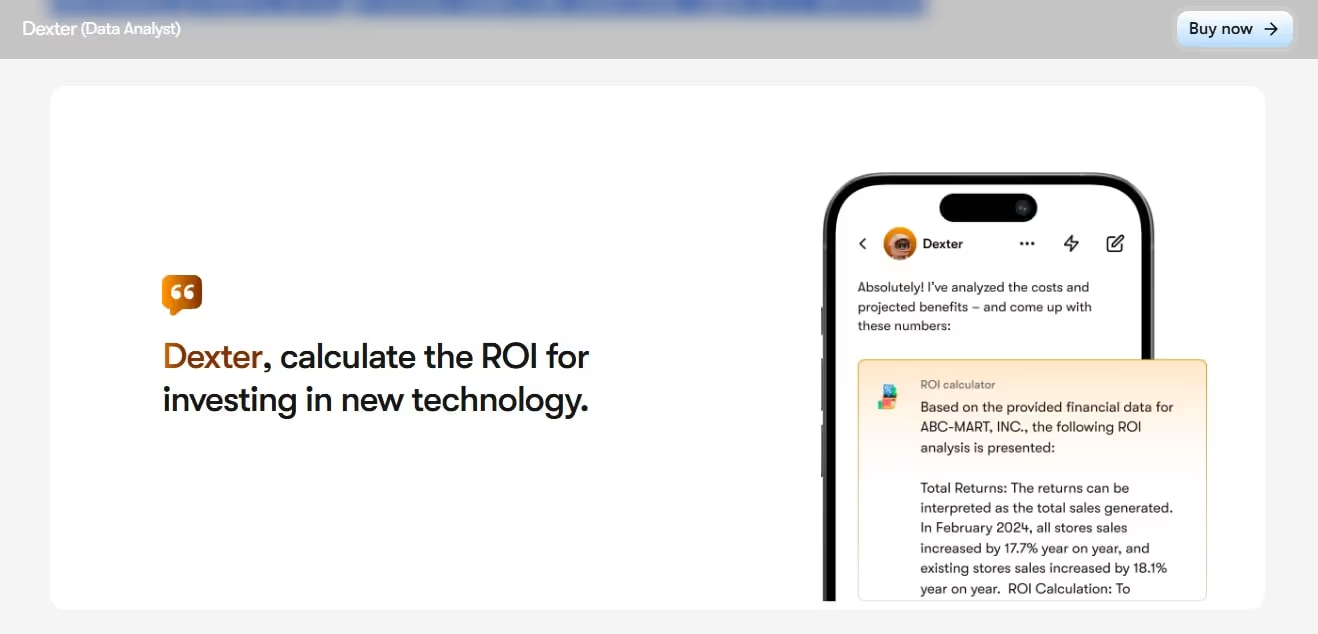
A typical example of AI data analytics is Dexter. This AI data analyst leverages your company’s personal data and resources to empower employees in making informed decisions. Be it crafting financial reports or meeting the ROI expectations, Dexter can spot gaps and propose strategies in minutes.
Predictive Signals for Burnout & Attrition
Many times, employees find it challenging to talk about mental health and an overwhelming workload. Yet, AI use in employee engagement solutions proves beneficial in this case as well. Today, predictive analysis can read sentiments in employee data for actionable insights.
Wellness surveys and casual conversations are a typical case for feedback in workspaces. AI can use this data to track reasons behind declining participation, longer responses, and negative behaviors in feedback. So, supervisors can act on it before escalation.
Let’s understand it with an example. Managers held a survey across the company and flagged a high ratio of delayed email responses, big gaps between meetings, and longer task completion. Now, they can direct this feedback to HR to intervene for burnouts and wellness checks.
However, while doing so, the technology shouldn’t overstep. Some models can turn from proactive care to surveillance. So, human oversight is crucial to ensure that AI does not invade personal messages or misuse the findings against a specific individual from past records.
Career Growth: Personalized L&D Paths
Generative AI and employee engagement are not limited to benefiting a worker of a specific company. Rather, it can significantly facilitate personal learning based on employees’ strengths, weaknesses, and interests. It maps a person’s skills and craft-tailored development path.
Adaptive learning platforms can use gen AI to adjust the pace for the learner for better knowledge retention. It can also provide micro-learning nudges and recommendations for supervisors to help their employees in continuous learning.
Let’s say an employee was currently positioned in the sales team from the technical department. Now, he is struggling with managing data and following recommendations. AI can not only spot his weakness but also suggest a data course. However, it must be in a way that he feels supported and not monitored.
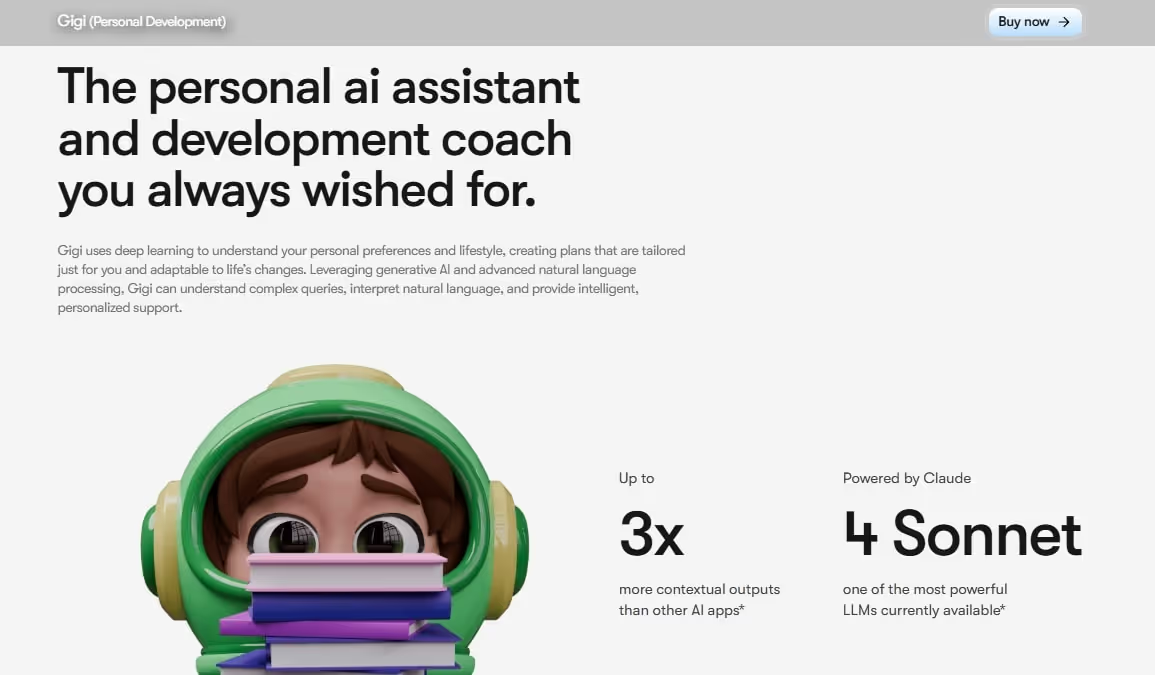
Gigi is one such AI personal assistant for enhancing employee engagement. It can manage and organize your routine in a way that facilitates learning and not just repetition of daily tasks. You can also feed it the data you want for a better understanding of what your preferences and desired goals are.
Recognition & Performance Moments
Automated performance management is yet another area where AI-powered employee engagement shines the best. Beyond identifying employees’ strengths and weaknesses, AI can also track the progress of projects and offer insights on how to accelerate them further.
With AI’s constant data-oriented suggestions, managers save time that would otherwise be spent on mentoring and coaching employees while navigating the project.
Upon completion, AI agents can also prompt managers for personalized recognition. For instance, a remote worker contributed significantly to marketing the products, which helped the department meet its quarterly goals. Appreciating this employee would make him feel valued.
However, this does not mean you leave the recognition part to AI as well. Some things demand a personal touch. An automated praise not only sounds inauthentic and gamified, but it also takes a toll on an employee’s loyalty to the company.
Benefits and Trade-Offs of AI in Employee Engagement
Everything with benefits comes at some opportunity cost, and so does the AI integration in employee engagement. Let’s discuss some of its advantages and risks.
Benefits of AI in Employee Engagement
- Efficient Analytics: AI data analytics processes massive datasets in minutes, be it surveys, feedback platforms, and performance metrics. Exploring such insights manually means spending days deciphering and making sense of papers. This frees up space for managers to focus on crucial strategic tasks.
- Empowered Employees: AI-powered analytics uncover in-depth insights from the workspace data. It goes beyond obvious points and digs deeper into what may impact your employees’ potential positively and negatively. Hence, they empower managers to make informed decisions.
- Sharing Employees' Burden: AI is excellent at automating repetitive administrative operations like data entry, booking meetings, summarizing documents, etc. Having this assistance frees up space from employees’ schedules, so they can focus on what truly matters: contributing to strategies and maximizing productivity.
- Better Communication: AI agents are available at all times to handle employees' queries. This creates a sense of accessibility and responsiveness, helping counter the communication barriers within teams. This technology can also analyze collaboration patterns in departments to compose teams, based on skills and personality traits.
- Scope for Personal Growth: AI-powered employee engagement focuses on individual growth, based on performance history, interests, strengths, and goals. This personalized approach helps employees excel at what they do and feel content and valued.
Trade-Offs of AI in Employee Engagement
- Data Security and Privacy: The most apparent reason companies are hesitant to employ AI in employee engagement is data theft. Storing your employees’ data over time, especially sensitive information, comes at the risk of unauthorized access and security breaches. Hence, as a business, you must,
- Respect the industry-standard practices for data protection.
- Follow the employees’ privacy rights.
- Biases: Many times, your company’s data includes biases and discrimination. This can lead to misleading and misinterpreted insights that are harmful for employees and businesses alike. To avoid this, you must always position an audit system, supervised by a human. Doing so eliminates errors and makes employees feel included.
- Data Transparency: Employees feel sceptical of AI, and it’s natural. Hence, to put them at ease about their concerns of potential misuse of data and transparency control, the company must
- Communicate their intentions clearly.
- Be transparent about data usage.
- Include employees in the analysis and decision-making processes.
Ethical Guardrails, Privacy & Change Management
Think of AI in employee engagement as a contract between employees and employers. In this arrangement, employees give their valuable data. This data is operational and behavioral. In return, the employer makes the most of this trust and employs AI for the workforce’s benefit.
In doing so, they must be ethical enough to ensure transparency, security, and satisfaction. Here are some ways through which employers can do this.
- Respect employees’ trust by protecting their data.
- Selecting the most reliable platforms to keep the employees’ data safe and secure.
- Being transparent about what data will be used and how it will be used.
- Identify biases in the data and clean it before feeding the information to the system.
- Rewarding employees’ contributions through recognition and making their lives easier.
- Being mindful that managers are dealing with real humans and not just AI.
Implementation Roadmap: How to Employ AI in Employee Engagement?
AI integration in employee engagement solutions demands a balanced approach to transparency, security, ethical application, human oversight, and performance evaluation. Let’s see how an organization can use this system to get benefits for better participation.
Step 01: Prioritize Use Cases
You don’t want to go all in with AI, having no experience. Hence, a good way is to narrow down the scope of your project. Gather your team and brainstorm a few use cases. It can be feedback surveys, predictive analysis, sentimental clustering, etc.
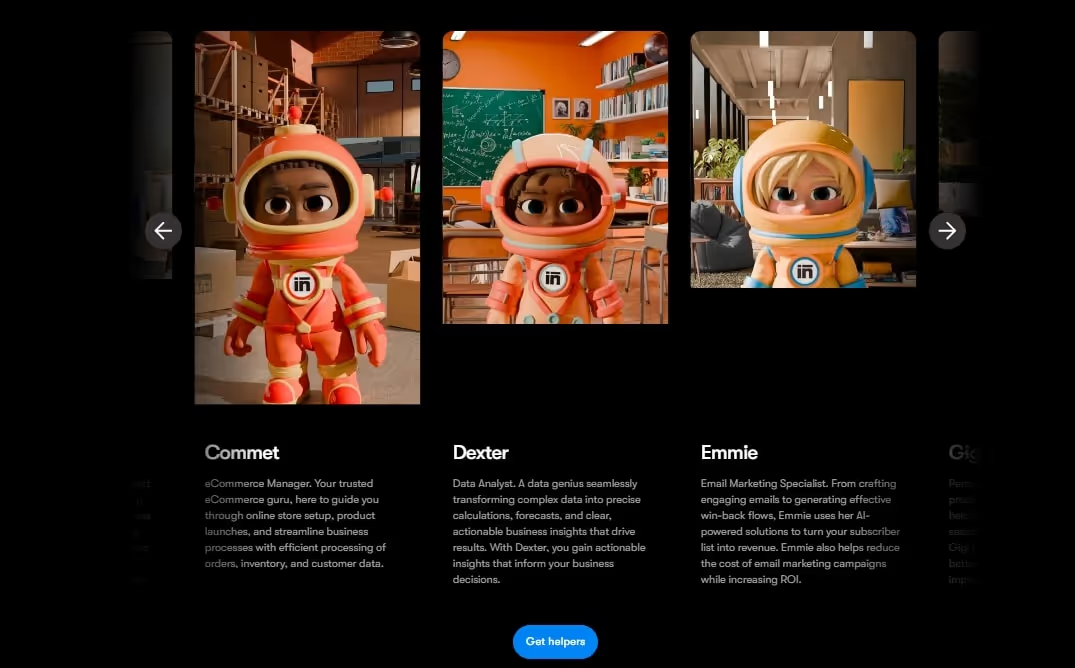
For this project, let’s restrict ourselves to data analysis. For this, you do not have to buy an entire stock of AI agents. Thankfully, Sintra allows you to purchase one AI helper at a time. For this, let’s employ Dexter.
Step 02: Set Measurable Goals
Now that you are clear about the scope of your project, let’s discuss the goals. As the primary concern is data analysis, here are some potential measurable objectives.
- Identify the root drivers of engagement (workload, working hours, etc).
- Personalized the training regime for individual employees based on their performance.
- Provide managers with valuable insights regarding employee participation.
Once you have the goals clearly defined, also allocate a few key performance indicators, such as engagement score on the dashboard, training stats, etc. This will help you measure the outcomes later.
Step 03: Data & Knowledge Setup
The next step is training your AI model. For this, you need a centralized knowledge space from which it will learn about your company’s workforce, objectives, and preferences.
Thankfully, tools like Sintra.ai’s Brain AI work as your business repository. It works by understanding your data and directing the dedicated AI helpers to perform certain tasks.
For instance, when you prompt Dexter to make a list of individuals struggling with dashboard navigation, it will derive the data from Brain AI.
Let’s see how it works.
- Once you log into your Sintra account, navigate to the Brain AI section from the dashboard.
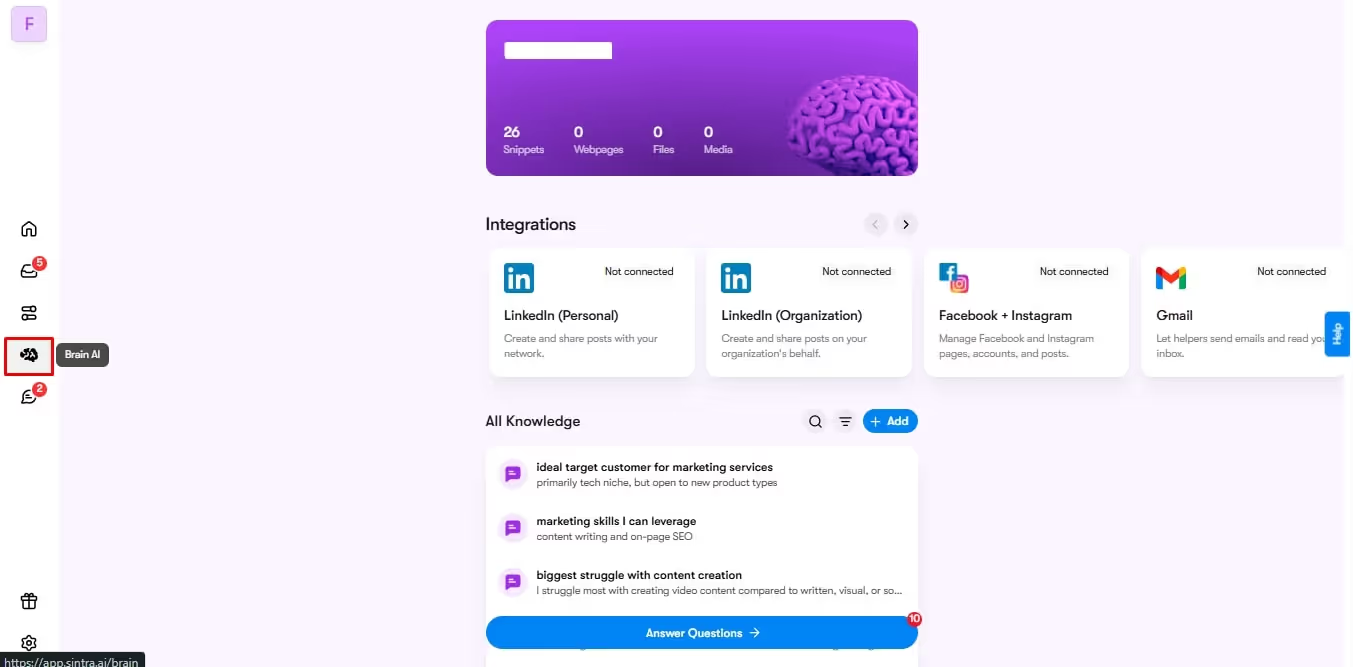
- From here, you will see the All Knowledge tab.

- Click Add and upload your business data. It gives you the option to enter webpages, files, media, and lengthy text.
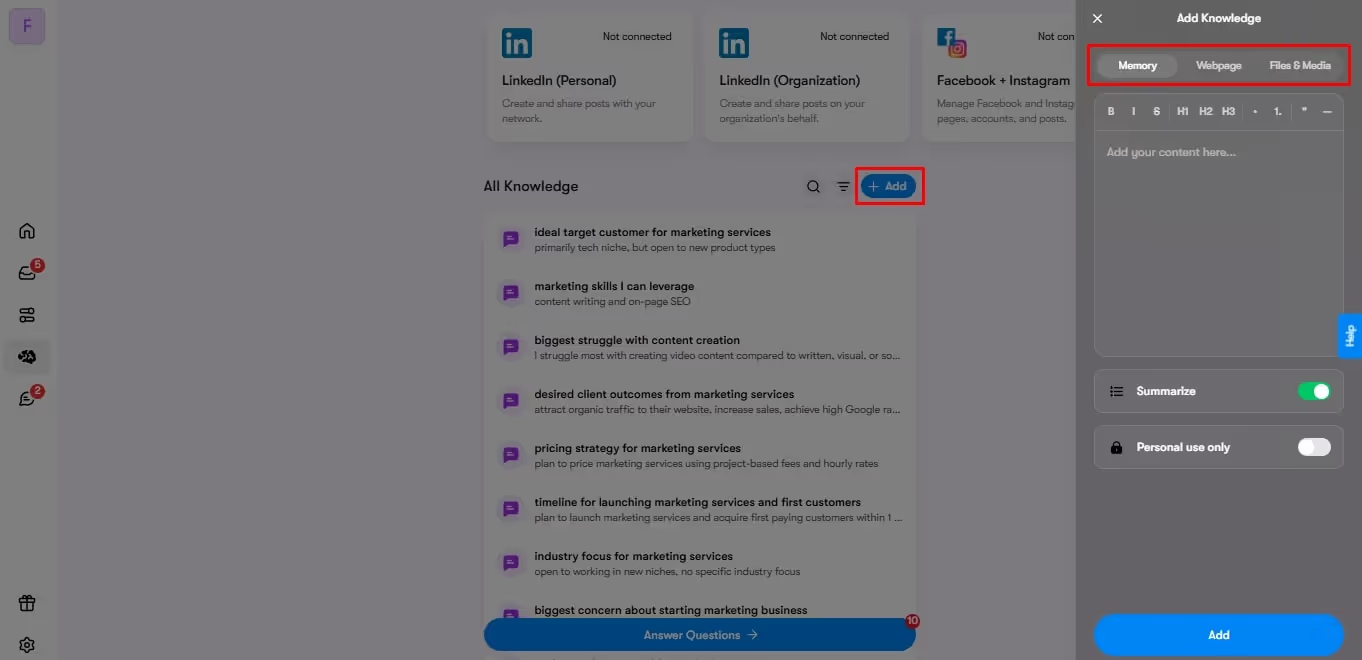
- It also creates surveys after some internal research to improve its understanding of your business.
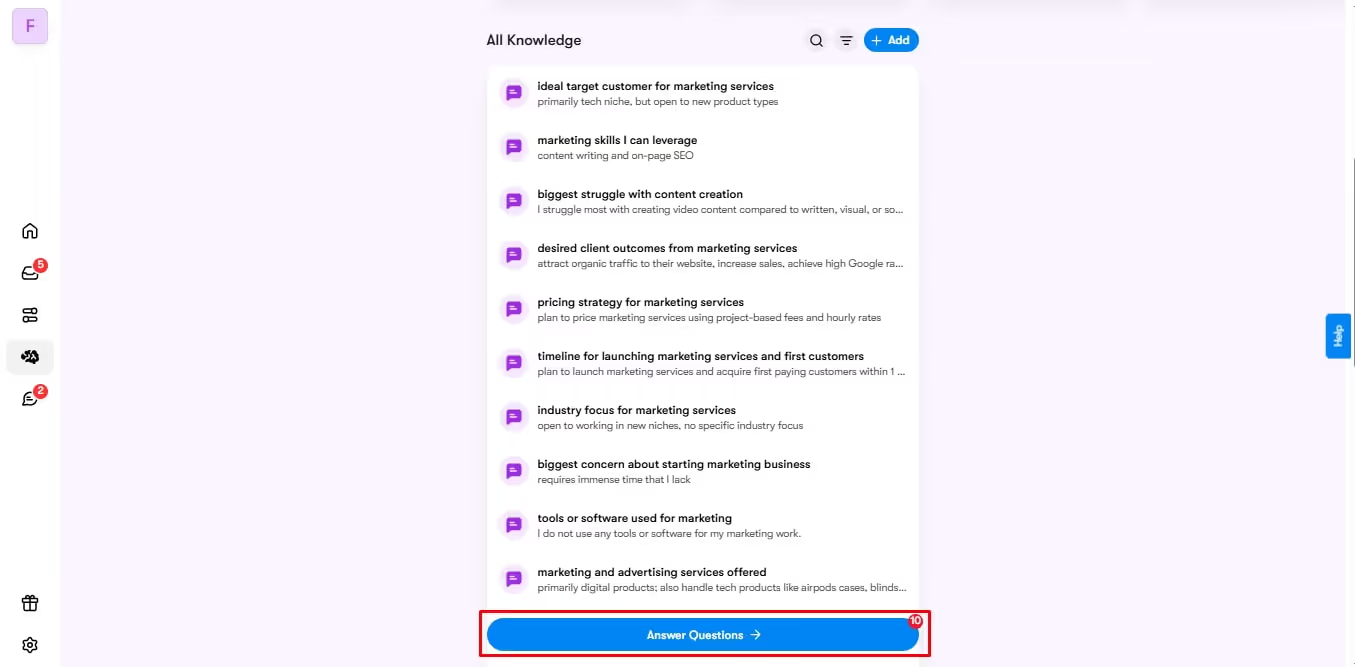
- To attempt these surveys, click Answer Questions and start typing.
While doing so, make sure the data is clear and structured in the form of surveys, Excel sheets, and documents with established headings.
Step 04: Human-in-the-Loop & Quality Standards
Before you put your planned AI to the test, it’s essential to set up a governance structure. While the use of generative AI in employee engagement is helpful in improving productivity and efficiency, it’s not a replacement for your HR team. Hence, human supervision is ideal.
- For starters, define some checkpoints, such as the accuracy, tone, biases, and discrimination.
- If you want to go ahead, identify some red flags. These can be scenarios where human interference is crucial, such as disciplinary actions, high-risk for burnout, performance reviews, etc.
- You can also train your HR employees and managers to interpret the answers for informed decision-making.
Step 05: Measurement Plan
You must have a measurement plan to evaluate your performance. It is recommended to have both the primary indicators and outcome metrics.
- Primary indicators are the direct outcomes of your projects. Some of them include the response time, open messages, help-desk deflections, and more.
- Outcome metrics are your long-term objectives, like engagement scores, onboarding completion rates, etc.
When it comes to performance evaluation, go beyond immediate successes. It is better that you link your AI-driven insights with business outcomes like lower turnovers, improved ROI, boosted sales, etc.
Dexter is a perfect help for this step, as it can help you understand your goals, evaluate performance accordingly, and suggest practical actions. Open Dexter from the dashboard and enter the prompt for planning key metrics for performance.

- Pro Tip: You may set up a mini KPI dashboard that helps you display the outcomes in a centralized space. This will help you get back to the feedback after every few weeks or a month to revise your strategy.
Step 06: It’s Time to Test
It’s time to test your AI model. But don’t go all in. It’s better that you choose a limited people, let’s say, one department to run the pilot project over a specific period. Moreover, choose a manager to oversee the system performance, so you can avoid errors and hallucinations.
Step 07: Scale, Integrate, and Automate
After your pilot study is complete, it’s time to scale it. Expand gradually over time with two or three departments, but keep the automations limited. Analyze the implementation over time and keep adding more people to it.
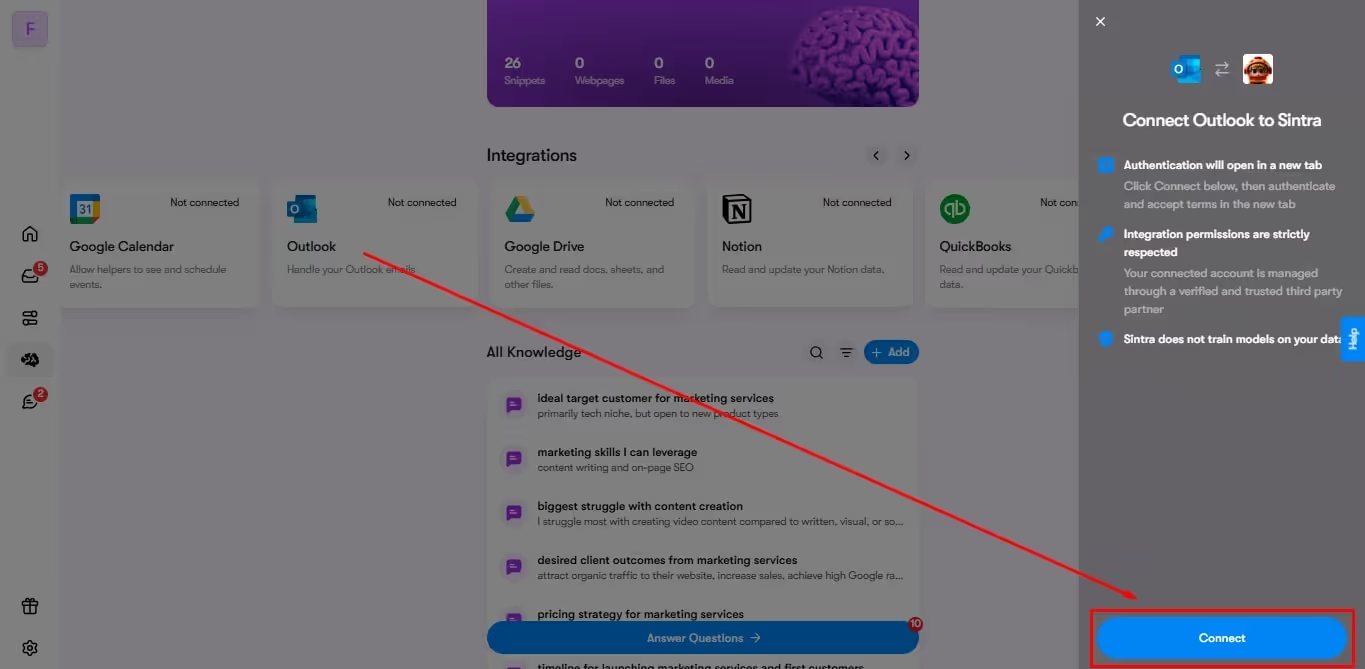
- Pro Tip: Integrate your work platforms (HR tools) into the project to seamlessly perform operations. For this, go back to the Brain AI tab and navigate to Integrations. Select one and click Connect, and that’s it.
Tooling Snapshot to Enhancing Employee Engagement
While AI-powered engagement implementation is straightforward, companies must be mindful of certain tools and controls to keep the system scalable, safe, and focused on employees. Here is a checklist of employee engagement strategies that your execution process must meet.
- A centralized knowledge base containing employees’ data with encryption.
- Multi-lingual support to assist remote teams from across the world.
- Individual assistance based on job roles, experience, and interests.
- Advanced analytics for feedback tracking, clustering capabilities, and real-time participation updates.
- Integration with popular work tools, LMS, and CRM.
- Governance is promoted by humans to promote transparency, ethical use, and data security.
Not sure where to begin? Consider Sintra.ai. It’s an advanced employee engagement platform with twelve special helpers that help with routine operations, from data analysis to content curation, and more. It also features a Brain AI, the memory of your company. With this, you can store all your workforce data and integrate it with daily work tools for maximum efficiency.
Mini Case Examples for AI-Powered Employee Engagement
AI tools can do all the heavy lifting, so you feel empowered and take your business to a new level. Let’s see some common use cases where it has proven to be a great success.
Chatbots as Your Onboarding Assistants
AI chatbots are a typical example of supporting employees during onboarding. HR teams can automate around-the-clock support for policy clarifications, contract signing, work protocol, accurate resolutions, and more. It does not stop here. HR teams can also benefit from the free time for more critical tasks like strategizing for employee loyalty.
Here are some benefits of having automated onboarding support.
- Reduced workload on the HR.
- Higher completion rates for onboarding.
- Immediate issue resolution.
- Lower time-to-productivity for new joiners.
Sentimental Analysis for Empowered Employees
AI employee engagement tools can process rich feedback data at scale. This way, managers don’t need to gather all the employees’ data working under them and analyze it manually. With this technology, they can segment the workforce and produce actionable insights, depending on the job role.
In the long term, it helps in
- Job satisfaction and improved productivity.
- Early detection of a dip in employees' morale.
- Better employee experience.
Streamlining Recruitment with AI Tools
Recruiting new people is a data-driven aspect, and AI can help the HR team with it. You can employ it to establish a centralized dashboard with all the available data. This way, HR senior personnel can make rapid and data-based decisions about pooling in candidates within the company for a project or hiring new people.
Common Pitfalls to Avoid
Enhancing employee engagement with AI might seem like a dream come true for companies, but it has some common pitfalls you must avoid.
- Risk 1 - Hidden Workload Expansion: The most mundane pitfall with AI is the expansion of workload that is often disguised as efficiency. AI can reduce tasks, but it also creates new tasks that you didn’t sign up for. So, a good solution would be to monitor your automations and set up a human manager to monitor the workload.
- Risk 2 - Over-Automation: Many of us think that automation is an excellent way to prevent employee burnout. However, while it tempts you, automation downsizes the teams. This leaves fewer people for crisis management. To avoid this, only attempt automation where needed.
- Risk 3 - Eroded Human Connections: Companies need to understand that engagement is not just about productivity metrics. Rather, it is more about mentorship and establishing meaningful interactions with employees. In the race of automation, this gets lost somewhere. A good approach is keeping HR managers in the loop, especially when dealing with appraisals.
- Risk 4 - Change Resistance: Employees fear AI, and it’s understandable. Many thoughts come to their mind; Is the computer better than me? Are they going to replace me? While lack of transparency is not much thought of, it can lead to a dip in employees’ morale. Hence, it's a call for leadership to make the employees feel AI is there to assist them and not replace them.
- Risk 5 - Ignoring Bias Tests: While most companies don’t give it a second thought, biases in training data can do significant harm. Modern AI models are susceptible to unintentionally discriminating against employees in the trained data. The only takeaway from this is using clean and structured data.
Templates and Checklists
Using AI to engage employees means you need to be careful at each and every step. The best saves in this situation are templates and checklists that can help you throughout. So, let's check them out.
Ethical Use Policy: First, you need a document declaring your AI use policy. It must cover the core ethical values, such as data privacy, accountability, transparency, and compliance. This will help you allocate roles and duties to specific people in the workforce for improved management.
Prompt Library for Managers: Imagine a booklet that has all the example prompts you need to engage with employees using AI. Sounds helpful, right? This would save you time and improve consistency in the responses, be it coaching, recognition, or feedback surveys.
Feedback-to-Action Playbook: Feedback coming from all different directions can be overwhelming for managers. Here, the feedback-to-action playbook is your savior. Such a template would cover frameworks to act on priority issues, feedback insights, etc.
Weekly Quality Review Checklist: Review and evaluation are crucial to AI implementation in employee engagement. But, to have it easy, you must have a checklist to monitor the benefits against set goals. Ideally, it should include verifying data use practices, assessing KPIs, and more.
Ready to Elevate Employee Engagement with AI?
Enhancing employee engagement via AI is a great opportunity for businesses to streamline operations, boost productivity, and maximize employee satisfaction. However, just because everyone is doing it does not mean you should as well. Instead, a better approach would be to find a high-impact use case, promote open communication among employees, test the system, and see if it works for you.
Not sure where to start? Try Sintra.ai. It offers a centralized knowledge base from where you can do almost anything, from automating tasks to supporting employee interaction. Plus, Sintra allows you to purchase individual AI agents, so you can easily limit the scope of your pilot project.
AI in Employee Engagement FAQs
How does AI actually improve employee engagement day to day?
AI improves employee engagement with data-driven and accelerated decision-making. It goes beyond automation and performs complex tasks like data analysis and communication. Doing so boosts efficiency while ensuring job satisfaction.
How can we use generative AI without risking tone, bias, or errors?
Generative AI can be used without any biases through ethical guidelines and cross-functional governance. Having human oversight over AI outcomes and using structured, bias-free data can also eliminate discrimination from the AI responses.
Which metrics should we track to prove impact to leadership?
Key performance metrics like engagement scores, turnover rates, and feedback indicators can help managers and other leaders prove the impact of AI integration on employee engagement.
Where should we start if our team is small?
If you are a small team, begin with tools like Sintra.ai. This sales platform lets you purchase individual agents for one or two use cases. So, you don’t have to buy an entire subscription package with irrelevant features for your team.
How can AI help reduce burnout and improve retention?
AI can reduce burnout by detecting negative sentiment in employees’ behaviors and actions. It is designed to detect early warning signs like delayed responses, constant absences, and reduced collaboration. This way, the managers know when to intervene.
Related articles

.avif)