AI Resume Screening: Streamline Hiring with Automation & Sintra.ai


Table of Contents
TL;DR - Improve Hiring Process
AI resume screening helps recruiters hire faster and more accurately by filtering hundreds of applications in minutes, ranking best-fit candidates, automating follow-ups, and reducing manual workload. The key is using AI for speed and consistency while keeping humans involved to prevent bias and missed talent.
On Monday morning, you posted a job. By Tuesday, your mailbox is flooded with up to 300 applications.
Now what’s next?
You have a pile of resumes in front of you, and you know one potential candidate is hidden among them. For this, you have to spend your next three weeks sorting these resumes one by one, with every single night dropping eyes.
This is a story of every recruiter. A typical business employment opportunity receives an average of 250 job applications per job post. It's about a mid-sized company —leave out the numbers; huge firms are dealing with. It's nearly impossible for human recruiters to screen resumes without errors while making quality hiring decisions.
This is why AI resume screening software is transforming the recruitment process entirely.
In 2026, 83% of companies are expected to use AI in resume screening. It is not merely because AI is trending everywhere; it is also a survival in the hiring environment across every corporate sector, where speed and accuracy are a must-have to acquire the best talent. Addressing bias is equally important - a landmark study found resumes with White-sounding names received 50% more callbacks than identical resumes with African American-sounding names, underscoring why objective AI screening matters.
In this guide, we explain how AI resume screening works and how it is changing the recruitment process. Also, we will discuss the fundamental challenges to adopting this technology, how to address them, and how to use tools like Sintra AI to automate resume screening without manual effort.
What is AI Resume Screening?
The first stage after a job posting is to review the application you received in response. Instead of manually doing this painful exercise, AI resume screening automates it, sorting through the best candidates who fit the job description. AI-based resume screening scans, extracts, and analyzes applications within seconds. This automation searches for the skills needed, candidate experiences, qualifications, and the right keywords that match the job description.
This method stands out from traditional Applicant Tracking Systems (ATSs), which we often see in old-school ATSs, that only match keywords or specific phrases like “Project Management” or “Python”. And now? AI resume screening is more intensive. It not just clicks on matching keywords in JDs and resumes; it analyzes skills and experience, understands the context, considers qualifications, and even assesses the career progression of candidates.
Companies that are more serious about their quality workforce are actively implementing AI in their recruitment process. Why? Because they want to speed up this slow hiring process while also bringing suitable candidates among thousands.
Key Benefits of AI Resume Screening in Recruitment
Resume screening by AI not only saves time but also expands the possibilities for recruitment.
More rapid short listing/candidate - What once took a recruiter 23 hours per hire now takes only a few minutes. Automated screening reduces initial review time by 75% and improves match accuracy.
Minimized human bias - These AI hiring tools can reduce some forms of unconscious bias when properly configured, allowing individuals to focus on skills and qualifications rather than unfounded feelings about names or backgrounds.
More accurate at scale - The AI screening tools achieve 89-94% accuracy, which is sometimes comparable to, and sometimes even higher than, human performance, particularly when large amounts of data are to be processed and human exhaustion is a consideration.
Better applicant experience - Quicker response times ensure applicants do not wait in the dark. 82% of applicants would like to see faster application processing, and 79% like better response time.
Massive cost savings - Businesses claim a 30% decrease in hiring costs and a yearly savings of 2.3M in enterprise firms.
Actual case: A tech firm with more than 1,200 applications to a top engineering position employed automated screening to filter the top 50 employees in less than an hour. Their recruiter then took time to interview the best fits rather than wasting days to reach a shortlist level.
The difference? They completed the position in 12 days, compared to the industry average of 44 days, and their successful hire had application number 487; they could never have reached him through hand screening.
How AI Resume Screening Works: The Technology Behind the Process
It is better to understand how AI resume screening works to apply it more effectively and identify potential issues before they affect your hiring.
Natural Language Processing (NLP) - That is how the software reads resumes as humans do. NLP disaggregates text, learns context, understands that “Managing a team” and “Led a group” mean the same thing, and can even detect sentiment in cover letters.
Machine Learning - The system is trained on past hiring data. It observes which candidates have relevant skills, identifies patterns in their backgrounds, and then applies this information to forecast which new candidates would be good fits. The more you use it, the brighter it becomes.
Resume parsing - Automation is the extraction of structured data from unstructured resumes. Names, contact details, work experience, education, skills— all of it is brought into searchable, comparative fields, no matter how an individual candidate structures their resume.
Ranking and scoring - Resumes are scored individually based on your job requirements. The system balances various factors (such as years of experience vs. specific technical skills) and ranks applicants so that the best fits for the job are at the top.
Integration with HR tools - New screening does not exist in a vacuum. It integrates with your ATS, HRIS, calendar, and communication solutions to ensure that data flows naturally and applicants move efficiently through your hiring process.
Background work: When an applicant uploads his/her resume, the system reads the information in milliseconds, obtaining 50 or more data points. It takes your applicants, compares them to your job requirements, identifies red flags (such as career gaps), assigns a match score, and either moves the job seeker to the next step. Or it sends a polite rejection notification before you have finished your coffee.
Common Challenges and Limitations of AI Resume Screening
Automated screening is a potent tool, though not an impeccable one. These are the actual issues you should be aware of, along with how to solve them.
The elephant in the room is algorithmic bias. The studies indicate that screening tools prefer white associated names 85% of the time and male-related names 52% of the time. The more concerning element is that names related to black males were never preferred over white male-related names in testing.
Why the gender bias? These systems are based on past hiring data. Suppose past hires are biased toward a specific set of demographics (which most firms are, whether by choice or not), the automation will perpetuate those trends. And it is nothing bad, only mathematical. But the effect is similar: qualified diverse candidates are filtered out.
False positives are less harmful than false negatives. The unconventional experience candidate who would bring a new viewpoint? The transferable-skilled career-switcher? The individual who went on vacation to see family and has a gap? In automated screening, these profiles are often overlooked because they do not conform to the so-called standard profile.
This is because 50% of companies only automate rejections in the first stage of resume screening. So, half of all rejected applicants are never reviewed by a human. A lot of possible talent is going to waste.
Data privacy and security issues: Facial recognition data is collected by candidates during video interviews. It is highly problematic from a consent, data storage, and compliance with laws and regulations, such as GDPR and CCPA perspectives.
The garbage-in, garbage-out problem: When your job descriptions are ambiguous, your requirements are unrealistic, or your past hiring history is biased, the system will amplify those issues on a larger scale.
How these challenges may be overcome:
- Audit regularly: Train your screening on a variety of candidate profiles to identify bias patterns before they affect real people.
- Human in the loop: Automation should never be allowed to make final decisions regarding rejection. It should be used as a shortlisting tool, not as an elimination tool.
- Train on clean data: Review your past hiring data to spot bias before running it through the hiring screening.
- Set specific standards - Define the job titles for AI systems and double-check the AI screening filter.
- Be transparent: When automating, make it clear to the candidates that you are doing so during the screening process and provide methods of appealing automated decisions.
How Sintra.ai Bots Streamline Resume Screening and Recruitment Workflows?
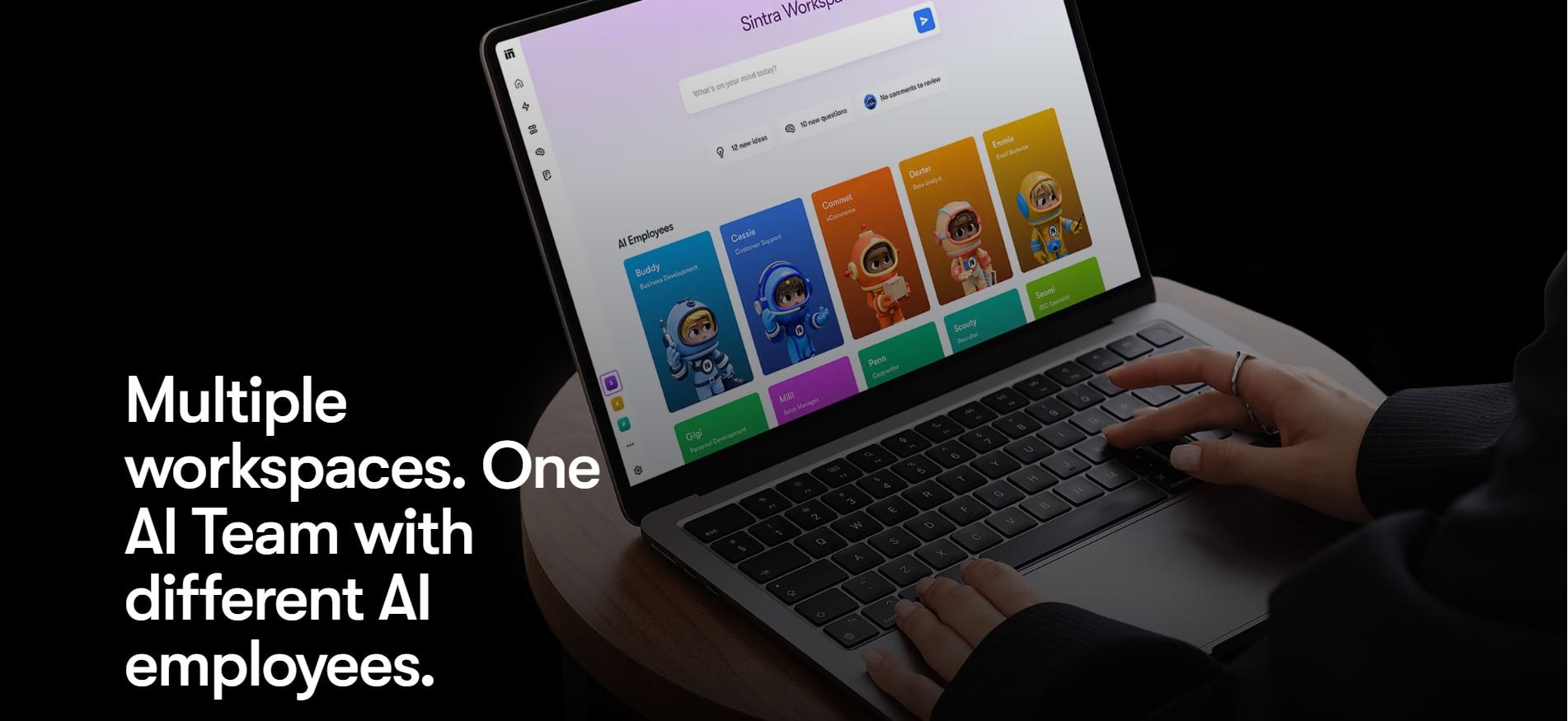
Sintra.ai is not just another screening tool. It is your full recruitment automation suite with multiple AI employees in action 24/7. It does not replace your hiring manager but supports him/her.
In contrast to point solutions that support only one part of the hiring process, Sintra provides dedicated assistants to support your entire recruitment process. Imagine that you have a team of tireless recruiters who are never sleep-deprived, never exhausted, and never let applicants fall through the cracks.
Automating Resume Parsing and Shortlisting

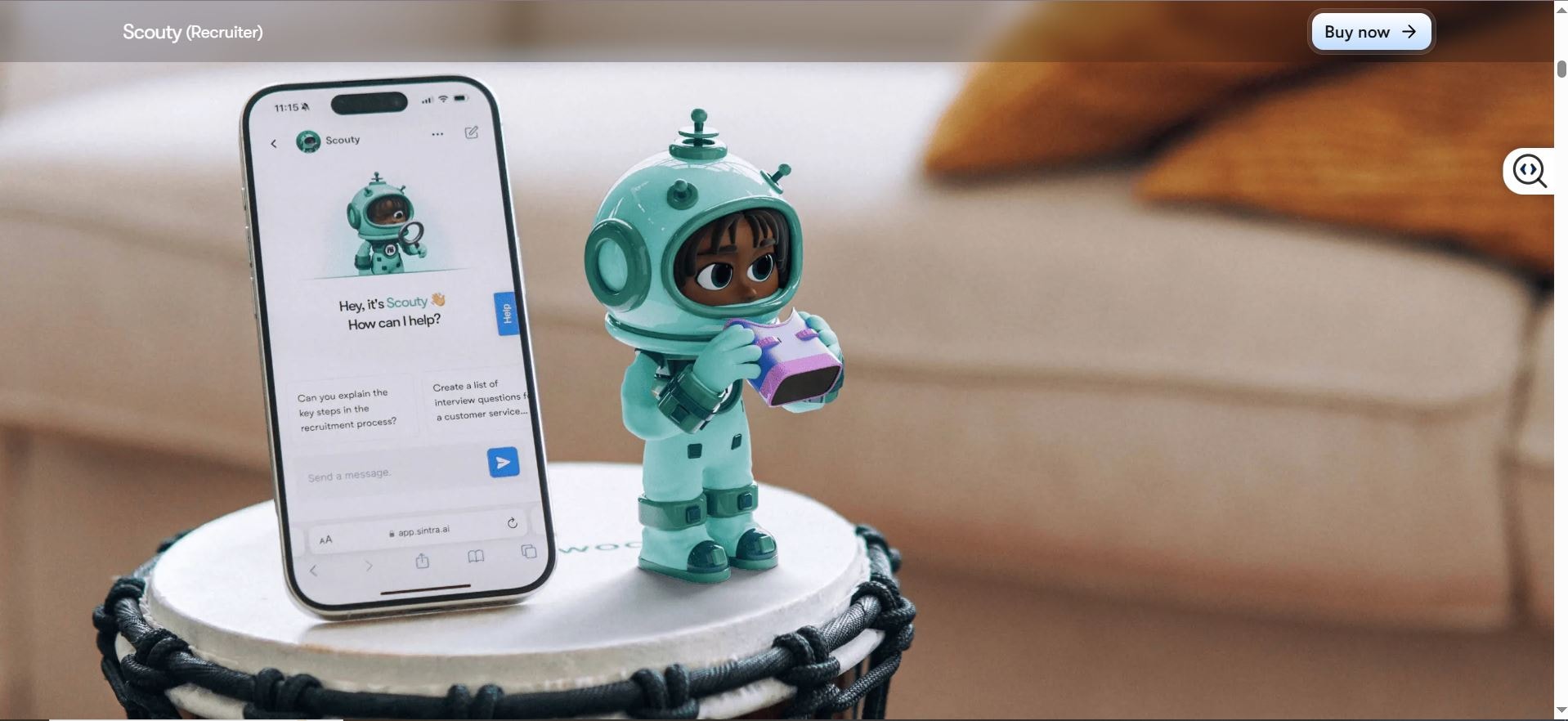
Scouty is Sintra's AI recruiter that filters incoming resumes as soon as they are received. It pulls all the necessary information —such as skills, experience, education, and certifications — and compares it to your job requirements in real time.
And here is the difference: Scouty does not simply search for keyword similarities. It understands context. When you are looking to hire in customer success, and the candidate has experience in account management, Scouty will see the overlap and not eliminate them, as they use a different term.

It is the same set of criteria you established: First-time must-haves, nice-to-haves, deal-breakers, and Scouty will use them on every application in precisely the same way. There is no longer the excuse that I had a bad day and was being particularly picky, or that I was in a hurry and did not see the red flag. All the applicants are tested on the same basis.
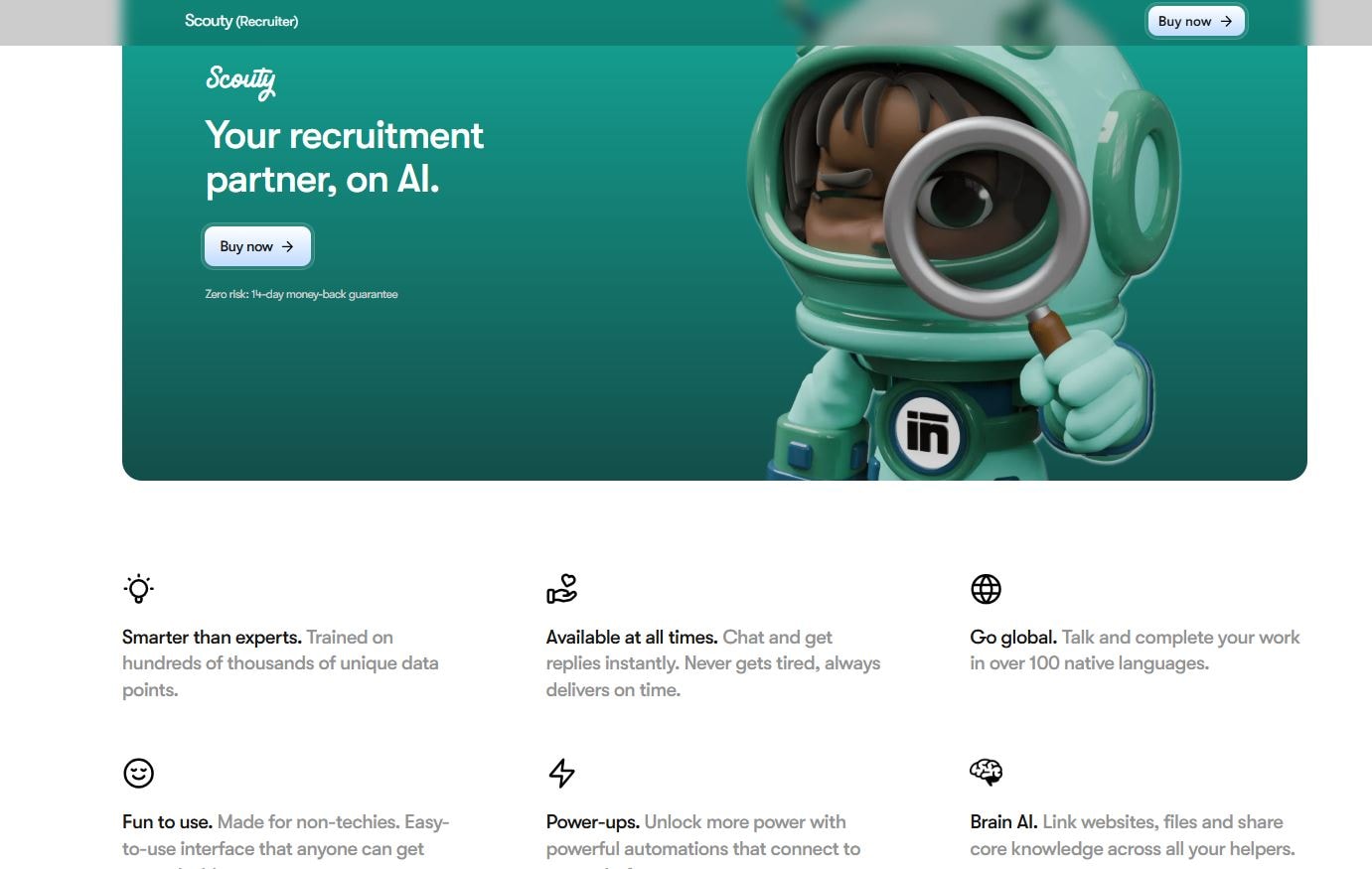
The saving of time is dramatic. A marketing firm that deployed Scouty took 45 minutes of screening time on their first role. They said they were able to identify suitable candidates and hire faster. All this is because their recruiters could focus on the best matches rather than being exhausted by the volume of their applicant pool.
Integrating Candidate Outreach and Follow-Up
This is where the majority of the hiring process breaks down: communication.
Candidates apply and do not hear. They reach the interview stage and wait weeks before further action. They receive invitations but are ghosted throughout onboarding. Every communication failure costs you talent.
What Sintra does is automate the process to ensure candidates are not bored, and your team does not have to work around the clock.
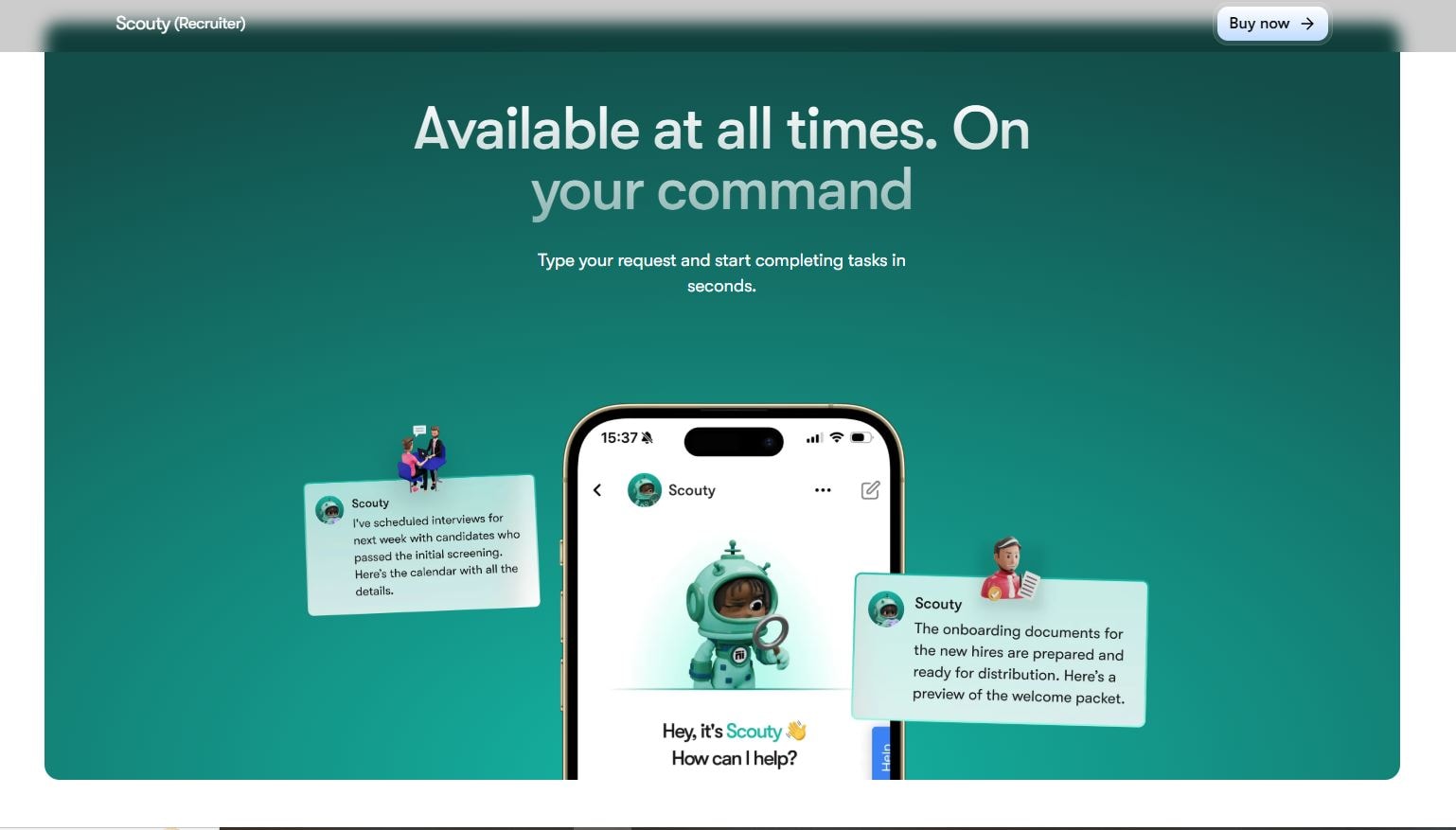
They receive a prompt response when an applicant applies. They are automatically given the following steps when shortlisted by Scouty. Follow-up occurs within 24 hours of completing an interview. When unselected, they receive a rejection in a respectful and personalized manner rather than remain silent.
Sintra can also plan an interview based on your calendar and the candidate's availability, and send calendar invites and reminders the day before. No longer play tennis via email when trying to find a time.
Real impact: A SaaS organization cut down its average response time from 8 days to 4 hours through automated outreach with Sintra. The acceptance rate of their offers increased by 23% because candidates felt valued and involved in the process.
Connecting Resume Screening with CRM and HR Systems
Sporadic data kills recruitment effectiveness. Your resume database is in a single system, your correspondence with candidates is in email, your interview feedback is in Slack, and your offer letters are in Google Docs.
Everything is connected to Sintra's AI team. Your ATS accepts resume data automatically. Interview records are integrated into your HRIS. Communication with the candidate remains searchable and well-organized. All the work your team requires is contained in a single connected workflow.
The integration will ensure that your recruiters do not have to switch platforms often or manually copy information. When a candidate passes through a screening category to the interview stage and finally receives an offer, this information is automatically shared across the system.
Why it is crucial: A recruiting firm with 200+ vacancies handled simultaneously reported that Sintra reduced data entry time by 90% and eliminated errors that previously occurred during information transfers between systems.
And with Sintra's integrations, you can have immediate access to specialized recruitment features without developing solutions or purchasing independent tools. It includes bulk email campaigns, candidate scorecards, and diversity analytics.

Best Practices for Implementing AI Resume Screening
Automated resume screening is not a matter of finding a tool and switching it on. Here is a way to execute it successfully.
Begin with specific hiring rules: You cannot screen effectively without explicit knowledge of what you are screening. Identify required qualifications, desirable abilities, and deal-killers for each position. Be specific. “5+ years of experience” as a project manager is more appropriate than “Experienced”.
Audit pre- and post: When you are in, test your system against a variety of candidate profiles. Test resumes with various names, backgrounds, and career paths, and note the tool's rankings for each. When patterns appear problematic, change your criteria or tools.
Keep people in the process: Shortlist, but do not filter out. Your best practice: the system reduces 300 applicants to the top 30, and then humans screen the 30 people to pick final interview candidates. Always have human control over the software rejection of candidates.
Measure outcomes over time: Pay attention to measures such as the diversity of shortlisted candidates, false negative rates (qualified individuals who were filtered out), and turnaround time. When something does not look right, check and make changes.
Be honest with applicants: Inform them that you are automating your screening process. Provide a way to contact someone to review their application and ensure they were not wrongfully filtered. Transparency builds trust and helps you remain compliant with new hiring laws.
Train your team: Your recruiters should be familiar with automated screening and understand its strengths and weaknesses. They need to know how to correlate scores and when to overrule computerised recommendations.
Revise your requirements with time: As your business expands, so do your hiring requirements. It is essential to review and revise your screening criteria every 3 months to ensure your system continues to identify the right things.
Hire Faster With AI Support
Resume screening works best when speed and human judgment work together. Use Sintra AI and Scouty to write job posts, screen resumes, shortlist candidates, draft outreach, and organize early hiring steps. Get started today!
AI Resume Screening FAQs
What types of jobs or industries benefit most from AI resume screening?
AI resume screening shines for high-volume roles like retail, restaurants, customer service, and call centers, where there are hundreds of applications to work through and software can sort them quickly. It's also strong for roles with hard requirements, such as nursing (RN license), accounting (CPA), or coding (specific languages), where the tool can verify whether someone holds the right certification or skill. The industries that lean on it most tend to be tech, banking and finance, and healthcare. Where it struggles is creative roles like graphic design, senior leadership, and highly specialized jobs where experience is hard to quantify. The rule of thumb: when you can write a clear list of what you need, screening tools help; when hiring comes down to gut feel and a deeper conversation, go with human review.
How does AI resume screening handle non-traditional resumes or career gaps?
Not very well, to be honest. Most screening tools are built to reward a continuous employment record, job titles that match the opening exactly, and a clean junior-to-senior progression. That's why they often auto-reject qualified people who have gaps in their history, who switched careers (a teacher moving into programming), or who freelanced. The fix is to use screening software you can adjust: tell it to look for skills rather than just titles, keep it open to varied backgrounds, and have a person review anything the system isn't sure about. Sintra's recruiting helper, Scouty, is built around structured evaluation with a human making the final call, which fits this approach and helps you avoid filtering out a strong candidate just because they took a different path.
Can AI resume screening integrate with existing HR software?
Integration matters, because a screening tool that doesn't connect to your other systems just shifts the data-entry work around. The strongest tools tie into your recruiting software (like Greenhouse or Workday), your HR database (like BambooHR), your calendar (Google Calendar or Outlook), and your messaging and email (Slack, Teams, Gmail). It's worth being clear on where Sintra fits: it isn't an applicant tracking system and doesn't do field-level status sync across ATS or HRIS tools. Scouty helps on the drafting and evaluation side, generating job descriptions, summarizing resumes, and drafting offer letters, while Sintra's connections (Gmail, Google Calendar, Drive, LinkedIn, Outlook) are final-step actions rather than two-way pipeline sync. If your workflow needs candidate statuses updating automatically across a full ATS stack, pair Scouty with a dedicated ATS rather than expecting Sintra to be one.
Is candidate data secure when using AI resume screening tools?
It depends on the tool you choose. Screening tools handle personal candidate data, like phone numbers, addresses, and work history, so that information needs protecting. Look for software that meets a recognized security standard (such as SOC 2), is GDPR-compliant if you're hiring in Europe, encrypts your data, and keeps clear privacy policies. Before you buy, ask where they store data, who can access it, how long they keep it, and whether candidates can request deletion.
How can I ensure my AI screening process remains fair and transparent?
Test your system to ensure that it is working correctly. Here's how:
Test using fake resumes: Prepare sample resumes using various names and backgrounds. Feed them through your resume screening program. If you notice that certain people are always filtered, adjust your settings.
Compare your number: Who is applied versus who interviewed. When half of the applicants are women, yet only 1 in 10 interviews is a woman, something is wrong.
Have humans in the loop: Screen 300 applications down to 50 using AI. Then recommend those 50 to your team and select whom to interview.
Explain decisions: Understand why someone has been filtered out so you can explain it when a person inquires.
Educate your team: Your recruiters should know when to rely on AI and when to override it.
Using the best AI resume screening software is aimed at helping you find better candidates more quickly, not eliminating human judgment.
Related articles