Best AI Website Builder For E-commerce

Table of Contents

Quick Answer: What Makes the Best AI Website Builder for E-commerce?
The best website builder is not defined by speed alone. It must support sustainable, long-term growth. To identify the most effective website builder AI tools, we evaluated multiple platforms based on the factors that matter most for launching and scaling fully functional e-commerce websites quickly and intelligently.
Our evaluation criteria included:
- E-commerce functionality
- AI automation depth
- Scalability
- Integrations
- Pricing transparency
- Long-term growth capability
These benchmarks ensure that the AI websites featured in this guide are not only easy to launch but also capable of supporting marketing, operations, and expansion over time.
Below is a quick comparison of our top AI websites building tools before we break down each platform in detail.
Best AI Website Builders for E-commerce in 2026
The best AI website builders simplify the process of creating websites, enabling beginners to build webpages that match their exact vision. AI website builders typically allow users to create a website in one to five minutes, depending on the complexity of the design process.
However, the role of an AI website builder does not end once the site goes live. Startups and developers require ongoing support after launch, which highlights the importance of tools that extend beyond one-time site generation. The commercial stakes are significant - Shopify's 2025 revenue hit $11.56 billion, up 30% year-over-year, with executives crediting AI integration through tools like Sidekick for reshaping how buyers discover and purchase.
The top AI website builders on our list are selected based on their e-commerce infrastructure, AI automation capabilities, and long-term scalability. Rather than focusing solely on design speed or visual appeal, this ranking evaluates how effectively each platform supports product management, marketing workflows, operational efficiency, and sustained growth.
Sintra AI
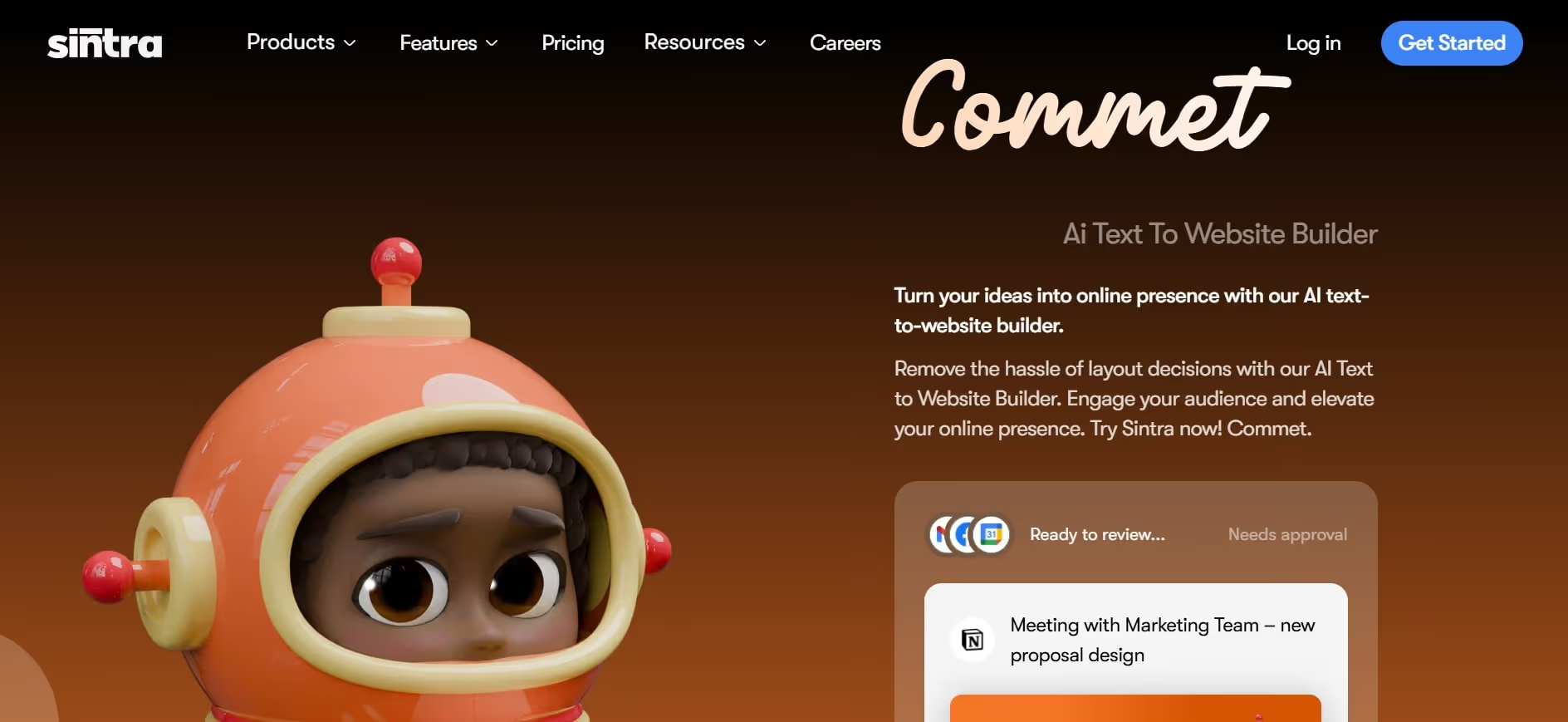
Sintra is one of the best AI website builders for e-commerce, especially for beginners. It offers a simple, intuitive interface that allows webpages to be generated quickly. However, Sintra is not a traditional AI website builder that stops at site creation. Instead, it functions as an AI team, supporting businesses with daily e-commerce execution.
At the heart of Sintra is its e-commerce AI agent, Commet, a chat-based assistant that turns ideas into functional and visually appealing layouts.
You simply define your goals, provide context, and upload business files or other necessary resources. Commet then uses AI to understand your requirements and deliver outputs that closely match them. Users should always review and edit AI-generated content to ensure it aligns with their brand voice and messaging before publishing their site.
Commet goes beyond layouts to manage product descriptions, email campaigns, customer support replies, FAQ generation, landing page drafts, and workflow coordination. This frees human teams to focus on strategic tasks while maintaining operational efficiency.
For example, when launching a new product, Commet can:
- Generate product titles, descriptions, and SEO-friendly metadata
- Draft landing page content and image captions
- Create social media posts and email announcements
- Track inventory data across sales channels
With Commet, products can go live with minimal manual input, fully optimized for search and conversion.
Importantly, Sintra does not replace storefront builders like Shopify or Wix. Instead, it complements these platforms with powerful AI integrations, helping businesses run and grow their e-commerce operations after the store is built.
Key Features
- AI Text-to-E-commerce Website Builder: Users can generate their website by conversing naturally with the AI, making site creation simple and intuitive.
- Rapid Website Creation: Build a professional e-commerce website within minutes, even without technical expertise.
- Seamless E-commerce Management: Simplifies online store management through powerful e-commerce tools and streamlined workflows.
- Conversion-Focused Content Generation: Produces SEO-optimized product descriptions, landing pages, and marketing copy designed to drive conversions.
- Optimized Productivity and Performance: Transforms ecommerce tasks into repeatable, AI-driven systems shaped by business goals and contextual inputs.
Best For
Sintra is an ideal AI website creator for:
- E-commerce founders and small business owners who want to launch and manage their stores efficiently
- Brands seeking operational efficiency through AI-powered automation
- Small to mid-sized teams with limited technical resources
- E-commerce stores requiring ongoing automation beyond the initial website setup
- Professionals needing cross-functional support across marketing, support, and operations
Sintra Pricing
Commet, Sintra’s ecommerce website builder, is available starting at $39 per month. However, businesses can access all 12 AI helpers, including Commet, for $48.50 per month, offering greater overall value.
For long-term users, the annual plan provides the most cost-effective option, reducing access to all 12 AI helpers to approximately $15.60 per month when billed annually.
Shopify AI

Shopify is widely recognized as the most effective AI website builder for e-commerce based on 2026 evaluations. It offers a range of AI-powered features designed to build websites and support e-commerce operations, such as advanced shipping and inventory management. Since Shopify provides access to over 8,000 apps to extend functionality, it effectively addresses specific business needs.
One of its key features is Shopify Magic, a suite of built-in AI tools that helps users generate product descriptions, blog posts, page copy, and other marketing content. Shopify AI also supports theme customization by generating content blocks and assisting with store design. It can suggest email copy and marketing messages to support promotions and customer engagement.
Another major feature is Shopify Sidekick, an AI assistant designed to streamline administrative tasks such as adjusting prices, setting up discounts, and answering operational questions. It also provides insights based on store data.
However, while Shopify’s app ecosystem is a significant strength, costs can rise quickly as businesses add premium apps and third-party services. Advanced email automation, customer segmentation, and complex marketing workflows often require external tools, making total expenses less predictable over time.
Key Features
- Shopify Magic AI Suite: Built-in AI tools that assist with content creation, store management, and task automation directly inside the Shopify dashboard.
- AI-Generated Product Descriptions: Automatically creates SEO-friendly product titles and descriptions based on simple prompts.
- Automated Email Suggestions: Provides AI-powered recommendations for email subject lines and marketing copy, with automation options for abandoned carts and customer engagement.
- Integrated Checkout System: Secure, optimized checkout experience with Shop Pay, payment gateway integrations, and fraud protection built in.
- Multichannel Selling: Enables selling across social media platforms, online marketplaces, and in-person retail. while syncing inventory and orders in one dashboard.
- Extensive App Ecosystem: Access to thousands of third-party apps that expand functionality in marketing automation, analytics, SEO, customer support, and more.
Best For
Shopify AI is the best AI website builder for:
- Small business owners and solopreneurs who want to launch and scale e-commerce websites with limited resources.
- E-commerce store owners who need AI assistance with administrative tasks and store management.
- Marketing-focused teams looking to improve campaigns and create more personalized shopping experiences.
- E-commerce brands serving a global audience, especially those requiring multilingual capabilities, multichannel selling, and 24/7 customer support.
Shopify AI Pricing
Shopify AI is included in all Shopify paid plans. Basic monthly plan starts at $25/month for solo preneurs and scales up to $399/month for global businesses.
However, users can save by opting for Shopify's yearly plans that start at $19/month and go up to $299/month.
For complex, high-volume operations, Shopify Plus starts at $2,300/month, billed annually, supporting advanced features and multiple inventory locations.
Wix AI
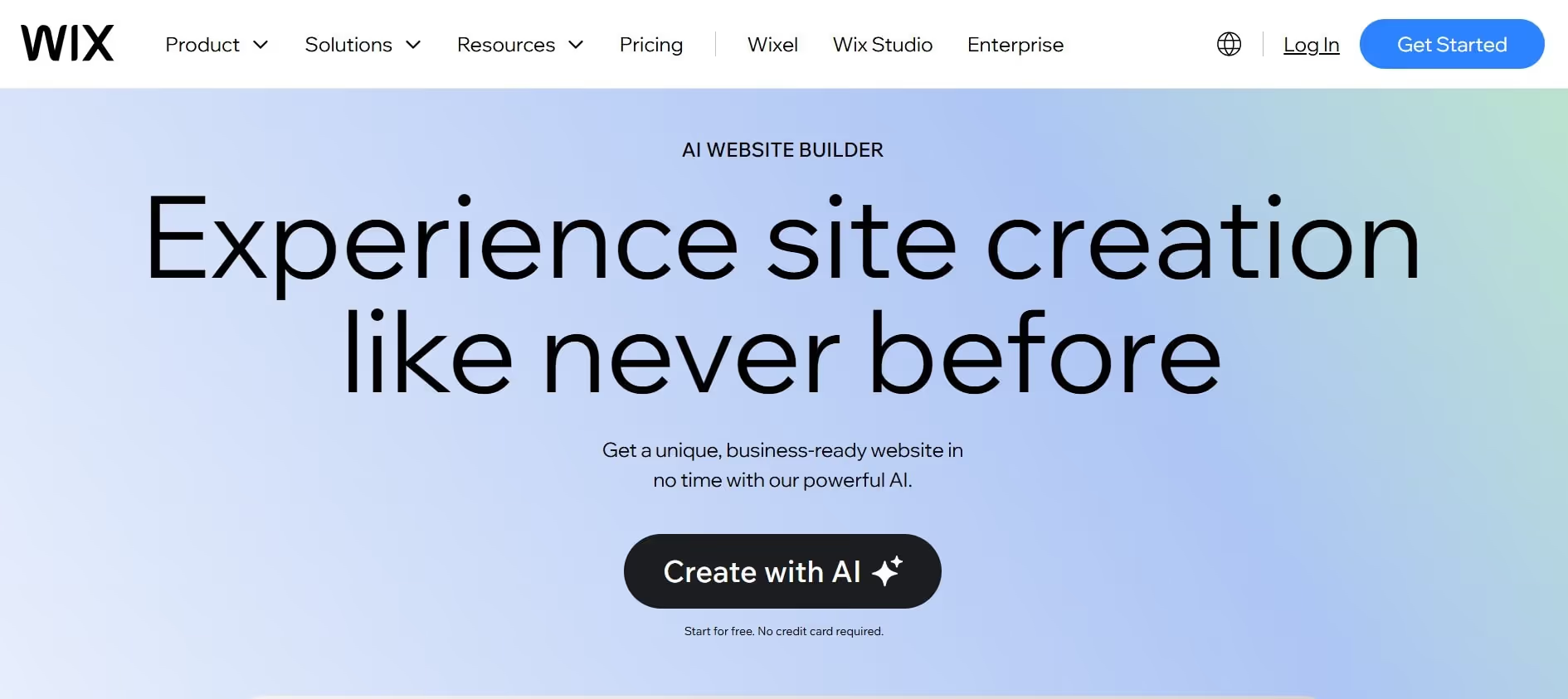
Wix is considered one of the best AI website builders thanks to its effective and easy-to-use AI site designer. Like many AI website builders offering free trials or plans, Wix allows users to build free websites on its Wix-branded domain, letting them test the platform before committing to a paid subscription.
One of the biggest highlights of this free AI website builder is its generation speed. Platforms like Wix and Hostinger can generate a functional online store in under two minutes using just a simple text prompt.
Wix’s AI site builder uses a chatbot to guide users through creating a personalized website by asking questions about their business. It then generates several website design options to choose from. Once a layout is selected, Wix builds a fully-featured site. After generation, users typically customize the AI-generated content to better align with their brand and goals.
Automated layouts and guided onboarding make Wix AI a beginner-friendly option for small and mid-sized ecommerce businesses. AI website builders like Wix and Shopify provide tools for inventory management, shipping, and sales tax calculation, simplifying the process of selling products online.
However, Wix AI has limitations in scalability and automation depth. It lacks the advanced backend systems needed for very large catalogs, high-volume traffic, or complex inventory workflows. Businesses might experience performance lags on Wix compared with enterprise-grade platforms like Shopify or Webflow. Additionally, Wix’s AI tools do not offer deep automation for ongoing business operations beyond basic website generation.
Key Features
- Beginner-Friendly AI Website Builder: Wix AI offers an intuitive, chat-guided interface that helps users create websites quickly with minimal technical experience.
- Automated Layouts: The AI generates ready-to-use website designs and page layouts based on your business information, reducing the time spent on setup.
- Guided Onboarding: Step-by-step prompts and AI guidance make it easy for users to navigate the site-building process and customize their website.
- E-commerce Tools: Wix includes built-in e-commerce features like product catalog management, inventory tracking, shipping, basic marketing tools, and multichannel selling.
- Free AI Website Option: Users can start building websites on a Wix-branded domain for free before upgrading to a paid plan.
Best For
Wix AI is best suited for:
- Beginners and solopreneurs who want to launch an online store quickly.
- Small to mid-sized businesses that need basic selling tools.
- Creative professionals and service providers who prioritize speed and simplicity over complex backend workflows.
- Freelancers and agencies that seek advanced, responsive design features.
Wix AI Pricing
Most AI website builders cost between $10 and $30 a month, with some offering free plans or trials. Wix offers a free plan, while its ad-free, custom domain paid plans start at $17/month and go up to $39/month. Wix AI is available on all Wix plans, including their free plan.
Larger businesses can opt for the Business Elite plan, which costs $19/month.
Webflow AI
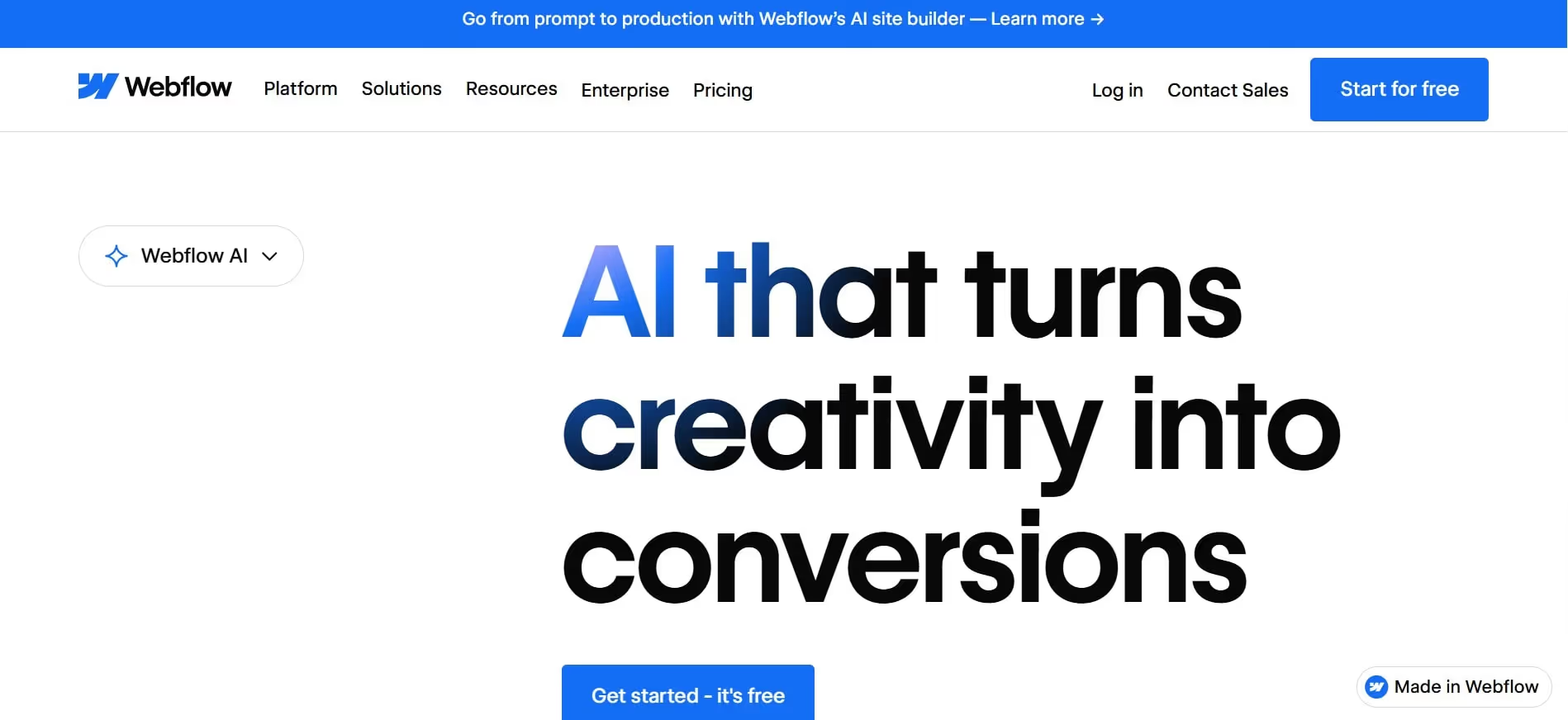
If Wix is ideal for businesses prioritizing speed and simplicity, Webflow is designed for brands and agencies building websites at scale. It is a visual web development platform that enables teams to create custom, professional websites without coding knowledge.
Like many AI website builders, Webflow allows users to customize AI-generated sites using drag-and-drop editors. However, its customization capabilities are far more advanced than most platforms, giving designers complete control over the final output.
A standout feature of Webflow AI is its components—reusable blocks that standardize designs. Editing a component in one place automatically updates it across the site, allowing non-technical team members to add pages quickly without disrupting the design.
Webflow AI also offers a flexible, database-driven CMS that separates content from design, supporting structured content management and scalable dynamic sites. This makes Webflow significantly more powerful than basic drag-and-drop builders.
However, these advanced design features and robust CMS come with a steeper learning curve, so beginners and non-technical teams may need extra time to build complex websites effectively.
Key Features
- Visual Development Flexibility: Drag-and-drop interface combined with advanced design tools lets users build dynamic websites without coding.
- Customization Freedom: Complete control over layouts, design elements, and content relationships, allowing users to create highly personalized websites.
- CMS Structure: Flexible, database-driven system with Collections, custom fields, and dynamic templates, allowing scalable management of content and products.
- E-commerce Capabilities: Offers multiple online store management tools, including product catalogs, inventory tracking, payment gateways, shipping, and order management, all integrated into the CMS.
Best For
Webflow AI is ideal for:
- Teams and agencies that need full control over website visuals.
- Businesses that are building websites at scale with complex catalogs or dynamic pages.
- A technical team of designers who require advanced customization without coding.
- Brands in need of a powerful CMS for blogs, products, portfolios, or dynamic content.
Webflow AI Pricing
Teams can start building, experimenting, and prototyping with Webflow AI for free on a Webflow-branded domain.
Users can access a custom domain with the Basic plan for $18/month, though this tier does not include CMS features. For full CMS functionality, the CMS plan is available at $29/month.
Businesses seeking the complete suite of Webflow features, including advanced e-commerce and CMS tools, can opt for the Business plan at $49/month.
Annual billing is available to reduce the effective monthly cost compared with paying month-to-month.
Squarespace AI
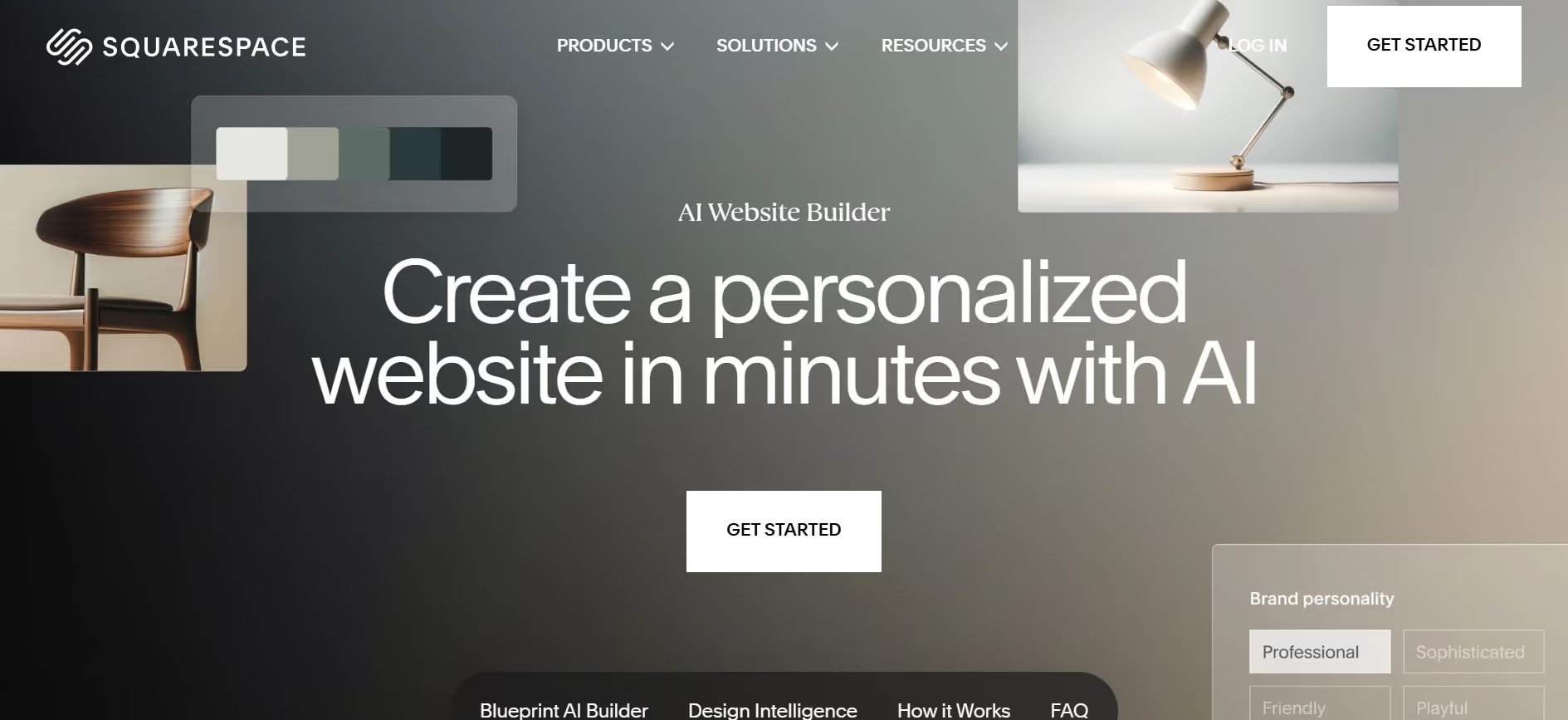
Squarespace is one of the best AI websites for building an e-commerce store. It offers over 180+ templates in 19 different categories and an intuitive drag-and-drop editor that makes building online stores simple and easy.
All of Squarespace's templates are customizable, but if you want to design a tailored site from scratch, Squarespace's Blueprint AI is perfect for the job. In fact, Squarespace's Blueprint AI is praised for its collaborative design process, allowing users to customize their websites significantly.
The best thing about Squarespace is that it goes beyond AI-generated design systems to deliver efficient e-commerce workflows. The tool's branding strength, visual consistency, and integrated marketing tools help e-commerce businesses scale without disruptions.
But while Squarespace's built-in e-commerce tools are valuable, it lacks deep, AI-driven operational automation found in more advanced platforms. The tool cannot handle tasks such as predictive customer segmentation or complex automation sequences.
Key Features
- AI-Assisted Content: AI features help generate text and suggestions for pages, products, and marketing copy.
- Branding Strength: It allows businesses to create cohesive, visually striking brands with professionally designed templates.
- Visual Consistency: Built-in design systems ensure a unified look and feel across all pages, ensuring visual consistency throughout your site.
- Integrated Marketing Tools: It supports social sharing, email campaigns, basic analytics, and creating branded promotional assets within the platform.
- E-commerce Essentials: It allows product listings and selling, tax calculation, scheduling in-store pickup, and many more e-commerce features.
Best For
Squarespace's AI website creator is perfect for:
- Brand-focused businesses that prefer professional and consistent designs.
- Small to mid-sized e-commerce store owners.
- Creative professionals such as artists and photographers.
- Users who value visual consistency and simplicity over deep customization and advanced automation.
Squarespace Pricing
Squarespace offers a 14-day free trial for new users. After the trial period, users can choose between three plans: Basic, Core, and Advanced. Pricing starts at $19/month and goes up to $36/month. However, monthly plans do not include a free custom domain.
To get a free custom domain, users must choose an annual plan, which also offers better overall value compared to month-to-month billing.
Do E-commerce Businesses Need More Than AI Website Builders?
Generating a complete website involves defining your goals, providing the platform with enough data about your business, and selecting a layout that best represents you. The more detailed your prompts or descriptions of how you want the site to look, the better the results you get from the AI website builder.
But once the storefront is ready, how well does it truly hold up when it’s time to process payments or track inventory?
The best one for e-commerce not only offers intelligent templates, but a running business needs more than a polished front end. It must handle challenges such as brand consistency, complex inventory management, marketing automation, customer support, and internal workflows.
Therefore, when selecting an AI website builder for your e-commerce business, make sure it is equally capable when it comes to operational execution. Otherwise, you may end up with a great-looking website that struggles as soon as you start selling.
Store Creation Is Only the First Step
AI website builders make it incredibly easy to launch an e-commerce store. With an AI website, you can generate layouts, product pages, and checkout systems in minutes. The setup is simple, fast, and efficient.
But once the store goes live, the real work begins. Businesses must continuously optimize product pages and update content based on user feedback. They also need to manage and adjust marketing campaigns for new offerings and promotions.
For example, a fashion brand might launch quickly with an AI website builder, but it would soon need to update product pages and marketing materials for new collections and seasonal promotions.
Store creation is just the first step. A powerful AI site builder should continue assisting users in day-to-day operations, ensuring the website stays optimized and efficient.
Marketing Automation and Customer Acquisition
The best AI website builder can generate attractive landing pages and product descriptions. However, customer acquisition requires more than automated design.
Businesses must run email campaigns, implement SEO strategies, and manage paid ads to drive customers to the website and move them through the sales funnel.
Many AI storefront tools offer basic automation and personalization, but they still have limitations that can affect performance, including:
- Inaccurate AI-generated content
- Incorrect pricing
- False or incomplete product details
- Irrelevant product recommendations
- Robotic communication
- Misinterpretation of user context
E-commerce business owners must understand and address these limitations when using an AI-powered website builder. At the end of the day, marketing isn't about just launching pages — it’s about attracting, retaining, and converting the right audience.
Customer Support and Retention Workflows
AI website builders can generate FAQs and install basic chat widgets. However, real customer support is far more complex.
E-commerce businesses must manage live chat, email support, shipping delays, loyalty campaigns, exchanges, and refunds. Most online stores also offer 24/7 support, so customers in different time zones can receive timely responses.
For example, an electronics store handling warranty claims must coordinate refunds, replacement logistics, and ongoing customer communication.
The effectiveness of a business’s customer support directly impacts customer retention. That’s why an AI website should be capable of supporting the operational complexity of real customer service workflows.
Instead of focusing solely on front-end setup, AI website builders should also help enable full-service support operations.
Operational Efficiency and Internal Workflow Management
Backend coordination becomes more complex as a business grows. Therefore, the right AI website builders go beyond storefront launch to support internal workflow management.
E-commerce businesses must handle:
- Supplier management
- Inventory synchronization
- Multi-channel order tracking
- Sales and performance reporting
For example, a clothing store selling through its website and Instagram must update inventory in real time to avoid overselling. This becomes even more challenging when promotions are running across multiple channels.
A website builder AI tool can help design a storefront, but scaling a business requires strong backend efficiency. Most website builders cannot fully automate supplier chains, demand forecasting, or cross-department coordination.
Why AI Teams and E-commerce AI Agents Matter
Traditional website builders can launch and structure a store, but real success depends on coordination and execution across marketing, customer support, inventory, and reporting. As an e-commerce business grows, cross-functional coordination becomes increasingly important. This is where AI teams or AI-powered agents can add real value.
AI teams can help:
- Automate marketing
- Manage customer acquisition
- Update SEO content
- Support customer service and retention
- Coordinate internal workflows
Instead of replacing staff, these AI agents act as operational support layers. They help brands scale sustainably rather than relying solely on storefront automation.
How to Choose the Best AI Website Builder for E-commerce Needs?
When choosing an AI website builder for your e-commerce store, analyze your own business needs before falling for marketing claims. Ask yourself about your business goals, the level of design control you need, and your budget. Are you looking for a simple, fast setup with limited e-commerce features? Or is your ideal choice more customizable with specific features?
At the end of the day, the AI site builder you choose should save you time and money, not become a source of constant frustration.
Clarify E-commerce Goals and Growth Plans
The first step is to define your e-commerce goals. This includes understanding what you want your online store to achieve. Do you want the website to launch quickly? Are you focused on building a strong brand presence? Do you want a platform that helps you scale over time?
It's also important to consider factors such as product catalog size, expected website traffic, the target markets you want to serve, and your digital marketing strategy. The AI builder should be able to support your business needs while also offering the potential to grow as your business expands.
Ultimately, the best AI website builder for e-commerce depends on your priorities. Some businesses may value speed and simplicity, while others may need deeper customization, advanced automation, or long-term scalability to support future growth.
Evaluate AI Automation Capabilities
Not all AI builders are equally intelligent. Each platform offers different levels of customization and automation. Some tools simply provide templates and basic design assistance, whereas true AI-powered website builders actively generate layouts and structure content based on changing business needs.
The best AI sites can automatically create product descriptions, optimize pages for SEO, and generate internal links that improve navigation and search visibility. They may also improve page layouts, adjust design elements, and modify content structure based on user feedback and performance data.
Strong AI builders are designed to update and optimize continuously. Unlike traditional website builders that remain static, advanced builders use machine learning to analyze traffic, engagement, and conversions to refine the website over time and support long-term e-commerce growth.
Compare E-commerce Features and Technical Infrastructure
An e-commerce website builder must offer more than just an attractive design. It must support the backend systems that allow the store to function effectively once it starts selling.
Look for essential e-commerce features such as payment gateway integrations, automated tax calculations, shipping management tools, and real-time inventory tracking. These systems ensure orders are processed efficiently and without errors.
Many AI site builders also support multi-channel selling, allowing businesses to track orders across different marketplaces while synchronizing them with real inventory. Another important feature to consider is an analytics dashboard. These dashboards allow businesses to monitor sales performance, customer behavior, and marketing results in one place.
The best site builders combine AI automation with reliable backend performance and security. Features such as unlimited bandwidth, fast loading speeds, secure payment processing, firewall protection, customer support, and scalable systems help ensure your store grows without technical issues.
Assess SEO and Conversion Optimization Tools
Online selling requires more than just an attractive product catalog. An e-commerce store must focus on SEO and conversion optimization to attract and retain visitors.
A powerful AI site builder can automatically generate key SEO elements such as metadata, structured headings, and create schema markup for product pages. With these features, search engines can understand and rank your store, increasing your chances of attracting organic traffic.
Another important factor is your website’s technical performance. The builder you choose should ensure fast page loading and mobile responsiveness, both of which directly impact user experience and search rankings.
You should also look for website builders that support AI-driven upsells, cross-sells, and personalized recommendations based on user behavior. These features help increase average order value and boost sales. Some platforms also optimize checkout flows to reduce cart abandonment.
When combined, SEO and conversion tools ensure that your store not only attracts visitors but also converts them into paying customers.
Analyze Customization, Branding, and User Experience
A good user experience is key to an online store’s success, and that experience is closely tied to strong and consistent branding.
When choosing an AI website builder, select one that offers a balance between automation and customization. While these platforms are great at generating quick layouts, you should still have control over design elements so your website perfectly reflects your brand identity.
Brand consistency also improves the overall user experience. An effective website builder should allow businesses to maintain consistent visual elements across pages, product listings, and checkout flows. This helps create a more professional and trustworthy shopping experience.
You should also assess whether the platform allows you to organize product categories, optimize navigation, and ensure responsive layouts across devices. Since many users browse online stores on mobile devices, your website design must be fully responsive with smooth page transitions to reduce bounce rates.
Review Pricing, Scalability, and Long-Term Value
One of the most important factors when comparing website builders is pricing. You should carefully review pricing structures beyond the entry-level plan. Many builders may appear affordable initially, but additional costs can arise through transaction fees, AI usage limits, premium templates, or advanced e-commerce features.
You should also evaluate the platform’s scalability. A builder that works well for a small product catalog may struggle to support larger inventories or increased website traffic.
Compare the builder’s growth potential with your own business plans to determine whether it is a suitable long-term solution.
Keep in mind that long-term value is often more important than short-term affordability. Once your website is built on a platform, migrating to another platform later can be costly and technically complex.
Ready to Scale E-commerce Businesses with AI Teams?
An online store needs an AI team that can support day-to-day operations beyond website creation. That’s where Sintra’s e-commerce AI agents can take the lead by automating marketing workflows, managing customer support, analyzing performance data, and optimizing store operations in real time.
If you're ready to move beyond basic automation and build a smarter e-commerce operation, get started with Sintra today.
Best AI Website Builder for E-commerce FAQs
What is the best AI website builder for e-commerce businesses?
The best website builder delivers quick results while supporting sustainable, long-term growth. For small to mid-sized e-commerce businesses that want store automation beyond website design, Sintra AI is the best option for them. Shopify AI is another great choice, especially for businesses seeking scalable ecommerce infrastructure. For beginners and small businesses, Wix AI offers basic e-commerce tools packed in a user-friendly experience.
Is there a free AI website builder for e-commerce stores?
Yes, there are several website builders that offer free plans. However, most of them do not allow custom domains and may have specific limitations once you start selling. Some popular free AI website builders include Wix, GoDaddy, Square Online, HubSpot, PageCloud, and FreeSite. Users should keep in mind that most free website builders lack the deep customization and automation that are available with their paid counterparts.
How do AI website builders compare to traditional e-commerce platforms?
AI website builders create online stores by generating layouts, product pages, and content quickly, often requiring minimal technical skills. Traditional e-commerce platforms do not compete in speed of generation; instead, they focus on robust backend infrastructure, advanced integrations, and deeper customization.
With AI website builders, even beginners can create a professional, fully functional website. Fast page generation, guided design, and automated content simplify the setup process significantly.
In contrast, traditional e-commerce platforms are slower to set up and may require technical expertise, but they are better suited for advanced operational control and high-growth businesses.
Which AI website builders support SEO and product descriptions?
Several AI website builders include features to help with SEO and product descriptions, but the depth varies by platform. Tools like Sintra AI and Shopify offer strong support for generating SEO-optimized product titles, meta descriptions, and content that improve search visibility. In contrast, Squarespace AI's content suggestions and SEO tools lack in-depth compared to higher-end platforms.
Can AI website builders automate e-commerce marketing and customer support?
Yes, but to a certain extent. Most AI website builders can automate basic marketing tasks like email campaigns, product descriptions, and abandoned cart reminders. They may also offer FAQ automation and simple chat for customer support. However, these basic features may not be enough for large businesses. Advanced marketing workflows and full customer support automation usually require third-party integrations or specialized tools.
Related articles
.avif)
.avif)

.avif)