Enterprise AI Strategy: How to Build, Implement, and Scale AI for Real Business Impact

Table of Contents

Artificial intelligence isn't just transforming how businesses operate; it's reshaping how they function from the ground up. An effective enterprise AI strategy enables organizations to move beyond experimental AI projects and achieve scalable, measurable business growth.
Leading enterprises are embedding AI into their corporate strategy, rather than treating it as a one-off investment. They try to align every initiative with long-term goals and key performance indicators. Financial services firms are among the most aggressive adopters - 43% use gen AI in marketing and sales, and software engineering gen AI use in the sector at 37% is higher than most other industries. This structured approach enables companies to discover more effective ways to analyze data, automate processes, and make informed decisions.
In short, without a clear vision and a defined AI strategy, even the most advanced AI solution risks becoming disjointed experiments. A roadmap ensures every step drives scalable business success. Let's gain a deeper understanding of enterprise AI strategies.
What Is an Enterprise AI Strategy?
An enterprise AI strategy is a structured plan that aligns AI investments with a company's overall business strategy. Instead of adopting tools randomly and experimenting with them on the go, a good strategy defines how and why AI should be used to reach key goals.
It connects data sciences, machine learning, and automation to enhance decisions, streamline workflows, and improve customer experiences. In simple terms, it turns AI from a tech experiment into a growth driver while ensuring every project adds measurable value and supports the brand's long-term vision.
Why Every Business Needs an AI Strategy?
A structured enterprise AI strategy prevents the chaos that comes with mindlessly adopting AI. Many companies rush into AI adoption without a clear plan. The results often turn into expensive experiments with duplicated efforts and wasted budgets.
An enterprise strategy defines a plan for how an AI solution will serve significant goals. Whether that's improving customer experiences, optimizing operations, or driving innovation, an effective AI strategy can make it all happen. Organizations can connect AI use cases directly to key performance indicators (KPIs), ensuring every initiative contributes to growth.
Moreover, a well-defined strategy helps identify gaps in data, talent, and infrastructure early on. It reduces risks by establishing clear rules for data use and compliance, while allowing for growth and experimentation with new ideas. AI adoption is no longer optional; having a strategic foundation, however, is what separates leaders from followers.
Key Elements of a Successful Enterprise AI Strategy
An effective enterprise AI strategy doesn't happen on a whim. It's built on a strong foundation of structure, vision, and alignment. To make AI truly scalable and sustainable, organizations must focus on a few key elements that tie technology, people, and business goals together.
Let's have a closer look at the key elements that make a successful AI strategy:
1. Aligning AI Initiatives with Business Objectives
A successful strategy starts with alignment. Every AI project should tie back to the company's mission, KPIs, and long-term business strategy. Without this connection, even the most expensive AI solutions risk becoming a disjointed project rather than meaningful assets.
To achieve this alignment, leaders should begin by clearly defining what success looks like. They should be aware of and clearly communicate to the organization why they need AI tools and where these integrations will be implemented.
From there, AI initiatives can be mapped to measurable outcomes that directly support these objectives, ensuring every model or workflow delivers strategic value, not just technical sophistication.
2. Prioritizing High-Impact Use Cases
AI is not perfect, and not every AI idea deserves immediate execution. The real power lies in picking the right ones and executing them at the perfect time. Prioritizing high-impact AI use cases means evaluating projects based on three key factors: business value, feasibility, and strategic alignment.
Start by identifying where AI can solve real business challenges or unlock measurable ROI, such as enhancing customer experiences or automating manual tasks. Next, assess feasibility by checking the available data, tools, and talent needed for a successful execution. Finally, ensure that each project aligns with your organization's broader business strategy, which supports both short-term and long-term wins.
3. Establishing AI Governance and Responsible AI Practices
AI governance isn't just a formality; it is the backbone of trust and accountability in every AI aspect. Establishing clear governance ensures that AI solutions operate ethically, comply with regulations, and maintain transparency across departments.
This includes defining ownership, outlining data usage policies, and setting boundaries for how machine learning models make decisions. Responsible AI practices also protect businesses from potential risks like biased data or opaque algorithms.
By embedding governance eart on, companies can confidently scale their AI use while keeping their reputation safe. Good governance transforms AI from risky innovation into a reliable, long-term strategic asset.
4. Building the Right Data and Technology Foundation
A strong AI strategy starts with clean, consistent, and accessible data. Poor-quality data limits the accuracy and reliability of AI models. Companies should focus on building centralized data systems, setting clear data governance rules, and ensuring continuous data quality checks.
Equally important is having a scalable, flexible infrastructure. Cloud-based platforms and modern APIs allow AI tools to integrate smoothly with existing systems. This foundation not only supports faster innovation but also makes it easier to adapt.
5. Fostering a culture of AI Adoption and Upskilling
AI transformation succeeds only when people embrace it. Encourage teams across departments to collaborate on AI projects so everyone sees its value in real business contexts.
Upskilling is equally important to acknowledge, even if an aspect of a business is fully automated. AI literacy shouldn't be limited to data scientists only. Training programs can empower employees at every level to explore new tools and techniques.
Step-by-Step Guide to Developing Your Enterprise AI Strategy
Building an enterprise AI strategy isn't about diving straight into the latest tools; it's about setting a clear direction before execution. A structured roadmap helps organizations start small, learn fast, and scale responsibly.
Here's a quick breakdown of how to move from planning to impact:
1. Assessing Readiness and Setting Clear Goals
This step involves assessing data maturity, infrastructure, and internal skills to identify what's missing. From there, leaders can set clear, measurable goals that tie AI outcomes directly to business strategy.
2. Identifying and Prioritizing Use Cases
Businesses should map potential use cases, score them by impact and feasibility, and focus on those that align most closely with company goals. A clear prioritization framework helps avoid scattered experiments and ensures resources go where they'll make the biggest difference.
3. Designing for Scalability and Long-Term Value
This involves building flexible data pipelines, selecting interoperable tools, and ensuring that AI models can adapt as business needs evolve. Think of it as future-proofing your investments. The goal is to avoid starting from scratch every time technology advances or new data emerges.
4. Measuring Success and Iterating
Define KPIs that reflect both technical efficiency and business outcomes, from model accuracy to revenue growth or cost savings. Regularly reviewing these metrics enables teams to refine their models, address biases, and focus on what works.
How Sintra.ai Empowers Your Enterprise AI Strategy
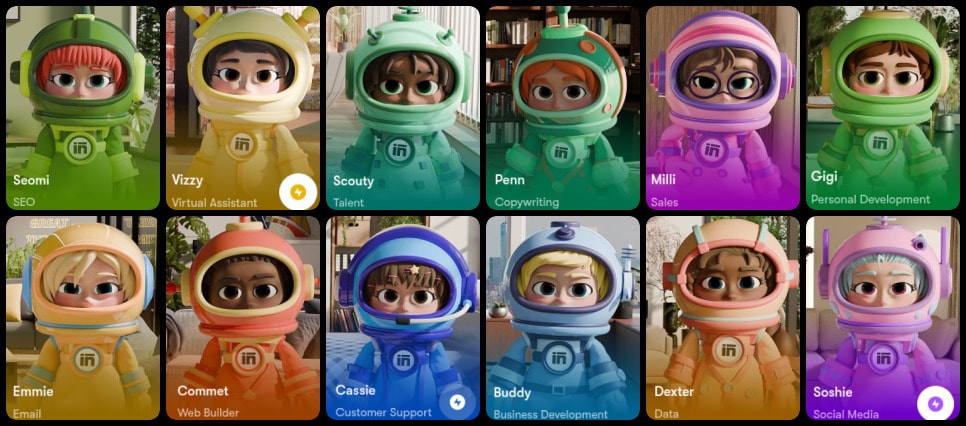
Sintra.ai simplifies the complex process of building and scaling an enterprise AI strategy. Instead of juggling multiple platforms or struggling with disconnected data, businesses can leverage Sintra's intelligent bots to handle everything.
These AI-driven assistants help identify high-impact AI use cases, automate data preparation, and ensure seamless integration with existing tools. As companies grow, Sintra.ai scales effortlessly, providing analytics, governance support, and continuous performance insights.
In short, it bridges the gap between AI strategy and execution, empowering teams to focus on innovation while Sintra takes care of the heavy work behind the scenes.
Frequently Asked Questions
1. Why is a clear AI strategy important for businesses?
Because without a clear roadmap, AI efforts can easily become scattered and unproductive. A structured AI strategy ensures that every project aligns with your business goals, drives measurable ROI, and minimizes wasted investments.
2. How do you identify the best AI use cases for your organization?
Start with areas that have clear data availability, measurable KPIs, and potential for automation or insight generation. Then assess each idea for feasibility, scalability, and direct business impact before committing resources.
3. What are the key risks and challenges in AI adoption?
Common risks include poor data quality, lack of governance, unclear ownership, and overestimating short-term gains. Without an effective AI strategy, these issues can stall progress and limit scalability.
4. How can Sintra.ai help automate and scale AI initiatives?
Sintra.ai provides ready-to-use AI solutions that simplify every step of the enterprise AI journey. Its bots automate repetitive work by using Brain AI and ensure a smoother, faster path to value.
5. What are the best practices for measuring AI success?
Set key performance indicators (KPIs) that directly reflect business outcomes such as revenue growth, cost reduction, and process efficiency. Track results continuously and iterate based on performance insights.
6. How do you ensure ethical and responsible AI use?
By establishing AI governance frameworks that emphasize fairness, transparency, and accountability. Ethical AI isn't optional; it is what builds long-term trust between your brand, your teams, and your customers.
Related articles


.avif)