



SEO Agent AI Employee
From audits to step-by-step recommendations – Seomi keeps your website visible. Try an SEO AI agent that’s actually smart, fast, and surprisingly easy to work with.


Understands your business, website and audience.
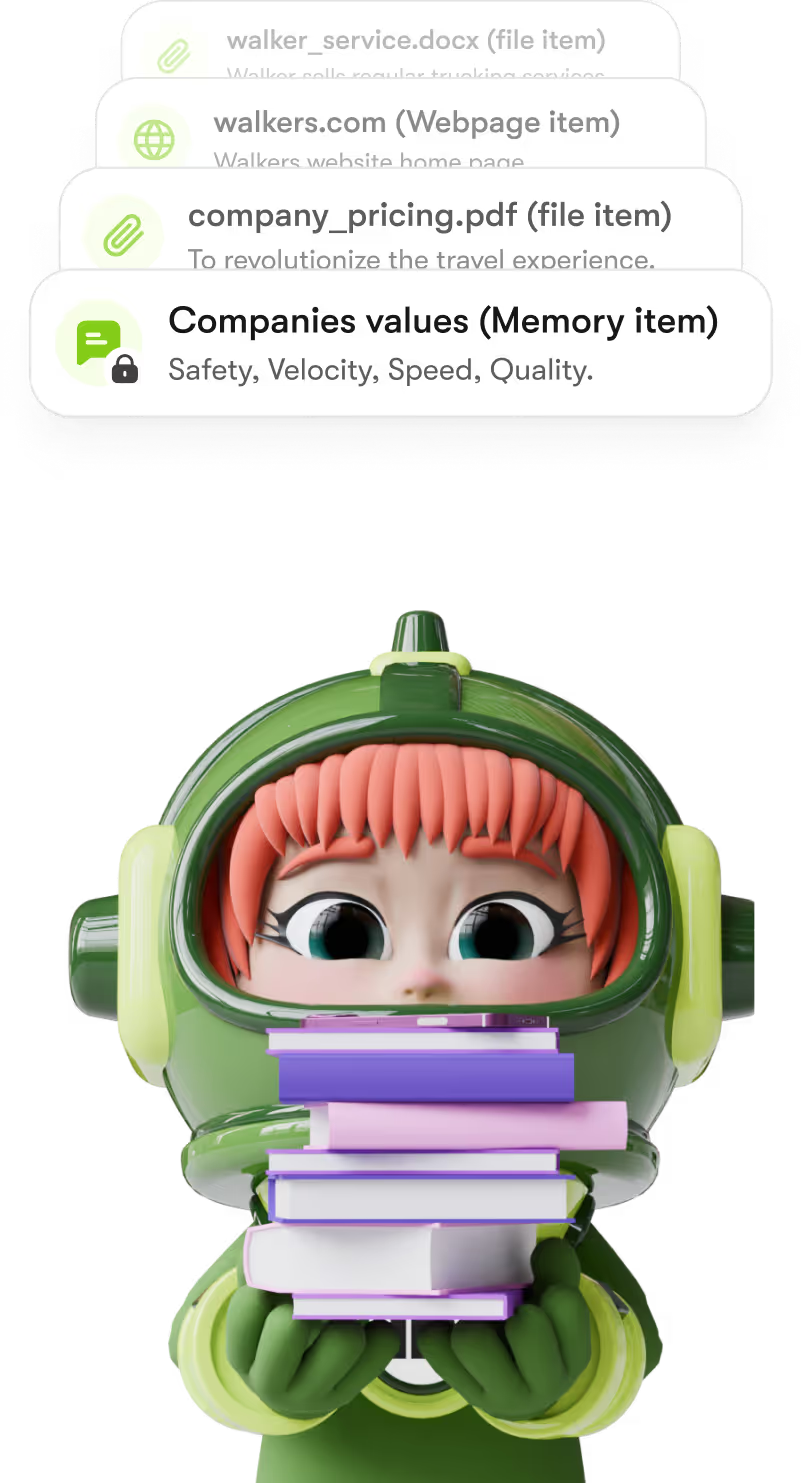
Creates intent driven SEO-ready content.
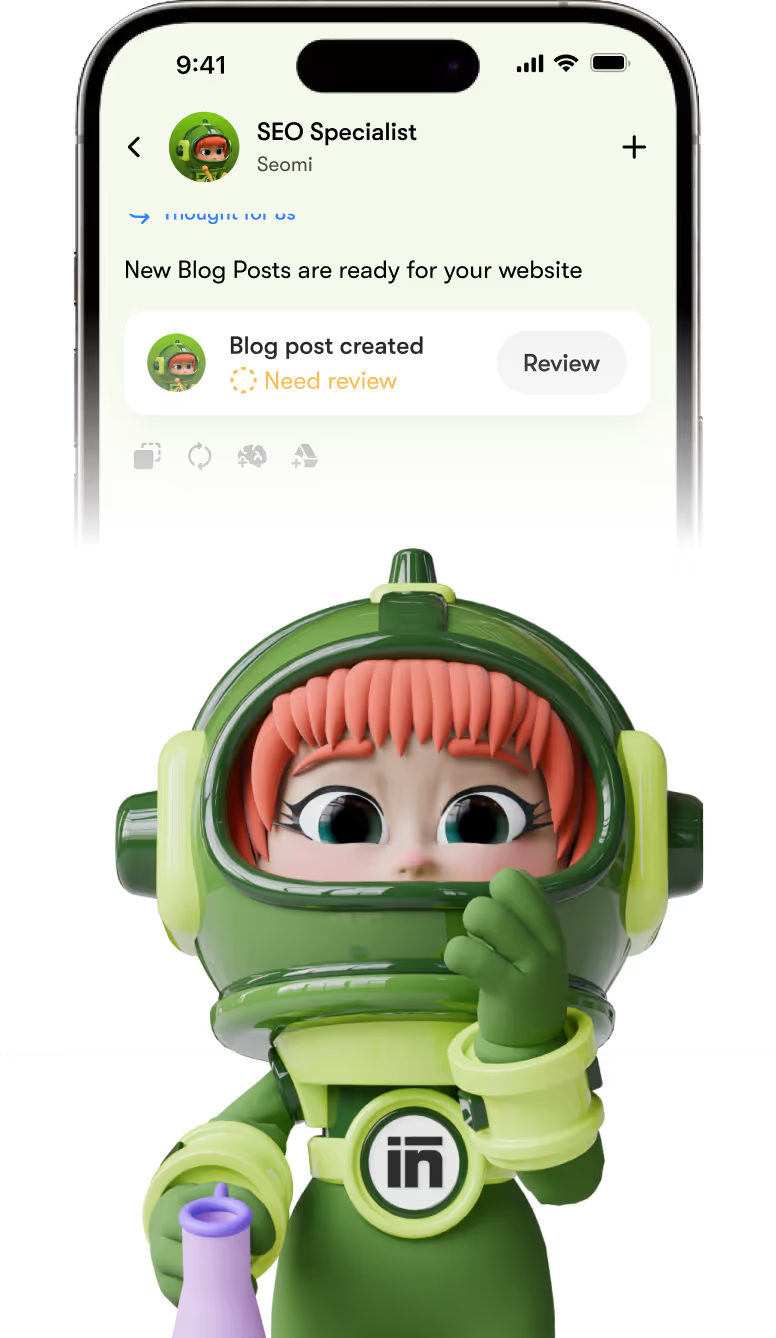
Analyzes, monitors, and improves performance.
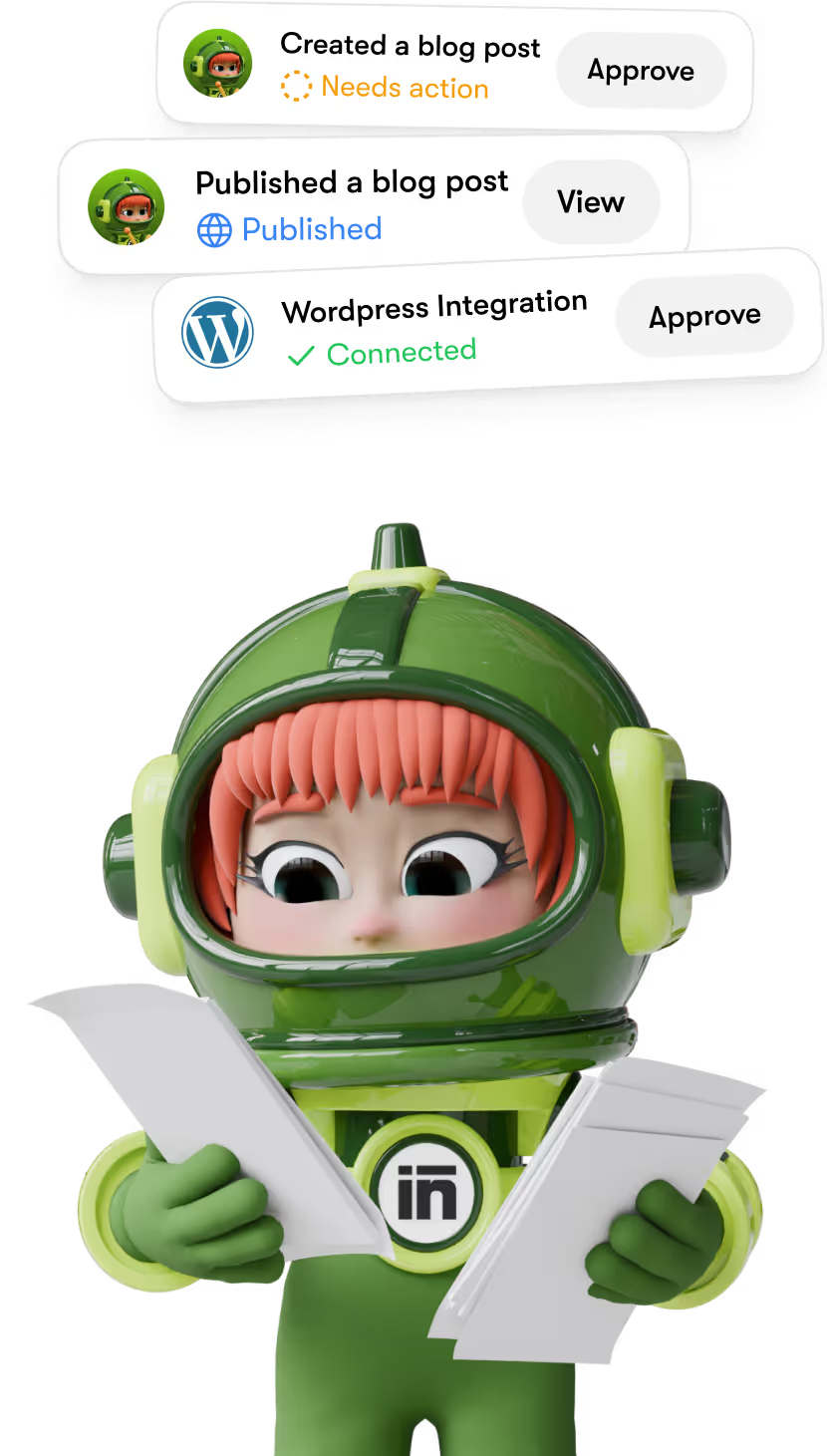
Runs your SEO tasks on auto-mode 24/7.
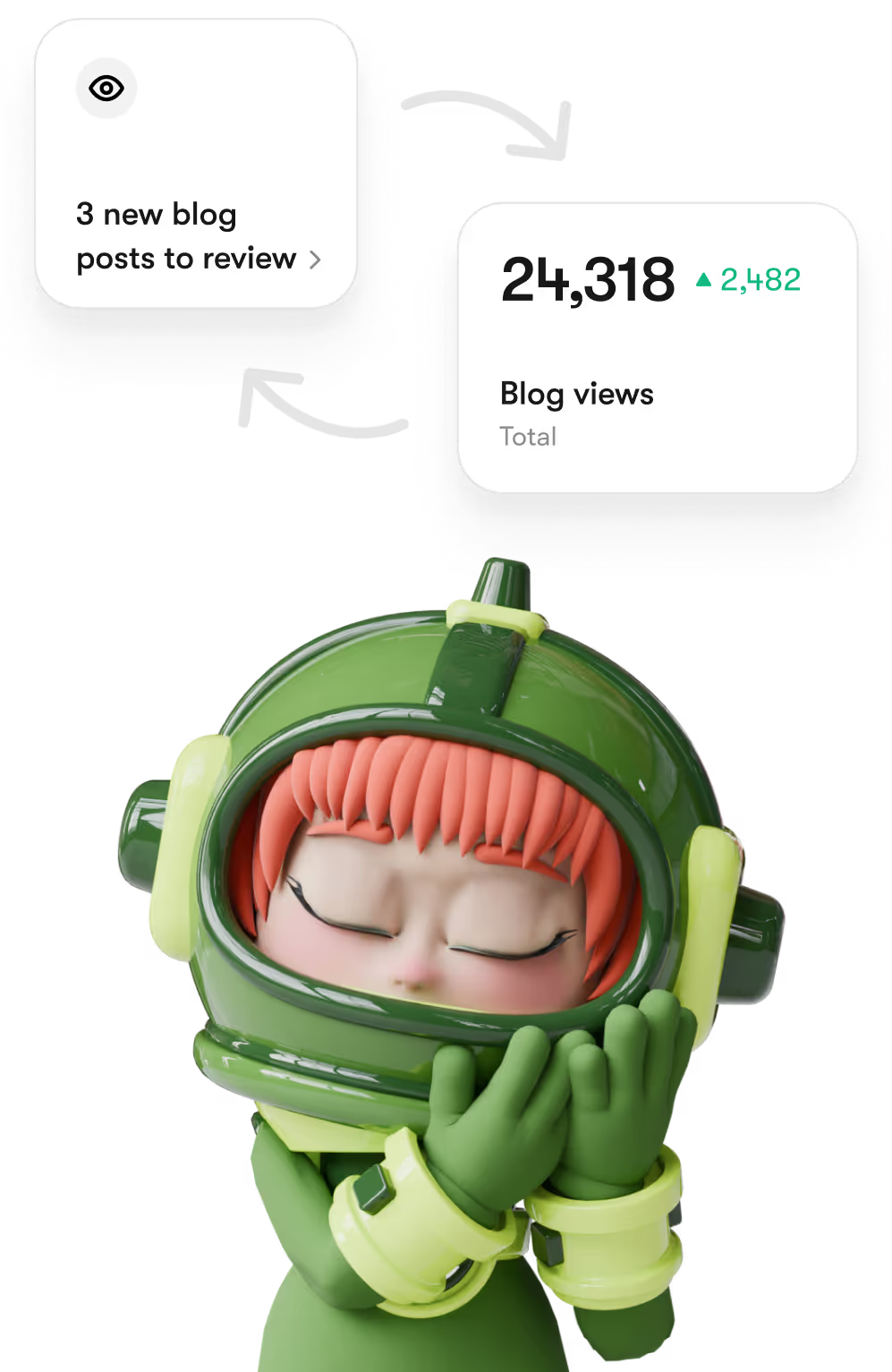
Most teams don’t fail at SEO – they abandon it.
Not because SEO doesn’t work, but because it's a long game and businesses want fast results. Our SEO helper makes it sustainable by running quietly in the background.
One advanced SEO AI agent - no extra resources required.

From setup to value in minutes
Getting started with our AI SEO assistant is intentionally simple. Create an account with Sintra AI, set your preferences, and let the AI take it from there.
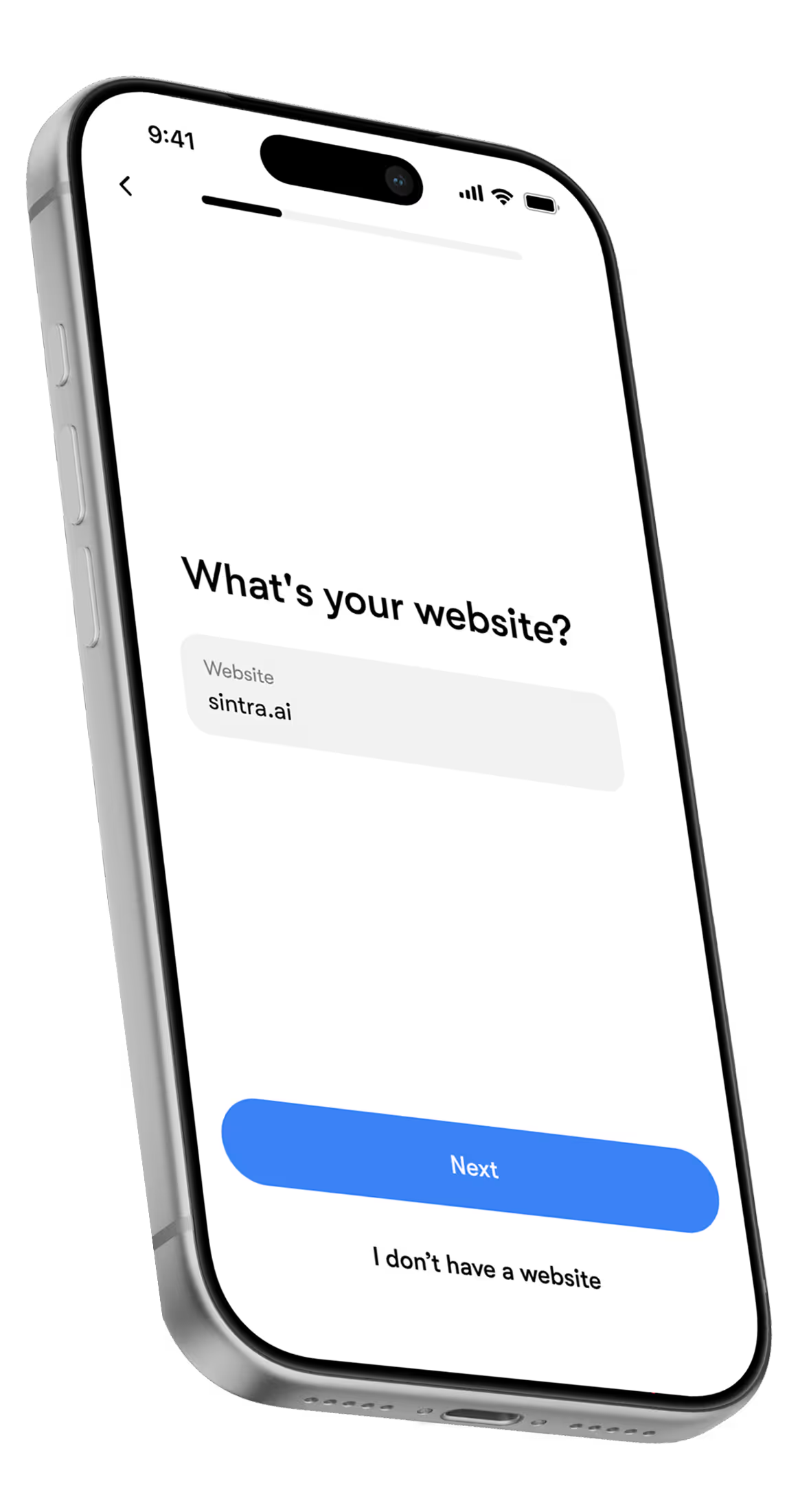
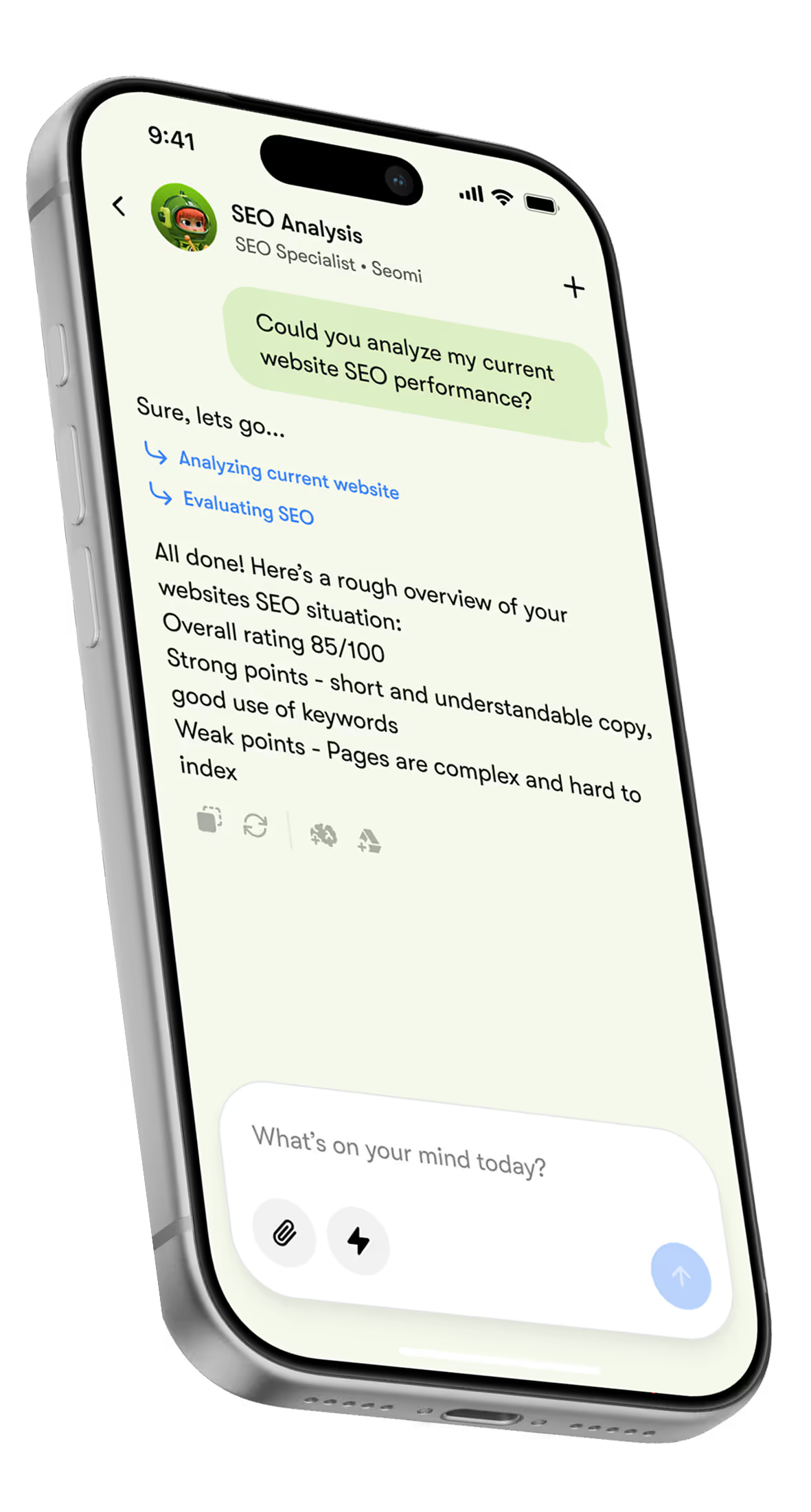
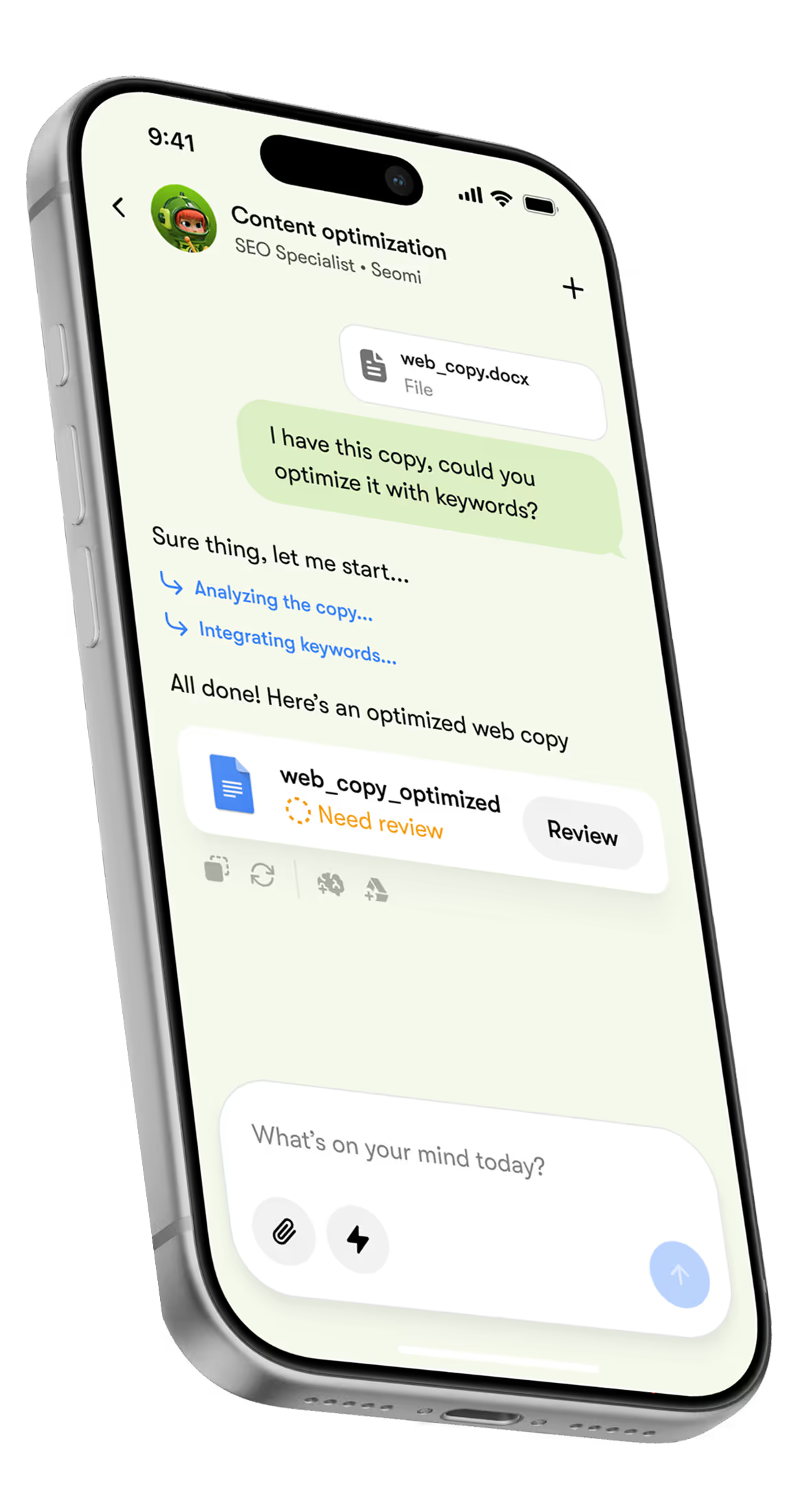
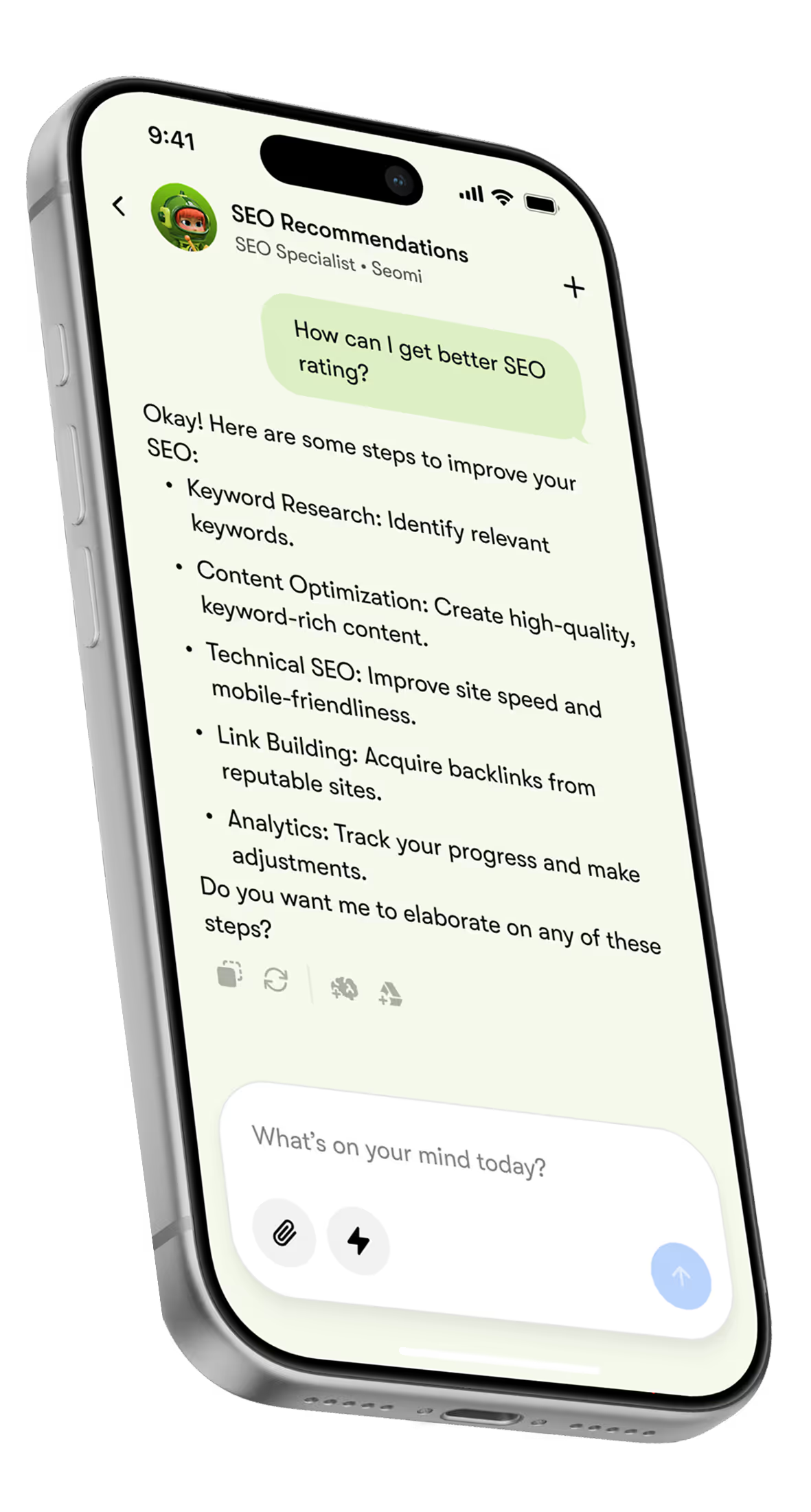
Set your foundation
Add your website and business details once. Tell Seomi what you’re building, who you’re targeting, and your goals – so every SEO decision reflects your brand, positioning, and growth objectives from day one.
Connect your tools
Link the platforms Sintra supports through Brain AI – like Google Analytics, Google Drive, and Notion – so Seomi can pull in the context and data needed to guide your SEO decisions.
Set the SEO strategy once
Tell Seomi what matters most – keywords, pages, markets, competitors, and KPIs.This gives her a clear definition of priorities, so SEO actions are planned and executed against measurable outcomes.
You lead, Seomi executes
You decide what goes live. Review recommendations, content, or changes before implementation – no surprises.
Your very first
AI SEO strategist
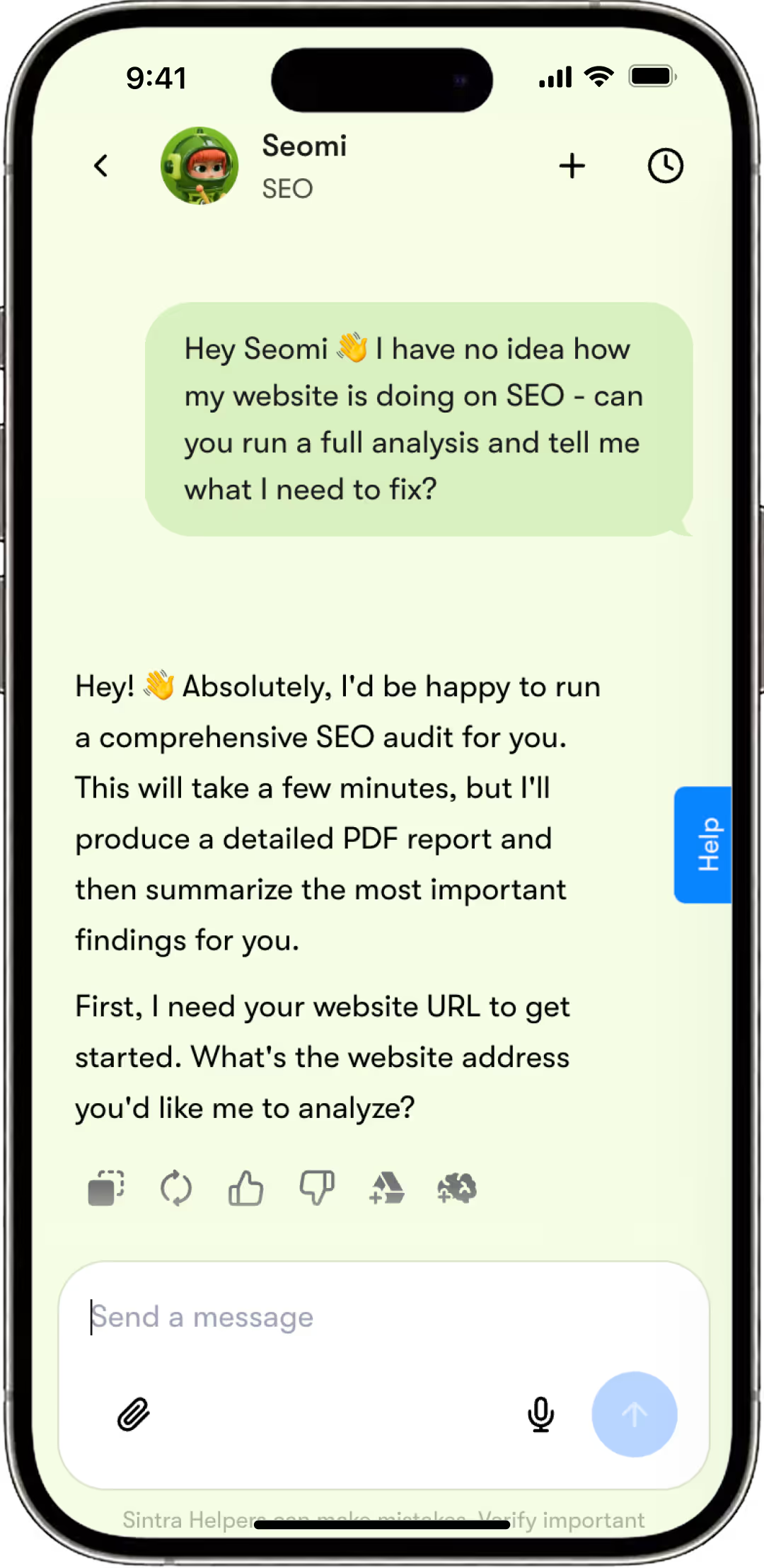
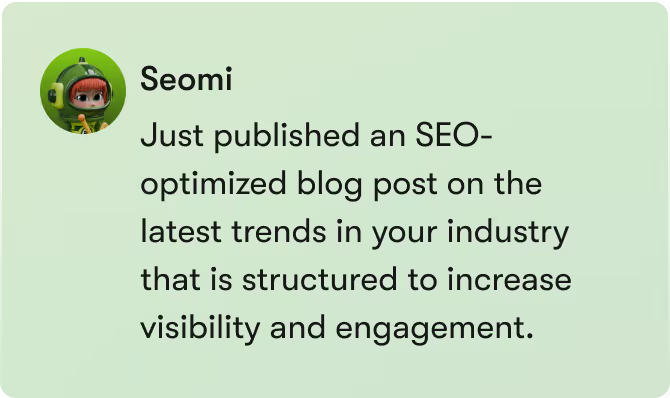
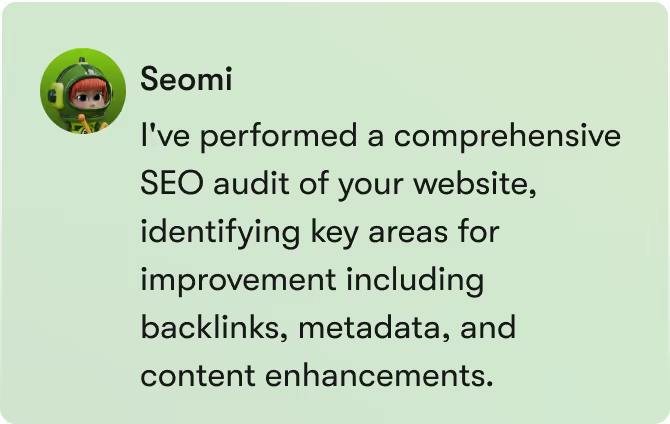
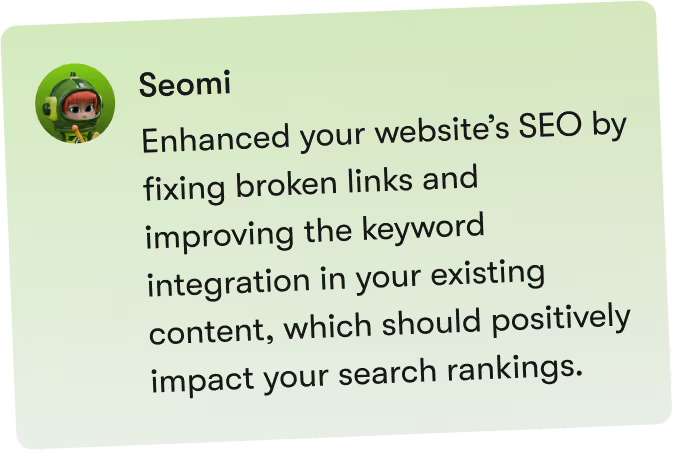
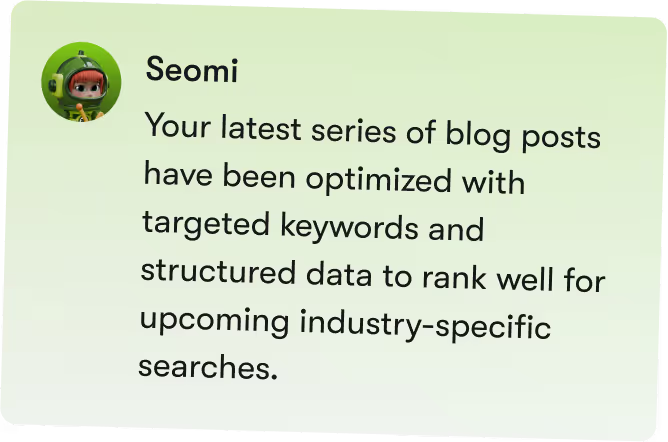
Our AI SEO agent turns strategy into a steady, repeatable system that doesn’t break when things get busy.
Optimizations ship consistently, week after week, shaped by real performance - not guesswork. Your SEO stays active without being top of mind.
Your team stays focused on what actually grows the business.
Create an SEO strategy
Define goals, keywords, and markets aligned with your business.
Build an optimization plan
Turn strategy into clear, actionable SEO tasks.
Create an SEO roadmap
Map technical, content, and authority work across months and launches.
Generate SEO content
Create outlines, drafts, and on-page optimizations ready for review.
Identify quick wins
Spot high-impact fixes and opportunities worth shipping fast.
Surface growth signals
Highlight ranking gains, traffic lifts, and gaps to focus on next.
Provide expert-style insights
Turn SEO data into clear, decision-ready recommendations.
Analyze performance trends
Track what works over time and translate it into next actions.
Summarize case studies & results
Turn wins into clear summaries highlighting impact and measurable SEO results.
Send weekly recaps & summaries
Summarize optimizations, performance, and next priorities in one place.
Coordinate execution tasks
Break SEO work into clear steps so nothing stalls or gets missed.
Your search engine optimization,
on easy mode.
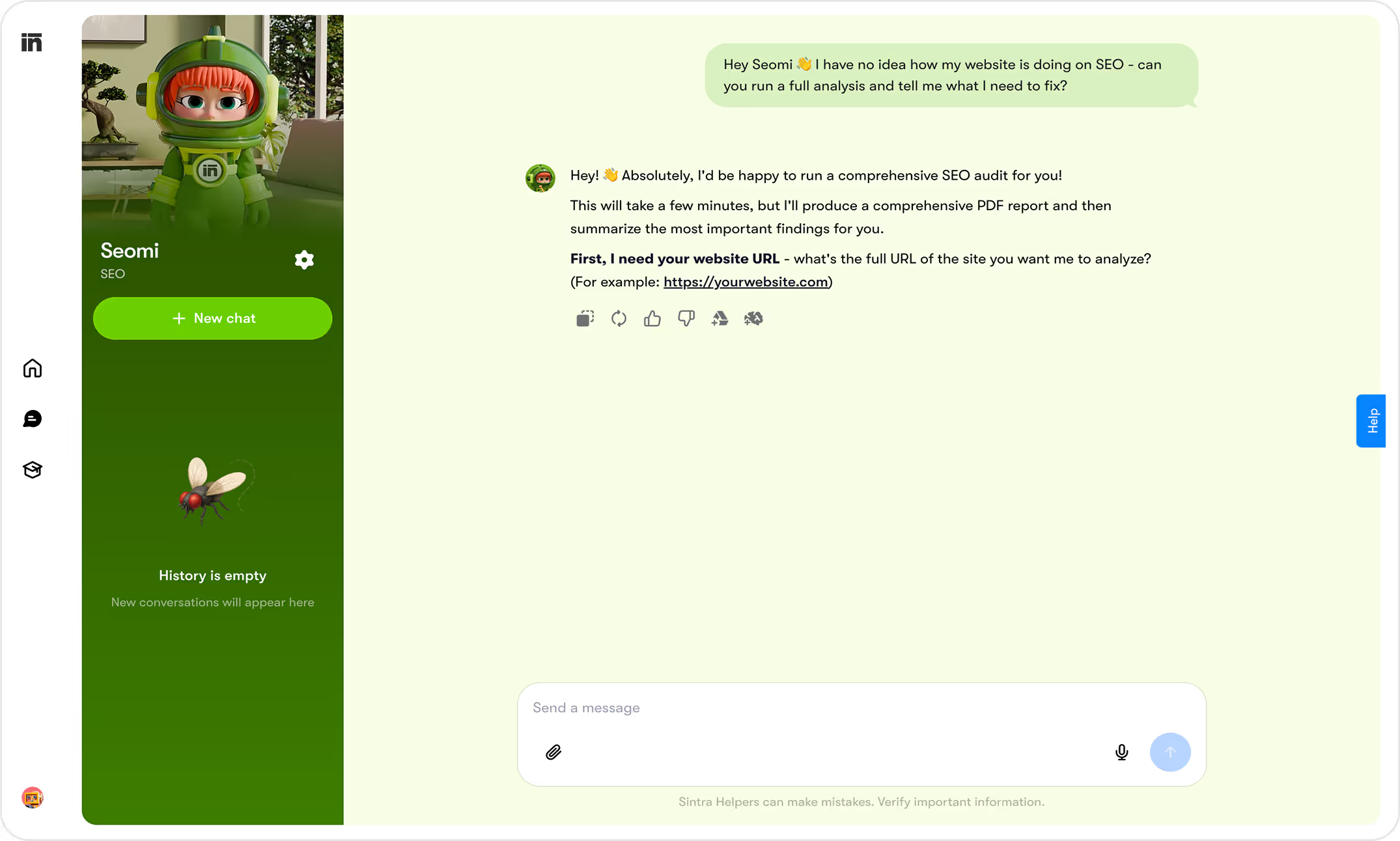
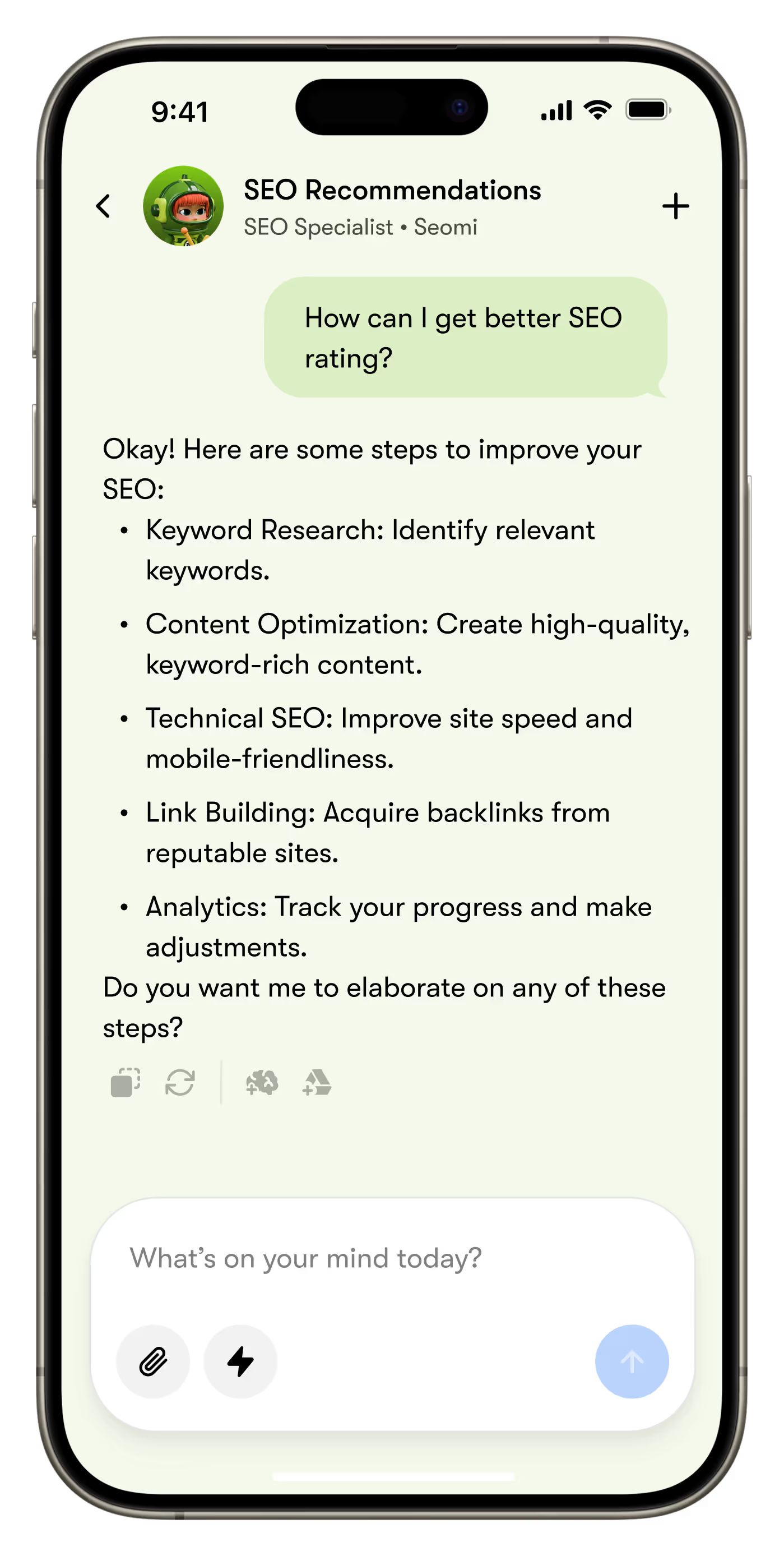



Predictable output. Rankings and traffic improve without recurring planning sessions or manual audits. Take back your time.
Fewer bottlenecks. No chasing reports, syncing tools, or checking status - your AI SEO manager reduces friction by default.
Built for scalable SEO. Manage growth across pages and priorities without added complexity.
Powered by great models. Seomi applies the right approach for audits, content, and analysis - without you dwelling on what to choose.


Scale creates experience. Experience creates intelligence.
More than
10M+
pages analyzed
Available
24/7
for consultation
More than
30,000
websites supported
More than
2M+
SEO recommendations generated
Shaped by real search experts. Trained on millions of best performing web pages.
Trained on real-world SEO patterns, Seomi understands what drives rankings and conversions. Every insight is translated into practical intelligence – helping your site rank smarter and move faster. It’s balanced, credible, and fits seamlessly into any workflow.
Powered by Brain AI
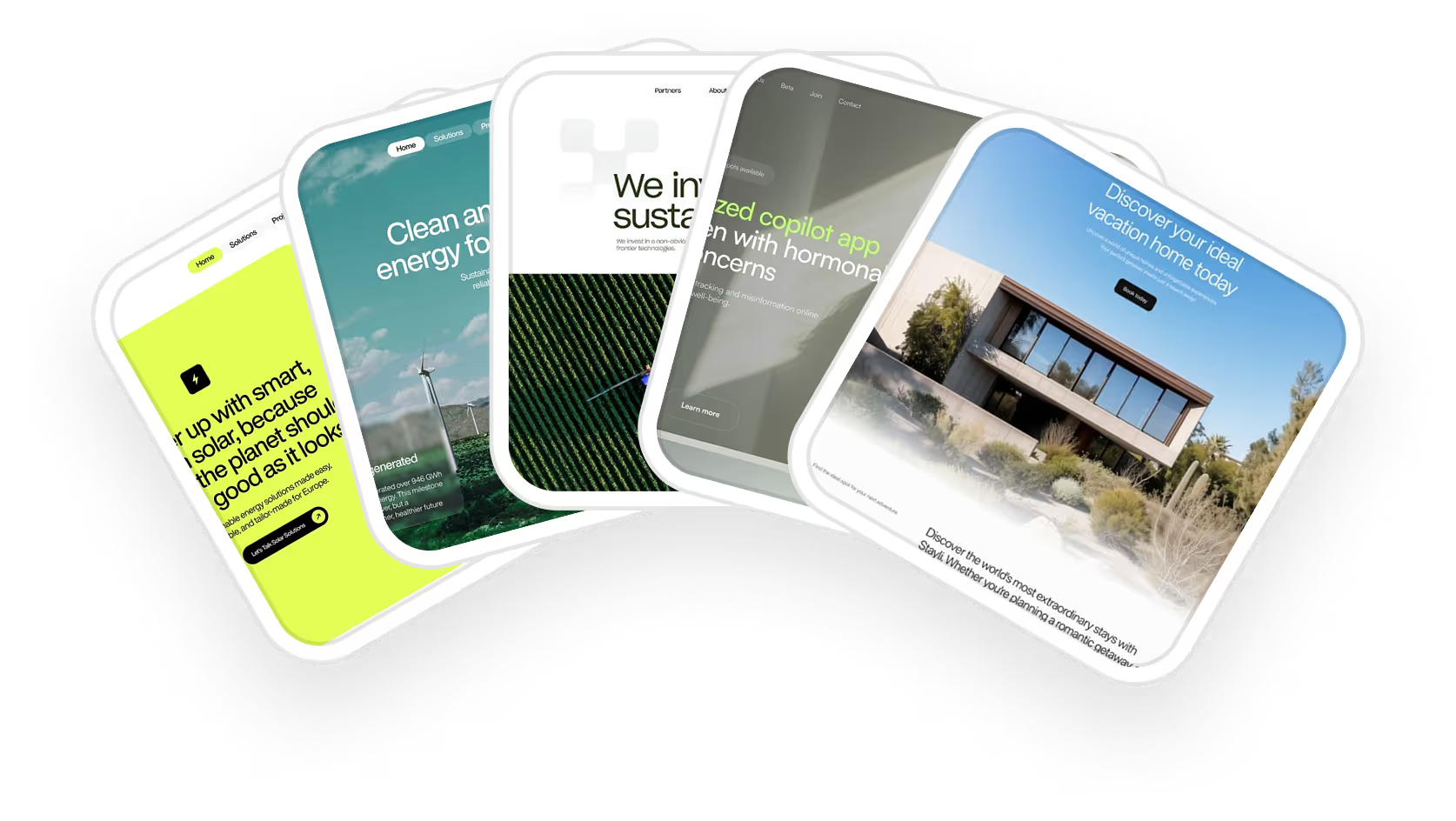



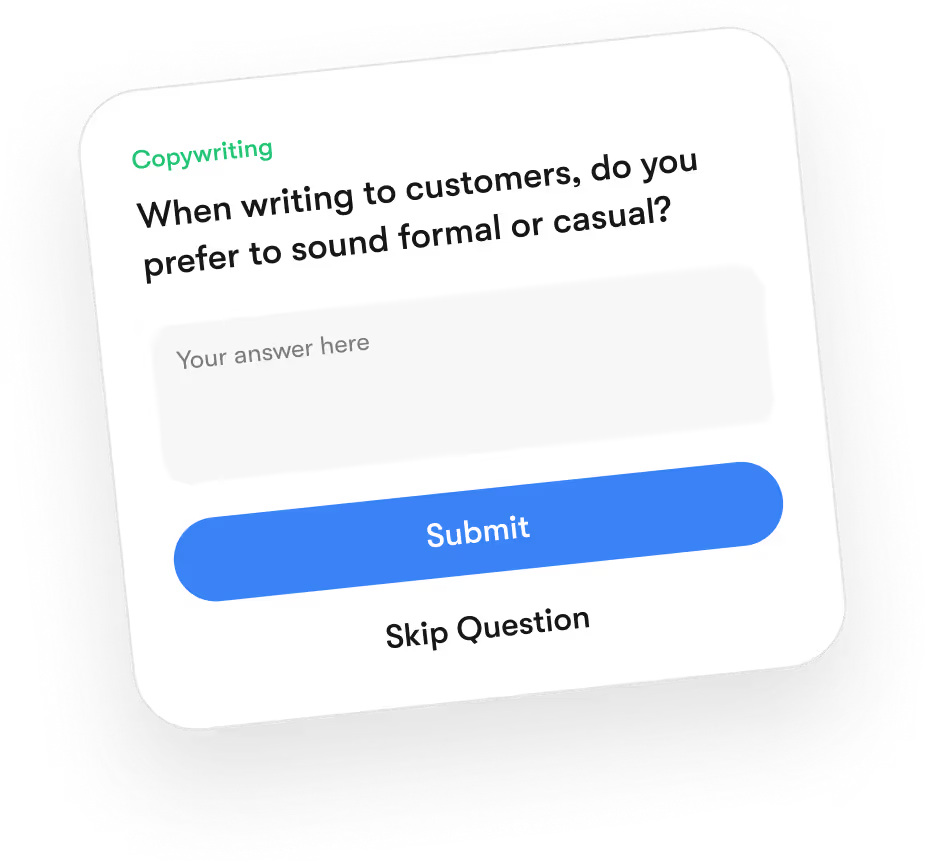
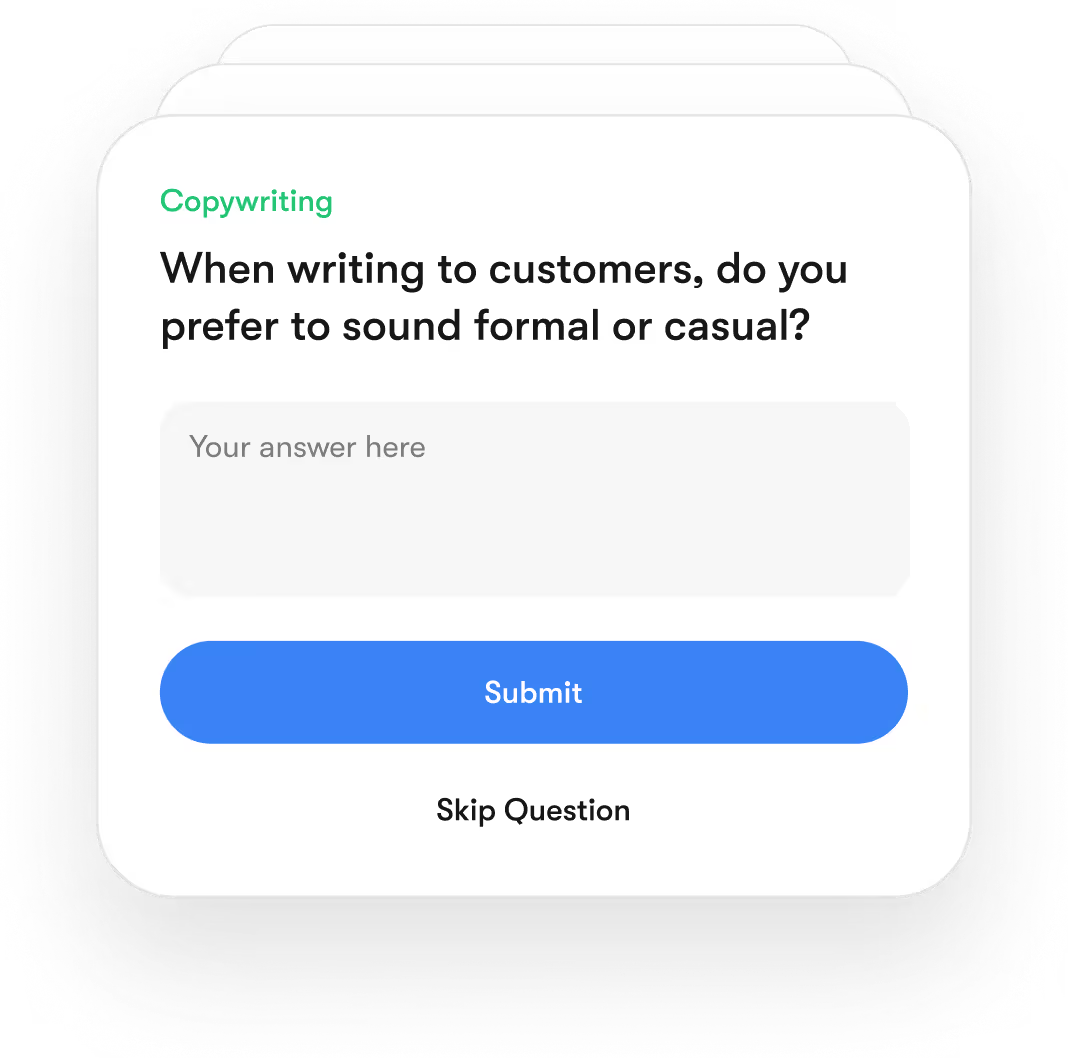
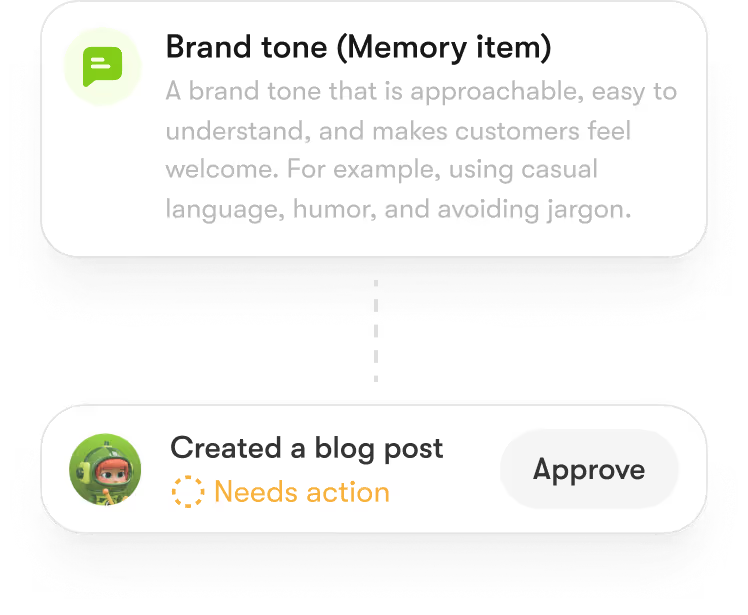
Get all your business context in one workspace - a centralized library that brings together your site data, preferences, and strategy to Seomi, so nothing gets lost in translation.
1. Always up to date
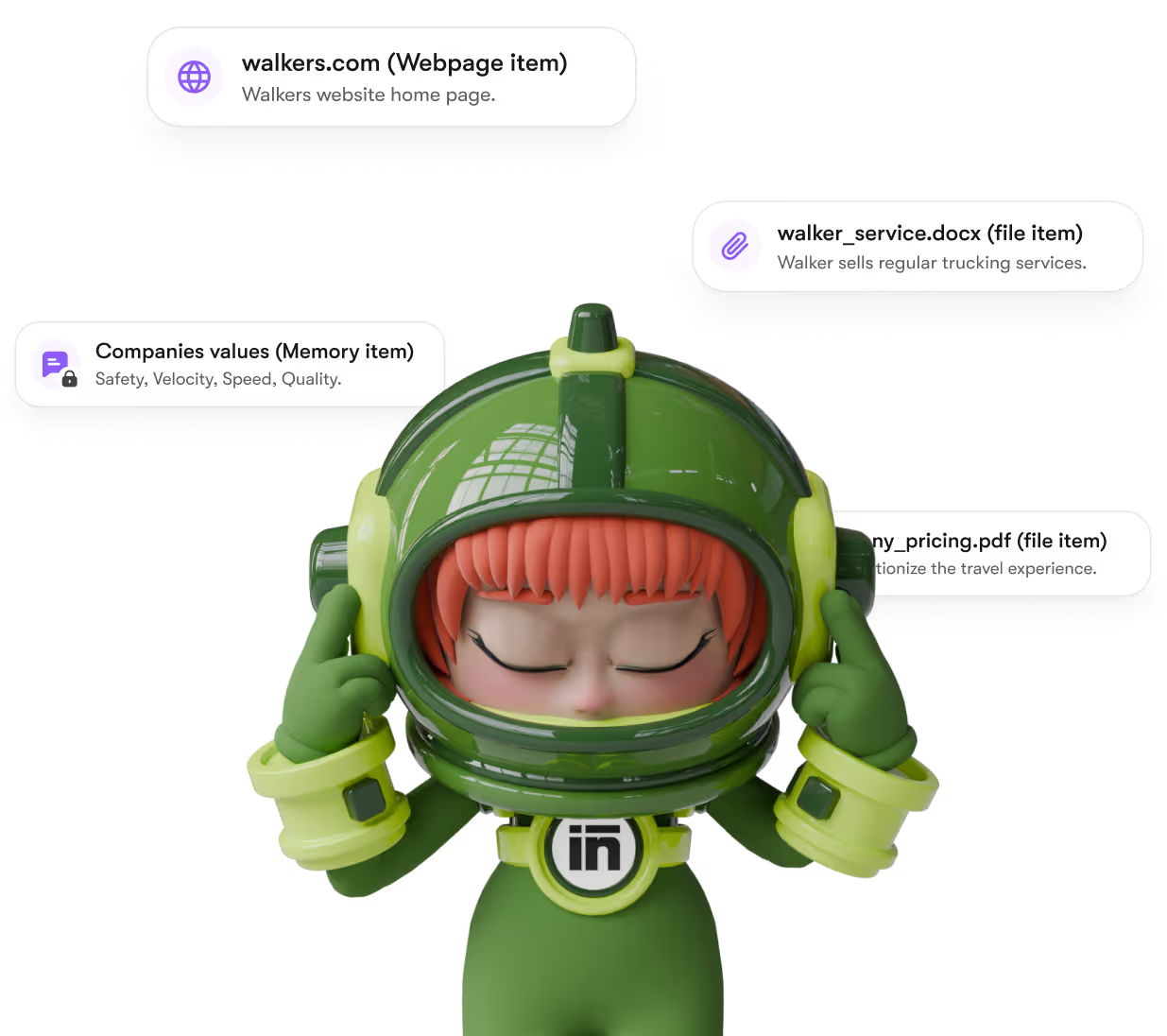
Brain AI stores your SEO context, targets, and history, so Seomi doesn’t “forget” how your website evolves.
2. Context that compounds
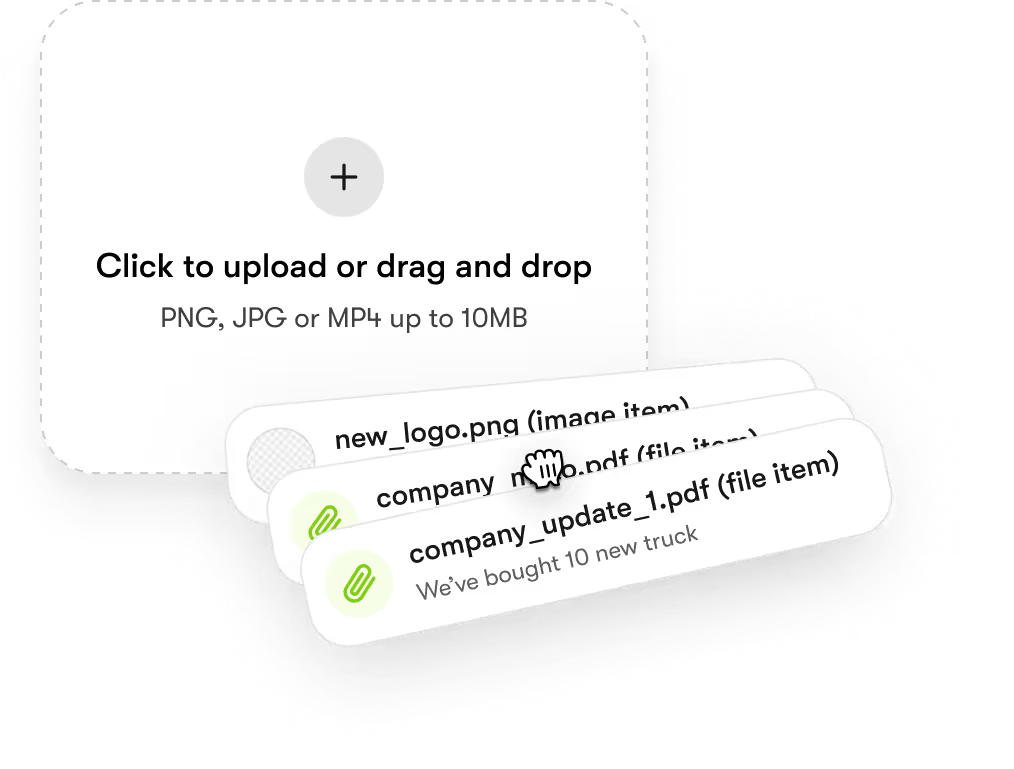
As you refine keywords, approve changes, and ship updates, Brain AI keeps everything connected – no re-explaining, no resets.

3. One source of truth
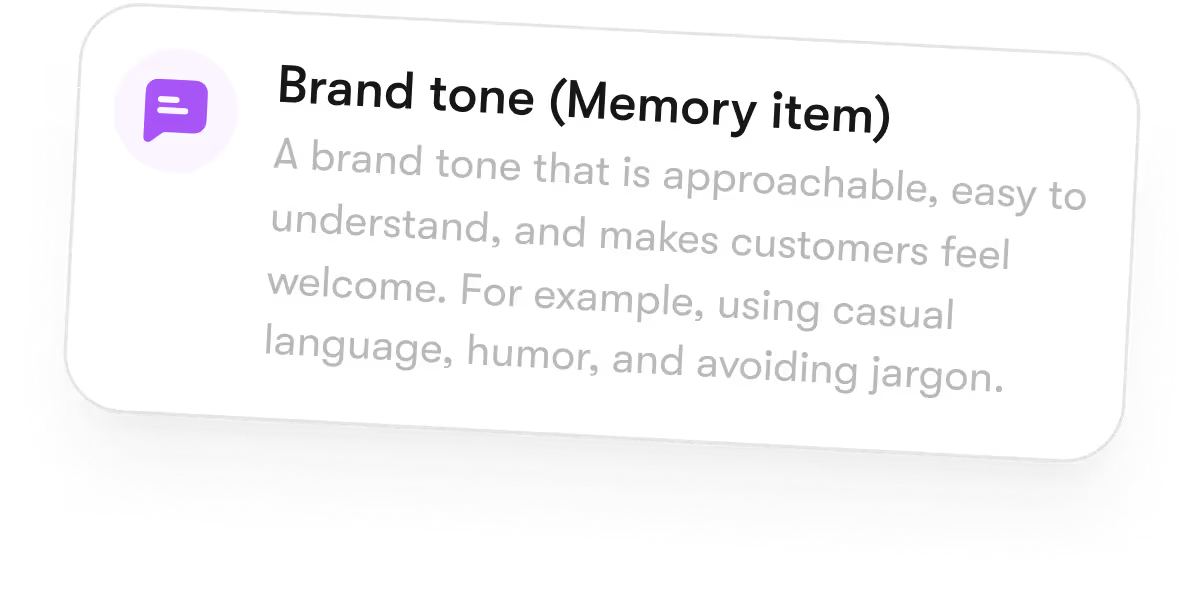
Your SEO strategy, data, and references live in one place, ensuring consistency across every page and update.

With great powers
comes great privacy.
Encrypted by design
From your first login to the last addition in your business knowledge vault, every interaction is encrypted in transit and at rest. This means that neither Sintra nor any third party can access your files or analytics.
Full Data Ownership
"Your content, your strategy, your AI - they belong entirely to you. At any time, you can delete your data or export it. We don’t train models on it or resell it, and your Brain AI is built exclusively on your own assets.
GDPR Compliant
We follow the highest standards of data protection under the GDPR framework. Your personal information is collected and stored transparently - with clear rights to access, modify, or delete your data at any time.
Seomi is the most ❤️ loved AI SEO agent online
Available always, at your command.
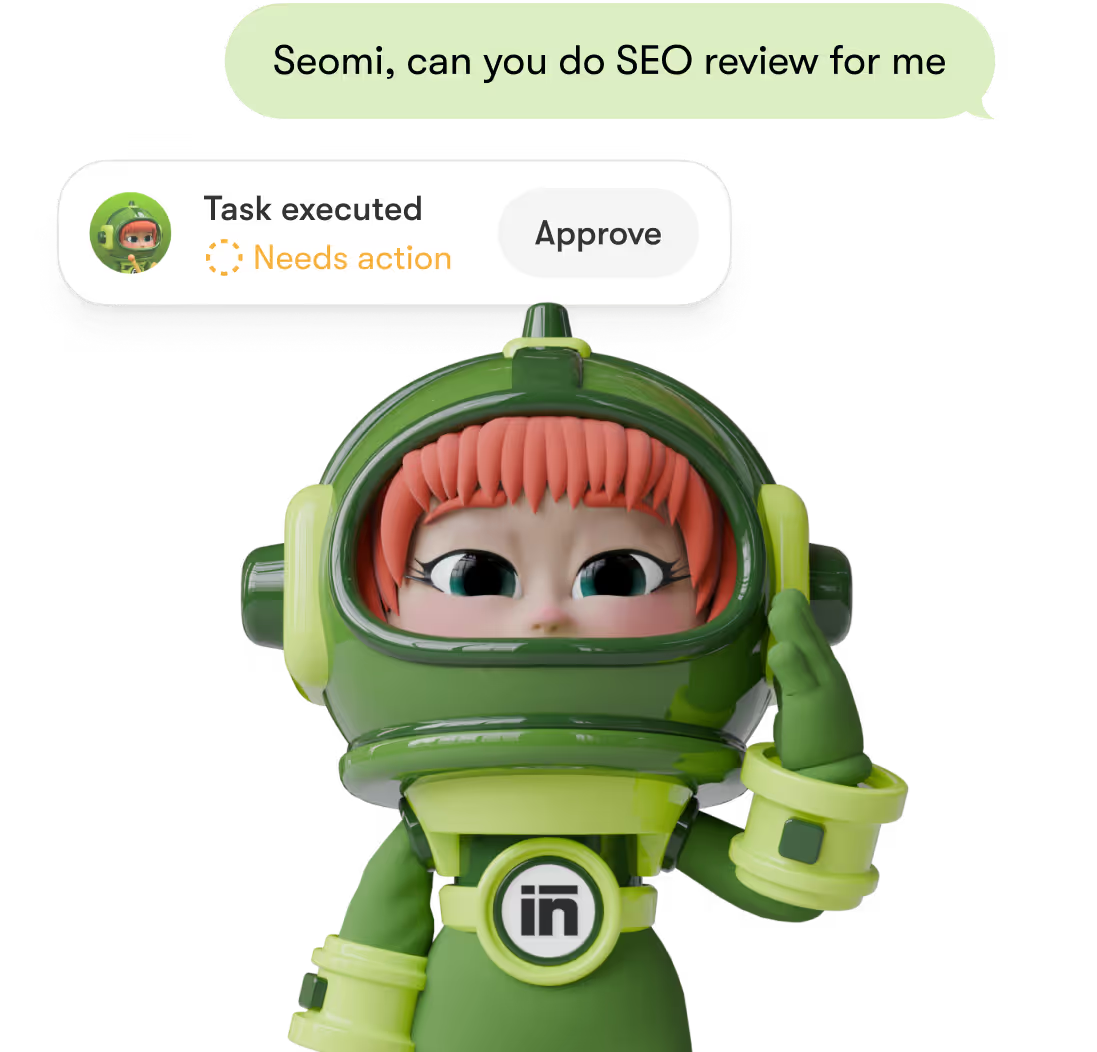
Ask and it’s underway – any hour. Seomi audits, optimizes, and reports without hand-holding.
Works with just
a few clicks.
Type what you need, review, done in natural language. SEO tasks move forward in seconds.
Adapts to every website.
Recommendations are tailored to any website niche and market, wether it's SaaS or eCommerce - no generic advice.
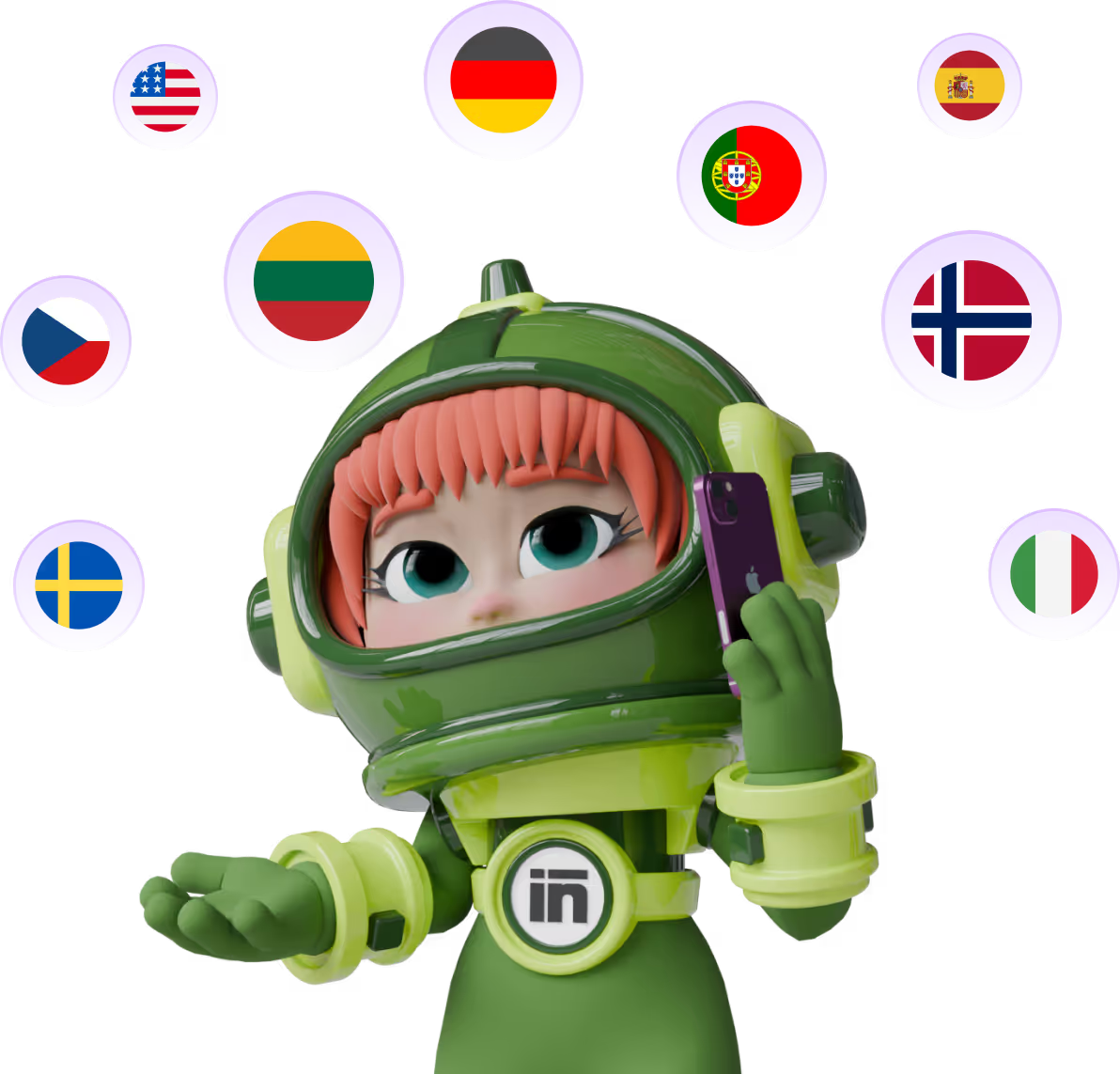
Speaks fluently in 150+ languages.
Optimize globally with local nuance - without the “machine” voice.
Consistent over time.
Past decisions and results inform future strategy - so SEO knowledge compounds instead of resetting.
Delegates the rest to others.
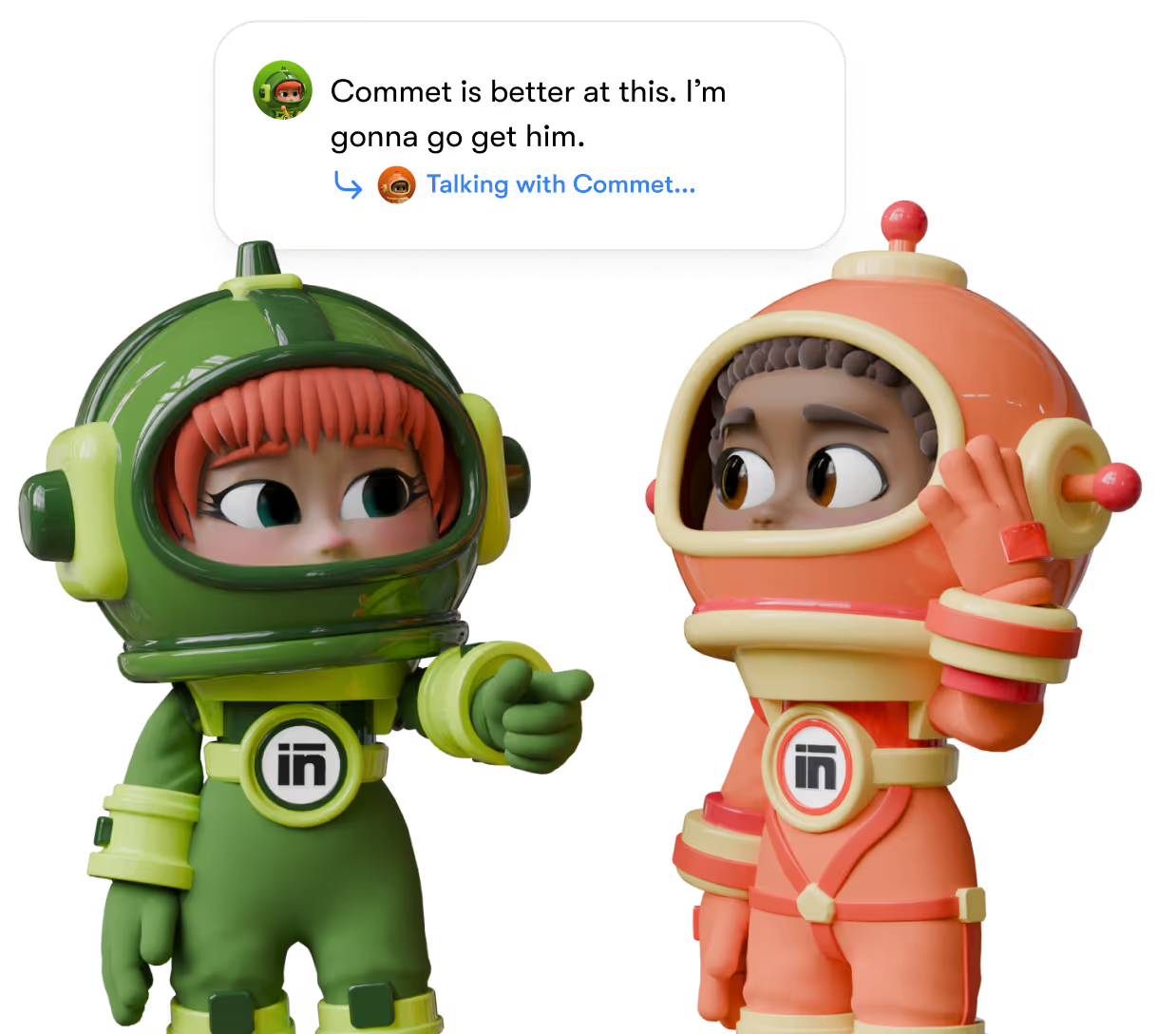
When needed, Seomi can collab with other AI helpers to research, write, or analyze - working behind the scenes.
How we compare
Save $400/month. Get Seomi.



Trusted by leading teams worldwide.





Hire our AI SEO specialist for just $1 per day.
Seomi
Your first reliable AI Agent for SEO strategy.


Try for 14 days risk-free.
Not sure our SEO AI is right for your team? Test it for 14 days or get a full refund, no questions asked.

Our SEO AI Agent is used by more than 50,000+ founders.


I can’t recommend SintraAI enough. It’s like having a personal business coach 24/7, mapping out steps to grow my company and clarifying my priorities. I feel a renewed sense of focus and control every day.
December 29, 2024 • Socrate Concepcion • US

Each AI bot tackles my to-do list, from scheduling tasks to crawling my website for SEO tips. I love how it set up calendar reminders for all my commitments. Sintra.ai is well worth every penny, especially for a busy single-person business.
December 14, 2024 • Jennifer Glenn • US

As an entrepreneur launching a new venture, Sintra.ai has made a real difference. The AI assistants are like personal staff I can rely on. And whenever I needed support, the team was on point. A must-try for any budding business!
December 21, 2024 • Custódio Barreiros • HU

I once had a large team, and although I loved my helpers, they needed constant motivation. With Sintra, there’s no drama, just new ideas that I can simply accept or reject. It’s a huge relief—100% recommended.
December 26, 2024 • Holly Wehde • US

Hiring Sintra was a great decision for my struggling boutique. They handle social media posts, guide my ads, and even offered a solution for double social media pages. Now I can focus on my inventory and customers.
December 17, 2024 • Michele Davis • US

Signed up for Sintra X—it felt overwhelming at first, but once it understood how I think, it turned into a creative powerhouse. Support is top-notch, and the daily integrations impress me.
Dec 10, 2024 • Sami Liftoff • US

I’m not usually one to give top marks, but once I got comfortable with Sintra’s 12 helpers, I was blown away by their efficiency. They churn out so many analytical ideas I have to pause and digest them. It’s sometimes overwhelming, but in a good way.
December 29, 2024 • lars • DK

Sintra integrates with all my favorite tools and these little helpers automate my tasks in a huge way. They actually learn my company’s style day by day. It’s a massive step up from generic AI chats.
December 30, 2024 • Michelangelo • IT

My life is simpler with Sintra. It handles content creation, next steps, brainstorming, and copy. I highly recommend it if you want to free up mental space for what truly matters in your business.
December 28, 2024 • Lionel D'Alvia • US

My “team” in Sintra knocks out tasks like magic, offering fresh ideas for efficiency and better customer outreach. It’s a relief knowing I have AI assistants ready to go around the clock.
December 31, 2024 • Kat Angelica • US

I’ve only been using Sintra for a couple of weeks, but the experience has been great—especially with the social media bot reaching out to me with new ideas. The pull model feels super proactive and makes me more confident in my daily tasks.
December 30, 2024 • Bayan Qandil • US

I challenge anyone to compare other platforms to Sintra.ai and their staff—you won’t find a better customer experience. Everyone is professional, responsive, and genuinely cares about helping. Truly top-notch!
December 28, 2024 • Timothy Montjoy • US

This platform helps me like a full-time employee would. As a startup, I can’t afford extra staff, so Sintra stepped in to handle complex tasks and free me up for big-picture thinking.
December 28, 2024 • Jules Kincaid • US
I’m juggling multiple hats in my business, and these 12 AI “helpers” lighten the load. They even crack jokes and celebrate milestones with me! I saved thousands in consultant fees by letting Sintra handle SEO and content tasks.
December 30, 2024 • Michelle Smith • US

This platform helps me like a full-time employee would. As a startup, I can’t afford extra staff, so Sintra stepped in to handle complex tasks and free me up for big-picture thinking.
December 24, 2024 • Domanic R.H • US


SEO AI Agent FAQs
Pricing for all helpers starts at $97/m with Sintra X. Save more with annual billing.
Support available 24/7
Need help? It’s always within reach - get support that fits your schedule.

What is an AI SEO agent?
An AI SEO agent helps manage and execute SEO work end-to-end. It audits sites, plans strategy, optimizes content, tracks performance, and surfaces insights, so teams grow search traffic without constant manual effort.
When do teams need an AI SEO assistant?
When SEO becomes a backlog instead of a growth lever. Seomi is built for teams that want results without adding headcount or juggling variety of expensive tools.
How does AI agent for SEO actually help teams?
SEO requires consistency and follow-through. AI for SEO removes manual overhead by handling analysis, recommendations, and execution in the background – keeping growth steady without pulling focus from core work.
Is an AI SEO tool enough on its own?
Basic tools help, but execution matters. Seomi combines strategy, analysis, and action - acting as an AI SEO consultant, not just a dashboard.
Why do most AI SEO tools still feel like more work?
Most stop at insights. Seomi goes further by acting as an AI powered SEO expert – turning insights into organized, review-ready actions.

There’s even more to love about Sintra AI
Beyond Seomi, 11 more AI employees help across marketing, operations, and analytics - working together to power your business growth.
Vizzy
Your AI virtual assistant.
Penn
Your AI Copywriting Expert
Scouty
Your AI Recruitment Manager




Copyright © 2026 PlayOS, Inc. All rights reserved