Top 11 AI Sales Assistants in 2026

Table of Contents

When people think about AI sales assistants, names like HubSpot Sales Hub, Salesforce Sales Cloud, RingSense, and Sintra AI usually come up. I’ve gone through these tools myself and seen both their strengths and where they can fall short.
Sales has always been about building trust and closing deals, but today's sales teams also spend hours on admin work, data entry, and follow-ups. AI is changing what's possible - in B2B sales, AI can drive 1.8x margin impact through combined revenue growth and GTM efficiency, with BCG-verified gains including a 54% sales uplift from AI Sales Avatars and 5 hours per week saved per seller from AI content generation.
That’s where marketing-focused AI assistants are making the biggest impact. Let’s walk through the top tools, the main use cases, and how to pick the right AI assistant for your sales team.
What are AI sales assistants?
AI sales assistants are software tools that use artificial intelligence to support sales teams throughout the selling process. They automate repetitive tasks like lead research, follow-ups, CRM updates, and meeting summaries, while also analyzing data to surface insights about deal health, buyer intent, and performance trends.
Instead of replacing sales reps, AI assistants act as copilots. They help teams prioritize the right opportunities, personalize outreach at scale, and make smarter decisions based on real-time data.
Benefits of using AI Sales Assistants
An AI sales assistant is software that uses artificial intelligence in sales to help agents work more efficiently. It automates repetitive tasks like lead qualification, CRM updates, and follow-ups, while also providing insights such as deal risks, forecasting, and buyer intent.
In 2024, 83% of sales teams using AI reported revenue growth compared to 66% of teams without it. This shows the measurable impact AI tools are already having on sales performance.
Key ways AI sales enablement improves the sales process include:
- Speeding up lead qualification and prioritization
- Reducing admin work with automated CRM updates and notes
- Surfacing early warning signals in at-risk deals
- Personalizing outreach at scale with buyer insights
- Supporting managers with data-driven coaching
Together, these capabilities help teams run smoother pipelines, improve decision-making, and close deals with greater confidence.
The Best AI Sales Assistants for Sales Teams in 2026
Here’s a breakdown of the 11 best AI sales assistant tools for 2026, what they do best, where they may fall short, and the types of sales teams they’re most useful for:
Sintra AI – Best for AI-powered Sales Assistance
Suitable for: Sales teams that want one AI assistant to handle outreach, coaching, and deal management.
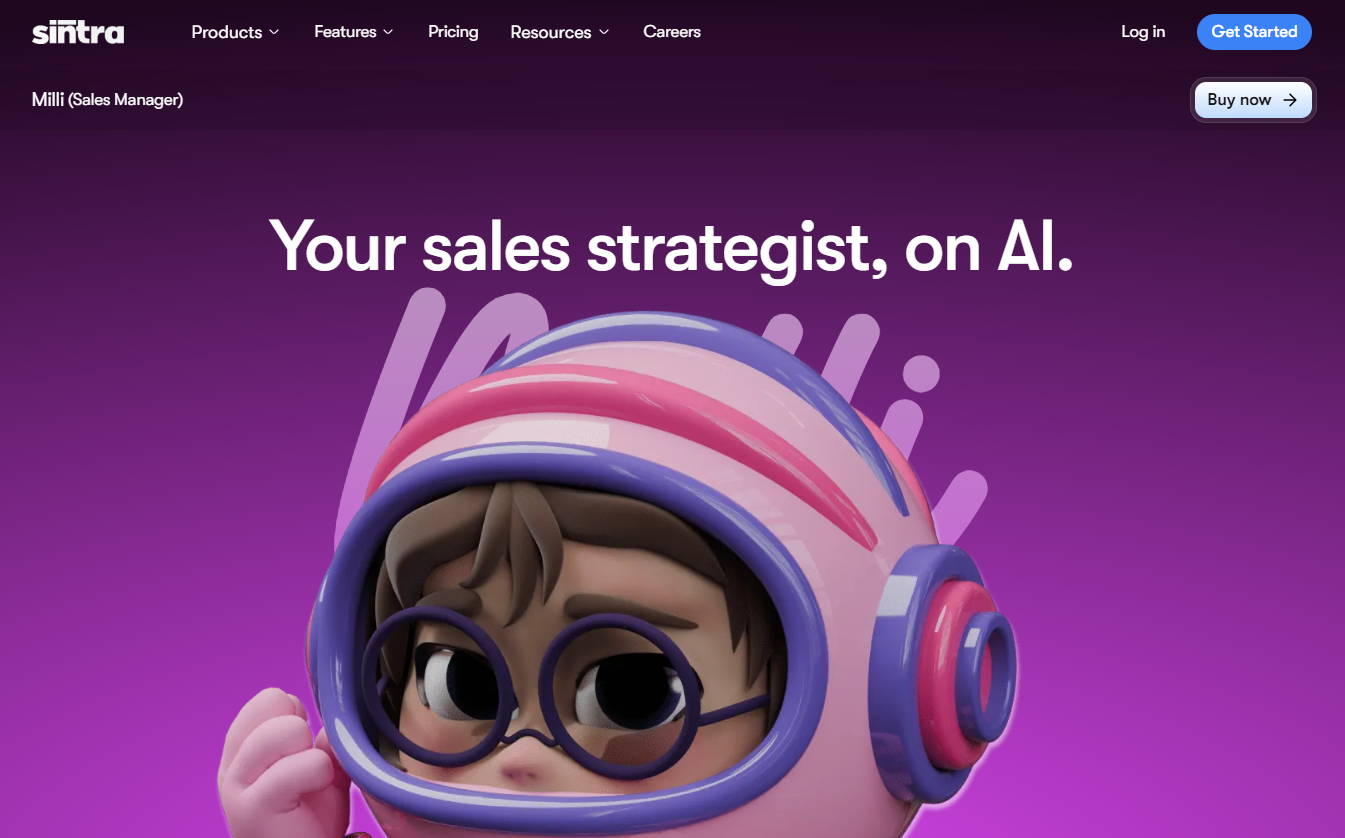
Sintra AI gives businesses an AI sales assistant that supports more than one small part of the sales process. Milli helps with lead research, outreach, follow-ups, sales messaging, proposals, and deal support, so teams can reduce the manual work that slows sales down.
The main value is context. With Brain AI, our platform can store your sales documents, product details, brand voice, customer notes, and past instructions. This helps Milli create emails, call scripts, and follow-up messages that feel more relevant and on-brand.
For businesses, this means less time spent rewriting sales copy, chasing leads, or starting each message from scratch. Milli helps keep outreach consistent, supports reps with next-step ideas, and makes sales communication easier to scale without losing the human touch.
Strengths
- Lead generation and scoring to find the best prospects
- Personalized outreach with cold emails and LinkedIn messages
- Deal support with suggestions to move sales opportunities forward
- Coaching tools to review rep performance and highlight gaps
- Forecasting that improves revenue predictions and pipeline accuracy
- Automation for time-consuming tasks like scheduling and data entry
- Integrations with your existing CRM system and sales stack
Weaknesses
- An initial setup is needed to get the best, personalized results
Sintra AI Pricing
Available through the Sintra X plan, which includes all Sintra AI assistants. Starts at $97/user/month, with custom options for larger teams.
RingSense – Best for Conversation Intelligence
Suitable for: Sales teams that want clear insights from sales calls and meetings without doing manual note-taking.
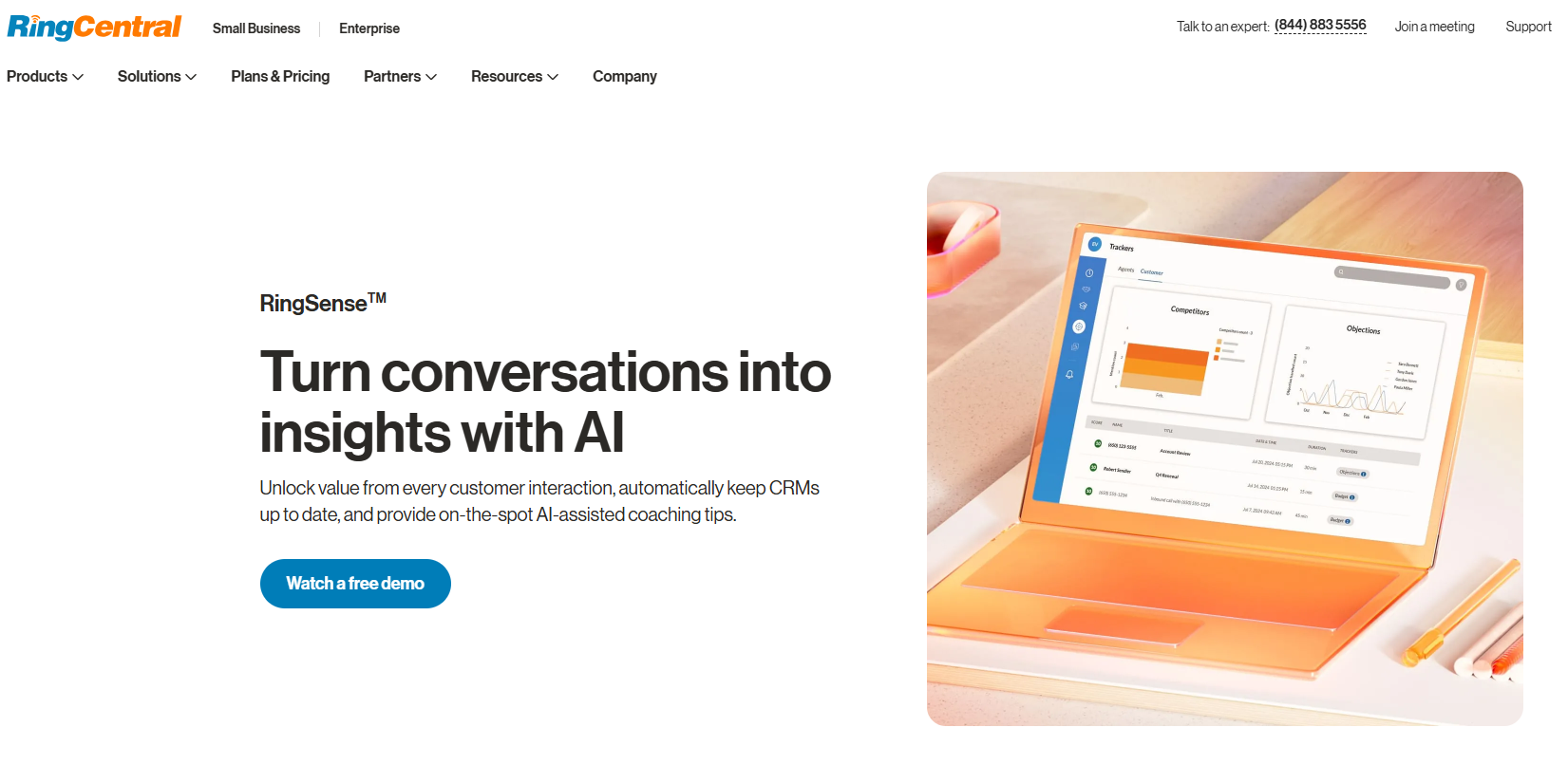
RingSense is an AI sales assistant software that focuses on conversation intelligence. It records and analyzes customer interactions in real time, giving sales reps and sales managers valuable insights into buyer intent, objections, and rep performance.
Using natural language processing and machine learning, it turns call data into clear recommendations that improve the sales process and help teams close more deals.
Strengths
- Automatic call recording & transcription so every sales conversation is captured.
- Sentiment and intent analysis to spot buyer interest and concerns.
- Deal and pipeline insights that flag risks and opportunities.
- Coaching dashboards for managers to track sales performance and train reps.
- CRM integrations with tools like Salesforce and HubSpot to streamline sales workflows.
- Keyword and topic tracking so teams can follow up on pricing, objections, or competitor mentions.
Weaknesses
- Pricing may be high for smaller teams.
- Works best for teams that do lots of sales meetings and calls.
- Advanced analytics may need training to use fully.
RingSense Pricing
RingSense doesn’t share fixed prices. Plans are usually custom quotes based on team size and call volume.
Salesforce Sales Cloud – Best for Enterprise Teams
Suitable for: Large sales teams and enterprises that need a full customer relationship management (CRM) system with AI features
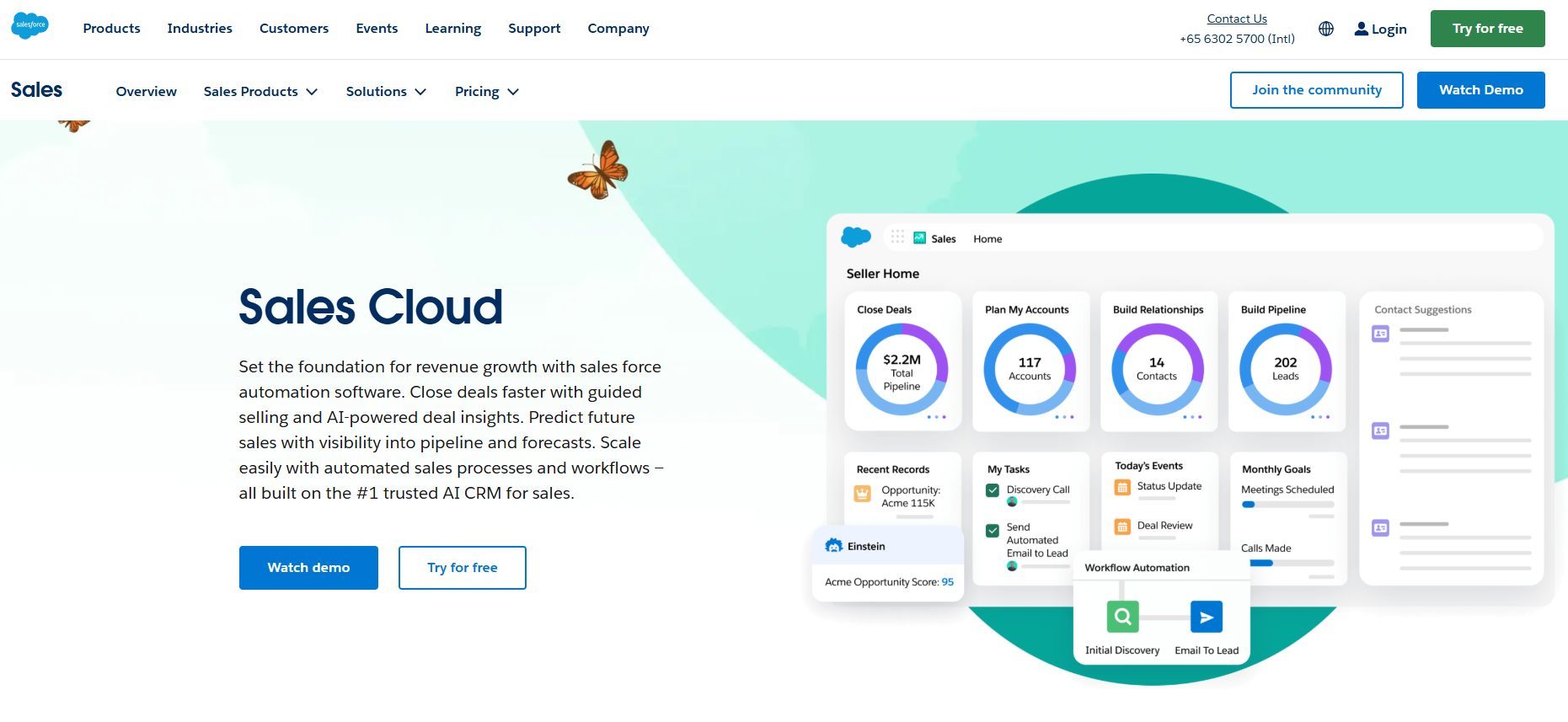
Salesforce Sales Cloud is an AI sales assistant software built on the Salesforce platform. It supports sales teams and sales managers through the full sales process:
- Capturing leads
- Managing contacts
- Tracking opportunities
- Closing deals
With its Einstein AI layer, it automates data entry, lead scoring, surfaces insights from data, and helps forecast revenue. It also includes Copilot for Sales, which assists with email drafts, next-step suggestions, and conversational context.
Strengths
- Einstein GPT for AI-powered scoring, forecasting, and email assistance
- Pipeline management to track deals and keep the sales pipeline healthy
- Advanced reporting and dashboards for monitoring sales performance and key metrics
- Automation tools for follow-ups, task reminders, and data entry
- Integration with major CRM platforms and apps to build a complete sales stack
Weaknesses
- Pricing can be expensive, especially for smaller companies.
- Setup and customization can be time-consuming.
Salesforce Sales Cloud Pricing
Salesforce Sales Cloud plans start at $25 per user/month (Essentials) and go up to $300 per user/month for the Unlimited plan.
HubSpot Sales Hub – Best for SMBs
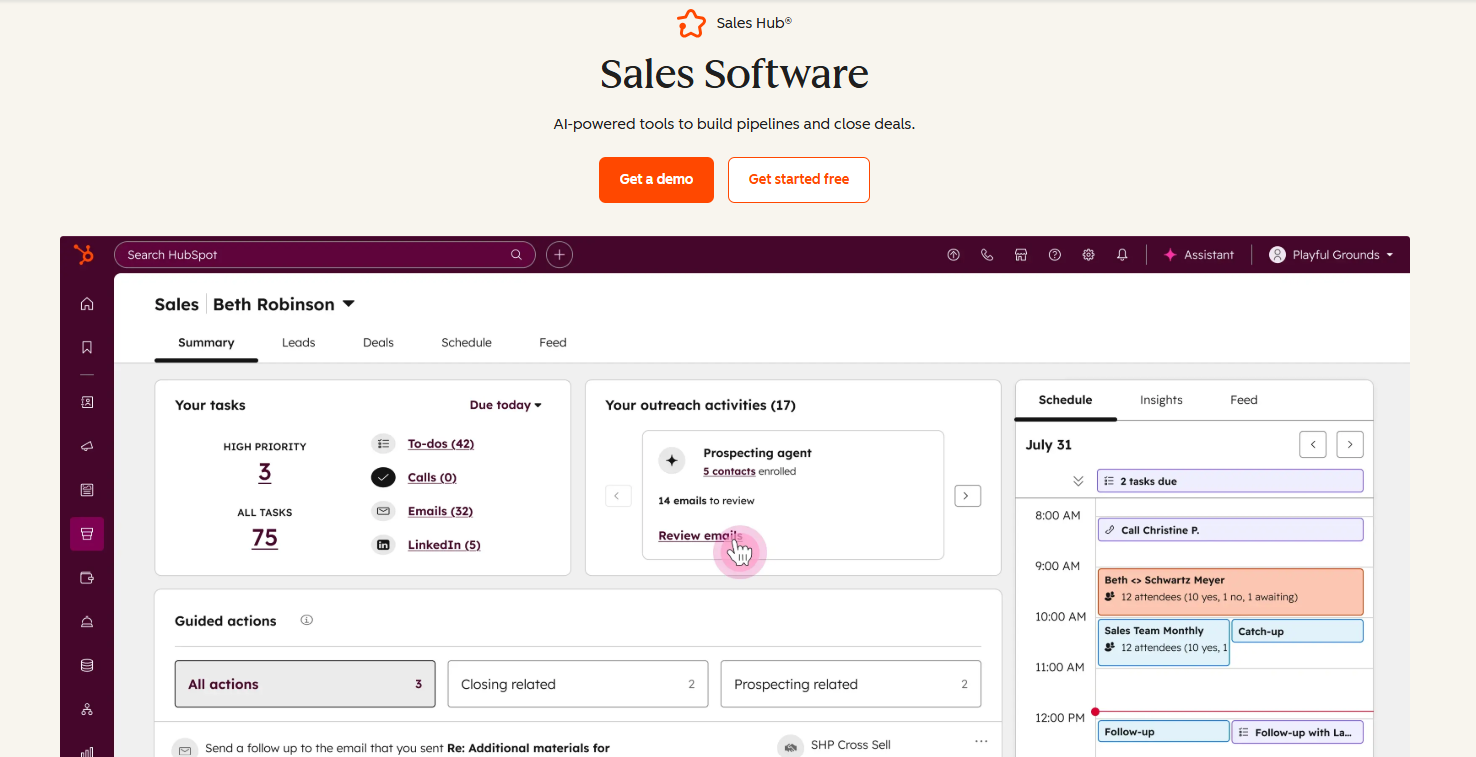
Suitable for: Small and midsize sales teams that want AI sales assistant software to manage outreach and deals
HubSpot Sales Hub is built into the HubSpot CRM, making it easy for sales reps and sales managers to track the sales process, run outreach, and close deals.
It includes AI features like the Prospecting Agent for lead discovery and Smarter Sales Meetings for call transcription and summaries. For SMBs, it turns contact data into valuable insights without a steep learning curve.
Strengths
- AI-powered email generation and sequences for faster follow-ups
- A prospecting agent that flags high-quality leads and buying signals
- Smarter meeting scheduling, call transcription, summaries, and next steps
- Pipeline visualization to spot risks in the sales pipeline
- Easy integration with Gmail, Outlook, and calendars
Weaknesses
- Advanced AI features are locked to higher-tier plans
- Setup time needed for custom workflows
Pricing: Free plan available. Paid plans start at $20 per seat/month and go up to $150 per seat/month for Enterprise.
Regie.ai – Best for AI-Powered Content Personalization
Suitable for: Sales teams that want to scale personalized outreach across email, LinkedIn, and calls
Regie.ai is an AI sales assistant software built for personalization. Instead of sending generic outreach, it uses AI tools to write custom emails, sequences, and social messages tailored to each prospect.
By combining sales intelligence with generative AI, it helps sales reps run targeted campaigns that feel human, while saving hours on content creation.
Strengths
- Auto-pilot agents that research accounts and deliver ready-to-send outreach
- Rapid Writer for quick email, LinkedIn, and sequence generation
- AI dialer & parallel calling to boost connection rates
- Signal detection that alerts teams to engaged leads
- CRM & sales engagement integrations to keep workflows smooth
Weaknesses
- Pricing may be high for early-stage or small teams
- Requires setup to align content with brand tone
Regie.ai Pricing
Enterprise packages start around $35,000/year, with custom quotes based on team size and usage.
Clay – Best for Lead Enrichment
Suitable for: Sales teams that want accurate, enriched lead data before doing outreach.

Clay is an AI sales tool that connects to 75+ data providers like LinkedIn, Apollo, and Clearbit to verify and enrich lead data.
Its “live spreadsheet” interface pulls in company info, contacts, and signals, while AI agents (Claygent) research websites and news for deeper insights. This helps teams save time on manual research and keep the sales process running smoothly.
Strengths
- Integrates with 75+ data sources for enrichment
- Waterfall logic that retries different providers automatically
- AI helper (“Claygent”) for web and document research
- Workflow automation for lead scoring and prioritization
- Syncs enriched data back into your CRM and sales workflows
Weaknesses
- It does not handle outreach, works best alongside other sales software
- Advanced setups may have a learning curve
- The credit system can get expensive for heavy use
Clay Pricing
Free plan with 100 credits/month. Paid plans start at $149/month and scale up to custom enterprise pricing.
Lavender – Best for Email Optimization
Suitable for: Sales representatives who want to write better outreach emails faster and improve reply rates
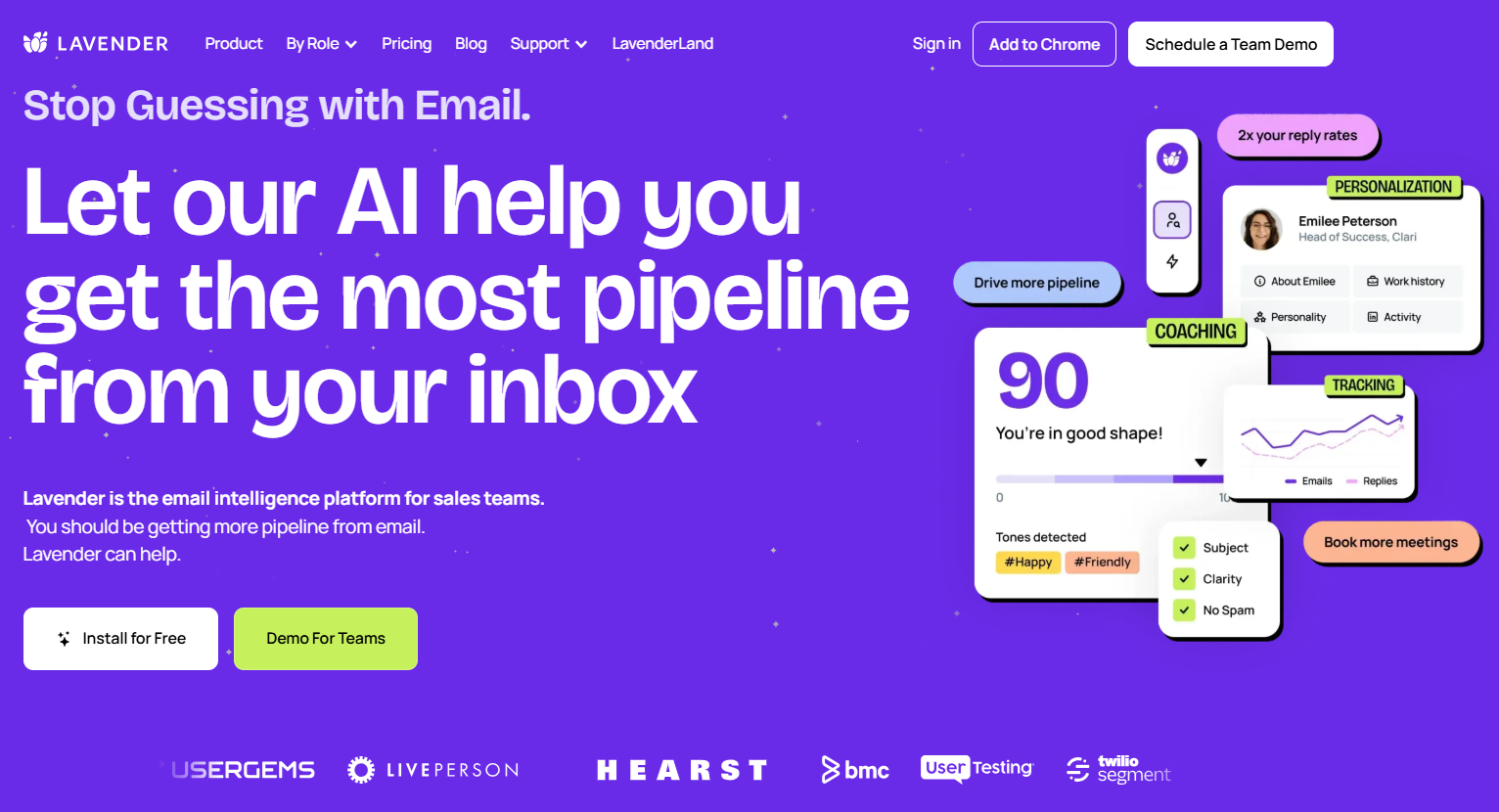
Lavender is an AI sales assistant software that acts as a real-time email coach. As you type, it scores your email, suggests wording improvements, and proposes personal touches based on sales data. It works inside Gmail, Outlook, or your CRM tools so you don’t have to jump between apps.
Strengths
- Live email scoring & feedback to flag weak spots before sending
- Personalization assistant that brings in prospect info automatically
- Real-time coaching with suggestions for tone, clarity, and structure
- Team analytics dashboard to track how emails perform across reps
- Integration with Gmail, Outlook, HubSpot, Salesloft
Weaknesses
- Advanced features are only in paid plans
- Less useful for teams not relying heavily on email outreach
Lavender Pricing
Free plan available (analyze 5 emails/month). Paid plans start at $29/month, rise to $69/month for teams.
UserGems – Best for Target Account Prospecting
Suitable for: Sales teams that want to find warm leads by tracking job changes and past customer relationships

UserGems is an AI sales assistant software that alerts you when former buyers, champions, or contacts move to new companies.
Combining sales data with job-change signals and relationship mapping helps sales reps reach out with timely, relevant context. This shortens the cold outreach cycle and gives teams more opportunities to close deals with accounts that already know their product.
Strengths
- Job-change alerts that flag new opportunities
- Relationship mapping to connect contacts with target accounts
- AI suggestions for messaging and outreach sequences
- CRM and sales engagement integrations for smooth workflows
- Helps teams focus on high-quality leads with proven intent
Weaknesses
- Pricing can be high for smaller teams
- Alerts may be delayed or outdated
UserGems Pricing
Plans start around $2,500/month and scale to custom enterprise pricing.
Forwrd – Best for Predictive Lead Scoring
Suitable for: Sales and revenue teams that want to use AI to prioritize leads and pipeline opportunities
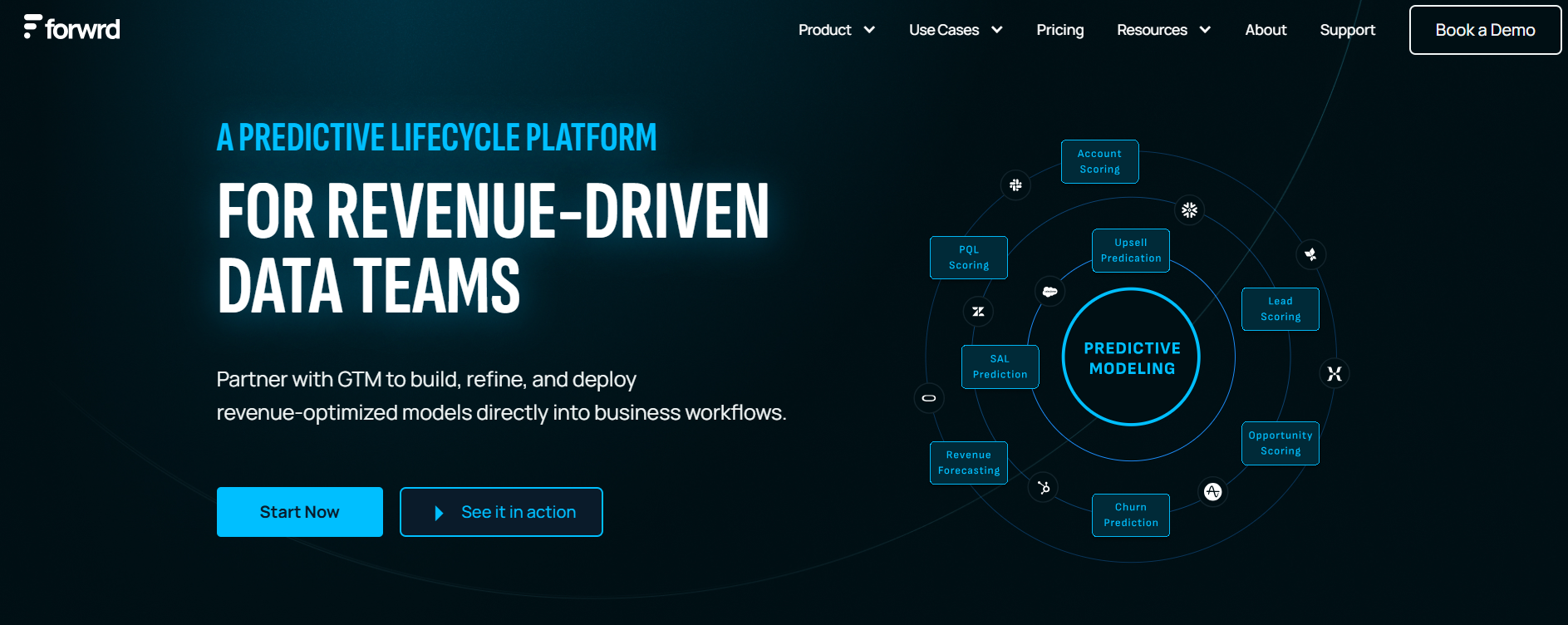
Forwrd is an AI sales assistant software that builds no-code predictive models to score leads, accounts, and opportunities using your historical sales data and multiple data sources. It continuously updates its models and pushes AI insights into CRMs so the team can work smarter, not harder.
Strengths
- Full lead scoring & account scoring across multiple data sources
- Real-time prediction via API & webhook for instant sync into sales tools
- No-code model building, no need for data science teams
- Correlation analysis that reveals which factors drive conversions
- Integrations (HubSpot, Salesforce, Outreach, Snowflake, etc.) to push scores into existing sales workflows
Weaknesses
- Advanced features might require higher-tier plans
- Model accuracy depends on the quality and depth of input data
Forwrd Pricing
Forwrd offers tiered plans based on usage. You get unlimited seats, and the pricing is tied to the number of monthly predictions and integrations used.
Dialpad AI – Best for Call Coaching
Best for: Sales leaders who want live feedback and coaching tips during calls
Dialpad AI is built into Dialpad’s phone and meeting platform. Key benefits include real-time transcription, sentiment analysis, and AI coaching cards that pop up during calls to guide reps. Managers can monitor calls live, review summaries, and track sales performance, making every call a chance to improve.
Strengths
- Real-time transcription and call summaries
- AI coaching cards with in-call suggestions
- Sentiment and intent analysis for buyer reactions
- Supervisor monitoring and coaching tools
- CRM integrations to sync call insights
Weaknesses
- Advanced AI features require higher-tier plans
- Less valuable for teams with low call volume
- Tied to using Dialpad’s platform
Dialpad Pricing
Plans start at $15/user/month, with AI coaching in higher tiers.
Avoma – Best for AI-assisted Sales Meetings
Best for: Sales teams that want automated meeting notes and insights to improve conversations
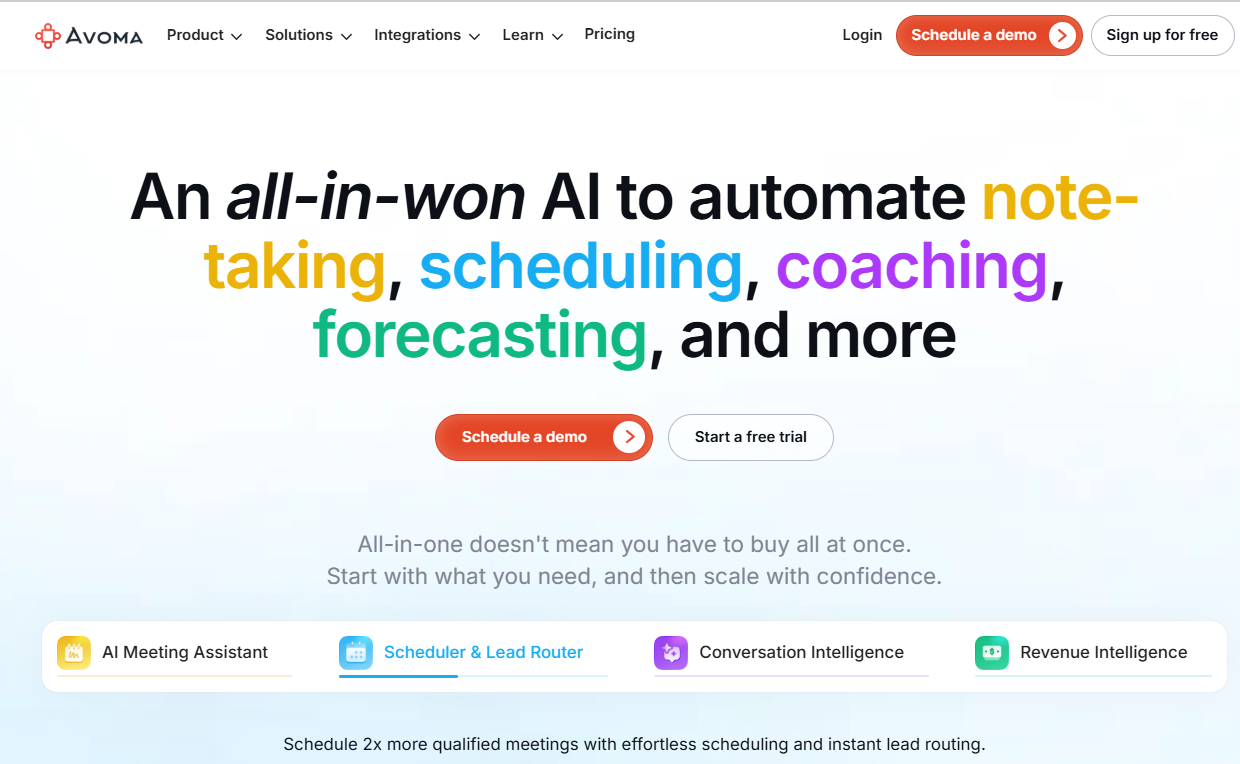
Avoma is an AI meeting assistant that records, transcribes, and summarizes calls in real time. It highlights objections, action items, and talk ratios, then syncs updates back into your CRM. With features like “Ask Avoma” and automated follow-up drafts, it saves reps time and gives managers better visibility into sales conversations.
Strengths
- Real-time transcription and AI summaries
- Conversation intelligence with talk ratio and sentiment
- “Ask Avoma” copilot for quick insights
- Automatic CRM updates and follow-up emails
- Integrations with Zoom, Google Meet, Salesforce, and HubSpot
Weaknesses
- Some advanced features cost extra
- AI summaries may need human editing
Avoma Pricing
Plans start at $19/recorder-seat/month, with higher tiers at $29–$39.
Use Cases for AI Sales Assistants
AI sales assistants are changing the way sales teams work by taking over repetitive tasks, surfacing insights that humans might miss, and guiding smarter decisions.
Here are the most impactful ways businesses are putting them to use:
Automating Lead Generation and Qualification
Finding new prospects is one of the most time-consuming parts of selling. AI sales assistants take over this process by continuously pulling contact and company data from multiple sources, checking it against your ideal customer profile, and applying predictive lead scoring.
Instead of guessing which accounts are worth pursuing, reps log in to see a ranked list of opportunities with clear signals of fit and intent. This helps:
- Reps focus their time on high-quality conversations instead of cold prospecting.
- Managers ensure the team’s energy goes toward the leads most likely to convert.
- Revenue teams maintain a healthier top of funnel with fewer wasted hours.
Scaling Personalized Email and Social Outreach
Personalization at scale has always been a challenge for sales teams. Writing tailored messages takes time, and generic outreach gets ignored.
AI sales agents bridge this gap by using sales data and buyer signals to generate emails, LinkedIn messages, and follow-ups that feel one-to-one but can be sent at scale.
Here’s how an AI assistant helps:
- Pull in a prospect’s recent job change or company news
- Suggest subject lines that match the buyer’s role and industry
- Draft an email or LinkedIn message that ties your solution directly to their pain points
This means sales reps can run multi-touch campaigns that sound personal without spending hours on manual research. Tools like Sintra’s AI Email Assistant (Emmie) make this even easier by automatically generating and scheduling customized outreach.
Enhancing Sales Coaching and Team Training
Coaching has always been a challenge for managers. It’s impossible to sit in on every call or review every email. AI sales assistants make this scalable by analyzing sales calls, emails, and meeting notes automatically, then surfacing patterns that matter most.
For example, AI can:
- Flag when reps speak too much compared to the customer
- Highlight missed follow-ups or unanswered objections
- Identify top performers’ habits that can be shared across the team
Instead of waiting for quarterly reviews, sales managers can give targeted feedback week by week. Reps improve faster, managers spend less time digging through recordings, and the entire sales team benefits from consistent, data-backed coaching.
Improving Forecasting Accuracy with AI-Driven Insights
Forecasting is one of the toughest parts of sales management. Spreadsheets and gut feeling lead to surprises at the end of the quarter. AI sales assistants improve this by combining historical data, pipeline health, and live deal activity into clear, predictive insights.
With AI, managers can see:
- Which opportunities are most likely to close
- Where deals are at risk and need attention
- How current performance compares to quota in real time
This level of visibility helps sales managers set realistic forecasts, adjust resources early, and make confident decisions with leadership.
Increasing Customer Retention Through Predictive Analytics
Winning new business is important, but keeping existing customers is where the biggest gains are made. AI sales assistants help by tracking usage, engagement, and support signals to spot accounts that may be at risk of churn.
For example, AI can:
- Flag when product adoption drops or logins decline
- Detect changes in sentiment during calls or emails
- Recommend personalized retention actions, such as tailored offers or proactive check-ins
How to Choose the Right AI Sales Assistant Tool
If you’re exploring AI for sales reps but don’t know where to begin, start by looking at your current sales workflows and pain points. Here’s a simple 5-step process to guide your decision:
- Review how your sales team currently works, from prospecting to closing deals.
- Identify where tasks are most time-consuming or prone to error.
- Prioritize the gaps that, if fixed, would have the biggest impact.
- Explore AI sales assistants that specialize in those exact areas.
- Compare options based on features, cost, scalability, and integration with your existing CRM system.
This way, you’re choosing one that actually fits your sales strategy and helps your team close more deals.
Features to Consider For Choosing an AI Sales Assistant Tool
Not all AI sales assistants are built the same. Some are designed as SDR copilots that handle prospecting, email warmups, and outreach. Others lean toward analytics and forecasting, giving managers better visibility into the sales pipeline and team performance.
No matter your focus, here are must-have features to look for:
- Real-time data analysis: AI should go beyond automation and provide insights from your sales data that reps can act on immediately.
- Machine learning: The longer it runs, the smarter it gets, adapting to your patterns and improving predictions over time.
- Natural language processing: Allows the AI to understand and generate human-like text, so you can give instructions in plain language and get clear, usable outputs.
- Sales process automation: Reps shouldn’t have to manage repetitive follow-ups or admin work. Good AI assistants handle these routine tasks automatically.
- CRM integration: The tool must sync with your existing system to avoid duplicate work and manual data entry.
- Manual override: Even the best AI can miss context. Choose a tool that lets you step in and adjust outputs when needed.
Choosing the Best for Your Sales Model
Every sales team is different, and the “best” AI depends on your structure and goals. A small outbound team might benefit most from an AI SDR that automates prospecting and outreach, while larger enterprise teams need stronger forecasting and coaching support.
What matters most is choosing a solution that not only matches your current sales workflows but can also grow with you.
Book a free consultation and explore how Sintra AI can help your team close more deals with AI Employees built to scale with your business.
FAQs
What is an AI sales assistant?
An AI sales assistant is a tool that helps sales teams by using artificial intelligence. It can find and qualify leads, write emails, take notes from meetings, and update your CRM.
Instead of spending hours on manual work, sales reps can focus on building relationships and closing deals while the AI takes care of routine tasks.
Is there an AI for sales?
Yes. There are many AI tools made for sales. Some are built for prospecting and outreach, while others help with call notes, coaching, or forecasting.
Tools like Sintra AI Milli act as all-in-one sales assistants so teams can work faster and close more deals with less manual effort.
What is the top AI sales assistant for B2B?
For B2B teams, the best AI sales assistants are those that make prospecting, outreach, and deal management easier. Well-known options include Salesforce Sales Cloud and HubSpot Sales Hub, while niche tools like Clay or Lavender cover specific needs.
Sintra AI Milli stands out because it combines these functions in one platform, making it especially effective for B2B sales.
Related articles