


Autonomous AI Agents: How They Work, Use Cases, and Sintra.ai’s Role in Automation
.jpg)
Skip ahead
Artificial intelligence has already transformed how businesses operate. But recently, companies have begun to realize the power of autonomous AI agents—the next big step in AI.
Unlike simple chatbots, these autonomous robots can think, plan, and operate independently, performing many duties just as effectively as skilled human agents. No wonder 79% of executives agree that agentic artificial intelligence is a key driver in business automation and productivity.
Autonomous AI agents are becoming easier to adopt, thanks to affordable AI models and better development tools. And if you're wondering how you can benefit from them, here’s a complete breakdown of what autonomous AI agents are, how they work, and how you can seamlessly integrate them into your operations.
What Are Autonomous AI Agents?
Autonomous AI agents represent software systems that leverage artificial intelligence to achieve business goals and complete tasks on behalf of users. They can think, reason, plan, and retain information. Most importantly, they demonstrate autonomy. They can make decisions, learn, and adapt on their own.
These capabilities allow autonomous agents to understand and respond to inquiries, then take action without human intervention. Once you assign an AI agent an objective, it can generate the necessary tasks to achieve that goal, execute them efficiently, and move on to the next objective once the previous one is complete.
Agentic systems are built on powerful models like GPT, Claude, Mistral, and Llama. These models enable agents to understand context, intent, and tone behind user interactions. More advanced systems use multimodal models such as GPT-4o or Gemini 1.5 Pro, which can process text, images, and audio for richer, more dynamic interactions.
Unlike traditional chatbots and simple reflex agents that follow predefined rules, autonomous AI agents operate independently in dynamic environments. This makes them ideal for handling multi-step tasks in marketing, commerce, sales, customer service, and beyond.
The independence of autonomous agents allows them to move past basic automation and perform tasks autonomously. They don’t rely on human input at every step, resulting in faster decision-making and fewer errors.
Moreover, they can run processes continuously without constant human oversight. This frees employees from low-complexity tasks, enabling them to focus on strategy, creativity, and customer relationships. Ultimately, autonomous agents can transform your workforce into a self-managing digital ecosystem that drives productivity, consistency, and scalability.
Key Characteristics of Autonomous AI Agents
Autonomous AI agents are the future of businesses because they're intelligent and effective. Beyond just being programmed tools, these agents can reason and act autonomously, making them indispensable for future teams.
An AI agent's strength lies in a unique combination of traits that include:
Autonomy
An autonomous agent’s defining characteristic is its autonomy. Unlike traditional chatbots or automation tools, these autonomous agents can execute tasks with minimal human intervention, operating within predefined boundaries. Once they have a goal, AI agents can plan, prioritize, and complete tasks without step-by-step instructions, ensuring faster and smoother workflows.
Adaptability
Today’s work environments are highly dynamic, with constantly evolving data, parameters, and objectives. Autonomous agents use adaptive algorithms to adjust their strategies in real time. They continuously interpret incoming data, seize new opportunities, and modify their behavior based on changing conditions.
Learning Ability
Best AI agents are designed to learn from past experiences and improve continuously without human oversight. They leverage techniques like supervised and reinforcement learning to process feedback and evolve. This allows them to become smarter, more efficient, and better aligned with business goals after every iteration.
Tool Use and Integration
One of the main reasons behind the success of autonomous agents is their seamless integration with existing business technology stacks. Beyond internal tools, they can also connect with external systems, software, and APIs, enabling them to execute processes efficiently and enhance productivity, even in complex operations.
Memory
Memory is a crucial element that allows AI agents to leverage past experiences for current and future tasks. With memory storage, agents can recall previous interactions, decisions, and customer data points, ensuring consistency in long-term operations. For example, a customer service agent can remember prior conversations with a customer and tailor responses accordingly.
Decision-Making
The ability to think and decide independently is what sets autonomous agents apart from traditional bots. Using logic, probabilistic reasoning, and predictive modeling, they can process data, simulate potential outcomes, and make informed decisions that align with future goals.
Autonomous AI Agents vs. Generative AI and Traditional Automation

While all AI-powered sophisticated systems aim to enhance efficiency and reduce manual effort, they differ significantly in how they operate and in their level of autonomy. Let’s take a closer look at how autonomous agents compare to generative models and traditional automation tools.
Traditional Automation Tools
Traditional automation tools or simple reflex agents follow a rule-based approach. They execute actions according to user input and predefined rules. For example, an RPA system might copy data from one spreadsheet to another or trigger an alert when inventory levels drop. Although these tools are fast and reliable, they lack flexibility and still require human monitoring.
Generative Models
Generative artificial intelligence, on the other hand, can create content independently. These models are used for content creation, software development, and personalized communication. Examples include AI assistants like GPT and Claude. While such tools can craft content like emails, blogs, and reports, they remain dependent on user prompts.
AI-Driven Autonomous Agents
This brings us to the most advanced artificial intelligence solution in business—autonomous agents. They don’t just generate outputs based on prompts; they act independently, planning actions, making decisions, and executing multi-step workflows without constant supervision. Autonomous agents can reason, remember, and adapt, making them far more capable than both traditional automation tools and generative models.
How Do Autonomous AI Agents Work?
Autonomous agents can execute tasks independently following a single prompt. This is possible through a combination of advanced technologies, including machine learning, NLP, and real-time data analysis.
Here's how each of these technologies enables autonomous agents to work without human intervention.
Perception
Perception is an agent’s way of understanding the world around it. Autonomous agents begin by gathering customer data from various sources such as emails, transaction histories, customer interactions, and external databases. They then use technologies like natural language models, computer vision, and data analytics to convert this raw information into structured knowledge. This data foundation enables AI agents to understand the context of each task and make more accurate, autonomous decisions.
For example, a customer service autonomous agent might analyze interactions using sentiment analysis. By identifying how a customer feels about the brand, the agent can craft a relevant response that’s timely and empathetic.
Decision-Making
Once the AI agent understands its working environment, it uses preset rules, reasoning algorithms, and optimization models to determine the best course of action. In most cases, a larger objective is broken down into smaller tasks, which the agent prioritizes and sequences based on importance and efficiency. Some autonomous agents also use reinforcement learning to simulate potential outcomes and identify the strategy most likely to succeed.
For example, a sales AI agent might gather data on potential customers from website visits, email engagement, and purchase history. It would then analyze this information to identify high-priority leads and send them personalized follow-up emails. Meanwhile, mid-level prospects could be nurtured further down the sales funnel through product demos or tailored recommendations.
Action Execution
When the goal is divided into actionable tasks, the next step for autonomous agents is to execute them. Depending on their integration level, this could involve sending emails, generating reports, updating CRMs, analyzing market data, responding to customer queries, or escalating complex issues to human agents.
An autonomous agent performs tasks efficiently and seamlessly, ensuring a smooth and consistent user experience. For example, a marketing AI agent tasked with retargeting customers via email would first determine the target audience and messaging. It would then create email templates, schedule send times, and track real-time engagement throughout the campaign.
Feedback Loops
After completing its tasks, an autonomous AI agent analyzes whether the goals have been met through feedback loops. This stage is crucial because it helps determine if the intended outcomes were achieved.
Feedback can come from various sources, such as system logs, user responses, and success metrics. For example, if an AI marketing agent detects a low open rate for its email campaign, it could automatically adjust the subject line or modify the send time to improve engagement.
Through these feedback loops, autonomous agents continuously optimize their execution process, prevent repetitive errors, and measure their own performance.
Continuous Learning and Adaptation
Finally, one of the most crucial elements of autonomous agents is continuous learning. These AI agents are designed to learn and update their knowledge base so that future responses are even more accurate than before. The agent's ability to identify patterns from past successes and failures helps it remain efficient, adaptive, and precise.
This continuous learning process ensures that autonomous agents can adapt and evolve in dynamic environments without requiring human intervention. For example, a customer support AI agent handling customer queries could analyze which responses successfully resolved issues and which led to escalations. Using this analysis, the agent would fine-tune its language, tone, and solution strategies to improve future interactions.
Levels and Types of Autonomous AI Agents

There are different types of autonomous agents, based on what they can do and the level of autonomy they're capable of. Each type works in a different way to achieve its objectives. Here's a quick breakdown of common types of autonomous agents and their autonomy levels.
Levels of Autonomy
- Level 1: Assisted Intelligence
This is the first stage in agent autonomy. At this level, humans support autonomous agents, giving them input for repetitive and rule-based tasks. Both actions and their sequence are predefined. For example, a rule-based agent would extract customer data from PDFs and enter it into a database.
- Level 2: Partial Autonomy
Agents can make some decisions independently. However, they still require human supervision in the form of approvals for critical actions. While actions are predefined, the sequence can be dynamically determined using routers or Large Language Models. For instance, an AI sales assistant would draft emails but wait for approval before sending them.
- Level 3: Conditional Autonomy
At this level, an AI-powered agent can plan, execute, and perform tasks according to the given objective. It doesn't need constant human intervention. But when the agent encounters an exception in the data, it would trigger a fallback mechanism that transfers the issue to a human agent. An example of a conditional autonomy agent would be a supply chain bot that restocks inventory when levels drop below a certain threshold.
- Level 4: Full Autonomy
A fully autonomous agent can set goals, plan multi-step tasks, execute action sequences, and improve with feedback, all without human supervision. These autonomous agents are perfect for dynamic workplaces. A fully autonomous AI agent would continuously test, analyze, and adjust marketing campaigns to maximize ROI.
- Level 5: Collaborative Multi-Agent Autonomy
This is the highest level of autonomy, where a single-agent system is replaced by a multi-agent system. At this level, multiple agents work together autonomously to achieve complex organizational goals. A multi-agent system can be seen in smart city management frameworks.
Types of Autonomous Agents
- Reactive Autonomous Agents
These autonomous agents are the simplest kind. They act on preset rules and data and react to user input. While they incorporate new data into their actions, they don't retain or learn from past interactions.
- Deliberate Autonomous Agents
These types of autonomous agents can think and reason before deciding on the next course of action. They are smart and capable of working with minimal human intervention. Deliberate agents can analyze the environment and select a path that takes them closest to the objective.
- Goal-Based Autonomous Agents
Goal-based autonomous agents are focused on achieving the ultimate goals. They plan and carry out tasks, making internal adjustments whenever needed. They can quickly respond to changing environments or shifts in objectives.
- Model-Based Autonomous Agents
Model-based agents are powered by machine learning. It can not only make decisions autonomously but also learn from past interactions. If model-based agents have an incomplete set of data, they can fill in the missing pieces with smart predictions based on their learning.
- Utility-Based Autonomous Agents
Utility-based agents evaluate different outcomes and select one that maximizes overall utility or benefit. These autonomous agents are best suited for environments where multiple variables need to be evaluated simultaneously. For example, financial trading and resource allocation.
- Hybrid Autonomous Agents
Hybrid autonomous agents combine the characteristics of model-based, reactive, and deliberative agents. They can follow preset rules to achieve long-term goals while also responding to real-time data with deep reasoning. By merging quick reactions with thoughtful decision-making, hybrid agents facilitate multi-agent systems, offering a more balanced and efficient alternative to traditional models.
Benefits of Autonomous AI Agents in Business
Autonomous agents can offer deeper levels of specialization in businesses thanks to their nuanced reasoning and learning capabilities. Their enhanced functionality can benefit businesses in multiple ways.
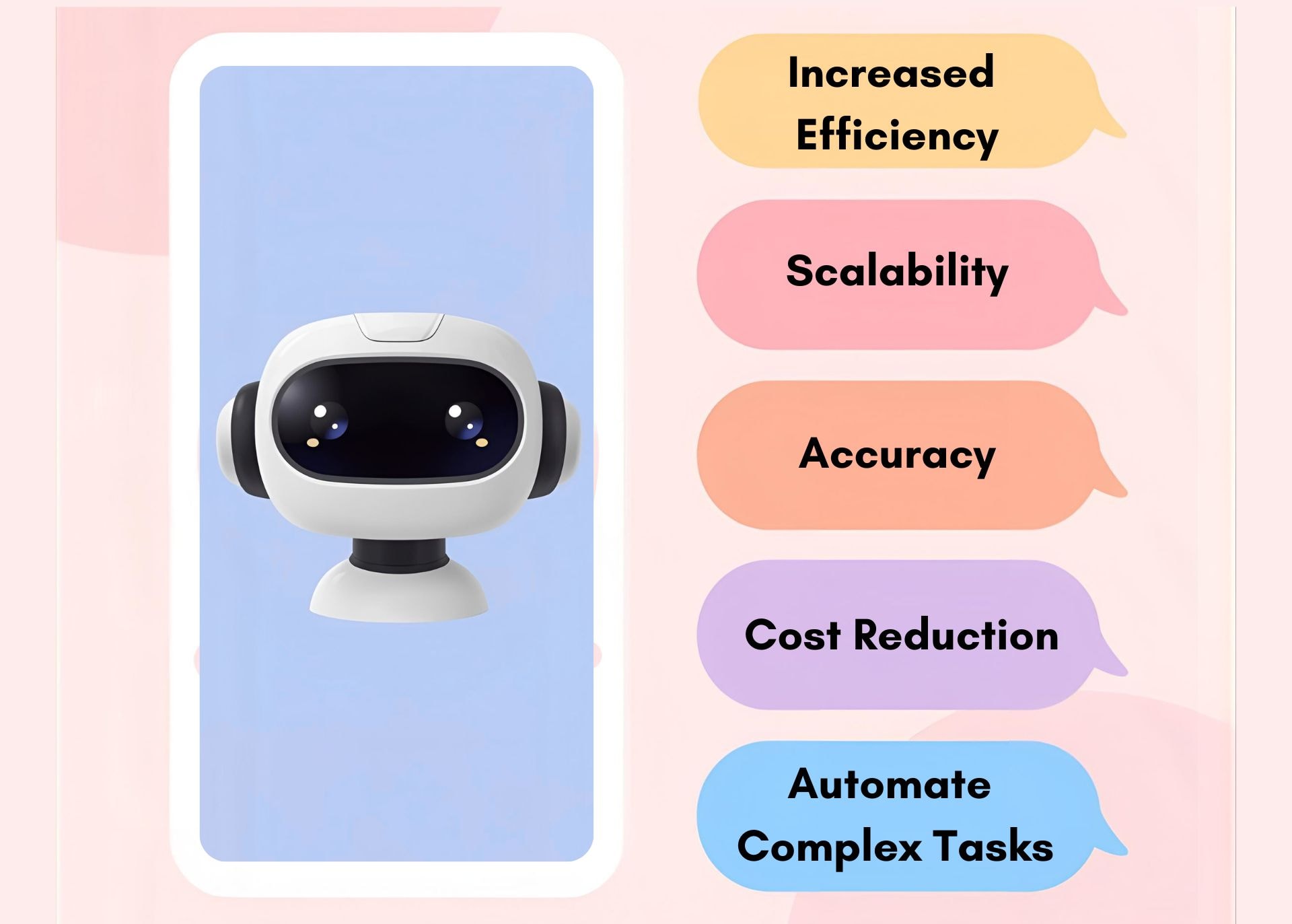
Increased Efficiency
Autonomous agents can make decisions on their own, without human intervention. This saves time in situations where constant decision-making is required for complex tasks, improving overall operational efficiency. AI agents also automate routine tasks such as data entry, scheduling, and invoice generation, making processes faster and more efficient.
Scalability
When a business grows, the volume of operational tasks increases exponentially. With AI agents, companies can handle larger data volumes without incurring additional staffing costs. Even better, they don’t have to compromise on operational agility in the process.
Accuracy
With AI agents, the risk of human error in processes such as data entry, report generation, and other routine business tasks is greatly reduced. Since autonomous agents follow strict logic and programming, their output is highly accurate. This helps businesses avoid costly mistakes and maintain higher standards of quality and compliance.
Cost Reduction
When AI agents automate repetitive tasks, they free up human employees to focus on high-value activities. This automation also reduces the staffing costs associated with large manual operations. Also, autonomous agents work around the clock without added overhead, lowering operational expenses and improving resource allocation.
Ability to Automate Complex Tasks
One of the biggest benefits of autonomous agents is their ability to automate complex workflows. Unlike basic automation tools, AI agents can understand objectives, break them down into a sequence of tasks, and execute them— all without constant oversight. When you integrate autonomous agents into your existing systems, you can leverage multiple agents to achieve greater efficiency, even in complex operations.
Real-World Use Cases Across Industries
Since autonomous agents can operate independently, they bring value across a wide range of industries.
Customer Service and Support
Autonomous agents play a vital role in modern customer service. Using NLP, they can understand inquiries, provide assistance, and complete certain tasks automatically. Many companies also use these autonomous agents to deliver personalized recommendations and tailored solutions, improving customer satisfaction and reducing response times.
Finance
In finance, autonomous agents analyze market data and trends, making them an essential part of decision-making. They can process real-time financial data and execute actions much faster than humans. These autonomous agents are also instrumental in detecting and preventing fraudulent activities, helping institutions maintain security and compliance.
Transportation
Self-driving cars are one of the most recognized examples of autonomous agents in transportation. These vehicles can navigate roads and environments without human input. From delivering goods to transporting passengers, autonomous self-driving cars are reshaping the transportation industry with the power of artificial intelligence.
Retail and logistics
In retail and logistics, autonomous agents are revolutionizing supply chain management and customer experience. They monitor inventory levels in real time, forecast demand, and automatically reorder stock before it runs out. This reduces the risk of shortages and overstocking. In logistics, these autonomous agents optimize delivery routes, analyze traffic conditions, and minimize operational costs to ensure faster, more efficient deliveries.
Healthcare
Autonomous agents are transforming both patient care and administrative efficiency in the healthcare industry. These autonomous agents can analyze large volumes of medical data, including lab reports, patient histories, and imaging scans. This analysis supports diagnostic decision-making systems, helping healthcare professionals make faster, more accurate, and data-driven diagnoses. In addition, these autonomous agents also handle operational task execution like auto-scheduling, patient follow-up, and billing.
Common Challenges and Risks
AI agents have a lot to offer. However, there are several challenges and risks associated with their integration that you can't ignore. Therefore, organizations need to identify them and ensure that the agents operate within moral, legal, and societal frameworks.
Bias and Discrimination
One of the most widely discussed issues with autonomous agents is bias and discrimination. Since AI bots learn from massive datasets, they also absorb societal inequalities and historical prejudices. This is later displayed in their output, which can often lead to reputational damage and legal consequences for companies
Privacy Invasion
Autonomous agents need to access data to function properly. However, they might end up collecting or using private and sensitive data they don't have permission for. This could result in serious breaches of privacy and trust.
Accountability
Autonomous agents are designed by a developer and deployed by an organization. So, who is to blame when the bot makes a serious error? The developer? The organization? Or the end user who interacted with it? Accountability is, therefore, a complex challenge when it comes to using autonomous agents in businesses.
Transparency
Most AI setups, especially those powered by deep learning, often function as "black boxes." Understanding how and why the algorithms choose a specific outcome can be difficult. This lack of clarity in decision-making becomes dangerous in critical healthcare or criminal justice industries.
Autonomy and Control
Although autonomy is the real highlight of these AI agents, how much autonomy should they be given is an important question. Complete autonomy without human oversight and judgment could lead to harmful outcomes. This is why AI solutions must be designed so they amplify human expertise rather than undermine it.
How Sintra.ai Empowers Businesses with Autonomous AI Bots?

If you’re looking to integrate autonomous agents into your existing systems, Sintra.ai is the perfect solution. This all-in-one AI platform is equipped with expert assistants that can automate, manage, and execute workflows across departments with minimal human involvement.
Sintra offers 12 specialized autonomous agents, each trained on thousands of data points to perform tasks with precision and consistency. A standout feature is its Brain AI, which acts as a shared knowledge hub—storing all information about your business so that every Sintra agent can access the data infrastructure for context-aware decisions and relevant responses.
Whether you need an autonomous social media manager, personal assistant, data analyst, or business developer, Sintra’s intelligent bots adapt seamlessly to your workflows and objectives.
Easy Adoption
- Sintra integrates effortlessly into existing CRMs, spreadsheets, and communication tools.
- You don't need to be a technical expert to integrate Sintra's autonomous agents into your workflows.
- Pre-trained assistants encourage instant onboarding, delivering value from day one.
Automated Workflows
- Sintra's agents leverage information stored in the Brain AI, combined with set parameters, to automate multi-step processes autonomously.
- These autonomous agents work 24/7, increasing both efficiency and productivity.
- Automated workflows reduce human error and boost consistency.
Multi-agent Capabilities
- Sintra's suite of autonomous agents communicates, delegates, and exchanges data to manage complex operations.
- Its multi-agent framework allows your business to scale easily without extra staffing and overhead costs.
- Each agent can access shared business memory for smarter problem-solving.
Sintra's autonomous agents represent an intelligent digital workforce built to boost efficiency and productivity.
Sintra.ai in Action: Practical Automation Scenarios
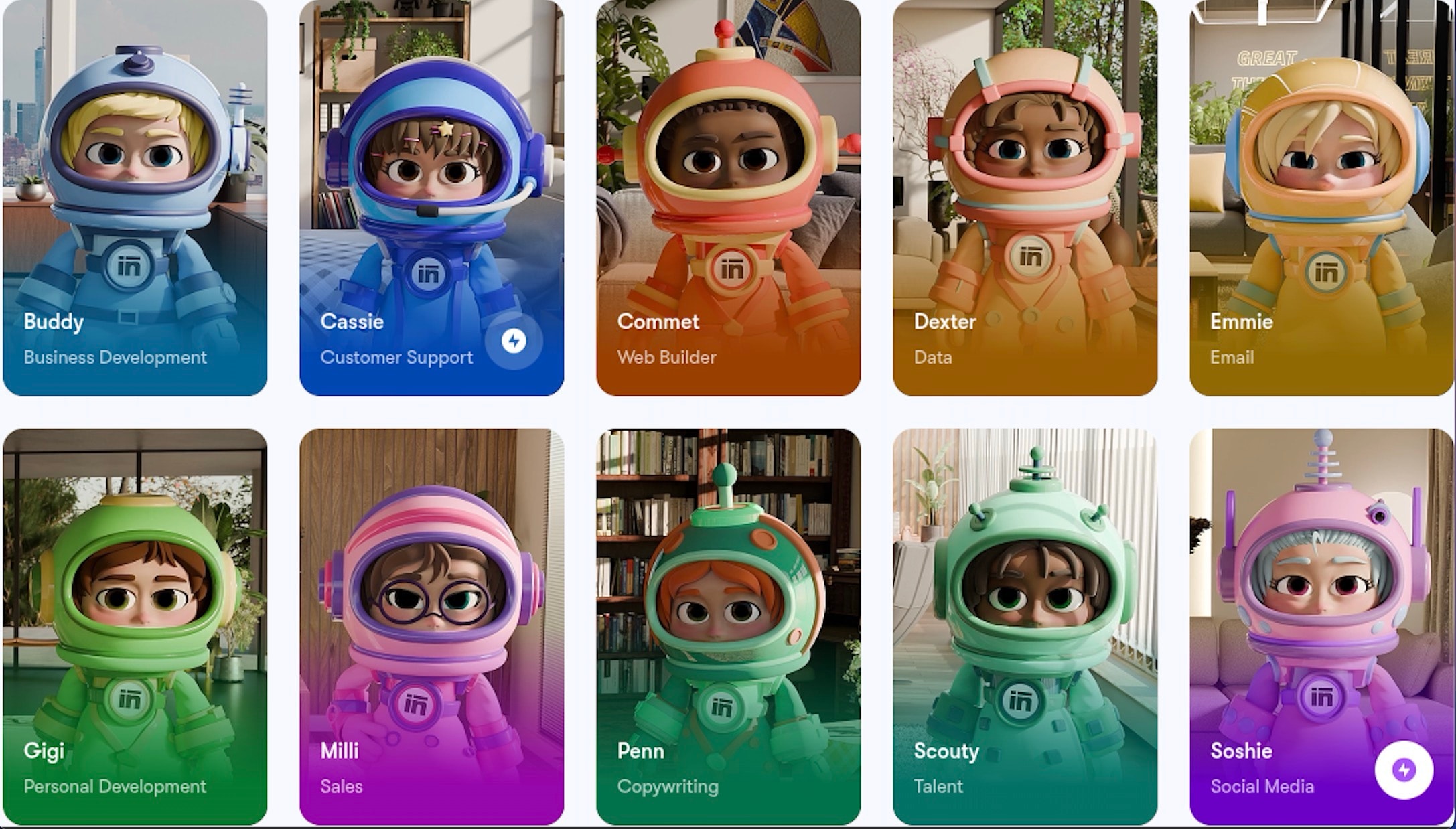
Let's take a closer look at how Sintra's AI-driven assistants can help solve real business problems.
Cassie- Customer Support
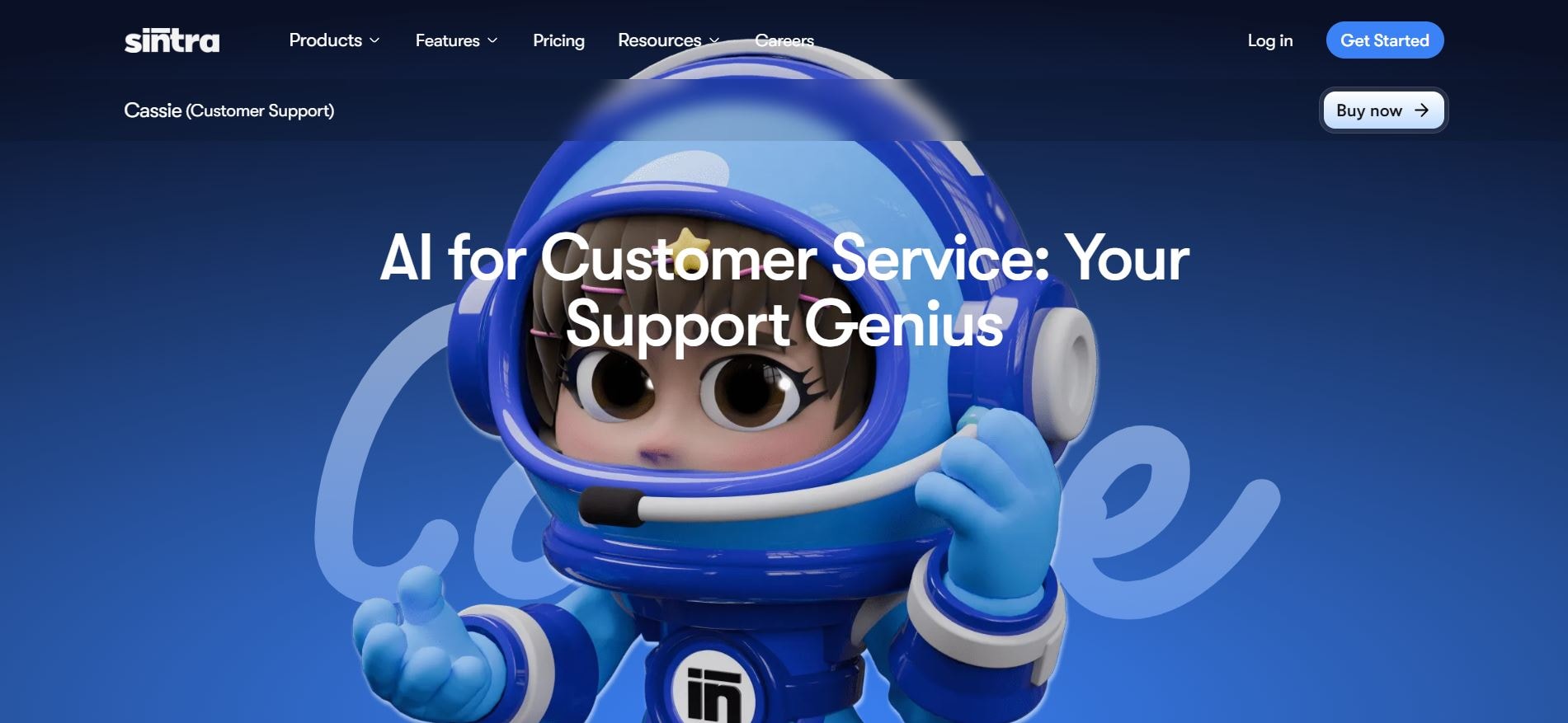
Cassie is a customer support specialist who uses artificial intelligence to make customer interactions more efficient, personalized, and automated. Powered by advanced natural language processing and contextual learning, Cassie can handle complex support operations with minimum intervention.
It can:
- Respond instantly to customer emails with accurate, context-aware replies.
- Engage with customers by replying to comments and messages on social media platforms.
- Automate live chat responses, handling FAQs, complaints, and requests in real time.
- Converse in over 100 languages, ensuring global support coverage.
- Personalize each interaction by analyzing the company’s knowledge base so every response feels human-like and brand-consistent.
- Update and maintain product manuals to ensure customers always have the latest information.
- Analyze support data to identify recurring issues, customer pain points, and opportunities for service improvement.
Commet- eCommerce Manager

Commet is Sintra’s autonomous eCommerce manager built to optimize online store performance and create a seamless shopping experience for customers. Acting as a full-time digital store manager, Commet automates and completes tasks that drive sales, enhance customer satisfaction, and maximize profit.
Commet can:
- Draft high-converting landing pages and product descriptions in multiple languages to attract a global audience.
- Optimize your online store with SEO-friendly content that improves visibility and boosts organic traffic.
- Discover winning product ideas by analyzing trends, competitors, and customer demand.
- Calculate profit margins and forecast performance to ensure consistent business growth.
- Analyze store performance to identify weak points, bottlenecks, and opportunities for improvement.
- Offer 24/7 customer support, assisting buyers throughout their purchase journey.
- Automate responses and streamline engagement, managing everything from product inquiries to order fulfillment.
Buddy- Business Development
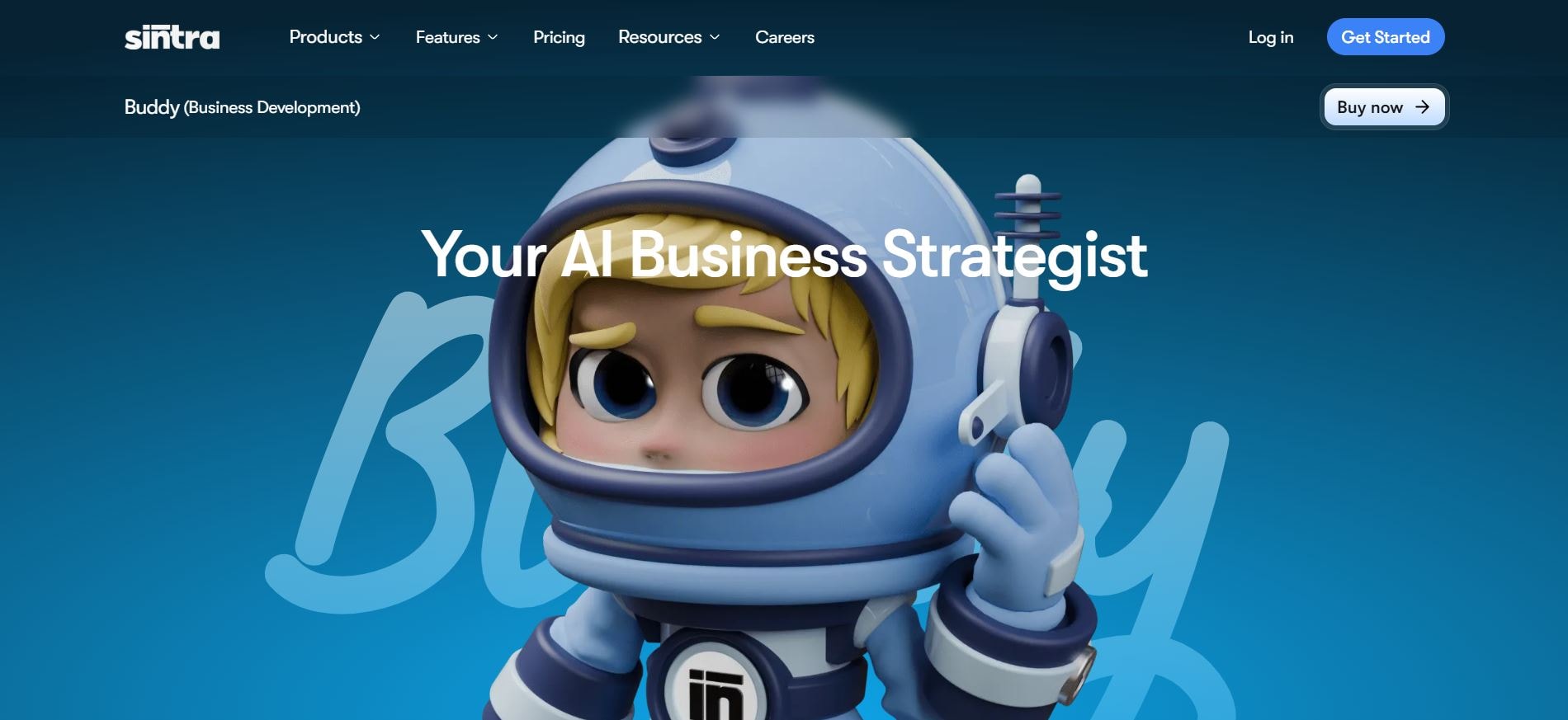
Buddy is a smart business developer trained on thousands of data points to help companies drive innovation and scale efficiently. Acting as a full-time analyst and strategist, Buddy assists businesses in making smarter, data-driven decisions across every stage of growth, from idea generation to market execution.
Buddy can:
- Analyze market trends and customer insights to identify new opportunities and forecast future business directions.
- Formulate and execute go-to-market strategies for new product lines, including targeted campaigns, messaging, and partnerships.
- Conduct competitor analysis to highlight strengths, weaknesses, and identify market gaps your business can fill.
- Generate fresh business ideas based on real-time market research, trends, and audience behavior.
- Create detailed product launch plans and timelines that align with your company’s goals and objectives.
These are just 3 of Sintra’s 12 autonomous robots. Imagine the possibilities when you have the entire team working together to automate, optimize, and scale your business operations.
Best Practices for Integrating Autonomous AI Agents
If you're planning to incorporate autonomous agents into your existing tech stack, the following best practices can help you get the most out of your bots.
Identify the Right Use Cases
Analyze your current processes to identify which rule-based, recurring tasks consume the most time. Also, look for tasks that are most prone to human errors or where delays affect customer satisfaction. Once you've pinpointed the processes that can benefit from AI automation, assign clear success metrics for the new AI system.
Check your Infrastructure's AI Readiness
Autonomous agents require reliable computing resources, strong and consistent internet connectivity, and secure data storage systems. So before you deploy AI agents, evaluate your current tech stack to ensure that it can support an AI integration.
Select the Right Agent
Matching an AI agent's capacity with specific business functions is crucial. Consider the different types of agents, such as reflex agents, utility-based agents, hybrid agents, and so on. Analyze their analytical reasoning, data requirements, and integration needs. Finally, select the agent that's most suitable for the selected process.
Test the Agent
Carefully test the agents through controlled pilot programs. This will help you assess whether the agent's skillset matches the task's requirements without risking critical business operations. Monitor the agent's output continuously and establish feedback loops for learning and adjustment.
Expand Functions Strategically
Don't be hasty and roll out the AI system gradually. Phase your implementation to allow time for system optimization and user training between each stage. A gradual expansion minimizes risk while allowing your organization to learn, adapt, and continuously improve the newly implemented system.
Frequently Asked Questions
How are autonomous AI agents different from traditional chatbots or generative models?
Autonomous agents are very different from other agents. Traditional automation tools or simple reflex agents follow a rule-based approach. They execute actions according to user input and preset rules. Whereas generative assistants create content independently, generating text, images, or code based on patterns learned from large datasets. Autonomous agents don’t just generate outputs based on prompts like other systems; they act independently, planning actions, making decisions, and executing multi-step workflows without constant supervision.
What are the main benefits of using autonomous agents in business?
Autonomous agents can offer deeper levels of specialization in businesses thanks to their nuanced reasoning and machine learning capabilities. They:
- Save time in situations where constant decision-making is required for tedious tasks, improving overall operational efficiency.
- Automate routine tasks such as data entry, scheduling, and invoice generation, making processes faster and more efficient.
- Can handle larger data volumes without incurring additional staffing costs.
- Reduce the risk of human error in processes such as data entry, report generation, and other routine business tasks.
- Automate advanced workflows with multi-agent systems.
Are there risks or challenges in deploying autonomous AI agents?
As with any advanced technology, deploying autonomous agents comes with a few challenges:
- Integration Complexity: Incorporating autonomous agents into your business systems can require technical expertise and proper API alignment.
- Data Security: Since autonomous agents draw information from vast databases, securing sensitive data can be problematic.
- Unchecked Automation: Relying too much on AI automation with minimum human intervention can sometimes lead to biased decisions and other system errors.
- Ethical Concerns: Maintaining transparency, fairness, and compliance with evolving AI governance standards is critical.
How do I start incorporating autonomous AI agents into my business?
If you're wondering how to incorporate autonomous agents into your business, here's a quick guide to help you get started:
- Identify which operations can benefit the most from automation.
- Choose a reliable AI platform that offers automation for your desired business operations.
- Train the autonomous agents with your company's data, building AI agents that deliver real value. Expand their roles across departments gradually.
- Monitor the autonomous agents' performance and tweak parameters to refine workflows.
Related articles
.jpg)
.jpg)
.jpg)

Want a mystery discount on your order?

PlayOS, Inc.
All rights reserved