AI Lead Scoring: How to Automate, Prioritize, and Convert More Leads in 2026


Table of Contents

Ever wondered why some sales teams can close deals faster while others struggle to keep up with their customers?
The only difference lies in the method of lead scoring.
While some businesses are still stuck at traditional rule-oriented lead scoring and guesswork, others are implementing predictive analytics to adjust the scoring criteria. The shift is significant - AI-powered predictive lead scoring identifies high-potential prospects via engagement, firmographic, and behavioral signals, driving meaningful conversion gains across tech, financial services, manufacturing, and healthcare, and machine learning triples the predictive power of churn models. Instead of wasting time on gut instincts and outdated data, AI technology uses real-time behavior, demographics, and engagement scores to find the most promising prospects.
With this help, businesses are better able to sustain their customers, improve conversion rate, and attain pipeline growth. Let’s find out more about AI lead scoring, how it works, and how you can use it to your benefit.
What Is AI Lead Scoring?
AI lead scoring refers to the use of machine learning models to automate the process of evaluating and ranking leads, based on how likely they are to convert.
Unlike traditional methods that focus on set rules, AI lead scoring is based on predictive analysis. This involves using large datasets, historical data, and real-time behavior updates to determine the most promising leads.
Simply put, the lead scoring system analyzes,
- What previously converted leads do?
- Who are they?
- How do they behave across different channels?
Based on the insights, these systems adjust scoring criteria, rank leads, and enable the sales efforts to locate the warmest leads. This way, they can focus solely on the marketing efforts to convert the leads identified and drive revenue.
How AI Lead Scoring Works?

Let’s visualize how a typical AI lead scoring solution works step-by-step.
Data Sources and Integration
The lead scoring process starts with data collection from multiple channels. It can be your marketing tools, business websites, social media, and outreach campaigns.
Common data businesses look for while lead scoring include,
- Demographic Data, such as job title, company size, industry age, and more.
- Behavioral Data, such as website visits, email interactions, social media engagement, etc.
- Engagement Data, such as interacting with content, attending webinars, and downloading resources.
Always remember - data sources must be integrated to convert most of your qualified leads. Hence, businesses must create a centralized knowledge space, directly connected with their enrichment tools, marketing software, and most importantly, CRM.
Machine Learning Models and Scoring Algorithms
Next comes data modelling. At this stage, businesses employ unique AI-powered lead scoring models, trained on historical data from previous leads. This process includes,
- Machine learning algorithms and predictive analytics to detect patterns in the data that relate to successful lead conversions. This can be engagement indicators, leads behavior patterns, and firmographic information
- Ranking prospects based on their likelihood to convert. For example, a prospect with frequent website visits and continuous downloads will be ranked higher than one with basic demographic information.
Once your lead scoring model is all trained, it can score leads according to their resemblance to the previous success rates.
So, the higher the score, the more it is to convert. Typically, AI predictive scoring models allocate scores between 0 and 100. You can also set up custom qualification scores to identify leads most similar to your existing customer base.
Real-Time Updates and Continuous Learning
The best thing about AI lead scoring tools is that they are dynamic and remain evolving with the data flow. As it scores leads, nurtures, and converts them, these leads add to the system. This data then makes it to your sales pipeline for better and accurate predictions in the future.
Let's learn this with a real-time scenario.
A SaaS company sells CRM software and is currently handling thousands of leads per month. But traditional lead scoring for this enterprise can consume time, effort, and resources. Even then, it's not completely accurate.
Solution implementation of AI-powered lead scoring software
- Such software can analyze data from across multiple channels and segment the data into the behavior, firmography, and engagement categories.
- Once done, its advanced algorithms process the data and score leads by identifying similar patterns in the previous conversions.
- Finally, based on these insights, the company can direct its sales teams to focus on nurturing or outreaching the leads per their scores.
Eventually, the AI lead scoring will improve their conversion rate and revenue growth
Key Benefits of AI Lead Scoring Platforms
AI lead scoring platforms are not all about saving time - it is about making the right decisions throughout your sales pipeline and helping you create lead magnets more effectively. Let's have a look at how implementing AI lead scoring in sales processes can benefit you.
Faster Conversions: Want to make the most of the low-hanging fruit? AI lead scoring tools are your way out. This helps you identify the low-risk, high-potential leads and effortlessly convert them, giving you a quick win.
Resource Efficiency: Lead scoring solutions enable businesses to focus their sales and marketing efforts on high-quality leads. This way, you don't have to waste resources on leads that were never going to close.
Integration and Scalability: You can integrate AI lead scoring solutions into your working CRM, so no more toggling between multiple tools to access lead data. For example, your sales team can access real-time lead scoring trends, customers’ previous history, and tailored recommendations - all in a single dashboard. Plus, with this, you can always decide to scale.
Consistency: Unlike traditional lead scoring, AI tools enable the sales teams to know exactly when, how, and which prospects to target. This accuracy is consistent and has minimal scope for human error.
Improved Sales and Marketing Alignment: No more conflicts between the sales and marketing teams, all thanks to the shared centralized working space. Now, both teams can agree on the warmest leads, which can improve their collaboration and follow-up actions.
Better Forecasting: With AI predictive lead scoring software, no more inaccurate and compromised decisions. Such tools interpret vast datasets to identify patterns and score leads accurately. Having a deep understanding of your leads' behavior, prospects, and engagement, such software offers a minimal chance of human error.
Practical Use Cases for AI Lead Scoring

Companies using AI lead scoring are getting remarkable lead conversions - something that was impossible with traditional lead scoring. Let’s check out how companies are progressing prospects in the sales processes with minimal effort.
Grammarly, the AI-powered writing tool, was struggling to convert free users to paid ones. With a massive customer base, they only needed a smart solution to identify what users showed genuine interest in upgrading.
The company employed AI lead scoring to analyze user engagement patterns, feature page frequency, and error correction rates. The result: 80% increase in premium lead conversions.
Similarly, HES Fintech, a renowned financial services company, was struggling with manual lead scoring. It would consume most of the organization’s resources, still missing precious lending opportunities. Plus, the traditional method couldn’t handle the volume while ensuring accuracy.
The company used the predictive model to analyze historical app data, approval rates, and customer behavior to score leads and predict loan completion probability. The result: 40% increase in loan application volume.
That said, AI lead scoring solutions are not one-size-fits-all. Here are some common areas where automated lead scoring is making rounds.
- Inbound Lead Routing: AI agents send high-scoring, low-risk leads to the sales team while they direct the high-risk, lower-scored prospects for further nurturing.
- Outbound Prioritization: Marketing and sales teams use AI to detect warmer accounts and prioritize them in their target list.
- Product-Led Growth: Lead scoring tools that analyze users’ in-app behavior to identify whether they will convert or not.
- ABM Campaign: The lead scoring system, here, focuses on prospects that fit your decided custom profile and showcase engagement intent in real time.
- Lead Reactivation: In this case, the AI enables the sales teams to locate old and cold leads that are now warming up. Modern systems can detect such leads even without obvious triggers.
How to Implement AI Lead Scoring in Your Business?

Implementing the AI lead scoring setup is not as easy as it seems. Let’s check out a few steps deemed mandatory while executing such a system.
Review Your Existing Lead Scoring System
Before transitioning to AI technology, you must review and evaluate your existing traditional lead scoring system. Highlight its strengths and weaknesses, and identify areas where AI can help your sales team with the most impact. Here is how to do it.
- Evaluate the components of your current system. Check whether the setup assigns scores on specific actions like form filling, clicking on messages, etc, or the demographics like the industry, job title, etc.
- Identify the gaps in the setup. See if it is missing fields in the data or the inadequate modeling.
- Analyze the accuracy of your existing system. Ask yourself questions: Are the sales reps able to close deals with the current scoring? Or the high-impact leads slipping through the gaps in the system?
Document everything, so you are better equipped to implement the AI scoring model.
Preparing Your Data for AI Lead Scoring
Always remember! AI lead scoring models are as good as the data quality you feed to the system. A car without fuel is not going to run, even with the most powerful engine.
Such is the case with AI predictive lead scoring software, as they need detailed and holistic information about your prospects, ICP, and existing customers, to accurately evaluate leads.
If your knowledge base is filled with duplicates, data gaps, missing fields, and outdated lead records, the scoring accuracy will be zero.
Hence, the first step is always to clean your data and make sure it is free from any errors. For this, you can simply use data management and cleaning tools within your CRM platform. Or, you can consider using specialized software to sort out the messy data.
Training the AI Models
Now, you have organized data, but this is not enough for an AI lead scoring model to work. Advanced algorithms must be put in place to train your model for the desired results. For this, you feed your model the cleaned data to make predictions.
Based on this analysis, the AI will analyze successful leads, detect high-impact prospects, and set scoring criteria. It will also rank leads on the basis of their conversion likelihood and consider other influential factors.
At this stage, it's ideal to look for no-code AI leads scoring tools, such as Sintra.ai. This is especially crucial if you are just getting started with AI technology or if you are on a budget. It removes the burden on your IT team and leaves free time to focus on strategic tasks. Learn more about how no-code automation can facilitate your sales processes.
Aligning Sales and Marketing Around Lead Scoring
Sales and marketing teams are bound to have conflicts during the lead scoring process. But you can minimize this by training. Both teams must know how to use AI lead scoring to their benefit.
Here are some things you must establish during these onboarding sessions,
- Lead scoring is not equal to lead qualification. Sales teams must use this technology as guidance and not a replacement. Good sales judgement comes with the context, and AI tools provide that context for you. The ultimate decision stands with the sales reps.
- Your go-to marketing strategy must be a reflection of your lead scoring trends. Ask yourself questions: Are you optimizing for demos? Do you want expansion? Is your ultimate goal self-served conversions? and decide accordingly.
- Building trust with AI is crucial. If your team doesn't trust the process of scoring, they are unlikely to use it. Make sure the platform you employ establishes transparency and maintains trust, so the reps always know if it is right to prioritize the scored leads.
- High scores in your AI system are not a guarantee that the lead will drive revenue. Make sure the sales and marketing teams are connecting your scoring engines to the right workflow. They must know if the prospects require lead routing, personalized outreach, etc, for optimal performance.
Monitoring and Optimizing Your AI Lead Scoring Model
Hang on a bit. Little is left now.
AI models are not always perfect, and how do you know if they are delivering right? The answer lies in testing. Run a test to check if the system matches your ideal lead profile, gather feedback from the sales and marketing team, and identify scope for improvement.
Hence, optimization is also an ongoing process. Eventually, these improvements will help the model align with your sales goals according to the user behavior. For this,
- You can use KPIs like lead conversion rates, deal sizes, and sales velocity to improve the performance of AI lead scoring.
- Use surveys and questionnaires to track the feedback from your sales and marketing team. See how comfortable they are with the system? Check if the model performs as it intends to?
Moreover, based on the insights from the optimization process, adjust your scoring criteria to find out when a prospect is ready for sales outreach. For instance, over time, you may realize that leads with a 75 score consistently convert, while those below 55 require nurturing. In this case, you can set the threshold at 60.
- Pro Tip: As the market trends change and the new data comes into your sales pipeline, retrain your AI model and set new conditions. This will keep your lead scoring system up-to-date.
Automate Lead Scoring and CRM Workflows with AI Bots
An all-encompassing lead scoring platform with unique AI helpers that help you at each stage of your sales process. Sounds cool, right? That’s Sintra.ai for you. It is an advanced sales software with twelve AI helpers trained on hundreds of thousands of data points, power-ups, and a centralized knowledge space to help you through it all. Let’s see how it helps sales teams focus on high-value prospects and accelerate growth.
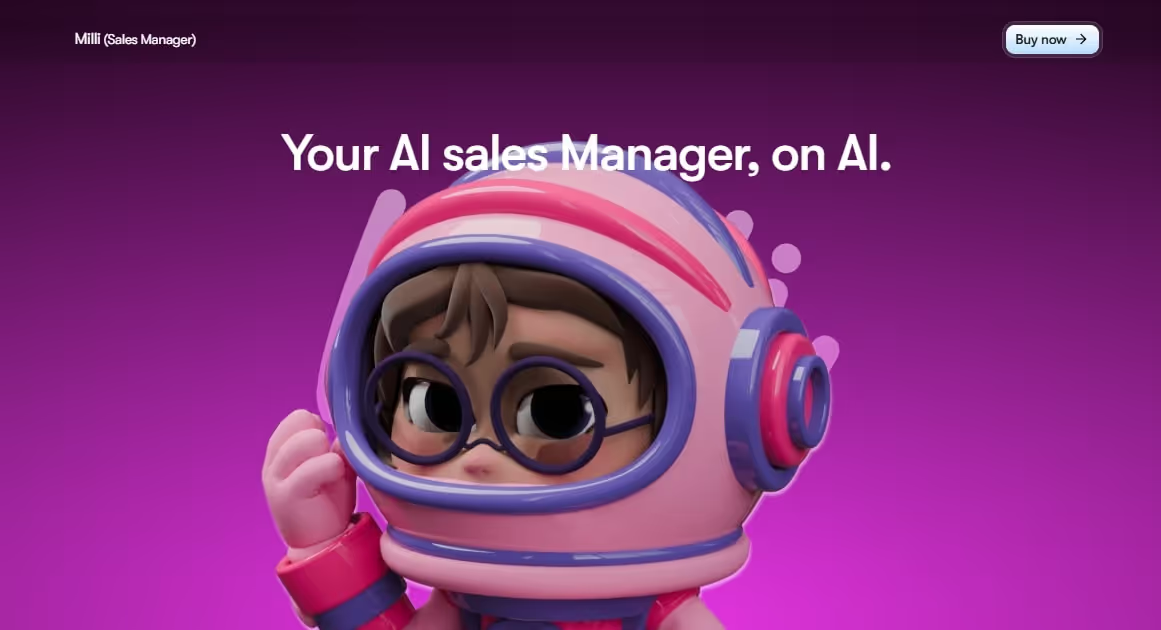
Meet Milli, your AI sales manager. It can help you score leads based on customer behavior, their demographics, and previous interactions stored in the knowledge space. With Milli, you can manage the sales better by knowing when and how to intervene.
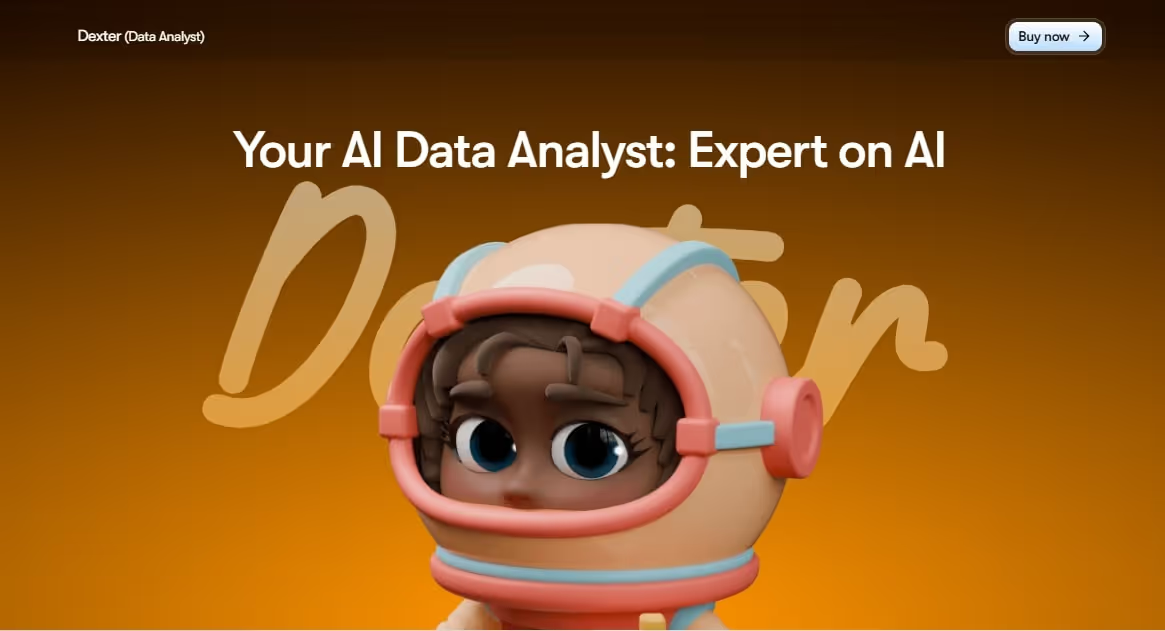
Next comes Dexter. This data analyst helper from Sintra can help you understand, interpret, and predict - all with minimal hassle. It can help sales teams make the most of the lead behavior, performance metrics, and engagement score.
Once you have decided when to intervene in the warmest leads available, it’s time to reach out to them. For this, Sintra offers Emmie, its Email marketer. It can launch automated drip campaigns, effortless follow-ups, and more. Gradually, it contributes significantly to your revenue.

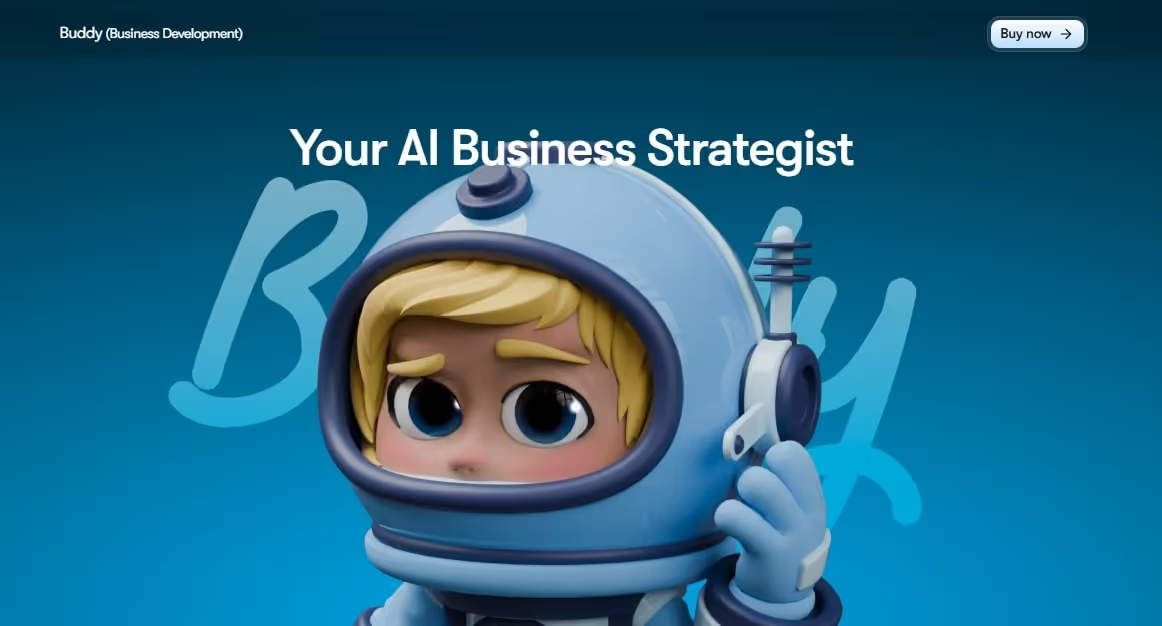
Want to retrain your AI model and need thorough research on the market trends and changing customer behaviors? Try Buddy. This business development coach from Sintra can help you conduct in-depth studies on the hot topics, current market scenarios, and more.
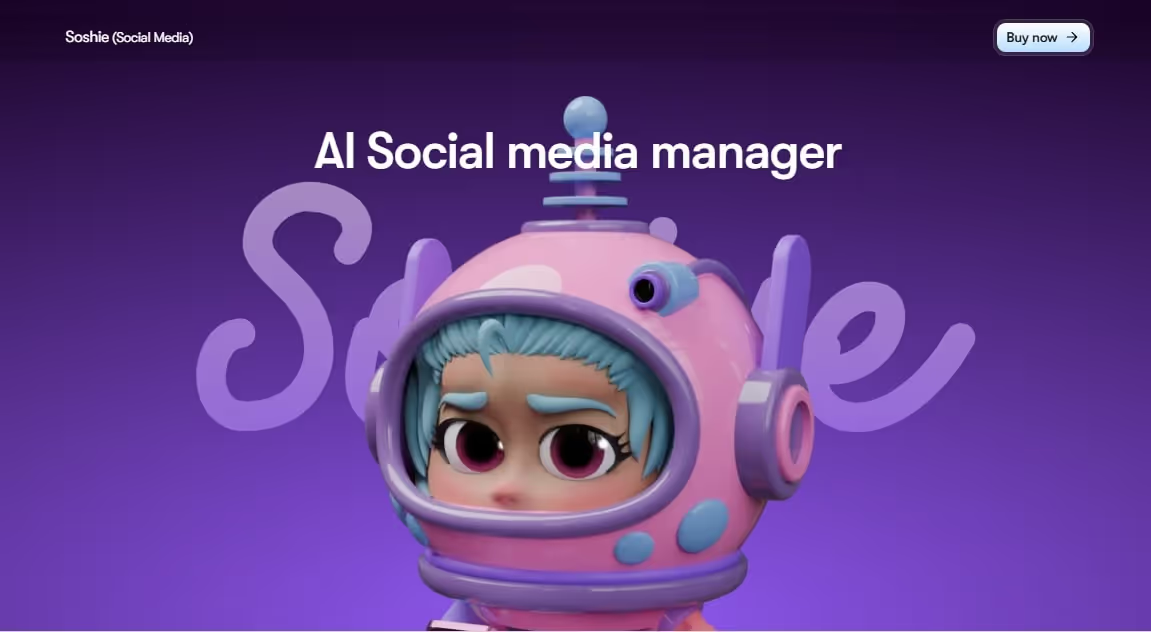
Not only this, but Sintra also features Soshie, the AI social media manager. This AI agent can craft personalized visuals and text for social media campaigns.
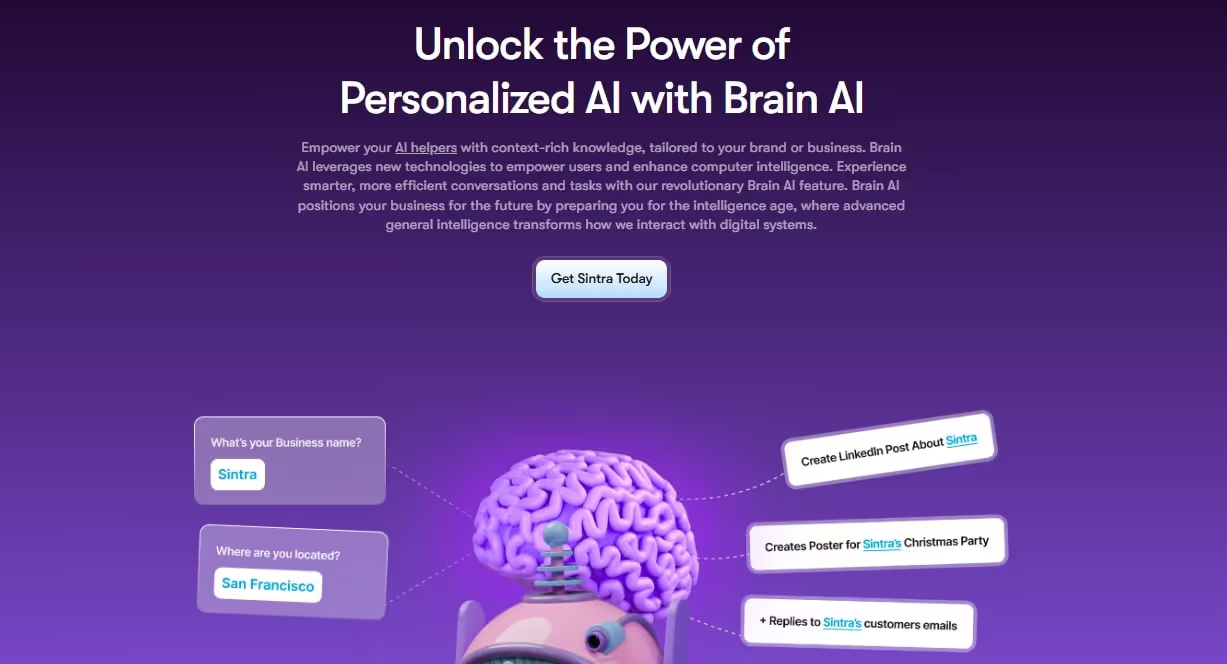
Finally, we have the centralized knowledge base for your business - Brain AI. It stores all the necessary documents, customer surveys, media, URLs, and more to help the AI agents operate effectively - making it a powerful AI sales funnel generator that never stops evolving. As you add data, Brain AI learns more about your goals, objectives, and methodology for optimal working.
Common Pitfalls and Best Practices in AI Lead Scoring
While AI lead scoring on paper is the go-to solution for your struggling sales, the reality is much more complex. Here are some common pitfalls you might encounter with these tools and the right sales strategies to overcome them.
Pitfall 1: Lack of Adequate Training
There is a big misconception that using AI is a piece of cake. Even if you go with a convenient and intuitive lead scoring platform, transitioning into a new workflow means investing significant time in onboarding. And, if you neglect the training, there will be an unavoidable crisis, especially between the sales and marketing teams.
Best Practices
While training the system, you must consider the following.
- Make sure you have clean and structured historical data from your CRM system. This includes everything from your previous lead interactions, their demographics, whether they were successfully converted or not, and more.
- Customize your lead scoring AI model through relevant data points. It can be behavioral data (like website visits) or firmographic data (like revenue, company size, etc).
- Always define thresholds specific to your historical lead quality and allocate specific actions for different scoring categories. For instance, a lead with a higher score (80) goes directly for outreach, while the one with 60 requires further nurturing.
- AI system set up your AI system to periodically retrain as new data comes into the AI model. This will help the setup understand the behavior of the prospects, which improves the accuracy.
Pitfall 2: Over-Reliance on AI
Machine learning algorithms and predictive lead scoring solutions are imperfect. So, you should trust them blindly in making the sales judgment. I understand - It can be tempting to completely rely on AI, but it eventually builds on the workload and offers inevitable governance issues.
Just imagine an AI agent pulling the contracts from multiple channels, structuring the data, modelling the system for lead scoring, and narrowing down prospects for further action. A single hallucination at any step is a recipe for a big disaster.
So, undermining human oversight and an SDR’s judgment while using AI means compromising your revenue and letting the high-quality leads fall through the cracks.
Best Practices
- Set up a human governance team that continuously checks the AI results for hallucinations or technical errors.
- Always place a human sales rep to evaluate the qualified leads for the final judgment. Whether to reach out to a prospect based on its lead scoring criteria will be his or her call.
- Only automate where needed. Do a thorough examination of your existing systems to see the areas where AI can have a high impact on the sales processes.
Pitfall 3: Overestimation of AI Lead Scoring
AI lead scoring is important. However, it is not a replacement for all the operations in the sales funnel. While many forget it, lead scoring is only a part of your sales process. What happens after you have narrowed down a qualified lead to approach is equally significant.
Having no setup for the future steps, be it lead routing, lead nurturing, or personalized outreach, will only give you a set of new problems, difficult to cater to.
Best Practices
- Have a lead scoring system that connects ranking to the future course of action, including lead routing, personalized outreach, content creation for engagement, etc.
- Select an AI system that gives you an all-in-one integrated solution for each stage of lead prospecting. One such option is Sintra.ai with twelve specialized AI agents and a centralized knowledge base for your business operations.
Pitfall 4: Data Hallucinations
We all know today, machine learning and advanced algorithms can generate too good content. But here lies the problem.
When you ask AI to pull out the lead data, there is a higher chance that it will make up these contacts, especially if it’s not trained well.
For example, as a sales trap, you enter the name and company of the prospect for AI to find an email address. The AI, programmed not to disappoint you, might produce an email address that is fabricated or does not even exist.
Eventually, you are left with tons of bogus emails that will bounce back, defeating the entire purpose of lead prospecting.
Best Practices
- Always perform the hygiene audit before training your system. This includes using email verifiers to validate the email addresses before reaching out to the prospects and regularly cleaning the data by removing typos, duplicates, and fake contacts.
- Double-check AI outputs. A sales rep dedicating 10 minutes to help you avoid the damage control later on.
Pitfall 5: Compliance and Legal Landmines
Like any other AI, lead scoring does not get a pass on privacy laws.
If your existing pipeline heavily relies on personal data and spammy contacts, beware. You can land in serious legal trouble. Hence, there are hundreds of industry regulations you must follow while applying AI-driven prospecting.
Let me help you understand the gravity of the situation. Imagine you have an AI bot that pulls contacts from LinkedIn - this may seem harmless, but it violates platform policies and data protection laws, which can harm your LinkedIn lead generation strategy.
Best Practices
- Set up a legal team to oversee your customers’ privacy, industry-standard compliance, data protection laws, and more.
- Always add an unsubscribe link at the end of your cold emails. This will help you manage your opt-outs effectively.
- Never use shady purchased lists. They might seem like a quick win, but eventually, they cost you tons of resources, time, and money. Use common civic sense - if a human is not allowed to do something, the AI also shouldn't do it.
Frequently Asked Questions
How does AI lead differ from traditional lead scoring?
AI lead scoring uses advanced algorithms, machine learning-driven analysis, and predictive evaluation, while traditional methods usually rely on set rules by the sales teams. Plus, AI technology is a lot quicker, efficient, and accurate.
What data is needed for effective AI lead scoring?
You need different types of data for effective AI lead prospecting. Most commonly, it includes lead’s behavior (website visits, interactions, etc), demographics (job title, industry, etc), and firmographics (engagement, downloads, etc).
How accurate is AI lead scoring?
Unlike traditional lead scoring, AI tools are remarkably accurate. These systems are capable of interpreting warmest leads from vast datasets. Plus, their accuracy is consistent - the only condition is the training of their AI model.
Can AI lead scoring integrate with my CRM?
Yes, of course. Several AI lead scoring software integrate with your existing CRM, displaying real-time updates, historical data, and prospects’ profiles. It helps the sales team get a complete view of new lead data from multiple channels.
What are the benefits for sales and marketing teams?
AI lead scoring and marketing automation tools can help improve lead quality, promote conversions, boost sales efficiency, and build collaboration between the two departments. It can also help them focus all their energy on driving revenue.
How do I choose the right AI lead scoring software?
There are several things you must consider when choosing an AI lead scoring software. Some of them include integration with existing CRM, customization scope, real-time updates, and predictive analytics. Plus, a no-code software with a free plan is always a bonus.
How often should I retrain or update my AI lead scoring model?
Well, it depends. Ideally, you should retrain or update your AI custom scoring model by exclusive performance triggers and how quickly your customer behavior changes. Having monthly or bi-monthly fixed schedules can also do the job.
How does Sintra.ai help automate lead scoring and qualification?
Sintra.ai uses specialized AI agents to analyze your CRM data and engagement on multiple channels, rank prospects, and automate personalized outreach. These helpers can help your sales team with data analysis, strategic thinking, and automation.
What are common mistakes to avoid with AI lead scoring?
Common mistakes to avoid with automated lead scoring include poor-quality data, over-automation, minimal human interference, and inadequate training. Learn more about the sales and marketing strategies for AI lead prospecting to avoid these pitfalls.
Related articles