AI and the Future of SEO: How Automation & Smart Workflows Are Transforming Search

Table of Contents

With Google rolling out AI Mode, Gemini, and AI Overviews, search engine optimization (SEO) is now focused on AI-powered, conversational answers that understand context and intent.
This is the biggest change in SEO history. The user numbers behind this shift are substantial - 112.6 million Americans used AI-powered tools in 2024, with usage forecast to top 241 million by 2027, and ChatGPT and Gemini together now control over 78% of the AI search market.
Today, ranking at the top of search results matters less than being mentioned or referenced inside AI-generated answers. Your visibility now depends on having structured content, strong brand authority, and alignment with what users really want.
For marketers and SEO professionals, organic traffic is dropping, and traditional search results are less likely to be clicked. But SEO isn’t dying, it’s evolving. Teams that adopt AI tools in marketing early, understand how new search systems work, and optimize for AI-driven results will have a major advantage in the future of SEO.
This guide explains how AI is transforming search, what it means for your SEO strategy, and how to create content systems that succeed in the AI search era.
Understanding the AI Revolution in SEO
The old version of SEO is gone. Keyword stuffing, link exchanges, and PageRank tricks no longer work. SEO is not ending, but it is changing faster than most teams can keep up.
This shift is deeper than an algorithm update. Search engines now rely on AI algorithms and machine learning to understand, process, and deliver information. AI decides how users find content, what appears on the page, and which brands stay visible.
Recent studies show how quickly search engines are changing:
- AI Overviews now appear in 11–13% of U.S. Google queries, up from 6.5% in early 2025.
- Zero-click searches already exceed 50% and could reach 70% by mid-2025.
- Web pages that appear below AI Overviews see a 34.5% drop in clicks.
- Some websites have lost up to 70% of traffic because of the AI-generated results.
Search traffic is falling, but opportunities are shifting. Visibility now depends on understanding how AI search works and how search engines interpret context. Here are some major revolutions in SEO:
AI-Driven Keyword Research
Manual keyword research takes time and often misses key search patterns. AI-powered tools like SurferSEO, Clearscope, and SEMrush analyze millions of queries to find trends, related phrases, and topic gaps.
They use predictive analytics to identify long-tail keywords and topics that will grow in search volume. This saves time and gives SEO teams better direction. AI surfaces the data; humans decide how to use it.
Content Optimization and AI-Generated Content
Modern content optimization depends on AI analysis. Tools such as Sintra, MarketMuse, Frase, and JasperAI review high-ranking pages and suggest what’s missing in your content.
They recommend keywords, headings, and structure based on search engine results pages and competitor data.
AI-generated writing tools now help create first drafts of blogs, product descriptions, and guides. Writers still lead the process. Human review, fact-checking, and tone alignment keep content accurate and trustworthy.
AI and Search Intent Matching
Google’s search engine algorithms now use AI systems like BERT and MUM to understand meaning and context. They identify what users want to achieve instead of matching words.
For example, when someone searches “best CRM for startups,” AI looks at user intent, not just the keyword. Web pages that give clear, direct answers to real questions perform better in search engine results pages.
Brands that understand user intent create content that fits what search engines now prioritize: relevance, structure, and clarity.
AI-Powered Voice and Visual Search
People are no longer typing every query. They use voice assistants and camera-based tools to search. Voice search is growing with devices like Google Assistant, Siri, and Alexa. It favors natural, conversational phrasing and fast answers.
At the same time, visual search tools such as Google Lens and Pinterest Lens are analyzing images to deliver relevant results.
Optimizing for voice and visual search requires descriptive alt text, clear metadata, and content designed for spoken questions. Brands that invest in multimedia SEO will have a clear advantage as search engines evolve.
The New Rules of SEO: From Keywords to Intent and Experience
The era of focusing purely on keywords is over. Generative AI-driven discovery has changed how content gets surfaced, places where many traditional keyword tactics no longer apply.
Moving Beyond Keywords
Originally, SEO centered on matching search terms and building backlinks. Today, AI-driven digital marketplaces use search algorithms to evaluate context, intent, and quality.
Tools now help you automate keyword research, but the value isn’t in the quantity of keywords; it’s in relevance. Identifying long-tail keywords and semantic equivalents matters more. What to focus on:
- Map keyword clusters around core topics rather than isolated terms.
- Use AI to surface related topics and gaps, then apply human judgment to choose the best.
- Structure content so it covers the intent fully
Understanding Intent and Relevance
Modern search depends on queries that reflect conversation, not just terms. AI systems interpret user queries based on the meaning behind the words. Actionable steps:
- Frame your content by the question a user actually asks, not just the keyword they type.
- Use AI-powered tools to analyse search trends and shifting intent signals.
- Write SEO content that addresses the full task or goal behind the query, not a simple answer.
E-E-A-T and Brand Authority
With the rise of AI-powered tools, measuring authority and trust matters more than ever. Brands with high credibility are more likely to be cited in generated answers. How to build it:
- Display author credentials and case studies to reinforce your subject matter expertise.
- Use schema markup to tie your brand, authors, and content together in the eyes of AI systems.
- Refresh flagship content regularly; outdated information hurts authority even if keywords remain.
Optimizing for Semantic Search
Semantic search means search engines are reading for meaning, entities, and relationships. Best practices:
- Organize your content with clear headings (H2/H3) and use structured lists.
- Link internally to relevant pages to build topic clusters and show depth.
- Incorporate entity data (people, places, brands) to help AI systems understand connections.
Understanding the New Optimization Models
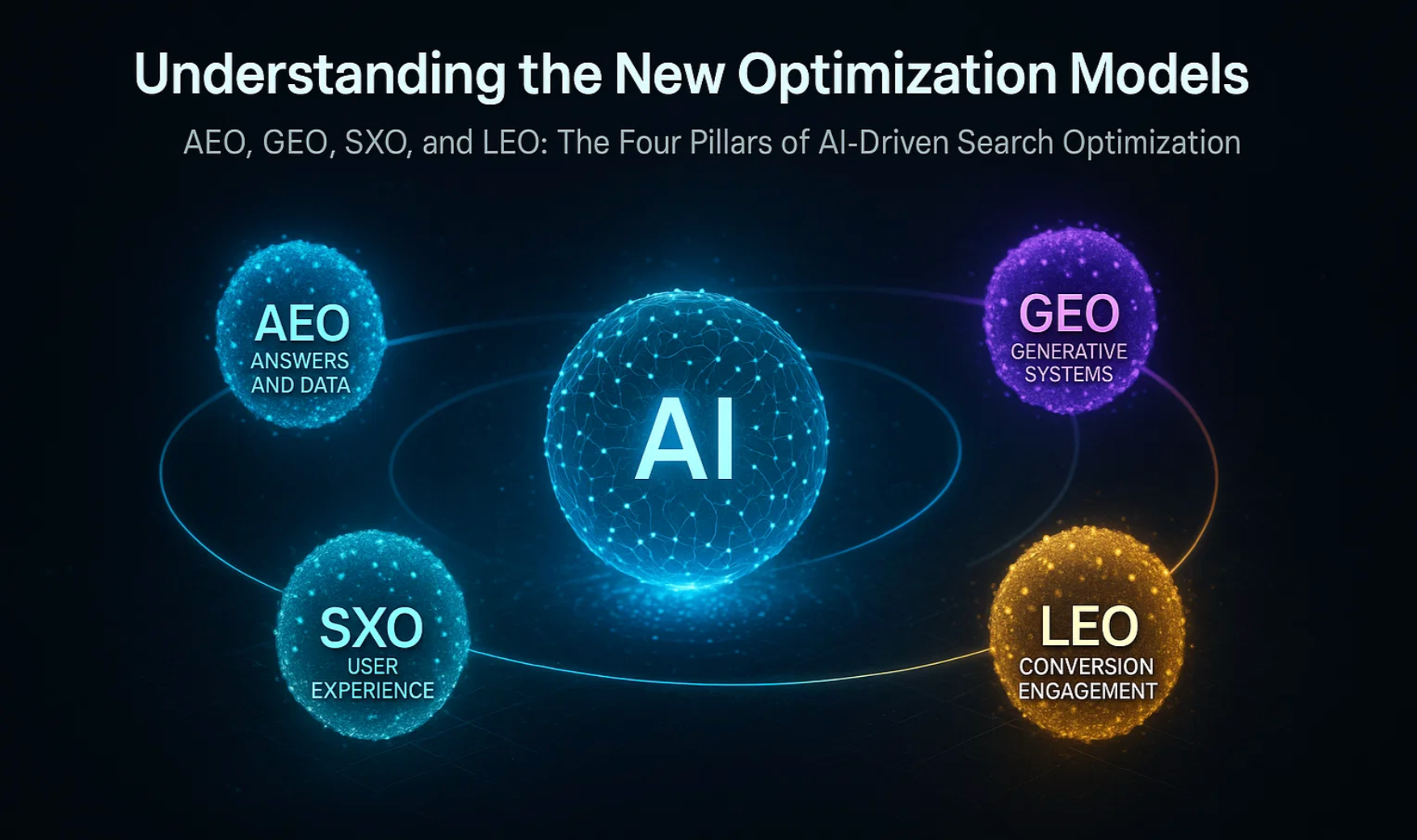
AI has created new ways to optimize content. These methods focus on how users search, interact, and make decisions. Each model builds on SEO fundamentals but fits the needs of AI-first search systems.
AEO – Answer Engine Optimization
AEO means preparing your content for AI systems that generate answers. Platforms such as ChatGPT, Copilot, and Google’s AI Overviews use structured information to form responses.
AEO helps your page appear as a cited source inside these answers. To do this, write clear definitions, factual explanations, and short summaries. Use schema markup, headings, and bullet points to make information easy to read.
For example, a page that defines “marketing automation” in one short paragraph, lists tools, and includes sources is more likely to be used by AI-generated summaries.
GEO – Generative Engine Optimization
GEO is about aligning your content with how generative AI reads and rewrites information. These systems value clarity, accuracy, and structured context.
To use GEO, present your ideas in logical order, include verified data, and organize pages around complete explanations. Consistent formatting and reliable references help AI models understand your topic.
SXO – Search Experience Optimization
SXO focuses on what users experience during search. It measures how well a page meets expectations after a click. Search engines now track time spent, readability, and user satisfaction.
To improve SXO, make content easy to scan and fast to load. Use short paragraphs, clear headings, and simple navigation. Good layout and strong readability help users find what they came for.
It means that a blog that loads quickly, uses a short introduction, and answers a query within the first few lines keeps visitors engaged longer.
LEO – Landing Experience Optimization
LEO improves what happens after a user reaches your page. The goal is to hold attention and increase conversions.
AI tools now help test headlines, CTAs, and layouts to see what works best. Clear design, minimal clutter, and focused messaging keep users interested.
A landing page that uses AI testing to compare two headlines and CTAs can find the version that leads to more sign-ups or demo requests.
AEO, GEO, SXO, and LEO represent how SEO has evolved in an AI-driven search environment. They guide how brands create, structure, and test content for both users and AI systems.
Skills Modern SEO Professionals Need in the Age of AI
AI has changed how SEO work gets done. Tools now manage data collection, audits, and keyword analysis. What matters is how professionals use these tools to make better decisions and create stronger strategies. Here are some core skills every SEO professional needs:
- AI literacy: Understand how AI tools function and where they add value. Learn prompt design, model behavior, and data output.
- Data analysis: Interpret search trends, rankings, and engagement data to guide strategy instead of relying on guesses.
- Strategic planning: Focus on the full search experience, from intent to conversion, not just keyword rankings.
- Content quality control: Review AI-generated content for accuracy, tone, and credibility before publishing.
- Technical SEO expertise: Use structured data, schema markup, and performance audits to improve visibility in AI-driven search.
- Collaboration: Work closely with writers, developers, and analysts to keep SEO aligned with brand and product goals.
SEO professionals who build these skills can manage automation confidently and stay relevant in an AI-driven search environment.
AI Tools Powering Modern SEO Workflows
SEO teams used to spend hours collecting data, checking rankings, and editing drafts by hand. Those processes slowed growth and made optimization reactive.
AI helpers have changed that. The right tools automate routine work, provide better insights, and help teams act faster. Most SEO professionals now rely on automation to save time and improve consistency.
Smarter Keyword Research with AI
Manual keyword research means scanning endless lists and guessing which terms might perform. AI tools like SEMrush, Clearscope, and SurferSEO simplify that process. They analyze millions of searches to understand user intent and uncover topic clusters that match real behavior.
AI also predicts search trends, highlights long-tail keywords, and filters out noise. Teams can quickly focus on the terms that matter most.
Instead of spending a day sorting spreadsheets, an SEO strategist can now spend that time planning stronger content around data-backed opportunities.
Content Creation and Optimization
Content planning once required hours of research, drafting, and editing.
Now, AI-powered SEO tools handle much of that foundation. They create outlines, integrate keywords naturally, and suggest headings based on what performs best in search engine results pages.
Writers then review, refine, and add expertise. They adjust tone, verify facts, and include real insights or case studies that AI cannot replicate. This balance of automation and human editing produces accurate, high-quality content at scale.
For instance, a marketing team using AI for their first drafts can publish four optimized articles in the same time it once took to produce one, without losing quality or voice.
Technical SEO and Performance Automation
Manual audits miss small technical issues until rankings drop. AI now monitors these details automatically. Crawl checks, schema validation, and metadata updates run in the background while alerts flag problems before they hurt visibility.
Automated tools also track how search engine algorithms shift and how those changes affect search engine results pages. Teams can respond immediately rather than waiting for a quarterly report.
This kind of automation prevents issues and frees time for deeper analysis instead of repetitive maintenance.
Competitive Insights and Predictive Analysis
Competitor tracking used to involve spreadsheets, reports, and manual comparisons. Now, machine learning systems process real-time ranking data to spot emerging competitors, rising keywords, and content opportunities before they peak.
Predictive analytics reveal what topics or formats are gaining momentum. A content lead can use these insights to decide which themes to expand or retire, making strategy proactive instead of reactive.
AI delivers the foresight, and teams use that information to refine execution.
Zero-Click Searches, AI Overviews, and the Evolving SERP
Zero-click searches occur when users find their answers directly on the results page without visiting any website. These searches now define modern SEO. They explain why clicks are falling, traffic is shrinking, and visibility metrics feel misleading.
SEO professionals are reporting sharp drops in organic traffic, unstable reporting, and loss of confidence among stakeholders. You can rank in position one and still see little to no traffic.
Zero-click search is not a new concept, but its scale is. This section explains how it started, where it’s growing, and how AI Overviews are reshaping visibility, rankings, and user behavior.
The Anatomy of Zero-Click Search
Zero-click results come from years of Google integrating AI and machine learning to summarize information directly on the results page.
Features like Featured Snippets, Knowledge Panels, People Also Ask, and Local Packs all trained users to expect quick answers.
These elements reduced the need to click. What began as small snippets of information is now a complete experience that satisfies intent instantly.
Featured Snippets and the Start of Instant Answers
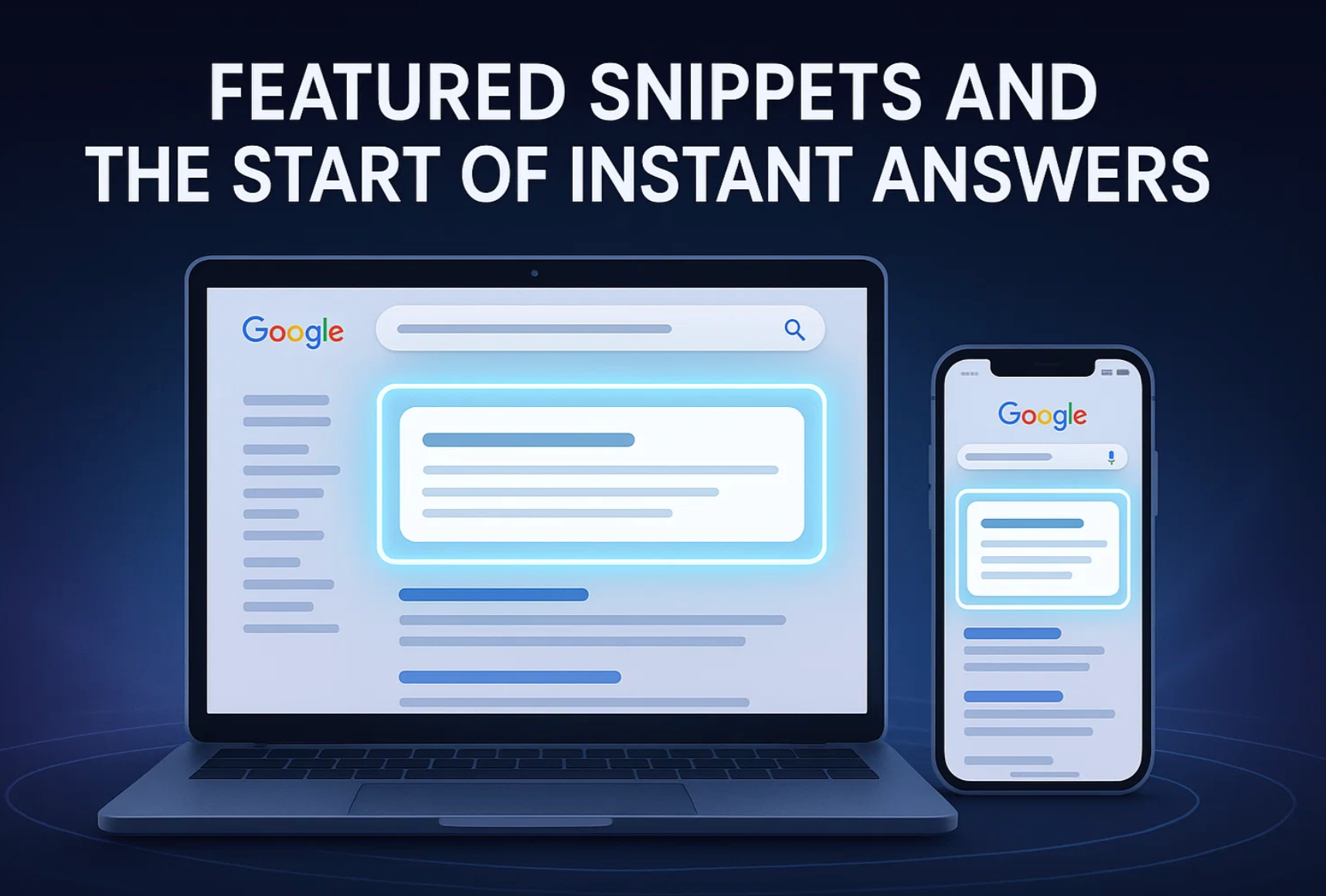
Featured Snippets were Google’s first major move toward zero-click results. They appeared above all other organic listings and introduced what many called “position zero.” That visibility helped brands dominate search real estate and capture attention before users even scrolled.
The format worked well for users and SEO teams alike. Snippets drew traffic, improved click-through rates, and taught marketers how to structure content for extraction.
Clear definitions, step-by-step lists, and simple comparison tables performed best because Google could read and display them easily.
But Featured Snippets also set a new expectation. Searchers learned to expect answers immediately. Over time, these snippets became the foundation for voice search, where assistants like Alexa or Google Home read your content out loud, without crediting your brand.
The Evolution to AI Overviews
AI Overviews build on that foundation but introduce something far more advanced. Instead of pulling direct text from a single page, AI synthesizes information from multiple trusted sources. It creates an original summary, written by a model trained to understand meaning rather than copy it.
Google’s AI Overviews now appear in roughly 74% of informational searches, including queries such as “how to improve page load speed for SEO” or “latest Google algorithm updates.” These queries require context, not just a definition. AI combines insights from several authoritative pages and presents one cohesive response.
The outcome is a better experience for searchers but a new challenge for brands. Traffic that once flowed to websites now stays within Google’s ecosystem.
Unlike Featured Snippets that linked directly to the source, AI Overviews often show minimal attribution. Even when your site is listed as a reference, that small citation delivers a fraction of the traffic you would receive from a snippet.
How to Build Visibility in Zero-Click Environments?
Winning attention inside AI-driven results requires a structured, intentional approach. Content must be designed for both human readers and AI systems that extract or synthesize meaning.
To improve discoverability:
- Present information in short, factual paragraphs.
- Use schema markup for FAQs, how-to steps, and product data.
- Write in a neutral tone that favors clarity over style.
- Keep facts updated, and cite credible sources for verification.
- Strengthen brand authority through transparent authorship and expertise signals.
A guide that explains a process clearly, such as optimizing images for faster load times, can still be quoted in an AI Overview, even if users never click through.
Voice, Visual, and Multimodal Search: Preparing for What’s Next
Users now speak, snap pictures, and combine devices to search. Search engines are adapting fast to support these behaviors. Visual searches have grown by 65% year over year, and voice queries are increasing across all platforms.
This change is shaping the future of search engine optimization. Brands that adapt to voice, visual, and multimodal inputs stay visible as search technology evolves.
Voice Search Optimization
Voice search is now a normal part of daily life. Around one in four internet users relies on voice assistants to get quick answers. Voice queries are longer and sound like natural conversations. A user might ask, “What are the best running shoes for flat feet?” instead of typing “best running shoes 2025.”
To appear in these results, content needs to sound human. Write in a clear, conversational tone that matches how people ask questions. Add FAQ sections and structured data so AI systems can extract direct answers.
Most voice searches happen on mobile devices, so fast and responsive pages are essential. A few seconds of delay can cause your content to drop out of voice results. Here are some key elements:
- Conversational Language: Use natural, full-sentence phrases that reflect how people speak, not how they type.
- Question-Based Content: Create content that answers “what,” “how,” “where,” and “why” queries directly.
- Structured Data: Add FAQ and HowTo schema so AI assistants can surface your content in voice results.
- Mobile Performance: Optimize for fast loading and mobile-first design to support device-based voice searches.
- Local Targeting: Many voice queries include local intent. Keep your business information updated for “near me” searches.
Visual Search Optimization
Visual search allows users to upload or capture images to find information. Google Lens and Pinterest Lens now process billions of image-based searches every month.
Optimizing for visual discovery means every image on your site should be descriptive and structured. Use detailed file names, clear alt text, and relevant captions so search engines can identify what the image represents.
For example, an image titled “black leather backpack with silver zippers” helps search algorithms understand the product. Supporting visuals with short text adds context and improves clarity.
Visual search matters most for e-commerce, travel, and lifestyle brands. When someone takes a picture of a product and asks, “Find this near me,” only optimized content appears in the results. Here are the key elements of visual search optimization:
- Descriptive File Names: Name each image based on what it shows, not a generic upload code.
- Alt Text and Captions: Use meaningful alt text and captions that describe the image’s content and context.
- Structured Markup: Apply schema for products, reviews, or locations to help search engines interpret images correctly.
- Image Context: Include short supporting text that explains what the visual represents.
- Page Speed and Quality: Compress images for faster load times without losing clarity.
Search engines prioritize pages that balance quality and performance.
Multimodal Search Optimization
Multimodal search combines text, images, and voice into one query. A person might upload a photo of a jacket and say, “Show me similar styles under one hundred dollars.” Search engines read both the image and the voice command to give the right results.
AI and machine learning power this interaction. These systems understand meaning across formats to deliver accurate and useful responses. Google Multisearch already supports this type of combined query, showing how search is becoming more dynamic.
To stay visible, your content should align text, visuals, and metadata in one consistent format. Here are some key elements for multimodal search:
- Conversational Keywords: Use full, natural phrases that match how people speak.
- Structured Data (Schema): Add FAQ, HowTo, and Product schema to make your content easier for AI to interpret.
- Local Optimization: Voice and multimodal searches often include local intent. Keep your Google Business Profile and local details accurate.
- Mobile-Friendly Design: Most multimodal searches happen on mobile devices. Fast loading and simple layouts improve ranking and experience.
- AI-Driven Personalization: Create content that matches user intent, not just keywords. AI favors content that provides clear, verified answers.
Practical AI SEO Use Cases with Sintra.ai
Integrating AI into daily SEO work is about removing repetitive SEO tasks so humans can focus on strategy. Sintra.ai offers a connected system of powered seo tools that manage research, writing, audits, and analytics in one workspace.
Here are real-world examples of how SEO teams use Sintra's AI team to stay productive and competitive in the era of AI and the future of seo.
Seomi – Your AI SEO Expert
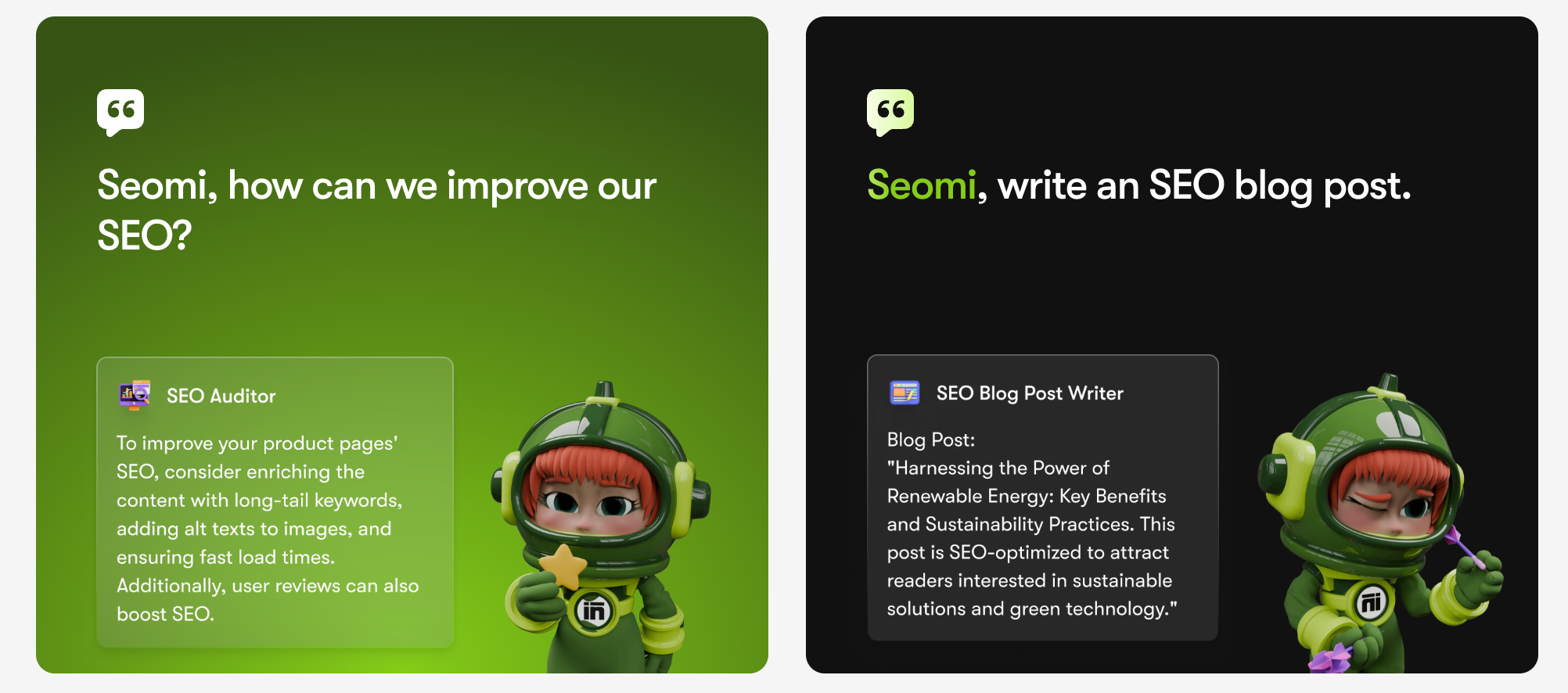
Seomi, your AI SEO agent automates the time-consuming parts of search engine optimization. It performs audits, detects issues, and suggests fixes that improve visibility across search engine results pages. You can use it to:
- Run on-page audits and find missing schema, alt text, or broken links.
- Analyze search rankings, performance data, and keyword gaps in real time.
- Recommend quick actions that improve SEO optimization and content structure.
- Check internal linking and crawlability to maintain a strong technical foundation.
- Monitor page updates to ensure content remains current and compliant.
Example
A digital agency uses Seomi to audit 50 blog posts in minutes, flagging technical issues that once took hours to find manually.
Penn – AI Copywriter for Content Teams
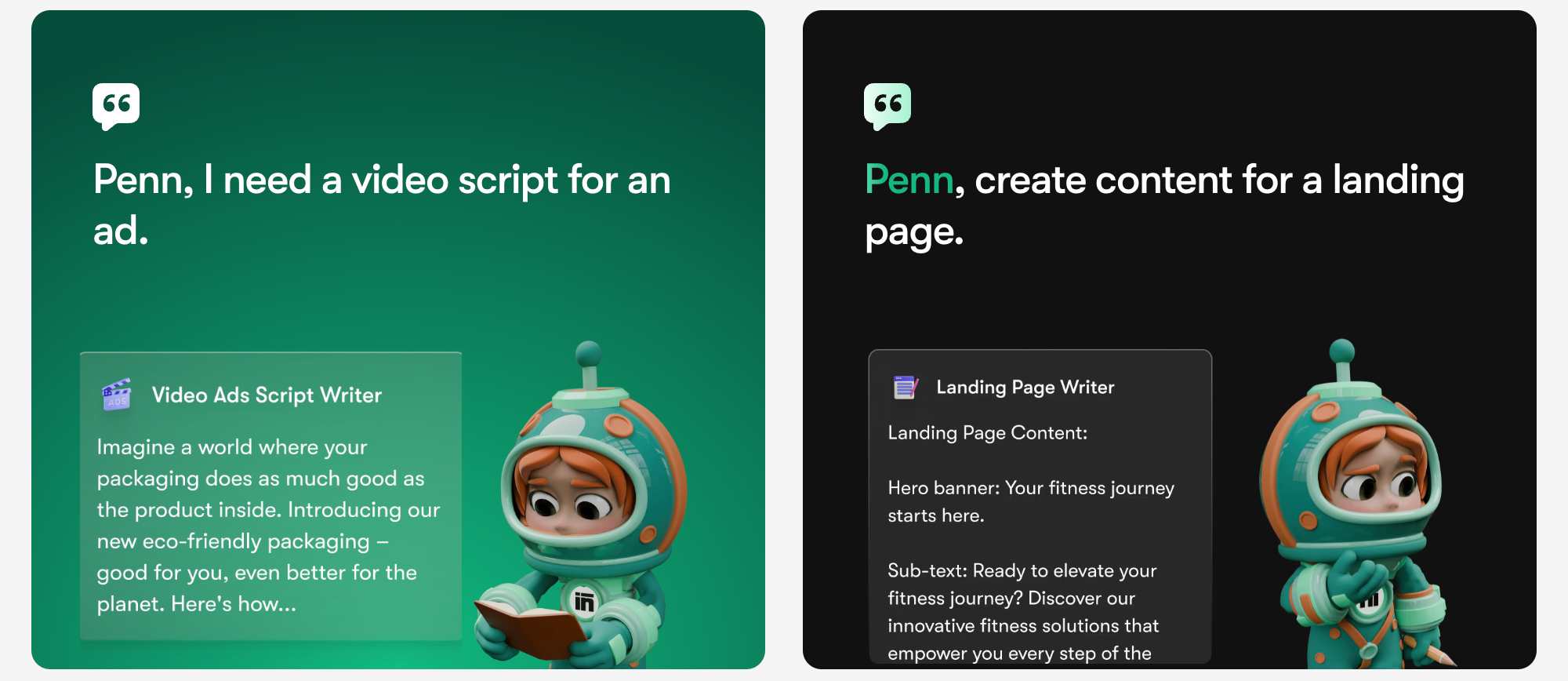
Penn is your AI copywriter designed for faster, higher-quality content creation. It turns briefs into ready-to-edit drafts while keeping your tone, brand voice, and user intent intact. What it does:
- Create first drafts for blogs, landing pages, and web copy.
- Add SEO-friendly headings, meta descriptions, and internal links automatically.
- Repurpose old articles into new formats, such as guides or case studies.
- Maintain tone consistency across multiple pages or campaigns.
Example
A SaaS brand uses Penn to create 10 optimized blog drafts weekly; editors then refine insights, saving 70% of writing time.
Dexter – AI Data Analyst

Dexter turns analytics data into actionable insights that improve performance and guide strategy. Instead of spending hours inside dashboards, your team gets simple recommendations for the next move. Here’s what it does:
- Discover keyword clusters and intent variations faster than manual research.
- Identify content gaps and emerging search trends.
- Measure performance by page, keyword, or topic group.
- Build reports that show growth opportunities across your domain.
Example
A B2B startup uses Dexter to predict which pages risk losing traffic after Google’s next update, allowing proactive optimization.
Brain AI and Power-Ups – Scale with Control
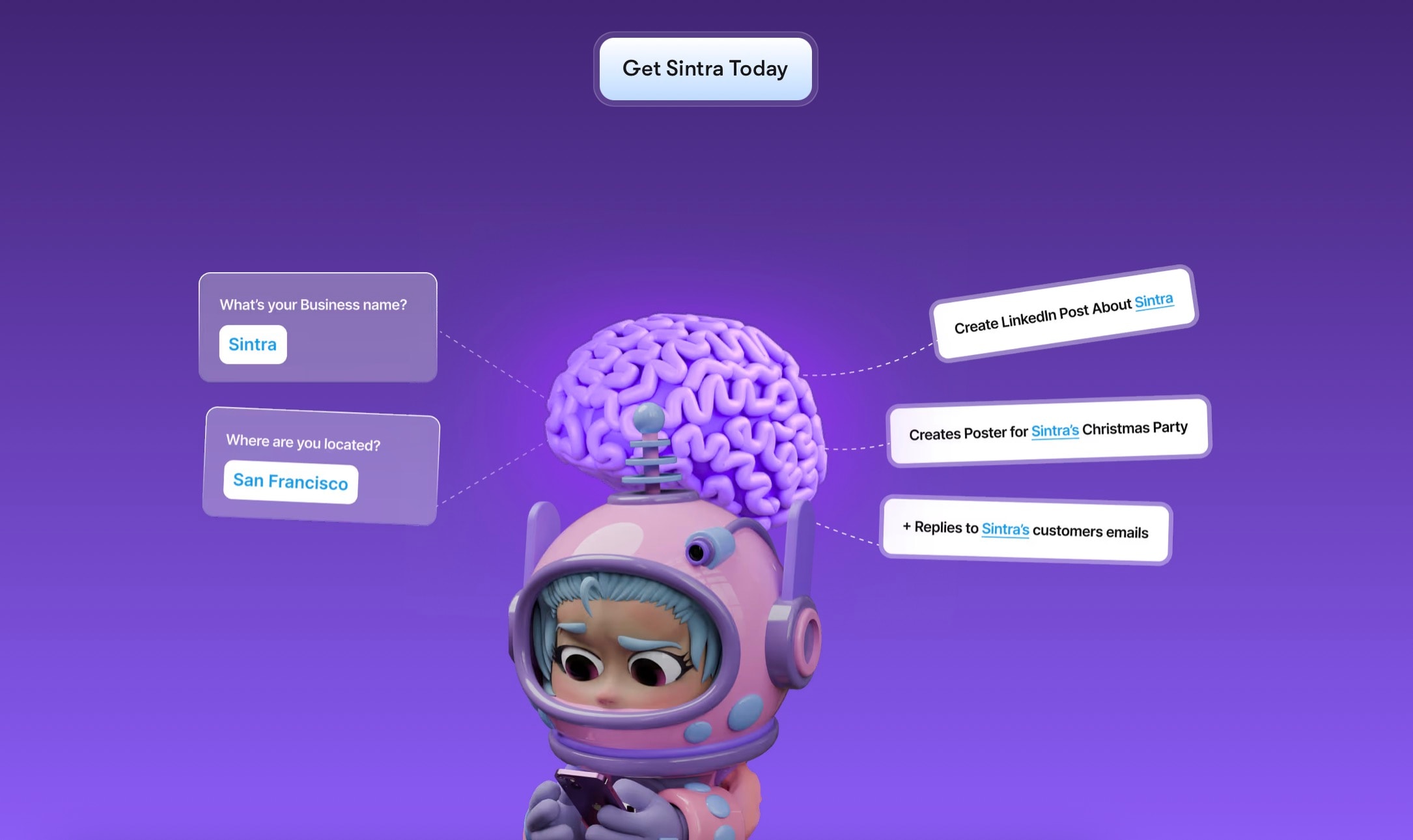
Brain AI keeps every output aligned with your brand identity. It learns tone, vocabulary, and style from your existing materials. Power-Ups add automation for audits, outreach, and workflow triggers across your tools. What it does:
- Review articles for consistent brand voice and writing style.
- Verify data accuracy and remove conflicting statements.
- Build knowledge bases that help AI helpers learn your brand language.
- Standardize content for multi-author teams or client accounts.
Example
A marketing team uses Brain AI to enforce brand tone across multiple writers, while Power-Ups automate SEO alerts and status updates.
Ethical Considerations and Quality Control in AI-Driven SEO
AI has made search engine optimization faster and more scalable, but it also introduces new ethical and quality risks. Without oversight, automation can lead to misinformation, repetitive output, and brand reputation issues.
To sustain visibility and trust, teams must combine artificial intelligence with strong human review and publishing standards.
Avoiding AI Hallucinations and Inaccuracies
AI models sometimes produce false or outdated information. These errors, known as hallucinations, can quickly spread if not verified. When inaccurate claims appear in content, they harm credibility and lower visibility across search engine results pages.
To prevent it:
- Always fact-check AI-assisted content before it goes live.
- Link to verified, up-to-date data and real-world examples.
- Use AI tools to detect missing citations or factual inconsistencies.
- Keep subject-matter experts involved in every review.
AI is useful for speed, but humans ensure truth.
Maintaining Trust and Compliance
Trust signals now define strong SEO strategies. Search systems such as Google Gemini and Bing AI prioritize content that demonstrates accuracy, transparency, and accountability.
Some best practices include:
- Add author names and revision dates to all pages.
- Use structured data to mark authorship and content updates.
- Disclose when AI tools are part of your workflow.
- Protect sensitive data and follow copyright and privacy laws.
Being transparent about AI usage improves trust with readers and aligns with compliance standards.
Managing Bias and Fair Representation
AI models learn from existing data, which may include bias. Unchecked bias can lead to unfair or inaccurate results, especially when your content covers diverse topics or audiences.
To reduce bias:
- Diversify data sources and references.
- Run AI-generated drafts through multiple reviewers with different backgrounds.
- Avoid phrasing or examples that generalize or misrepresent audiences.
- Use tone and language guidelines that promote inclusion.
Balanced input leads to balanced content, which search engines increasingly reward.
Balancing Automation with Human Oversight
Automation improves scale but can weaken tone and context if left unchecked. Human editors must ensure that every AI-generated piece reflects your brand voice and adds real value.
Here’s a recommended workflow:
- Use AI for research, clustering, and first drafts.
- Have experts refine key sections with insights or data.
- Add an editorial layer to check readability and accuracy.
- Audit published content quarterly for updates and consistency.
AI accelerates production, but humans maintain meaning.
Setting Guardrails for Ethical AI SEO
Responsible use of AI in SEO optimization requires clear internal rules. Guardrails prevent compliance issues, protect user data, and preserve content integrity.
Create governance policies that define:
- Which tasks AI can and cannot perform.
- Data handling, storage, and access rights.
- Licensing terms for AI-generated assets.
- Frequency of content and model reviews.
These controls ensure that AI supports long-term growth instead of introducing unseen risks.
Ensuring Long-Term Quality Control
AI-generated content ages faster than human-written work because models rely on older training data. Regular review cycles prevent outdated claims from harming performance or trust.
To sustain quality:
- Refresh content quarterly with new data and examples.
- Recheck schema, citations, and outbound links.
- Track audience feedback to detect tone or accuracy issues early.
Ongoing monitoring keeps your AI-powered SEO strategies reliable as algorithms evolve.
Action Plan: Future-Proofing Your SEO with AI
The search landscape will keep evolving. AI-driven discovery, AI search, and AI-powered tools are already reshaping how brands, and the teams behind them. If you're also looking at how to hire for this new era, our guide on AI recruiter agents is worth a read. The goal now isn’t to chase every update; it’s to build a system that adapts automatically.
This action plan helps you align people, processes, and technology for long-term success:
Step 1: Redefine What Success Looks Like
Traditional search results focused on rankings and traffic. In AI-first search, visibility happens inside generated answers. New success metrics:
- Mentions or citations in AI search results.
- Branded visibility within search engine results pages.
- Engagement metrics from conversational interfaces.
- Quality signals such as freshness, authority, and intent match.
Step 2: Integrate AI Across Your Workflow
Adoption should start small before scaling. Use tools where automation adds clear value.
Example workflow:
- Research: Use AI to find gaps, trends, and user intent shifts.
- Content creation: Generate structured drafts, then refine tone and credibility.
- Technical SEO: Automate crawl checks, broken link alerts, and schema updates.
- Analysis: Apply predictive analytics to forecast which pages need refreshes.
When your AI stack and team work together, you gain agility, not dependency.
Step 3: Maintain Human Oversight
Even with automation, human judgment defines quality and authenticity.cAI can process data fast, but people understand context, tone, and brand identity. Best practices for oversight include:
- Keep editors, strategists, and subject-matter experts involved in review stages.
- Validate AI-generated insights against trusted data and market knowledge.
- Train your team to write effective prompts and apply critical review skills.
- Ensure compliance with internal and legal content standards.
AI accelerates delivery. People protect trust. Maintaining human oversight keeps automation accountable and your brand credible.
Step 4: Build a Scalable Governance Framework
Define internal policies for how AI contributes to your seo strategies. Include rules for:
- Review cadence (weekly audits of AI-assisted content).
- Data security and prompt management.
- Tone and compliance standards.
- Approved tool usage (Seomi, Penn, Dexter, Brain AI).
Governance makes sure that as search engines evolve, your workflows stay compliant and consistent.
Step 5: Stay Measurable and Iterative
The future of seo isn’t static. Use dashboards that blend traditional KPIs with new ones for AI-powered search engines. Track:
- Average citation frequency in AI summaries.
- Time between refresh and visibility gain.
- Growth in brand queries and assisted conversions.
Step 6: Future-Proof Your Stack with Sintra.ai
Integrate Sintra.ai as your foundation for automation and insight.
- Seomi handles audits and on-page optimization.
- Penn speeds up high-quality content production.
- Dexter turns analytics into next steps.
- Brain AI keeps brand voice consistent across teams.
Together, they create an adaptive workflow that scales with every change in search engines and AI technology.
Ready to Get Started with AI-Enhanced SEO?
AI-powered platforms like Google Gemini, AI Overviews, and Bing Copilot are reshaping how users find and consume information. SEO teams now need to combine automation with human strategy to stay visible and competitive.
AI helps SEO professionals work smarter. It speeds up audits, improves content quality, and provides real-time insights into search performance. Marketers who adopt AI tools early will understand trends faster and create content that aligns with what users actually want to see.
Sintra AI helps you adapt to this new search environment. Its AI helpers, Seomi, Penn, and Dexter, work together like an SEO team that never stops. Seomi manages audits and performance checks. Penn creates optimized, ready-to-rank content. Dexter analyzes data and identifies opportunities to grow.
With Sintra AI, you get a single platform that automates key SEO tasks while keeping your team in control. The result is consistent visibility, stronger rankings, and smarter workflows powered by real insights.
FAQs
Will AI completely replace SEO in the future?
No. AI will automate repetitive SEO tasks like audits, clustering, and tracking, but human strategy and creativity remain essential. AI can process data fast, but people add judgment, originality, and context that automation cannot replace.
How does AI change the role of SEO professionals?
SEO professionals now guide AI systems, interpret insights, and design strategies. Their role has shifted from doing manual work to managing automation intelligently. This change allows them to focus on analysis, storytelling, and building brand authority.
Can AI tools like ChatGPT replace SEO writers?
AI can draft and structure content, but it cannot fully capture human tone or insight. Editors and strategists refine these drafts to match brand voice, verify facts, and add expertise. The best results come from humans and AI working together.
How can businesses use AI for SEO without hurting rankings?
Use AI responsibly and always review before publishing. Fact-check every output, update content often, and maintain your brand tone. Google rewards content that is accurate, transparent, and useful, not content that is fully automated.
What skills will SEO professionals need in an AI-driven future?
SEO professionals must understand AI tools, prompt design, and data interpretation. They should combine analytics with strategic thinking and clear communication. The strongest professionals will use AI for scale while keeping human insight in every decision.
Is Sintra AI a replacement for SEO agencies?
No. Sintra AI complements agencies by automating research, writing, and reporting so teams can focus on strategy and growth. Its AI helpers, Seomi, Penn, and Dexter, act like a complete SEO team that supports audits, content creation, and analytics. This makes Sintra AI a partner, not a replacement, for professionals who want smarter SEO workflows.
Related articles