


AI in eCommerce: Best Use Cases, Tools & Benefits (2026 Guide)

Skip ahead
Imagine this: you own a digital store, and a visitor uploads a picture of a vase she found on Pinterest. Within seconds, your system identifies a similar vase in your store and even suggests a matching placemat and planter. The visitor adds everything to her cart and checks out. Meanwhile, you’re swimming laps at the community pool.
This isn’t some far-off futuristic scenario—it’s happening right now. AI in ecommerce has completely transformed how businesses operate. No surprise, then, that 80% of companies are already using AI systems in at least one business function.
With AI working tirelessly behind the scenes, learning, predicting, reasoning, and making decisions. Your business operations practically run themselves. This gives you the freedom to focus on what matters most: driving revenue and growing your business.
Let’s dive deeper into how AI technologies are shaping ecommerce and explore the best tools you can use to take advantage of this powerful trend.
3 Types of AI Technologies Transforming eCommerce
There are three types of AI tech. Each contributes to the constant growth of artificial intelligence in ecommerce companies.
Natural Language Processing
NLP enables computers to understand human language, analyze its context, and generate relevant responses. The best part? It all happens in real-time. This allows digital businesses to dramatically improve customer service and user experience.
In ecommerce, Natural Language Processing AI models can:
- Power Chatbots & AI Assistants – Instantly answer customer queries, guide them through the buying process, and even recommend products.
- Enhance Visual & Voice Search – Understand user intent and deliver accurate, relevant search results.
- Analyze Reviews & Feedback – Gain customer insights from historical data and reviews to improve products and services proactively.
- Generate Product Descriptions – Create SEO-friendly, engaging product descriptions at scale, saving time and resources.
Machine Learning
Machine Learning systems use AI algorithms that learn from data. They improve automatically over time without needing explicit programming. This allows ecommerce businesses to make smarter and better-informed decisions while ensuring a highly personalized online shopping experience.
Machine Learning algorithms enable businesses to:
- Deliver Personalized Recommendations – Analyze browsing history, purchase patterns, and customer behavior and recommend products shoppers are most likely to buy.
- Implement Dynamic Pricing – Adjust prices in real time by considering demand, competitor pricing, and inventory levels to boost sales and profits.
- Detect Fraud – Identify unusual or suspicious activity by learning from past behavior, protecting both buyers and sellers from potential scams.
- Run Targeted Marketing Campaigns – Segment customers based on demographics, interests, and spending habits. They then help launch campaigns that drive higher customer engagement and conversions.
Deep Learning
Deep Learning is a subset of Machine Learning that uses neural networks to process big data and identify complex patterns. It works like a human brain. When Deep Learning is used in ecommerce, it amplifies the benefits of Machine Learning. It makes it possible to analyze unstructured data such as images, videos, and audio, and gain even deeper insights.
Deep Learning AI models can power:
- Visual Search and Image Recognition – Let customers upload a photo and instantly find similar products, making online shopping faster and more intuitive.
- Hyper-Personalized Recommendations – Analyze purchase history and predict beyong what customers might buy. They predict when and why they might need a product or service. This eventually impacts conversion rates positively.
- Inventory Management – Analyze sales trends, customer behavior, and seasonality to forecast inventory demand. They highlight supply chain challenges with greater precision and avoid stockouts.
- Detect Frauds – Deep Learning tools can identify fraud patterns more effectively than traditional Machine Learning systems.
How to use AI in eCommerce: 9 Best Use Cases
AI is being used in different parts of ecommerce operations, from helping customers find the products they're looking for to retargeting previous buyers. Let's look at 9 practical applications of AI integration in ecommerce businesses.
Smart Product Recommendations
AI has completely redefined the customer experience. The proof is clear: 73% of customers say companies now treat them like individuals rather than just another number. One of the biggest drivers of this shift is personalized product recommendations.
By analyzing customer data such as past purchases, browsing patterns, and shopping timelines, AI can predict what a customer might be looking for at any given moment. It then delivers spot-on recommendations that align with their unique shopping habits.
These hyper-personalized experiences not only focus on customer feedback but also boost conversions and foster lasting brand loyalty.
Generative AI for Content Creation
For example, a large retailer with thousands of SKUs can use a generative AI tool to automatically write product descriptions. The system is trained on product data, customer reviews, and SEO best practices. This enables it to generate accurate, engaging, and optimized descriptions for every item within minutes.
Similarly, businesses with limited social media budgets can use AI tools to create and schedule relevant marketing content across platforms. It maintains a strong online presence with minimal effort.
Pricing Optimization
There was a time when pricing was set manually based on extensive market research, buyer preferences, and competitor analysis. Today, AI has revolutionized this process with dynamic pricing.
AI adjusts product prices in real-time by analyzing customer behavior, demand surges, competitor prices, and inventory levels. This strategic integration of AI into pricing systems empowers businesses to adapt swiftly to changes in customer preferences and competitive conditions.
Best of all, it’s fully automated. Your pricing is continuously optimized, ensuring you get the best possible conversion rates and maximize profit margins without lifting a finger.
Chatbots and Virtual Assistants
The greatest asset of any business is its sales and service team, and thanks to AI, these “agents” are now available 24/7, across all time zones.
Chatbots and virtual assistants use conversational AI to understand customer sentiment and queries and automate responses in real time. They are fast, efficient, and save customers valuable time, which is why 80% of e-commerce companies now use AI for customer support.
With these tools, businesses can handle FAQs, resolve complex issues, assist with product discovery, and even enable visual and voice searches, all without needing human intervention. The seamless experiences created by AI not only boost buyer satisfaction. They also increase repeat purchases and improve retention rates over time.
Product Images
Another powerful use case of AI in e-commerce is product image design. While the technology is still evolving to generate perfectly accurate images every time. AI tools already help businesses significantly speed up their design process.
These tools can change product backgrounds, place products in different settings, make large edits in seconds, fine-tune image quality, and even inspire designers with fresh creative perspectives. This not only saves time but also ensures visually appealing product imagery that aligns perfectly with a brand's image.
Image Recognition
Here’s an AI application we’ve grown so used to that shopping without it now feels inconvenient: visual search.
AI in ecommerce allows customers to find products simply by uploading an image. The system then analyzes the image and suggests similar or matching products in seconds.
A great example is Pinterest, where users can instantly discover related products through AI-powered image recognition. This helps them find stores and items they might never have discovered on their own. Google Lens offers a similar experience, making it possible to search and shop using nothing but a photo.
Predictive Inventory Management
With AI-powered tools, retailers can track stock levels in real time using robots and image recognition systems. This ensures optimal inventory levels and timely restocking throughout the year.
Another powerful use case of AI in inventory management is its predictive capability. By analyzing past sales data, AI can forecast future demand with impressive accuracy. Combined with real-time insights from sensors and RFID tags, businesses can monitor what’s selling, where it’s sourced from, and where it’s headed.
These insights allow businesses to maintain just the right amount of stock at any given time. It helps prevent overstocking or stockouts and frees up valuable working capital for growth.
Fraud Detection and Prevention
The use of AI in e-commerce has made fraud detection and prevention easier than ever. Since the system is constantly analyzing customer data, it can spot anomalies in transactions in real time.
AI flags unusual activity immediately. Whether it’s high-value transfers, multiple transactions within minutes, or purchases from unusual locations. It then compares these anomalies with the customer’s typical behavior and historical patterns. This allows it to accurately detect and stop fraudulent activity before it causes harm.
AI Retargeting
AI-powered retargeting is one of the most effective tools in e-commerce today. While retargeting itself is an age-old marketing tactic, AI takes it to the next level by creating highly precise customer segments based on behavior, browsing history, and other data points.
Instead of showing ads to just anyone, AI carefully selects past visitors who are most likely to return to the site and complete a purchase. This way, businesses can personalize retargeting ads for maximum relevance and impact.
As a result, AI-driven retargeting campaigns are more focused, cost-effective, and significantly boost conversion rates.
Top AI Tools & Platforms for E-commerce Companies in 2026
1. Sintra AI for ecommerce

Sintra is a complete AI solution for ecommerce companies, offering a wide range of AI-powered tools through 12 virtual employees. Sintra’s helpers are designed to handle specialized tasks such as:
- Social media management
- Business data analysis
- Email marketing
- Recruitment
- SEO optimization
- Customer support
- Crafting business strategies
- Copywriting
- Creating sales strategies
- Virtual assistance
- Ecommerce business management
The best part is that all these AI employees share knowledge through Brain AI, ensuring consistency across outputs. Brain AI acts as a knowledge base where companies can upload brand data, documents, links, and files. The more data you provide, the better the helpers understand your business context.
With Sintra AI, ecommerce retailers can automate routine tasks like writing social media posts, addressing customer concerns, and running data analysis—saving valuable time that can be redirected toward strategic planning.
Top Features:
- 12 specialized AI agents for different business roles.
- Brain AI to ensure consistency and contextually relevant outputs
- Power-Ups to perform micro-tasks
- Multilingual support
- Seamless integration with ecommerce tools for streamlined workflows
2. Dynamic Yield for Personalized Shopping Experiences
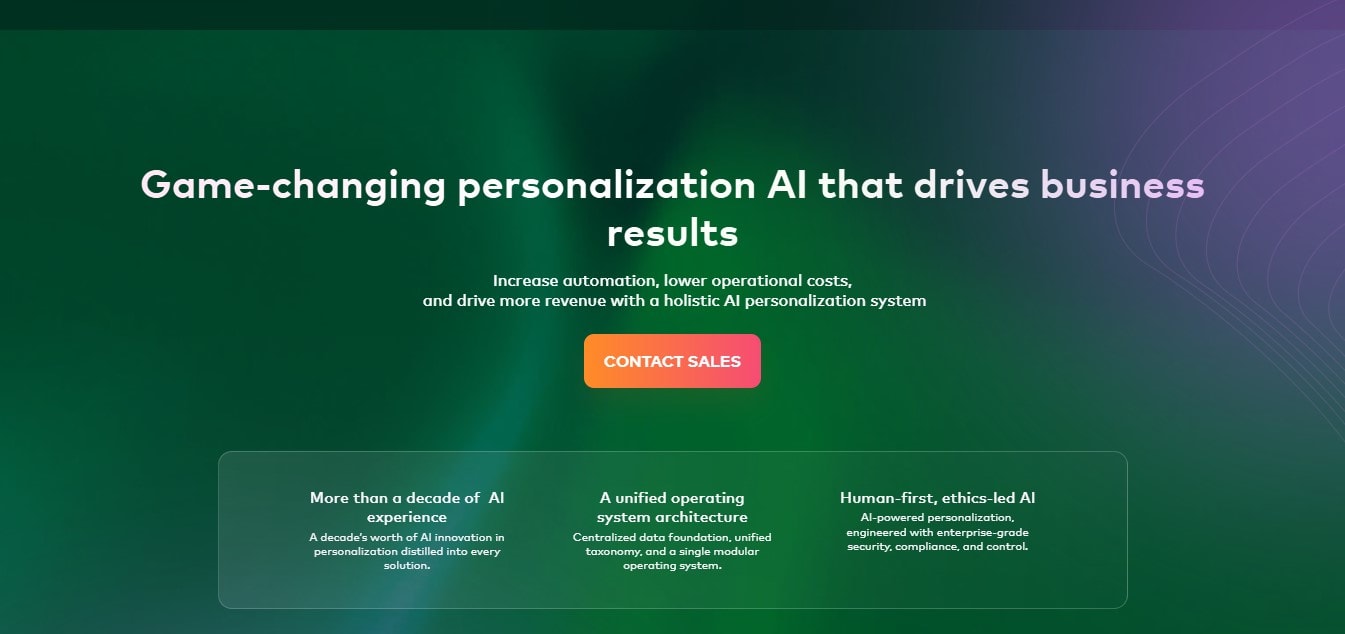
Dynamic Yield is an AI-powered platform designed to create personalized customer experiences across multiple digital channels, including web, mobile apps, email, and more.
It uses advanced AI algorithms to understand and predict customer behavior in real time. It then delivers tailored product recommendations, relevant content, and personalized offers that encourage conversions.
One standout feature is Shopping Muse, Dynamic Yield’s conversational AI tool, which acts like a personal shopping assistant. Using NLP, image recognition, and personalization algorithms, it responds to customer queries and learns their preferences.
The result is a highly customized shopping journey that makes customers feel valued, driving both engagement and conversions.
Top Features:
- AI-powered Experience OS for personalization
- Real-time audience segmentation
- Tracks real-time behavior to trigger personalized content
- Omni-channel personalization
- Customizes recommendations and content based on regions
- Shopping Muse chatbot that mimics in-store assistance
3. Jasper AI for Copywriting
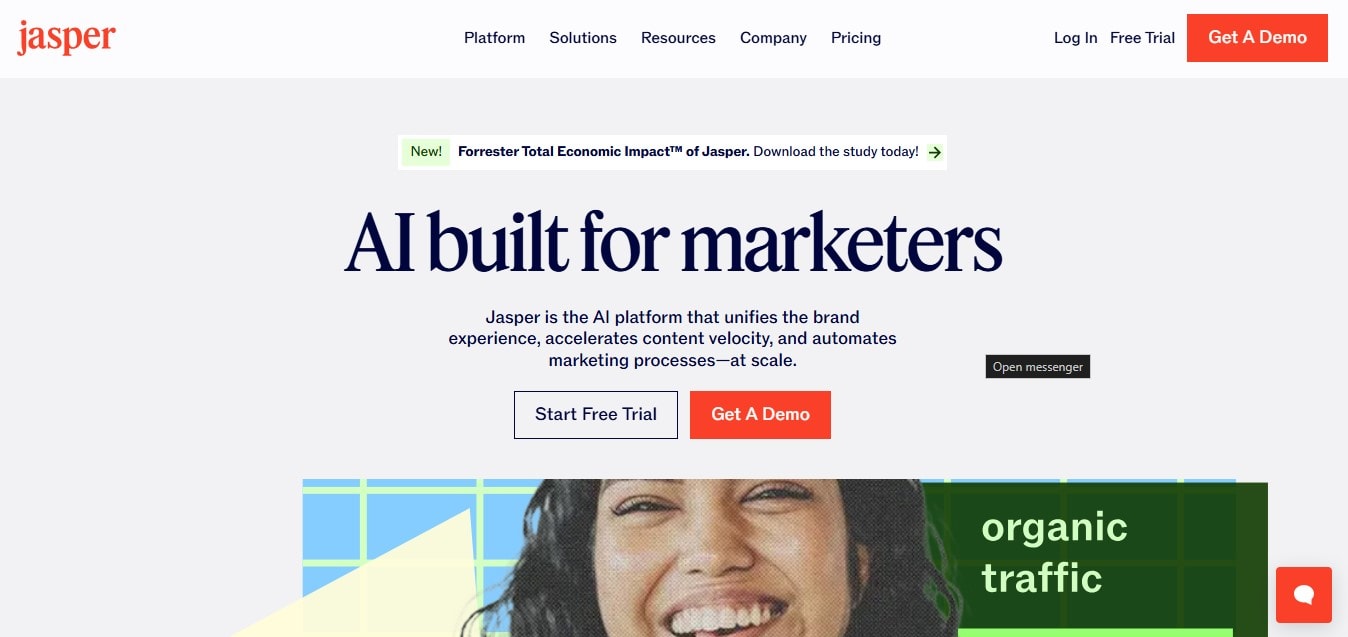
Jasper is an AI-powered ecommerce platform that generates and optimizes all types of content, ranging from product recommendations to blogs.
With Jasper's AI Brand Voice, businesses can generate content that aligns with their unique brand voice. This helps them infuse the company's tone and style into all generated content.
While the tool is excellent for various content needs, it's best known for its remarkable marketing copies. From catchy social media captions, persuasive web copy, to compelling emails, Jasper AI understands the different nuances of marketing channels and adjusts the content style accordingly.
Top Features:
- AI-powered content generation
- Aligns content with brand voice and style using Jasper Brand Voice
- Remembers data to ensure consistency
- Jasper Chat for interactive, engaging conversations
- Chrome extension for quick, on-the-go content creation
4. Yieldigo for Dynamic Pricing

Yieldigo is a cloud-based pricing solution for retailers, wholesalers, and ecommerce businesses. It uses AI to analyze data, simplify pricing decisions, deliver actionable insights, and prevent margin loss.
Using AI, Yieldigo studies customer behavior patterns and competitor activity to provide pricing strategies that maximize profitability. Users can also set pricing rules and constraints to ensure that all automated price changes align with the company’s overall strategy.
Top Features:
- Creates 'what-if' simulations for price changes
- Maintains pricing across different zones and territories
- Analyzes competitor prices for better positioning
- Keeps pricing consistent across related products
- Supports discounted price tiers for bulk purchases
5. Lyro by Tidio for Chatbots

Lyro is an advanced conversational AI chatbot by Tidio that delivers human-like interactions. It offers seamless customer support without the high cost of hiring additional staff.
Lyro can autonomously handle large volumes of customer interactions, reducing the need for human agents. With its multilingual capabilities, businesses can easily serve customers from different regions without language barriers.
Although designed for SMBs, Lyro scales effortlessly to meet growing customer demands without compromising response quality or speed.
Top Features:
- Real-time customer support through live chat
- Automated responses for common queries
- Manages communication across multiple channels
- Provides personalized interactions
- Seamless integration with ecommerce platforms
6. Midjourney for Creating Marketing Images

Midjourney is an AI-powered platform that generates original, high-quality images. It’s especially useful for creating lifelike product renderings, allowing customers to view items up close and from multiple angles.
The platform gives creators extensive control over imagery with advanced customization options. This way ecommerce businesses can maintain brand consistency across all visual content.
One of Midjourney’s biggest advantages is its speed and efficiency. It dramatically reduces the time and cost compared to traditional photography or design processes. Hence, SMBs can scale their visual content effortlessly with this AI tool.
Top Features:
- Text-to-image generation
- Style customization (realism, surrealism, photorealism, etc.)
- Advanced prompt parameters
- High resolution and image quality
- Improved privacy for higher-tier users
7. Zoho for Inventory Management
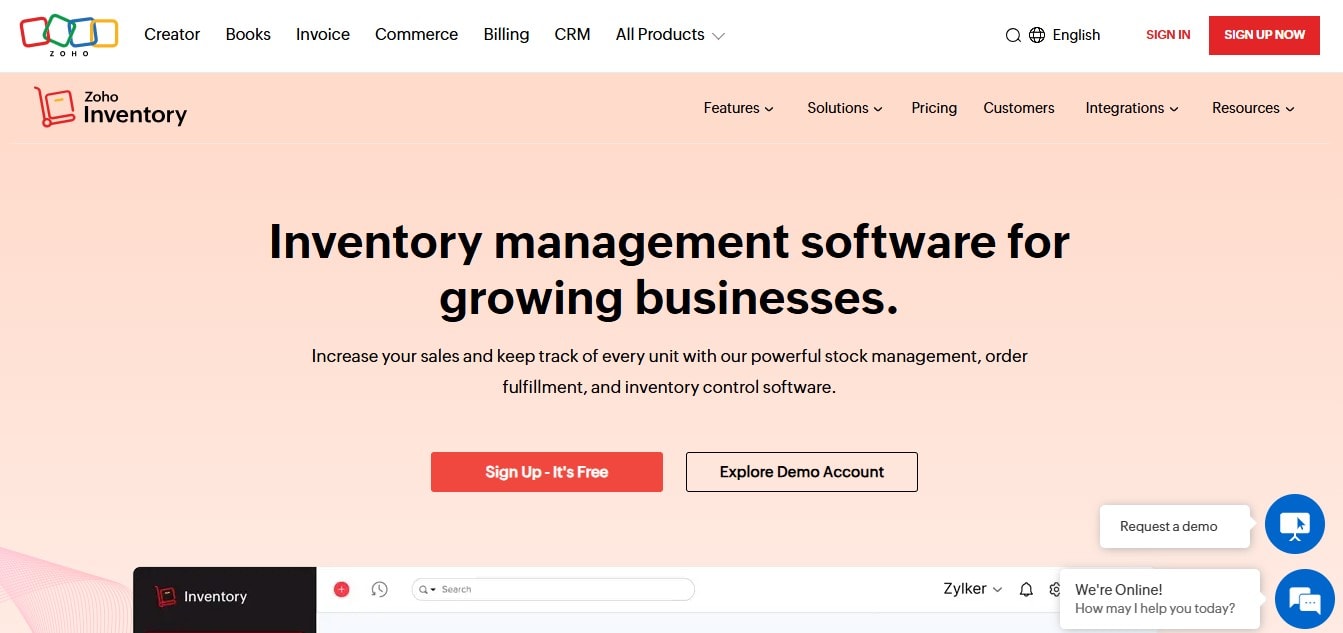
Zoho is a comprehensive software suite with multiple tools, including Zoho Inventory, Zoho CRM, and a helpdesk system to assist different business functions.
Zoho Inventory is an AI-powered inventory management tool that caters to SMBs. It provides effective tools for inventory tracking, order management, and warehouse oversight.
With Zoho Inventory, businesses can sync stock and orders across channels and prevent overselling or stockouts for maximum customer satisfaction. While it works well for small businesses, the tool is capable of supporting growing order volumes.
Top Features:
- Real-time stock tracking using barcode and RFID technology
- Gets real-time shipping costs from global carriers
- Supports multichannel selling
- Warehouse management
- Consolidates and tracks sales and purchase orders
8. Adroll for Retargeting
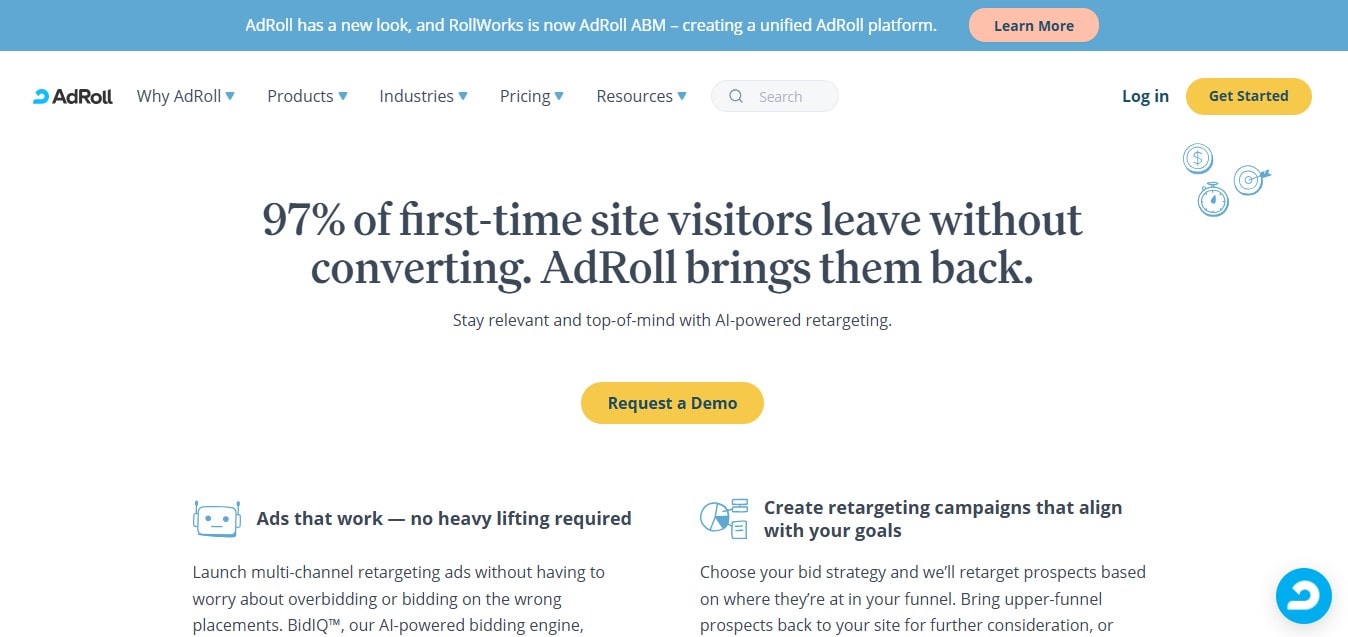
AdRoll is a leading advertising platform that offers features like retargeting ads, brand awareness campaigns, email marketing, and customer privacy protection.
Its versatile tools help businesses reconnect with customers by delivering personalized content to users who have previously visited their site.
AdRoll takes a multi-channel approach, using social media retargeting, email retargeting, and abandoned cart recovery across multiple platforms. This makes Adroll a powerful partner for driving conversions and revenue growth.
Top Features:
- Personalized content delivery to re-engage potential customers
- Audience segmentation and marketing automation
- Integrations with major ecommerce platforms like Shopify Plus, Wix, and WooCommerce
- Cross-channel performance dashboard
- Real-time analysis and reporting
Key Benefits of Implementing AI in Ecommerce Businesses
AI has become an integral part of ecommerce businesses today, as it improves both internal business operations and the customer experience.
Enhanced Customer Satisfaction
Customer satisfaction is at the heart of every successful business, and recent studies show that 43% of consumers abandon a brand after just one poor experience.
The good news? AI tools help businesses keep online shoppers engaged and satisfied across every touchpoint. From personalized recommendations and virtual shopping assistance to seamless checkout experiences, AI enhances every stage of the purchase process.
AI Chatbots and VAs are available 24/7, delivering personalized interactions and proactive support whenever customers need it. This not only improves the overall customer journey but also builds trust and encourages repeat purchases — a key driver of long-term loyalty.
Real-Time Decision-Making
One of the biggest advantages of using AI in ecommerce is its ability to process real-time data and turn it into actionable insights. With continuous data analysis, businesses can make smarter strategic decisions about operations, supply chain management, marketing campaigns, and customer service.
AI’s powerful predictive capabilities also help business owners with demand forecasting. It factors in sales patterns, seasonality, promotions, and even external factors like local events, ensuring they stay ahead of market trends.
Improved Sales
AI tools can optimize landing pages, blogs, product descriptions, and more, making every piece of content more effective. They also personalize customer experiences based on behavior and preferences, significantly boosting the chances of conversion.
When combined with dynamic pricing, smart stock management, and automation of repetitive tasks, AI frees up both time and working capital. This allows teams to focus on what really matters: driving revenue growth.
Reduced Costs
AI helps reduce staffing and overhead costs by automating routine, repetitive tasks. From industry research and stock management to data analysis, content creation, and customer service, AI tools have proven to be a faster and more cost-effective alternative to manual work.
AI is not only quicker and more efficient but also less prone to errors. By automating everyday tasks, businesses can reallocate budgets and resources to higher-value initiatives that drive growth and innovation.
Future AI Trends in eCommerce Businesses
AI in e-commerce is evolving at lightning speed, with new tools and technologies reshaping how businesses operate every year. As a business owner, staying ahead of these trends is key to outpacing the competition and driving long-term growth.
Here are some emerging AI trends you should be ready to adopt:
- AI-Enabled Shopping Experiences:
AI has already revolutionized personalization, but the future will take it further with deep learning algorithms. Expect AI to optimize website layouts, generate smarter search terms, and analyze data to deliver hyper-personalized recommendations that feel almost tailor-made. - Agentic AI:
This next generation of AI will take conversations to a whole new level, mimicking human-like interactions and building stronger relationships. In e-commerce, Agentic AI won’t just answer questions; it will act like a personal shopping assistant. It will offer valuable insights and suggestions as if you were talking to a real store associate. - Voice-Powered Checkout:
AI-powered tools will make hands-free shopping the norm. Smart speakers and displays will allow shoppers to make purchases, re-orders, and renew subscriptions simply by speaking. It will eliminate the need to navigate traditional e-commerce interfaces. - Auto-Generated Content:
Generative AI will continue to get smarter and more precise. It will automate repetitive tasks like writing product titles, descriptions, and category pages, creating social media ads, drafting blog posts, and personalizing marketing emails at scale, all with minimal human input.
Key Takeaways
AI has undoubtedly revolutionized ecommerce, elevating it to levels once thought impossible. It hasn’t just improved operations; it has given business owners a clear vision of what the future of ecommerce can look like.
While the idea of AI replacing human staff may seem alarming, it’s crucial to remember that machines cannot replace human creativity, strategy, or emotional intelligence. Critical thinking and innovation will always require a human touch, and AI is only here to enhance your efforts, not replace them.
FAQs
How is AI changing eCommerce?
AI is changing eCommerce by making online stores more personalized, automated, and efficient. It helps businesses recommend the right products, respond to customers instantly, optimize pricing, and manage inventory in real time, improving both customer experience and profitability.
How is AI used in eCommerce?
AI is used in eCommerce for product recommendations, chatbots and virtual assistants, dynamic pricing, content creation, fraud detection, inventory forecasting, visual search, and targeted marketing. These systems analyze customer behavior and data to support faster and smarter decisions.
Will AI take over eCommerce?
No. AI supports eCommerce businesses but does not replace them. It automates repetitive tasks and improves decision-making, while humans still handle strategy, creativity, and brand direction. AI works best as a tool that enhances human teams, not replaces them.
Related articles

Want a mystery discount on your order?

PlayOS, Inc.
All rights reserved