How to Automate Lead Generation with AI in 5 Steps

Table of Contents

Quick Answer: How to Automate Lead Generation with AI
To automate lead generation with AI, start by defining your Ideal Customer Profile (ICP), so your system knows exactly who to target. Then use AI tools to discover and enrich leads at scale.
From there, AI handles personalized outreach across email and social channels, qualifies prospects based on behavior and engagement, and runs follow-up sequences automatically. The result is a pipeline that keeps moving without needing manual effort at every step.
80% of sales require at least five follow-ups, yet 44% of sales reps give up after just one attempt. Manual lead generation burns time fast. Researching prospects, copying data between tools, writing outreach emails, and keeping up with follow-ups can easily take over the entire day before any real selling even starts.
AI changes that. It can automatically find leads, enrich contact data, personalize outreach, qualify prospects based on behavior, and manage follow-up sequences without constant manual work. Instead of pushing every lead through the pipeline yourself, the system keeps running in the background.
This guide is for solopreneurs, startup founders, and small marketing teams that want a practical lead generation system, not just another AI tool recommendation. We’ll break down five clear steps to build an AI-powered lead generation workflow and show how Sintra AI’s team fits into each stage of the process.
What Is AI Lead Generation Automation?
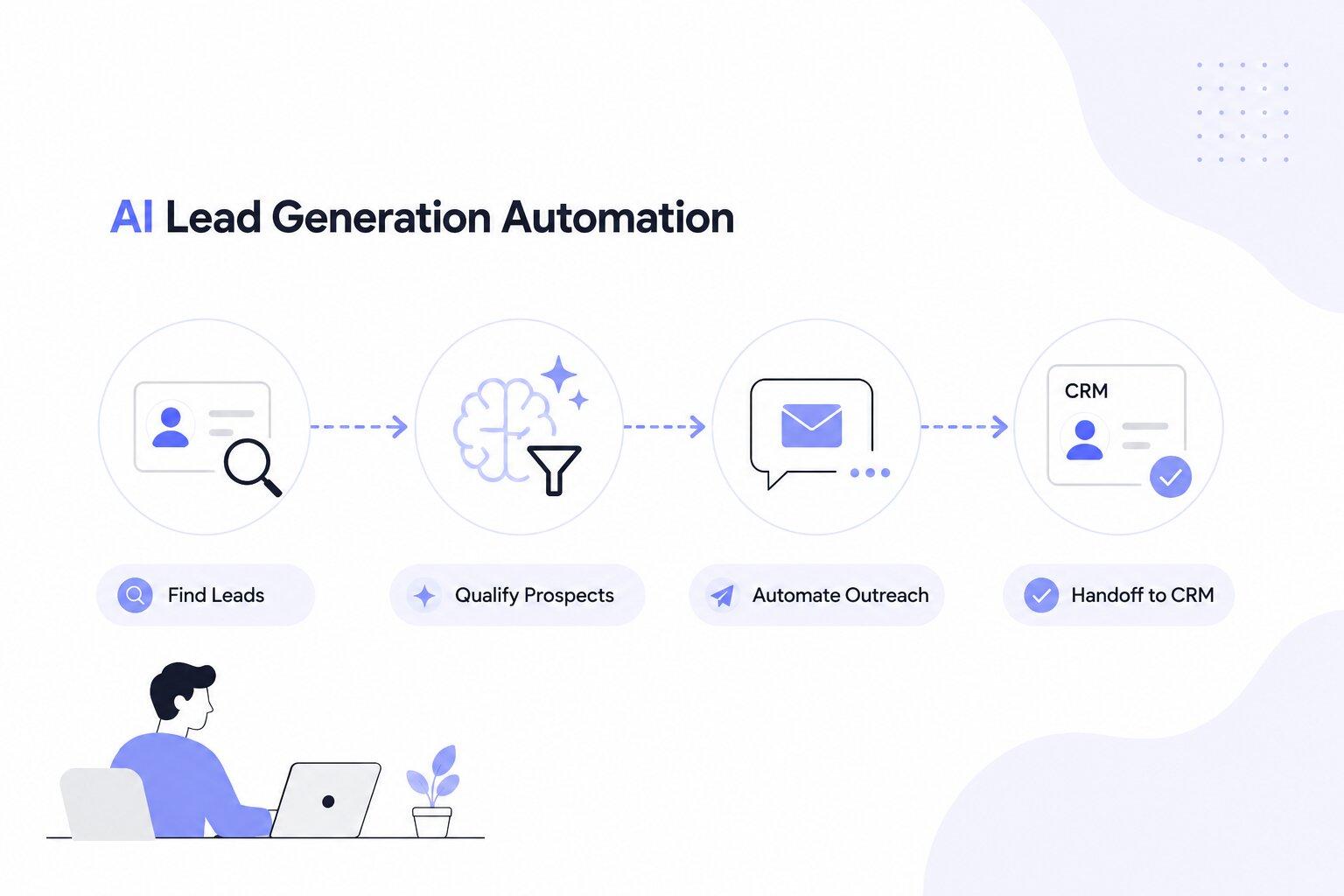
AI lead generation automation is the use of artificial intelligence to find, qualify, and engage potential customers, without relying on manual effort for each step. Instead of a human researching contacts, writing emails, and following up one by one, an AI-driven system handles the repetitive work continuously and at scale.
AI enhances lead generation by using machine learning, natural language processing, and predictive analytics to find potential leads more precisely and reach a target audience more quickly than traditional methods.
In practical terms, that means your system can identify the right prospects, reach them at the right moment, and keep them moving through the funnel, even while you're focused on closing deals.
Sintra AI is one example of how businesses are putting this into practice. Rather than patching together a dozen tools, Sintra uses role-based AI helpers that each handle a specific part of the lead generation process, from outreach to qualification to follow-ups, inside one connected workflow.
How AI Lead Generation Automation Works
The process starts with AI pulling data from multiple sources, including websites, social profiles, databases, and intent signals. It then identifies leads that match your ideal customer profile, enriches those profiles with firmographic and behavioral data, and places them into automated outreach sequences.
As leads engage, AI tracks their behavior, scores their intent, segments them into the right categories, and either passes them to your sales team or continues nurturing them with follow-up content.
A simple way to think about it is like an automated pipeline. A prospect enters the system after visiting your website, filling out a form, or matching a search filter. From there, the workflow keeps moving automatically. The lead gets identified, contacted, qualified, followed up with, and eventually handed off to sales when they're ready to buy.
AI vs Traditional Lead Generation
Traditional lead generation is slow, inconsistent, and difficult to scale. Sales teams spend hours manually researching prospects, writing outreach emails, and chasing leads that often go cold before anyone follows up.
Speed matters here.
There are 9× more chances of converting a lead when follow-up happens within five minutes of an inquiry, yet 42% of sales reps say they are too busy to respond that quickly.
AI removes that delay.
It keeps outreach moving continuously, follows up instantly, and never lets leads slip through the cracks because someone got busy with other tasks. This is where sales lead automation becomes especially valuable.
Companies using AI tools could increase leads by over 50% and reduce costs by up to 60%. Marketing automation also drives significantly more qualified leads while improving overall sales productivity.
Personalization has improved just as quickly. Modern lead generation automation tools can analyze past interactions, industry trends, customer preferences, and real-time intent signals to create highly targeted outreach across email, LinkedIn, and even voice channels. Doing that manually at scale is nearly impossible for most teams.
Key Components of an AI Lead Generation System
A strong AI lead generation system is built around several key components that work together to automate the entire pipeline.
1. Data Sources
Everything starts with data. The system pulls information from sources like LinkedIn, company databases, website visitor tracking, CRM records, ad platforms, and third-party enrichment tools. This helps build detailed prospect profiles instead of relying on basic contact information alone.
2. AI Analysis and Lead Scoring
AI models analyze that data to identify leads that match your ideal customer profile. They score lead quality, segment prospects by behavior or industry, and detect buying intent based on signals like website visits, email engagement, or job changes. This helps teams focus on leads that are more likely to convert.
3. Outreach Automation
The outreach layer handles communication at scale and plays a major role in lead management automation. AI-powered systems personalize emails, LinkedIn messages, and follow-up sequences based on what they know about each prospect. Instead of sending the same generic template to everyone, the messaging adapts to the lead’s interests, activity, and position in the funnel.
4. CRM and Integration Layer
CRM and integration tools keep everything connected. They sync lead data across platforms, update records automatically, route leads to the right sales reps, and track interactions in one place. This prevents leads from getting lost between tools or manual handoffs.
Step 1: Define Your Ideal Customer and Data Inputs
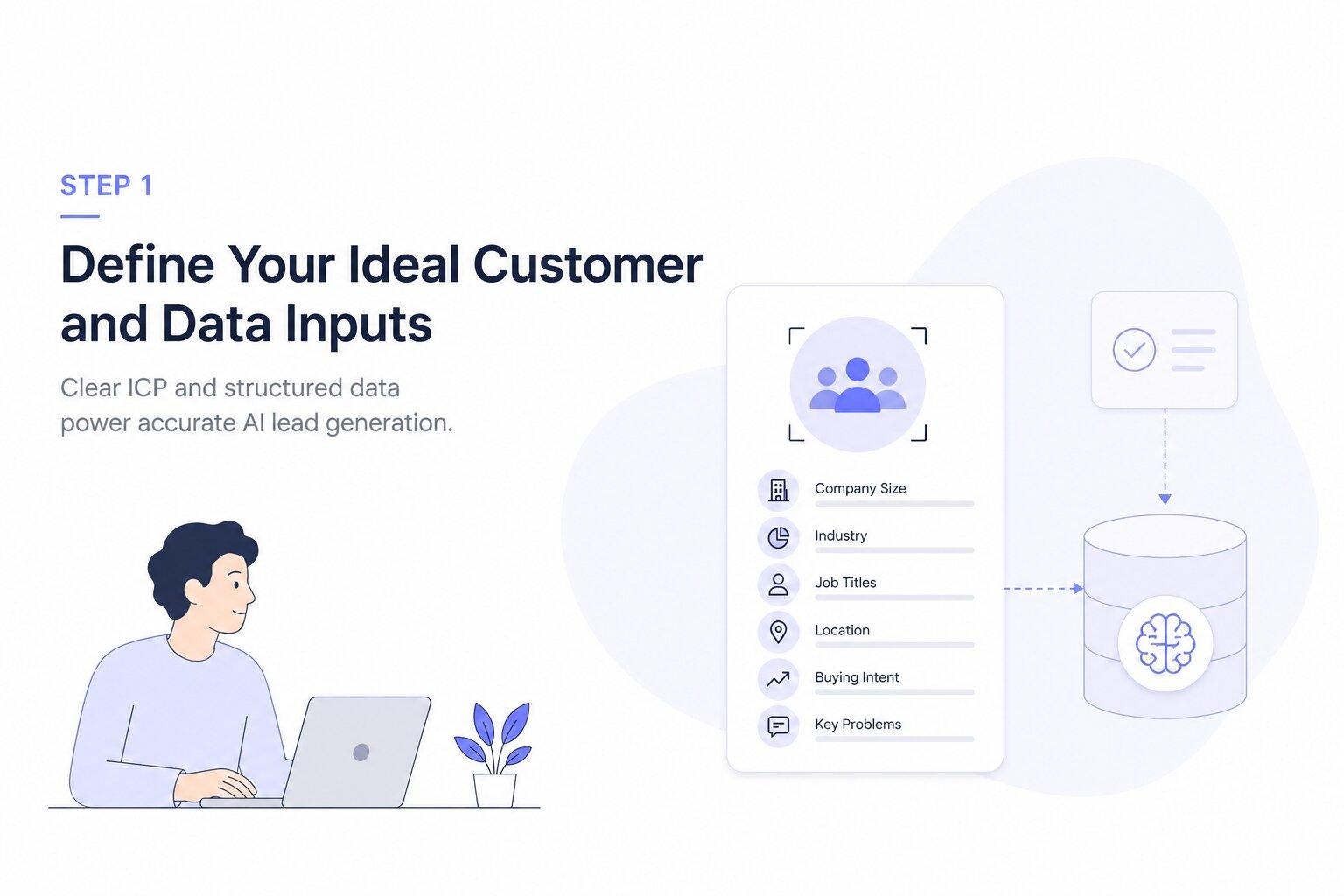
Before automating lead generation, you need to clearly define who you want to target. AI systems only perform well when the input is specific. If your Ideal Customer Profile is too broad, like “small business owners” or “marketing professionals,” the system will pull in a large number of low-quality leads that are unlikely to convert.
A strong ICP should include details like company size, industry, revenue range, job titles, location, tech stack, buying intent, and the exact problems your product solves. The more precise you are, the easier it becomes for AI to identify qualified prospects.
One of the biggest mistakes in B2B lead generation is targeting too wide an audience. When the audience is unclear, outreach becomes generic and sales teams waste time chasing poor-fit leads.
Once your ICP is defined, the next step is feeding that information into your AI system as structured data. This is where lead generation automation tools like Brain AI become useful.
Brain AI works as a centralized knowledge base that stores your ICP, brand voice, product positioning, customer pain points, and past campaign context. Instead of manually re-entering this information every time you launch a campaign, your AI helpers can automatically pull from it to keep outreach consistent and accurate.
For example, a SaaS founder targeting e-commerce brands with fewer than 50 employees using Shopify could store all of that information inside Brain AI once. From there, outreach messages, qualification questions, lead scoring, and follow-up sequences stay aligned with the same targeting criteria and brand positioning automatically.
Step 2: Use AI to Find and Enrich Leads
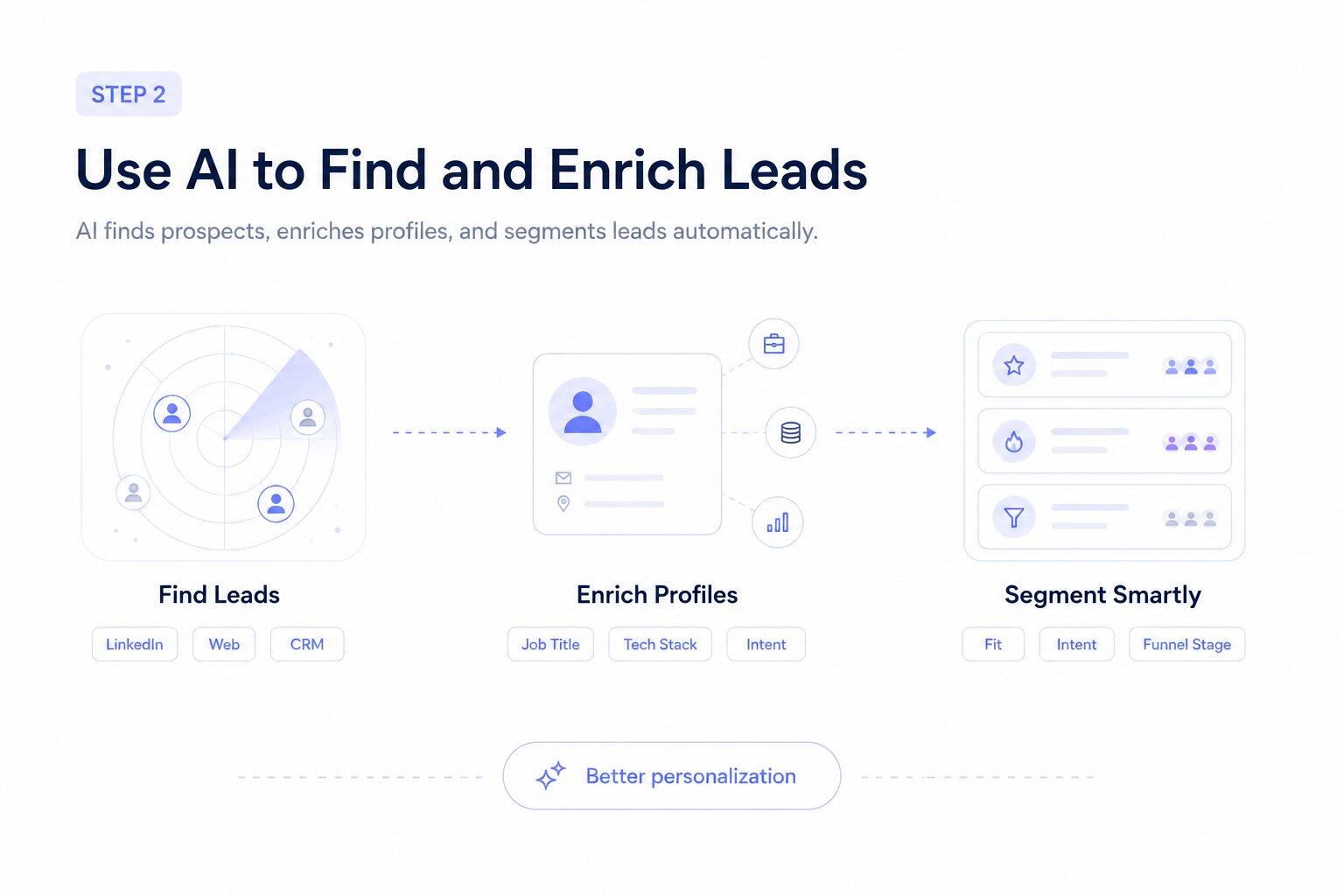
Once your ICP is defined, AI can handle prospecting at a scale that would be impossible to do manually. This stage involves three main tasks: finding leads, verifying their information, and enriching their profiles with useful context. This is also where marketing automation lead generation becomes far more efficient than traditional manual prospecting.
AI prospecting and lead automation tools scan LinkedIn, company websites, databases, CRM records, and public web sources to identify prospects that match your criteria. Instead of spending hours researching accounts one by one, AI can quickly surface relevant contacts and pull insights from company activity and past interactions.
Enrichment is what makes outreach more effective. Basic contact data, like a name and email address, is not enough for strong personalization. Enriched profiles add details like job title, company size, funding activity, tech stack, hiring trends, and behavioral intent signals. Some systems can also track actions like website visits, pricing page views, or email engagement to better understand buying intent.
With that data, AI can automatically segment leads based on fit, intent level, industry, engagement history, or funnel stage. A prospect who visited your pricing page multiple times should receive very different outreach from someone who only downloaded a top-of-funnel guide. That segmentation becomes the foundation for smarter outreach in the next step.
Step 3: Automate Outreach with AI-Powered Messaging
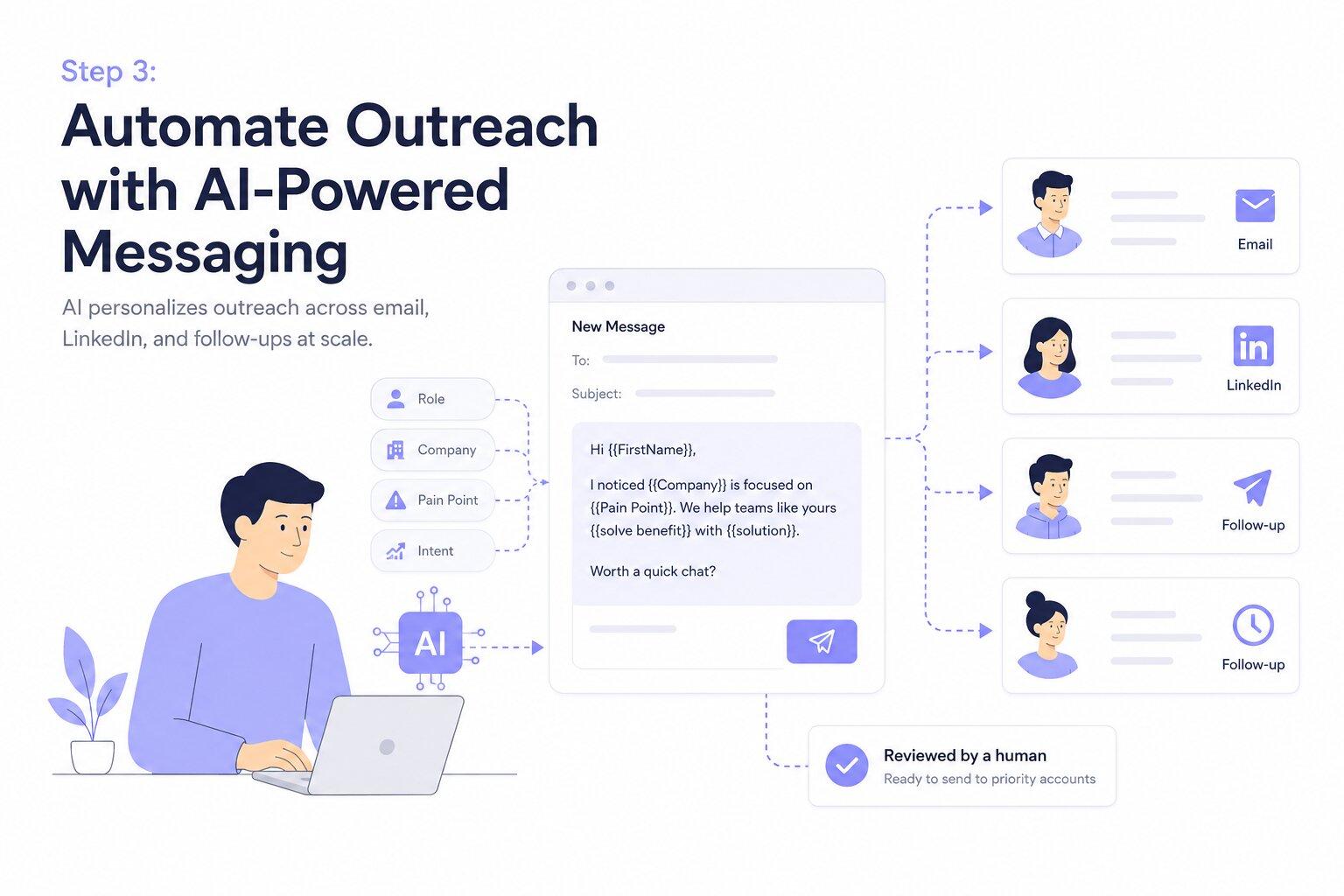
This is where most lead generation platforms succeed or fail. Personalized outreach at scale sounds impossible, but AI makes it practical. Instead of sending the same template to every prospect, AI uses enriched lead data to create messages tailored to each person’s role, company, industry, and pain points.
Modern lead generation automation tools can personalize outreach across email, LinkedIn, and even sales call talking points. The goal is to make every touchpoint feel relevant without requiring someone to manually write hundreds of messages every week.
With Sintra AI, this process is handled through role-based Helpers. Cassie manages email outreach campaigns by pulling information from Brain AI, personalizing messages based on lead data, and adjusting follow-up timing using engagement signals. Soshie handles social media touchpoints, helping your brand stay active across channels without constant manual posting or messaging.
The biggest advantage here is consistency. Personalized emails can dramatically improve reply rates, but maintaining that level of personalization across hundreds or thousands of prospects is almost impossible without automation that is actually informed by real lead data.
At the same time, high-value outreach should still include a human layer. Lead automation tools are excellent for drafting, sequencing, and scaling communication, but important accounts often respond better when sales teams review and refine the final approach themselves.
Step 4: Qualify and Segment Leads Automatically
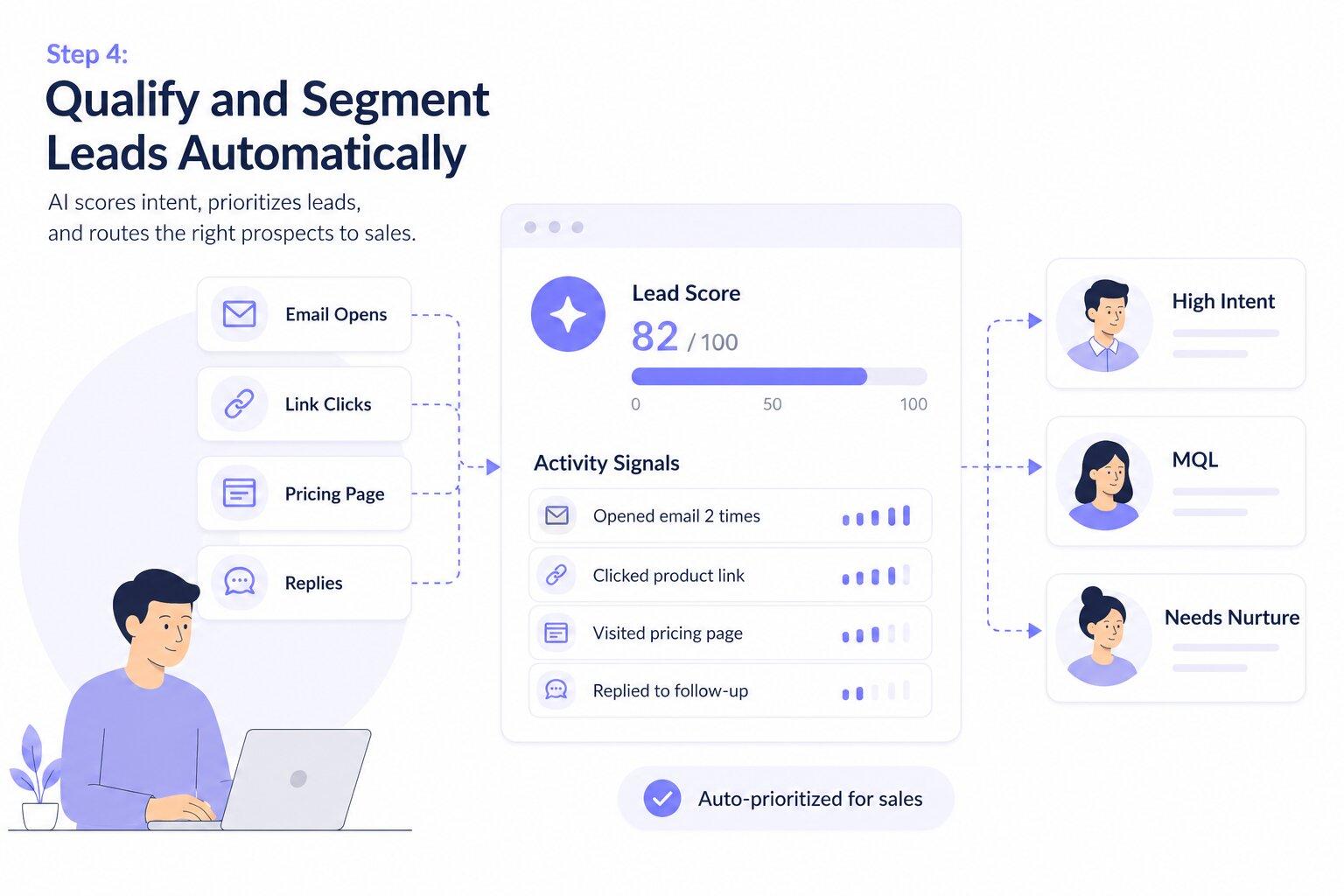
Not every lead who opens an email is ready to buy. An AI qualification helps separate high-intent prospects from people who still need nurturing by analyzing actual behavior instead of relying on guesswork.
AI systems track signals such as email opens, link clicks, website activity, content downloads, social engagement, and direct replies. A lead who visits your pricing page, opens multiple emails, and checks your case studies is showing much stronger intent than someone who only opened one email and disappeared.
Using predictive analytics, AI can score leads based on how likely they are to convert. It looks at historical data, engagement patterns, and customer behavior to identify which prospects deserve immediate attention from sales teams.
For example, someone might download your free guide, open a follow-up email a few days later, and then click through to your demo page. AI can automatically recognize that progression, classify the prospect as a marketing-qualified lead, move them into a sales sequence, and notify your team without anyone manually reviewing activity logs.
This is one of the biggest advantages of automation. Instead of sales teams wasting time reviewing every contact individually, AI continuously prioritizes the leads most likely to convert.
Step 5: Automate Follow-Ups and Nurture Sequences
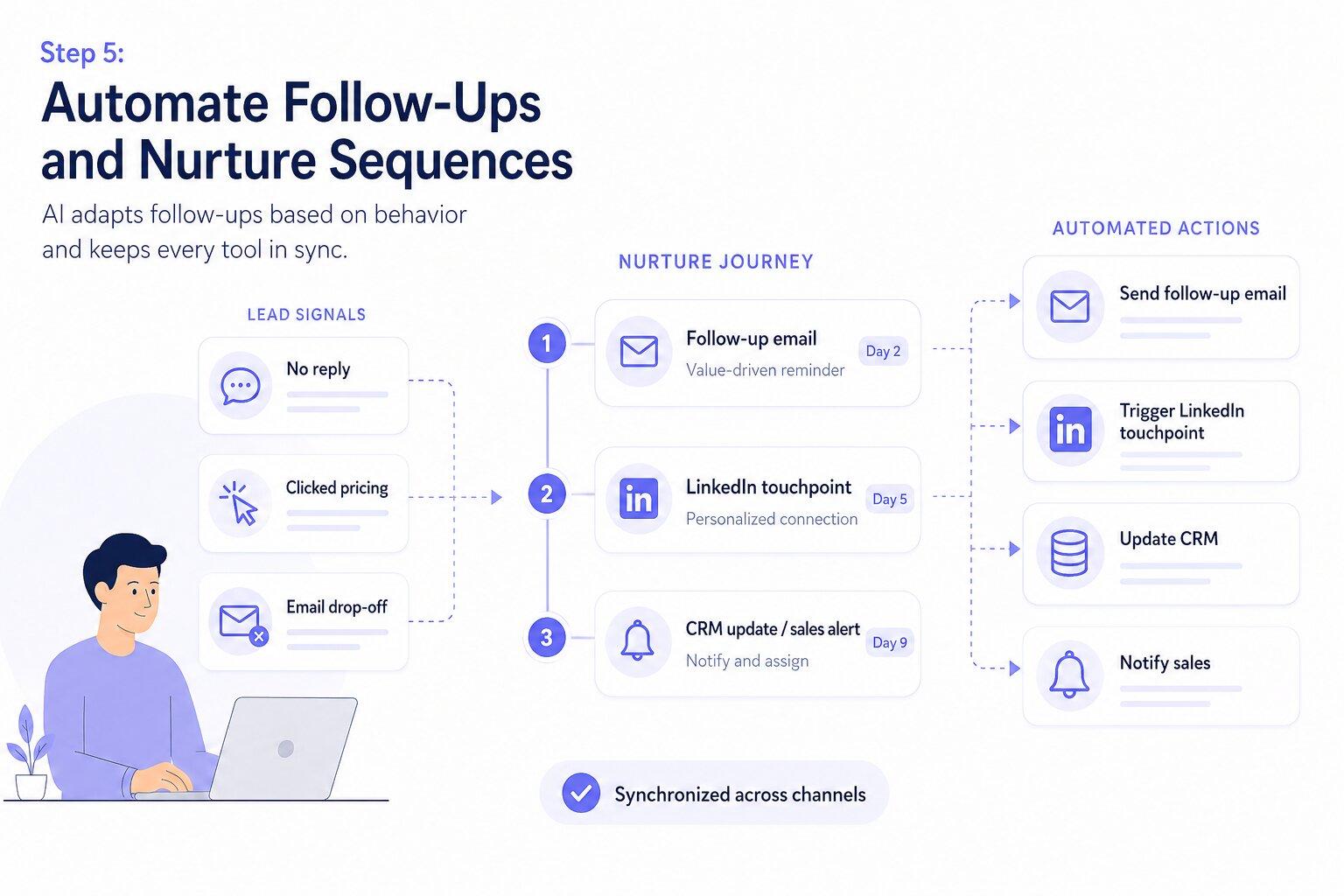
Most leads do not convert because they are never properly followed up with. In many cases, the problem is not that the lead was unqualified; it is that the business stopped nurturing them too early. Follow-up timing is one of the most important parts of lead generation, and it is exactly the kind of repetitive, time-sensitive work AI handles well.
AI-powered nurture sequences send follow-ups automatically based on how a prospect behaves. A lead who ignored the last email can receive a different message from someone who clicked a pricing link but did not book a meeting. Instead of repeating the same generic reminder every few days, the system adapts based on engagement signals.
AI can also coordinate follow-ups across multiple channels. It can update CRM records automatically, trigger LinkedIn outreach when email engagement drops, and alert sales teams when a lead shows strong buying intent.
This is where AI integrations become critical. When your email platform, CRM, calendar, and social accounts are connected, every action stays synchronized across the system. That reduces manual work, prevents missed handoffs, and keeps leads from slipping through the cracks between tools.
Best AI Tool for Lead Generation Automation
AI lead generation works best when prospecting, outreach, qualification, follow-ups, and CRM updates all operate inside the same system. Using separate lead generation software for each stage often creates workflow gaps, inconsistent data, and extra manual work between teams.
Sintra AI is designed as a unified AI platform rather than a collection of standalone apps. It uses role-based AI employees that work together on a shared data foundation. Cassie manages outreach, Soshie handles social media, Penn creates content, Dexter analyzes data, and Buddy supports operations. Every helper pulls from the same Brain AI knowledge base, so targeting, messaging, and follow-ups stay aligned across the entire pipeline.
Why Disconnected AI Tools Create Problems
A scraping platform might identify leads, but it usually stops at basic contact data. Email tools can automate campaigns, yet they often lack deeper context around buyer intent or engagement history. CRMs help organize information, but they still rely on data flowing in accurately from other systems.
When these lead generation software operate separately, teams end up manually moving leads between platforms, engagement data becomes fragmented, and high-intent prospects can easily be missed because activity is not synced in real time.
What to Look For in an AI Lead Generation Tool
The strongest AI lead generation systems should support the full lead lifecycle from start to finish. Key things to evaluate include:
- End-to-end automation across prospecting, outreach, qualification, and follow-ups
- Real-time personalization using behavioral and firmographic data
- Seamless CRM, email, and calendar integrations
- Centralized lead data that updates automatically across workflows
- Scalability for both small and high-volume lead pipelines
Weakness in any one of these areas usually creates more manual work later in the process.
Why an All-in-One AI System Works Better
When outreach, lead scoring, follow-ups, and CRM updates all work from the same shared data source, the pipeline becomes faster and more reliable. Teams spend less time fixing workflow issues and more time focusing on qualified opportunities.
Research from McKinsey & Company shows that AI-driven sales systems can significantly increase appointments while reducing acquisition costs, but those results depend on having connected systems that work together smoothly. For startups and small teams, especially, an all-in-one AI platform is often more efficient than managing multiple separate tools and integrations.
Common Mistakes When Automating Lead Generation
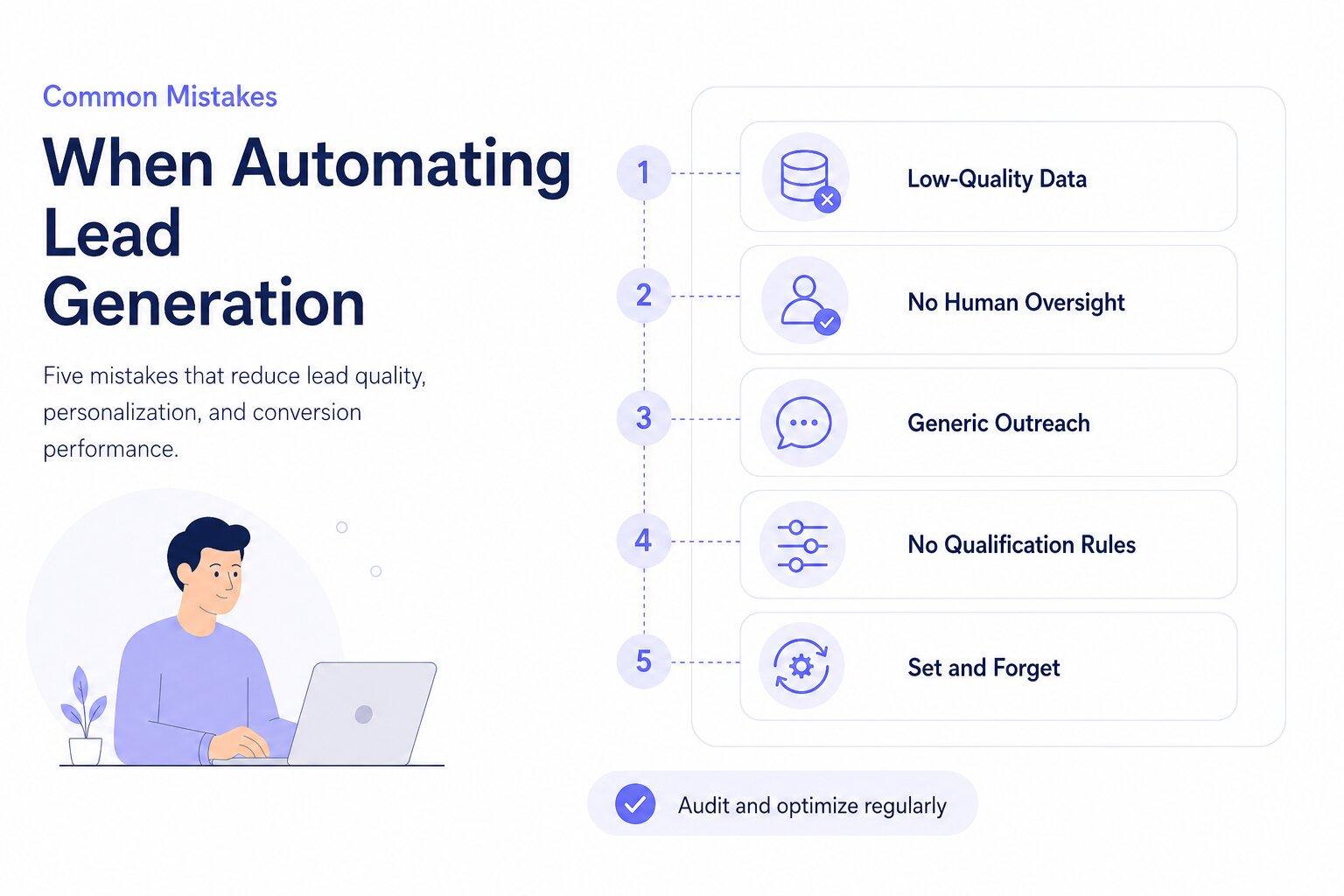
AI can improve lead generation significantly, but poor implementation can create just as many problems. Here are some of the biggest mistakes businesses make when automating lead generation.
Using Low-Quality or Outdated Data
AI systems are only as good as the data behind them. Outdated contact information and weak data sources lead to inaccurate personalization, lower deliverability, and poor-quality leads. At scale, those issues compound quickly. Regularly auditing your data sources and using enrichment tools that refresh contact information in real time helps keep outreach accurate and relevant.
Removing Human Oversight Completely
Automation works best when AI supports human decision-making instead of replacing it entirely. Fully automated outreach can sometimes feel robotic, overly aggressive, or disconnected from real customer intent. AI should handle repetitive and data-heavy work, while humans stay involved in strategy, messaging reviews, and high-value conversations.
Sending Generic Outreach
Adding a first name to an email template is not real personalization. If targeting criteria are too broad, AI can easily generate outreach lists filled with poor-fit prospects. Strong campaigns rely on clear firmographic, technographic, and behavioral targeting so outreach stays relevant to the right audience.
Not Defining Lead Qualification Rules
AI cannot identify strong leads if it does not know what a qualified prospect actually looks like. Clear lead scoring criteria based on ICP fit, engagement signals, and buying intent are essential before automating workflows.
Treating Automation as “Set and Forget”
Lead generation systems need ongoing adjustments. Markets change, customer behavior shifts, and messaging that worked a few months ago may stop performing over time. Reviewing campaign performance regularly and updating workflows helps keep the system aligned with current market conditions.
Benefits of Using AI for Lead Generation Automation
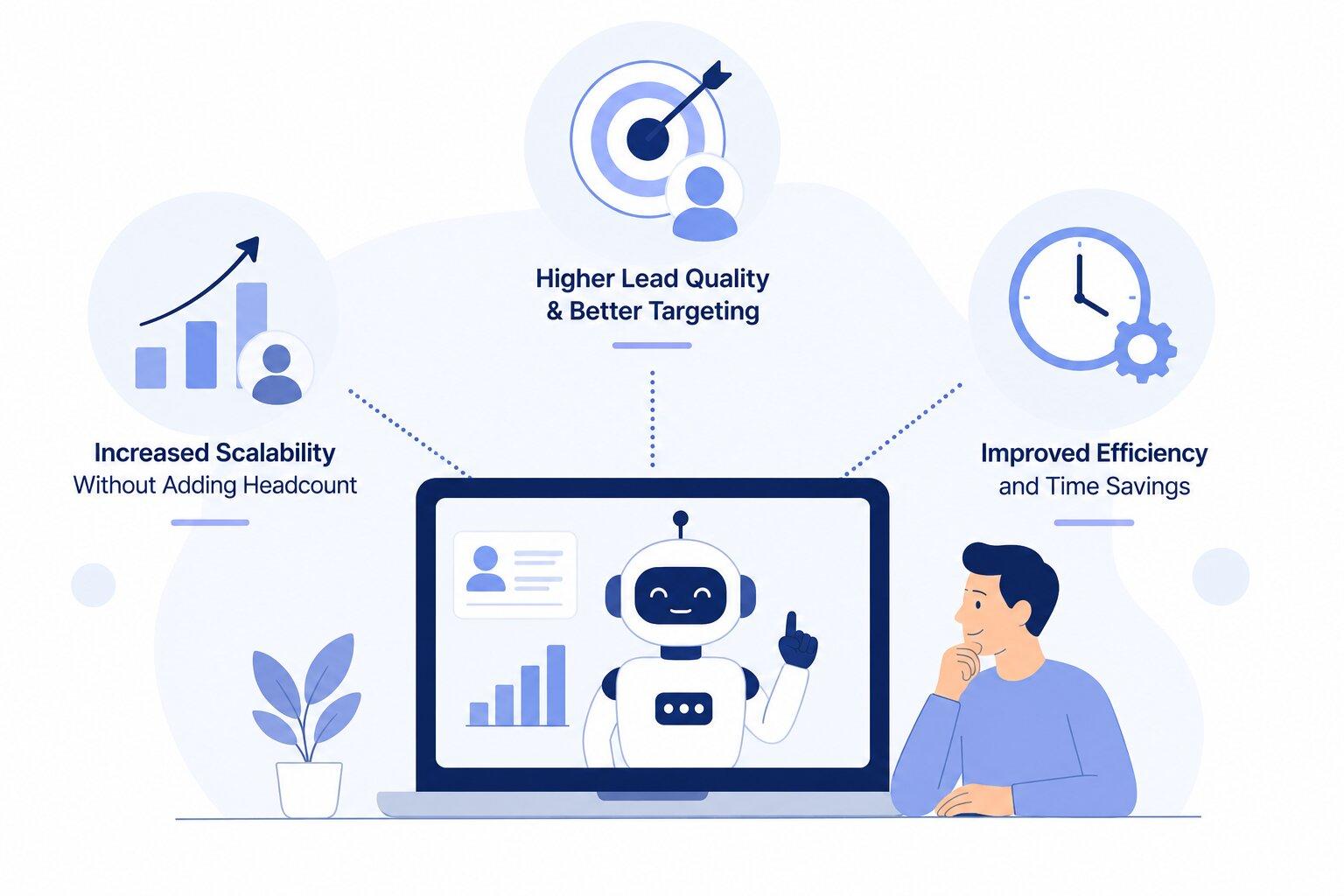
The biggest advantage of AI-driven lead generation is measurable business impact. Businesses using AI often see higher lead volume, lower acquisition costs, and faster pipeline growth because prospecting, outreach, qualification, and follow-ups run inside one connected system instead of disconnected manual workflows. Sintra AI is built around that kind of end-to-end automation.
Increased Scalability Without Adding Headcount
Growing lead generation manually usually means hiring more people or increasing workload on existing teams. AI changes that by allowing businesses to manage far more leads without adding additional headcount.
AI systems can run outreach campaigns, track engagement, manage follow-ups, and organize lead data automatically. For solopreneurs, that can mean reaching hundreds of prospects at the same time. For small businesses, it means scaling pipeline growth without scaling payroll at the same pace.
Improved Efficiency and Time Savings
AI automation removes a large amount of repetitive admin work from the sales process. Tasks like prospect research, CRM updates, email drafting, and follow-up scheduling can all run automatically in the background.
That shift allows teams to spend less time managing workflows and more time focusing on conversations, sales calls, and relationship-building activities that directly impact revenue.
Higher Lead Quality and Better Targeting
AI systems can identify buying intent signals that are easy to miss manually. By analyzing engagement patterns, website activity, past interactions, and behavioral data, AI helps prioritize the leads most likely to convert.
Better targeting leads to fewer wasted conversations and stronger conversion rates throughout the pipeline. Instead of treating every prospect the same way, AI helps businesses focus attention on the leads showing the strongest intent to buy.
Ready to Automate Your Lead Generation?
If your lead generation process still depends on multiple disconnected tools and too much manual work, the system itself is likely holding growth back. A connected AI workflow helps eliminate gaps in the pipeline and creates a more consistent, scalable process from the first interaction to the final conversion.
Get started with Sintra AI to manage prospecting, outreach, qualification, follow-ups, and workflow automation inside one unified platform. With AI Helpers, built-in integrations, and a shared data foundation, Sintra helps solopreneurs and growing teams build a more efficient lead generation system without increasing operational complexity or headcount.
Lead Generation Automation FAQs
What is automated lead generation and how does it work?
Automated lead generation uses software and AI to handle prospecting, outreach, lead qualification, and follow-ups automatically. The system identifies leads that match your ICP, enriches their data, personalizes outreach, tracks engagement, and routes qualified prospects into your sales pipeline with minimal manual work.
How can AI improve lead generation results?
AI improves lead generation by analyzing large amounts of data faster and more accurately than manual processes. It helps identify high-intent prospects, personalize outreach at scale, automate follow-ups, and optimize campaigns over time. This leads to better-quality leads, lower acquisition costs, and shorter sales cycles.
Is AI lead generation suitable for small businesses?
Yes. AI helps small businesses and solopreneurs scale lead generation without needing a large sales team. It automates time-consuming tasks like prospect research, outreach, and follow-ups, allowing smaller teams to manage a much larger pipeline more efficiently.
How long does it take to see results from automated lead generation?
Many businesses start seeing measurable improvements within 30 to 60 days, especially in response rates and follow-up speed. Larger pipeline and conversion improvements, usually built over the following months as campaigns, are optimized, and the system gathers more data.
Can AI replace human sales teams in lead generation?
Not completely, and that is not the goal. AI handles repetitive and data-heavy tasks like prospecting, outreach sequencing, lead scoring, and follow-ups very effectively. Human sales teams are still essential for relationship-building, negotiations, and high-value conversations that require judgment and trust.
Related articles