Best Conversational AI Agents for 2026

Table of Contents
It's likely that you have so many tasks that you can't keep up with them. The backlog of support tickets is increasing. You have half-finished marketing campaigns. SEO audits that you keep rescheduling.
Here is the thing: The best conversational AI agents in 2026 are no longer just fancy chatbots. They are actual AI helpers that do your work while you are sleeping. We are talking about systems that can generate leads, write content, manage social media, and resolve customer issues without constant supervision. Expectations are shifting too - while only 25% of leaders expect AI to take on fully autonomous roles in the next one to two years, 53% see it primarily as a support tool, and younger leaders are notably more optimistic about agentic AI than their senior counterparts.
This guide covers the leading conversational AI platforms in 2026, not the theoretical ones. The platforms that companies are actually employing to automate routine activities and grow without exhausting their teams.
I have been testing these systems for months (some really impressed me, while others were frankly disappointing). I will tell you exactly which ones are the real deal and which are mostly hype.
Quick answer: What's the best conversational AI assistant for 2026?
Sintra AI is best suited to small and medium businesses, with 12+ specialized AI helpers collaborating through Brain AI to manage marketing, support, SEO, sales, and daily processes. It provides you with a whole AI workforce, not a chatbot.
Enterprise teams that require complex workflows across 30+ channels use Sprinklr or IBM WatsonX to scale to enterprise levels (though these solutions are expensive and take months to deploy).
At the same time, Rezolve.ai or Leena.ai are effective in an IT and HR helpdesk within Microsoft Teams. The majority of platforms have a single assistant, who attempts to do all tasks inadequately; Sintra has experts who specialize in their respective tasks.
Shortlist: The best conversational AI assistants for 2026
Before we get into all the details, here's the abbreviated version of it:
- Sintra AI: Complete AI team for small to medium businesses' productivity
- Sprinklr: Enterprise social omnichannel
- IBM Watsonx Assistant: Regulated industry compliance
- Amelia: Complex workflow orchestration
- Rezolve.ai: MS Teams IT support
- Verloop.io: E-commerce support automation
- Leena.ai: HR-focused conversational assistant
- Haptik.ai: Multilingual conversational AI platform
- Zendesk Answer Bot: Native Zendesk ecosystems
- Aisera: Predictive service management
- Avaamo: Healthcare & voice workflows
- Amazon Lex: Custom AWS integrations
- OneReach.ai: Multimodal low-code builds
Nearly all of these are problem-specific solutions; thus, they perform well in targeted areas. Meanwhile, some of them put a hat on everything and end up not being very good at most of it. In subsequent sections, I will dissect each one to show you what they really do (not what their ads say) in detail.
What Is a Conversational AI Platform?
A conversational AI platform is a program that facilitates the creation, training, and launch of AI assistants that can interact with humans in natural language across various channels. Those channels could include web chat, mobile apps, WhatsApp, SMS, voice calls, email, social media, or any other channel.
CAIPs enable businesses to develop virtual assistants and conversational AI agents that facilitate both customer-facing and internal interactions.
What's New?
The main thing that modern conversational AI platform systems have that old rule-based chatbots don't is natural language processing. Old chatbots operated on very strict decision trees. If the exact right word wasn't used, they didn't know what to do. Angry and annoyed people were the result.
Present-day conversational AI tools even recognize context and intent and can handle incorrect human language (like typos, slang, and sudden changes) as well. (However, few platforms are quite as good at this as others. I will explain that further.) Generative AI is a key component of conversational AI, enabling these platforms to craft responses that sound natural rather than robotic. That's why customers can't tell they're talking to code anymore.
What is the significant change that is happening right now?
Multi-agent systems. Instead of asking one assistant to do a bit of everything, you now get specialized AI employees who work only in a particular area of the business, such as marketing, SEO, support, or sales. And the good part is that they can share knowledge for effective decision-making.
Single assistant approach: One bot tries to handle everything, gets confused constantly, and gives generic answers.
Multi-agent approach: Specialized assistants focus on their specific jobs, share a central memory system, and actually solve problems. Modern conversational AI agents can operate autonomously, making decisions based on real-time data and historical context.
For example, a client, Sarah, tried a single-bot solution last year. It constantly mixed up support tickets with sales inquiries. Customers got annoyed. Sarah eventually just turned it off. When she switched to a multi-agent system, her support resolution time dropped by 60% because the support assistant actually knew support workflows inside and out.
That is the difference. If you want to understand more about how conversational AI chatbots evolved from simple scripts to intelligent systems, check out our detailed guide on chatbot vs conversational AI.
How conversational AI technology works?
Under the hood, conversational AI chatbots rely on several interconnected technologies working together:
Natural Language Processing (NLP)
It is a division of human language that breaks it into structured data that the system can comprehend. It detects words, grammar, syntax, and meaning. Composite multilingual NLP is a feature of CAIPs that allows processing of user natural language using a combination of rule-based and machine learning techniques.
Natural Language Understanding (NLU)
It determines what people mean (not what they said). The words "I want to cancel" and "This is not working with me" have the same consequence. Good NLU catches that.
Natural Language Generation (NLG)
It is the generation of human-sounding answers. It is where most platforms either perform well or fail miserably. Some create robotic and rigid responses. Some people are even conversational.
Machine learning
The more it converses with people, the brighter the system becomes literally. Conversational AI utilizes continuous learning to enhance the agent's accuracy and performance over time.
Context management
It allows the assistant to remember past messages in the conversation, so it does not ask the same questions every time or forget the conversation. (And you would be outraged how many costly platforms continue to chagrin this down.)
Shared memory
It is interesting when it comes to shared memory. Systems such as Sintra's Brain AI allow AI agents to exchange knowledge across conversations. Your support tickets teach approximately 100,000 SEO assistants. Your sales assistant recollects marketing campaigns. Everything connects.
The conventional means of communication isolate every discussion. AI of the brain unites it all. This is why multi-agent systems can handle complex workflows without requiring you to repeat information.
Top conversational AI companies and platforms in 2026
Let me take you through the real players worth considering. I rated them based on actual performance (not marketing hype), scalability, NLP quality, level of automation, integrations, and what actual users have reported 6 months or more after implementation.
Some of these conversational AI companies deliver precisely what they promise. Others? Frankly, they are more skillful in sales presentations than in performance.
The use of conversational AI is growing across sectors such as customer service, IT support, and healthcare, thanks to its ability to automate tasks and improve efficiency.
1. Sintra AI - Best for SMBs needing an AI team
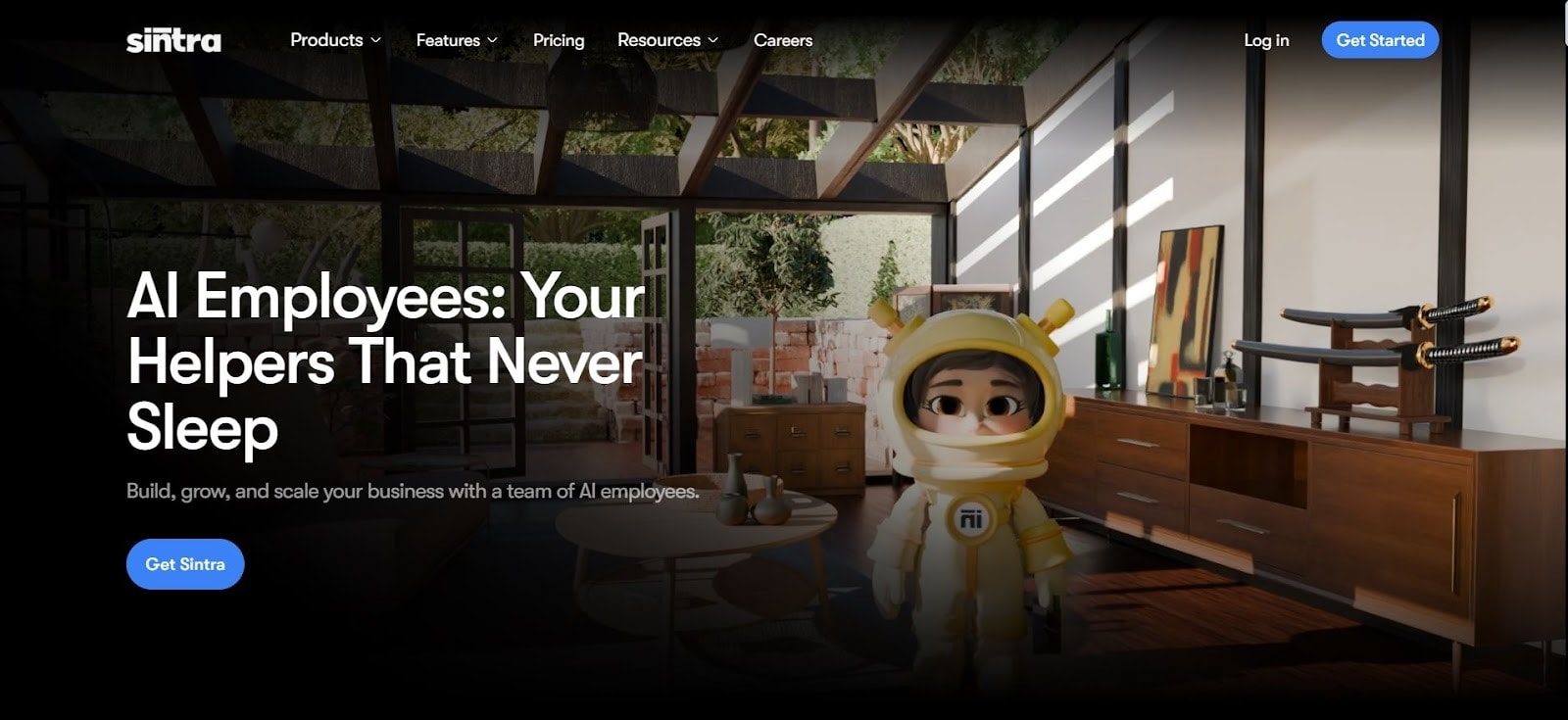
Sintra AI isn't a single conversational AI platform. It has a team of 12 specialized AI employees who actually run your business operations.
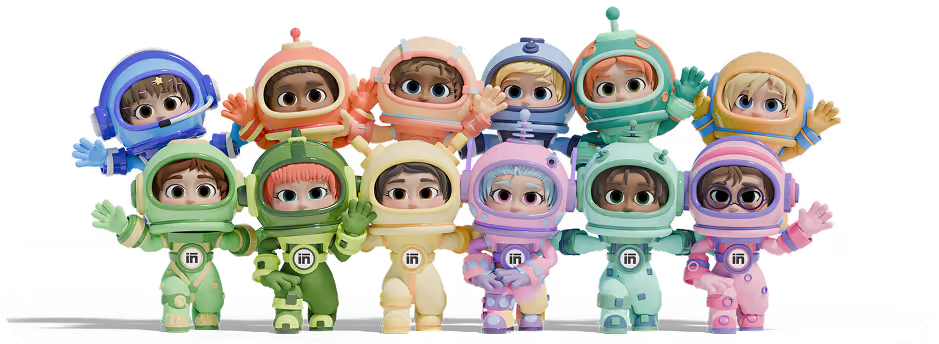
You get dedicated conversational AI agents for SEO, content writing, social media, customer support, eCommerce, personal assistance, research, and more. All of them specialize in their area and do it in an exemplary way. They exchange information with Brain AI, so once your support assistant knows something about a client, your sales assistant knows it, too.
This is what makes Sintra special: most platforms provide a single assistant that does everything badly. On the other hand, Sintra provides you with experts. Seomi conducts SEO audits and Keyword research. Penn is a copywriter for campaigns and blogs. Soshie runs your whole social media. Commet deals with eCommerce processes. Vizzy addresses the scheduling and administration.
They do not simply respond to requests. They work proactively. Seomi will inform you of a drop in your rankings. And in the meantime, Soshie writes posts and replies to comments when you are asleep. Penn creates content ideas from trending topics in your industry. AI agents can resolve up to 80% of routine queries at first contact, and because Sintra's agents share knowledge, that number rises over time.
Pricing
Starts at $39/month for individual helpers or $97/month for the full suite.
2. Sprinklr - Best for Enterprise Omnichannel Support
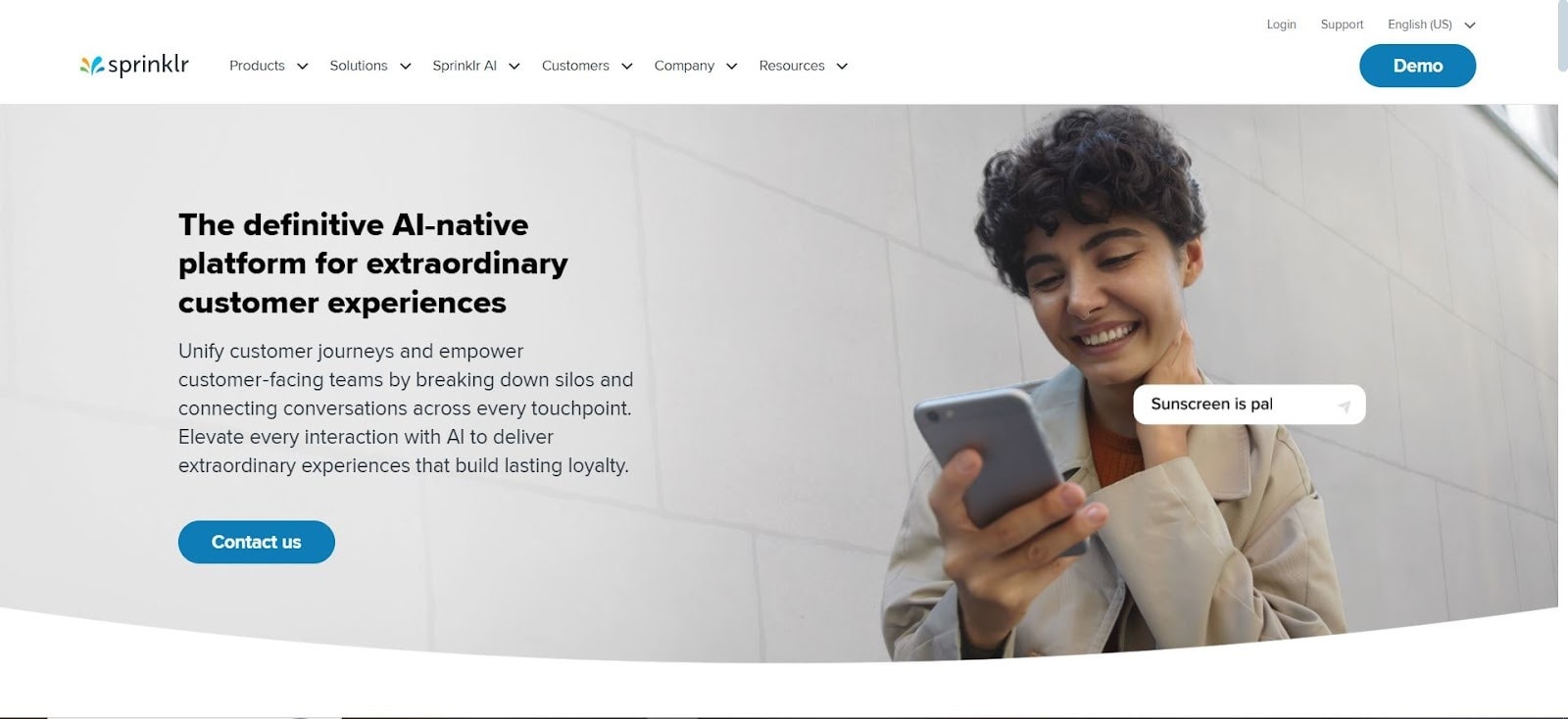
Sprinklr is the enterprise-grade conversational AI platform built for massive brands managing customer interactions across 30+ channels simultaneously. We are speaking of Facebook, Instagram, Twitter, WhatsApp, SMS, email, web chat, mobile apps, and voice calls, all of it.
Their integrated interface will allow a team to handle all discussions in a single dashboard. Analytics are immensely profound. You receive sentiment analysis, journey mapping, campaign attribution, and performance insights, which most platforms do not even bother to provide.
The automation potential is high. The AI at Sprinklr can route, classify intents, generate responses, and implement escalation logic across channels without context confusion.
Pricing
Quote-based; enterprise plans usually start at $2,000+/month based on volume.
3. IBM Watsonx Assistant - Best for Regulated Enterprise Compliance
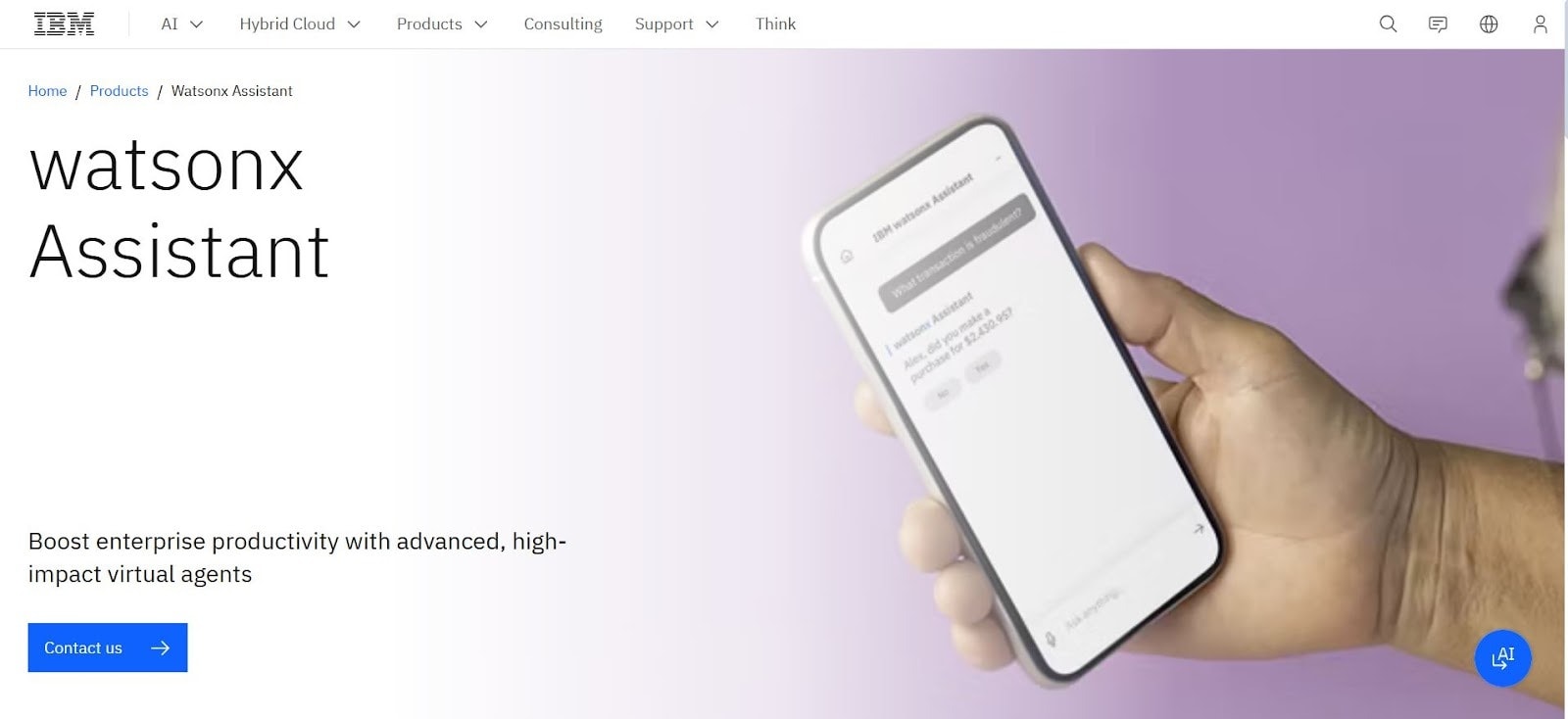
IBM Watson Assistant is an enterprise-ready conversational platform focused on governance, accuracy, hybrid deployment, and deep integrations for regulated industries. Consider healthcare, finance, insurance, and government (regulated industries in which errors can be factual).
Watson's hybrid deployment model lets you deploy conversational AI on-premises, in the cloud, or in a mixed environment. That is significant when you are dealing with sensitive information that cannot leave your infrastructure. The platform is compatible with existing IBM systems and third-party tools, which is essential in the enterprise environment with complex tech stacks.
Integration with back-end systems and data sources is a key feature of CAIPs, allowing personalized communication with critical services and applications.
NLP quality is solid. Watson supports multi-turn conversations, remembers, and becomes more accurate over time through machine learning. The enterprise focus provides built-in features for audit trails, explainability, and compliance.
Pricing
Free tier available; paid plans start at $140/month plus usage-based fees.
4. Amelia - Best for Complex Workflow Automation
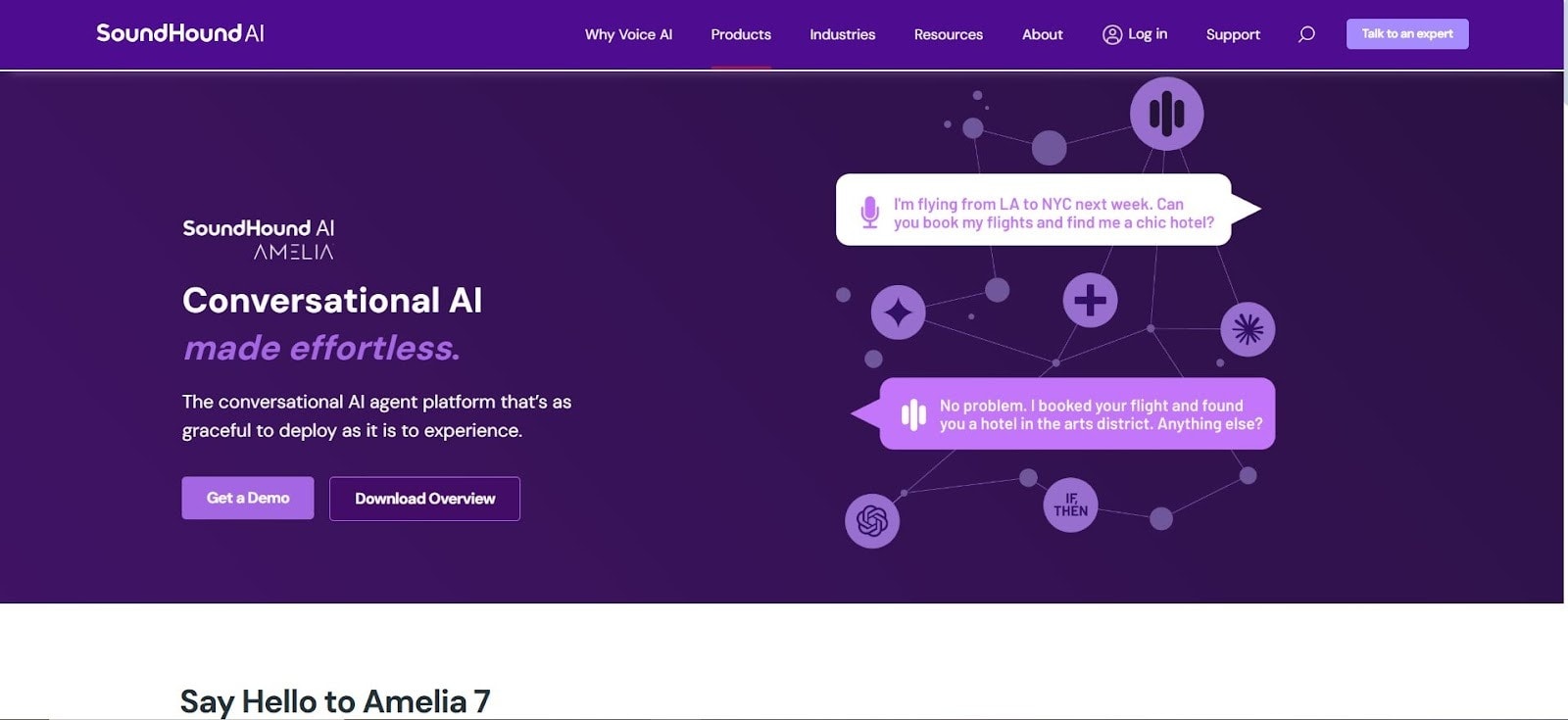
Amelia focuses on advanced service processes that involve multiple steps, handoffs, and automated processes. Consider large-scale customer support operations (or employee service centers) that require cross-departmental coordination.
The platform manages conversational exchanges and automates back-end workflow coordination. Someone requests time off? Amelia verifies balances, policy checks, routes, system updates, and checks everything without a human being. Workflow building tools are essential for managing fulfillment logic during dialogues in conversational AI applications.
Amelia's strength lies in handling complex processes that traditional conversational AI solutions struggle with: multi-step transactions, conditional logic, legacy system integration, all that ugly backend stuff. The platform supports phone calls, chat, email, and voice interactions with decent multilingual capabilities.
Pricing
Custom enterprise pricing typically requires a high-volume annual contract.
5. Rezolve.ai - Best for Microsoft Teams Integration
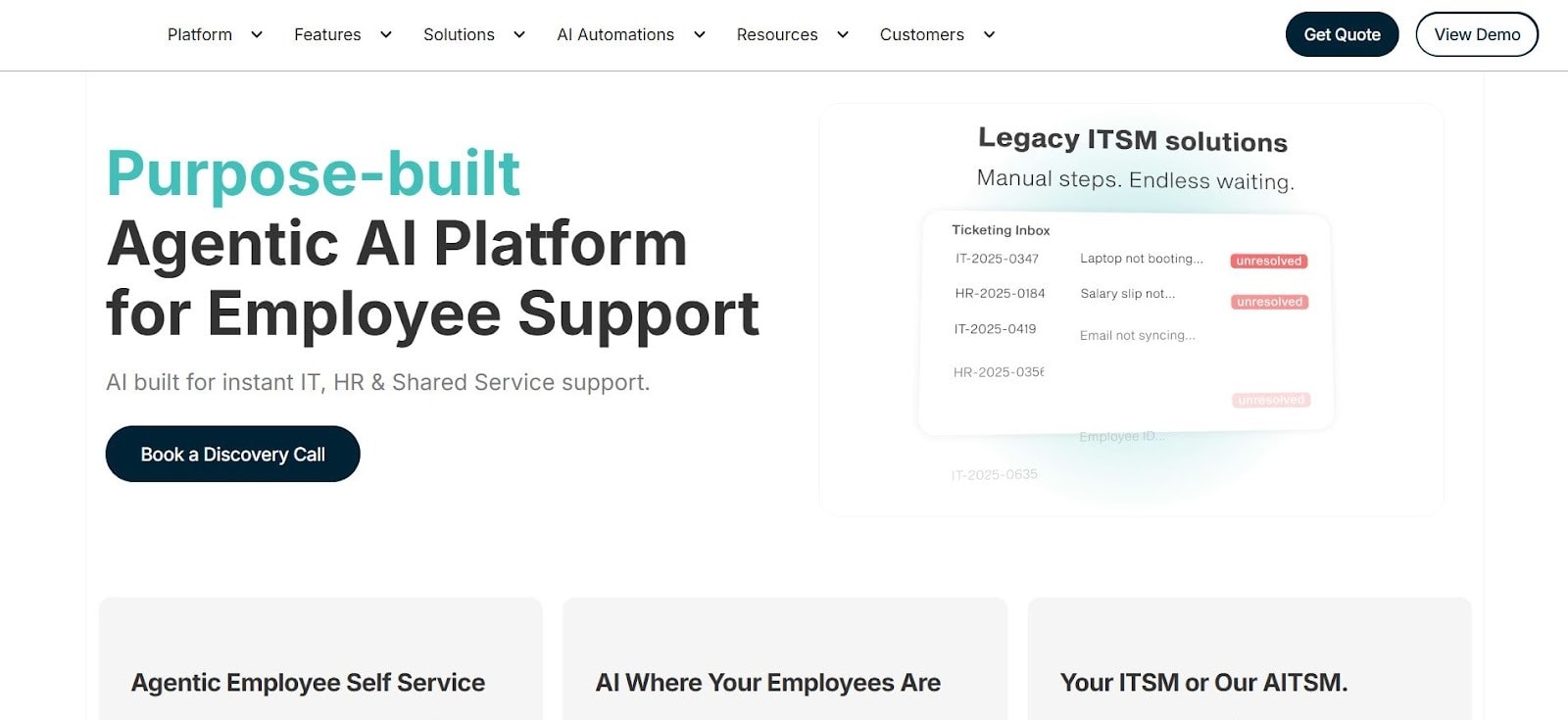
Rezolve.ai is fully integrated with Microsoft Teams, which is brilliant if your company already uses Teams for everything. IT support, HR requests, facilities requests, etc., are managed in a conversational tone without compelling employees to study another platform or portal.
The assistant automates ticket creation, forwards tickets to the appropriate teams, provides knowledge base articles, and addresses frequent issues immediately. Workers chat with the bot as they would chat with a colleague. Automating routine tasks, such as FAQs, can significantly reduce operational costs by 30% to 40%.
It integrates with ServiceNow, Jira, and other ITSM tools to synchronize tickets. No duplicate data entry. No change of systems.
Pricing
Quote-based, often priced per employee or per resolved ticket.
6. Verloop.io - Best for Retail Multichannel Support
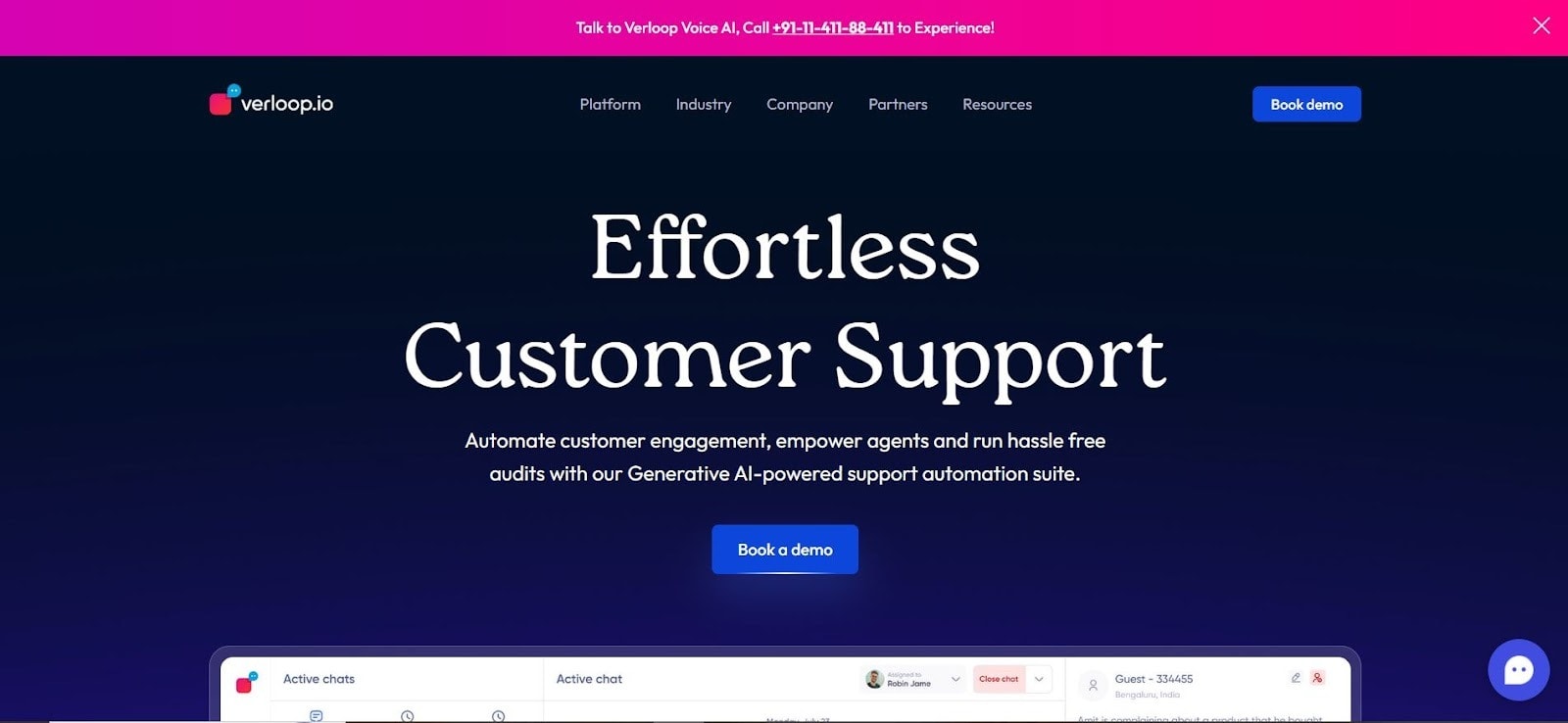
Verloop.io specializes in customer support automation (web, WhatsApp, and mobile apps, and other digital channels). It is used in retail and BFSI (banking, financial services, insurance), where the scale of support is vast and response time is essential.
The platform handles frequent queries, directs complex queries to human agents, and maintains context across channels. One initiates a chat on WhatsApp and turns to the site? Those interactions are connected automatically by Verloop.
Conversational AI agents can provide 24/7 support, and Verloop's agent handoff system is smooth; customers don't notice when they transition from bot to human. Agents can handle hundreds of inquiries simultaneously, significantly reducing customer wait times.
Verloop offers campaign automation, so you can automatically reach out to customers with personalized messages triggered by behavior.
Pricing
Free starter plan; custom enterprise quotes based on conversation volume.
7. Leena.ai - Best for HR Automation
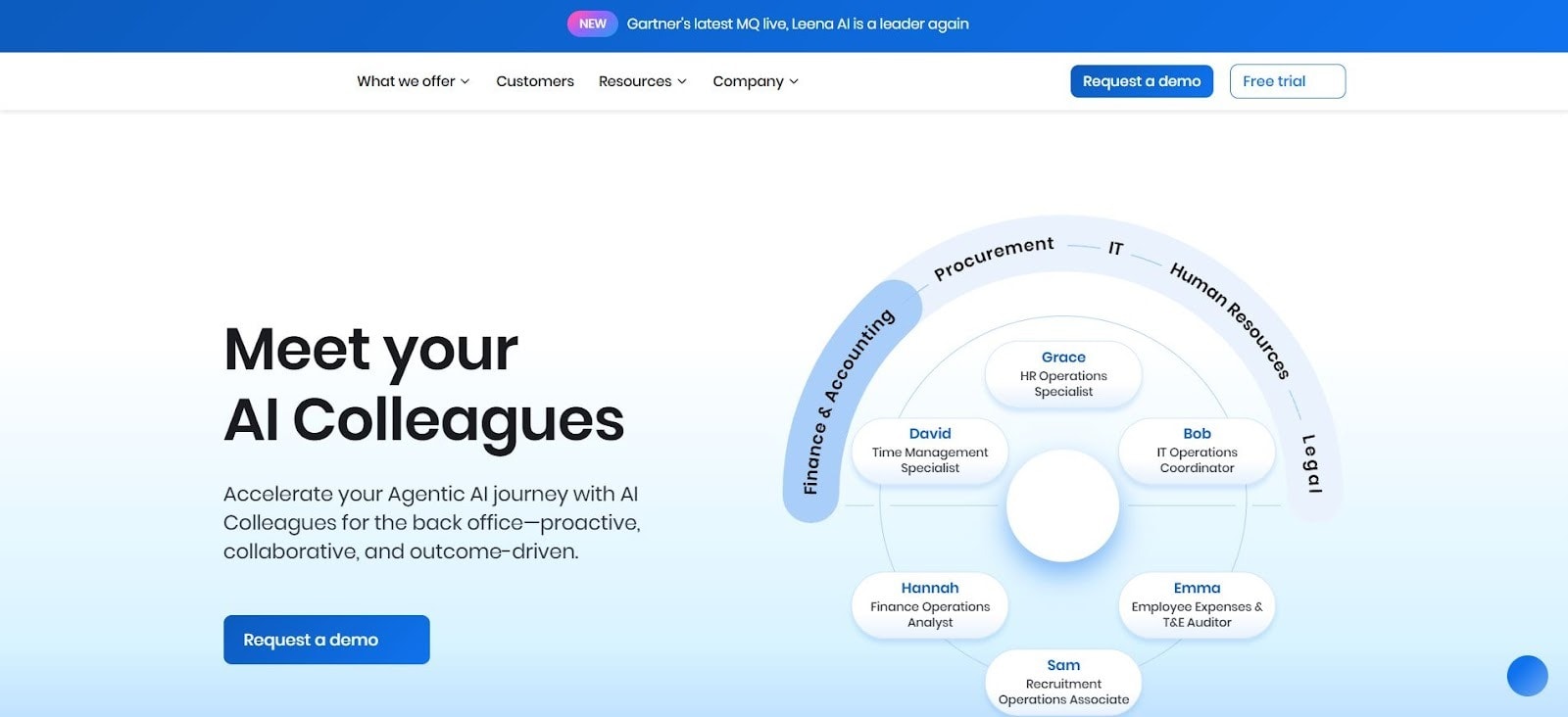
Leena.ai is designed to help HR teams overwhelmed by employee queries. "How do I submit expenses?" “What is our parental leave policy? I have to re-enroll in my benefits”. The same enquiries were repeated.
Leena automates HR questions, ticket creation, onboarding workflows, and even sentiment analysis of employee satisfaction. It connects to HRIS systems such as Workday, BambooHR, and SAP SuccessFactors to extract employee data and streamline operations.
Leena's strongest area is new-hire onboarding. The assistant will lead employees through paperwork, answer questions about benefits and policies, and ensure nothing slips through the cracks.
Pricing
Custom enterprise quotes tailored to the total employee headcount.
8. Haptik.ai - Best for Multilingual Consumer Brands
Haptik.ai works with large consumer brands through multilingual voice and digital conversational AI. They can support 20+ languages, which is essential when doing business in markets such as India, Southeast Asia, or Latin America, where language diversity is enormous.
Haptik has a natural language understanding (NLU) engine and generative AI that can process complex and unstructured queries with a very high level of precision. The platform includes an AI Agent Builder, which enables companies to deploy dedicated bots to handle sales, support, and lead qualification with minimal coding.
On top of the chat, it is fully integrated with payment gateways like Razorpay and Stripe, enabling a seamless end-to-end customer experience for discovery, purchase, and payment. Its voice capabilities are good. Haptik handles phone calls with decent speech recognition and natural-sounding responses.
Pricing
Quote-based pricing focused on monthly active users (MAU) or ticket volume.
9. Zendesk - Best for Existing Zendesk Users
The Answer Bot by Zendesk is an automated support system in the current Zendesk environments. If you are already using Zendesk as your support ticket system, adding Answer Bot is relatively easy.
The AI conversational chatbot suggests relevant help articles based on customer questions, resolves simple inquiries automatically, and escalates complex issues to human agents with full context. Zendesk's Answer Bot and associated conversational tools automate support within existing Zendesk ecosystems.
Installation is not as tricky as with enterprise systems. You link Answer Bot to your knowledge base, set a few settings, and it starts working.
Pricing
Included in Suite plans (starting $55/agent/month) or per-resolution add-ons.
10. Aisera - Best for IT and HR Teams
Aisera is built on domain-specific large language models (LLMs) designed to support IT, HR, and customer operations. The reasoning is that specialized models have a better grasp of industry terminology, work processes, and context than general-purpose AI. CAIPs support LLM prompt engineering via dedicated low-code/no-code modules or embedded functionalities.
The platform anticipates problems and resolves them before they escalate, automates routine tasks, and addresses requests across channels. IT teams rely on Aisera to reset passwords, access software, and conduct incidents.
The platform also connects with more than 1,200 enterprise systems, including ServiceNow, Salesforce, and Workday, to run multiple steps of work, such as processing refunds or terminating employees. It employs a trusted, responsible, auditable, private, and secure (TRAPS) framework to ensure these automated measures do not violate stringent data privacy policies and achieve a mean response time of less than one second.
Pricing
High-end enterprise quotes often exceed $ 50,000 per year for large deployments.
11. Avaamo - Best for Healthcare and Finance
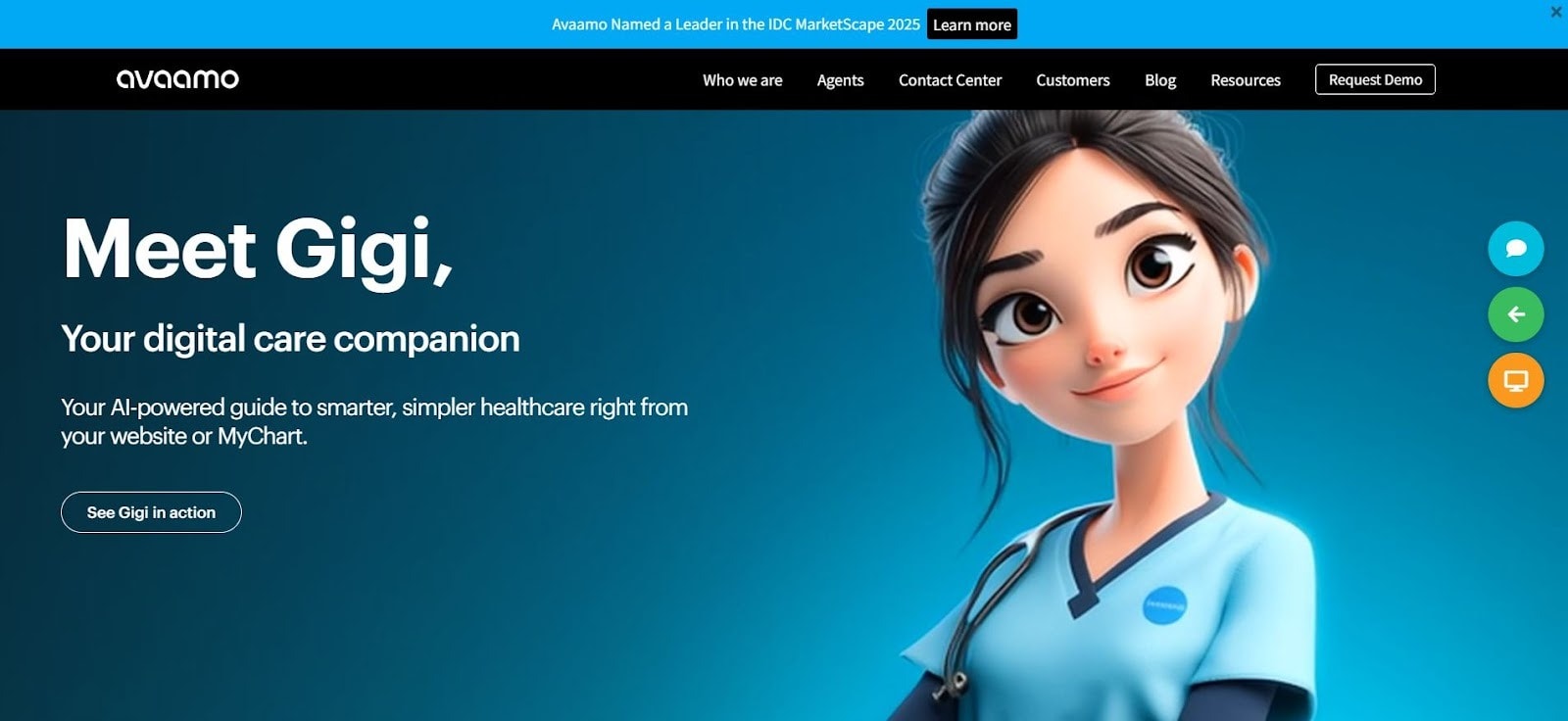
Avaamo is built on voice, chat, and domain-specific workflows, which have high-quality speech synthesis and contextual NLU. The platform manages discussion-based interactions and coordinates systems-wide processes.
Healthcare organizations utilize Avaamo to schedule patients, refill prescriptions, and remind them about appointments. It is followed by financial services to enquire about an account and to support transactions.
Voice quality is excellent. Avaamo's text-to-speech is more natural than some competitors'. It also has enterprise-level security certifications, including HIPAA, SOC 2 Type 2, and ISO 27001, enabling it to be directly embedded into sensitive systems such as medical records (Epic or Cerner) and financial cores (banking).
Pricing
Custom quote-based pricing focusing on successful task completion or volume.
12. Amazon Lex - Best for AWS Developer Teams
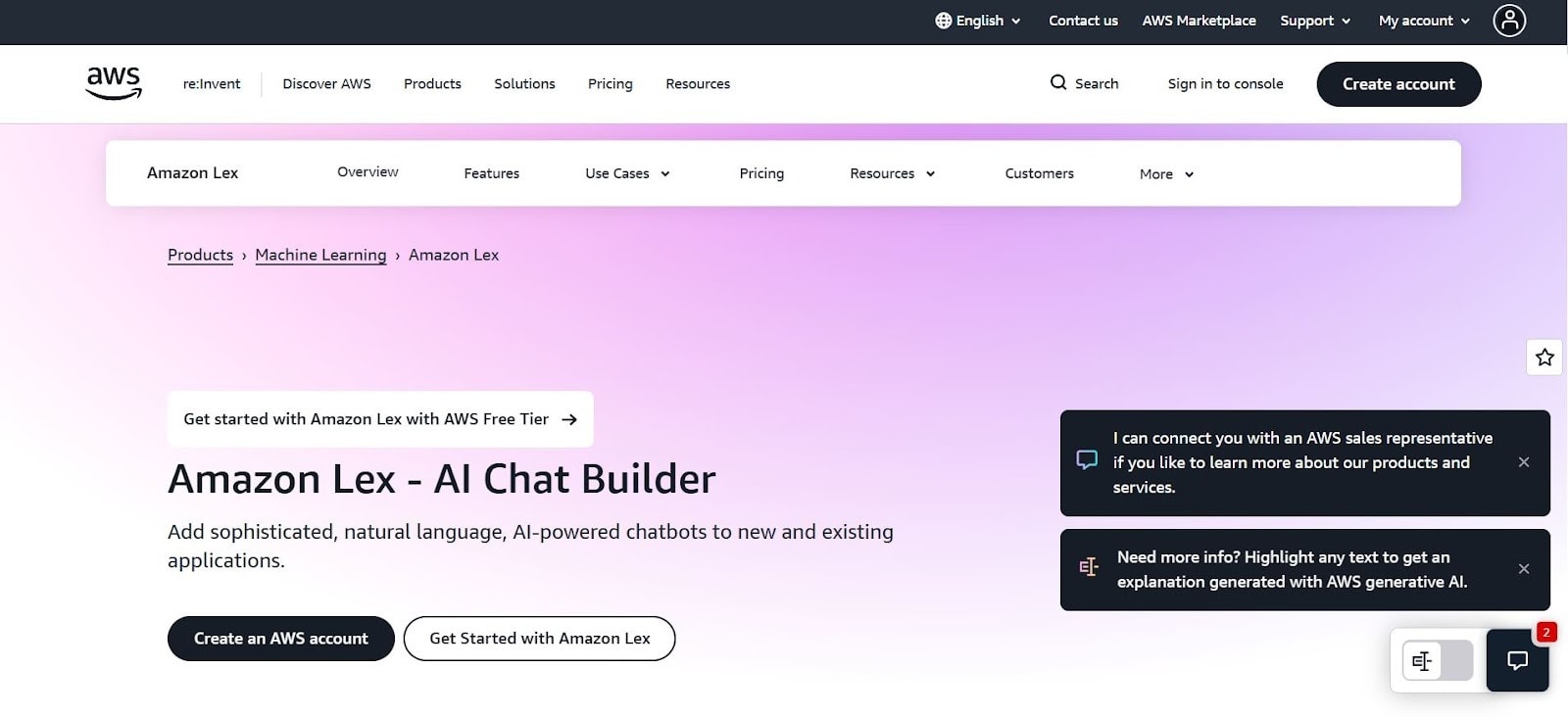
Amazon Lex is an AWS conversational interface developer that provides automatic speech recognition (ASR), natural language understanding, and direct integration with AWS workflows. In case you are already operating infrastructure on AWS, Lex will integrate well with your stack.
Developers use Lex to add conversations to applications, websites, and services. It can integrate with AWS Lambda for backend logic and connect to other AWS services.
Amazon Lex V2 currently supports a Visual Conversation Builder, a drag-and-drop development environment that enables developers to graphically represent a complete conversation flow and branching logic without any code. Coding options, including low-code and no-code tools, are essential for rapid application development and deployment in conversational AI solutions.
The catch? Lex is developer-focused. Technical skills are required to develop, install, and support Lex applications.
Pricing
Pay-as-you-go: $0.00075 per text request and $0.004 per speech request.
13. OneReach.ai - Best for Custom Workflow Builders
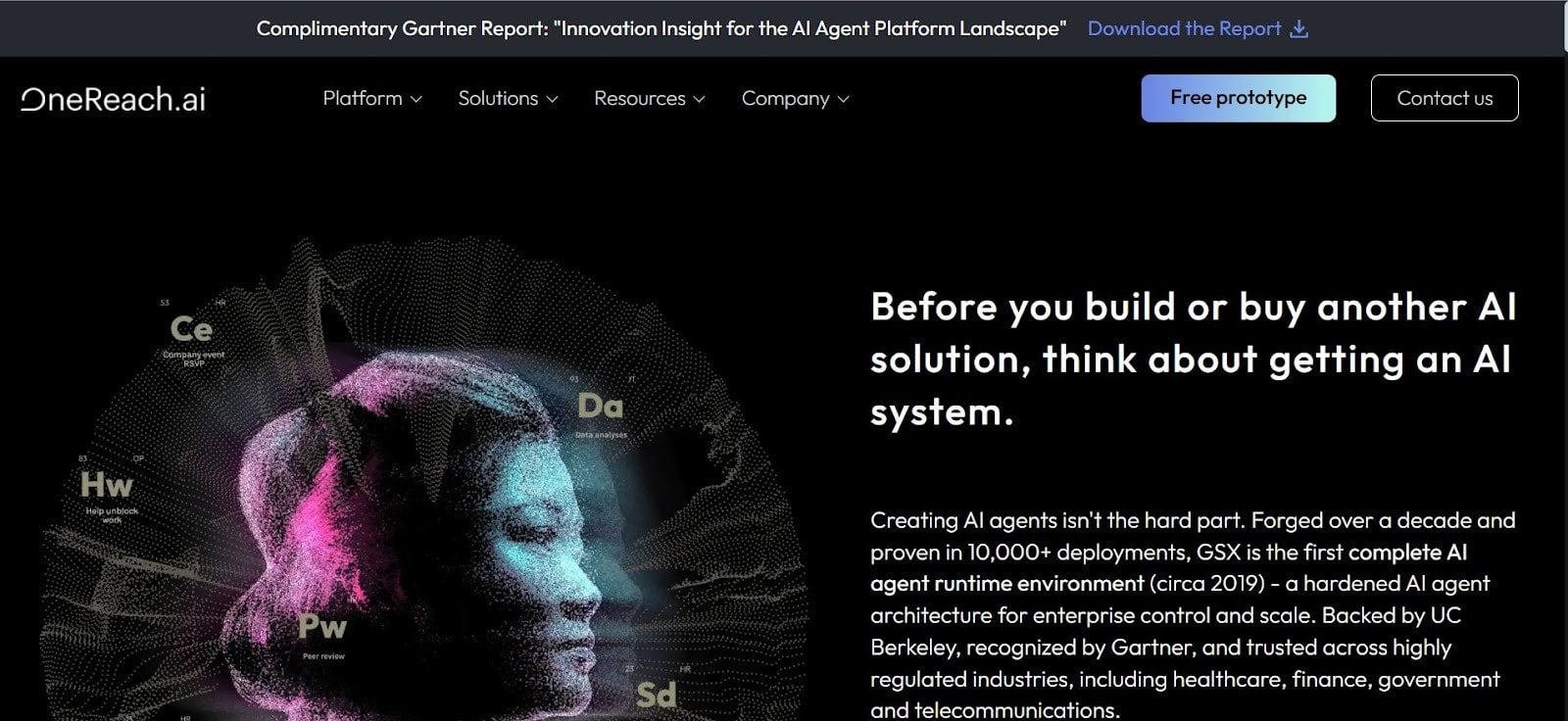
OneReach.ai is a low-code platform for developing intelligent digital workers via voice, chat, SMS, email, and other channels. The platform focuses on workflow orchestration (linking two or more systems and processes into automated journeys).
OneReach is used by marketing teams to conduct conversational campaigns. It automates omnichannel tickets used by support teams. Sales teams use it for lead qualification and appointment booking.
As opposed to simple chatbots, these digital workers are stateful, that is, they can remember context across channels and long durations, and may even pogo-stick across SMS, voice, and email in the same chat.
Pricing
Quote-based; usually involves a platform fee plus usage/orchestration costs.
Conversational AI use cases and real-world examples
Conversational AI tools solve real business problems across virtually every department. I will demonstrate what is in fact operating in 2026 (not speculation, but the facts of operation). Conversational AI agents are increasingly used in customer service to meet high customer demands despite limited human resources.
Customer support and IT helpdesk
This is the area where conversational AI is most valuable. The support teams are bombarded with redundant queries, password resets, account verifications, and basic troubleshooting. That is done automatically by AI.
How it works: The assistant identifies frequent problems, retrieves articles in the knowledge base, runs resolution processes, and forwards more complex issues to human agents in their entirety. There are faster responses to customer requests. The agents focus on tasks that require human judgment.
Real impact: 92% claim to save time in solving customer problems in small contact centers, and 87% say that AI makes the jobs of the agents easier.
Similar advantages are observed with IT help desks. Conversational assistants built with identity management and ticketing systems will immediately solve password resets, software access requests, VPN troubleshooting, etc.
Sales, lead qualification, and revenue workflows
AI conversational agents qualify leads, book sales calls, nurture prospects, and power conversational commerce across channels. AI now reaches out to leads, rather than holding them in your CRM awaiting a follow-up.
The work process: a person completes a contact form. AI messages them instantly. Asks qualifying questions. Decides whether they are suitable. Books call in with sales qualifications. Feed them with content that is relevant in case they are not ready. All automatically.
In retail and e-commerce, conversational commerce (buying products through chat) is on fire. Customers shop, pose questions, receive customized suggestions, and make purchases without leaving the discussion.
Marketing, SEO, and content workflows
This is where multi-agent conversational AI services really shine compared to single-assistant platforms. Marketing needs experts: someone who knows SEO, someone who knows how to write compelling copy, and someone who knows how to handle social media.
Exceptional AI employees deal with:
- SEO audits and search engine optimization (such as Seomi)
- Developing content (as Penn) and copywriting.
- Planning and implementation of campaigns.
- Performance Analysis and Optimization.
Data from interactions with AI agents can provide insights into customer sentiment and trends, aiding business strategy.
E-Commerce, support, and post-purchase journeys
Conversational AI takes e-commerce to a whole new level, beyond asking questions about products. It directs shopping, proposes goods based on preferences, upsells, tracks orders, handles returns, and monitors customer satisfaction throughout the trip.
The experience: A customer comes to your shop seeking running shoes. AI incorporates questions on their running style, running terrain, budgeting, and preferences. Presents three alternatives that would be in their best interest. Responds to questions relating to sizing and shipping. Completes the purchase—following care instructions.
Commet (Sintra eCommerce specialist) automates product search, recommendations, order status, return requests, and after-sales services. Customers receive assistance at their convenience, without waiting in line to be served by humans.
Social media, brand engagement, and communities
It is tiring to control social media manually; replies, direct messaging, mentions, community posts (they never end). Conversational AI interacts automatically whilst preserving your brand voice.
What AI manages:
- The ability to generate replies to comments and DMs in real-time.
- Auto-write content calendar posts.
- Being proactive with the followers.
- Measuring brand mentions and sentiment.
- Determining opportunities and trending topics.
Soshie (Sintra's social media AI) responds to comments, answers product questions, forwards support issues appropriately, and writes posts for review.
Virtual and personal assistants for busy teams
Conversational AI agents automate scheduling, reminders, inbox triage, research, admin tasks, and all the operational work that eats up hours every week.
Tasks they handle:
- Scheduling meetings and managing calendars
- Triaging emails and flagging priorities
- Conducting research and summarizing findings
- Creating documents and presentations
- Setting reminders and following up on tasks
Vizzy (Sintra's virtual assistant) and Gigi (personal assistant) handle the administrative overhead that prevents you from focusing on high-value work.
Why every business needs conversational AI in 2026?
Look, I won't go so far as to say that every single company has to implement conversational solutions tomorrow or they will definitely fail. That would be an exaggeration.
However, this is what the data reveals:
92% of businesses intend to invest in AI-powered software. It is not just any trend. Mass adoption is happening right now. Your competitors are not waiting for you. They are already rolling out this stuff.
97% of companies expect generative AI to create new teams (training, customer support, HR) in the near future. The time for this is not coming. It's here. Departments in companies are already using AI to perform their daily tasks.
77% of agents are confident that automation tools will allow them to complete more difficult tasks. AI is not substituting human teams. It is doing the monotonous work and allowing humans to work on tasks that require judgment, creativity, and relationship skills.
74% of small contact centers report positive feedback on AI's role in revenue growth. It is not only about saving costs. Revenue is driven through better customer experiences, faster response times, and improved satisfaction.
According to Gartner, by 2026, about 10% of interactions with agents will be automated, up from 1.6% today. This change is taking place very quickly.
Already, 71% of customers believe AI will make the customer experience more empathetic. The secret lies in knowing when and where to employ it to enhance the experience.
The business case is straightforward: Small teams can do the work of large teams thanks to conversational AI. Marketing, support, sales, and operations can be run with fewer people, at lower costs, and with better results.
One more statistic: The implementation of conversational AI in contact centers is expected to cut agent labor costs by $80 billion worldwide by 2026.
How to choose the best conversational AI solutions?
Purchasing conversational AI does not involve buying software in which you sign up, log in, and start using it right away. These systems become part of your work, they engage with your customers, and come to represent your brand. You need to choose carefully.
The following is the way to assess platforms without being overwhelmed or falling into sales pitches.
Step 1 – Define goals and use cases
Before you look at any conversational AI solution, write down 3-5 specific use cases you want to automate and the measurable outcomes you expect.
Bad goal: "Increase customer service.
Good goal: 50% of tier-1 support tickets to be automated in 90 days, and the overall average first response time will be lowered to 30 minutes, instead of 6 hours.
Bad goal: "Use AI for marketing."
Good goal: To publish 4 SEO-optimized blog posts per month and be able to take charge of daily social media interactions without raising the workload of the team.
Specificity matters. Unclear objectives lead to unclear execution that fails to deliver clear value. By creating measurable outcomes first, you can determine whether the platform is working.
For example, a client, Emily, wanted to operate with AI assistance. An hour was spent in determining what that was. She desired automated lead qualification (10 or more qualified sales calls per month), social media (posting and engaging daily with no manual effort), and customer support (automatically answering 60% of questions).
These very objectives helped us select the appropriate platform (Sintra multi-agent system) and define the success metric. Three months afterward, she achieved all three goals. Had she kept it to AI's use in operations, she would not have known whether it was effective.
Step 2 – Evaluate NLP quality and context
Most conversational AI technology sounds impressive in demos. After which, you roll it out and learn that the AI is misinterpreting half of the words customers say.
Lookouts
Before committing, you have to test three things:
- Intent recognition: Can the system read the minds of people as they say things in different ways? “I want my money back.” “This is not working.” “Can I get my money back?” “I want to return this.” It's all the same. Good NLP catches that. Bad NLP considers them as isolated requests.
Test it yourself. Repeat the same question five times in different ways. When the AI provides contradictory responses, it is a warning.
- Context retention: Are you able to remember what you were discussing three messages ago with the assistant? People do not repeat all the sentences. "I need help with my order." "It hasn't arrived." "I placed it two weeks ago." The AI is not supposed to interpret three distinct problems in the three sentences; instead, it is supposed to recognize that they are interconnected.
Bad systems lose context every time. You find yourself restating and repeating information, and this irritates everybody. My client Mark tried a platform that discriminated based on the context of 2 exchanges. Customers were furious. He switched platforms.
- Improvement over time: Does the system improve with errors? Machine learning implies that AI becomes more accurate as the number of conversations increases. Request that vendors provide information on how their systems learn and what they use to train.
Other platforms boast of machine learning but do not improve after implementation. That's not machine learning. That's marketing.
Test in the real world using real customer questions (not vendor demo scripts). See how it performs. When sellers refuse to let you test correctly, that is saying something.
Step 3 – Check integrations, data, and security
Conversational AI platforms don't work in isolation. To be useful, they must be related to your already existing systems.
Critical integrations to test:
- CRM ( Salesforce, HubSpot, Pipedrive ) for the customer data and leads.
- Support ticket creation and routing, Helpdesk (Zendesk, Intercom, Freshdesk)
- Employee and HR workflow data and HRIS (BambooHR, Workday, ADP).
- Order information and transactions for eCommerce (Shopify, WooCommerce, BigCommerce).
- Customer communication channels (WhatsApp, Slack, SMS, email, web chat).
When a platform does not connect with other tools you already use, it can take months to connect it on your end or manually copy data. Neither option is fun.
Sintra's AI integrations are out-of-the-box compatible with major platforms, and your AI team will have access to customer data, generate tickets, and automatically update CRMs and workflows without having to develop them themselves.
Is my data secure?
Data security is a bigger issue than people believe. You are feeding customer discussions, personal information, and business information into these systems. Where does that data live? Who can access it? How is it encrypted? What would occur in the case of a breach?
Ask vendors directly:
- Where is data stored? (US, EU, specific cloud provider)
- Is data encrypted at rest and in transit?
- Who has access to conversation logs?
- What's your incident response plan?
- Are you SOC 2 or ISO 27001 certified?
For regulated businesses (healthcare, finance, legal), compliance requirements cannot be negotiated. HIPAA, GDPR, and CCPA (not recommendations). Ensure the platform complies with your business's regulations.
Step 4 – Compare automation depth and architecture
No two conversational AIs perform in the same way under the hood. The reason architecture is essential is to determine which systems can be automated.
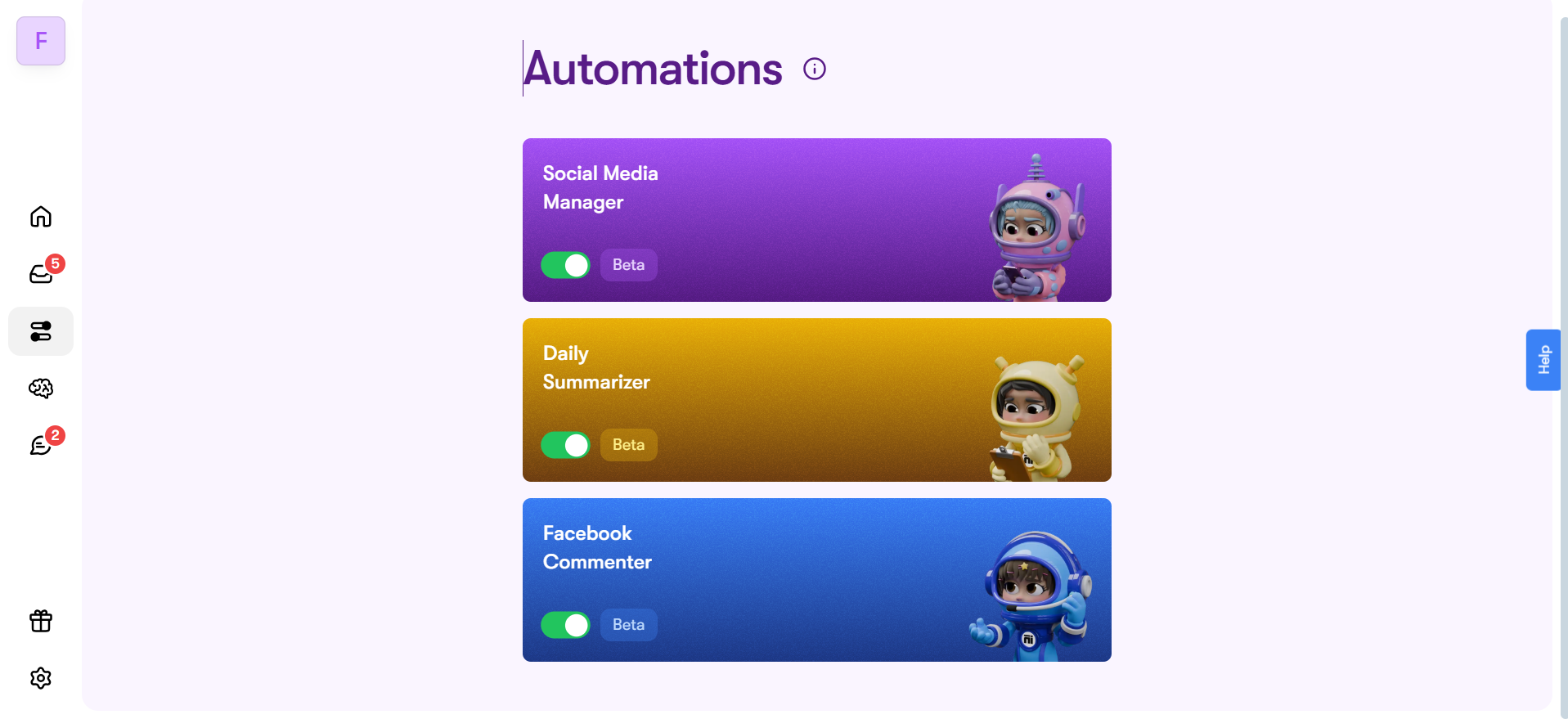
From Rigid Rules to Intelligent Workflows
Bots that follow rules use decision trees. "If the user says X, respond with Y." They are rigid yet predictable. Any straying off the script shatters them. These worked okay in 2018. They're obsolete now.
Whereas NLP is used in backend automation within workflow engines. The AI receives requests and implements multi-system processes. More advanced than rule-based bots, but weak. They usually have one assistant who is attempting to do it all.
Why Experts Outperform Generalists
Multi-agent systems deploy specialized AI-powered conversational agents that each focus on specific domains. "Marketing AI" manages marketing, "Support AI" handles support, and "SEO AI" handles SEO. They exchange knowledge in central memory systems and automatically coordinate.
That is why multi-agent architecture is the best decision in most businesses: Experts are better than generalists.
Role-Specific Intelligence and Central Memory
One assistant who attempts to handle marketing, support, sales, and operations will be average at all of it. It is unable to acquire in-depth domain knowledge. It becomes disoriented in changing contexts. It provides generalized responses because it lacks expertise.
Expertise in specialization develops in agents. They know industry jargon, general processes, and practices specific to their role. When they exchange knowledge within a system such as Brain AI, specialization and coordination emerge.
When single assistants operate: Basic applications with one feature (such as processing support FAQs or just qualifying leads).
When multi-agent systems are effective: Complex work involving the solution of multiple functions (which characterizes most of the real businesses).
Step 5 – Run pilots and measure impact
Do not purchase enterprise licenses on behalf of your organization until you have demonstrated that the platform is actually functioning. Start with small steps, test high-impact use cases, measure results, then scale what works.
Smart pilot approach:
- Select 1-2 high-volume, high-frequency cases (password resets, lead qualification, FAQ responses)
- Establish specific KPIs (response time, resolution rate, cost per interaction, customer satisfaction)
- Test in real traffic (30-60 days).
- Compare real performance with objectives.
- Test based on what you know.
Key metrics to track:
- Rate of resolution: How often does AI process requests without the help of a human?
- Response time: How quickly are the customers served?
- Customer satisfaction: Do people feel happy with AI interactions? (Measure, and do not suspect)
- Cost per interaction: How much does each interaction cost as compared to human processing?
- Agents' workload: What time does AI save your team?
Track these conversational AI tools metrics religiously during pilots. When numbers are not improving significantly, it may be a wrong platform or the implementation should be modified.
Don't be too optimistic at first. AI systems get better with time since they learn through interactions. However, you can expect definite improvement after 30-60 days. If you don't, something's wrong.
Waiting is an issue with pilots. But so does good measure. Unless the results are moving in the right direction within 60 days, then cut your losses and experiment with something new.
Food for thought – the future of conversational AI assistants
The current transformation is about reactive to agentic AI. Existing systems primarily react to requests. The systems of the future will be proactive, design workflow, and achieve objectives on their own.
The agentic AI agents who really do the work. You tell your marketing AI, "I need to grow organic traffic by 20% in the next quarter," and it develops the strategy, makes optimizations, posts content, and monitors progress without active oversight. We're seeing early versions with AI-powered conversational agents like Sintra's specialized employees, but it's going to get way more sophisticated within 2-3 years.
Multimodal experiences with text, voice, images, and video. You will provide your assistant with a photo and ask them to find something similar for less than $50. Or give a screenshot of an error and troubleshoot instantly. Voice is well supported on platforms such as Amazon Lex. The second jump involves actual multimodal knowledge of all input modalities simultaneously.
Greater autonomy in which AI takes decisions within the confines. Your sales AI bargains on simple terms. AI refunds are capped. Your marketing artificial intelligence adjusts campaigns based on performance. This involves trust, though as accuracy increases, more companies will allow AI to operate with greater autonomy.
Working AI teams with specialized agents. Your AI-based research is a data collector. It is interpreted by your analyst AI. The report is generated by your writer AI. Everything is automatically coordinated. It is already occurring with the creation of platforms such as Sintra, where AI employees exchange knowledge on Brain AI.
It is not whether this future is approaching; it's here. Will you be an early adoptee and benefit, or will you wait until your competitors start climbing the AI ladder?
Why Sintra AI is the ultimate choice for 2026 and beyond?
Most conversational AI agents give you one assistant trying to do everything, such as support, sales, and marketing. That assistant becomes mediocre in it all.
Why settle for a generalist when you can hire a department of specialists?
Sintra provides you with 12+ dedicated AI employees, each specializing in their field and doing it exceptionally well. Seomi runs SEO, Penn writes copy, Soshie manages social media, and Commet handles eCommerce. They do not simply react when questioned, they work proactively.
This is possible because of the Brain AI architecture. Each of your AI employees has an intelligence called central. By the time your support assistant learns of a customer, your sales assistant is already aware. Such an integrated strategy outsmarts platforms that isolate discussions.
Sintra provides unparalleled flexibility and depth of automation to SMBs and scaling teams. You are not purchasing software that will take months to implement, but you are hiring an AI team that can work within hours.
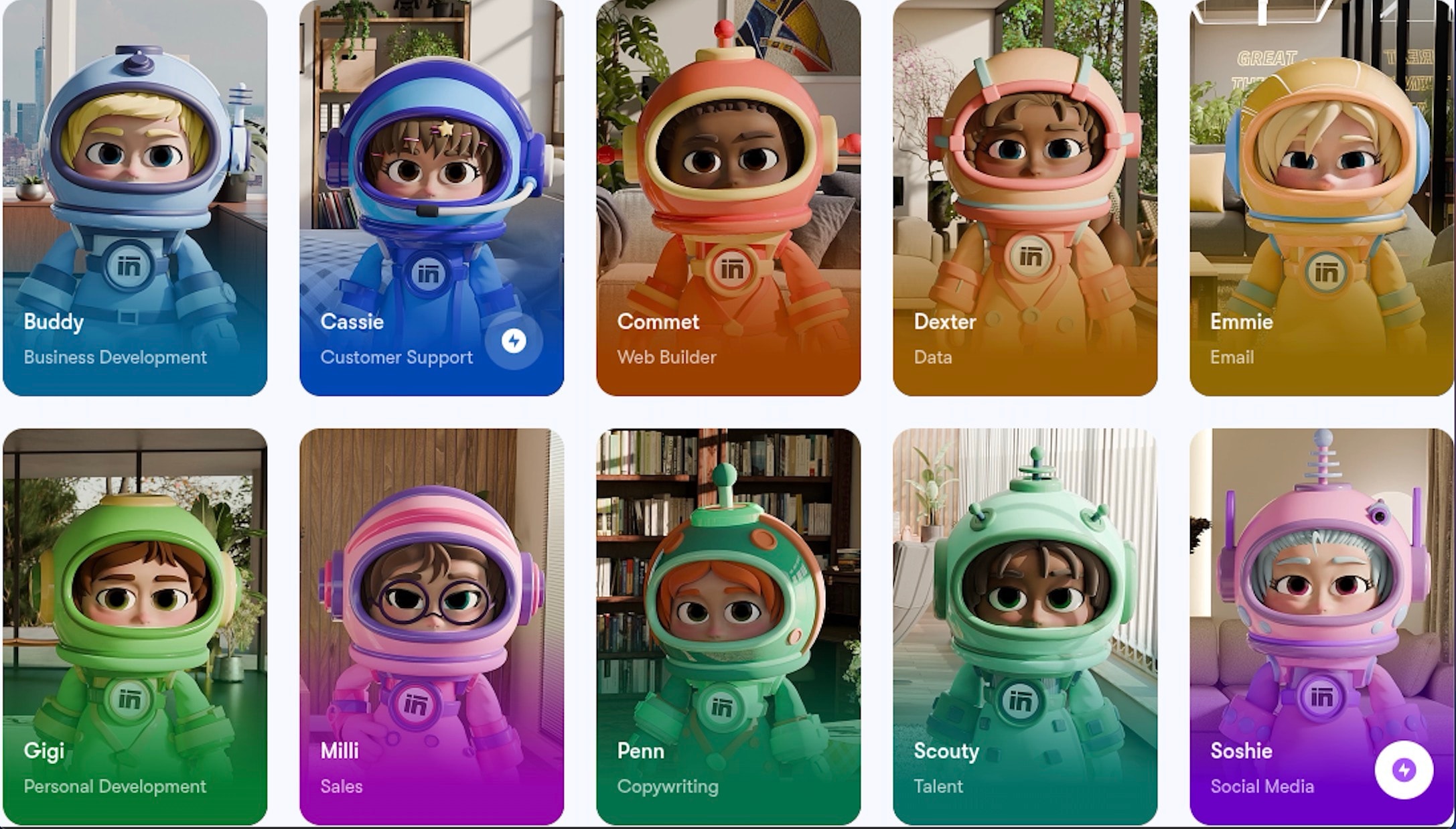
Real case study: A client, Maria, owns a small eCommerce brand with eight people, but it requires the features of a 30-person company. Sintra was introduced to her six months ago. SEO, content, social media, support, and admin are now assigned to specially trained artificial intelligence (AI). Revenue increased 60%. Team workload decreased. That's the best conversational AI advantage.
Don’t wait – start your AI team today.

Begin with 2-3 AI employees who specialize in your most pressing pain points. If you are overwhelmed by support, start there. If marketing lags, begin with Seomi and Penn. In case of social media inconsistencies, begin with Soshie.
Link them to your information systems and knowledge bases. Allow them to learn your business in 2-3 weeks, then evaluate. The majority of people notice obvious value in the initial month.
The conversational AI services you need are available right now. Get started today and find out what can be accomplished when specific AI takes over the execution, and you concentrate on strategy and growth.
Best conversational AI FAQs
What is a conversational AI assistant, and how is it different from a chatbot?
Conventional chatbots have strict scripts. Conversational AI operates using natural language processing to comprehend context and intent, process messy language, recall conversations, and improve over time. Best systems, such as Sintra, are multi-agent systems, and specialized AI digital workers specialize in particular domains rather than a single bot, which fails at everything.
Which conversational AI platform is best for small businesses in 2026?
Sintra AI is the best choice in most small businesses, as you get 12+ experts in AI at a cost that is less than that of a single employee. They are 24/7, knowledge-sharing Brain AI, and take hours to set up. Enterprise platforms are pricier and take months to implement.
How much do conversational AI assistants typically cost?
Enterprise solutions (Sprinklr, IBM) cost around $100,000/year. Mid-market platforms cost between $1,000 and $5,000 per month. Small businesses such as Sintra begin with approximately 500 monthly users and multiple AI workers. There are always implementation and training costs to consider, in addition to software costs.
Can conversational AI assistants work with existing tools and data?
Yes, but quality varies. Good platforms are integrated with 50+ tools by default and can be set up in hours. Average platforms need to be designed and integrated in a matter of weeks. Make sure that the platform is integrated with your key systems, then commit.
What are the most significant risks when adopting conversational AI?
Most projects are killed due to poor implementation. Businesses do little preparation and want magic. Before going live, you require system training, data connection, and testing. Other tips include not setting unrealistic expectations (AI is not going to replace teams overnight) and ensuring sensitive data is appropriately secured.
How long does it take to see results from conversational AI?
With proper implementation, most businesses achieve results within 30-90 days. FAQ automation is a quick win that occurs within 30 days. Multi-channel support and content production are reflected within 60-90 days. Complete operational transformation requires six or more months.
Will conversational AI replace human teams?
No. AI handles repetitive tasks, routine questions, and 24/7 service. Human beings deal with complicated issues, connections, and creative planning and decision-making. Small teams of skilled individual members are retained in winning businesses and enhanced by AI. You achieve in 8 people what would have taken you 30 people to achieve.
Related articles