How to use AI for email personalization?

Table of Contents
In 2026, email personalization means way more than "dear sir/madam". Your audience expects emails that feel personal and relevant. That's where AI-driven email personalization comes in. AI-powered tools can analyze user behavior, preferences, and past interactions to craft emails that are actually opened.
But is email personalization really that necessary? Studies show that using the recipient's first name in the subject line can increase open rates by 26%. This happens just by using their first name, shocking, right?. Imagine how high the sales can go if you personalize the emails dedicatedly.
This guide walks you through how to use AI for email personalization, the best practices and strategies, and real-life examples of brands nailing it. Whether you're a marketer, founder, or just trying to improve email campaigns, you'll get insights for boosting engagement and conversion with smart AI employees.
Quick Answer
First, collect data on your subscribers' behavior, preferences, and past interactions. Next, segment users by interests, purchase history, or engagement levels. Then let AI generate and adapt content.
Each subject line, copy, and recommendation will be tailored separately for each segment. Finally, automate workflows and optimize results by testing what works. Track performance and refine your campaigns for better open rates and conversions. Once done, you will see for yourself how efficient email personalization has become thanks to AI.
Key Takeaways
The email inbox is a crowded place. If your message doesn't feel personal, it gets ignored. AI-driven email personalization strategies help you tailor content for each subscriber. This makes the messages more relevant and engaging.
Personalized emails can achieve 6x higher transaction rates than non-personalized emails. In this guide, you'll learn how to collect the right data, segment your audience, craft AI-powered emails, automate workflows, and optimize results for maximum impact.
- AI speeds up personalization: You don't have to write hundreds of emails manually. AI can generate customized content within minutes.
- Improves relevance: AI analyzes behavior, preferences, and past engagement to suggest content that truly relates to the recipients.
- Boost engagement: Personalized emails are more likely to be opened and clicked.
- Scales human-like messaging: Even large subscriber lists can receive messages that feel individually crafted.
These are some of the features that AI email content personalization can offer to you. With these tips and techniques, you can see how AI can make campaigns smarter, faster, and more engaging.
What is AI Email Personalization?
AI email personalization is simply making the most of cold emails with AI. It goes beyond using a first name in the subject line. AI analyzes data to shape what each person receives. This includes subject lines, copy, timing, and even product suggestions.
For effective email personalization in marketing, AI tools analyze data such as opens, clicks, purchases, and browsing history. It identifies patterns that humans would typically miss. It then predicts what a reader is most likely to care about. Based on that, it generates or adapts email content in real time.
Spotify uses AI to create weekly personalized playlists and email updates for millions of users. Amazon recommends products to you based on your browsing history.
AI email content personalization also improves with every send. The system learns what works and what doesn't. Over time, emails feel more natural and less automated. For example, an online retailer can use AI to send follow-up emails based on products a customer viewed but didn't purchase.
The result is simple. Emails feel relevant, readers feel understood, and engagement goes up without extra manual work.
Benefits of AI Email Personalization
AI-driven email personalization does more than make emails sound friendly. It directly impacts performance across key metrics, starting with open rates. Let's take a closer look at more of its benefits:
Increase open rates
68% of Americans say they base their decision to open an email on the 'from' name. AI improves email open rates by optimizing subject lines, send timing, and audience targeting based on real user behavior. Instead of relying on assumptions, AI analyzes past interactions to determine what is most likely to resonate with each recipient.
AI also predicts the best time to send your emails to each user. Emails sent at the individual's best hours are more likely to get clicks because that's when people are most active in their inbox.
Sephora designs subject lines and send times based on browsing history and past purchases. Personalized subject lines like "You left something behind - here's 20% off!" often get higher open rates than a generic "Big sale this week!"
Boosts Customer Engagement
Instead of sending the same email to everyone, AI adapts subject lines, body copy, and even dynamic elements based on preferences. This makes emails feel relevant and timely, which naturally encourages more clicks and interactions.
Personalized emails can see up to 41% higher click-through rates and 82% higher open rates. Personalization isn't just a nice touch; it directly lifts engagement metrics because each message feels built for the individual.
Brands like Spotify and Netflix use AI to recommend services in emails based on purchase history. This practice often leads to much higher interaction than broad, non-targeted campaigns.
Improves Relationship Building
Personalized emails strengthen trust and connection between your brand and clients. When people see content that's designed for their needs, they feel understood. It doesn't feel like marketing to them anymore.
Studies show that 91% of consumers are more likely to buy from a brand that offers relevant recommendations. That relevance often starts with personalized communication.
When a message reflects someone's preferences, they view the brand positively. This builds a deeper, longer-term relationship that goes beyond a one-time click. Brands that consistently send relevant content are seen as helpful rather than intrusive.
One email personalization example is Starbucks. Starbucks uses data from its mobile app to create email content. From rewards updates to personalized offers, everything is based on past offers.
Drives Sales
Sales email personalization strategies increase purchases by serving people what they actually want. It uses recommendation engines, timing optimization, and behavior triggers to make offers feel relevant to each user. Using AI for sales emails removes guesswork and encourages readers to buy.
Personalized emails now generate around 760% more revenue than non-personalized campaigns. That's because triggered offers convert at a much higher rate. Segmented, AI-driven messages outperform generic ones as they help customers, not bombard them with spam.
Often Overlooked, Yet Very Important
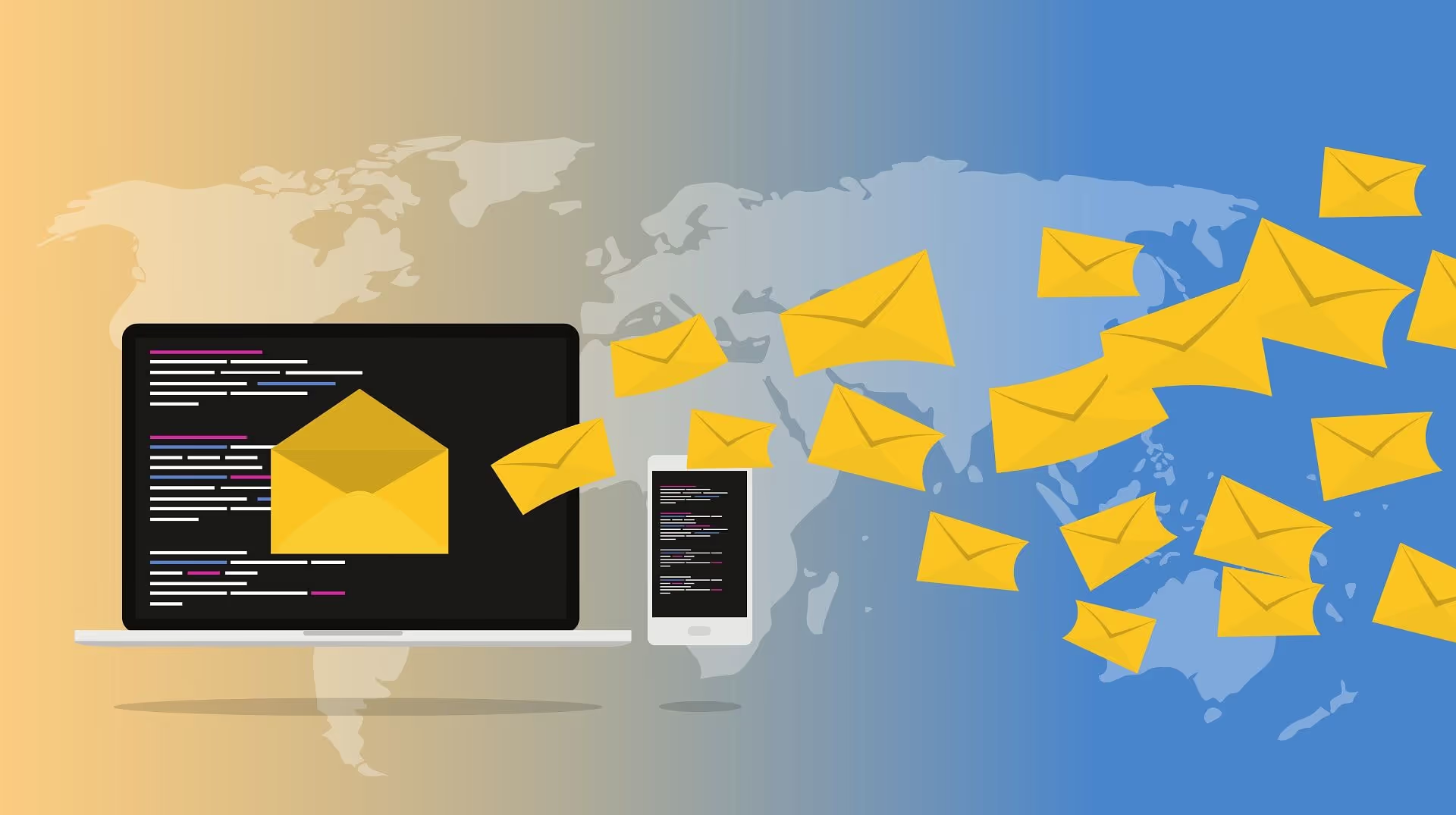
When it comes to email personalization best practices, some factors hold tremendous importance. These practices can make or break a deal. They can be as trivial as choosing the right tools or connecting your current stack.
Let's take a detailed look at these underrated practices:
Choose the Right Tool
Picking the right AI email personalization tools is more than just a checkbox exercise. The wrong tool can slow you down or send irrelevant messages. You want one that delivers without endless monitoring.
Here's what to look for:
- Accuracy: The tool should accurately analyze user behavior. Recommendations must match real preferences. It's worth noting that results vary - only 60% of marketers saw improvement from AI-generated email copy, lower than other personalization tactics. Dynamic content personalization led with 38% reporting much improved results, making it the benchmark to aim for.
- Personalization depth: It should go beyond first names. Think browsing history, purchase patterns, and engagement signals.
- Scalability: The platform should handle growing subscriber lists without losing speed or precision.
- Ease of use: Beginner-friendly dashboards are a must-have. Teams should be able to launch campaigns quickly without extensive training.
All-rounder tools like Sintra AI's helpers combine multiple AI agents to manage personalization in email marketing. They analyze behavior, optimize content, and adjust campaigns in real time. Using such an ecosystem reduces manual efforts while improving results.
Integrate With Your Stack
An effective email personalization strategy depends on how well your tools work together. AI in email personalization cannot operate in isolation. When AI integrates with your CRM, it understands user history and behavior.
Next, it connects with analytics tools, and it learns timing, intent, and engagement patterns. Ecommerce and CMS integrations add another layer of clarity. It feeds on purchase data, browsing activity, and live content.
This is how personalization in email becomes accurate. The AI stops guessing. It reacts to real signals in real time. As a result, messages stay relevant across campaigns.
Follow A Good Email Framework
Email personalization techniques work best when structure does the heavy lifting. AI can design content, but it still needs a clear flow to follow. That is where simple frameworks come in.
Here's a quick comparison between AIDA and PAS frameworks:
AIDA Framework
- Attention: Grab your reader's attention instantly by using personalized subject lines and openings.
- Interest: Add relevant context using behavioral or preference data.
- Desire: Show a specific benefit that matters to the reader, not a generic "Big Sale" feature.
- Action: End with one clear, personalized call to action.
PAS Framework
- Problem: Address a real pain point the reader is likely facing.
- Agitate: Highlight the cost of frustration of not fixing that problem.
- Solution: Present your offer or message as the clear next step.
These email personalization tips give structure to your AI stack. They also keep your emails focused, readable, and conversion-driven without sounding robotic.
Top Strategies for Personalization
Email personalization works best when you stop treating your mailing list like a crowd. Not everyone experiences the same thing. Not everyone wants the same thing. This is where smart strategy matters, and it starts with segmentation.
Segment Audiences
Segmentation means grouping people based on shared traits. Personalization goes a step further than this. It changes the message itself for each person. That is the key difference when people ask, "What is the difference between email segmentation and personalization?"
Segmenting your audience allows you to provide personalized content that resonates with subscribers. It involves demographics, interests, behavior, or purchase history to send relevant messages. You can also segment your list by location, job role, and industry. Segmentation decides who gets the email. Personalization decides what the email says.
This matters the most for cold email personalization. When outreach emails feel generic, they get ignored. When they reference a real problem, role, or trigger, they feel human. AI helps here by creating personalized variations within each segment.
Use Automation
Automation turns good ideas into repeatable systems. Instead of sending one-off emails, you build journeys for the readers. These journeys react to user actions in real time.
Someone signs up; they get a welcome email. Someone clicks a product page; they get a follow-up that matches that interest. This is where triggered emails jump into action. Triggered emails are a must-have in email marketing, as they are sent in response to specific customer actions.
Timing stays consistent, messaging stays relevant, automation handles delivery, pacing, and triggers. You focus on strategy, not scheduling.
Create Dynamic Content
Dynamic content changes the email itself based on who is reading it. This is where AI email content personalization really shines. Emails should be optimized for mobile responsiveness due to high open rates on mobile devices. One email, many variations.
Dynamic blocks can switch headlines, images, offers, or CTAs. Conditional copy adjusts tone or messaging based on role, behavior, or stage. A new lead sees education, and a returning customer sees an upgrade. Emails feel fresh because they are different for each reader.
Don't Forget Birthdays and Anniversaries
Life events are easy to miss, but that is why they work so well. Just when someone thinks no one will wish them, a personalized email will make their day, and increase your sales.
Birthday emails and anniversary messages feel personal without being invasive. They show awareness and effort. These simple examples often outperform regular campaigns. Add a small reward or message and let automation handle the dates. Engagement usually follows behind.
Recommend Products
AI tools are notorious for tracking your wishlists and filled carts. It checks out your browsing history, past purchases, and intent signals. It predicts what someone might want next, and these predictions often come true.
Instead of blasting your full catalog, you send targeted suggestions. This is one of the most effective email personalization strategies today. The emails feel helpful, not pushy, and conversions tend to rise because the offer actually makes sense for the reader.
Personalize Sender Information
People check who an email is from before they read it. A generic sender name hurts trust, even if it is a personalized email. A real name builds that trust. That decision alone takes seconds.
Using a human sender, like a founder or account manager, works better than a brand-only label. It feels direct and intentional. This is one of the most proven tips for AI email content personalization.
Send Re-Engagement Emails
Not every subscriber stays active all the time. What matters the most is how you bring them back. AI helps spot drop-off early. It tracks opens, clicks, and inactivity patterns and triggers the right message at the right time. Triggered emails are automated emails sent in response to specific customer actions, such as cart abandonment.
A strong email personalization strategy uses tone and timing to re-engage. Some users need a reminder. Others need an incentive. AI adapts both. These email personalization workflows feel thoughtful, not desperate, which makes win-back emails more effective.
Create Personalized Content
Personalizing content is where AI shines the brightest. It adjusts tone, structure, and adapts emotion based on behavior.
Personalized emails might feel friendly to one user. The same might feel direct or informal to another. However, AI changes the intent for every user. This is the real advantage of AI-driven personalization.
Employ AI to Do Heavy Lifting
Personalization sounds great in theory. In practice, it gets messy fast. Too much data, too many users. This is where AI steps in and does the boring work for you.
Adapt Your Messages Using Customer Data
AI-driven email personalization works because it looks at browsing behavior, past purchases, inactivity, and abandoned carts. Then it adjusts the message to match intent. No guesswork; only real signals.
Someone who viewed pricing twice needs a different email than someone who left a cart behind.
AI automatically applies these email personalization strategies. Tools like Sintra's Brain AI remember context over time. That means emails get smarter with every interaction, not repetitive or random.
Run Lead Nurturing Campaigns Automatically
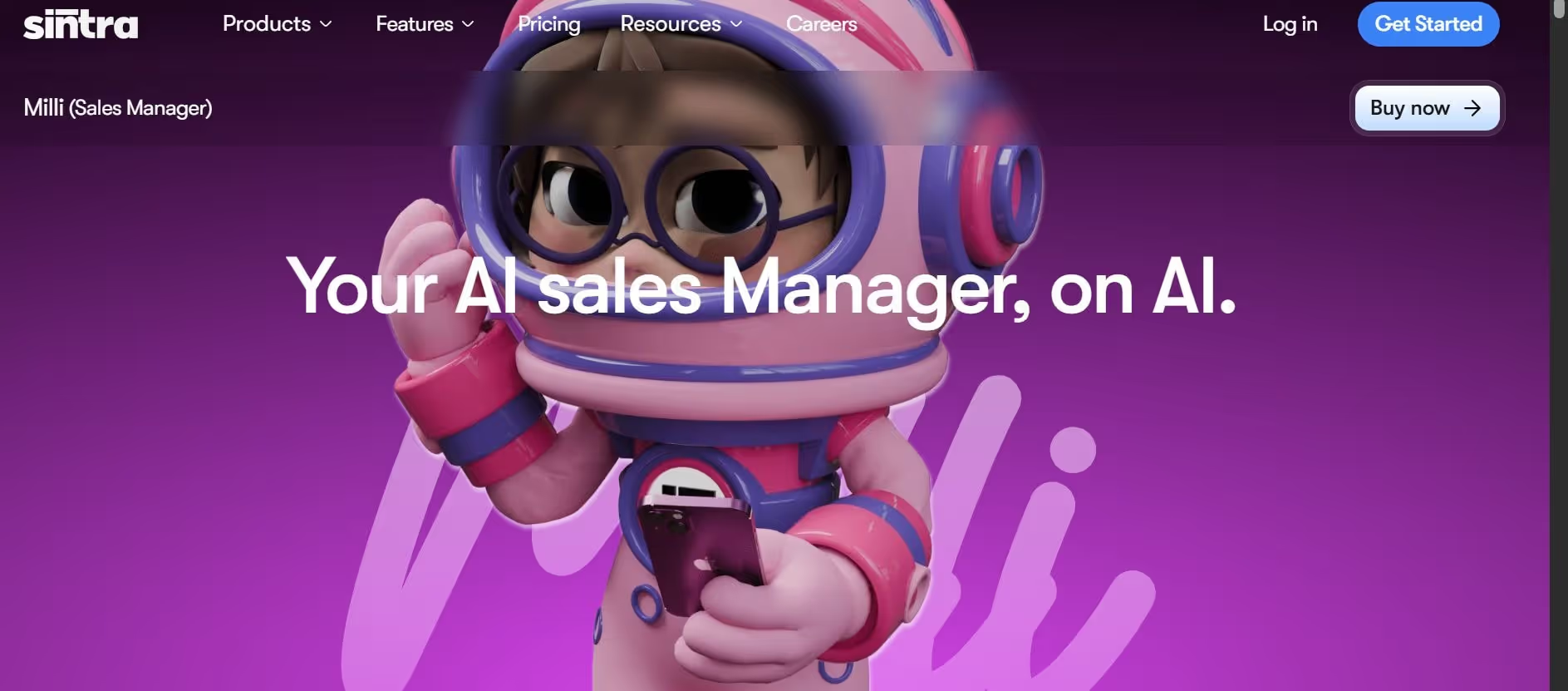
Lead nurturing breaks when it relies on manual follow-ups. AI fixes that. It runs sequences and adjusts timing. It changes messaging based on how each lead reacts.
These email personalization techniques help you scale without sounding like a machine. It knows when to push and when to pause. This makes email marketing personalization consistent and reliable. Sintra’s AI Sales Manager does this well by managing conversations like a real rep would.
Analyze Customer Behavior
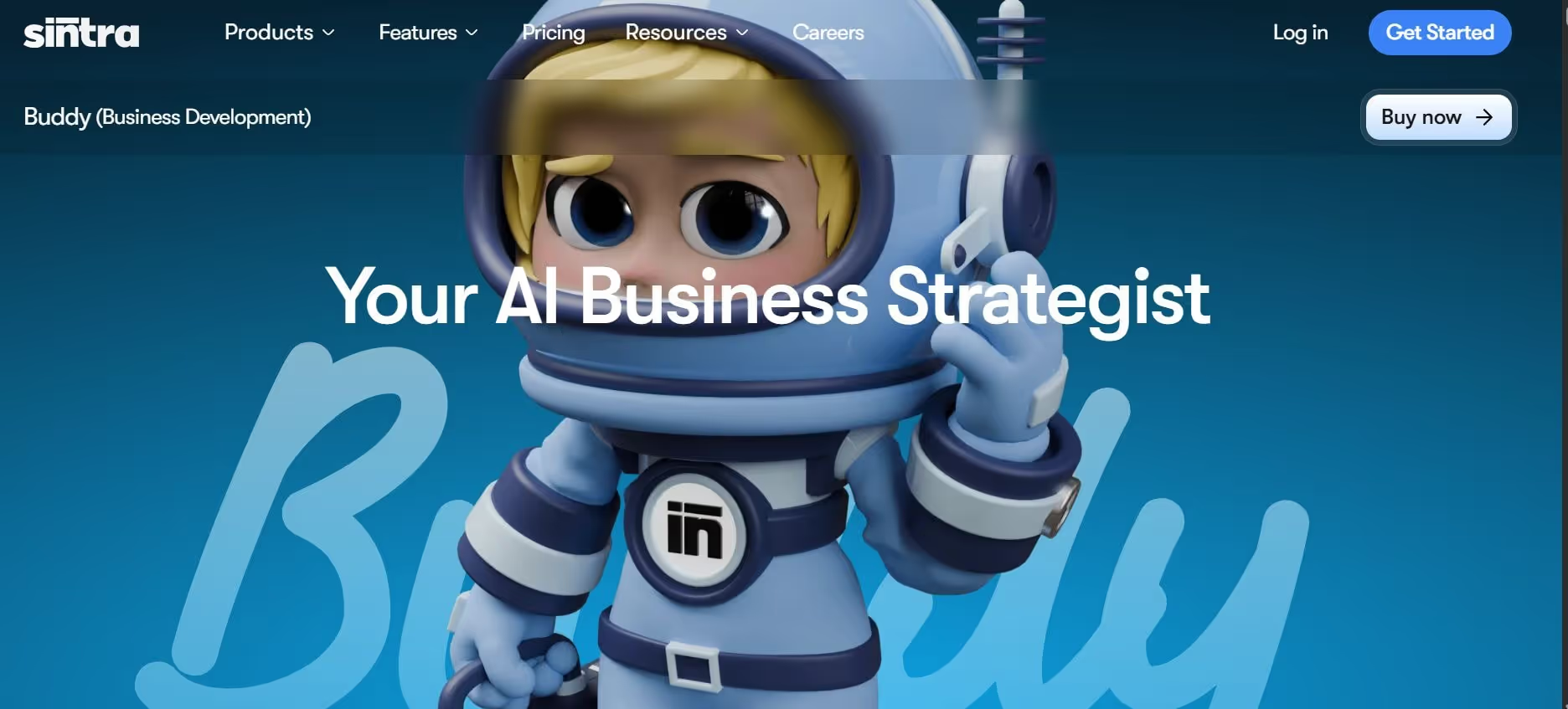
AI in email personalization predicts how users will react. It looks at past clicks, opens, and engagement patterns. Then it estimates the likelihood of a response. It can also suggest the optimal send time for each user.
Using predictive analytics is a smart way to boost results without guessing. Sintra’s AI Business Coach helps analyze behavior and provides actionable insights for better campaigns.
Craft On-Brand, Compelling Copy
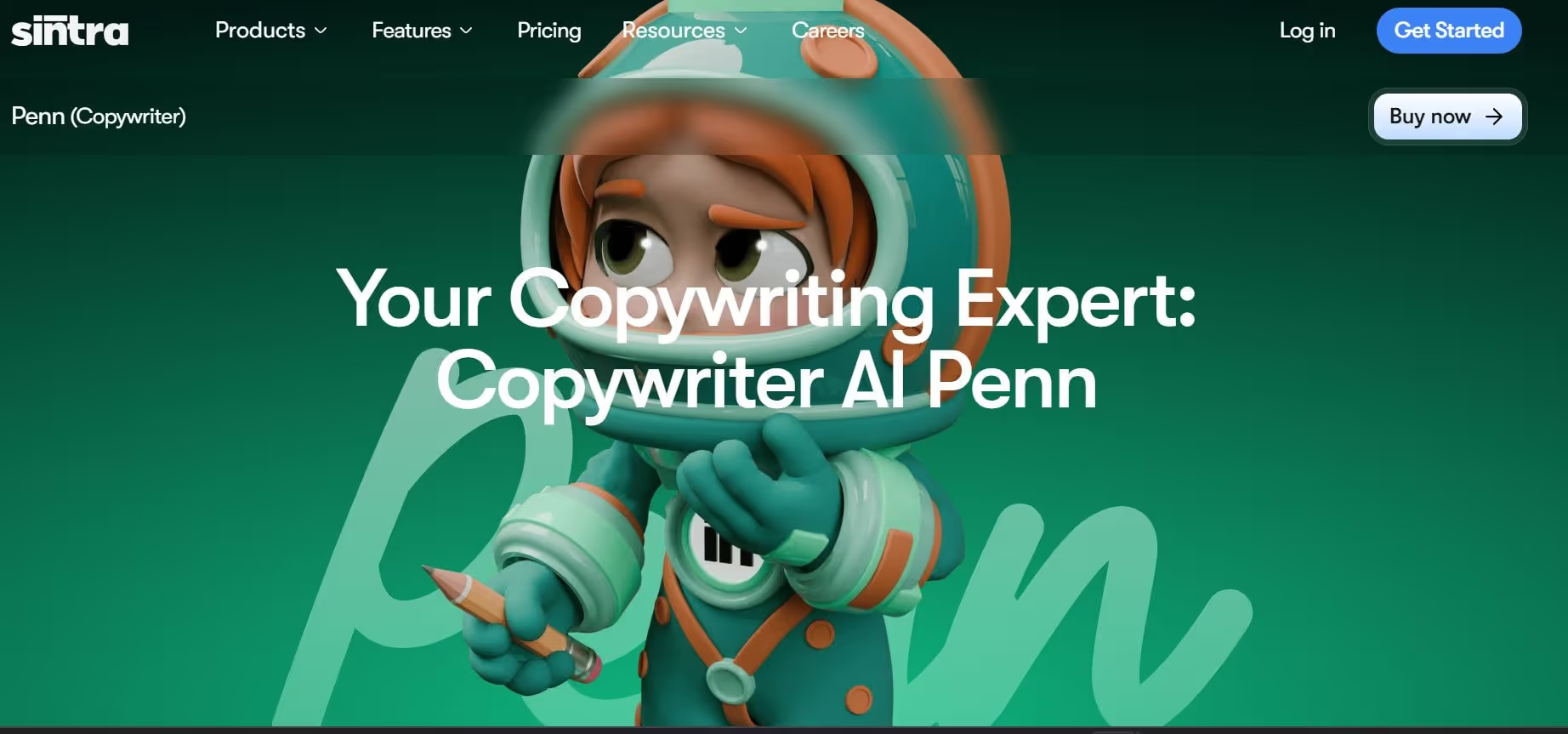
AI adjusts brand tone depending on the audience segment or campaign goal. Whether casual, professional, or playful, AI ensures messages feel authentic. This keeps readers engaged while staying true to your brand. Tools like Sintra’s AI Copywriter can generate or refine content instantly, saving time and improving personalization.
Outsource Admin Tasks
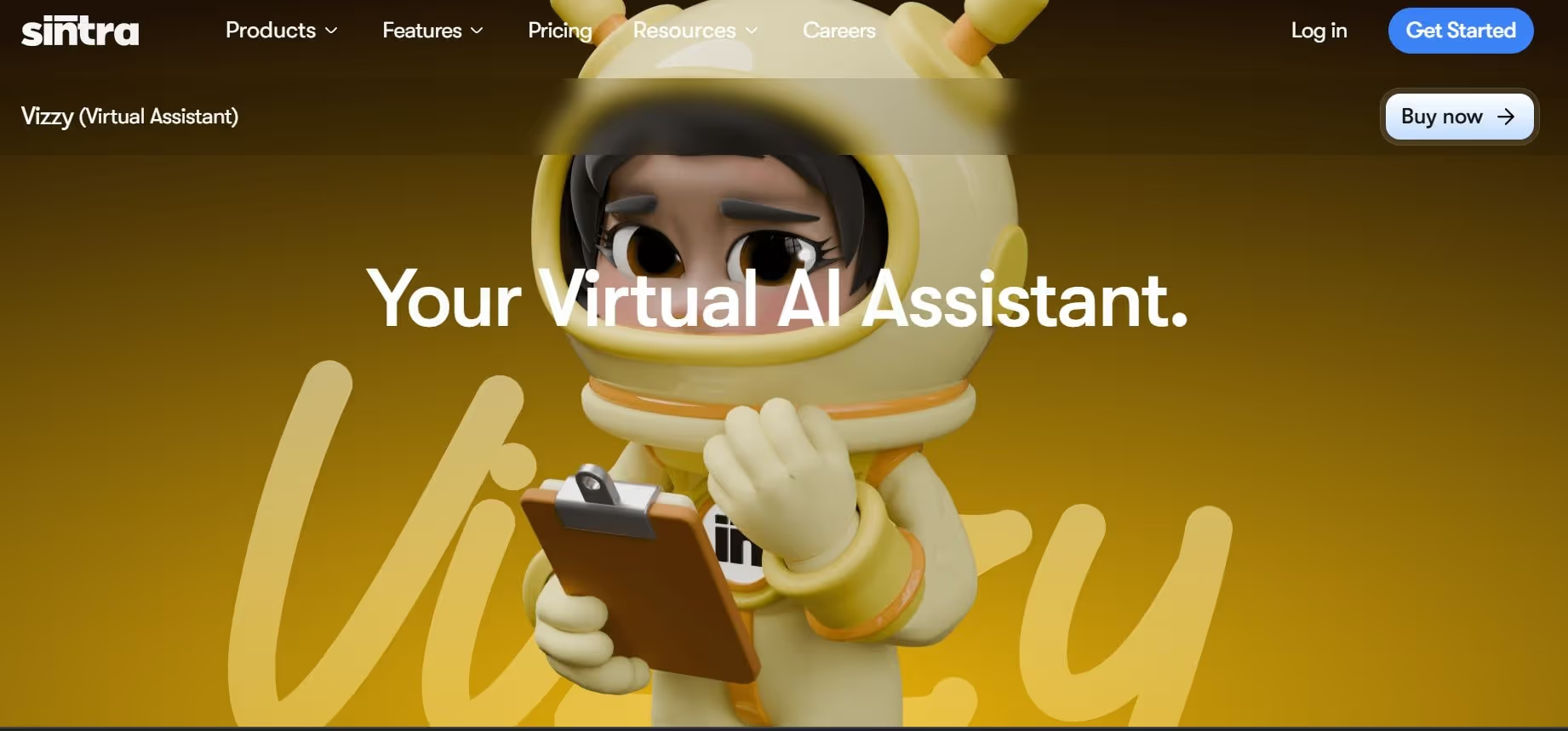
AI handles the boring stuff so your team can focus on strategy. It schedules sends, tags users, sets reminders, and organizes data. These email personalization strategies reduce manual workload and prevent errors.
With automated admin, campaigns run smoothly and consistently. Sintra’s AI Virtual Assistant handles these tasks seamlessly, freeing your team to focus on high-level planning.
How to Choose the Best Email Personalization Tool?
Picking the right tools for your stack isn't just virtual shopping. You want something that actually delivers results and makes personalization easy. Keep the following points in mind:
- Features: Look for more than just name merges. The tool should analyze user behavior, suggest personalized content, and support dynamic emails, adaptive subject lines, and segmentation.
- Automation depth: The best tools can trigger journeys automatically. Abandoned cart flows, lifecycle messages, and predictive send times should happen without manual effort.
- Analytics: You need clear insights on opens, clicks, conversions, and engagement trends. Dashboards should make data actionable, not confusing.
- Pricing: Make sure the cost matches your needs. Avoid platforms that hide essential features behind expensive tiers.
- Ease of onboarding: A steep learning curve slows adoption. Tools that integrate easily with your CRM, CMS, or ecommerce platform save time and frustration.
- Scalability: Your audience and campaigns will grow. Choose a platform that scales without limiting features as you expand.
- Red flags to watch: poor reporting, weak automation, limited integration, or long setup time. They can waste time and reduce the effectiveness of personalization.
By keeping these points in your mind, you'll select an email personalization tool that grows with your strategy and actually makes your campaigns smarter.
Why Sintra AI Is the Best Choice?
Sintra AI isn't just another email tool. It's an entire AI email personalization ecosystem. As opposed to other tools, it provides dedicated helpers for your tasks under one platform.
Here's what Sintra has to offer for a seamless email personalization experience:
- Brain AI: A shared intelligence layer that remembers your brand, audience preferences, and past campaigns. This means every helper you use gets smarter over time.
- AI helpers: Each one focuses on a specific part of your workflow. For example, some help craft copy, others analyze customer behavior. Together, they reduce manual work while maintaining precision.
- Automation: Sintra AI can trigger sequences, adjust messaging in real time, and even optimize send times based on predicted engagement. You can run highly personalized campaigns at scale without losing human touch.
- Scalable personalization: It runs high-impact, human-like campaigns with minimal manual work.
These capabilities make Sintra's AI Team the top choice for AI email personalization. It's not just a tool, it's an AI team that works alongside you.
Wrapping Up
AI has changed the way we personalize emails. It helps teams send relevant, timely, and engaging messages at scale. Using AI, you can optimize subject lines, content, timing, and even sender identity to maximize open rates, clicks, and conversions.
By implementing the strategies in this guide, you can create email campaigns that feel human but run on autopilot. Tools like Sintra AI make these strategies easier to implement. With its AI personal assistant handling repetitive tasks, your team can focus on creative and strategic work without distractions.
Get Started With Email Personalization
With AI email personalization, you can craft messages that feel personal, send them at the perfect time, and scale your efforts without extra manual work. You will see the rise in your sales within weeks.
Sintra AI makes this transition easy. Set up your AI helpers, automate journeys, and let Brain AI guide your content and targeting. You'll see faster results, smarter recommendations, and more engaging emails.
Get started today with Sintra AI. Even if you start small, your campaigns become more effective from day one.
AI Email Personalization FAQs
What is email personalization?
A personalized email is one tailored to the recipient’s preferences, behavior, or demographics. It can include their name, past purchases, interests, or browsing history.
Is there an AI that can write personal emails?
Yes. AI-powered tools like Sintra AI can generate emails that adapt to user behavior, past interactions, and campaign goals. These AI helpers produce content that reads naturally while staying on brand.
What data do I need for effective AI-driven email personalization?
You need data like purchase history, browsing behavior, engagement with past emails, and demographic info. The more accurate and up-to-date the data, the better AI can personalize messages.
What's the difference between email segmentation and personalization?
Segmentation groups users into categories, like age, location, or purchase history. Personalization goes deeper by tailoring content to each recipient.
What are examples of effective personalized emails using AI?
AI can tailor subject lines, send times, product recommendations, and even the email tone. Spotify, for instance, uses AI to send “Your Daily Mix” emails based on listening habits, boosting engagement and retention.
Do personalized emails perform better?
Absolutely. Studies show personalized emails can increase open rates by 26% and click-through rates by up to 14%. They build trust, drive engagement, and ultimately lead to more conversions.
Related articles