


How to Use AI in Sales: Practical Strategies, Tools, and Workflows for 2026
.avif)
Skip ahead
Your sales team is being overwhelmed by administrative work.
They are recording calls, filling CRM databases, researching prospects, writing follow-up emails, arranging meetings, and creating reports; wasting hours a day doing it, and it does not close a deal.
By the stage they spend all their time on busy work, they have literally no time for honest conversations with buyers that really matter.
Sound familiar? You're not alone. The sales reps allocate only 28% of their time to selling. The rest? Paperwork that consumes energy, kills momentum, and makes quota impossible to hit.
This is why sales teams around the world are moving to AI, not to replace human sellers, but to reclaim the time stolen by administration. When repetitive work is automated, you can have your reps focus on what they do best: building relationships and closing deals.
This manual provides deep insights into how to use AI in sales, step-by-step, through workflows, the actual tools, and common tactics. It offers candid tips on what will (and will not) succeed. Nevertheless, whether you are leading a small sales team or handling enterprise transactions, you will have something practical you can implement today.
Why AI Is Essential for Modern Sales Teams?
Sales have changed! Customers research before even speaking to a salesperson. Decision makers want individual communication. Competitors move faster. And your team? They get buried under the data entry and email follow-ups.
The data shows that sales representatives who use AI are 47% more productive and save an average of 12 hours per week.
And that is no little thing; that is a recovery of nearly two full working days a week.
The productivity improvement is real. Organizations that have used AI in their sales systems report a 30% win rate.
But here is what is more important than the statistics: your competitors have already implemented such tools. 67% of businesses use AI agents, with sales teams leading adoption at 14%.
If you're wondering how to use AI in sales, you are already lagging.
The right question is how to embrace AI in a way that actually makes your team sell more. It is not just another tool they must learn to use, but an actual necessity now.
Leveraging AI or AI technology in sales is no longer an option. It strengthens your sales professionals and gives you a competitive edge to stay in the market.
Key Benefits of Using AI in Sales
Enough about the hype, now we can discuss what AI really does to sales teams and sales effectiveness.
- Automates client data entry, call recording (voice analysis), CRM record updates, and follow-up scheduling. All the time-consuming tasks that do not require human skills are handled by sales automation, so your reps do not need to.
- Enhances lead qualification - Your team no longer needs to spend time cleaning up tire-kickers; AI analyzes customer behavior patterns and signals to determine which leads are truly ready to purchase. Your reps target hot prospects and not cold ones.
- Scales personalization - Each buyer would like to feel that you are knowledgeable about their needs. Generative AI will allow you to target individual emails, propositions, and outreach to hundreds of potential customers without typing each one.
- Offers fact-based information - What deals are at risk? How is your proper health on the pipeline? Where are reps getting stuck? AI reveals patterns that humans miss when they get lost in the weeds. Means analyzing data becomes fast and efficient.
- Reduces sales cycles - The fewer hours reps spend on paperwork and the more they spend on buyer interaction, the faster deals are made. Firms that employ AI have noticed shortened sales cycles and improved sales effectiveness.
Real case: A B2B software company used AI for lead scoring and to personalize emails. Their reps spent 45 minutes on what used to take 3 hours a day on research and outreach preparation. That additional time was directly added to customer interactions. Result? They increased their average deal size and reduced their sales cycle by 18 days.
The takeaway: You do not need to know how to use AI in B2B sales to put your team out of a job. It is all about granting them superpowers.
Top Use Cases for AI in Sales
This is where AI has the most tremendous impact on day-to-day selling. These are practical applications, not hypothetical- these are processes being rolled out by sales teams today to achieve quota in less time.
AI for Prospecting and Lead Generation
Locating the right prospects would require hours of manual searching: visiting LinkedIn, reading company websites, checking the news about their businesses, and trying to determine whether they would be a good fit.
AI alters the game for everything.
The modern sales prospecting tools search thousands of data points to find companies and contacts that fit your ideal customer profile. They can continue tracking purchase patterns, such as funding announcements, technical stack changes, job advertisements, and web browsing history. It identifies potential customers seeking solutions to their problems.
Your reps are not making cold calls to a purchased list, but to warm prospects who are in real need of what you are selling. The best AI lead generation tools can identify potential leads and even write personalized first outreach messages based on what they discover.
What this would look like in practice: Monday morning, your rep opens his dashboard and sees 20 potential leads that fit your ICP, and briefs why each would be a good fit at this particular time. Hours of research are not needed.
AI for Lead Scoring and Qualification
Most sales teams treat all leads equally, but most leads are not equal; they just go through the list one by one, wasting time on prospects who will never purchase.
AI corrects this through predictive lead scoring. The system uses machine learning to examine your past win and loss patterns to predict which current leads are most likely to close. It examines customer engagement levels, fit within the company, budget indicators, involvement of decision-makers, and dozens of other signals.
Your reps receive a prioritized list: "These 15 most promising leads need to be given priority; they are demonstrating strong buying intentions”.
The result? There is less time wasted pursuing false leads, and more time is spent communicating with those willing to purchase. After understanding how to apply conversational AI in sales to qualify, your team will stop making assumptions and begin knowing who to call first. In short, you can score leads based on real-time data without losing track.
AI for Pipeline Management and Sales Forecasting
Ask sales leaders about the accuracy of their pipeline, and they will grimace. Forecasting is guesswork because reps are optimistic, deals can go bad, and the CRM data is never up to date.
AI brings clarity to the chaos!
Pipeline management tools examine deal velocity, sales engagement trends, past win rates, and deal activity to alert on risks before deals close. They see that an agreement set to close next week has gone cold due to inactivity. They determine what deals must get done immediately.
To predict, AI models consider your historical sales data, healthy pipelines, market trends, and sales performance to tell you what will actually close this quarter, not what your reps want to close.
Actual improvement: Sales leaders using AI forecasting report a 25% increase in forecast accuracy. It translates into improved resource planning, more realistic quotas, and fewer end-of-quarter surprises.
AI for Communication and Personalization
Writing emails sucks. Sending hundreds of personalized e-mails? That's torture. So most reps don't. Their templates are generic-sounding, and potential clients delete them before even reading them.
Generative AI can resolve it by creating personalized outreach at scale. Write about your prospect and what you are selling, and it will write emails that sound like a human and include specific details about their business. Personalizing customer interactions speeds them up, letting you hold the customer longer.
In addition to emails, chatbots will be able to respond to prospect queries, arrange demos, and qualify interest 24/7, so your reps will wake up to booked appointments, rather than cold inboxes. This means customer engagement is active while your sales team is sleeping.
The trick lies in having generative AI tools handle the initial draft and personalization, then letting your reps revise and add a personal touch to deliver accurate responses.
AI for Sales Coaching and Training
Sales coaching is done quarterly in a conference room. That is not sufficient to improve sales performance.
AI transforms this by making a real-time data analysis of each sales call. It also analyzes talk-to-listen ratios, identifies the objections reps struggle with, flags deals where the conversation about discounts failed, and surfaces coaching opportunities in real time —not three months later during a review.
New reps receive AI-based training that adjusts to their weaknesses—having problems with pricing objections? The system provides practice situations that are centered on just that. It reduces onboarding time and accelerates new rep ramp-up.
Imagine the coach listening to each call and giving immediate feedback, rather than assuming managers have time to listen to recordings manually.
How to Implement AI in Your Sales Workflow?
It is one thing to know the benefits. Another is actually putting artificial intelligence into practice without disturbing your team. Here is the practical, step-by-step sales approach.
Step 1: Find your time-wasters
Identify the most considerable time-wasting work before purchasing any tools. Is it customer data entry? Prospect research? Email follow-ups? Begin with the most painful part.
Step 2: Begin with a single workflow
Do not attempt to automate everything at once. Start with a single workflow (e.g., lead qualification or email outreach) and apply AI there. Before expanding sales operations, know what is working.
Step 3: Select tools that can integrate with your current stack
If the team members are based in Salesforce, HubSpot, or your CRM, ensure that any AI tool can be integrated with it. Single applications that involve manual data transfer will be abandoned.
Step 4: Involve your team early
Reps will not embrace any tool imposed upon them without their involvement. Demonstrate to them the time it will save them, gather feedback, and allow them to help shape how it is used. Features are less critical than buy-in.
Step 5: Proper training and expectation
Do not just turn something on and hope people learn how to use it. Give practical training, exchange experiences, and establish clear guidelines regarding the way and timing of using AI.
Step 6: Evaluate outcomes and optimize
Measure such KPIs as time saved, lead conversion rates, and sales velocity. When something isn't working, change fast. The AI tools are enhanced by feedback.
The biggest mistake? Purchasing a stack of AI sales software and hoping for magic. The companies that are achieving results do not consider implementation as an event.
Supercharge Your Sales With Sintra.ai Bots
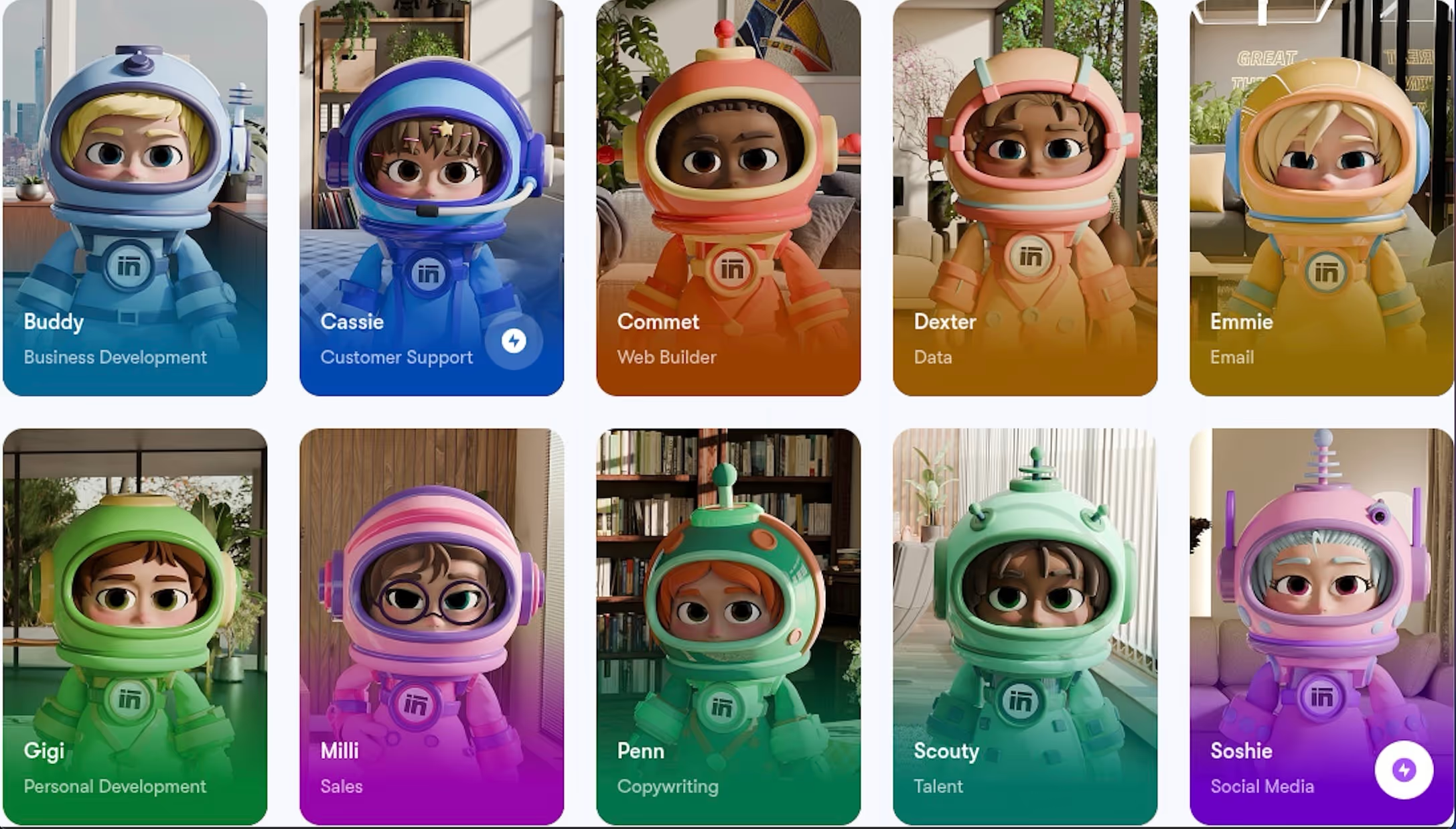
A majority of AI sales tools deal with a single piece of your workflow. This leaves you with five platforms that are not connected, and your team is wasting time moving between them.
Sintra.ai approaches it differently: specific AI assistants collaborate to handle your entire sales cycle. Think of it as having a complete sales support staff that does not sleep, will not complain, and does all the stuff that your reps hate to do.
Let’s discuss the way Sintra works with sales teams.
Automate Repetitive Tasks With Sintra.ai
Each salesperson is familiar with the routine. After a successful call, they spend 15 minutes recording the call in the CRM, updating deal statuses, setting follow-ups, and creating calendar invites. By the time that is done, it is too late.
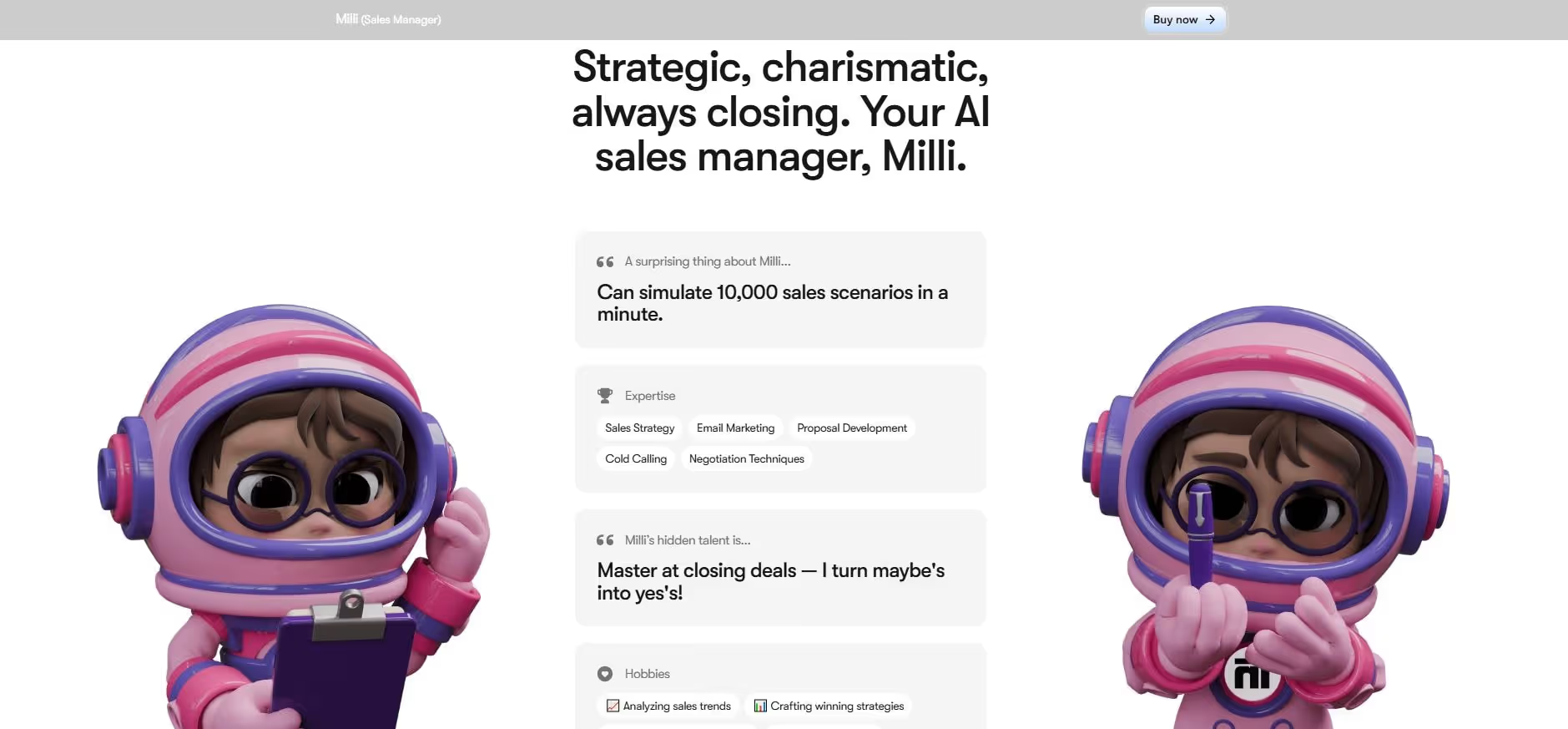
Milli, the AI sales strategist of Sintra, takes all that on her hands.
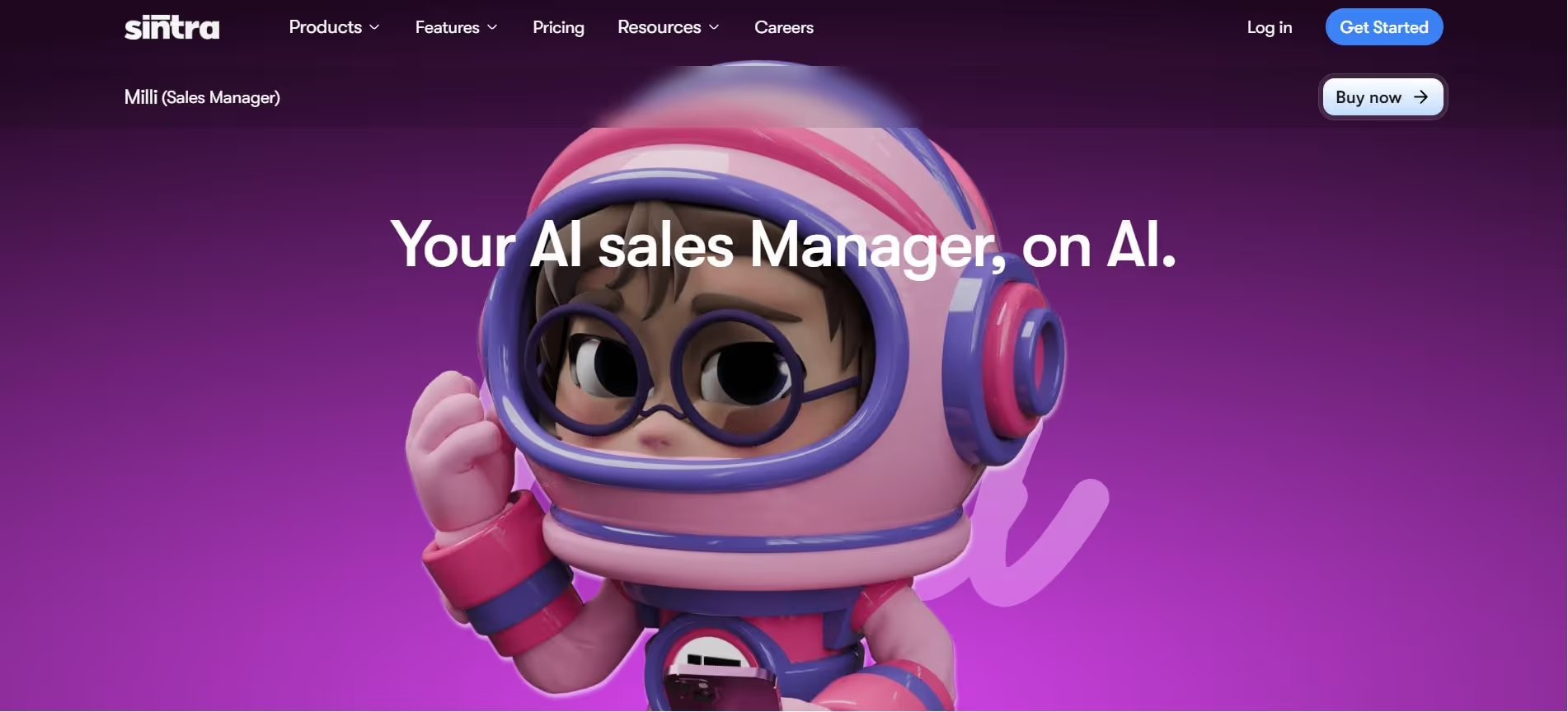
Once you place a call, Milli adds notes to your CRM, updates deal stages based on what transpired, schedules the next touchpoint, and sends follow-up tasks — without your rep having to move a single finger. This applies to email, meeting, and prospect data entry. Removing all the tedious repetitive tasks.
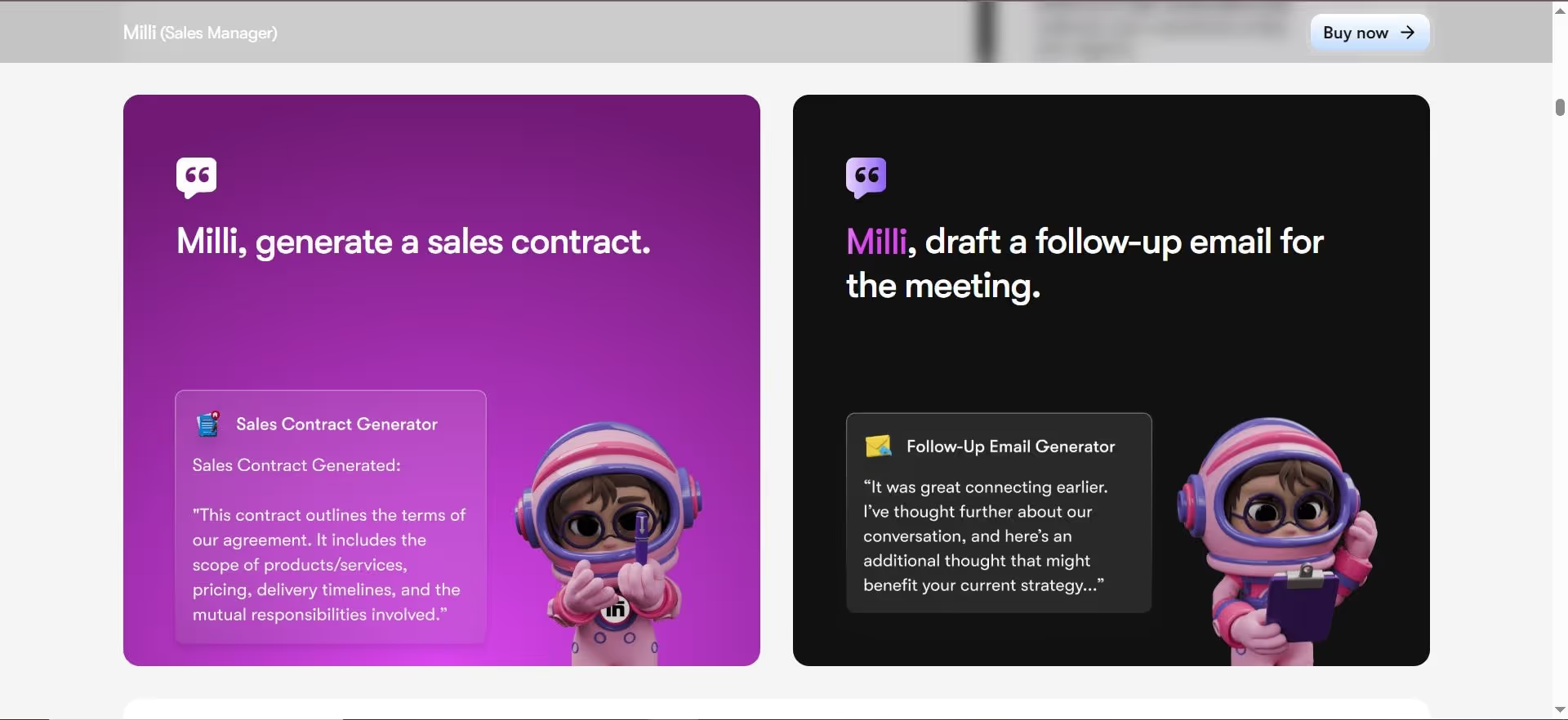
What it implies for your team: You no longer need to spend 2-3 hours a day on CRM cleaning and administration tasks; instead, have your reps spend 15 minutes reading what Milli did and get on to selling.
A Milli sales team was reported to have returned 10+ hours per rep per week. Not only productivity, but also giving your staff their lives back.
Boost Outreach and Personalization
Targeting everybody no longer works. Prospects erase template messages within a few seconds. But personalizing each lead writing personally? That doesn't scale.
Milli resolves this by personalizing customer interactions with specific emails, propositions, and follow-ups that read human since they are based on real research for each prospect. She dissects company details, latest news, pain points, and your solution to create outreach that resonates.
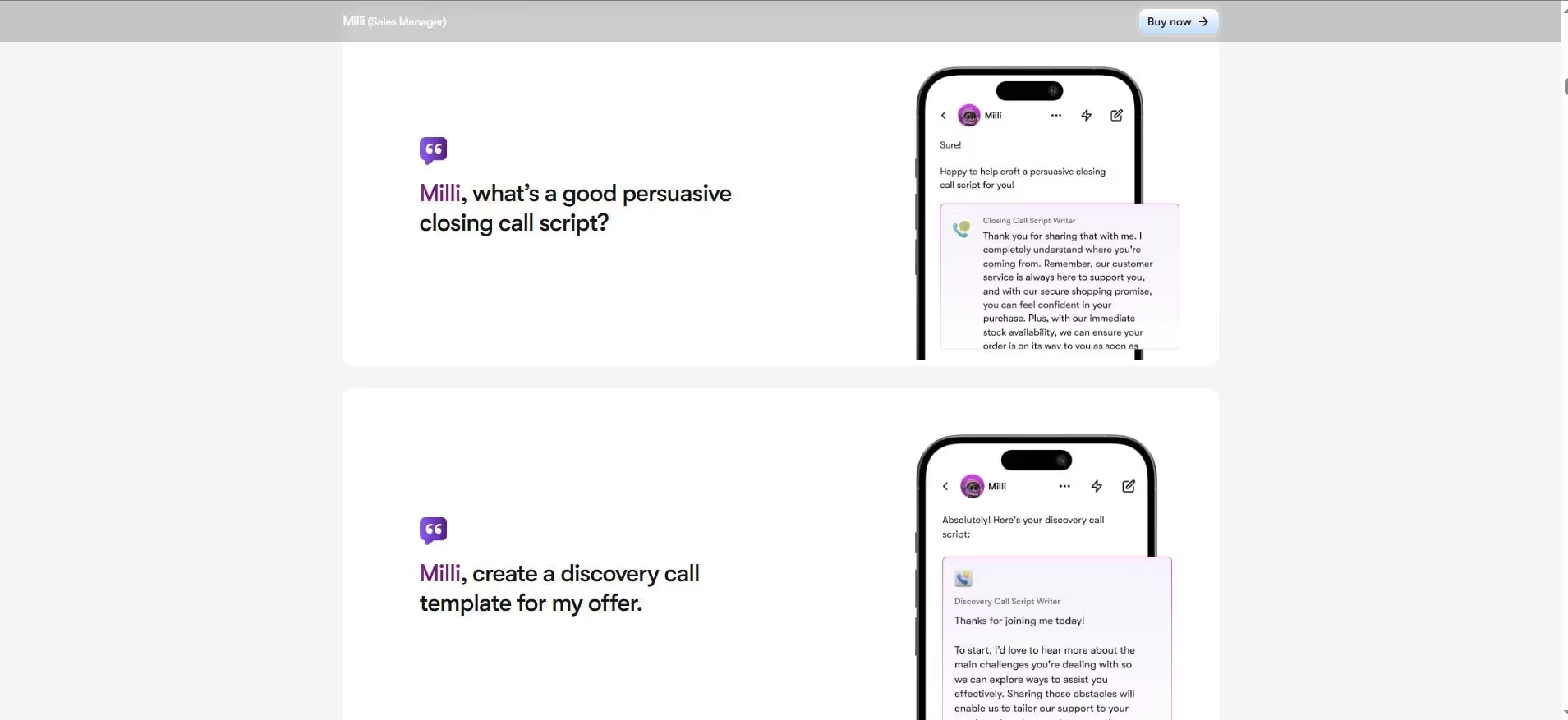
Your reps go over, add their own touch, and send — and so what used to take 30 minutes per prospect is now a 3-minute affair. It means you no longer need to deal with generic sales pitches.
For follow-ups, Milli monitors those who do not respond. She automatically backs up follow-up messages based on customer data, so you don't miss opportunities that slip through the cracks when your rep doesn't follow up.
Real case: In one SaaS sales team that used Milli for outreach, the email response rate increased by 23%. Why? All messages were personal and relevant, not spam.
Enhance Sales Analytics and Forecasting
The majority of sales dashboards inform you about what has already happened. Milli tells you what is going to happen and what you need to do about it.
She can track the health of the pipelines in real time. It highlights underperforming deals, determines which opportunities require urgent focus, and predicts the likelihood of a close based on actual activity trends —not rep optimism.
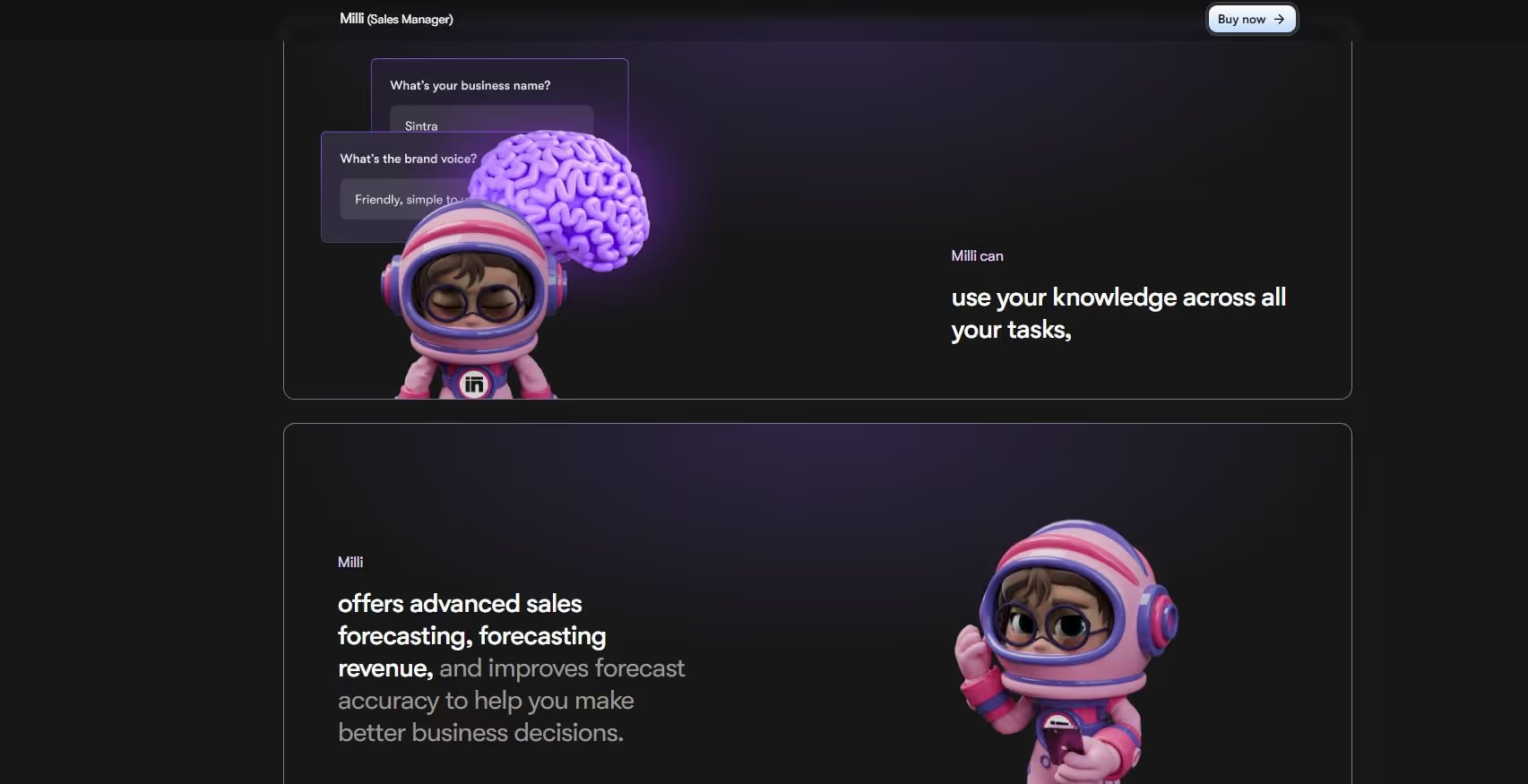
Milli notifies you when a deal has been inactive for 10 days and the prospect is not responding. It gives you an idea of what to do next. When your forecast is shaky, she shows you, in particular, the deals that are in danger and the reasons.
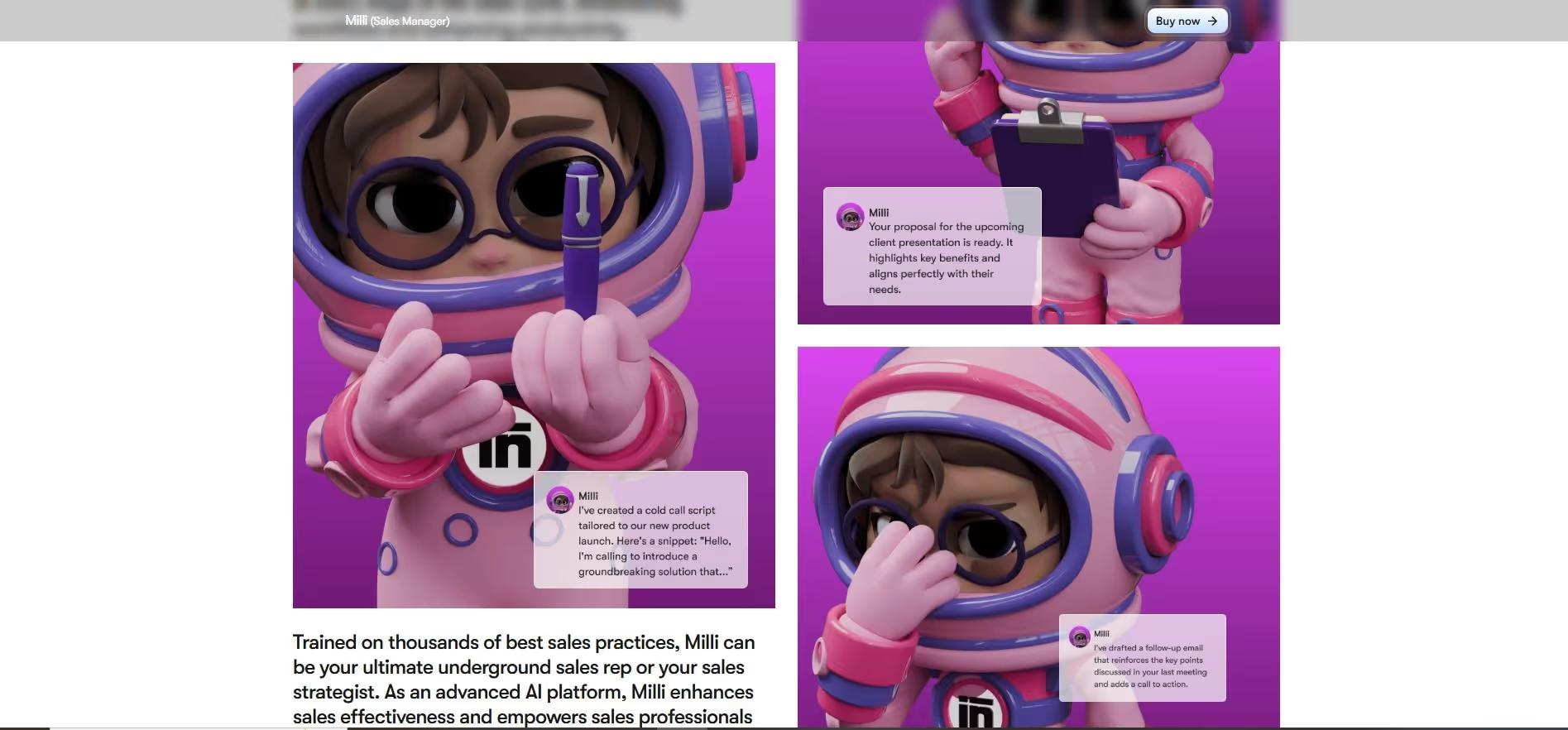
For sales leaders, goodbye to unexpected pipeline issues. You can see the dangers ahead and have time to rectify yourself.
Interested in how AI will change the way your company works? The analytics provided by Milli offer greater visibility than those of traditional CRMs. And when you require the full team strategy, Sintra X will unite all the AI assistants in Sintra to handle every aspect of your business, not just sales.

Best Practices for Maximizing ROI From AI in Sales
Buying AI tools is easy. Having your staff actually use them and realizing ROI? That takes work. Here is how you can be sure that your investment pays off.
- Begin with specific ambitions: Don't deploy AI to be innovative. Know what you wish: reduce response time, lead qualification, and shorter sales cycles. Compare with those particular goals.
- Human interference is a must: AI will suggest and implement, but leave your reps to make the ultimate decision on messaging, deal strategy, and customer interactions. AI assists; humans close.
- Follow up on performance: Measure weekly. Is AI outreach better than manual outreach? Do AI-qualified leads convert faster? If not, adjust your approach.
- Get feedback from your team: Your reps will understand what is working and irritating. Listen to them. When they claim that a tool slows them down or provides bad suggestions, fix or cut it.
- Train your AI on your data: Generic AI is fine. AI trained on your wins, losses, language for customer interactions, and sales process is robust. Feed it your best examples.
- Know new features: AI tools are advancing. What failed six months ago may perform miracles now. Review capabilities every quarter.
- Simplify, do not elaborate: A simple tool used by your entire team is better than a strong tool that no one uses. Enabling easy adoption: easy interfaces, value visibility, and minimal disruption.
The companies that achieve the highest performance view AI as an ally that requires coaching and feedback, not a magic button where one presses it and things start working perfectly.
Frequently Asked Questions
What are the best AI tools for sales teams?
The best AI tool for the sales team depends on what you require from it. To automate all-in-one sales, Milli by Sintra manages prospecting, lead scoring, CRM updates, email outreach, and forecasting in a single platform. In case of specialized requirements: LinkedIn Sales Navigator (prospecting), Gong (call analysis), Clay (research automation), Outreach (email sequences). Select the tools that will integrate with your CRM and address your particular pain points.
How does AI improve sales forecasting accuracy?
AI evaluates deal velocity, engagement rate, past close rates, and activity rates to determine which deals will close. Rather than using rep optimism, you get data-driven predictions. AI identifies red flags, such as stalled deals with no activity, and corrects predictions. Companies that apply AI forecasting achieve a 25% increase in accuracy.
Is AI in sales suitable for small businesses?
Yes. Small sales teams have an added advantage, since each hour saved is more valuable. Several AI sales software can be purchased for less than $100/month each. Begin with a single workflow — such as email automation or lead scoring — demonstrate ROI, and then expand. Small teams that employ tools such as Sintra even record time back of 10+ hours per rep, every week— huge when you are a 2-3 seller.
How do I get started with AI in my sales process?
Name your most significant time-consumer (research, data entry, follow-ups). Select a task and identify an AI solution to it. Begin with 1-2 reps, experiment, and then scale team-wide. Do not automate everything immediately. A step-by-step process for learning to involve AI in sales prevents overwhelm and makes it more adoptable.
Can AI replace human sales reps?
No. AI is involved with repetitive work, data analysis, and first drafts. Humans forge connections, interpret emotional signals, negotiate complicated deals, and seal them. AI taking care of busy work and letting reps concentrate on genuine conversations and relationship management is the winning combination. AI is not a substitute; it is a personal assistant.
How does Sintra.ai differ from other AI sales platforms?
The majority of AI sales tools are point solutions —they can do only one thing, such as email writing or call analysis. Sintra provides you with dedicated AI assistants that collaborate throughout your workflow. Milli handles sales planning, projections, and contacts. The other assistants include operations, marketing, and support. All are linked together so that the data is not in bins but one flow among functions. That’s how Sintra is easy enough for sales team members to use.
Related articles

Want a mystery discount on your order?

PlayOS, Inc.
All rights reserved