AI in Marketing Automation: Transforming Campaigns with Intelligent Workflows

Table of Contents
Artificial intelligence isn't just changing marketing, it's supercharging it. When combined with marketing automation, AI automation in search optimization helps brands run smarter, faster, and more personalized campaigns that actually convert. Adobe research finds product discovery is the number one AI marketing use case for executives in 2025, gen AI can automate 60–70% of marketing workflow time, and the CMO Council identifies gen AI as enabling true 1:1 personalization at scale.
AI-powered automation tools empower marketing teams to optimize their campaigns. It uses machine learning and predictive analytics to analyze client data, track customer behavior, and deliver personalized messages across multiple channels. This leaves the teams to focus on customer engagement and strengthen brand loyalty.
By incorporating AI-powered tools into their tech stack, businesses of all sizes can craft content that resonates and foster stronger relationships with customers.F
In short, AI is redefining traditional marketing automation, turning static workflows into intelligent, self-learning systems that drive measurable business growth.
What is AI in Marketing Automation?
AI in marketing combines artificial intelligence and machine learning to stay several steps ahead in the marketing game. While traditional marketing follows predefined rules, such as sending an email when someone signs up or assigning leads based on form submission, AI-powered marketing automation does all that on a pre-calculated basis that seldom goes amiss.
It uses AI algorithms to analyze clients' data, predict customer behavior, and continuously optimize actions without constant human input. Instead of marketers manually tweaking workflows, AI marketing automation tools learn from historical data and adapt in real-time to deliver more relevant, personalized messages.
In simpler terms, AI in marketing automation thinks and interprets data, understands customer journeys, and helps marketing teams create dynamic campaigns that keep growing with every interaction.
Key Benefits of AI-Powered Marketing Automation
The real power of AI-powered automation lies in its ability to transform everyday marketing efforts into intelligent, self-improving systems. With each interaction, these tools learn more and grow more efficient. By combining automation with AI, businesses can finally move beyond repetitive tasks and start creating campaigns that think, learn, and adapt.
Here's what AI has to offer in the realm of marketing:
Smarter & Faster Workflows
Instead of guessing all day and wondering whether a client could be a potential lead, AI eliminates the guesswork. It relies on AI-powered optimization at every step. From customer segmentation to email campaigns, building workflows with AI helps marketing teams save time while boosting precision - making it a powerful lead magnet creator.
Hyperpersonalization at Scale
The AI assistant won't send the same message to everyone like a robot. With access to human data and machine learning, AI understands individual customer preferences and delivers personalized messages that drive real customer engagement and brand loyalty.
Data-driven Decision Making
By using AI, marketers can be sure about their decisions as they are no longer based on guesswork. AI interprets customer behavior, performs predictive analytics, and turns complex patterns into actionable insights. This gives marketing professionals the clarity to optimize campaigns, forecast results, and align efforts with actual business outcomes.
Scalability Without Burnout
Whether you're merging five clients or fifty, AI ensures consistency and accuracy across multiple channels. It helps marketing teams maintain their brand voice, automate customer-facing processes, and grow sustainably. And all this does not require an army of marketers.
Core Use Cases: How AI Transforms Marketing Workflows
From predicting trends to crafting personalized content, AI-powered automation allows brands to make smarter choices across every stage of the customer relationship.
Here's how AI is driving real transformation in the realm of marketing:
- Predictive Analytics and Forecasting
- Intelligent Customer Segmentation
- Lead Scoring and Nurturing
- AI-Driven Content Generation
- Chatbots and Automated Customer Support
- Campaign Optimization
Together, these workflows represent how artificial intelligence is taking marketing automation from reactive to predictive and from generic to deeply personal.
Let's take a deeper look at how these real-life use cases transform an average marketing experience and better understand the impact of AI.
1. Predictive Analytics and Forecasting
At the heart of AI automation lies predictive analysis. It is the ability to see what's coming before it happens. But this is not voodoo or magic, it's pure data-driven science. By analyzing historical data, AI algorithms identify trends in customer behavior, providing marketing teams with a clearer view of what's likely to drive results.
With predictive analysis, marketing professionals can act proactively. Machine Learning models process massive amounts of data, spotting patterns that humans would miss. This means brands can optimize campaigns, allocate budgets efficiently, and engage the right audience at the perfect time.
Predictive forecasting also helps in customer segmentation and lead scoring. When marketers understand how an individual customer is likely to behave, they can deliver personalized messages that match intent and timing. As a result, we get higher conversions, stronger brand loyalty, and faster business growth.
2. Hyper-Personalization at Scale
Traditional marketing tools rely on boring, predefined prompts - if a customer clicks on this, send him that. But AI goes far beyond that simplicity. Using machine learning and generative AI, it analyzes individual data, behavior, and interactions across multiple channels to deliver content that feels hand-crafted for each user.
AI doesn’t just segment audiences; it treats every individual customer as a unique story. It can analyze information from emails, social media, and purchase history to craft personalized messages that evolve with each interaction.
Whether it’s an automated email campaign, an in-app product recommendation, or a chatbot suggestion, every response feels lively and human.
This level of customer engagement strengthens brand voice and builds lasting customer experiences. For marketing teams, it means scaling one-to-one conversations without increasing manual effort.
3. Intelligent Lead Scoring and Nurturing
One of the biggest challenges for marketing and sales teams is determining which leads to pursue and when the right time is. The never-ending nightmare of doubt keeps getting bigger. But this is where you’ll need AI the most.
AI identifies who’s most likely to convert and who is not. They have learnt past histories and customer interactions and can analyze that data into meaningful patterns. Together with campaign performance and engagement patterns, you will get just the right prospects within minutes.
For example, if a lead frequently opens your email campaigns, interacts with your social media, and visits high-intent pages on your site, the AI will automatically flag that prospect as a high priority. From there, automation tools can trigger personalized messages or targeted offers that will surely get them to convert.
This is just one strategy of lead nurturing. You can read more about AI lead generation tools and decide for yourself how impactful they are.
4. AI-Driven Content Creation and Curation
Creating compelling content across multiple platforms can be a nightmare. You want every copy or blog post to be unique and convincing. But there is so much humans can do without burning out.
Using generative AI agents, marketers can now create content tailored to different platforms. Blog posts, social media captions and copy, and even email campaigns, you name it, and AI can do that in minutes. This saves a lot of brainstorming time and the struggle to keep everything unique while maintaining brand voice.
Beyond writing, AI also curates. By analyzing customer behavior, the system identifies what type of content resonates most with each individual customer. For example, if a user is a visual learner rather than text-based articles, AI will suggest sending them how-to videos instead of lengthy blogs.
These tools seamlessly integrate with your tech stack. This means that the entire process from idea creation to scheduling runs with minimal effort. This also ensures that you publish every copy and post smartly, aligning every piece of content with real-time audience insights.
5. Automated Customer Support with Chatbots
Chatbots are a lifesaver for the customer support team. They have completely changed how brands handle customer interactions online. Instead of relying solely on human agents, businesses can now use intelligent bots that respond instantly, accurately, and in a friendly tone. And they are available 24/7
Modern AI marketing automation goes beyond simple FAQs. They integrate with CRMs and support systems, using machine learning and natural language processing. They understand context, sentiment, and intent, enabling them to respond more humanly.
And not only chatting, these tools can upsell products, guide users through a website, or recommend next steps based on their behavior. This is personalization at scale with speed that traditional systems can't match. When this is combined with a consistent brand voice and tone, AI chatbots not only assist customers but also make a marketer’s life easier and strengthen the brand like never before
Implementing AI in Your Marketing Automation Strategy
Adopting AI marketing automation tools isn't just about buying new software; it's about creating a smart team of virtual assistants. It's about an ecosystem that connects data, tools, and people. The goal is to abandon the traditional ways and step into a system that learns, adapts, and optimizes continuously.
Here's how to make that shift effectively:
- Set Clear Objectives: Define what success looks like to you. It could be an improved customer engagement experience, a higher lead conversion, or more efficient email campaigns. Specifying goals helps marketing teams choose the right AI tools for measurable results.
- Audit Your Customer Data: The quality of your AI insights depends on the quality of your data. Clean, structured, and privacy-compliant data ensures that machine learning models can accurately analyze information and predict accurate trends.
- Choose the Right Tech Stack: The right tools will perfectly sync with your existing CRMs, analytics platforms, and AI models. Look for systems that can handle multiple channels, from social media to email and chat.
- Train Marketing Professionals: Even the smartest algorithms need skilled humans. You need to upskill your team to understand how AI algorithms work, interpret actionable insights, and fine-tune outputs to maintain your brand voice.
- Test, Measure, and Optimize: Treat your AI marketing automation as an extension to your human marketing team. Experiment with different strategies, monitor performance, test new workflows, and see what works best for optimized campaigns in real time.
With the right foundation, AI becomes more than a tool. It becomes that extension that drives your team to work smart and be better at every aspect of marketing.
How Sintra.ai Elevates Marketing Automation with AI Bots
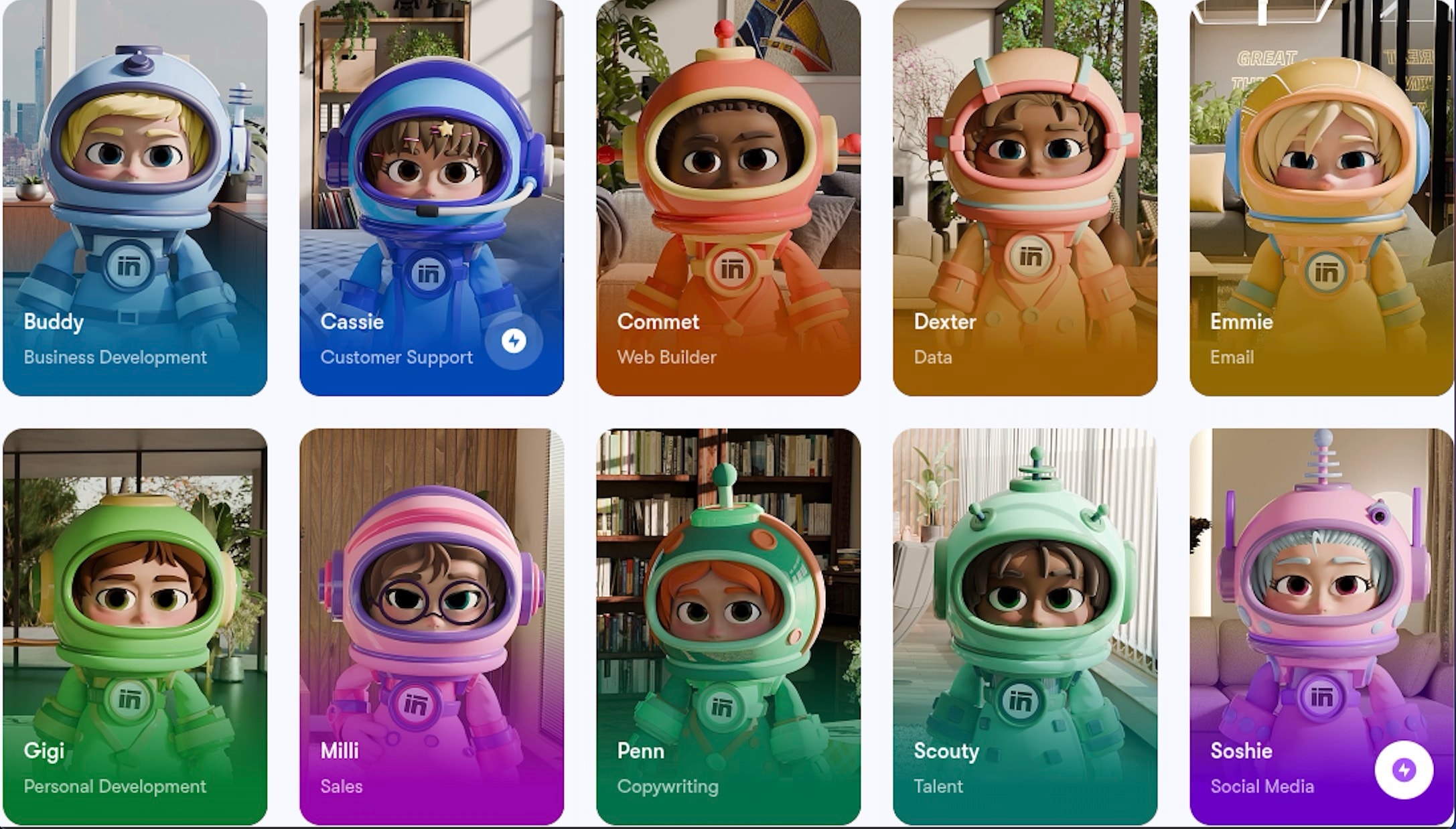
Sintra.ai is a marketing automation expert that combines machine learning, generative AI, and intelligent automation tools within a single platform. Instead of using separate apps for every aspect, Sintra brings everything together through specialized AI bots, each trained for a specific marketing task.
At the core of it all is Brain AI, the personalization engine that analyzes data, identifies target customer segments, and tailors communication to each individual customer.
Here's how Sintra's AI bots work across the marketing journey:
- Predict Campaign Success: Using predictive analysis, Brain AI forecasts customer behavior and helps marketers define campaigns before they even launch.
- Automate Content Creation: AI-powered bots like Penn, the AI copywriter, generate blogs, ad variations, and personalized messages that match your audience's intent and tone.
- Streamline Email & Lead Nurturing: The AI sales assistant and email marketing bots craft customized follow-ups, ensuring that no lead slips through the cracks.
- Enhance Customer Engagement: AI chatbots handle customer-facing processes with human-like precision. They deliver friendly, accurate responses 24/7, freeing up human teams for strategy.
- Unify Data & Insights: By connecting all your marketing automation tools, Sintra's bots provide a complete overview of customer journeys, making it easier to spot trends and boost loyalty.
Sintra.ai doesn't just automate marketing; it gives marketers a new direction. It empowers them to create, analyze, and refine campaigns with minimal manual effort and maximum impact.
Challenges and Best Practices for AI Marketing Automation
AI in digital marketing offers incredible potential, but it is not without challenges. Businesses often face hurdles like poor data quality, integration issues, lack of backend support, and concerns about customer privacy. But with the right strategy and mindset, these challenges can be managed effectively.
- Data Quality and Accessibility
AI thrives on high-quality data. Inaccurate or incomplete data lead to poor targeting, flawed prediction, and irrelevant customer experiences. To fix this issue, ensure that your system can analyze data in real time and maintain clean, updated records across your tech stack.
- Integration with Existing Tools
Combining AI-powered solutions with traditional marketing automation tools can be tricky. A seamless connection between CRMs, email campaigns, analytics dashboards, and other tools ensures your entire marketing team operates efficiently. Platforms like Sintra.ai simplify this by connecting multiple tools into one ecosystem.
- Skills and Adaptation Gap
Many marketing professionals struggle with keeping up with the AI algorithms. The learning curve of an AI tool should not be steep. Start with small projects, train your team, applying AI workflows for HR principles to onboard new tools faster, and encourage experimentation.
- Privacy and Ethical Use
When dealing with human data, you must be aware of data usage and laws of compliance. Be transparent about data usage, obey privacy regulations, and avoid manipulative personalization tactics. Respect for customer trust directly impacts brand loyalty and customer retention.
- Continuous Optimization
AI doesn't just learn and forget; it retains and continuously improves itself. To get the best results, optimize campaigns regularly, monitor campaign performance, and use insights to refine your strategy.
When done right, AI automation saves time as well as helps marketers define smarter strategies, nurture customer engagement, and drive long-term business growth. It is just a matter of time for every business to include AI in some aspect of its workflows.
Frequently Asked Questions
What is the difference between AI and traditional marketing automation?
AI in marketing automation refers to the integration of machine learning algorithms and intelligent data processing to get optimized results. While in traditional automation, everyone follows fixed rules and predefined triggers. AI predicts what users will do next and automatically adjusts messaging or timing.
How does AI improve personalization in marketing campaigns?
AI enables hyper-personalization at scale by analyzing user data and tailoring content for each individual. Instead of one message for everyone, brands can deliver unique experiences across email, ads, and social media.
What are the most common AI use cases in marketing automation?
Some of the most popular applications include predictive analytics, lead scoring, chatbots, content generation, and campaign optimization. These tools help marketers make smarter decisions, save time, and improve ROI.
How can small businesses benefit from AI marketing automation?
AI helps small businesses by automating time-consuming tasks and offering insights that used to require large teams or budgets. It helps personalize outreach, forecast trends, and convert leads more efficiently.
What data do I need to implement AI in my marketing strategy?
To make AI work effectively, you will need access to high-quality data such as customer demographics, engagement history, purchase patterns, and website analytics. The more relevant and clean your data, the smarter your AI system becomes at predicting behavior and generating marketing strategies.
Related articles


.avif)