10 Best Agentic AI Frameworks

Table of Contents

TL;DR - Top Agentic AI Frameworks
Quick takeaway: The best agentic AI frameworks in 2026 split into two types. Use plug-and-play platforms like Sintra AI for business use, and frameworks like LangGraph or AutoGen if you’re building custom agents from scratch. Sintra AI – Best for ready-to-deploy.
This guide ranks the most popular agentic AI frameworks in 2026, from developer-first tools to plug-and-play platforms. These frameworks power AI systems that can plan tasks, make decisions, and complete workflows with minimal human input, an approach known as agentic AI, where intelligent agents reason through problems, use tools, and act on their own.
To build these kinds of systems, developers rely on role-based AI employees. These frameworks make it easier to create AI agents that can remember context, connect with external tools, and handle multi-step tasks without constant instructions.
As per Gartner forecasts, 33% of enterprise applications will include agentic AI by 2028. Enterprises are already moving - 66% use AI infrastructure platforms to deploy agents, 60% rely on agent capabilities embedded in their core applications, and 41% use low-code or open-source tools like LangChain, CrewAI, and AutoGen. In this blog, we'll look at the 10 best agentic AI frameworks developers are using to build intelligent AI agents today.
10 Best Agentic AI Frameworks to Evaluate in 2026
Agentic AI frameworks cannot be evaluated by just comparing feature lists. The deeper capabilities that are important in building reliable autonomous systems include similar architecture, memory management, easy integration of tools, and scalability.
The best frameworks facilitate dynamic planning, facilitate the easy coordination of various agents, and offer powerful monitoring to monitor and cognize the decision-making processes. Based on the above features, here is the detailed description of the best agentic AI frameworks that engineers are adopting in 2026 to create intelligent autonomous systems.
1. Sintra AI - AI Employees for Instant Business Automation
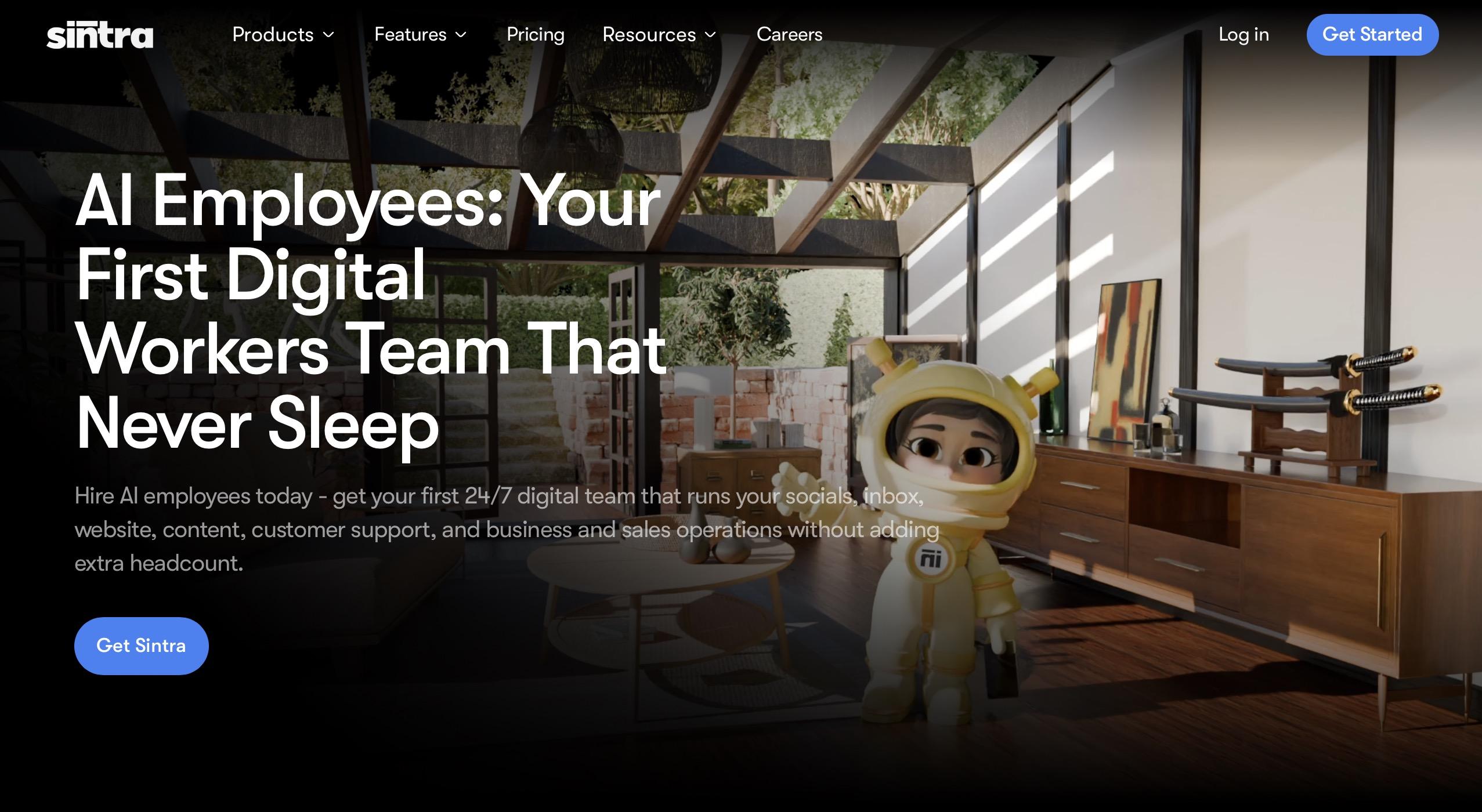
Our platform is built for businesses that want working AI employees without designing their own agent architecture. Instead of asking teams to build memory systems, AI orchestration layers, or custom workflows from scratch, Sintra gives them ready-to-use AI helpers for daily business work.
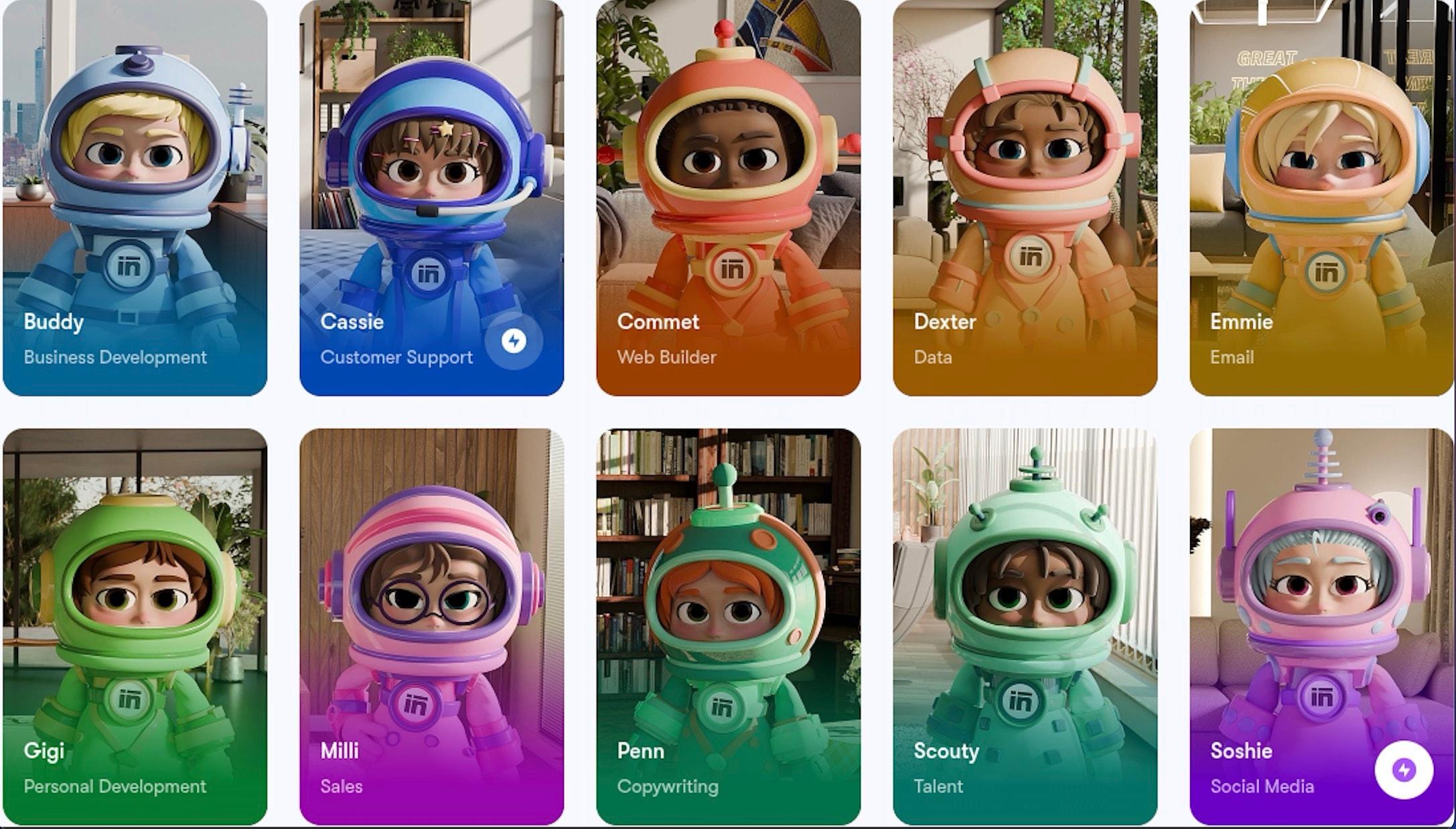
Each helper has a clear role, such as customer support, copywriting, data analysis, recruitment, social media, email, e-commerce, and business development. The shared context layer is Brain AI. It stores business context, files, links, snippets, instructions, and other knowledge that helpers can use when completing tasks. Brain AI can also connect with external platforms, so helpers can use workflow context from the tools a business already relies on.
This makes Sintra one of the best deploying AI employees, but not as a developer framework. It is not meant for teams that want to code their own agents, memory logic, or orchestration systems. It is for teams that want to deploy functional AI employees quickly and use them across real workflows.
Overall, Sintra is best for businesses that want agentic execution without the technical buildout. It gives teams a practical AI workforce that understands business context, connects with existing tools, and helps execute work across departments.
Pros
- Rapid deployment as compared to heavy frameworks.
- Employees of role-based AI are developed to work in the real world.
- Low engineering specifications
- Integration of business tools via workflow.
Cons
- A lack of customization in comparison to raw developer frameworks.
- Less flexibility of teams implementing special AI architectures.
Pricing
Sintra AI offers the "Sintra X" suite at a standard price of $97 per month, though significant discounts often bring it to approximately $48.50 per month for monthly access. Long-term commitments further lower the equivalent cost, with annual plans priced as low as $15.60 per month.
2. CrewAI - Multi-Agent Collaboration for Complex Workflows
Alt text: crew ai framework
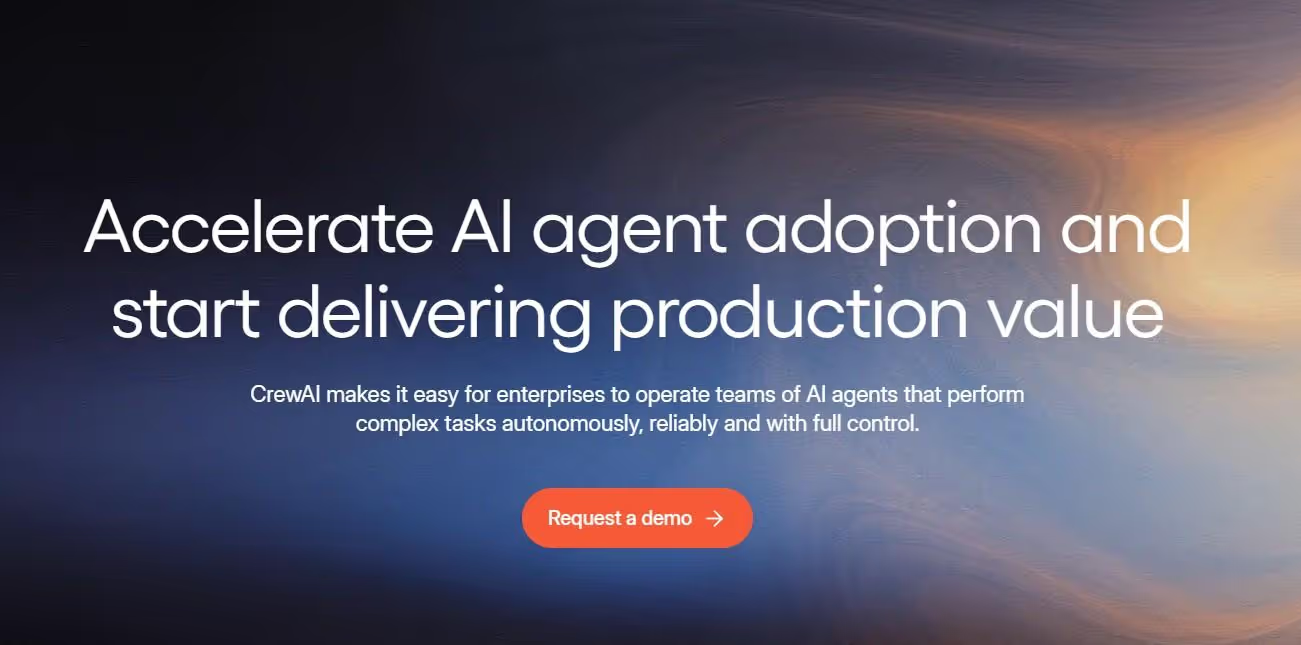
CrewAI is an open-source system designed to collaborate between agents. Rather than developing one autonomous system, developers build a number of agents with different roles that collaborate in the achievement of a common goal.
For example, one agent can work on the research, another one can synthesize the key information, and a third agent can create the final output. CrewAI can help to organize, simplify, and scale AI processes by assigning tasks to specialized agents.
The framework organizes these agents by orchestration logic, which allows them to interact and exchange context when performing tasks.
CrewAI is especially applicable to startups and product teams that are experimenting with agent-based architectures that involve complex workflows that need multiple views or specialized functionality. The developers are able to simulate teamwork conditions in which the agents work as a team.
The framework also aims at facilitating iterative decision-making. Agents are able to assess consequences, seek further information, and adjust their actions according to the consequences. This renders it applicable in use cases where activities are dynamic as opposed to being scripted.
Pros
- Excellent backing of joint agent simulation
- Multi-agent workflow coherence
- Active development of an open-source ecosystem
Cons
- Needs technical skills for implementation
- First installation and configuration may be complicated
Pricing
The managed "CrewAI Enterprise" (formerly CrewAI+ ) now starts at $150/mo for team features. Local use remains free.
3. Swarm by OpenAI - Lightweight Framework for Rapid Agent Prototyping

Swarm is a prototype orchestration toolkit that is used to experiment with lightweight agents. It enables developers to test agent behavior within a short time instead of developing heavy enterprise systems.
The framework is aimed at empowering various agents to interact and share duties. These agents are able to transfer context to each other and decide which system is to perform the next step of a workflow. This is a straightforward method that makes it appealing for research work and initial development.
Swarm is lightweight and thus makes the creation of agent prototypes easy. New correlation concepts can be tried, role-based agents can be experimented with, and the behaviour of collaborative AI systems can be tested before investing in a larger architecture.
Nevertheless, Swarm is not aimed at large-scale production settings. It does not have a lot of enterprise features like governance controls, detailed monitoring, and comprehensive security features.
Pros
- Quick at prototyping
- Light orchestration structure
- Perfect in the case of experimentation and testing of concepts
Cons
- Weak infrastructure of the enterprises.
- Experimental maturity compared with production frameworks
Pricing
OpenAI Swarm is an open-source, educational framework available for free download and local use under the MIT license. Because it is a lightweight orchestration layer, your only direct costs are the standard OpenAI API token charges for the models used by the agents.
4. ARCADE - Experimental Platform for Agent Architecture Research
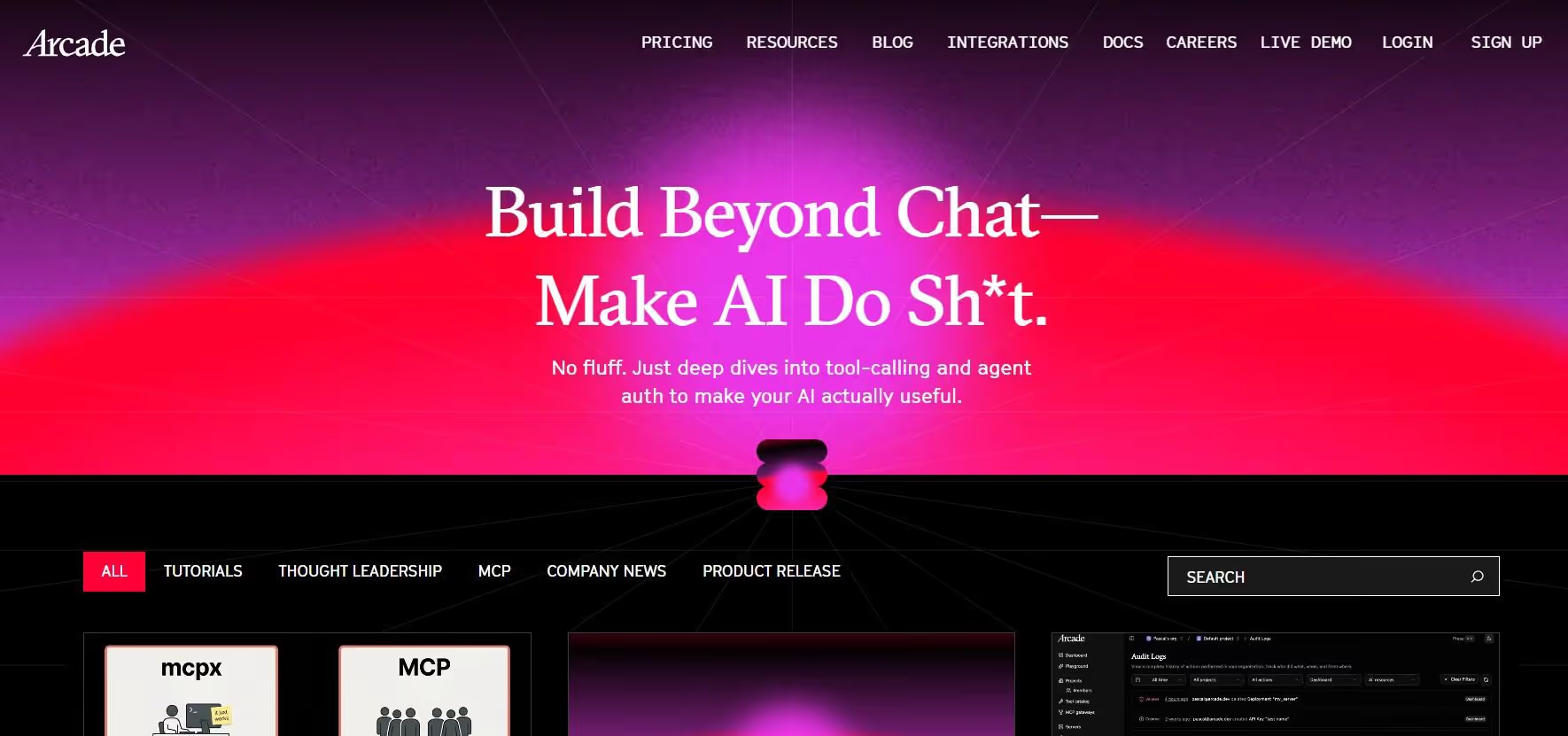
ARCADE is an AI system that is research-oriented and aimed at facilitating the experimentation of autonomous agent architectures. It does not prioritize business deployments, but rather focuses on flexibility to researchers and engineers who are investigating new coordination models.
The developers are able to create agents that can communicate with the various reasoning systems, planning strategies, and communication protocols. With this freedom, more sophisticated behaviors like adaptive planning or loops in decision-making can be experimented with.
Since ARCADE is more flexible, it can be very technical. It lacks the same degree of production-ready infrastructure as enterprise frameworks. It serves as a sandbox in which developers can experiment with new ideas in agent design and orchestration.
This environment of experimentation can be very useful to academic institutions and AI research teams. Nevertheless, the framework can be too specialized to be used by companies that require an immediate deployment of production.
Pros
- High flexibility of experimentation.
- Stable enough to be used in academic work and testing
- Supports exploration of new agent orchestration techniques
Cons
- Limited production tooling
- Less viable in business applications
Pricing
The Hobby tier is free for 1,000 tool executions, while the Growth plan costs $25/month plus usage fees. Additional costs include $0.05 per user challenge and $0.50 per "Pro" tool execution.
5. FIPA & JADE - Standardized Protocols for Distributed Agent Systems
Prior to the current agentic architectures of modern LLMs, the early agent systems were based on standardized communication protocols. FIPA and JADE had a significant role in setting those standards.
FIPA (Foundation of Intelligent Physical Agents) specified communication standards that enable two or more agents to communicate in structured environments. JADE is a software platform that realizes these standards, allowing developers to create distributed agent systems.
These tools brought forth some of the important concepts that continue to shape the current agentic AI systems, including structured messaging, role-based agents, and coordinated workflows. The technology, however, is older than modern LLM-based systems and is not native to the existing generative AI models.
Nevertheless, even with these shortcomings, there are enterprise systems that are based on FIPA-based communication models due to their solid structure and clear protocols of interactions between distributed agents.
Pros
- Standard guidelines for communication with the agents
- Structured protocols for multi-agent coordination
- Architecture of historic significance
Cons
- Outdated tooling compared to modern frameworks
- Minimal interaction with AI systems based on LLM
Pricing
FIPA is a set of standards for agent interoperability, while JADE is the free, open-source Java framework that implements those standards. Since JADE is distributed under the LGPL open-source license, there are no licensing fees for standard use.
6. Microsoft AutoGen - Conversational Multi-Agent System Development
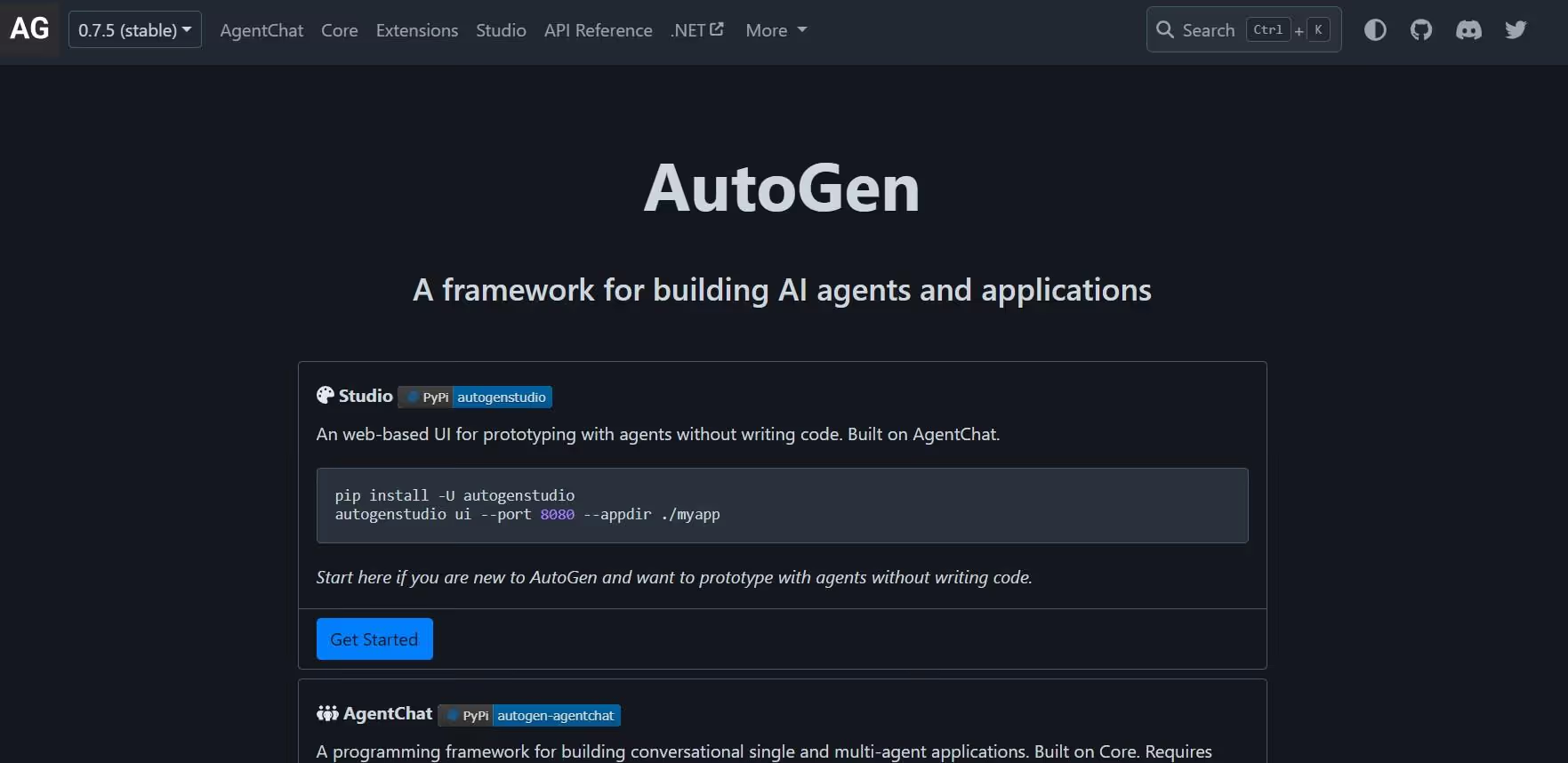
Microsoft AutoGen is an open-source agentic AI system that is used to create conversational multi-agent systems. AutoGen allows multiple agents to cooperate by means of a structured dialogue rather than using one AI model to accomplish tasks. Every agent may possess its role, tools, and reasoning ability, and complex workflows may arise as a result of interaction.
Practically, AutoGen agents interact by means of iterative dialogues in which one step is based on the answer of the other. For instance, one agent may be a planner, another a code executor, and another a reviewer who validates results. This structure enables teams to devise systems in which agents review the output of each other and make decisions until the goal is met.
AutoGen is also compatible with the Azure ecosystem of Microsoft. Companies that already use Azure services are able to link agents with cloud infrastructure, APIs, and enterprise data pipelines. This unification simplifies the implementation of large-scale AI solutions without compromising the security and compliance needs.
Pros
- Scalable business-ready architecture.
- Quick connection with the ecosystem of Azure and Microsoft.
- Reliable interactive cooperation between two or more agents
Cons
- Some of the advanced integrations are dependent on ecosystems
- Smaller teams might find it difficult to deal with architectural complexity
Pricing
Microsoft AutoGen is a free, open-source framework, meaning you only pay for the LLM tokens consumed through your chosen API provider.
7. Microsoft Bot Framework SDK - Enterprise Chatbot and Conversational AI Development
One of the most used AI frameworks to develop conversational applications is the Microsoft Bot Framework SDK. Although it was initially intended to be used with chatbots, developers can use it to support more complex AI agent application designs.
The framework offers the means of developing conversational interfaces in web applications, messaging systems, and enterprise collaboration tools. Natural language processing models, backend services, and workflow automation can be combined to form interactive AI-powered systems by developers.
The Bot Framework is not necessarily intended to be a fully autonomous agentic AI framework. It can be used to support agent-like behaviors by using orchestration logic and by integrating with external AI services.
It is commonly used together with other systems by developers to create agents that can retrieve information, activate workflows, and communicate with business tools.
Pros
- Advanced enterprise support and documentation
- Mature SDK used by many organizations
- Dependable infrastructure in conversational AI executions.
Cons
- Not fully agentic by default
- Needs further development to create independent agent behaviour.
Pricing
The framework itself is open-source and free, but hosting it via Azure Bot Service follows a tiered model: the F0 tier is free for 10,000 messages per month, while the S1 tier costs approximately $0.50 per 1,000 messages.
8. LangGraph - Graph-Based Orchestration

LangGraph is commonly regarded as one of the most developed LLM agent models for constructing complex agent workflows. It builds on the LangChain ecosystem by adding graph-based orchestration models, which enable developers to manage the interactions between agents and tools, data sources, and other agents.
Rather than using simple sequential workflows, LangGraph represents agent logic as nodes and edges of a graph. The nodes are the tasks, decision points, or tool interactions, and the edges are the way the workflow proceeds based on the outcome. This framework is much more transparent and controlled than most other AI frameworks.
Due to its structure, LangGraph is good at multi-step workflows, which need to be well coordinated. Developers are able to develop systems in which agents can assess intermediate outcomes, retrace steps, or dynamically change the execution path.
State management is another benefit. LangGraph enables developers to have a consistent state between actions, which is essential in creating agents that need to remember past actions and make decisions based on the knowledge gained.
Pros
- Graphical orchestration model
- Fine-grained control over agent workflows
- Good at multi-step, complicated automation systems
Cons
- Slow learning curve in terms of technical advancements
- Streamlines the planning of architecture in the implementation
Pricing
LangGraph is part of the LangChain ecosystem, where the framework is free to use, but the managed LangGraph Cloud (via LangSmith) starts at $39 per seat per month.
9. LlamaIndex - Data-Driven Framework
LlamaIndex is widely regarded as an information-oriented AI model to link AI agents to external sources of information. It is especially good at creating retrieval-augmented generation (RAG) systems in which agents require precise information in databases, documents, or APIs.
LlamaIndex not only uses knowledge stored in language models but also retrieves information that is relevant before it generates responses. This method can greatly minimize hallucinations and enhance dependability in situations where agents are required to deal with real-life information.
The capacity to be integrated with other data systems, such as the vector databases, document repositories, and enterprise knowledge bases, is one of the major strengths of LlamaIndex. This feature is suitable for the development of data-driven AI agents that can be used to conduct research, reporting, and knowledge retrieval.
The framework also facilitates event-based architectures in which agents react to changes in data sources. An example is that an agent can be activated by the addition of new documents to a knowledge base or by the availability of new data in a system.
Pros
- Powerful data retrieval and searching functions
- Outstanding coverage of RAG-based AI systems
- Scalable usage of numerous external data sources
Cons
- Beginners might find it tedious to implement.
- Needs adjustments to have high retrieval accuracy
Pricing
LlamaIndex is an open-source library that is free to use, but its "LlamaParse" and "LlamaCloud" services operate on a credit-based system starting at $1.25 per 1,000 credits.
10. Haystack - Production-Ready Framework
Haystack is a production-ready AI framework that is used to create scalable AI pipelines. It is mostly applied to enterprise search, question answering, and retrieval-based systems.
Its framework offers modular pipelines that link modules like document retrievers, language models, ranking systems, and data storage layers. These pipelines enable developers to create trustworthy workflows that can process large amounts of data.
Haystack is also strong in that it emphasizes production reliability. It has monitoring tools, logging features, and observability features, enabling teams to monitor the behavior of AI systems in the real-world context.
These monitoring capabilities are essential because modern agentic AI frameworks rely on external data and tool integrations. Unless observable, autonomous agents may produce unpredictable behavior that is hard to debug.
Haystack can also be deployed at scale, which is why it is appropriate for enterprises that require AI solutions that are able to manage high concurrency and large datasets.
Pros
- Planned to be used in large-scale deployments
- Powerful pipeline design for complicated activities
- In-built observability and monitoring
Cons
- The first-level installation is complex
- The complexity of infrastructure requirements exceeds simpler frameworks
Pricing
The Haystack framework is open source and free to use for building agentic AI pipelines. However, running it in production typically costs $50–$120/month for cloud infrastructure.
What Is an Agentic AI Framework?
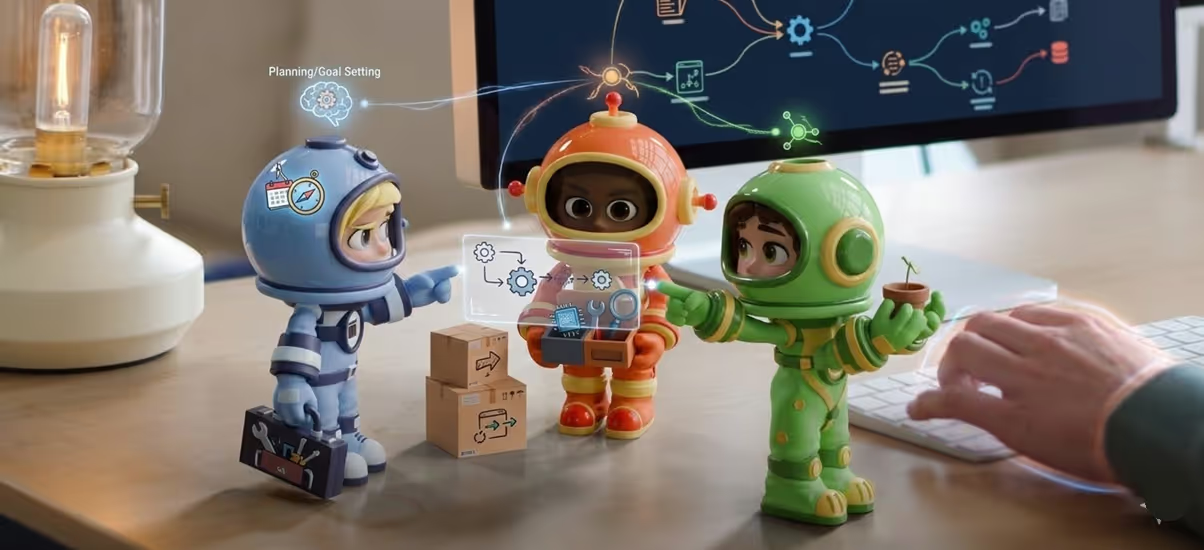
An agentic AI framework is an AI model that is created to develop autonomous AI agents who can plan their tasks, reason about decisions, utilize tools, and perform multi-step workflows. In contrast to the traditional AI systems that produce one answer to a query, agentic systems are able to execute required actions, consider the consequences, and decide on the next course of action.
Core Characteristics of Agentic Systems
The contemporary agentic AI systems have a number of fundamental abilities that enable agents to act independently. Autonomy allows an AI agent to decide the next step without being told every step by a human.
Furthermore, these agents assess goals and decide how to advance a workflow, rather than merely reacting to prompts. Memory enables agents to retain both short-term and long-term knowledge to maintain context within a workflow and to build knowledge across sessions.
How Agentic AI Frameworks Work
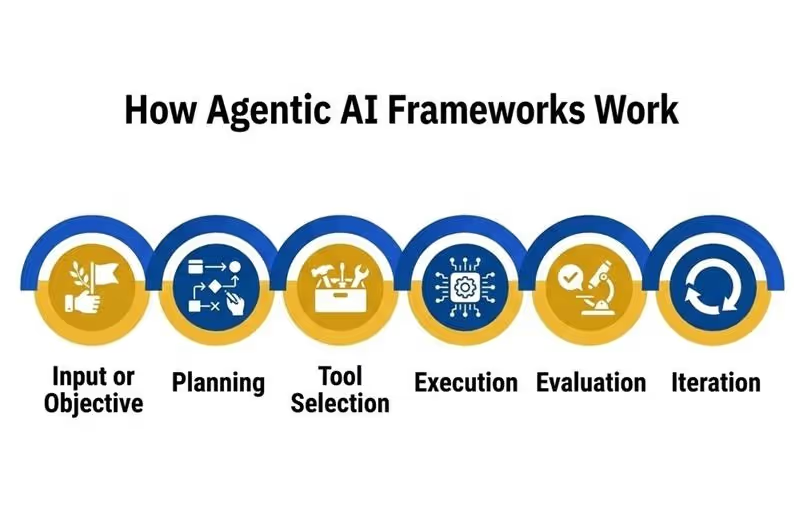
Most LLM agent frameworks follow a similar workflow pattern:
- Input or Objective: A user provides a goal or task for the system.
- Planning: The agent analyzes the request and creates a plan to accomplish it.
- Tool Selection: The system identifies which external tools, APIs, or data sources are required.
- Execution: The agent performs actions such as retrieving information, processing data, or interacting with other agents.
- Evaluation: The results are evaluated to determine whether the task was completed successfully.
- Iteration: If the goal is not achieved, the system adjusts the plan and repeats the process.
Agentic AI vs Traditional AI Frameworks
Traditional AI frameworks primarily focus on generating outputs from prompts. A user asks a question, and the system produces a response based on its training data. Agentic systems operate differently. Instead of producing a single answer, an agentic AI framework manages an ongoing process where an AI agent performs tasks, evaluates results, and decides what to do next.
For example:
- A traditional AI model may generate a marketing report.
- A role-based AI employee could gather data, analyze trends, create the report, and distribute it automatically.
Agentic AI Without the Engineering Overhead
Building agentic AI no longer requires designing complex orchestration. Modern platforms provide pre-built orchestration layers and role-based AI helpers for tasks like marketing, research, ecommerce, and support. With shared organizational memory like Brain AI, agents access company knowledge, brand guidelines, and workflows, making them consistent and reliable.
Top Agentic AI Frameworks Compared (2026)
The decision of selecting the right agentic AI model should be made with consideration and not any hype. Although numerous AI frameworks boast of independence and coordination, the real variations are in architecture design, scalability, breadth of integrations, and production environment preparedness. It is a systematic method that is used to make sure the platform fits the needs of the organization and workflow.
The following comparison table gives a perfect idea of the critical aspects, such as the level of complexity, scalability, integrations available, the right users, time to production, and the maturity of the enterprise. To more precisely and authoritatively evaluate it, refer to the official documentation of the vendors, such as AWS, IBM, and Microsoft. This will provide a basis of sound information on making decisions.
Architecture and Orchestration Models
The orchestration of each agentic AI framework is different. Other frameworks employ graph-based flows in which tasks are passed through interconnected nodes and decision paths. Others are based on conversational multi-agent loops in which multiple agents cooperate to accomplish tasks.
Planners, tool routers, or event-driven execution can also be used as an LLM agent framework to decide what action to take next. These models of orchestration specify the way an deploying AI employees processes the context, chooses tools, and solves multi-step problems. The simpler architectures are easier to deploy, whereas the more complex AI orchestration models can be more flexible and controllable.
Memory, Tool Use, and Integration Capabilities
Contemporary structures have to deal with memory as well as external tools to be effective. Conversational memory is used to keep an AI agent in context in the short term, and long-term knowledge storage enables the agent to remember information between sessions.
The ability to integrate is also crucial. Agents are able to access databases, CRM systems, search systems, and workflow automation systems through APIs and connectors. Powerful AI integrations enable agents to communicate with actual business systems and not be a standalone chat interface.
In reality, the power of an AI system can be more related to its capacity to handle context and external information than the intelligence of the model.
Ease of Use, Deployment Speed, and Target Users
Various frameworks are aimed at different audiences. Systems that are developer-oriented are highly customizable and need technical expertise and infrastructure. These are the tools that can be used by teams that are creating custom agent architectures.
In comparison, low-code agent platform solutions focus on usability and fast deployment. These tools enable teams that are investigating how to make an AI for beginners to deploy automation without constructing a complete architecture. Most of these systems are an AI agent application, which enables organizations to implement assistants within a short time.
For example, a copy-driven team may prefer using an AI copywriter such as Penn instead of developing a custom writing agent from scratch.
Scalability, Security, and Production Readiness
Scalability is diverse in agentic AI systems. There are systems that are primarily experimentation and prototyping, and those that are cloud-native, scaling, multi-user, and enterprise workloads.
The AI frameworks that are ready to be used in production usually have monitoring tools, logging systems, and performance management features. Security and governance are also important factors. Enterprise deployments must have role-based access controls, compliance protection, and reliable infrastructure to operate safely at scale.
How to Choose the Right Agentic AI Framework or Platform
The choice of an agentic AI framework is largely determined by three factors
- Internal technical knowledge
- Time of implementation
- And business objectives.
There are teams that require heavy customization and architectural control, and those that are more focused on speed, usability, and workflow automation.
The first thing that organizations need to identify is whether they are comparing developer-intensive AI frameworks or agent platforms that are ready to deploy.
Define Your Business Objectives
The teams should be able to state the problem they want to solve before implementing any AI agent. Other organizations aim at automating e-commerce processes, whereas others desire to enhance the response time of support or streamline marketing processes.
For example, an e-commerce AI agent might automate product optimization and campaign workflows, while an AI SEO agent can assist with keyword analysis and search optimization. Clear objectives help determine whether a custom-built system or a deployment-ready platform is the better choice.
Assess Workflow Complexity
The complexity of workflow is a strong determinant of the need to have a lightweight platform or a complete agentic orchestration system. Teams need to consider the number of steps in their processes, integrations needed, and the necessity of external APIs to be linked.
For example, customer support workflows may involve ticket classification, response drafting, and integration with existing systems. A support-focused agent like Cassie can manage these steps while connecting with existing workflows through AI integrations.
Evaluate Scalability and Long-Term Strategy
The choice of an AI framework cannot be made based only on existing needs. The future expansion, increased amounts of data, compliance, and long-term reliability should also be considered by the organizations. These are structures that are ideal to experiment and early prototyping, and those that are enterprise-level.
Common Challenges When Implementing Agentic AI Frameworks
Strong automation can be achieved with the use of agentic AI models, but the implementation process is likely to have many practical issues that organizations are likely to encounter. An understanding of these barriers early in the process will help teams develop reliable, scalable, and more manageable systems.
Complex Architecture Design
The majority of agentic AI models require developers to code orchestration logic, tool routing, memory systems, and decision loops. The engineering to get agents able to plan things, also to make phone calls, not to mention coordinate with other agents, is often not a trivial task. Moreover, the workflows are likely to be weak or difficult to test without a proper design.
Memory and Context Management
For agents to operate autonomously, they must maintain context across multiple steps. It is difficult to control the short-term conversation memory and long-term storage of knowledge. Different workflows may fail to deliver consistent output due to poor memory handling, leading to agents becoming out of context or repeating their actions.
Tool Integration and System Connectivity
The best application of agentic AI systems is their integration with other external tools, such as CRMs, APIs, databases, and workflow platforms. However, integration of these systems is only safe and reliable when there is a strong infrastructure and monitoring. Minor malfunctions in the connection of tools may sever complete automation pipelines.
Deployment and Operational Overhead
The transition into production of the experiment is generally difficult. Some of the areas that require management by the teams include scaling, logging, monitoring, governance, and also making sure that the agents behave as expected.
It is this complexity of operation that makes some organizations prefer to use platforms that have ready-to-deploy agents rather than completely develop architectures. The tools like Sintra reduce the burden on the engineering team with the role-based AI agents capable of being adjusted to the business workflow in a limited time.
Ready to Deploy AI Agents Inside Your Business?
The use of AI agents as members of an operational team in businesses is on the rise. Organizations can also automate workflows in marketing, support, research, and e-commerce processes with an agent platform instead of employing large groups of people to perform repetitive tasks.
Structured automation and centralized knowledge allow AI employees to have a unified brand voice and perform tasks at scale. If your team is ready to move from experimentation to practical implementation, you can get ready with Sintra and start deploying AI agents inside your business workflows.
Best Agentic AI Frameworks FAQs
What is the best agentic AI framework in 2026?
The best framework depends on your use case. Developer-friendly applications such as LangChain and AutoGen can be used with powerful custom systems, whereas agent platforms like Sintra AI offer quicker deployment to business teams.
What is the difference between an agentic AI framework and an AI agent platform?
An agentic AI system offers development tools to create agents, whereas an AI agent platform offers agents ready to deploy to a particular business process.
Which agentic AI framework is best for coding and building custom agents?
For building custom agents from code, LangGraph is best for structured, stateful workflows, AutoGen for conversational multi-agent systems, and CrewAI for multi-agent collaboration. LlamaIndex is strongest when your agents work over your own data. Non-developers who want business results without writing code are better served by a ready-to-use platform like Sintra AI.
What are the best open-source agentic AI frameworks?
Most frameworks on this list are open-source, including CrewAI, Microsoft AutoGen, LangGraph, LlamaIndex, Haystack, and OpenAI’s Swarm. They give developers full control to build, customize, and self-host agents with no license cost. If you want the results without the engineering, a plug-and-play platform like Sintra AI runs ready-made AI employees for business workflows instead.
Are agentic AI frameworks secure for enterprise use?
The security features that are provided in enterprise-grade frameworks are access controls, monitoring systems, and compliance safeguards to guarantee safe deployment.
Related articles
.avif)

.avif)