



Best AI For Social Media Content Creation


Table of Contents

Quick Answer: Hot Picks
Here is a short list of the best AI tools for social media content creation:
- Sintra AI: Best for teams wanting end-to-end automation from ideation through publishing.
- SocialBee: Best for small businesses focused on evergreen content and category-based scheduling.
- Predis AI: Best for e-commerce brands and agencies needing product-focused content with competitor analysis.
- ChatGPT: Best for budget-conscious teams comfortable with manual scheduling.
- Claude AI: Best for long-form content planning and campaign strategy.
Your content calendar calls for twenty posts this week. Yet, only three are complete, and it is already Wednesday. This is not a time management issue but a capacity challenge. Adding more hours only accelerates burnout.
Social media teams are responding by changing how content is created. The AI-powered content creation market is projected to grow to $10.59 billion by 2033. The growth is driven by tools that meaningfully expand production capacity.
Adoption is already widespread. Canva’s Magic Studio AI tools have been used more than 16 billion times, with over one billion words generated through its writing assistant.
AI-generated content has also become the norm on social platforms, with 71% of social media images now created using AI. Many teams already rely on these tools to increase publishing speed and output without expanding headcount.
This guide covers the best AI tools for social media in 2026, outlining what works, what to avoid, and how to choose tools that align with your content goals.
Best AI Social Media Post Generators
These tools were evaluated based on real-world performance across content quality, scheduling reliability, platform coverage, and ease of use. The best AI content creation tools for social media, for example:
- Generate on-brand content
- Maintain consistency across platforms
- Integrate into existing workflows
AI tools automate content creation processes by generating ideas, headlines, and posts. They help businesses maintain a consistent online presence by reducing repetitive manual tasks.
Each platform was tested for at least 30 days, with engagement metrics tracked throughout the evaluation period. The tools listed below proved most effective for scaling social media workflows in 2026.
1. Sintra AI - Best For End-to-End Automation

Sintra AI functions as a complete social media system rather than a single-purpose tool. It combines planning, creation, scheduling, and performance tracking into one platform.
The system is built around Soshie, an AI social media manager trained on millions of real social posts. Soshie handles ideation, post creation, scheduling, and optimization. What differentiates Sintra AI is its Brain AI, which learns brand voice, preferences, and content patterns over time.
Soshie generates weekly content batches for review in a visual calendar. You can approve them with one click and publish automatically to Facebook, Instagram, LinkedIn, and Twitter.
The Brain AI system uses uploaded brand guidelines, high-performing past posts, product details, and website content to generate posts that maintain a consistent brand voice. As performance data accumulates, the system automatically adjusts content types and timing.
Sintra AI supports over 100 languages and operates continuously, reducing weekly content management time from hours to minutes once configured.
Sintra AI Pricing
Sintra AI offers three plans: 1-month, 3-month, and 12-month, with the most economical 12-month plan priced at $15.60 per month.
2. Soshie - Best For Social Media Management
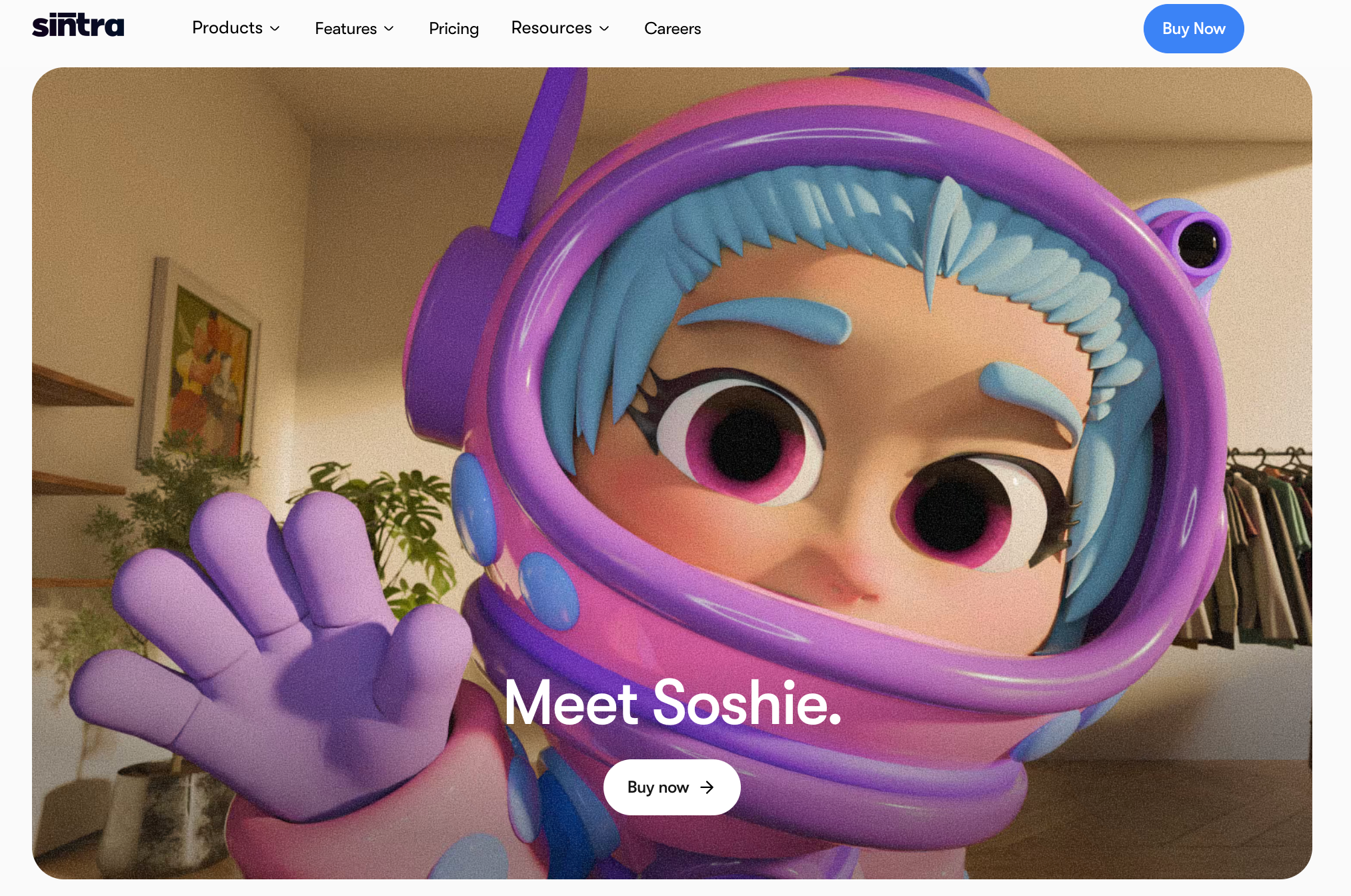
Soshie is the AI social media manager within the Sintra ecosystem, designed for end-to-end content execution. It generates content calendars, creates posts, writes captions, suggests hashtags, and schedules publishing across major platforms.
Trained on millions of real social posts and connected to the Brain AI knowledge base, Soshie ensures posts align with brand guidelines and historical performance. Content review happens in a visual calendar with one-click approvals, significantly reducing manual workload. Performance monitoring and optimization recommendations are included.
3. Penn - Best For Ideation And Copy

Penn is Sintra’s AI assistant focused on ideation, strategy, and copy development. While Soshie handles execution, Penn supports early-stage thinking, including brainstorming and message refinement.
Penn generates content angles, campaign concepts, headline variations, calls-to-action, and A/B test versions. It applies marketing psychology and persuasion frameworks to improve clarity, positioning, and effectiveness before content is finalized.
Assessment by Criteria
- Content Quality: Soshie generates captions that match our brand voice. The AI uses our Brain AI knowledge base to understand context.
- Brand Voice Alignment: The Brain AI system stores our brand guidelines and tone preferences. After two weeks of use, the tool captured our voice better than some freelance writers we've hired.
- Trend Awareness: Soshie monitors social media trends and suggests timely content. It identifies trending hashtags and current industry topics.
- Automation: Full end-to-end automation from ideation to publishing. Soshie generates weekly content batches and schedules posts at optimal times based on audience data.
- Scheduling Capabilities: A visual calendar enables monthly planning and easy timing adjustments around campaigns or events.
Strengths
- Handles the entire content lifecycle from ideation to analytics
- Learning system improves with each approved post
- Proactive content suggestions based on industry trends
- Multi-business support with separate Brain AI profiles
- Visual content generation included
- 24/7 operation across 100+ languages
Weaknesses
- Initial learning curve to set up Brain AI properly
- Takes 1-2 weeks for the system to fully adapt to the brand voice
4. SocialBee - Best For Evergreen Scheduling
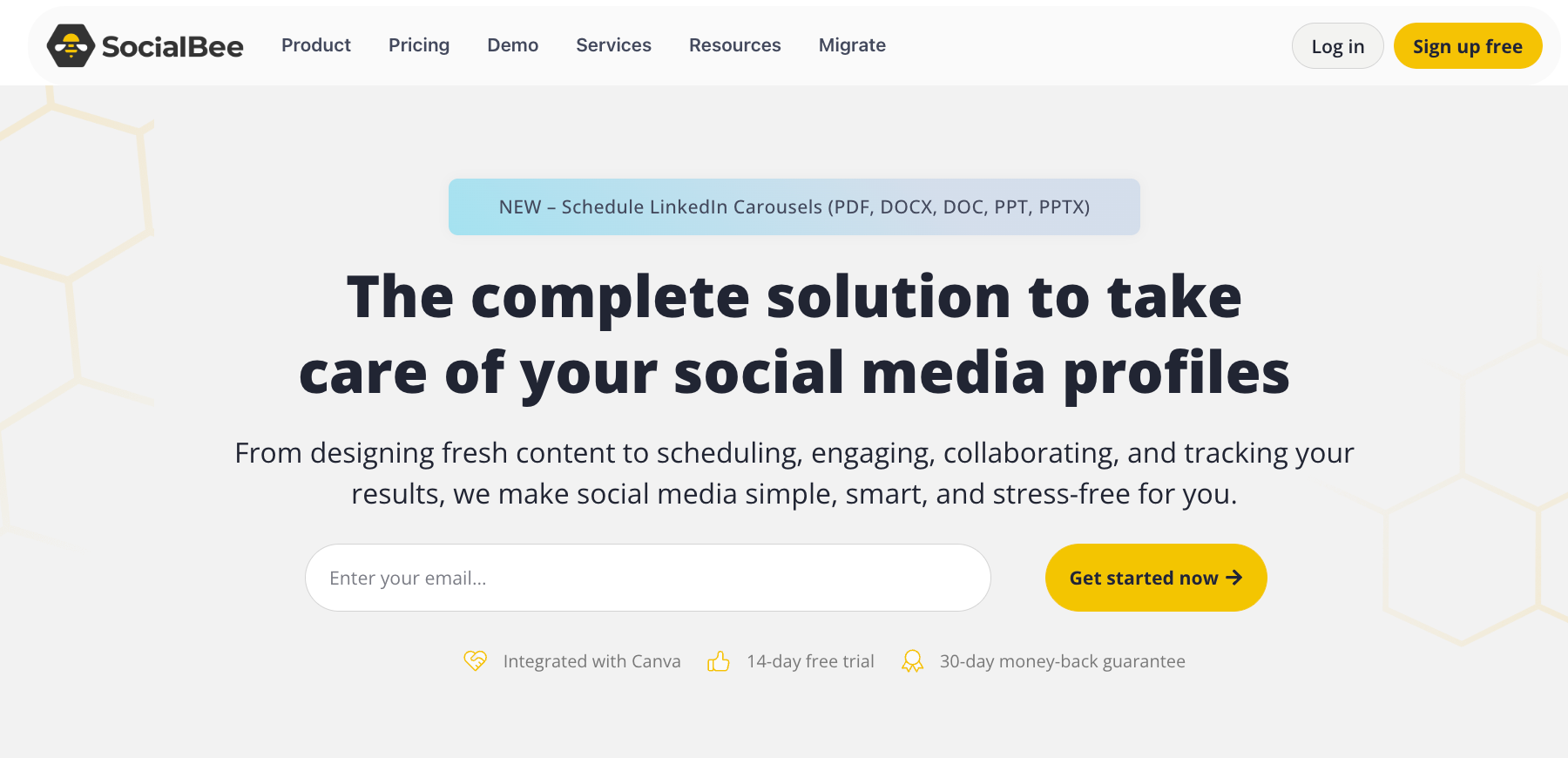
SocialBee is designed to create an entire social media posting plan. It is suitable for users who want a comprehensive approach to social media content creation.
The platform centers on category-based content management. It organizes posts into categories like promotional, educational, and curated content. SocialBee then automatically rotates through these categories, maintaining variety without manual intervention.
The AI Copilot feature impressed us the most. It generates complete social media strategies by asking about your industry and audience. SocialBee's AI-powered social media post generator offers over 1,000 customizable prompts for generating engaging captions and images.
The smart queue system handles content expiration. You can set posts to expire after a certain number of shares or on specific dates. This prevents outdated content from appearing months later.
SocialBee supports Facebook, Instagram, Twitter, LinkedIn, Pinterest, Google Business Profile, and TikTok. The RSS feed integration automatically imports blog posts and creates social content from them.
Assessment by Criteria
- Content Quality: AI-generated captions are solid starting points. The 1,000+ prompts cover most use cases. However, outputs sometimes need editing for brand voice consistency.
- Brand Voice Alignment: Less sophisticated than Sintra's Brain AI. You can set tone preferences. However, the system doesn't learn from approved content over time.
- Trend Awareness: Limited trend monitoring. SocialBee focuses on evergreen content rather than trending topics, which fits its positioning but limits timely content creation.
- Automation: Excellent for evergreen content. The category-based system and smart queues handle republishing automatically. Once configured, the system runs with minimal oversight.
- Scheduling Capabilities: The visual calendar provides a clear overview of scheduled content. SocialBee suggests optimal posting times based on historical performance data.
Strengths
- A category-based organization keeps content varied automatically
- Evergreen content recycling reduces the constant creation needs
- 1,000+ AI prompts for different content types
- Direct Canva integration for visual design
- RSS feed imports for blog content repurposing
- Strong platform coverage, including TikTok
- Affordable pricing starting at $29/month
Weaknesses
- Limited social listening capabilities for brand monitoring
- Analytics provide high-level metrics but lack granular insights
- The mobile app has restricted functionality and receives poor user reviews
- No drag-and-drop rescheduling in calendar view
- Weak team collaboration features (no approval workflows or task assignment)
- Some users report occasional posting failures on Facebook
- Limited media storage capacity
Socialbee Pricing
SocialBee provides three tiers called Bootstrap, Accelerate, and Pro, with plans starting at $24 per month.
5. Predis AI - Best For E-Commerce Content

Predis AI is an AI-powered social media post generator that helps users quickly create and schedule engaging content across multiple platforms.
The platform stands out for its data-driven approach to content creation. Predis AI helps users quickly create and schedule engaging content, including images, videos, carousels, captions, and hashtags. What makes it particularly effective is its focus on performance prediction and competitor analysis.
The e-commerce integration deserves special mention. Predis.ai can generate carousels and videos from simple prompts, making it suitable for agencies and e-commerce brands.
Shopify store integration is available. It automatically creates product posts from catalog data. This saved hours on product marketing content.
The competitor analysis feature provides unique value. When you enter competitor handles, Predis analyzes your content strategy, engagement patterns, and top-performing posts.
Predis supports 19+ languages and offers automated scheduling across Facebook, Instagram, LinkedIn, TikTok, Pinterest, and YouTube.
Assessment by Criteria
- Content Quality: Generated content is functional but often generic. Posts need human editing for brand personality and emotional resonance. Visual designs work better than copy.
- Brand Voice Alignment: Basic brand kit customization (colors, fonts, logos) but lacks the depth to truly capture unique brand voices. The outputs sound similar across different brands.
- Trend Awareness: Strong competitor monitoring identifies trending topics and formats. The system recommends content themes based on what performs well in your industry.
- Automation: Full automation from creation to scheduling. The fair usage policy applies limits on extremely high-volume generation, though typical users won't hit these.
- Scheduling Capabilities: Calendar-based scheduling with drag-and-drop interface. Suggests optimal posting times based on audience engagement data. Integration with major platforms is reliable.
Strengths
- Strong e-commerce integration with automatic product post generation
- The competitor analysis feature is unavailable in most alternatives
- Generates multiple content formats from a single prompt (posts, carousels, videos)
- Engagement prediction helps select the best-performing variants
- Built-in creative editor for quick customizations
- 19+ language support for international campaigns
- Affordable starting at $29/month
Weaknesses
- Content feels generic and requires significant editing
- Limited customization compared to professional design tools
- AI occasionally produces off-topic or unrelated content
- Free plan includes Predis watermark on exports
- Output quality varies significantly based on prompt specificity
- Customer support is slower for lower-tier plans
- Platform integration issues with lesser-known social networks
- Fair usage policy throttles extremely high-volume usage
Predis AI Pricing
Predis AI offers core, rise, and enterprise tiers, with pricing starting at $19 per month.
6. ChatGPT - Best For Budget Teams

ChatGPT is commonly used to draft captions and generate content ideas, though it has significant limitations in scheduling and analytics.
ChatGPT excels at text generation. You can use it to write captions, plan content calendars, generate hashtag suggestions, and develop scripts. AI can generate ideas for social media posts based on user interactions and trending topics. The multimodal capabilities of ChatGPT-4 support image inputs. It enables you to describe and repurpose visual content.
You can also use it for proofreading and tone adjustments. After writing initial drafts, ChatGPT checks grammar, shortens text for character limits, and rewrites content for different platforms.
The Plus plan ($20/month) offers higher usage limits and access to GPT-4, which produces significantly better results than the free version. Custom GPTs specialized for social media tasks improve output quality.
Assessment by Criteria
- Content Quality: Generates solid drafts, but the output often sounds generic without specific prompting. Content requires significant editing to feel authentic and brand-aligned.
- Brand Voice Alignment: No built-in brand memory. Every conversation requires explaining the brand voice again unless using custom GPTs with saved instructions. Lacks the learning capability of dedicated tools.
- Trend Awareness: Not real-time aware. Training data has a cutoff date, so it can't reference current events, trending topics, or recent platform changes without external information.
- Automation: Zero automation beyond text generation. No posting, no scheduling, no workflow integration. Everything requires manual copying and pasting.
- Scheduling Capabilities: None. ChatGPT cannot schedule or publish posts. Requires separate scheduling tools for any automation.
Strengths
- Excellent for overcoming writer's block and generating initial drafts
- Creates multiple content variations quickly
- Effective for proofreading and editing existing content
- Helps brainstorm content themes and campaign ideas
- Custom GPTs can save brand instructions for consistency
- Affordable at $20/month for the Plus plan
- Platform-agnostic works for any social network
Weaknesses
- No direct integration with social media platforms (manual copy/paste required)
- Zero scheduling or publishing capabilities
- No analytics or performance tracking
- Cannot access real-time trends or current events
- Content sounds generic and robotic without careful prompting
- Lacks emotional intelligence and cultural nuances
- No brand memory between sessions (except custom GPTs)
- Requires separate tools for a complete social media workflow
- Human oversight is essential for brand alignment
Chatgpt Pricing
ChatGPT offers free, Go, Plus, and Pro plans, with paid plans starting at $5 per month.
7. Claude AI - Best For Long-Form Planning

Claude AI's strengths lie in long-form and contextual writing for social media content planning.
Claude stands out for its ability to understand complex instructions and maintain context across longer conversations. You can use it for content calendar development, brand messaging refinement, and multi-post campaign planning where consistency matters across dozens of pieces.
The tool excels at analyzing existing content and adapting its style. You can share several past social posts, explain what worked and what didn't, and Claude adjusts its output accordingly. This makes it particularly effective for brands with established voices that need careful replication.
The extended context window handles complex workflows. You can review an entire month's content calendar in one session. Also, you can request revisions to specific posts and maintain consistency across the conversation without starting over.
Assessment by Criteria
- Content Quality: Generates sophisticated, contextually appropriate content. Output quality surpasses that of basic AI tools, particularly for longer captions or multi-paragraph posts that require narrative flow.
- Brand Voice Alignment: Strong contextual understanding allows voice matching when provided with sufficient examples. Lacks automated brand memory between sessions but adapts well within conversations when given reference material.
- Trend Awareness: No real-time trend monitoring. Cannot access current social media trends or breaking news without external information. Requires manual input about trending topics.
- Automation: Zero automation beyond text generation. Cannot schedule posts, connect to social platforms, or integrate into publishing workflows. Requires manual content transfer to scheduling tools.
- Scheduling Capabilities: None. Claude functions purely as a writing assistant with no scheduling or publishing features.
Strengths
- Exceptional long-form content generation for captions and blog post snippets
- Strong contextual understanding maintains consistency across campaign planning
- Processes and references lengthy documents in a single conversation
- Natural writing style with less robotic phrasing than alternatives
- Effective at strategic content planning and identifying messaging gaps
- Adapts quickly to brand voice when provided examples
- Helpful for editing and refining existing content
- Extended context window handles complex, multi-post workflows
Weaknesses
- No direct social media platform integration (manual copy/paste required)
- Zero scheduling or automated publishing capabilities
- Cannot access real-time trends, current events, or breaking news
- No built-in analytics or performance tracking
- Lacks brand memory between separate conversations
- Requires separate tools for a complete social media workflow
- Human review is essential before publishing
- More verbose than needed for some short-form social posts
Claude Pricing
Claude offers free, pro, and max plans, with the pro plan starting at $17 per month
8. Narrato - Best For Team Workflows

Narrato was evaluated for team-based social media workflows. Its AI social media post generator streamlines content creation through customizable templates designed for multiple platforms.
The platform is built specifically for teams and agencies managing multiple clients or brands. What distinguishes Narrato from standalone generators is its workflow management system. It connects content creation to approval processes and publishing schedules.
Narrato includes a content calendar with collaboration features. Team members comment directly on scheduled posts, suggest edits, and approve final versions without leaving the platform. Version history tracks all changes, which helps when clients request rollbacks or ask why certain edits were made.
Assessment by Criteria
- Content Quality: Template-based generation produces structured, professional content. Quality varies by template and the level of input detail. Posts are functional starting points but need refinement for personality and brand-specific nuances.
- Brand Voice Alignment: Custom brand voice profiles help maintain consistency across team members. The system follows guidelines but doesn't learn or improve over time from feedback. Requires manual profile updates to refine voice accuracy.
- Trend Awareness: No built-in trend monitoring or real-time awareness. Content suggestions rely on template structures rather than current social media trends. Requires manual research for trending topics.
- Automation: Automated generation from templates with workflow routing. No direct publishing to social platforms requires export to scheduling tools. Automation focuses on internal workflow rather than end-to-end publishing.
- Scheduling Capabilities: Internal calendar for planning and collaboration, but no direct social media posting. Content must be exported to platforms like Buffer or Hootsuite for actual publishing.
Strengths
- Excellent workflow management for teams and agencies
- Built-in approval processes eliminate external collaboration tools
- 15+ customizable templates cover common content scenarios
- Version history tracks all content changes
- Commenting and collaboration features keep feedback organized
- Custom brand voice profiles maintain consistency across team members
- Multi-format content creation beyond just social media
- Team member assignment and progress tracking
- Integrates content planning with task management
- Helpful for agencies managing multiple client brands
Weaknesses
- No direct social media platform integration for publishing
- Limited compared to end-to-end automation tools like Sintra
- Templates can make content feel formulaic without customization
- Steeper learning curve due to workflow complexity
- Requires separate scheduling tools for actual posting
- Brand voice profiles don't learn or improve automatically
Narrato Pricing
Narrato provides pro and business plans along with a custom enterprise option, with pricing starting at $36 per month.
9. Sprinklr - Best For Enterprise Operations

Sprinklr is an enterprise-grade platform with AI for insights, ad creation, and workflow management. It is designed for large organizations managing complex social media operations at scale.
Sprinklr operates differently from the tools covered so far. This is a management platform where social media content creation is one component of a broader enterprise system.
The AI capabilities span the entire content lifecycle. Sprinklr's AI analyzes customer conversations across channels, identifies trending topics, suggests content themes, generates posts, and tracks performance. The system handles content governance, brand compliance, and multi-level approval workflows required by enterprise organizations.
Assessment by Criteria
- Content Quality: AI-generated content is professional and aligns with enterprise standards. Output quality benefits from the platform's access to historical performance data and audience insights.
- Brand Voice Alignment: Strong governance tools enforce brand guidelines and compliance requirements. Custom brand profiles maintain consistency across global teams and markets. Less adaptable than specialized tools, but prioritizes control and consistency over flexibility.
- Trend Awareness: Excellent real-time monitoring across social platforms and digital channels. AI identifies emerging trends, competitive movements, and shifts in customer sentiment. Proactively suggests content themes based on listening data.
- Automation: Comprehensive automation across workflows, approvals, publishing, and reporting. Handles scheduling across time zones and markets with localization support. Automated compliance checks and brand guideline enforcement.
- Scheduling Capabilities: Enterprise-grade scheduling with multi-market support, time zone optimization, and bulk operations. Calendar management handles thousands of posts across dozens of accounts. Integrates with approval workflows before scheduling.
Strengths
- Comprehensive social listening and competitive intelligence
- Enterprise-grade governance and compliance controls
- Unified platform manages 30+ digital channels from one interface
- Advanced analytics and reporting with customizable dashboards
- Multi-level approval workflows for regulated industries
- Global market support with localization and time zone management
- AI learns from historical performance data to improve recommendations
- Integration with CRM, marketing automation, and business intelligence tools
Weaknesses
- Extremely high cost is prohibitive for small and mid-sized businesses
- A steep learning curve requires dedicated training and technical expertise
- Overkill for organizations without complex enterprise requirements
- Implementation timeline measured in months, not days
- AI content generation is less creative than specialized writing tools
Sprinklr Pricing
Sprinklr uses a custom pricing model, and pricing details are not publicly listed.
10. Jasper - Best For Brand Consistency
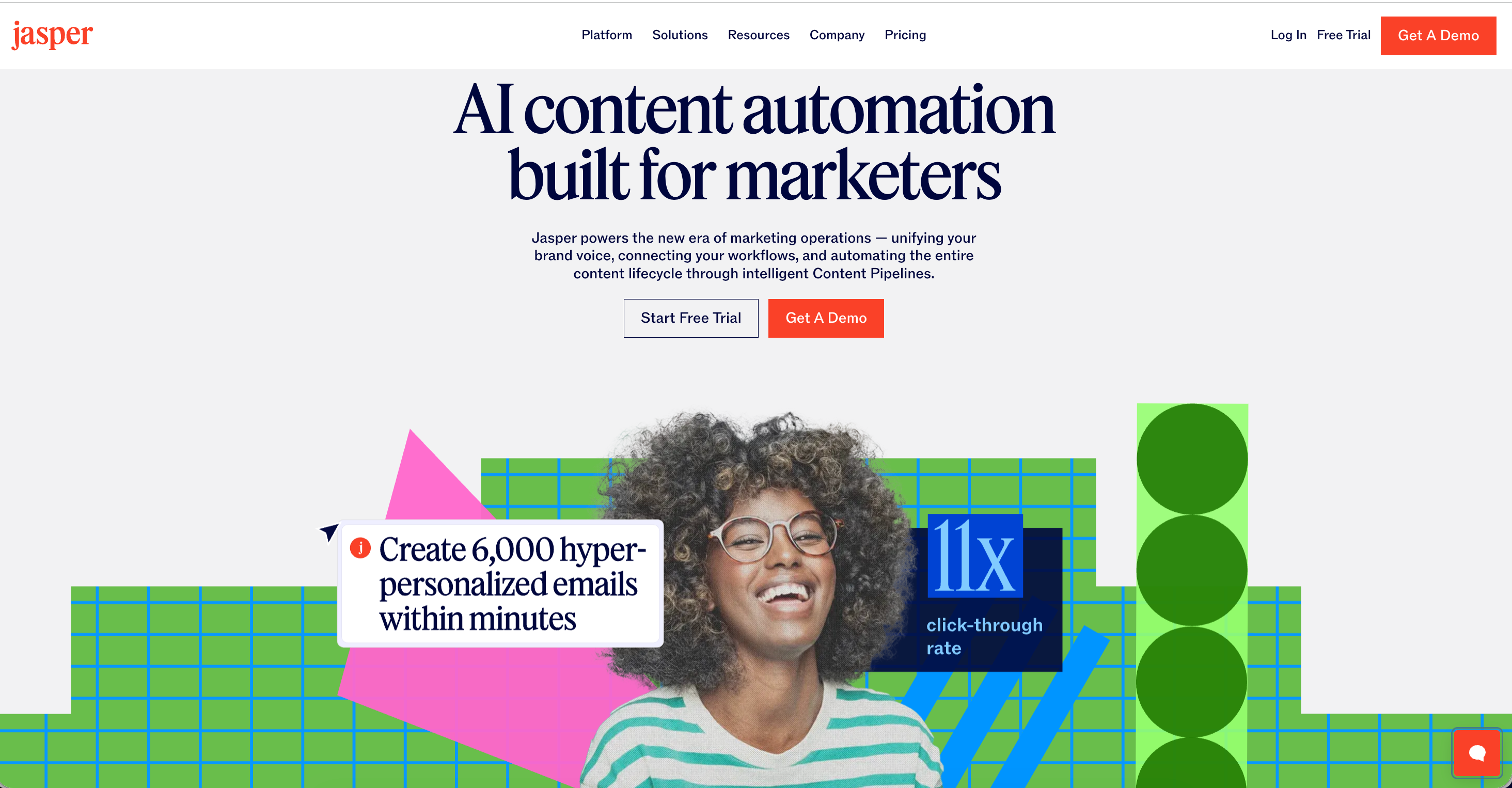
Jasper is a generative AI platform designed for marketers that automates workflows and accelerates content creation across formats.
The Brand Voice feature is what sets Jasper apart from general-purpose AI tools. You can train the system by uploading brand guidelines, website content, past successful campaigns, and product descriptions.
Jasper analyzes this information and generates content that matches your established voice and messaging frameworks. It is the top choice for high-volume marketing campaigns, using 'Brand Voice' training for consistency in generated content.
The template library includes over 50 pre-built frameworks for specific marketing use cases. You can select templates for product launches, seasonal campaigns, customer testimonials, or thought leadership posts.
Jasper's social media templates cover all major platforms and are optimized for each platform's format. You can generate Instagram captions, LinkedIn posts, Twitter threads, and Facebook updates from the same campaign brief.
Assessment by Criteria
- Content Quality: High-quality marketing copy that requires minimal editing. Output sophistication exceeds basic generators, particularly for persuasive and campaign-focused content. Tone remains professional and polished across different formats.
- Brand Voice Alignment: Excellent brand voice training system learns from uploaded materials. After initial training, content consistently matches established brand guidelines. One of the strongest voice replication capabilities among AI writing tools.
- Trend Awareness: No real-time trend monitoring or social listening. Cannot reference current events, viral topics, or breaking news without manual input. Focuses on evergreen marketing content rather than timely posts.
- Automation: Automated content generation across multiple formats from a single input. No direct social media publishing. Automation centers on content creation rather than end-to-end workflow.
- Scheduling Capabilities: None. Jasper functions purely as a content creation tool with no scheduling or publishing features. Requires integration with platforms like Buffer or Hootsuite for posting.
Strengths
- Exceptional Brand Voice training maintains consistency across high-volume content
- Template library covers 50+ specific marketing scenarios
- Campaigns feature generates coordinated content across multiple channels
- Strong long-form and short-form copywriting capabilities
- Chrome extension enables in-platform content generation
- Grammarly and Copyscape integrations address quality concerns
- SEO optimization for content driving website traffic
- Multiple content variations generated from a single input
- Suitable for integrated marketing campaigns beyond just social media
- Regular platform updates add new features and templates
- Strong support resources and tutorials
Weaknesses
- Premium pricing starting at $49/month (higher than many alternatives)
- No direct social media publishing or scheduling
- Cannot access real-time trends or current events
- Limited visual content creation (text-focused platform)
- Requires separate tools for a complete social media workflow
- Learning curve for advanced features and custom workflows
- Output occasionally over-optimized and marketing-heavy
- Character usage limits on lower-tier plans restrict high-volume use
- No built-in analytics or performance tracking
- Brand Voice training requires quality input materials for the best results
- Some users report occasional repetitive phrasing across outputs
Jasper Pricing
Jasper offers pro and business plans, with pricing starting at $69 per month.
10. Copy AI - Best For Content Variations

Copy AI is excellent for generating diverse copy using templates and workflows. It is particularly effective for short-form social media content and quick campaign ideation.
Copy AI's workflow builder is what distinguishes it from basic text generators. You can create custom workflows that chain multiple AI operations together.
The template library covers over 90 use cases across marketing, sales, and general business writing. For social media specifically, you can regularly use templates for Instagram captions, Twitter threads, Facebook ad copy, LinkedIn posts, and video script outlines.
The Infobase feature functions as a brand knowledge repository. You can store product details, brand voice guidelines, key messaging, and customer profiles. Copy AI references this information when generating content. It improves relevance and accuracy without repeating context in every prompt.
When stuck on messaging for a new campaign, you can run several workflow iterations with different inputs.
Assessment by Criteria
- Content Quality: Generates functional short-form copy quickly. Output quality is well-suited to testing and iteration, but often requires significant editing to align with brand personality and emotional depth. Best for generating starting points rather than final copy.
- Brand Voice Alignment: Infobase features store brand guidelines and improves consistency. Voice matching is adequate but less sophisticated than Jasper's Brand Voice or Sintra's Brain AI. Requires detailed prompting to replicate a nuanced voice.
- Trend Awareness: No real-time trend monitoring or social listening capabilities. Cannot reference current events, viral topics, or trending hashtags without manual input. Focuses on evergreen content generation.
- Automation: Strong workflow automation chains multiple generation steps together. No direct social media publishing; outputs require manual copying to scheduling tools. Automation is limited to content creation processes.
- Scheduling Capabilities: None. Copy AI provides no scheduling or publishing features. Requires separate tools for posting content to social platforms.
Strengths
- Exceptional speed, generating multiple content variations in seconds
- Custom workflow builder automates multi-step content creation processes
- 90+ templates cover diverse marketing and social media use cases
- Infobase stores brand knowledge for consistent content generation
- Built-in editor streamlines refinement without platform switching
- Zapier integration enables automated content workflows
Weaknesses
- Content is generic and requires substantial editing for authenticity
- No direct social media publishing or scheduling capabilities
- Cannot access real-time trends or current events
- No built-in analytics or performance tracking
- Outputs are occasionally repetitive across variations
- Requires separate tools for a complete social media workflow
Copy AI Pricing
Copy AI offers a single plan priced at $29 per month.
Other Notable Tools Worth Mentioning
Several other platforms serve specific use cases in the social media ecosystem:
- Planable is a social media collaboration platform that streamlines content creation, approval, and scheduling across multiple platforms. It excels at team coordination for agencies managing client approvals.
- Hootsuite integrates AI features to help users generate post ideas and manage multiple social media feeds effectively. It remains popular for multi-account management despite newer AI-native competitors.
- Buffer offers an AI Assistant for tailoring posts and provides scheduling and analytics for managing multiple accounts. The platform balances simplicity with effective automation for small teams.
- Socialinsider provides in-depth analytics for major social platforms, helping users understand what content works best and why. It's valuable for data-driven strategy refinement.
- Canva's Magic Studio offers features such as text-to-image generation and background removal, making it a dominant force in visual content creation. It's user-friendly for visual design with integrated AI for text and images, making it great for beginners.
- InVideo AI is best for turning text prompts into fully produced videos with stock footage and voiceovers. It accelerates video content creation without extensive editing skills.
- OpusClip automates the extraction of viral 'hooks' from long-form videos, repurposing them into short-form content for platforms like TikTok and Instagram Reels.
- Publer enables users to produce unique AI-generated visuals and bulk-schedule hundreds of posts while managing platform customization across accounts.
- Synthesia is ideal for creating professional explainer or marketing videos with realistic AI avatars in over 140 languages, making it particularly valuable for multilingual campaigns.
In 2026, AI tools for social media content creation are increasingly categorized by their primary output: visual design, video production, or campaign management.
Our Evaluation Criteria
Each platform was tested for at least 30 days using real client accounts, with performance tracked across multiple metrics. The evaluation framework focuses on factors that directly impact daily social media workflows rather than theoretical capabilities.
Here is how the best AI tools for social media content creation were assessed:
Content Quality
The evaluation examined the sophistication, accuracy, and readability of AI-generated posts. High-quality content requires minimal editing, maintains logical flow, and sounds natural rather than robotic. Each tool was tested using identical prompts to allow direct comparison of output quality.
Generated content was also assessed for alignment with the original brief. Tools that drift off-topic or misunderstand instructions lose points regardless of writing quality.
Brand Voice Alignment
Consistency plays a critical role in effective social media marketing. Platforms were tested on how well they capture and maintain brand voice across hundreds of posts. The strongest tools learn from examples and improve voice matching over time.
The assessment also considered whether tools offer brand memory between sessions or require repeated instructions for every piece of content. Platforms that store brand guidelines and preferences significantly streamline workflows.
Trend Awareness
Social media moves quickly. Tools were evaluated on their ability to monitor trending topics, viral content formats, and current conversations relevant to specific industries. Real-time awareness enables timely content that capitalizes on cultural moments.
Platforms without trend-monitoring capabilities can still generate high-quality content but miss opportunities to increase engagement by posting timely content.
Automation
The evaluation measured how much manual work each tool eliminates. True automation covers ideation, creation, scheduling, and publishing, with human involvement limited to review and approval. Partial automation generates content but still requires manual posting.
Workflow integration was also assessed, including connections to existing tech stacks such as scheduling platforms, analytics tools, and CRM systems.
Scheduling Capabilities
Calendar interfaces, bulk scheduling features, and posting reliability were tested. The strongest tools suggest optimal posting times based on audience data and support time zone management for global accounts.
Posting failures and delays were tracked. Tools with unreliable publishing undermine the entire workflow regardless of content quality.
Platform Coverage
Support was evaluated for Facebook, Instagram, LinkedIn, Twitter, TikTok, Pinterest, and YouTube. Tools that optimize content for each platform’s format requirements reduce the need for manual adjustments.
Multi-account handling was also assessed, as agencies and brands managing numerous profiles require tools that scale beyond single-account management.
Ease of Use
Learning curves, interface design, and documentation quality were considered. Tools that require extensive training delay value realization and frustrate teams.
Customer support responsiveness was tested when issues arose. Premium pricing should include reliable support, not just access to features.
Value for Investment
Pricing was compared against actual utility in production workflows. Lower-cost tools are not always the best value if they require a significantly greater time investment. Likewise, enterprise platforms may include features that do not justify premium costs for smaller teams.
Pricing scalability based on team size and usage volume was also evaluated. Tools with restrictive limits often force upgrades before teams are ready.
Use AI for Social Media Content
The math is simple. Posting consistently across four platforms requires 20+ pieces of content weekly. Creating that manually demands 15-20 hours from a skilled writer. Most teams don't have that capacity.
AI changes the equation. Tools generate months of social media content creation in hours rather than weeks. Consistency drives algorithms. Platforms reward accounts that post regularly with better organic reach. AI helps maintain that consistency even when teams are stretched thin or dealing with competing priorities.
AI also improves relevance. AI algorithms analyze large amounts of information to uncover valuable insights about user behavior, preferences, social media trends, and performance patterns. You can use these insights to create content that resonates rather than guessing what audiences want.
Speed matters in social media. Breaking news, viral moments, and trending topics have short windows. AI enables rapid content creation that capitalizes on opportunities before they pass. Manual processes can't match that responsiveness.
How to Choose the Best Tools?
Start by assessing your actual needs rather than chasing feature lists. The best AI for social media content creation depends on team size, content volume, and workflow complexity.
For Solo Marketers and Small Teams
Choose tools that handle multiple functions without complexity. Sintra AI, SocialBee, or Predis AI provide end-to-end workflows from a single platform. Avoid enterprise tools with features you won't use and learning curves that delay results.
Budget constraints matter for small teams. Tools with generous free plans or affordable starter tiers ($29-49/month) provide sufficient capabilities for most small business needs. Premium features become valuable as you scale, not immediately.
For Agencies and Multi-Brand Management
Prioritize tools with strong brand separation features. You need platforms that switch between distinct brand voices without cross-contamination. Narrato, Sprinklr, or Sintra's multi-business support handles client separation effectively.
Workflow and approval features become essential agency scale. Look for tools that route content through review processes, track revisions, and maintain version history. These capabilities eliminate chaotic email threads and missed approvals.
For Enterprise Teams
Enterprise organizations need governance, compliance, and integration capabilities. Sprinklr offers the depth required for regulated industries and global operations, though smaller companies find it excessive.
Integration with existing tech stacks matters more at enterprise scale. Evaluate whether tools connect to your CRM, marketing automation platform, analytics systems, and other core infrastructure. Disconnected tools create data silos and manual work.
Platform Coverage Considerations
Match tool selection to your active platforms. If you use only Instagram and Facebook, paying for 30-channel support is a waste of money. Conversely, expanding to TikTok or LinkedIn later shouldn't require switching tools entirely.
Consider where your audience actually engages. B2B brands need strong LinkedIn support. Consumer brands prioritize Instagram and TikTok. Choose tools optimized for platforms that matter to your business.
Content Volume Requirements
High-volume needs (30+ posts weekly) require robust automation and bulk scheduling. Tools like Sintra AI or SocialBee excel here. Low-volume needs (5-10 posts per week) can use simpler tools, such as ChatGPT and a basic scheduler.
Calculate your actual monthly content needs before evaluating usage limits. Some tools throttle generation on lower tiers, forcing upgrades. Others offer unlimited creation within reasonable fair-use policies.
Integration and Workflow Needs
Evaluate your current workflow. If you're already using scheduling tools like Buffer or analytics platforms, choose AI generators that integrate rather than replacing everything. If starting fresh, unified platforms eliminate integration headaches.
Team collaboration requirements vary. Solo creators need simple interfaces. Teams need commenting, approval workflows, and task assignment. Match collaboration features to your actual team structure.
Tips for Using Social Media Content Generators
AI accelerates content creation, but human oversight determines success. Here's how you can maximize performance when creating social media content:
Train the AI Properly
Feed quality inputs for quality outputs. Upload brand guidelines, successful past posts, product details, and tone preferences. Tools like Sintra's Brain AI and Jasper's Brand Voice improve dramatically with proper training.
Spend time on initial setup. An hour of configuring brand voice saves 10+ hours monthly on editing. Most teams rush this step and wonder why outputs feel generic.
Edit Everything
Never publish AI content without review. Treat generated posts as first drafts requiring human refinement. Check facts, adjust tone, and add personality to make the content feel authentic rather than automated.
Combine AI Strengths with Human Creativity
Use AI for high-volume, repetitive content, such as product posts, announcements, and evergreen tips. Reserve human energy for high-stakes creative work - campaign concepts, brand positioning, and culturally sensitive content. The results speak for themselves: 64% of influencer marketers say AI has improved their results, with the top benefits being time savings in campaign management, better content creation, and improved performance tracking. AI-based influencer matching also delivers 30% more advertising efficiency than manual processes.
You can use AI social media content creators to generate 80% of your content volume, then focus manual effort on the 20% that drives disproportionate impact.
Test and Iterate
Track the performance of AI-generated content versus manually created posts. We've found AI content performs equally well for informational posts but underperforms for emotional or storytelling content. Use data to guide where AI fits best.
Maintain Brand Safety
Set up approval workflows even with reliable AI tools. Reviewing posts before publishing prevents occasional off-brand content, factual errors, or tone-deaf suggestions from going live.
Balance Automation with Authenticity
Audiences detect overly automated content. Mix AI-generated posts with authentic, spontaneous content that shows the human side of your brand. Behind-the-scenes content, team spotlights, and real customer stories balance polished AI posts.
Respond to comments and messages personally, not with AI. Authentic engagement builds relationships that automated posting alone cannot achieve.
Final Scroll
AI transforms social media content from a capacity bottleneck into a scalable operation. The best tools eliminate repetitive work while preserving the creativity and strategic thinking that drive results.
Our testing revealed clear winners for different use cases.
- Sintra AI delivers end-to-end automation with sophisticated brand learning.
- SocialBee excels at evergreen content management.
- Jasper produces high-quality marketing copy at scale.
- ChatGPT and Claude AI offer flexible writing assistance without direct publishing.
Start with one tool and one platform. Master the workflow, measure results, then expand.
Ready to Try Sintra AI for Social Media?
Extensive testing across dozens of platforms shows that Sintra AI delivers a strong balance of content quality, automation depth, and ease of use.
Soshie is an AI social media post generator that creates on-brand content weekly, learns from approved posts, and handles scheduling automatically. The Brain AI system stores brand knowledge and improves over time, reducing content review from hours to minutes of manual creation.
The platform includes 11 additional AI helpers beyond social media management. These assistants support email marketing, customer support, data analysis, and other marketing tasks from a unified system.
Plans start at accessible pricing for small teams and scale with usage needs. The platform does not require complex enterprise contracts or lengthy implementation timelines. The setup allows content generation to begin within an hour.
Sintra pricing is structured to align with content volume and team size. Many teams find the platform offsets its cost within the first month through time savings alone.
Best Social Media Post Generator FAQs
Can AI generate social media posts automatically?
Yes. AI tools can generate captions, hashtags, visuals, and marketing ideas, with some platforms supporting scheduling and publishing. Tools like Sintra AI, SocialBee, and Predis AI offer varying levels of automation, from text generation to fully assembled posts.
Full automation requires setup, including brand voice, content preferences, and scheduling rules. Most teams use AI to generate content in batches and apply human review before publishing rather than relying on fully autonomous posting.
Are AI-generated social media posts effective?
AI-generated posts perform comparably to manual content for most use cases, particularly informational, promotional, and product-related posts. Effectiveness depends on proper setup and human oversight, as customized brand inputs significantly outperform generic outputs.
Is AI suitable for managing multiple social media accounts?
AI is highly effective for managing multiple accounts at scale. Tools like Sintra AI, Sprinklr, and Narrato support distinct brand voices across accounts while significantly reducing management time.
Teams managing several accounts see substantial efficiency gains, and agencies benefit most by increasing client capacity without proportional staff growth. Proper setup is essential to maintain clear brand separation and a consistent voice.
Related articles







Copyright © 2026 PlayOS, Inc. All rights reserved