Best Use Cases of AI in B2B eCommerce

Table of Contents
People in B2B eCommerce know how messy it can get. Customers demand speed, while your team is drowning in repetitive tasks.
B2B eCommerce is not simple. It handles massive product catalogs, long buying cycles, multiple decisions, custom pricing, numerous manual approvals, and more. One slow step can stall an entire deal. The peak season numbers show just how much is at stake - Shopify merchants hit a record $14.6 billion in BFCM 2025 sales, up 27%, with peak sales of $5.1M per minute, and 64% of shoppers used AI to find deals or discover products, rising to 84% among 18–24 year-olds. AI in B2B eCommerce automates complex sales workflows, where manual processes often slow teams.
With the help of AI, we automate workflows, reduce friction, and keep revenue moving without burning out teams. AI can improve inventory accuracy by up to 95%, and that is just one example. Tools like Sintra's AI employees can enhance customer service by providing instant responses to common inquiries.
AI is here to stay, and we are here to make you understand how to do that in your B2B eCommerce. Let's take a walk through this guide so you can see exactly how AI is transforming businesses.
Quick Answer: Top Use Cases
Here's where AI delivers quick impact:
- Automating product recommendations based on buyer behavior and past orders.
- Generating personalized catalogs for different accounts.
- Predicting demand to optimize inventory and procurement.
- Powering AI chat and assistant for quoting, support, and order tracking.
- Scoring leads and prioritizing high-intent buyers in long sales cycles.
- Automating follow-ups, reorder, and account-based outreach.
These use cases work because they sit directly inside revenue and operations workflows. When AI reduces delays, teams close deals faster, serve accounts better, and scale without adding headcount.
Practical AI Use Cases for B2B eCommerce
AI in B2B eCommerce succeeds only when it supports day-to-day execution, not experiments. It works when AI fits directly into messy workflows. You do not need shiny AI tools to achieve that.
The use cases below focus on proven applications we already see across growth, sales, and operations teams. These are practical, repeatable ways businesses use AI to reduce manual work.
Order and Quote Automation
In B2B, orders are rarely simple. Prices are negotiated, volumes change, and approval chains exist messily. AI steps in to remove the manual drag from this chaos. In B2B sales processes, AI automates quote creation based on customer history, contract terms, and volume tiers.
Here's what it looks like in practice:
- AI is generating instant quotes using past pricing, MOQ rules, and margin limits.
- Automatic order validation before it hits ERP or inventory systems.
- Smart routing of quotes for approvals when discounts cross thresholds
- Fewer back-and-forth emails between sales, finance, and operations.
As a result, we get speed without losing control. Quotes go out in minutes, not days. This is where AI earns its keep, quietly, efficiently, and at scale.
Inventory Management Optimization
Inventory mistakes are our biggest nightmare in B2B. It involves large orders and long replenishment cycles. One wrong forecast can lock cash for months.
Here's how teams apply AI for inventory management:
- Demand forecasting that accounts for bulk buying patterns and repeat customers.
- Automated reorder points based on lead times and supplier reliability.
- Early warning for slow-moving or at-risk inventory.
- Smarter allocation across warehouses and regions.
AI analyzes historical sales, seasonality, contract commitments, and real-time demand signals simultaneously. We stop guessing and start predicting. Operations stay calm, even when order volume spikes or buying behavior shifts unexpectedly.
Product Data Management
Product data management comes with high stakes and messy chaos. One missing spec among thousands of SKUs can stall a deal. AI helps solve this problem by standardizing product data across sources.
It cleans naming conventions, fixes attribute gaps, and keeps catalogs consistent across sales channels. This is one of the top AI features in modern B2B eCommerce systems, including automated attribute standardization, bulk content enrichment, duplicate detection, and cross-channel catalog syncing.
Let's take a look at what it practically does:
- Automatic normalization of product titles, specs, and units
- Attribute enrichment using supplier data and historical listings
- Duplicate detection and cleanup across catalogs
- Continuous updates when pricing, availability, or specs change
We get cleaner catalogs and faster purchasing decisions. Also, very few errors in order and quotes, making sales teams trust the data again, which is rare.
Content Generation and Translation
In B2B, product catalogs aren't just huge, they're gigantic and global. Every SKU may need multiple descriptions, landing pages, and localized content. AI in B2B eCommerce transforms the way content is generated manually and generates it in bulk without losing quality.
It can also translate content into multiple languages for international buyers. The best tools adapt messaging for local markets and industry-specific terminology. Let's take a closer look at what exactly AI does:
- Automatically generate product descriptions for new SKUs
- Localize landing pages for different regions without rewriting each manually
- Ensure consistency in tone, style, and technical specifications across all content
- Continuously update descriptions as products evolve or specs change
Using an AI eCommerce assistant saves hundreds of hours every month. It also ensures your global buyers see accurate, relevant, and high-quality content, improving engagement and conversions.
Advanced Customer Support
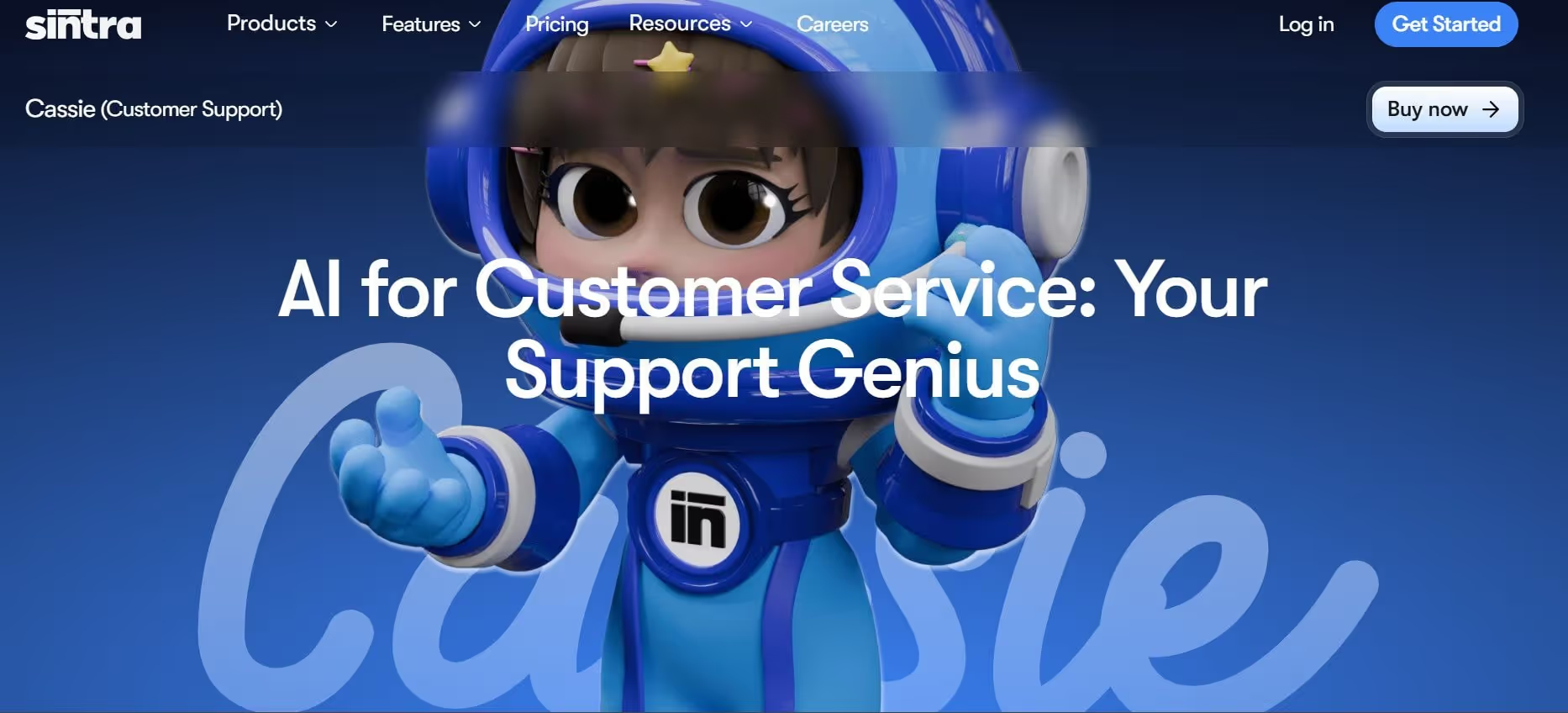
In B2B eCommerce, buyers often have complex questions about bulk orders, custom pricing, or delivery timelines. Relying solely on humans can slow down response time and frustrate customers. AI chatbot solutions in B2B eCommerce step in to handle routine inquiries, like order status updates, payment confirmations, and account questions.
It learns from past interactions to provide accurate answers and suggest helpful resources. More complicated issues are forwarded to human agents, ensuring no problem is left unsolved.
A practical setup with AI looks like this:
- AI manages common support requests 24/7
- Complex or sensitive issues are automatically routed to specialized teams
- AI logs interactions to improve the future and identify recurring problems
- Integration with CRM ensures personalized answers for each account
Tools like AI for customer service let teams scale support without adding extra members. Customers get faster responses, and support teams can focus on high-value tasks.
AI-Powered Product Recommendations
Buyers often reorder the same products or explore related items. To go through each recommendation manually sounds like a nightmare. AI in B2B eCommerce streamlines the process by analyzing buyer behavior, past purchases, account size, and industry trends to recommend the most relevant products.
It can surface cross-sell opportunities, upsell higher-value alternatives, or bundle items for efficiency. Recommendations are dynamic and personalized for each account, improving the likelihood of additional sales.
Here's how it does it all:
- AI detects when a customer frequently orders a component and suggests complementary products
- It identifies upsell opportunities for premium versions based on purchase patterns
- Account managers get AI-driven suggestions for each client, helping them offer more value with less effort.
With these capabilities, teams can boost average order value and streamline the buying experience. Buyers get tailored solutions without extra research, and we get a hassle-free sales experience.
AI Merchandising
Optimizing product placement in a B2B storefront can be complex. There are thousands of SKUs, multiple categories, and seasonal or account-specific promotions to manage. Top AI merchandising features in modern B2B eCommerce systems help teams automate merchandising decisions to improve discoverability and conversion.
AI analyzes buyer behavior, sales data, and trends to determine which products should be featured, highlighted, or bundled. Here's the process that AI follows:
- AI highlights frequently ordered items for returning clients, making repeat purchases easier.
- It tests different category structures to maximize product visibility.
- Promotional banners or discounts are automatically targeted to accounts most likely to convert.
By applying AI to merchandising, B2B teams can increase sales, reduce manual effort, and create banner ads that feel tailored to each buyer segment.
AI Product Bundling
Instead of guessing which items go well together, AI analyzes past purchases, browsing patterns, and product affinities to suggest combinations that are likely to sell. These intelligent bundles reduce decision fatigue for buyers and often increase average order value.
AI systems look at which products are frequently bought together or what customers with similar profiles have ordered in the past.
This is especially useful in B2B, where buyers might need compatible components, accessories, or related consumables in one order.
For example, solutions like Zoovu's AI-powered bundling engine help segment SKUs into meaningful groups and show them at checkout.
Website Optimization
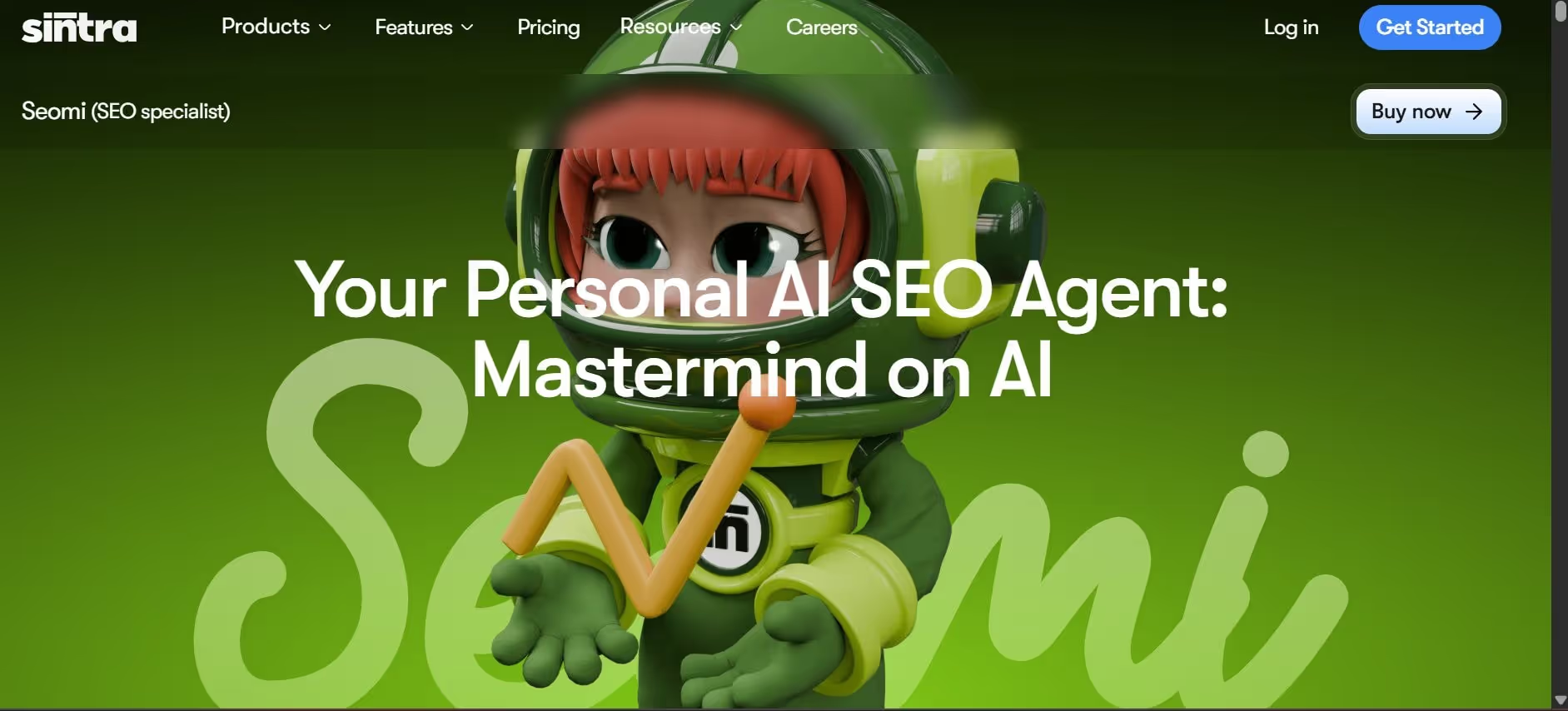
AI-powered website optimization helps B2B eCommerce sites make products easier to find, both on traditional search engines and AI-driven discovery platforms. It analyzes user behavior, search trends, and content performance to suggest site structure, metadata, and internal linking.
AI SEO agents like Sintra's Seomi automatically scan product pages, identify missing schema, optimize headings, and flag underperforming content. AI in B2B eCommerce helps maintain discoverability without constant human intervention.
Why B2B eCommerce Needs AI?
B2B eCommerce is complex. Large product catalogs, negotiated pricing, and long buying cycles make processes slow and error-prone. Traditional methods struggle to handle frequent updates, bulk orders, and personalized offers at scale.
AI in B2B eCommerce addresses these challenges by automating repetitive tasks, analyzing large datasets, and predicting trends. AI can provide B2B buyers with 24/7 self-service support through AI-powered chatbots, enhancing customer service. It allows teams to manage inventory, optimize pricing, and personalize experiences without slowing down operations. With AI, businesses can respond faster, reduce errors, and focus on growth rather than manual adjustments.
Benefits of AI in B2B eCommerce
Adopting AI in eCommerce B2B sales processes goes beyond automation. It transforms how we run operations. Automation of repetitive tasks such as bulk SKU updates, order-risk checks, and contract reviews can cut operational costs by up to 60%.
Teams see faster order processing, smarter inventory management, and more accurate forecasting. AI also drives revenue growth by recommending relevant products, optimizing pricing, and enhancing customer engagement.
Let's take a look at some of the common challenges that B2B eCommerce faces and how AI solves them.
Common Challenges
Implementing AI in B2B eCommerce isn't without hurdles. Many companies struggle to show clear ROI from their AI investments, which can hinder adoption. Cultural resistance can freeze progress in adopting AI technologies in B2B ecommerce. Let's take a closer look at these challenges:
- Data quality: AI relies on accurate and complete data to deliver reliable insights.
- Integration complexity: Connecting AI systems with ERPs, CRMs, and eCommerce platforms can be tricky.
- Change in management: Teams must adapt to new workflows and trust AI-driven processes.
- Automation trust: Stakeholders need to see consistent results before fully relying on AI
How to Choose the Best AI for B2B eCommerce?
Selecting the right AI solution can make or break your B2B eCommerce strategy. The solution comes down to matching features with your business needs. Here's what to look for:
- Business size and catalog complexity: Make sure the AI can handle the volume of products, SKUs, and accounts your team manages.
- Integration capabilities: Look for seamless connections with ERP, CRM, CMS, and analytics platforms to avoid manual data wrangling.
- Automation features: Check if the AI can handle recurring tasks like order processing, quoting, product recommendations, or inventory updates.
- Scalability: Ensure the solution can grow with your business and adapt to more complex workflows over time.
- Ease of use: Prioritize tools your team can adopt quickly without extensive training.
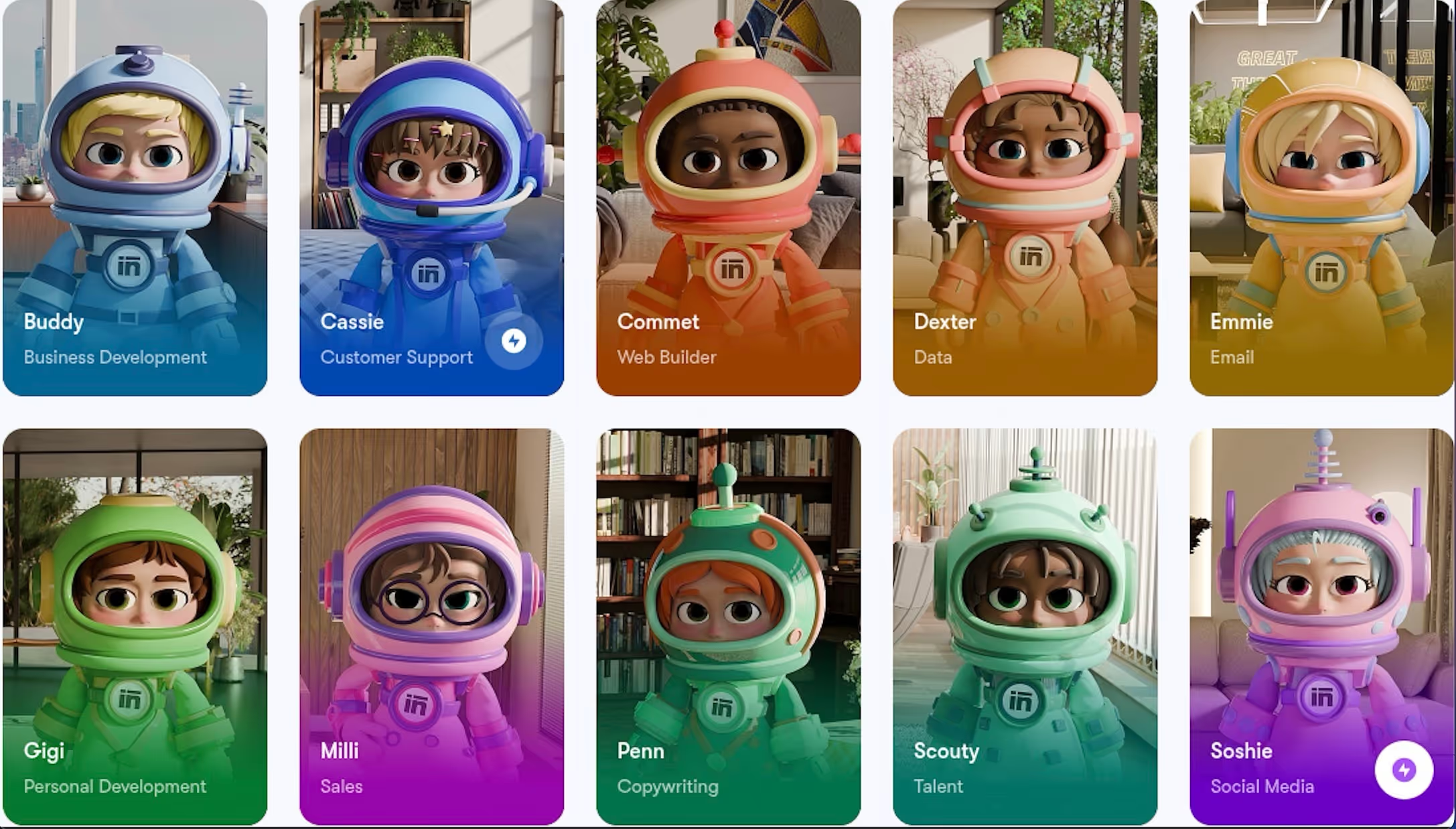
- AI assistants and helpers: Consider using Sintra's AI helper that provides prebuilt assistants for practical, workflow-driven B2B tasks.
Food for Thought
When thinking about AI, it's easy to focus on one feature or tool. But in B2B eCommerce, the real advantage comes from systems that connect insights, execution, and automation across your entire team.
AI in B2B eCommerce can do more than automate a task. It can coordinate workflows, optimize pricing, and surface opportunities faster than manual processes ever could.
Platforms with shared intelligence, like Sintra's Brain AI, help teams make smarter decisions by retaining context and learning over time. AI integrations with your existing systems ensure that AI insights flow seamlessly across sales, marketing, and operations.
Thinking systematically lets your business move beyond isolated wins to scalable, measurable growth.
Ready to Try Sintra AI?
Scaling a B2B eCommerce operation doesn't always mean hiring more people. Companies investing in AI report 30% higher revenue growth compared to those using traditional digital methods.
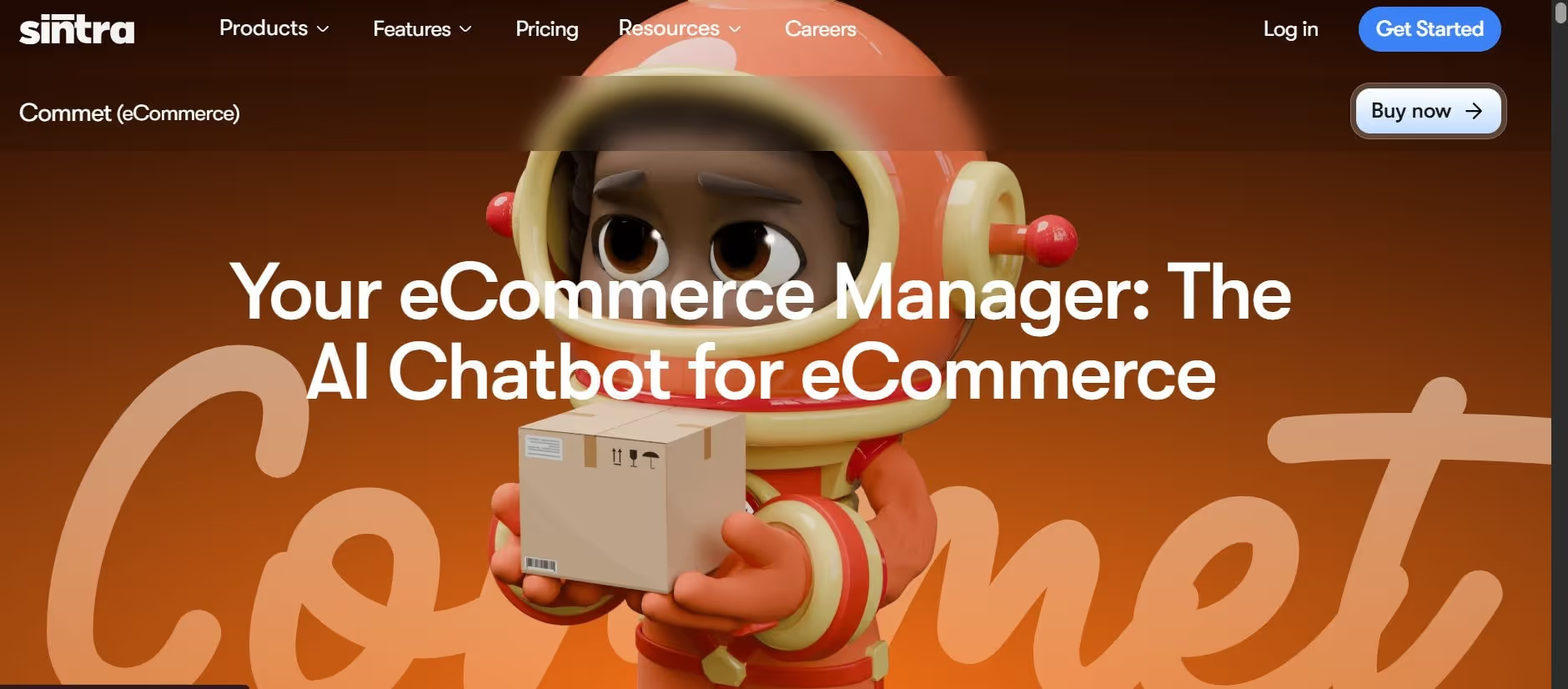
With Sintra AI, your team can automate repetitive tasks, streamline workflows, and make data-driven decisions faster. It acts as a practical execution layer, helping you manage quotes, orders, product catalogs, and customer interactions with AI precision.
Teams that adopt Sintra AI see processes move faster while keeping quality and consistency high. If you want to explore how AI can support growth without adding headcount, check out Sintra's pricing or meet the ultimate AI team that's always ready to assist you.
AI for B2B eCommerce FAQs
How is AI used in B2B eCommerce today?
It automates quotes, orders, inventory forecasting, customer support, product recommendations, and content management. It helps teams handle large catalogs, complex pricing, and long buying cycles with less manual work.
Can AI improve pricing and quoting in B2B sales?
Yes. AI analyzes historical deals, contract terms, customer behavior, and demand signals to generate accurate quotes faster.
Is AI in B2B eCommerce suitable for small and mid-sized companies?
Absolutely. AI helps smaller teams scale without hiring more staff. It automates repetitive tasks, improves decision-making, and brings enterprise-level capabilities to growing businesses without the complexity or cost of large legacy systems.
Related articles


.avif)