Strategic Initiatives: How-to Guide and Best Practices

Table of Contents

Quick Answer
A successful strategic initiative is a structured roadmap that helps companies achieve their objectives and targets. It includes tangible and measurable steps teams can take to move closer to their objectives. By breaking big-picture goals into smaller, focused actions, strategic initiatives make long-term strategies executable.
For execution-focused teams, this clarity ensures alignment, accountability, and steady progress instead of stalled plans.
A solid strategy gives a business direction. But direction alone doesn’t create results. Many companies set bold goals, only to fail once execution begins. The real breakdown rarely happens during planning — it happens after the plan is approved. That’s where strategic initiatives come in.
Strategic initiatives act as the bridge between strategy and execution, translating a company's vision into micro, actionable goals. Instead of leaving strategy as a static document, they turn it into a movement across teams. The time savings from AI-assisted collaboration are significant - the heaviest Microsoft Teams users summarized 8 hours of meetings using Copilot in a single month, the equivalent of a full workday saved.
In this article, we’ll explore strategic initiatives' meaning, practical examples, and how to turn them into repeatable systems that drive measurable progress.
What Are Strategic Initiatives?
Strategic initiatives are often confused with company strategy, goals, or projects. Because these terms are used in similar ways, the strategic initiatives definition can feel unclear. But when the meaning isn’t clear, teams struggle to execute.
So, let's break down what this term means in practical terms and how it differs from other business buzzwords.
Strategic Initiatives Definition (Plain Language)
Here’s the best way to define strategic initiatives: they are a focused set of actions that help teams achieve a strategic objective within a specific timeframe.
Strategic initiatives help turn high-level goals into smaller, more achievable projects. They guide daily tasks without overwhelming teams, making strategy easier to execute.
Strategic Initiatives vs Strategy vs Goals
It’s easy to get confused about strategy, goals, and strategic initiatives. If strategy sets the direction for a company and goals define the outcome, strategic initiatives are the bridge between the two — the actions that drive execution.
Without strategic initiatives, a company has the starting point and the destination, but not the map to get there. They are what actually make high-level plans work.
What Makes an Initiative “Strategic”?
What defines strategic initiatives, and how do they differ from tactical, everyday tasks? The best way to differentiate the two is by analyzing their impact and cross-functional relevance.
Any initiative that supports long-term objectives and creates measurable impact is strategic. It's not just about completing work—it is about moving the company closer to its bigger goals.
Strategic initiatives usually involve diverse teams across the company. They require collaboration and clear communication to reach common goals. Additionally, strategic initiatives are directly linked to company leadership. They not only approve these tasks but are also responsible for the results.
Core Components of a Strategic Initiative
A single initiative can include multiple small projects and milestones. But despite the varying scope and objectives of strategic initiatives, they all have these core components in common:
- Objective – What long-term goal does it support?
- Scope – What resources are required?
- Ownership – Who is responsible for execution and results?
- Timeline – When should milestones and outcomes be achieved?
- Success signals – What KPIs will be used to measure progress and outcomes?
- Dependencies – Which teams, tools, or decisions does it rely on?
Without these components, even the best-developed strategic initiatives can lose clarity and direction.
Why Strategic Initiatives Matter for Execution
Strategies drive business growth. But what drives strategies? It's timely execution.
Strategic initiatives exist to turn plans into results. They bring accountability to outcomes and create a momentum that helps companies reach their goals without losing the big picture.
After all, vision-setting is just one part of planning. The only way to realize those plans is through execution. When initiatives are clearly defined and actionble tasks, strategy becomes part of daily activities—not something teams revisit once a year.
Strategic Initiatives Meaning (With Simple Examples)
To understand the strategic key initiatives' meaning, think of them as focused efforts that bring a company closer to its long-term goals. They consist of practical steps that turn goals into a reality over time.
Here are a few strategic initiatives examples an organization might consider:
- Creating and implementing a social media campaign to introduce a new service
- Offering promotions to reduce losses from close-to-expiry products
- Acquiring a new raw material supplier to improve production stability
- Switching to eco-friendly production solutions
- Developing innovative products through research
- Launching an email strategy to reduce abandoned carts
Why Strategic Initiatives Fail in Execution
Most organizations don’t struggle with planning. They struggle after decisions are made. Company leaders hold meetings, teams present ideas and solutions, and everyone agrees on the best course of action. But a few weeks later, progress begins to slow, and over time, people lose sight of the company’s vision.
The reason strategic initiatives fail is that execution usually breaks down in daily work. Without actionable steps, clear ownership, strategic alignment, and consistent follow-through, even the best-developed strategic initiatives fall apart. However, when teams identify failure patterns early, they can correct execution before momentum is lost.
Lack of Clear Ownership and Accountability
When too many people are responsible for strategic initiatives, no one truly owns the outcome. While shared responsibility across departments can be valuable, the absence of clear accountability can make strategy feel optional.
If you define strategic initiatives as structured efforts tied to measurable outcomes, then ownership must be explicit. Without it, work gets delayed, and progress depends more on reminders than on real commitment.
Strategic Initiatives Live in Static Documents
Some initiatives get trapped in slide decks, planning tools, or lengthy documents created during the annual strategic plan. These static documents often become disconnected from daily workflows, resulting in stalled or unfulfilled initiatives.
For an organization to achieve its strategic plan, those documents must translate into active, visible priorities. Updated annual strategies may create the illusion of progress, but real growth comes from ongoing execution—not archived plans.
Teams Interpret the Same Initiative Differently
Ambiguity in strategic initiatives and a lack of shared context can lead to misinterpretation. For example, what sales teams view as long-term revenue growth may be seen by marketing teams as scattered campaigns.
When teams are unclear about the scope and objectives of initiatives, priorities shift, and execution suffers. Even strong strategic initiatives can fail if departments move in different directions.
Too Many Initiatives, Not Enough Capacity
Another reason strategic initiatives fail is overload—too many initiatives without the resources to support them. When teams and efforts are stretched thin, momentum fades quickly.
A better approach is to prioritize initiatives based on the company’s long-term vision. Successful strategic initiatives focus effort on a few high-impact areas rather than dispersing resources across too many goals.
No Feedback Loops or Adjustment Mechanisms
A strategic planning initiative cannot be “set and forget.” All teams involved must evaluate progress regularly and adjust efforts and resources based on results.
Instead of waiting for year-end outcomes, adopting shorter review cycles helps teams reach milestones more effectively. Without feedback loops and adjustment mechanisms, execution gradually drifts off course.
Strategy Drift Over Time
It is easy to lose sight of the bigger picture, especially during team transitions and shifting priorities. When teams forget why an initiative exists, their efforts lose direction and urgency.
Strategy drift often results from poor documentation and weak reinforcement. Without consistent reminders of purpose and progress, execution slowly loses focus.
Strategic Initiatives Examples Across Teams

Strategic initiatives are structured efforts that influence workflows and drive measurable outcomes—not just goals. But what are strategic initiatives in real teams? Below are strategic initiative examples that create repeatable systems and strengthen execution over time.
Marketing Strategic Initiatives
Example: Increasing Content Velocity
Instead of publishing inconsistent marketing content, teams can build a structured editorial workflow with clear timelines and defined ownership. Clear goals, combined with performance tracking, ensure content velocity increases without sacrificing quality.
Example: Improving Inbound Pipeline Quality
To execute this strategic initiative example, marketing teams can refine audience targeting and align the company’s messaging with sales feedback. Performance can then be tracked through lead-to-opportunity conversion rates. This shifts the focus from generating more leads to generating high-quality leads.
Example: Standardizing Campaign Execution
Rather than creating a new workflow for every campaign, teams can develop standardized briefs, reusable creative templates, and reporting frameworks. This ensures every launch follows a consistent process instead of relying on ad hoc execution.
Sales Strategic Initiatives
Example: Improving Lead Qualification
Sales teams can refine the Ideal Customer Profile (ICP), assign scores based on behavioral signals and demographic data, and train reps to identify red flags quickly. This strategic initiative example improves close rates by focusing effort on qualified opportunities.
Example: Reducing Sales Cycle Time
By strengthening lead qualification and leveraging automation for follow-ups, sales teams can shorten sales cycles. For this initiative to succeed, marketing and sales must align on KPIs such as pipeline velocity and prioritize high-quality, targeted leads.
Example: Standardizing Follow-Ups
Follow-up is a critical element of the sales cycle. Teams should ensure outreach messages are consistent and aligned with company guidelines. By creating structured, repeatable processes with templates, automated cadences, and CRM tracking, sales teams can standardize follow-ups effectively.
Operations Strategic Initiatives
Example: Tool Consolidation
Tool consolidation is not just about cost-cutting. Companies can assess existing tools based on functionality, technical fit, security, compliance, and scalability. Using a scorecard approach helps identify solutions that meet both business objectives and technical requirements.
Example: Improve Workflow Documentation
Teams can support this strategic initiative by centralizing documentation and making it easily searchable and accessible. Standardized templates and clear ownership ensure documentation remains consistent, current, and accurate.
Customer Support Strategic Initiatives
Example: Reducing Response Times
Customer support teams must be properly trained and guided to handle issues quickly and effectively. Companies can also implement AI-powered support to provide 24/7 assistance outside business hours. This reduces response times while improving overall customer experience.
Example: Building a Self-Serve Knowledge Base
Support teams can reduce repetitive tickets by creating a searchable help center. This involves identifying common pain points, organizing content for easy navigation, writing clear explanations, and incorporating visuals to enhance usability.
Company-Wide or Cross-Functional Strategic Initiatives
Example: Launching in a New Market
This is a high-impact strategic initiative example as it involves multiple departments, including marketing, sales, operations, customer support, and finance. Leadership defines the market entry vision and success metrics, while each department executes specific milestones. Although responsibilities differ, ownership is shared across department heads to ensure alignment and coordinated execution.
Example: Improving Customer Onboarding
Customer onboarding is a collaborative effort between marketing, sales, product, and customer support. Marketing aligns messaging with the product experience. Sales ensures a structured handoff. Product teams simplify the initial user journey. Customer support reinforces the process through proactive engagement rather than reactive assistance. When these teams align, onboarding becomes a coordinated system with clear success metrics and shared ownership.
Types of Strategic Initiatives
Strategic initiatives vary greatly in scope and intent. Some initiatives may be focused on generating more revenue. At the same time, others may be targeted towards amplifying a company's social media presence.
Before choosing strategic initiatives for your goals, it helps to understand the main categories they fall into.
Corporate-Level Strategic Initiatives
Corporate-level initiatives focus on overall business growth and market positioning. They address big-picture decisions, such as which markets the company should enter or what products it should offer.
For example, a coffee manufacturer may decide to expand into cookie production. To do this, the company could invest in new equipment or partner with an established cookie manufacturer. This type of initiative affects the direction of the entire business.
Functional-Level Strategic Initiatives
Functional-level strategic initiatives involve different departments and teams within the company. The purpose of these initiatives is to bring specific teams, such as marketing, sales, or operations, together to achieve corporate-level strategies.
For example, a software company might align its sales, marketing, and customer service teams to increase conversions from free trial users to premium customers. Each department plays a role, but the effort supports a larger business objective.
Innovative vs Defensive Strategic Initiatives
The difference between innovative and defensive strategic initiatives is similar to action vs. reaction.
Innovative strategic initiatives focus on introducing new products or ideas that eventually influence the market. An innovative strategic example would be the introduction of virtual clothes try-on features that compelled other online stores to offer the same services.
For other companies in the same space, keeping up with this new trend would become part of their defensive strategic initiatives. Here, a company may introduce new workflows and strategies, but the purpose is to stay competitive and relevant to customers.
Strategic Initiatives as Workflows, Not Just Goals
The problem with strategic planning initiatives is that they are often treated as high-level goals. Goals only define what to achieve, but workflows ensure the work actually gets done. The most effective way to embed strategic initiatives into daily operations is through structure, ownership, and repeatability.
Why Goals Alone Are Not Enough
Goals like “increase revenue” or “improve onboarding” sound clear, but without an execution structure, they remain unachievable. Ambiguity in execution steps, lack of accountability, and inconsistent follow-through all contribute to initiative failure.
Rather than simply tying strategic initiatives to outcomes, companies need clear workflows where everyone understands the exact steps, owners, and timelines involved. Without workflows, teams interpret goals differently, and execution stalls.
What a Workflow-Based Strategic Initiative Looks Like
A workflow-driven strategic initiative includes defined inputs, clear actions, assigned owners, and measurable outputs. It outlines:
- What needs to be done
- When it needs to be completed
- Who is responsible for the action
- How progress is tracked
For example, a strategic planning initiative aimed at improving onboarding would specify onboarding emails, product walkthrough triggers, sales handoff documentation, and response-time targets.
A well-defined, workflow-based roadmap helps teams achieve goals more effectively.
Turning Strategic Intent Into Repeatable Actions
Workflows turn strategic intent into repeatable cycles. When teams follow standardized processes, they can operate without constant clarification.
When every team member understands their role and has a clear action plan, ambitious goals transform into repeatable action sequences that can run consistently across cycles.
Cross-Functional Workflows Reduce Execution Friction
Shared workflows align marketing, sales, operations, and support around the same initiative. When each department follows a standardized execution structure, handoff errors decrease significantly.
A robust workflow ensures clear ownership and reduces confusion because expectations are embedded directly into the process.
Strategic Initiatives as Living Systems, Not One-Time Plans
A strategic plan is static, whereas strategic initiatives evolve based on updates, feedback, and iteration. By treating strategic initiatives as living systems, teams prevent them from becoming outdated or forgotten.
How AI Enables Workflow-Driven Strategic Execution
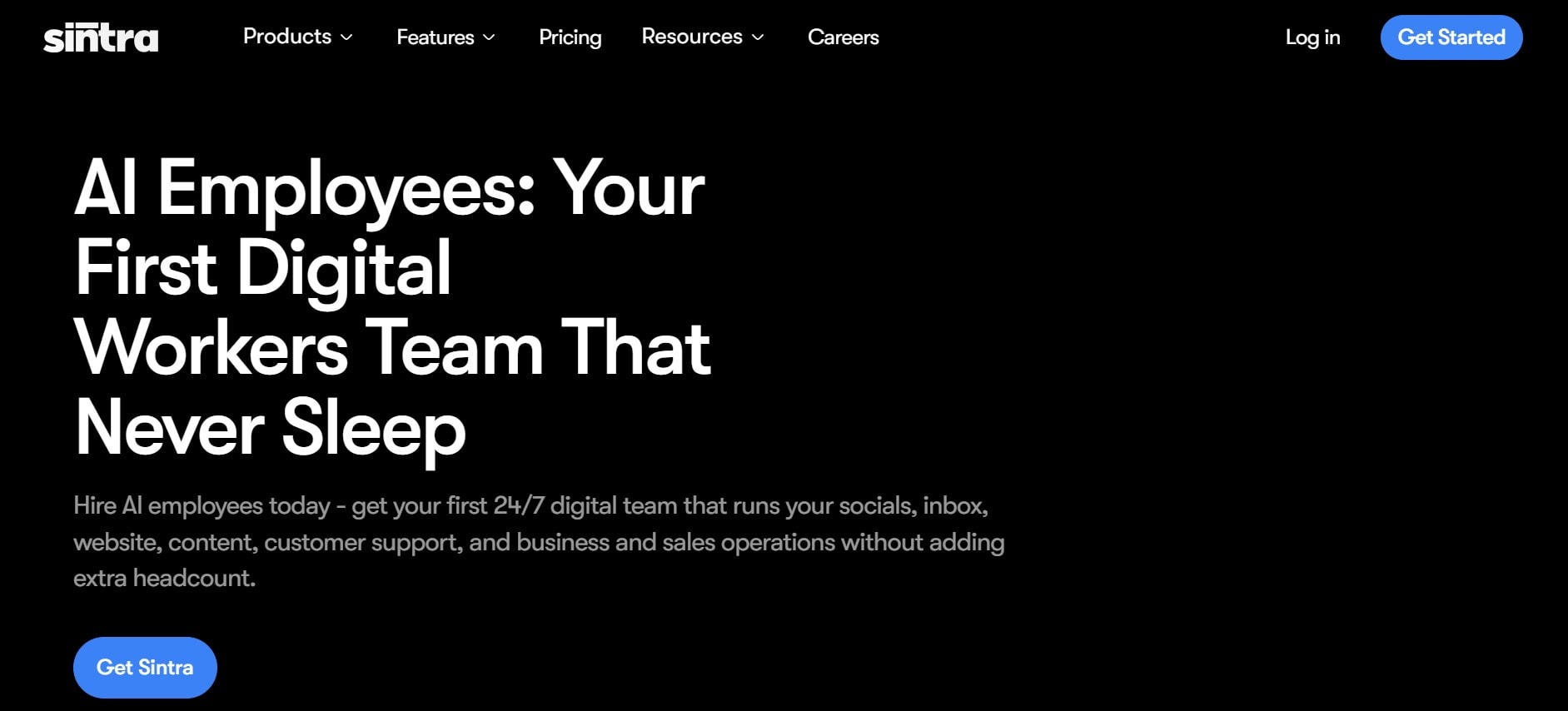
Sintra's AI employees can help structure and design processes that turn initiatives into executable workflows. They can break strategic initiatives into tasks, assign ownership, track progress, and preserve context across teams. With AI tools, workflows remain consistent, and momentum is maintained.
The best part? Sintra provides execution support without adding management overhead.
Turning Strategic Initiatives Into Repeatable Systems
Creating a new framework for every strategic initiative can drain a company’s resources and team capacity. A better approach is to build a robust structure that can be reused repeatedly to drive consistent outcomes.
When initiatives are documented as step-by-step playbooks with defined roles, timelines, and success metrics, they preserve institutional knowledge and reduce dependency on individual memory.
These playbooks become repeatable frameworks that teams can refine and reuse over time. Features like Sintra’s Brain AI align directly with the strategic initiatives definition by helping store context, past decisions, and workflows. This ensures strategic initiatives evolve into scalable systems rather than one-off efforts that disappear after completion.
Cross-Functional Alignment Without Endless Meetings

Strategic initiatives often fail when teams operate in silos and rely too heavily on meetings to stay aligned. Real alignment doesn’t come from constant syncs; it comes from shared context, clarity, and visible execution. Without the right structure, goals get lost in repetitive discussions while execution stalls.
Why Meetings Are a Poor Substitute for Alignment
Meetings do not define strategic initiatives. Instead, they often act as quick fixes that compensate for missing context and unclear ownership.
Excessive meetings slow down execution and complicate processes. Rather than relying on repeated syncs, teams should build repeatable systems that stay aligned with their goals.
Alignment Breaks When Teams Lack Shared Context
When context lives in fragmented documents, emails, or scattered conversations, teams interpret the same initiative differently. For example, sales, customer support, and finance may each view a strategic initiative through their own lens. This creates unnecessary friction and weakens execution.
Sharing context helps teams understand both what they are trying to achieve and how to achieve it. This ensures that strategic initiatives translate into coordinated action.
A Single Source of Truth for Strategic Initiatives
Scattered information across multiple tools creates confusion. A single source of truth where goals, decisions, assumptions, and progress updates are clearly documented helps teams move in the right direction.
When information is unified, cross-functional collaboration becomes smoother, and execution remains consistent. A shared reference point maintains clarity and alignment across strategic initiatives.
Clear Ownership Across Functions
When owners, contributors, and dependencies are clearly defined across functions, confusion decreases, and unnecessary follow-ups are reduced. A clear line of accountability ensures every team member understands their role. This minimizes bottlenecks and supports steady progress across teams.
Asynchronous Alignment Beats Real-Time Syncs
Real-time syncs may appear effective, but they often slow progress and are difficult to scale. Instead, asynchronous updates and visible workflows allow teams to stay aligned while working independently.
When updates are shared transparently, teams can identify and address blockers on their own schedules without losing momentum.
How AI Supports Cross-Functional Alignment
A well-structured AI team helps maintain shared context by keeping goals, decisions, and progress visible to everyone. It translates strategic initiatives into clear, role-specific actions so each team knows exactly what to do.
By reducing the need for manual coordination and constant follow-ups, AI supports execution while keeping the bigger picture in focus. At the same time, it helps teams stay aligned and concentrated on reaching the next milestone.
Strategy Execution for Lean Teams
Small teams don’t need heavy management layers or a formal PMO to execute complex initiatives. What they need are clear objectives, defined ownership, and actionable systems.
Since lean teams are closely involved in both strategic planning and daily workflows, they are often better positioned to execute strategic initiatives without losing focus.
Here’s a quick guide with practical steps to connect strategy and execution:
- Make your strategy visible to all teams
- Prioritize objectives that move you closer to your strategic plan
- Regularly review the connection between goals and initiatives
- Reinforce strategic conversations with your team consistently
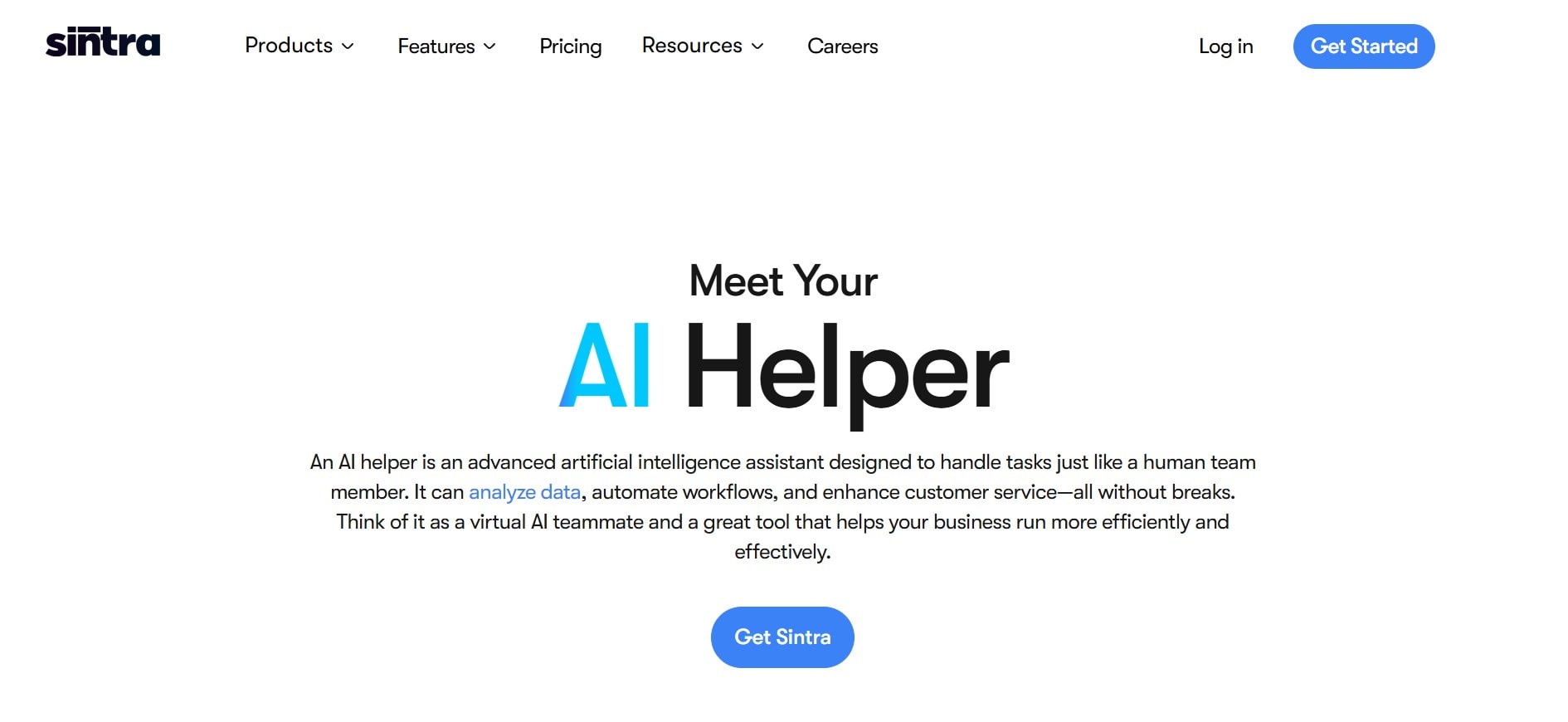
Lean teams can also rely on AI helpers, such as those offered by Sintra, to support execution and reduce operational overhead. With the right AI tools, teams can move quickly while maintaining alignment and control.
From Annual Strategy to Continuous Strategic Execution
Markets have changed. They are fast-moving and constantly evolving. Therefore, a traditional strategy cycle that is reviewed and updated once a year is no longer sufficient. Organizations today need continuous, adaptive strategic initiatives that are reviewed and adjusted throughout the year.
Why Annual Strategy Cycles Are Breaking Down
With shifting markets, changing customer behavior, and evolving internal capacities, annual plans often expire within months. In addition, feedback loops are slow, and execution delays make it almost impossible to respond to a change in time.
What Continuous Strategic Execution Means in Practice
Continuous strategic execution addresses the limitations of annual planning. It involves reviewing initiatives regularly, adjusting priorities incrementally, and maintaining clear ownership. If workflows are meant to move teams closer to their goals, they must adapt to real-time data rather than rely on fixed yearly assumptions.
Strategic Initiatives as Ongoing Commitments
Strategic initiatives should extend beyond yearly planning cycles. An adaptive approach allows teams to refine and strengthen existing efforts instead of resetting them every year. When initiatives are treated as ongoing commitments, strategies can evolve without losing momentum or accountability.
Faster Feedback Loops Improve Strategic Decisions
Frequent reviews create faster learning. Strategic initiatives examples show that early execution signals, such as conversion rates, retention, and operational efficiency, help organizations make smarter decisions. Quicker feedback loops allow priorities to be refined continuously and resources to be reallocated accordingly.
Aligning Teams Around a Moving Strategy
Continuous execution requires shared context so teams can adapt without confusion. When teams work in isolation, a fast-moving strategy can quickly lose focus. Continuous execution should not undermine intent. Instead, teams must remain aligned around long-term goals even as tactics evolve.
The Role of AI in Continuous Strategic Execution
AI helps maintain context, update plans, track progress, and adjust initiatives without restarting from scratch. An AI business strategist can support the execution side of strategic planning initiatives, ensuring every department in the organization follows a structured approach to achieve its goals.
Measuring Strategic Initiative Progress Beyond Dashboards

Are dashboards and KPIs enough to measure strategic initiatives?
Strategic initiatives are coordinated efforts, not spreadsheets. Measuring them only through dashboards and KPIs often fails to capture real progress. True success is reflected in execution momentum, consistency, and learning—not just numbers.
Why Dashboards Often Miss Strategic Reality
Dashboards typically focus on lagging indicators and surface-level metrics. While these show outcomes, they don’t reflect execution speed, alignment, or workflow health. Without context, data cannot reveal whether initiatives are truly moving forward or quietly stalling.
Leading vs Lagging Indicators in Strategic Initiatives
Indicators can be leading or lagging. Leading indicators track actions taken, workflows completed, and decisions made, while lagging indicators measure revenue, growth, or efficiency. Lagging metrics alone are insufficient to evaluate strategic execution. Leading signals give teams early insight into whether initiatives are progressing as intended.
Execution Signals That Show Real Progress
Real progress is visible through observable behaviors: tasks completed on time, smooth handoffs between teams, consistent decision follow-through, and fewer repeated discussions. These signals provide a practical view of execution beyond abstract performance numbers.
Qualitative Progress: Momentum, Alignment, and Clarity
KPIs cannot fully measure whether an initiative is healthy. Shared understanding, reduced confusion, and fewer blockers indicate true progress. Leaders should track these qualitative factors alongside metrics to understand initiative health.
Using Data to Support Decisions, Not Just Reporting
Data should not be limited to static reports. It should be leveraged to adjust priorities, iteration, and resource allocation. Real-time insights allow teams to adjust to changing conditions and make better execution decisions. An AI data analyst can identify patterns and offer actionable insights to support this process.
How Continuous Measurement Prevents Strategy Drift
Regular reviews keep strategic initiatives aligned with the original strategic plan. When teams understand why initiatives exist, they maintain focus, prevent drift, and sustain momentum. Continuous measurement ensures long-term strategic health and keeps initiatives on track.
Ready to Turn Strategy Into Action?
Planning is easy—execution is hard. Sintra AI bridges the gap between strategic plans and real outcomes. This AI tool turns strategic initiatives into actionable workflows, keeping your teams aligned and maintaining momentum. With AI execution, strategies move from planning to results faster, smarter, and without added overhead.
Get started with Sintra today and make every initiative count.
Strategic Initiatives FAQs
What is a strategic initiative in simple terms?
A strategic initiative is a focused, measurable action taken to achieve a larger goal. It breaks down long-term objectives into smaller, manageable steps, making strategy practical and executable for teams instead of just a high-level plan.
What is the difference between strategy and strategic initiatives?
Strategy is a high-level plan that defines long-term goals and overall direction. Strategic initiatives are structured efforts, such as projects or programs, that translate that direction into execution. Strategy provides focus, while initiatives drive action. Without strategy, initiatives lack purpose; without initiatives, strategy remains an idea on paper.
Can small teams run strategic initiatives effectively?
Yes. Small teams can execute strategic initiatives effectively by defining clear goals, assigning ownership, and building structured, workflow-based processes. Unlike large organizations, small teams benefit from agility, faster decision-making, and stronger accountability. This allows them to adapt quickly and maintain consistent execution momentum.
How do you measure the success of a strategic initiative?
The success of a strategic initiative should be measured through both qualitative and quantitative indicators. Beyond traditional KPIs and performance metrics, leaders should assess execution momentum, team alignment, task completion rates, decision follow-through, and tangible business outcomes to get a complete picture of progress.
Why do most strategic initiatives fail?
Most strategic initiatives fail due to unclear ownership, poor strategic alignment, and a lack of structured, actionable execution steps. When high-level goals aren’t broken down into manageable projects, defined responsibilities, and measurable workflows, teams struggle to translate strategy into consistent action and sustained results.
How often should strategic initiatives be reviewed or updated?
Strategic initiatives should be reviewed regularly using real-time data, not just during annual planning cycles. Rather than treating them as one-off projects, organizations should embed repeatable processes into workflows and manage initiatives as a continuous, evolving system that adapts to change.
Related articles