Best Zendesk Alternatives for 2026

Table of Contents

Quick Answer
The best Zendesk alternatives in 2026 include Sintra AI, Intercom, Freshdesk, Help Scout, HubSpot Service Hub, Gorgias, Zoho Desk, Front, Kustomer, and DevRev. The right choice depends on whether your team needs AI-powered automation, a simple helpdesk, deep CRM integration, or ecommerce-focused support.
If you are building a modern support workflow, you are no longer just choosing a helpdesk. You are choosing how your team operates daily, and in many cases, how much work can be handled by an AI team.
Below is a comparison table to help you quickly evaluate each platform before diving into the full breakdown.
Customer support has changed, and many teams are now looking for Zendesk alternatives because the platform can feel expensive, complex, and less flexible as they grow.
Basically, Zendesk is a customer service tool that helps businesses manage support tickets, live chat, and customer conversations in one place, but what once worked smoothly does not always keep up with today’s need for faster responses and leaner workflows.
When people search for apps like Zendesk, they are often trying to find tools that offer similar functionality but with more flexibility, better pricing, or a simpler setup.
Newer tools focus on automation, simplicity, and efficiency rather than just ticket management. The market opportunity is enormous - the global market for AI customer support solutions is growing at a 25.8% CAGR, from $12.06 billion in 2024 to a projected $47.82 billion by 2030, with AI forecast to handle 95% of all customer interactions by the end of 2026. In this walkthrough, we compare the 10 best Zendesk alternatives based on workflows, usability, automation, scalability, and value.
In this walkthrough, we compare the 10 best Zendesk alternatives based on workflows, usability, automation, scalability, and value, including options that offer specialized AI employees to help reduce repetitive work.
10 Best Zendesk Alternatives
The Zendesk alternatives are chosen based on actual use in various industries and team sizes. Every platform listed below has been assessed based on:
- How well does it manage support workflows?
- How simple is it to use?
- How much automation does it offer?
- And how well does it scale with expanding teams?
Every option has a detailed description of its advantages, disadvantages, pricing strategy, and Zendesk comparison. It will help you make a quicker, more confident decision without having to test ten different tools yourself is the basic objective.
These aren't only similar to Zendesk; they account for various customer service strategies in 2026.
1. Sintra AI
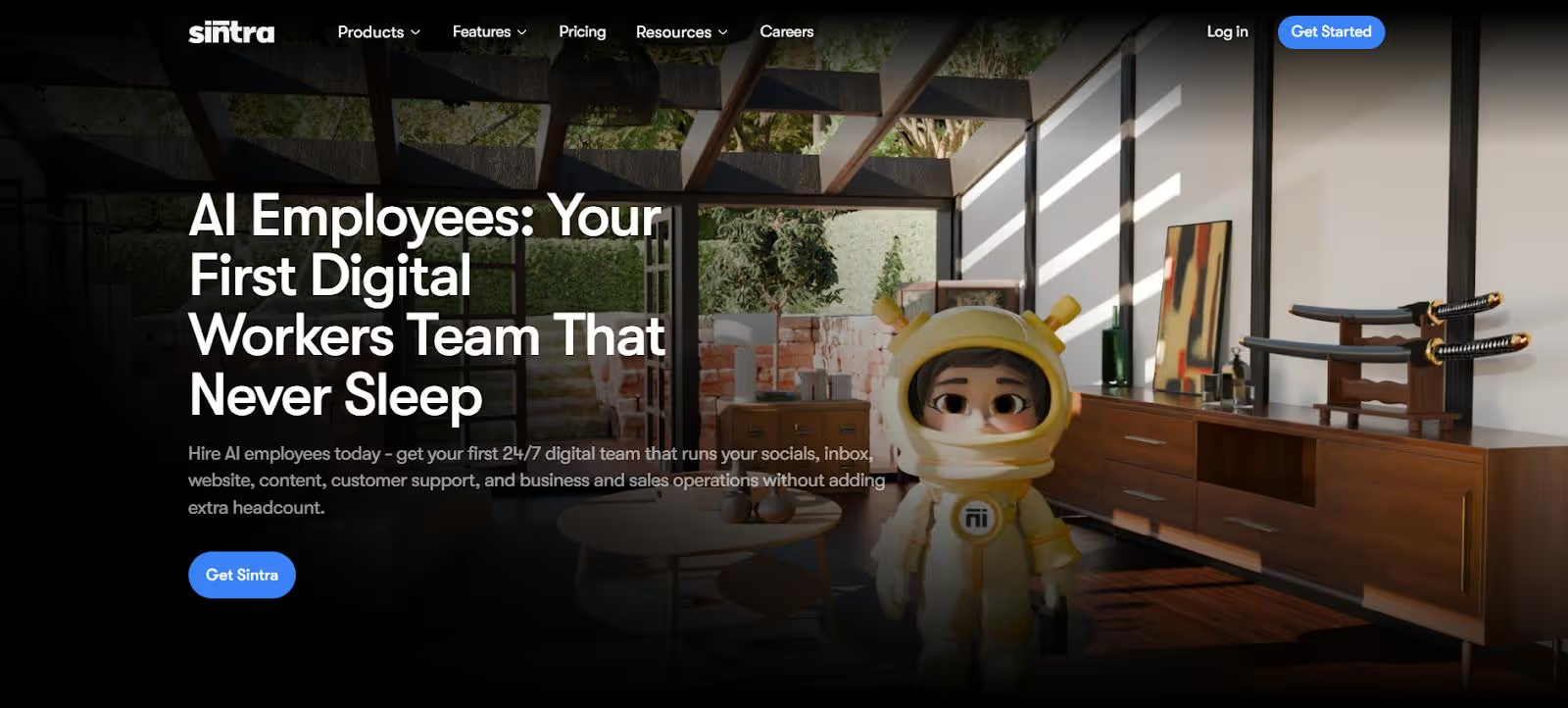
Sintra AI is not a traditional helpdesk, and that is exactly why it stands out as the best Zendesk alternative. Instead of focusing only on tickets, it works more like a digital team made up of specialized AI agents.
Each agent is designed for a specific role. Some handle customer support. Others assist with operations, communication, or internal workflows. This means your team is not just managing conversations. It is actively reducing the amount of manual work behind those conversations.
For teams looking into AI for customer service, this approach changes how support gets done. Instead of routing tickets between agents, you distribute tasks across AI helpers that can draft responses, summarize conversations, retrieve information, and support multiple workflows at once.
At once means that all the agents are connected through Sintra’s Brain AI that stores your business information and brand’s needs. This makes Sintra AI a strong fit for teams that want more than just a ticketing system.
Pros
- Automation-friendly interface
- Multi-role AI agents for various tasks.
- Brain AI ensures consistent output
- Customer support supporting internal workflows, communication, and operations.
- Reduces the need for multiple tools.
- Strong fit for startups and lean teams
Cons
- Different structure from traditional helpdesk platforms
- Not always a direct replacement for legacy systems
Sintra AI compared to Zendesk
While Sintra AI offers an AI assistant that can draft responses, summarize conversations, pull information, and assist with both support and operations, Zendesk concentrates on conventional support and ticket workflows.
When compared to legacy systems like Zendesk, Sintra is a more comprehensive AI-driven model that is frequently more beneficial for modern organizations.
Pricing
By combining operations, marketing, and support into a single AI-driven ecosystem, Sintra AI presents itself as a high-value alternative for Zendesk. The Sintra X plan offers 12 specialized "AI Helpers" for $97 per month or a discounted annual rate of $15.60 per month ($187.20 billed annually). It is an excellent alternative to several costly subscriptions.
2. Intercom
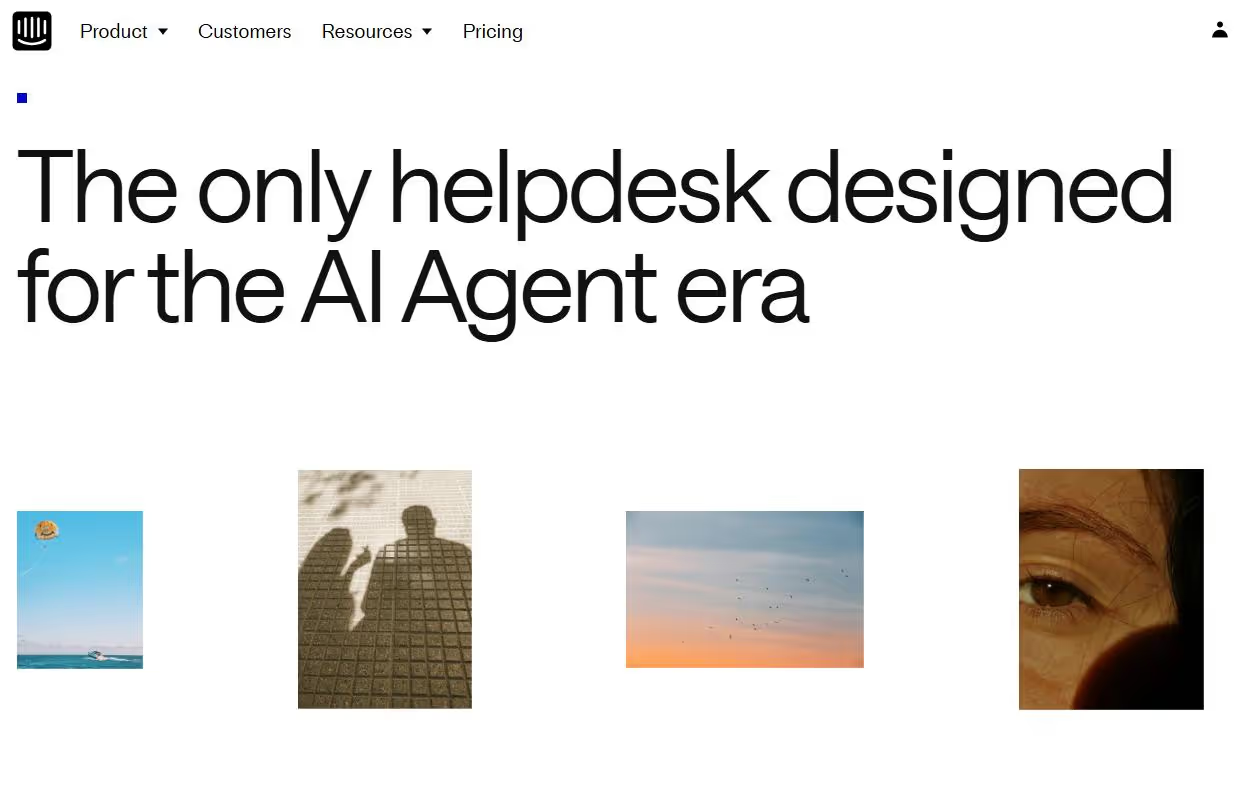
Intercom has built its reputation as one of the most recognizable Zendesk alternatives, especially for teams that prefer a messaging-first approach to customer support.
Different than Zendesk, Intercom centers the entire experience around conversations. Live chat, in-app messaging, and automated responses all work together to create a more fluid customer experience.
This makes it particularly appealing for businesses that want support to feel more like a real-time interaction rather than a structured queue.
Pros
- Chat-first design with user-friendly conversational support experience.
- Powerful automation processes queries with no human influence.
- Customer engagement tools for proactive messaging and targeting.
- Best Zendesk alternative for customer experience teams.
Cons
- Pricing may get complicated with the growth of teams or features.
- More expensive than simpler tools, particularly in small teams.
Intercom compared to Zendesk
Intercom’s conversational model focuses on real-time engagement and messaging, which is different from Zendesk's traditional ticket-first structure. For companies like Zendesk, the choice often comes down to whether you prefer managing a queue or a conversation.
Pricing
Intercom positions itself as a premium Zendesk competitor, targeting product-led teams that prioritize real-time engagement over basic ticketing. While Zendesk offers lower entry-level rates, Intercom’s official 2026 pricing starts at $39 per seat/month ($29 billed annually) for its Essential tier, with Advanced features scaling to $99 per seat/month.
3. Freshdesk
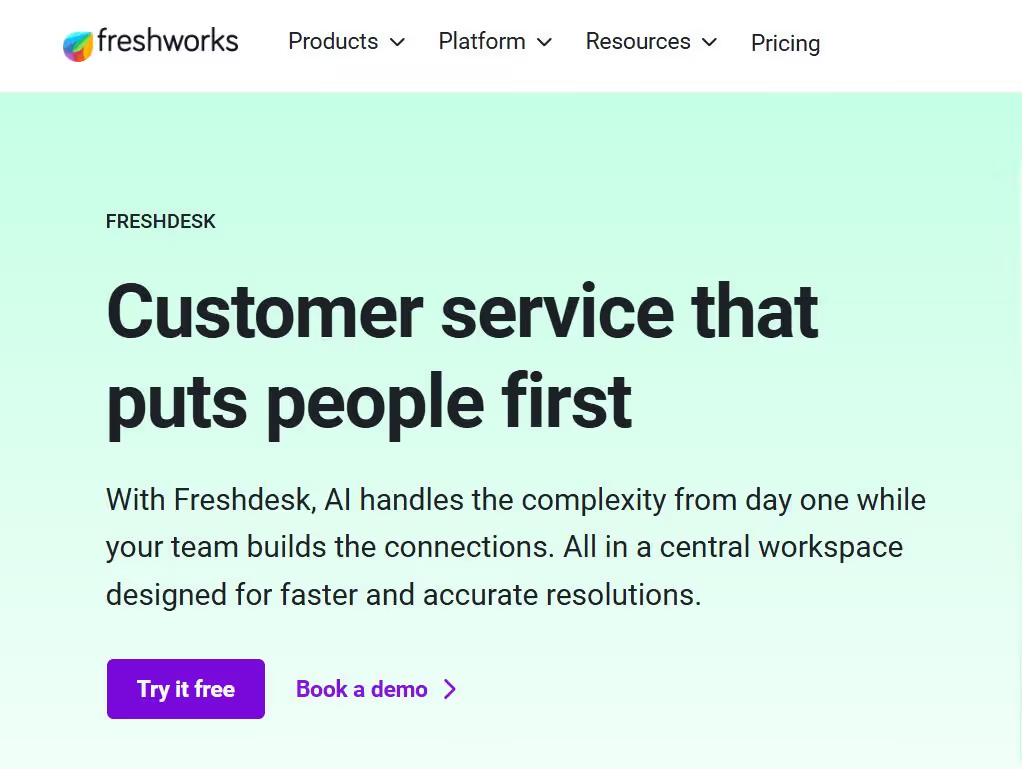
Freshdesk has earned its spot as a top Zendesk alternative, particularly for small and mid-sized teams looking for a reliable, easy-to-use support platform. It strikes a solid balance between functionality and accessibility, making it a popular choice for businesses ready to move beyond Zendesk without overcomplicating their workflows.
One of its standout features is multi-channel support; it handles email, chat, and social media seamlessly, so teams can engage customers wherever they are. The interface is simple and approachable, which helps new users get up to speed quickly without a steep learning curve.
Beyond basic support, Freshdesk includes built-in automation tools that reduce repetitive tasks, helping teams work smarter, not harder. Its combination of simplicity, versatility, and strong core features makes it a go-to option for businesses that need a dependable support platform without the complexity or cost of enterprise-level systems.
Pros
- Strong multi-channel support
- Built-in automation without complex setup
- Well-suited for SMB and mid-market teams
- Trustworthy solution without enterprise complexity.
- Good Zendesk substitute regarding accessibility.
Cons
- Certain features are restricted to higher-level plans.
- The interface can be less modern than newer platforms.
- Customization can be less profound than it should be.
Freshdesk compared to Zendesk
Freshdesk and Zendesk are often compared directly because they serve similar use cases. Freshdesk tends to be easier to adopt and more accessible in terms of pricing. Zendesk, on the other hand, offers deeper customization and enterprise-level capabilities.
Pricing
Freshdesk stands out in the Zendesk competition by offering a "Free Forever" tier and entry-level paid plans that start at just $15 per agent/month (billed annually). According to official 2026 rates, even its most advanced Pro ($49) and Enterprise ($79) tiers remain significantly more affordable than Zendesk layers while including Freddy AI and multilingual support.
4. Help Scout
Help Scout is a Zendesk-similar tool, designed for teams that want a clean, no-friction way to manage customer conversations. It focuses on shared inbox workflows rather than complex ticket systems, which makes it easier to adopt for smaller teams.
Instead of overwhelming users with features, Help Scout prioritizes clarity. Conversations feel like email threads, and the entire experience is built to keep things simple for both agents and customers.
For businesses looking for an AI like Zendesk that reduces setup time and keeps support human, Help Scout is often a strong contender.
Pros
- Simple to operate and fast to set up and onboard.
- Shared inbox model, easy to use, shortening the learning curve.
- Fits small teams perfectly.
- Simpler setup.
Cons
- Does not venture as far into advanced workflows.
- Restrictive to larger organizations when dealing with complex operations
Help Scout compared to Zendesk
Help Scout is simpler and easier to adopt than Zendesk. It focuses on communication rather than structured ticket management. Zendesk offers more advanced features and deeper customization, but that also comes with increased complexity.
Pricing
Help Scout is positioned as a user-friendly and cost-effective alternative to Zendesk, prioritizing a conversational, "human" feel over complex ticket management. Their Standard plan starts at $25 per user/month, which includes live chat and multiple knowledge bases, features that often require a more expensive Zendesk competition tier (starting at $55 per agent/month for equivalent channel access).
5. HubSpot Service Hub
If you want to integrate your customer support with marketing and sales, HubSpot Service Hub is a great alternative to Zendesk. As a member of the HubSpot family, all customer interactions are connected to a single CRM.
So, support teams not only see customer tickets, but the whole customer journey, from lead to customer. This enables quicker, more relevant support and identifies ways to strengthen customer relationships. It also includes automation, reporting, and self-service features to streamline processes without creating clutter.
For businesses that already use HubSpot for marketing or sales, Service Hub is an intuitive addition. It eliminates the need for other software and centralises data. The integration, insight, and user experience make it a worthy alternative to Zendesk for teams seeking integrated, data-driven support.
Pros
- CRM integration with each support interaction linked to a customer profile.
- Top-notch visibility among teams.
- Collaboration across departments.
- Useful to businesses that desire an integrated system rather than individual tools.
Cons
- Pricing may go up rapidly as you grow or add features.
- Most effective in the HubSpot ecosystem.
- Might not be compatible with other tools.
HubSpot Service Hub compared to Zendesk
Zendesk focuses on support workflows, while HubSpot Service Hub connects support with the broader customer lifecycle. If your priority is standalone support operations, Zendesk may feel more focused.
Pricing
HubSpot offers a highly scalable model that serves as a strategic alternative to Zendesk, particularly for teams that want support data to live within their CRM. Unlike the rigid per-agent structures of much of the Zendesk competition, HubSpot provides a "Free Forever" tier and a Starter plan beginning at $15–$20 per seat/month.
As businesses expand, they can scale to Professional ($100/seat) or Enterprise ($150/seat) tiers to unlock advanced automation and "Breeze AI."
6. Gorgias
Gorgias is a Zendesk alternative that is built with e-commerce teams in mind, which makes it a unique choice among businesses that require support closely related to order data. In contrast to the old-fashioned helpdesk systems, Gorgias allows the agents to see the customer orders, issue refunds, and handle requests in one interface, without having to switch between different systems.
This not only makes processes more efficient but also allows support agents to deliver a cohesive customer experience and offer personalized support. Gorgias also provides automation features to respond to simple queries, enabling agents to work on more complicated product problems.
It also connects with well-known e-commerce systems such as Shopify, Magento, and BigCommerce, and teams can store all customer information in a single location. In the case of online stores, Gorgias is a simple, efficient, and e-commerce-specific tool, which makes it one of the most viable and efficient Zendesk cheaper alternatives in the retail sector.
Pros
- Constructed to streamline e-commerce stores.
- Integrates with e-commerce platforms such as Shopify.
- E-commerce workflow automation, including order inquiries and requests.
- Excellent Zendesk substitute for e-commerce.
Cons
- Beyond e-commerce, the value is much lower.
- Features may not be as useful to service-based businesses or SaaS companies.
Gorgias compared to Zendesk
Zendesk is more general-purpose, whereas Gorgias is designed to work with e-commerce. In the case of online stores, Gorgias can be more relevant and efficient. In other industries, Zendesk can be more general.
Pricing
Gorgias operates on a volume-based pricing model with unlimited seats, with the Starter plan (50 tickets) costing $10/month, Basic (300 tickets) costing $60/month, and Pro (2,000 tickets) costing $360/month. This structure is advantageous to efficient teams according to the official 2026 rates, but the cost increases with the number of tickets and optional AI Agent add-ons, which cost about 0.75-1.00 per resolution.
7. Zoho Desk
Zoho Desk is a viable Zendesk alternative for teams that do not want to spend a lot on a support system but still need key features. It provides multi-channel support, automation, and reporting features that assist teams in handling customer inquiries effectively, and at the same time, maintain a user-friendly experience.
The fact that it is a part of the larger Zoho ecosystem is also a major benefit: support teams can easily integrate with CRM, analytics, and other business applications, providing them with a more comprehensive picture of customer interactions and business data. This integration assists in enhancing response times, performance tracking, and making better decisions.
To those companies that are already using Zoho products, Desk is a natural extension, as it does not require any extra software and allows keeping all the information about customers in one place. Zoho Desk is a trusted and viable Zendesk competitor to small to mid-sized businesses with its balance of affordability, functionality, and integration.
Pros
- Affordable and budget-friendly.
- Highly supported automation and omnichannel support.
- Better integrated with other Zoho applications, where applicable.
Cons
- The interface might not be as modern as newer platforms.
- May not be as customizable and flexible as more expensive solutions.
Zoho Desk compared to Zendesk
Zoho Desk is cheaper and simpler to use, whereas Zendesk is more sophisticated. Zoho Desk can be a superior choice to Zendesk in smaller teams or those that are more cost-conscious.
Pricing
Zoho Desk is a high-quality alternative to Zendesk that is more affordable to small teams, with a Free Forever plan that supports up to three agents and paid plans that are much cheaper than the competition. The Standard plan, according to official 2026 rates, begins at $14 per agent/month (billed annually), offering multi-channel support and automations that are often significantly more expensive elsewhere.
8. Front
Front is one of the best Zendesk alternatives that provides shared inbox support, rather than ticketing. It transforms messaging into a collaborative workspace where team members can work together on communications, share tasks, and see what is happening in customer interactions.
This is a good solution for teams who communicate primarily by email or messaging, as it brings all messages into a familiar workspace. Front also offers automation, reporting, and integration with other work tools, giving support teams the ability to automate support tasks and report on key performance metrics.
Front makes collaboration, transparency, and automation possible, allowing support teams to respond to customers in a faster, more efficient, and personal way. Front is a good choice for organisations looking for an alternative to ticketing systems that make support interactions easier and more collaborative.
Pros
- Simplifies collaboration and allows several individuals to collaborate.
- Simple and user-friendly.
- Best suited to support teams operating in common channels.
Cons
- Might not be as functional as a helpdesk.
- Lacks a bunch of modern features.
Front compared to Zendesk
Zendesk is structured around tickets, while Front is built around conversations. For teams that value collaboration and simplicity, Front is often the best Zendesk alternative. For structured workflows, Zendesk may still have the edge.
Pricing
Front is a mid-to-high-range alternative to Zendesk, starting at $19 per seat/month (billed annually) for its Starter tier. According to official 2026 rates, its Growth ($59) and Scale ($99) plans unlock omnichannel support and "AI Autopilot" for roughly $0.89 per resolution.
9. Kustomer
Kustomer is a customer-first Zendesk alternative. It doesn't treat support as a series of tickets, but as an ongoing conversation, so agents can see a complete record of the interactions. This gives agents more information to respond to and solve customer problems, and offers a better customer experience.
Beyond logging interactions, Kustomer also provides automated workflow creation and analytics functionality to make complex processes easier and faster. This software also integrates with CRMs, chat/messaging, and e-commerce systems to give support teams access to the necessary information and to keep various teams in the loop.
Pros
- Offers a 360-degree customer interaction.
- Provides a cross-channel conversation.
- Offers robust workflow management.
- Accommodates advanced support scenarios.
Cons
- It can be costlier than alternatives.
- May be time-consuming to adopt, particularly for startups.
- Not the right choice when you desire a low-effort Zendesk substitute.
Kustomer compared to Zendesk
Zendesk focuses on tickets, while Kustomer focuses on customer timelines. For teams that want deeper context and visibility, Kustomer offers a compelling alternative to Zendesk.
Pricing
Kustomer pricing is typically positioned for mid-to-large teams. Its value becomes clearer for organizations handling high volumes of complex support interactions.
10. DevRev
DevRev is a new Zendesk alternative that is designed to combine support and engineering, and is especially applicable to SaaS and technology companies. Conventional helpdesk systems assist in the management of communication with customers.
Yet, DevRev combines support with product and engineering teams to make sure that customer requests for features, product bugs, customer feedback, or anything else can be incorporated into the product development process. The outcome is a capability to offer more specific assistance to helpdesk teams and immediate feedback and problems to engineering teams.
Besides product team integration, DevRev also has automation, reporting, and workflow capabilities to enhance efficiency and communication across departments. It is made to be transparent, efficient, and insightful so that customers will desire to use your product, and companies will use customer feedback to focus on future improvements.
Pros
- DevRev assists product teams with feedback management.
- It provides software teams with contemporary workflows.
- It enables teams to speed up customer feedback on the product.
Cons
- Non-technical teams may find DevRev more complicated.
- Emphasis on product collaboration
DevRev compared to Zendesk
Zendesk is a support-oriented company, whereas DevRev bridges the gap between support, product, and engineering processes. In the case of SaaS teams, this fit frequently makes DevRev a better alternative to Zendesk.
Pricing
DevRev charges begin with Starter at $19.99/user/month and Pro at $59.99/user/month on its support platform, and Ultimate plans are custom-priced. It also provides cheaper Build plans at $9.99/month. Authoritative sources verify a tiered, per-user model with optional enterprise pricing and scalable features.
How to Choose the Best Zendesk Alternative
Choosing a tool between Zendesk alternatives involves the selection of the tool with the most features. It is a matter of identifying the one that suits the way your team works.
Begin with team size.
Smaller teams tend to have simpler tools that are easy to embrace. Bigger teams might require more workflows and reporting. Choose the one considering your team size
Then consider your support networks.
When you deal with email, chat, and social media, you require a platform that will unify all of them without complicating the matter.
Some tools help with replies, summaries, and workflows. Others offer simple automation. The key is to understand what features you are willing to trade off, considering your team's needs. This will help you choose between the different tools.
Budget is another important factor. Some Zendesk alternatives may get expensive as you grow, whereas others have more predictable prices.
Lastly, consider ease of use.
Even the strongest option won't help you if your team struggles to use it. Simply put, if you have simple needs, a simple helpdesk can suffice. But if you want to minimize manual work and enhance efficiency, a more advanced version of Zendesk-like platforms might be a better option.
Why Businesses Are Looking for Zendesk Alternatives in 2026
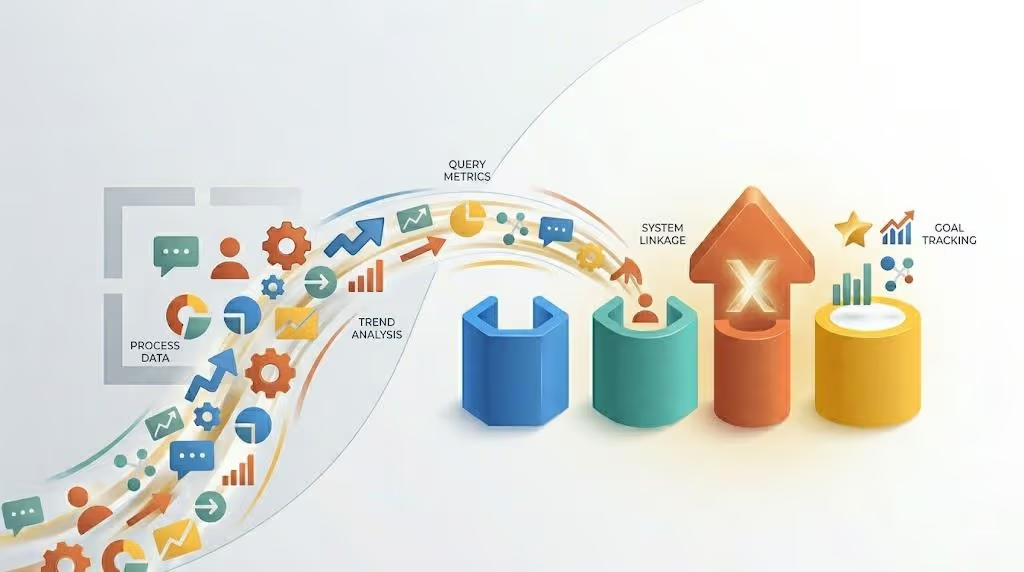
The rise of Zendesk alternatives is not random. It is driven by real challenges that teams face as they scale. Here are some of the top reasons businesses explore Zendesk alternatives in 2026:
Zendesk Pricing Can Become Expensive as Teams Grow
Zendesk pricing tends to rise with the number of agents, channels, or advanced features. In the case of small teams, the entry-level plans can be effective. However, expenses may increase rapidly as the business expands. That is why many companies begin to consider a Zendesk competitor that has easier or more predictable pricing.
The Platform Can Feel Complex for Smaller Teams
Zendesk is strong, yet complex. The process of setup, configuration, and workflow management may be time-consuming, particularly when dealing with smaller teams. In the case of businesses that simply require a simplified solution, simpler companies such as Zendesk tend to be more appealing.
AI Automation Is Becoming a Priority for Support Teams
The expectations of support have shifted. Customers demand quicker responses and improved experiences. Teams are currently seeking tools that can summarize discussions, write responses, and automate repetitive tasks. It is here that most of the best Zendesk alternatives are heading, with AI-first workflows instead of conventional systems.
Businesses Want Fewer Tools and More Integrated Workflows
Numerous support teams rely on various communication, analytics, and automation tools. It is complicated to manage all of them. The modern Zendesk alternatives are designed to make this easier by integrating features into one platform, eliminating the necessity of additional tools.
Zendesk vs Modern AI Customer Support Platforms
Customer support software is not stagnant. What began as mere ticket management systems has become much more dynamic. The comparison between Zendesk and modern apps is not as feature-based as it is today, but rather philosophical.
Zendesk is not old-fashioned, but the expectations of support have shifted. Teams are no longer simply arranging discussions. They are attempting to minimize the work behind those conversations.
Traditional Ticket-Based Support Platforms
Conventional helpdesk systems, such as those resembling Zendesk, are designed on structure. Firstly, a customer makes a request. Then, that order turns into a ticket. The ticket is allocated, classified, and closed by a specified workflow. Queues, macros, and automation rules help teams to maintain order.
This model is effective, particularly when dealing with companies that receive high volumes of support requests. It brings sanity and responsibility. However, the fundamental premise is the same: humans are doing the majority of the work.
The Rise of AI-Powered Customer Support Tools
Contemporary platforms are doing things differently. They are not merely organizing support, but they are assisting teams in doing it.
Artificial intelligence-based applications can compose responses, summarize lengthy discussions, analyze discussions, and extract pertinent information in real-time. This saves time that agents would have wasted on repetitive tasks.
It is not merely efficiency; it is scalability. Teams that adopt these tools are able to manage more conversations without the need to add more headcount at the same pace. This is why most businesses shift to exploring AI apps like Zendesk.
When a Traditional Helpdesk Still Makes Sense
All the innovation notwithstanding, traditional helpdesk systems are not disappearing. They remain applicable to organizations that require rigid workflows, comprehensive reporting, and highly tailored support environments. That structure is often useful in large enterprises, regulated industries, and teams with complex processes.
In such situations, such platforms as Zendesk or other firms such as Zendesk are still a good option.
The trick is alignment. A traditional system is effective when your team requires control and structure. Newer tools can be more suitable in case your team requires speed and automation.
Why Sintra AI Is the Best Alternative to Zendesk

Among all the Zendesk alternatives, Sintra AI stands out because it does not try to replicate Zendesk. It replaces the idea of a helpdesk with something more practical for modern teams. Instead of focusing on tickets, it focuses on execution. That difference may seem small at first, but it changes how support teams operate every day.
AI Agents That Work Like a Digital Support Team
The majority of support platforms are based on agents handling tickets. Sintra AI allocates work to specialized AI agents. Every agent has a specific role. One specializes in writing responses, while another summarizes conversations. Information can be accessed by others or help in internal processes.
This organization is not as much of a tool as it is a digital team. You do not request a single system to perform all tasks, but you delegate tasks to various AI agents that are specialized in particular tasks. That is why it is regarded by many teams as the most efficient Zendesk alternative.
Automation That Reduces Repetitive Support Work
Much of the support work is repetitive. Composing such responses. Summarizing conversations. Information search. Updating records. These are activities that are time-consuming, yet not thought-provoking.
Sintra AI pays much attention to the minimization of this kind of work. It assists teams in reacting more quickly without compromising quality. Agents receive support at each stage instead of beginning with nothing. Responses are written. Context is summarized. Automatic pulling of information.
One Platform Instead of Multiple Customer Support Tools
Teams juggle multiple systems at once: a ticketing helpdesk, a separate knowledge base, another platform for automation, and yet another for analytics. This fragmented setup does more harm than good. Constantly switching between tools slows down response times, breaks focus, and increases the chances of errors.
A more effective approach is to bring everything into one place. That is exactly where Sintra AI changes the workflow. Rather than forcing teams to manage disconnected systems, it unifies support, automation, and internal operations within a single workspace.
At the centre of this setup is its Brain AI feature, which acts as a shared intelligence layer, helping teams access information, coordinate tasks, and make faster decisions without jumping between platforms.
Ready to Upgrade Customer Support With Smarter AI Workflows?
Choosing a Zendesk alternative is not just about replacing a tool. It is about improving how your team works.
If your current setup feels slow, complex, or too manual, it may be time to rethink the system behind it. Modern platforms are giving teams a way to handle more work without adding more pressure. They reduce repetitive tasks, improve consistency, and create smoother workflows across the board.
If you are looking for the best Zendesk alternative that goes beyond ticket management and actually helps your team execute work, Sintra AI is a strong place to start. Get ready with Sintra to explore how it fits into your workflow.
Zendesk Alternatives FAQs
Who are Zendesk’s competitors?
The largest competitors of Zendesk are Freshdesk, Zoho Desk, Intercom, HubSpot Service Hub, and Salesforce service tools. These tools compete in various aspects such as pricing, usability, and automation.
What is the best Zendesk alternative in 2026?
The optimal Zendesk alternative in 2026 will be based on the needs of your team. Some platforms are more AI-friendly to automation, and those that are simpler, CRM-friendly, or chat-friendly. Sintra AI is a powerful tool due to its automation and workflow capabilities, whereas Intercom is powerful due to its support based on messaging.
Which Zendesk alternatives have AI features?
Most of the current Zendesk alternatives have AI capabilities as a core feature. Intercom, Freshdesk, and HubSpot Service Hub are platforms that provide AI features to perform tasks such as response suggestions, automation, and routing. More sophisticated tools go a step further to assist teams in writing replies, summarizing discussions, and performing repetitive tasks with minimum input.
What Zendesk alternative is best for small teams?
In the case of small teams, the most suitable Zendesk alternatives are those that focus on ease of use and affordability. Freshdesk and Help Scout are usually selected as they are easy to install and do not need a lot of configuration. Another good alternative that can be used by teams that desire an affordable solution with realistic features is Zoho Desk.
How much do Zendesk alternatives cost?
Zendesk alternatives are priced differently based on the platform, features, and team size. Entry-level tools tend to be cheaper at the beginning of the monthly rates per user, whereas more sophisticated platforms become more expensive as features and usage grow. Mid-range solutions provide a compromise between functionality and price, whereas enterprise tools may be much more expensive because of customization and advanced features.
Related articles





.avif)