


Best AI SEO Audit Tools for 2026
Skip ahead
AI SEO audit tools handle approximately 44% of SEO tasks today. Founders, marketers, and agencies are all dealing with an AI-driven search world where rankings change fast, and visibility now includes tools like ChatGPT and Perplexity. These AI-powered SEO tools automate audits, identify gaps, and predict current rankings.
Human search behavior has shifted as well. Google's AI Overviews appeared in roughly 25% of queries at peak visibility in 2025. That means simple organic traffic isn't enough. You need tools that audit for technical issues, content relevance, backlink health, and AI visibility across multiple engines. Sintra's AI Helpers are exceptional, and you will see why.
We tested 15 AI tools for website SEO, and this guide follows you through their characteristics. We break down how they perform in audits, reporting, automation, and accuracy. By the end of this list, you will confidently choose the right stack for your needs.
Quick Answer
The best AI tools for SEO audit in 2026 vary by need. AI tools crawl websites to analyze hundreds of ranking factors in minutes. Semrush leads the way in comprehensive site audits with deep technical and backlink scans. Surfer SEO excels in reporting and AI visibility tracking across generative engines. SE Ranking shines for content optimization with keyword clustering and on-page fixes.
As the standout all-rounder, Sintra AI's Seomi takes the lead thanks to its autonomous AI-employee model. It runs full audits and conducts keyword research. It also automates fixes like schema and structure. Meanwhile, it learns your site. This keeps optimization ongoing and hands-free. Sintra is your best choice for AI-powered SEO tools, thanks to its AI employees who act as virtual assistants.
Shortlist
The top AI tools for SEO in 2026 prioritize automation, AI visibility tracking, and actionable insights for website SEO. This shortlist highlights standouts by use case, drawn from real-user ROI and 2025 benchmarks.
- Sintra AI: Best all-rounder for autonomous audits
- Semrush One: Best for comprehensive site audits
- Ahrefs AI: Best for backlink and keyword audits
- SEOptimer: Best for quick, white-label audits
- Writesonic: Best for content optimization audits
- Surfer SEO: Best for on-page and AI visibility audits
- Search Atlas: Best for audits with competitive benchmarking
- Rankscale AI: Best for predictive keyword cluster audits
- Whatagraph: Best for visual SEO reporting
- Ranking Racoon: Best for small website audits
- Indexly: Best for detailed technical SEO audits
- SE Ranking: Best for scalable audits
- Rankability: Best for AI search visibility audits
- Koala AI: Best for long-form SEO content audits
- SEOpital: Best for content-focused SEO optimizations
Best AI SEO Tools that Help You Make an Impact
These AI SEO tools do more than basic crawls. They provide automated insights on technical issues, content gaps, and backlink health. They also track visibility in generative search engines.
Below, we review the top tools in detail. We assess their strengths in auditing, reporting, and automation. We also check overall accuracy. This helps you pick the tool that delivers real results for your business.
1. Sintra AI - Best all-rounder for autonomous audits
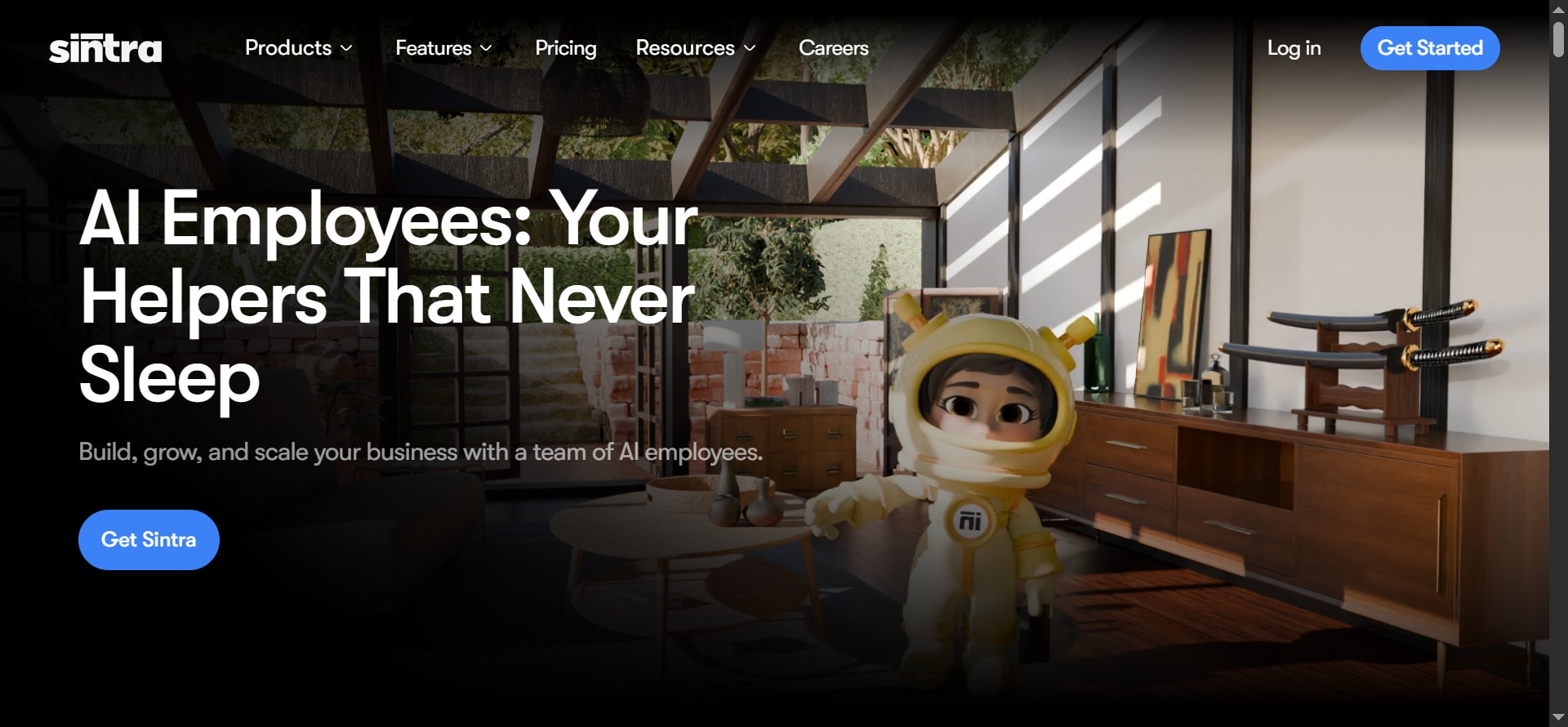
Sintra AI functions as an AI employee ecosystem rather than a standalone SEO checker. At its core is Seomi, a dedicated AI SEO agent that handles audits, keyword research, optimization, and more within a larger workflow.
What sets Sintra apart is Brain AI, which retains brand context and shares insights across other AI helpers. This ensures audits are consistent, actionable, and smarter over time. Here's how Sintra AI performs across our key criteria:
- SEO audit depth: Seomi performs structured site audits covering on-page issues, content gaps, internal linking, and optimization opportunities. It works like a real SEO agent, not just a checklist.
- Reporting quality: Generates clear, automated reports with prioritized fixes and explanations, for both technical and non-technical teams.
- Accuracy: Combines SEO best practices with Brain AI's memory of your site and past audits. It reduces repetitive setup and boosts report consistency.
Overall, Sintra AI is ideal for teams wanting a scalable SEO audit AI tool that acts more like an SEO hire than a traditional crawler.
2. Semrush One - Best for comprehensive site audits
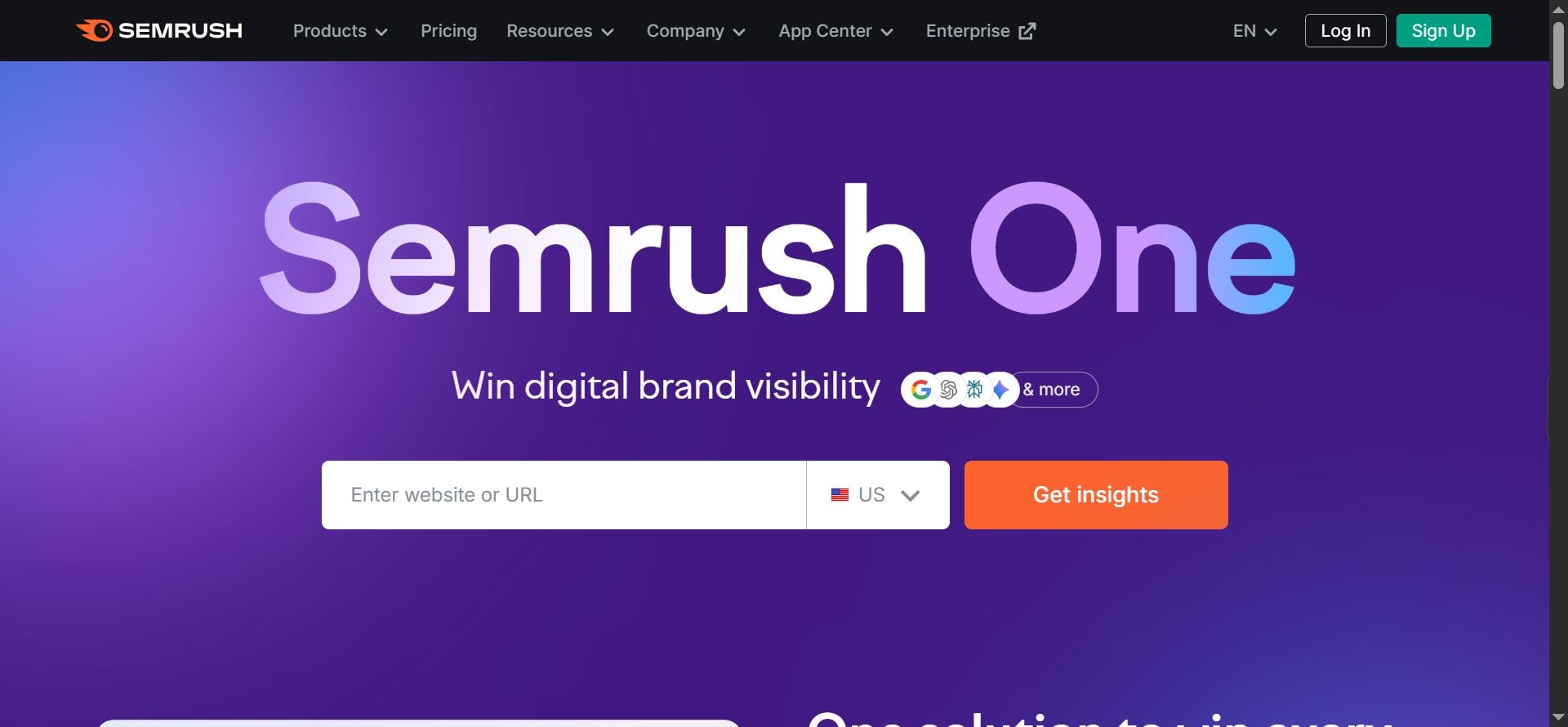
Semrush One combines traditional SEO with AI-driven search visibility in a single platform. It handles site audits, content scoring, technical analysis, rank tracking, and forecasting in one workflow. With over 55 marketing features, it also tracks your brand across search engines and AI discovery platforms. This gives teams a full picture of performance and helps prioritize real optimization actions.
- SEO audit depth: Extensive site audits with 150+ technical checks like crawlability, Core Web Vitals, schema, and orphan pages. AI Search Health ensures your site is accessible and optimized for AI crawlers.
- Reporting quality: Unified dashboards integrate traditional SEO and AI visibility metrics, including weekly health scores, prompt tracking, competitor comparisons, and share-of-voice trends.
- Automation: Daily or weekly cadences with AI-powered recommendations, anomaly alerts, and forecasting features that help plan optimizations and content updates.
- Accuracy: Semrush One is built on one of the largest SEO and AI datasets, with data refreshed regularly to support ranking forecasts and competitive benchmarking.
3. Ahrefs AI - Best for backlink and keyword audits
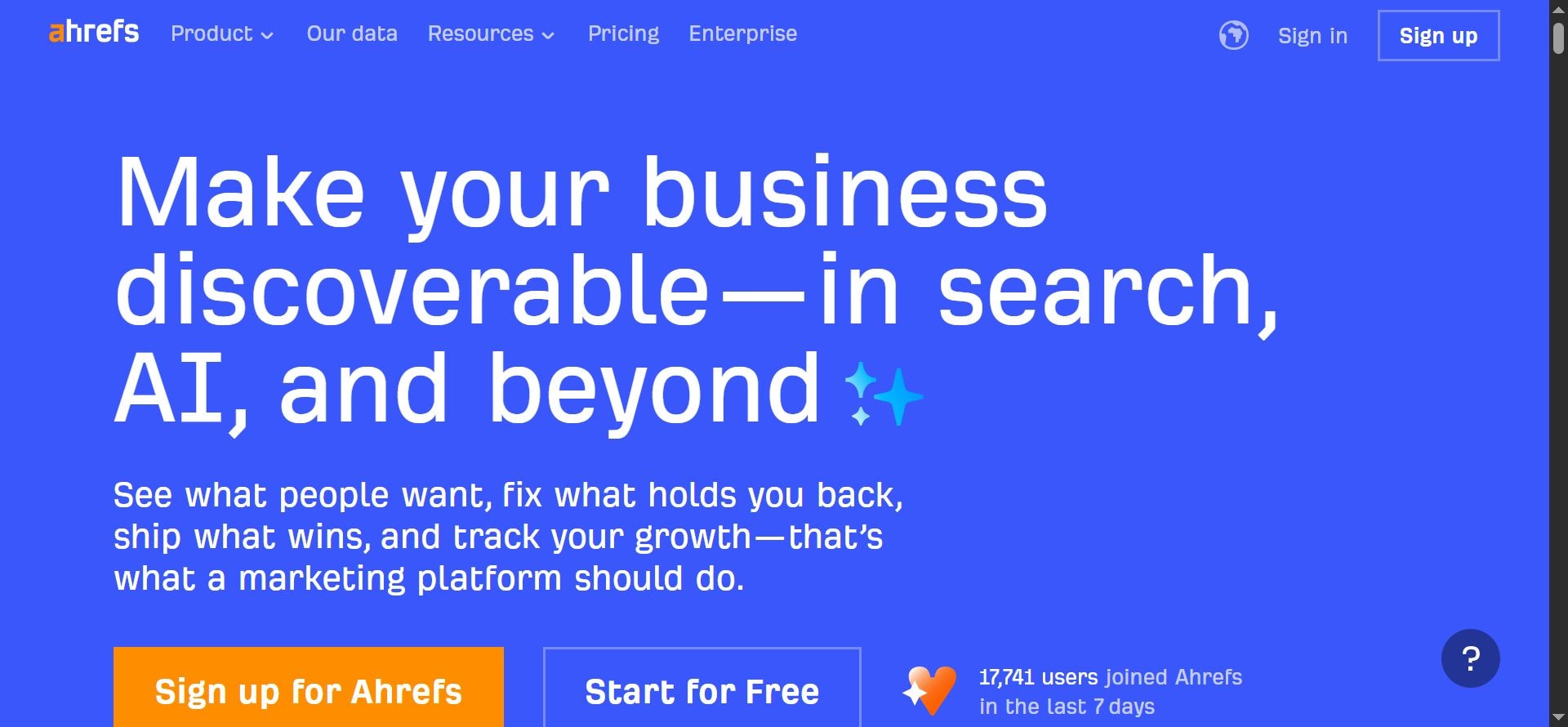
Ahrefs AI takes traditional SEO audits up a notch with smart automation. It identifies technical and content issues quickly, prioritizes what matters most, and suggests actionable fixes. It optimizes existing pages and monitors ongoing changes, saving time and boosting performance. Its AI Content Helper even evaluates content coverage and relevance for better rankings.
- SEO audit depth: Scans 170+ technical and on-page issues, including broken links, duplicate content, Core Web Vitals, and structured data errors. AI Content Helper evaluates coverage, relevance, and optimization opportunities.
- Reporting quality: Clear health score, organized dashboards, grouped issues, prioritization, and exportable reports for teams.
- Automation: Always-on audits monitor site changes 24/7. Batch AI can suggest bulk meta and title fixes across many URLs.
- Accuracy: Combines comprehensive crawls with updated SEO signals to deliver precise, actionable recommendations.
4. SEOptimer - Best for quick, white-label audits
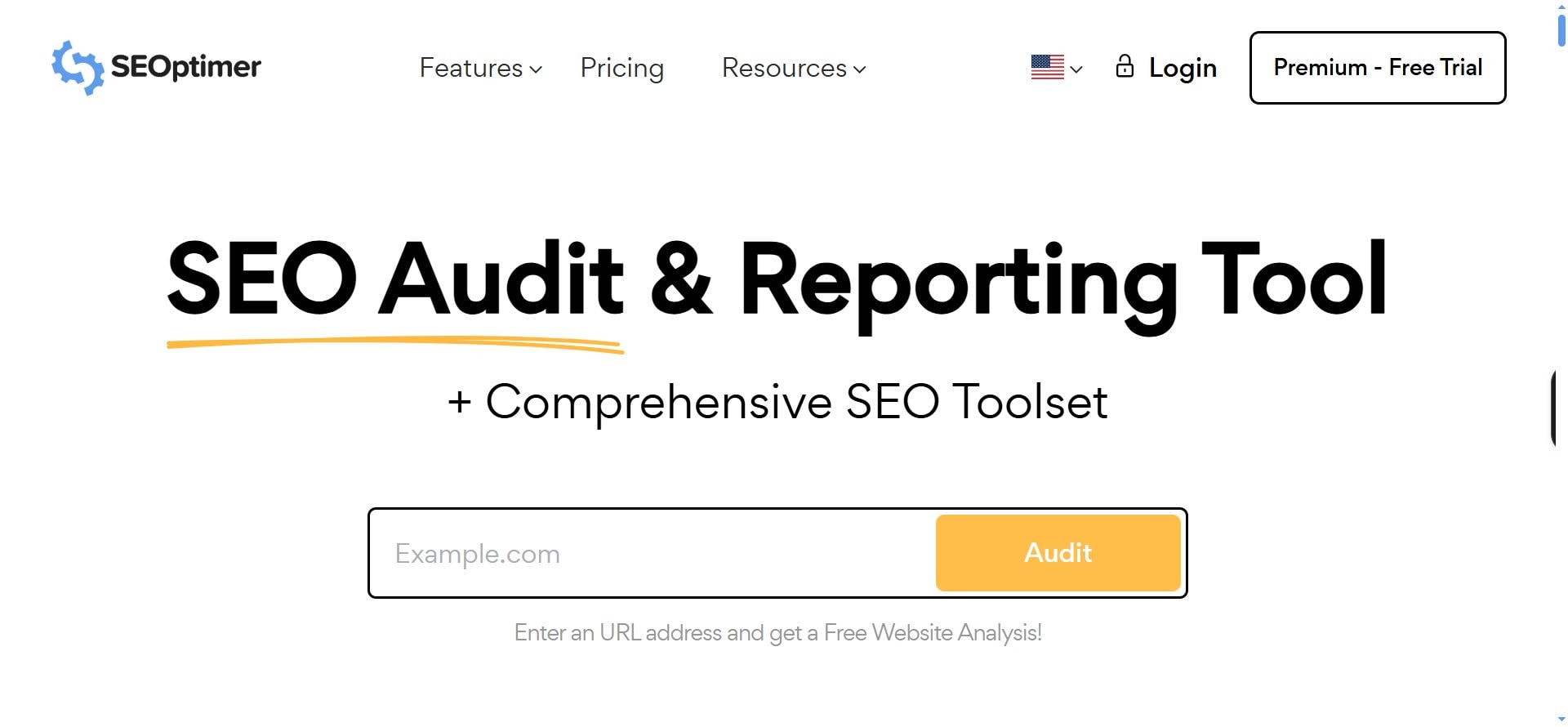
SEOptimer is ideal for small businesses or teams that want fast SEO insights. Its AI-powered platform runs audits in minutes and highlights key issues. Reports are clear, easy to understand, and actionable. With a focus on speed and usability, SEOptimer helps you fix on-page problems without needing great technical skills.
Let's see how it does across our criteria:
- SEO audit depth: Covers core on-page factors, mobile-friendliness, site speed, broken links, and basic schema validation with AI-assisted checks.
- Reporting quality: Generates clear, visually appealing automated SEO reports with prioritized recommendations for beginners and small teams.
- Automation: Automates audits and report generation for multiple pages and sends downloadable PDF reports instantly.
- Accuracy: While lightweight, it reliably flags common SEO issues and provides actionable suggestions suitable for non-technical users.
5. Writesonic - Best for content optimization audits
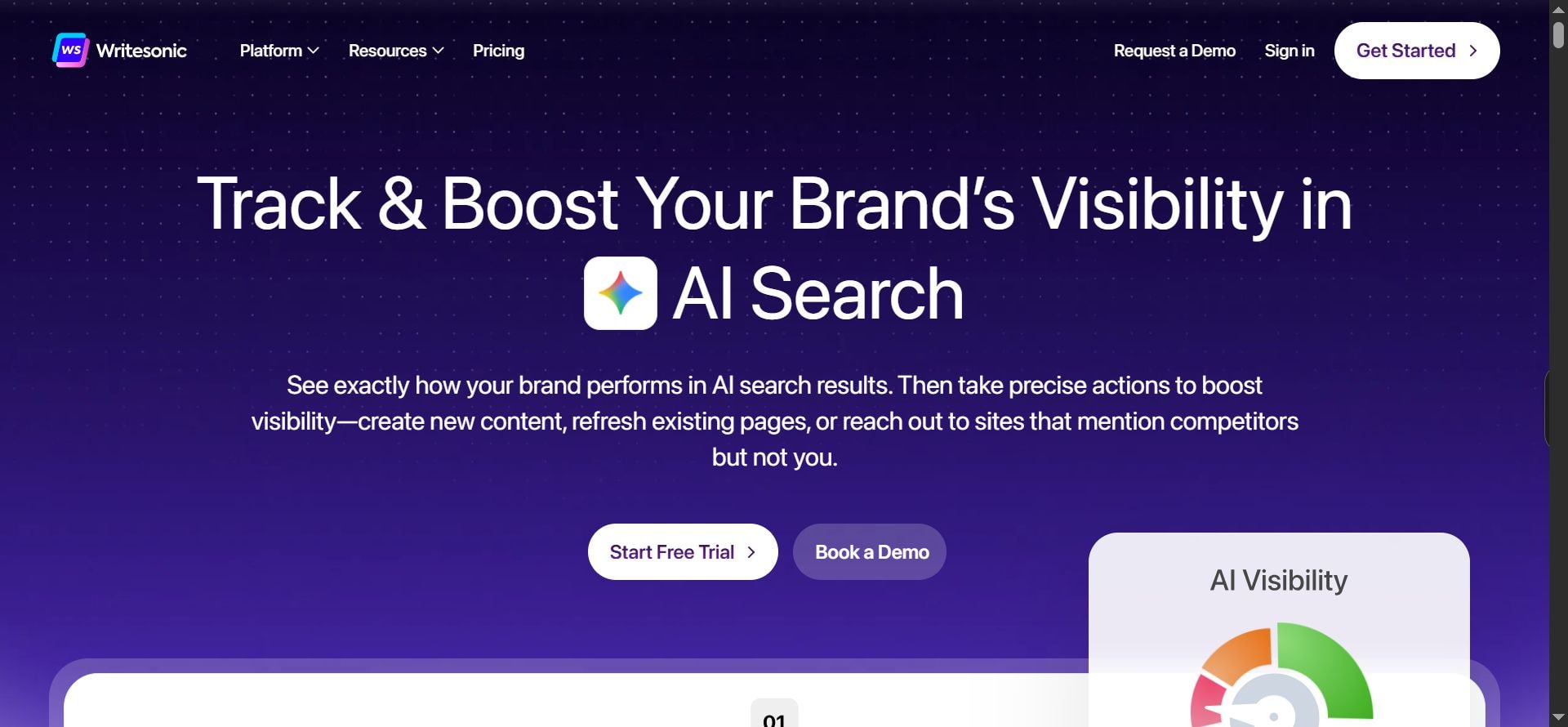
Writesonic extends beyond content creation. It offers AI-powered SEO optimization that complements traditional site audits. Its platform analyzes existing pages, identifies gaps in keyword usage, readability, and metadata, and recommends improvements. Additionally, it supports content-refresh workflows, helping teams update older posts to improve search rankings while maintaining brand voice consistency.
- SEO audit depth: Evaluates page-level SEO signals, including keyword density, meta descriptions, headings, readability, and internal linking opportunities.
- Reporting quality: Produces structured, actionable content optimization reports highlighting improvements for individual pages or content batches.
- Automation: Automates content-refresh tasks, keyword suggestions, and metadata optimization, reducing manual workload across large websites. Also connects with CMS platforms and supports batch optimisation workflows, making it easy to implement recommendations at scale.
- Accuracy: Leverages AI trained on SEO best practices and search trends to deliver precise recommendations tailored to each page’s goals.
6. Surfer SEO - Best for on-page and AI visibility audits
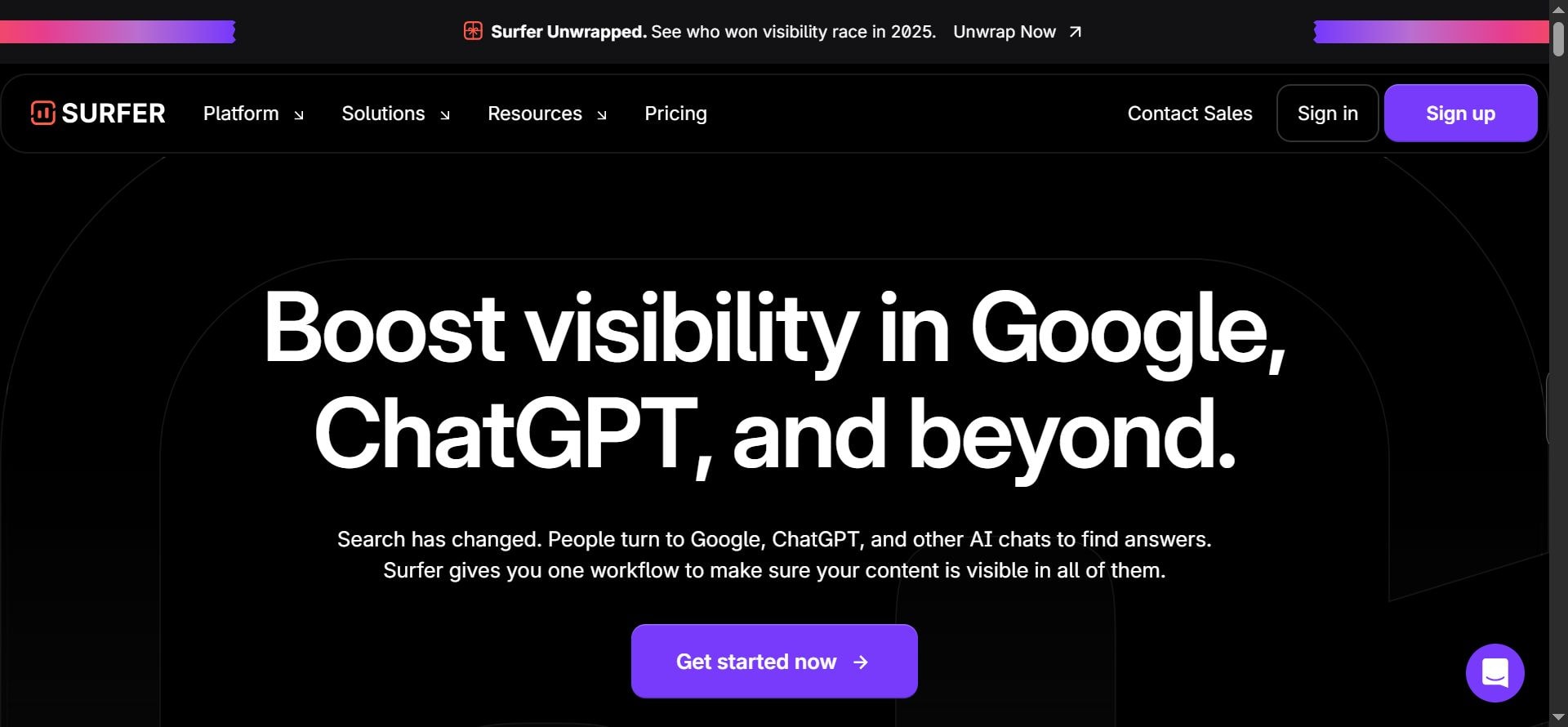
Surfer SEO combines traditional SEO checks with AI content optimization. It helps teams spot content gaps, improve on-page signals, and streamline audits. Surfer's NLP scoring evaluates semantic relevance, keyword usage, and content quality. This makes it easier to know what needs fixing and how to rank better.
It is particularly effective for content-heavy sites looking to maintain SEO consistency and fill gaps without manual research.
- SEO audit depth: Detects content gaps, evaluates on-page SEO signals, and assesses competitor coverage. Gives clear direction for what pages or topics need work.
- Reporting quality: Produces easy-to-read AI audit reports with suggested improvements, semantic scores, and keyword priorities. Perfect for quickly acting on insights.
- Automation: Supports automated content audits, topic research, and keyword mapping. You can update pages faster without doing manual checks.
- Accuracy: NLP-driven recommendations are based on semantic analysis of top-ranking pages. This boosts the chances of content ranking well in search.
7. Search Atlas - Best for audits with competitive benchmarking
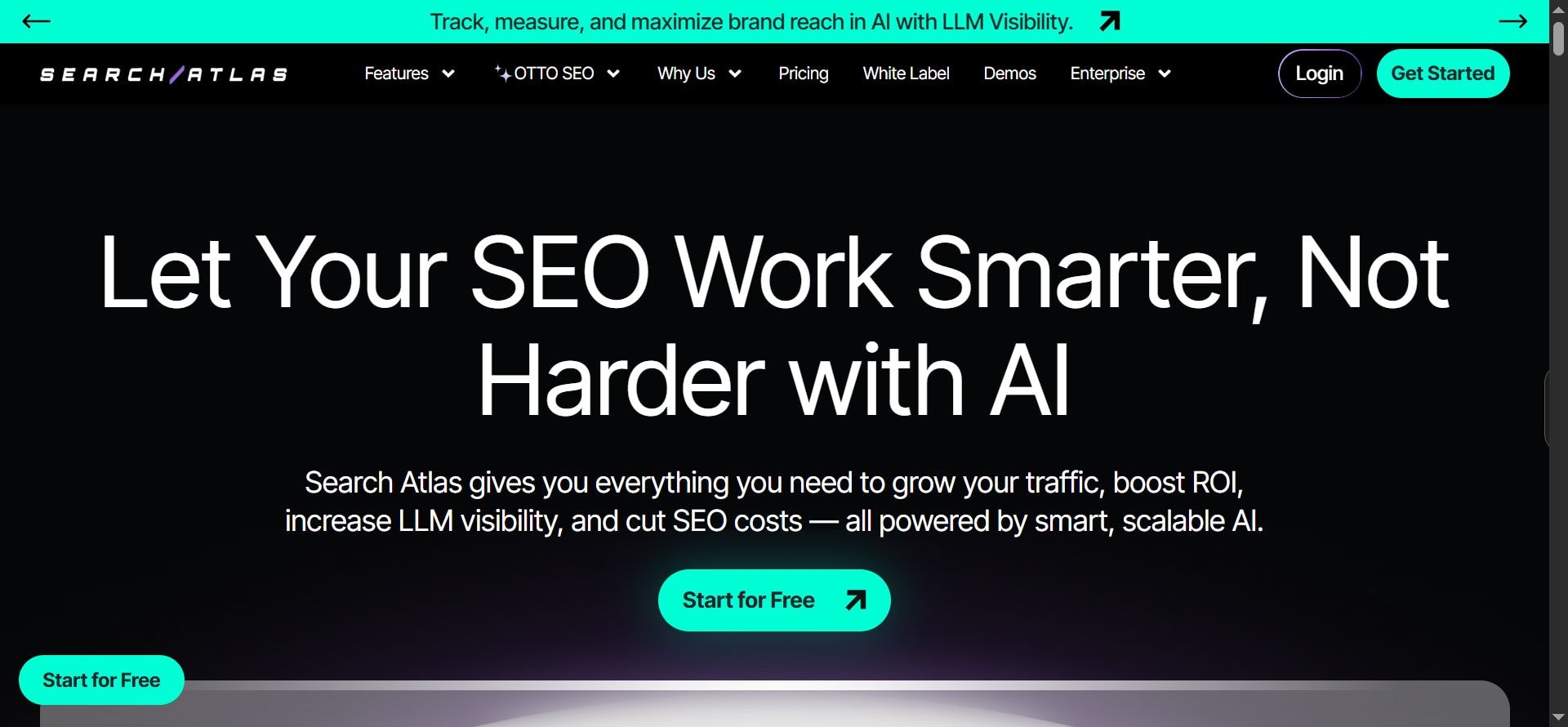
Search Atlas uses AI to deliver full site audits and content scoring. It evaluates technical SEO and content quality, then benchmarks pages against competitive SERPs. Historical performance data is included, so you can track progress. Teams get a clear picture of what to fix and how to improve rankings.
Let's see how it performs:
- SEO audit depth: Scans technical issues, on-page optimization, backlinks, and overall site health with AI-driven recommendations.
- Reporting quality: Produces automated, readable SEO audit reports with content scores, priority fixes, and SERP benchmarking.
- Automation: Conducts scheduled audits, content scoring, and competitor comparisons automatically, saving significant manual effort.
- Accuracy: AI evaluates both technical and content factors, comparing them with top-ranking competitors to provide precise optimisation guidance.
8. Rankscale.ai - Best for predictive keyword cluster audits
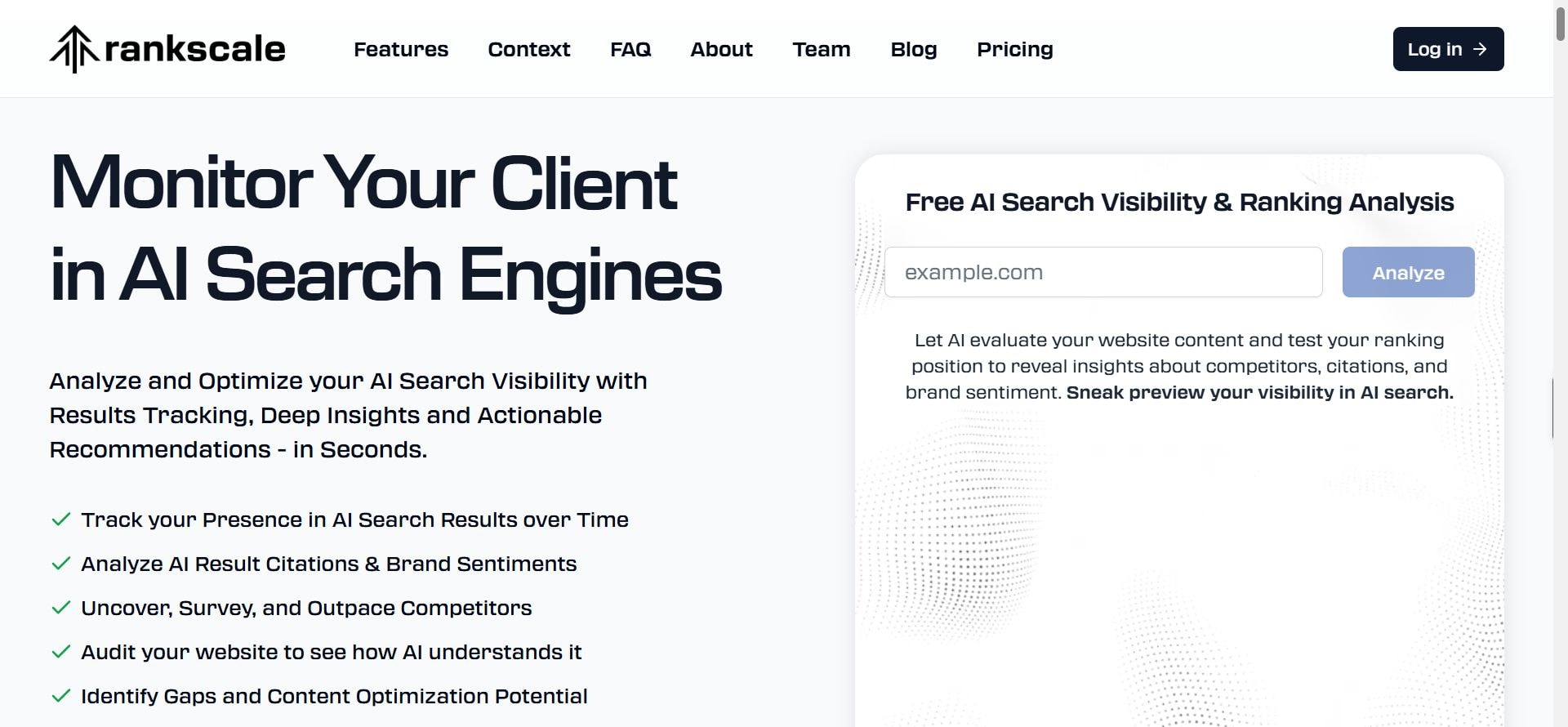
Rankscale.ai isn't just another SEO tool. It pairs AI-powered audits with predictive ranking models to help you prioritize the keywords that actually matter. The AI looks at past rankings, competition, and on-page signals to forecast your content's place in search results. Cluster-level audits save time and make it easier for your teams to spot gaps.
- SEO audit depth: Evaluates keyword clusters, technical SEO issues, content relevance, and internal linking patterns for comprehensive insights.
- Reporting quality: Generates predictive ranking reports with actionable insights, cluster performance metrics, and trend analysis for prioritisation.
- Automation: Automates audits, cluster analysis, and monitoring of ranking predictions, saving significant time for SEO teams. Its interface is tailored for SEO professionals looking for data-driven decision-making without extensive manual analysis.
- Accuracy: Combines AI predictions with historical SERP and keyword data for precise, data-backed recommendations.
9. Whatagraph - Best for visual SEO reporting
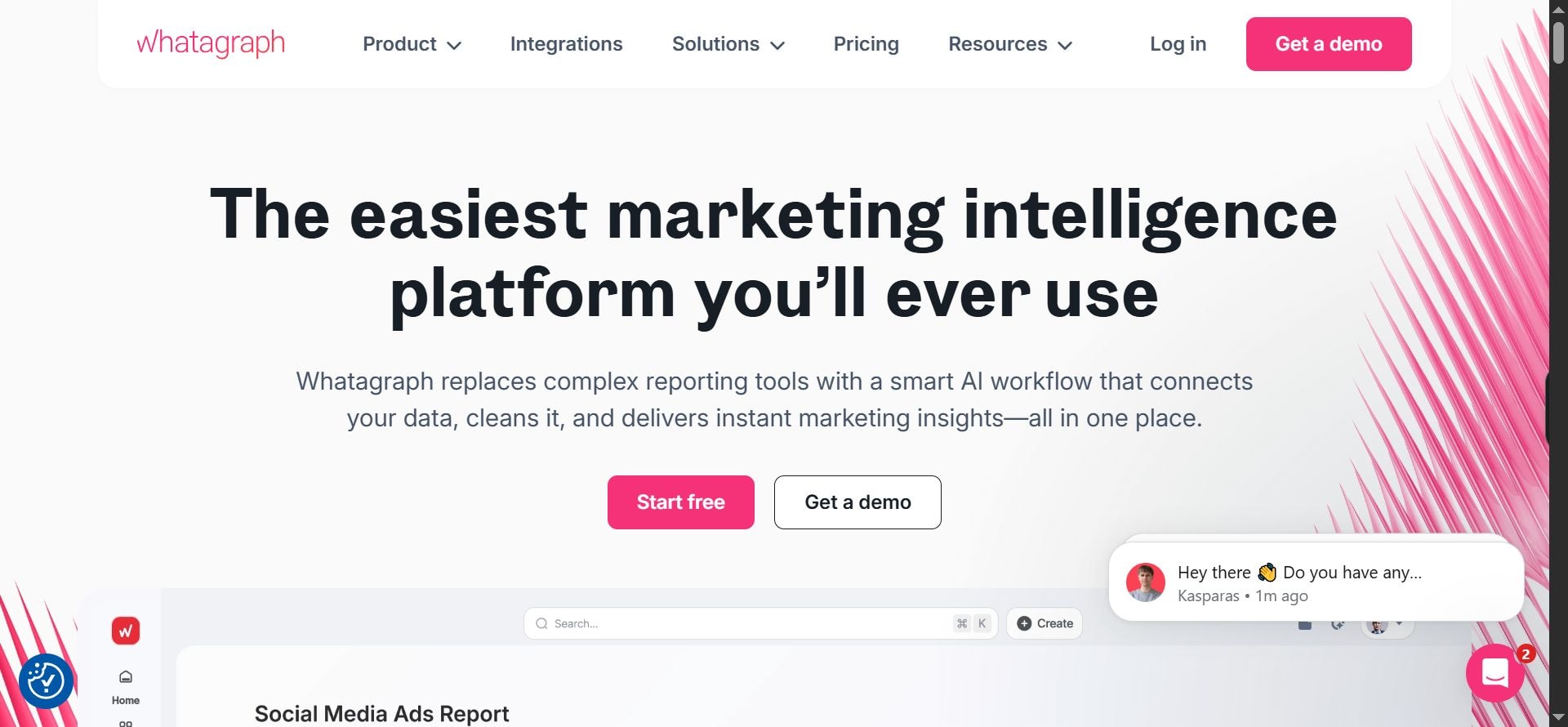
Whatagraph makes SEO reporting simple and visual. It pulls data from Google Analytics, Search Console, and other tools. It turns this data into easy-to-understand dashboards. Teams can monitor KPIs, track site performance, and quickly share insights with clients. With AI automation, you spend less time pinpointing data and more time improving results.
- SEO audit depth: Aggregates site performance, traffic trends, and keyword metrics from multiple sources for holistic analysis.
- Reporting quality: Generates automated, customisable dashboards and client-ready reports with actionable insights and visual analytics.
- Automation: Automatically updates reports, tracks KPI changes, and highlights anomalies or trends for immediate attention.
- Accuracy: Pulls real-time data from verified sources, ensuring reliable analytics for decision-making.
10. Ranking Raccoon - Best for small website audits
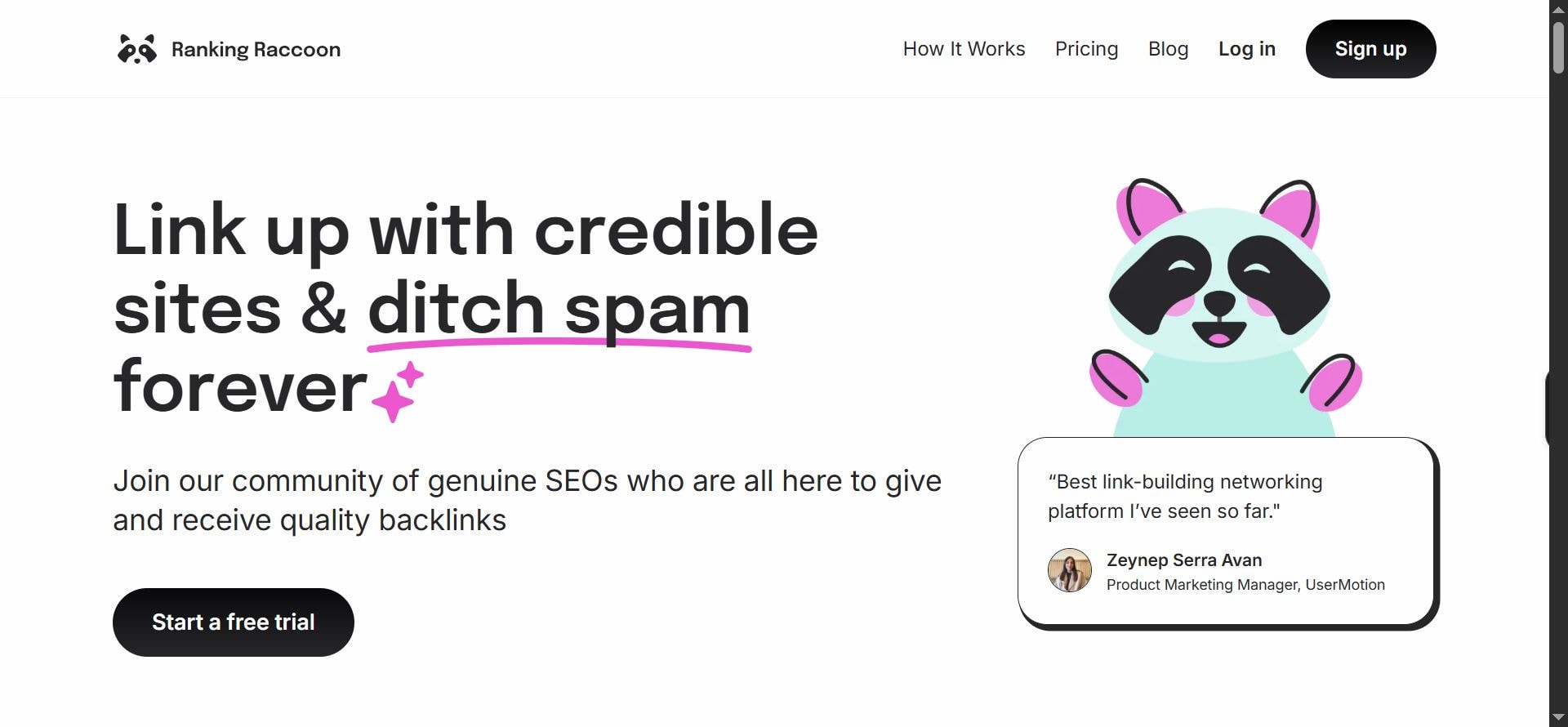
Ranking Racoon makes SEO audits easy for smaller websites. Its AI highlights the most important issues first. This makes teams focus on fixes that are actually important. Even non-technical users can navigate the platform and understand the suggestions. It's a practical solution for small businesses that need quick, applicable SEO guidance without unnecessary complexities.
- SEO audit depth: Scans essential on-page factors, technical errors, and content issues, tailored for small to medium-sized sites.
- Reporting quality: Generates clear, prioritised AI audit reports with recommended actions that are simple to implement.
- Automation: Automates recurring site audits, highlighting new issues and tracking previous fixes over time.
- Accuracy: Provides reliable recommendations for common SEO errors with AI-driven prioritisation based on potential impact.
11. Indexly - Best for detailed technical SEO audits
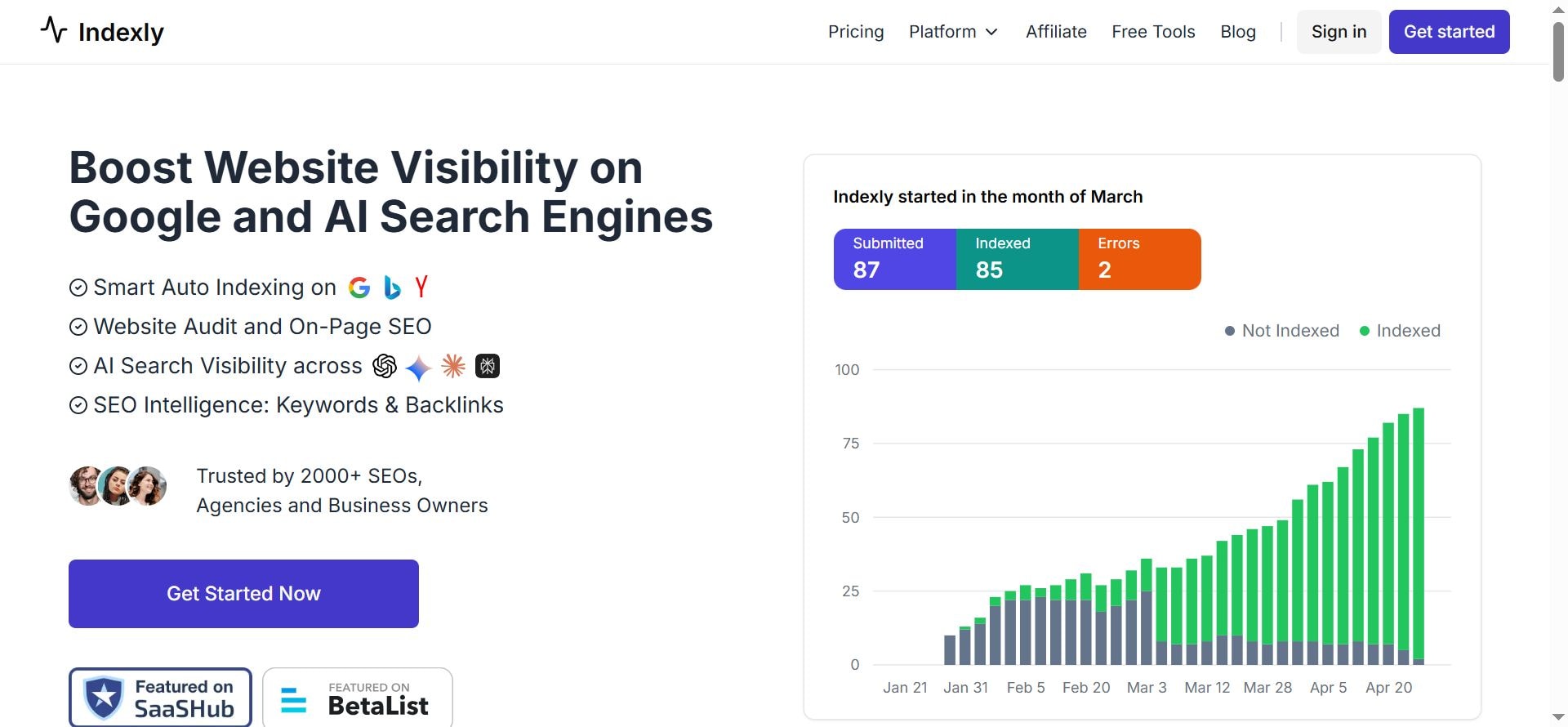
Indexly specializes in technical SEO audits. It keeps your site fully crawlable and indexable for AI and search engines. Its AI crawler spots broken links, duplicate content, sitemap errors, and robot.txt issues. The platform highlights structural bottlenecks and suggests fixes. It's ideal for developers and SEO specialists who need to maintain a technically healthy website.
- SEO audit depth: Performs detailed technical SEO audits, including crawl analysis, indexability checks, duplicate content detection, and sitemap validation.
- Reporting quality: Generates automated AI audit reports with clear prioritisation of critical technical issues.
- Automation: Supports scheduled site crawls and automated reporting to monitor indexability over time.
- Accuracy: AI crawler identifies both major and minor technical errors, providing precise, actionable insights.
12. SE Ranking - Best for scalable audits
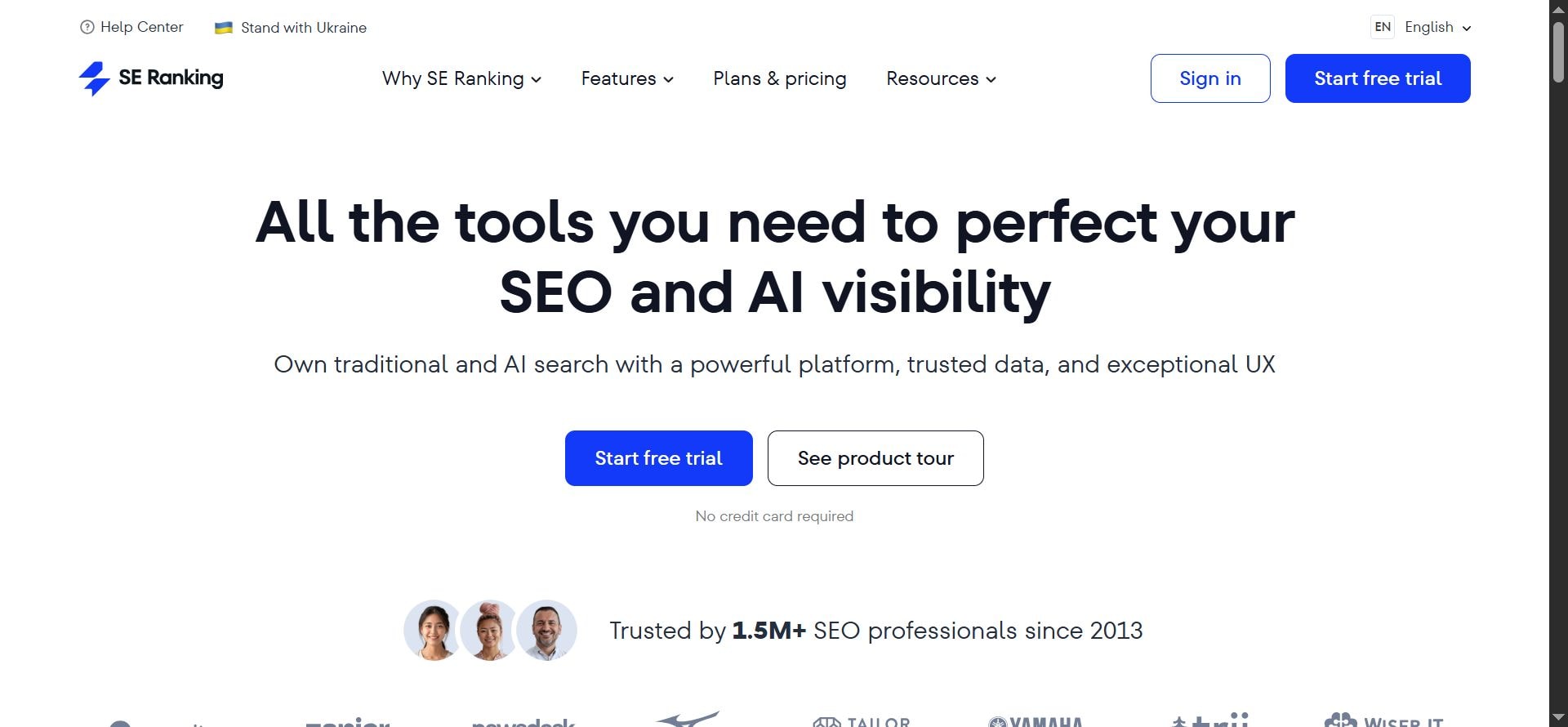
SE Ranking helps your team find and fix SEO issues fast. Its AI scans your site for technical problems, on-page errors, and backlink issues. It doesn't just flag problems; it prioritizes them so you can act on what really matters. Plus, its forecasting tools provide insight into potential traffic and ranking improvements. AI helps prioritize fixes by potential impact, enabling teams to focus on more meaningful matters.
- SEO audit depth: Conducts technical audits, on-page SEO evaluation, backlink analysis, and content performance scoring.
- Reporting quality: Produces clear, AI-enhanced audit reports with actionable insights and prioritisation of recommended fixes.
- Automation: Automates regular site audits, backlink monitoring, and on-page scoring for continuous optimization.
- Accuracy: AI-driven prioritization ensures teams address the most impactful issues first, improving overall site health.
13. Rankability - Best for AI search visibility audits
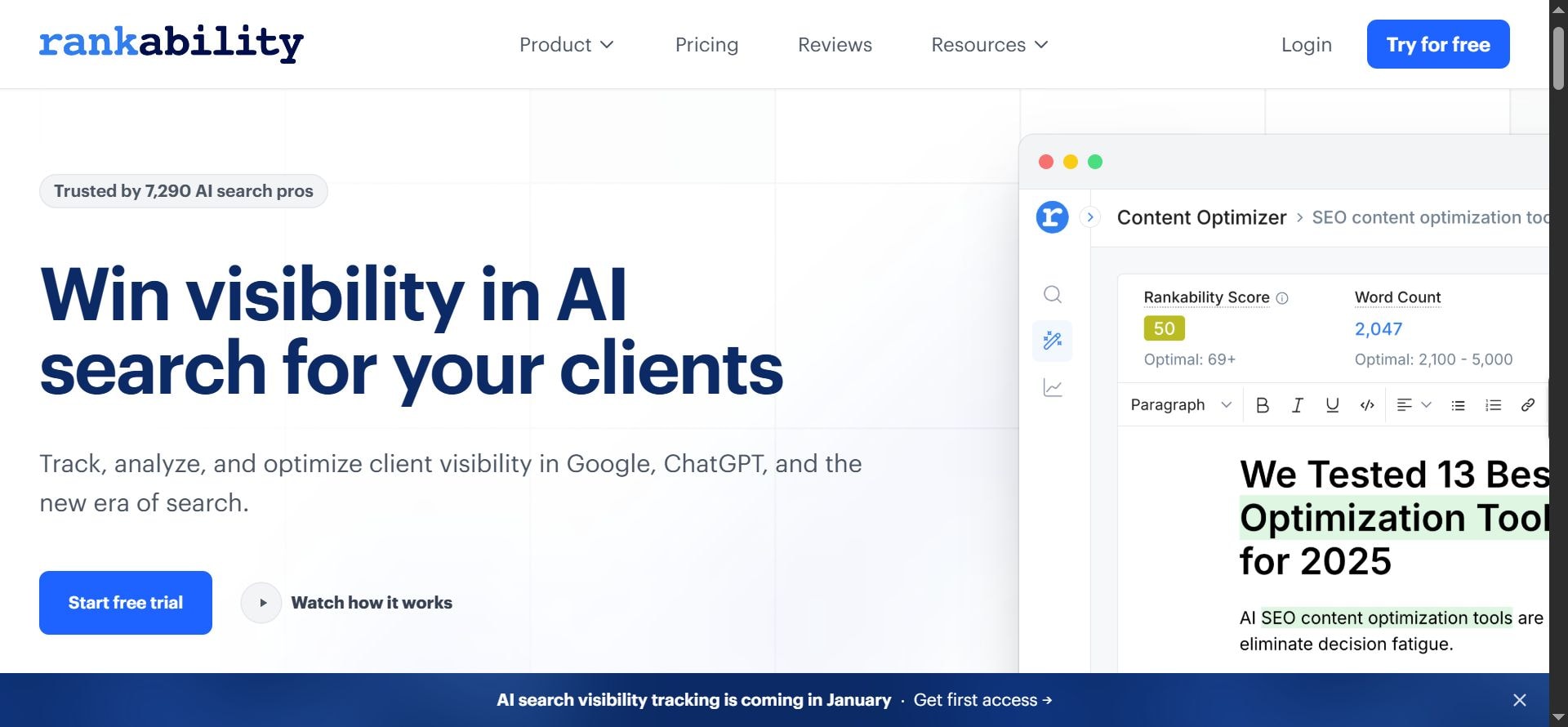
Rankability simplifies SEO audits and content optimization with AI. It focuses on SERP relevance, NLP-driven scoring, and competitive insights. The platform helps teams identify gaps, optimize content, and track ranking performance in real time. Its AI ensures recommendations are practical and aligned with search intent.
- SEO audit depth: Offers automated keyword and content gap analysis paired with AI scoring of topic coverage. The Content Optimizer ensures drafts include the proper context, topics, and terms to align with what search engines reward.
- Reporting quality: Produces readable reports and live content scores. It shows how well pages match search intent and ranking signals. It also offers optimization suggestions tailored to coverage gaps relative to competitors.
- Automation: Automates the generation of SEO briefs, outlines, and semantic recommendations. Also provides live feedback while writing or revising content.
- Accuracy: Uses NLP-driven scoring rooted in SERP analysis and competitor benchmarks to give context-aware recommendations.
14. Koala AI - Best for long-form SEO content audits
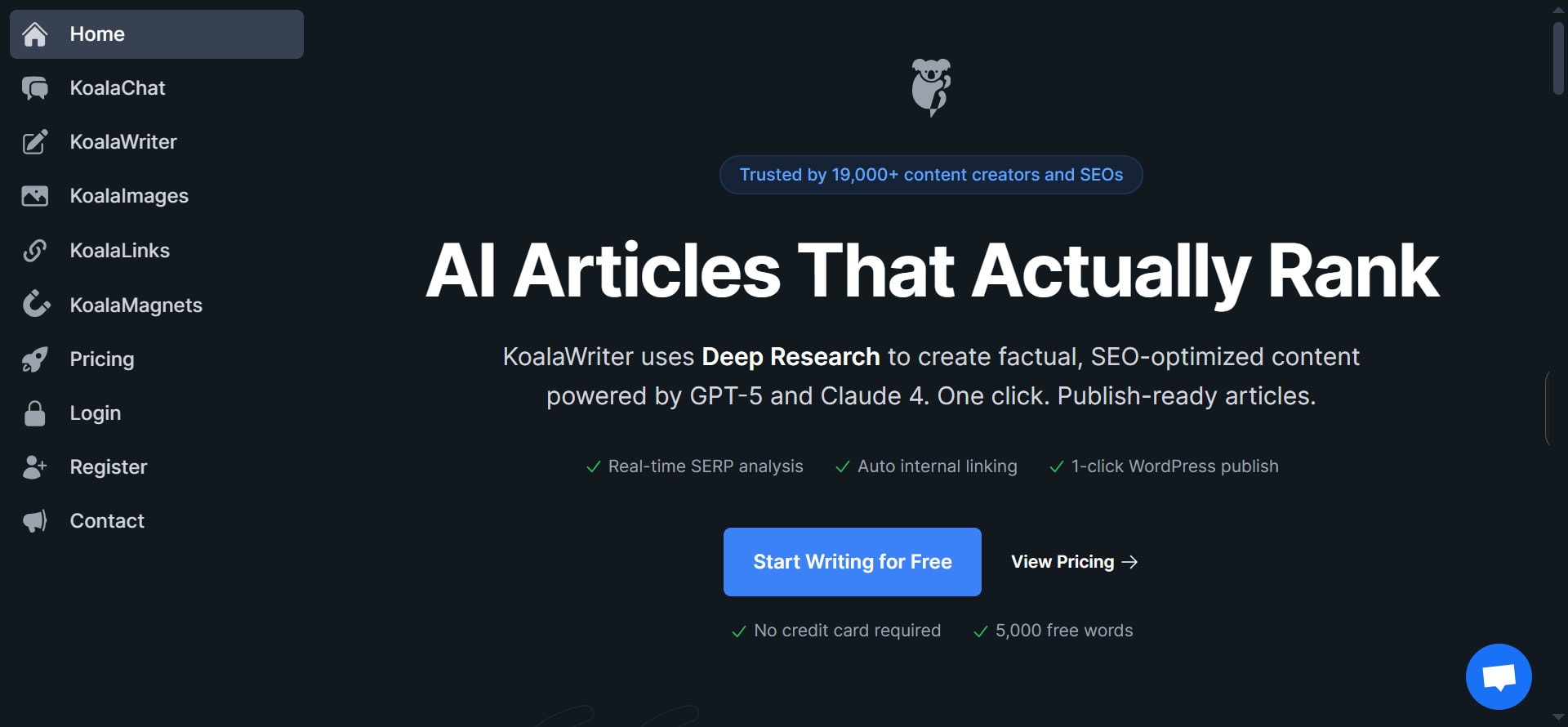
Koala AI's KoalaWriter goes beyond drafting content. It audits long-form SEO articles and provides optimization suggestions. Analyzing live SERPs for target keywords adds relevant semantic terms, entities, and topics. The tool also structures content like top-ranking competitors and suggests missing subtopics to improve readability.
- SEO audit depth: Uses real-time SERP analysis to evaluate relevant entities and semantic keywords, identifying gaps in content coverage compared to ranking pages.
- Reporting quality: Highlights optimisation opportunities, such as missing subtopics, internal linking improvements, and related keyword suggestions, to enhance relevance and ranking.
- Automation: Automates SEO-focused content refinement during the drafting process, reducing research and manual editing time.
- Accuracy: Leverages live search data and entity recognition to ensure content reflects real current ranking signals rather than outdated training data.
15. SEOpital - Best for content-focused SEO optimization
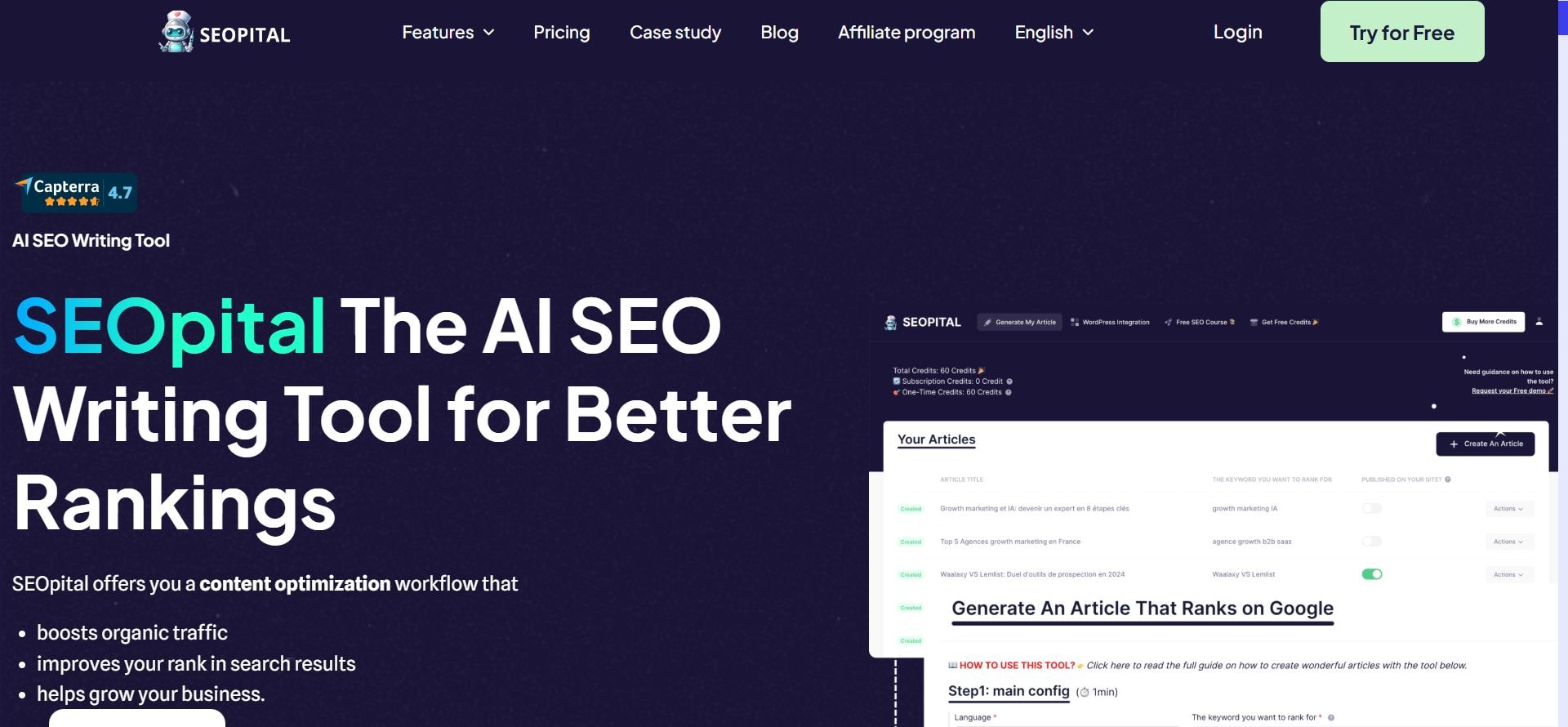
SEOpital helps teams improve their content's search performance by analyzing the top-ranking pages for keywords. It checks structure, semantic signals, and suggests improvements based on real-time search data. While not a full site crawler, it combines content optimization, keyword clustering, and structural analysis to support SEO audits.
- SEO audit depth: Analyzes SERP results for target keywords to highlight missing elements (headings, keyword frequency, FAQs) and suggests content-level optimisations to match top-ranking pages better.
- Reporting quality: Provides actionable optimization suggestions and content scoring based on structural signals extracted from high-ranking competitors, aiding prioritization of improvements.
- Automation: Automates keyword clustering, relevance analysis, duplicate content checks, and real-time SERP-driven recommendations during content creation or refresh cycles.
- Accuracy: Uses live SERP analysis rather than static checklists, increasing relevance of on-page and content suggestions. However, its strength is optimization rather than deep technical crawling.
How to choose your AI SEO stack?
Choosing the right AI SEO stack is more than just picking a bunch of tools. The best AI tools for SEO audit find real issues fast. They explain the impact clearly. They reduce manual work across teams. Strong AI tools for SEO also work well when used together rather than in isolation. This is where ecosystem-based platforms like Sintra AI make decision-making easier.
Here's a list of factors you should look out for when choosing your SEO stack:
- Accuracy: Reliable tools use fresh crawl data. They explain why an issue matters. They prioritise fixes that influence rankings, traffic, and revenue.
- Crawling depth: Effective audits go beyond surface checks. They cover technical SEO, indexability, internal linking, and on-page signals. Shallow crawls miss structural problems.
- Integrations: Your SEO stack should connect with analytics, CMS platforms, and reporting tools. Native AI integrations reduce setup time and data gaps.
- Automation potential: Top tools run audits on schedule. They trigger alerts. They generate reports without manual input.
- Ease of use: Clear dashboards matter. Plain-language recommendations matter more. Teams should act quickly, not interpret charts.
- Ecosystem benefits: Platforms with shared intelligence improve over time. Brain AI enables insights to be shared across agents, making every audit smarter and more consistent.
Why Sintra AI is a must-have?
Sintra AI stands out because it works like a real team, not a single tool. In a crowded 2026 market, most platforms still rely on manual triggers and isolated features. Sintra runs continuously. Its AI helpers think and act together. Every AI SEO audit improves over time because shared memory connects insights across tasks, agents, and workflows.
Let's take a look at what makes Sintra AI the best choice for your business:
- 24/7 autonomous AI helper: Sintra’s AI team works without prompts. Audits run automatically. Issues surface as they appear. You do not need to babysit dashboards.
- Seomi as a dedicated SEO audit AI agent: Seomi handles complete audits end-to-end. It scans technical issues. It analyses keywords. It reviews content quality. It generates clear, actionable reports. This is not partial automation. It is a true SEO audit AI agent.
- Smarter content audits: Seomi reviews existing pages. It flags thin content. It detects keyword cannibalisation. It recommends improvements to structure, headings, and optimisation.
- Keyword and opportunity analysis: The system identifies ranking gaps. It clusters keywords intelligently. It suggests content opportunities tied to real search intent.
- Technical SEO recommendations: Sintra highlights crawl issues, indexability problems, and internal linking gaps. Recommendations are prioritised by impact, not noise.
- Proactive suggestion powered by Brain AI: Brain AI shares knowledge across helpers. If content issues affect rankings, Seomi knows. If technical errors block pages, content audits are automatically adjusted. Every audit becomes sharper over time.
Food for thought
SEO is moving away from checklists and toward continuous intelligence. Between 2026 and 2028, AI-powered SEO tools will stop acting like assistants and start behaving like employees. Audits will no longer be scheduled. They will run constantly. Issues will be fixed before rankings drop, not after traffic declines.
Manual SEO audits will become rare. Autonomous agents will monitor sites in real time, interpret changes to the algorithm, and automatically adjust strategy. The best AI tools for SEO will not just report problems; they will explain trade-offs. They will suggest priorities and adapt as search engines evolve.
This shift also changes how teams work. SEO specialists will spend less time crawling and reporting and more time on strategy and content direction. The real advantage will belong to businesses that adopt AI systems early and let them learn over time.
Ready to improve your SEO with Seomi?
Seomi removes the guesswork from modern SEO. It replaces manual checks with a dedicated AI SEO audit report tool that runs continuously, flags issues early, and turns raw data into clear actions. Instead of stitching together multiple AI tools for SEO, teams receive automated audits, prioritized fixes, and reports that explain next steps.
As your site grows, Seomi scales with it, learning patterns and improving recommendations over time. Get started today and let SEO move from reactive work to an always-on advantage.
AI tool FAQs
1. Are AI SEO audit tools accurate enough for technical SEO?
Yes, modern AI tools reliably detect technical issues. They catch crawl errors, indexability problems, and on-page gaps at scale. Human review is still helpful for edge cases.
2. Can AI replace manual SEO audits?
For most routine audits, yes. AI handles continuous monitoring and prioritisation. Manual audits now focus more on strategy and validation.
3. Can ChatGPT do SEO?
ChatGPT can help with ideas and explanations. It cannot crawl sites or run technical audits. Dedicated SEO tools are still required.
4. Does Seomi give you comprehensive SEO audit reports?
Yes. Seomi delivers automated reports covering technical SEO, content quality, and keyword opportunities. Reports are prioritised and easy to act on.
5. How does Seomi compare to tools like Semrush and Ahrefs?
Semrush and Ahrefs are powerful but manual-heavy. Seomi focuses on automation, proactive audits, and acting like a true SEO agent.
6. Do AI SEO tools help with content optimisation as well as audits?
Absolutely. Most tools now analyse content depth, structure, and intent alignment alongside technical checks.
7. Is Seomi suitable for beginners or only professionals?
Both. Beginners benefit from clear recommendations. Professionals save time with automation and continuous monitoring.
8. How often should you run an AI-powered SEO audit?
Continuously. The most significant advantage of AI is always-on auditing, not periodic checkups.
Related articles





Want a mystery discount on your order?

PlayOS, Inc.
All rights reserved