How to Build a Winning Creative Strategy in 6 Steps?

Table of Contents

Quick Answer: What Is a Creative Strategy?
A creative strategy is an organized plan that helps brands communicate their message through creative assets, storytelling, and consistent messaging to achieve business goals. Think of it as a recipe. It tells you about the ingredients (tone, visuals, message) and the people the dish is for (your audience).
With a creative strategy, you can continuously refine your ad creatives for better performance, increase the speed of ad production, and explore new opportunities for ROI wins.
You launch a campaign with confidence. The creative aspects are good to go - idea is strong, and visuals are compelling. However, a few weeks later, your performance drops. The engagement is flat, shares are limited, and conversions underperform.
The reason: lack of clarity. Often, your creative team is focused on originality, while the commercial department prioritizes predictability and measurable returns.
This disconnect is common - 1 in 6 organizations has no clear C-level owner for AI adoption, and the top three barriers to progress are concerns about bias and job replacement at 46%, regulatory and ethical concerns at 44%, and organizational change management at 39%. The solution: Creative Strategy. A creative strategy is a framework that connects your business goals to the creative efforts. It uses compelling visuals, messaging, and storytelling to communicate your value to the audience.
Let’s learn more about the fundamentals of creative marketing strategy and how to develop one in six simple steps.
Why Your Business Needs a Creative Strategy?
A creative strategy helps you stand out among competitors and build a unique voice that resonates with your target audience. Here’s why your business needs a creative brand strategy in 2026.
It Sets a Clear Direction
When you have a clear, creative strategy focus, operations go smoothly. It is the blueprint that dictates how processes are done, what order of tasks to follow, and where to stop. With defined positioning, audience pain points, and content pillars, marketing turns from guesswork to data-driven. The result: you become organized and improve the chances of success.
It Aligns Teams Around One Message
Creative strategic planning involves building a brand through communication. This plan is usually written in a document, helping your business stay focused and consistent with your goals. This document explains almost everything, from the messaging to the target audience and objectives.
So, when the social media manager is deciding what to post, they can easily access the content pillars and generate content. Or, a copywriter can see what tone and language to use for website copy or CTA.
It Improves Measurable Performance
With a creative strategy, you know what to expect from your creative effort. Every creative asset has a designated measurable outcome. Instead of hoping your message reaches the right audience, your strategy shows impact through the funnel via
- Stronger Engagement: Content is driven by the real behavioral triggers. This drives attention faster and sustains it for longer.
- Higher Conversion Rates: Brand message speaks directly to your target audience’s pain points and interests, reducing friction from the buyer’s journey.
- Consistent Brand Presence: Campaigns remain coherent across channels, building loyalty and trust.
This data helps you know exactly how to adapt to rising challenges. The team performance shifts from reactive to proactive, and the chances of success improve.
The 6 Steps to Writing a Winning Creative Strategy
Building a strong creative strategy in marketing involves a step-by-step process, from research to planning and execution. Let’s see how this process goes.
1. Define Clear Business and Campaign Goals
Every successful creative strategy planning relies on clearly defined goals. Before you get caught up in the nuances of the process, take time to discuss what success will look like for your project. Ask yourself,
- Do you want to increase brand awareness?
- Does the campaign intend to boost sales?
- Is your priority customer loyalty?
Remember! While such questions are a good kick starter, you must not stop here. Vaguely defined goals like “build customer loyalty” are not enough. You need structured goals that provide motivation, focus, and accountability.
A good way to narrow down such goals is to use the SMART framework. This framework helps you transform abstract objectives into clear targets with success criteria.
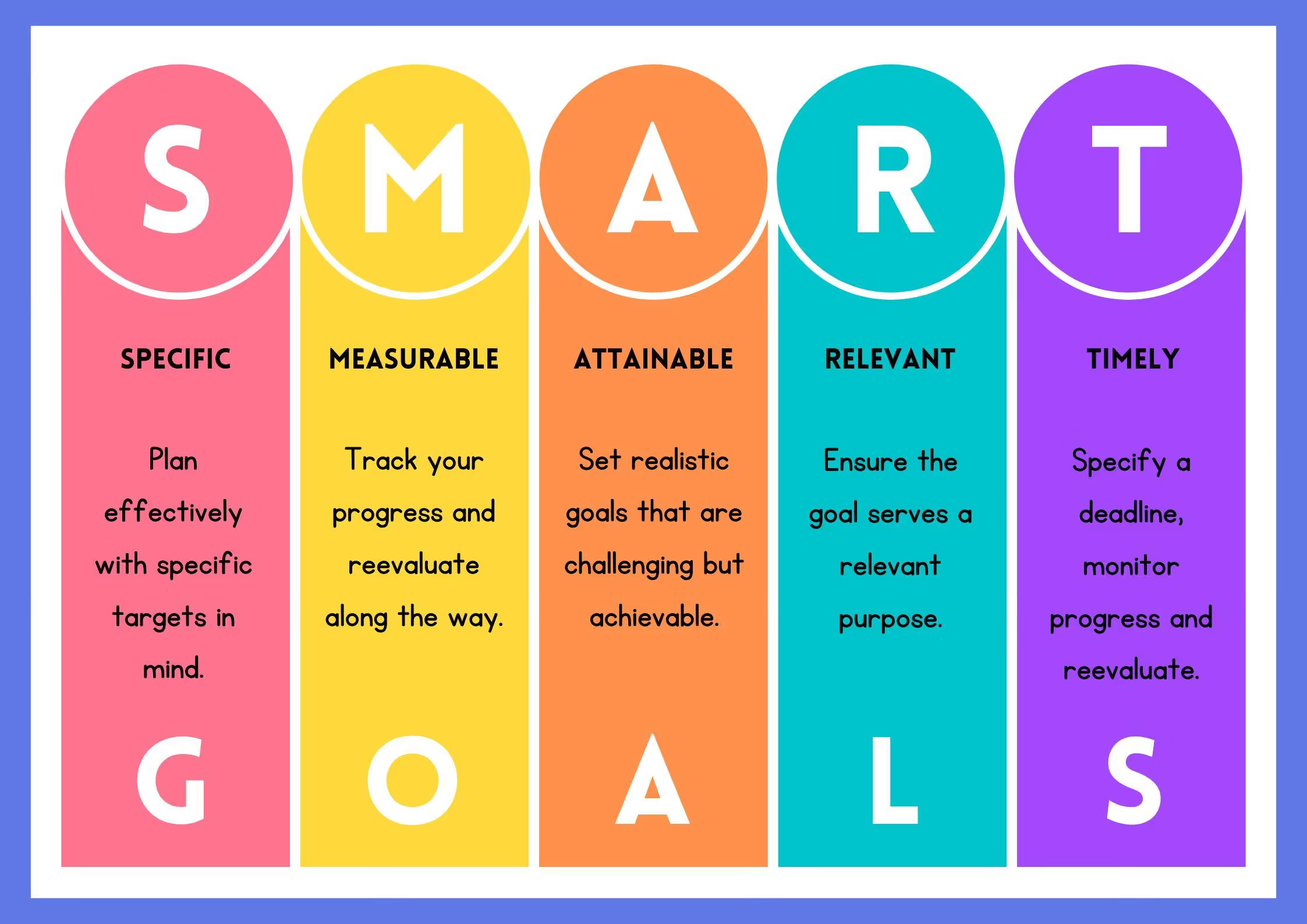
- S - Specific: Exactly what you need to accomplish, define the roles involved, the task sequences, where it happens, and why it matters to your business.
- M - Measurable: Qualitative and quantitative indicators through which you can track progress.
- A - Achievable: Be realistic and balance your ambition.
- R - Relevant: Goals that align with your business’s broader goals, priorities, and strategic focus.
- T - Time-Bound: Objectives with clear deadlines that create a sense of urgency.
So, instead of “increase brand awareness”, the goal of your creative business strategies would be something like, “marketing will improve LinkedIn engagement by 20% in the third quarter to drive qualified leads”.
Pro Tip: It’s always a good idea to redefine goals every now and then. This helps keep the objectives aligned with your growing business needs.
2. Understand Your Audience Deeply
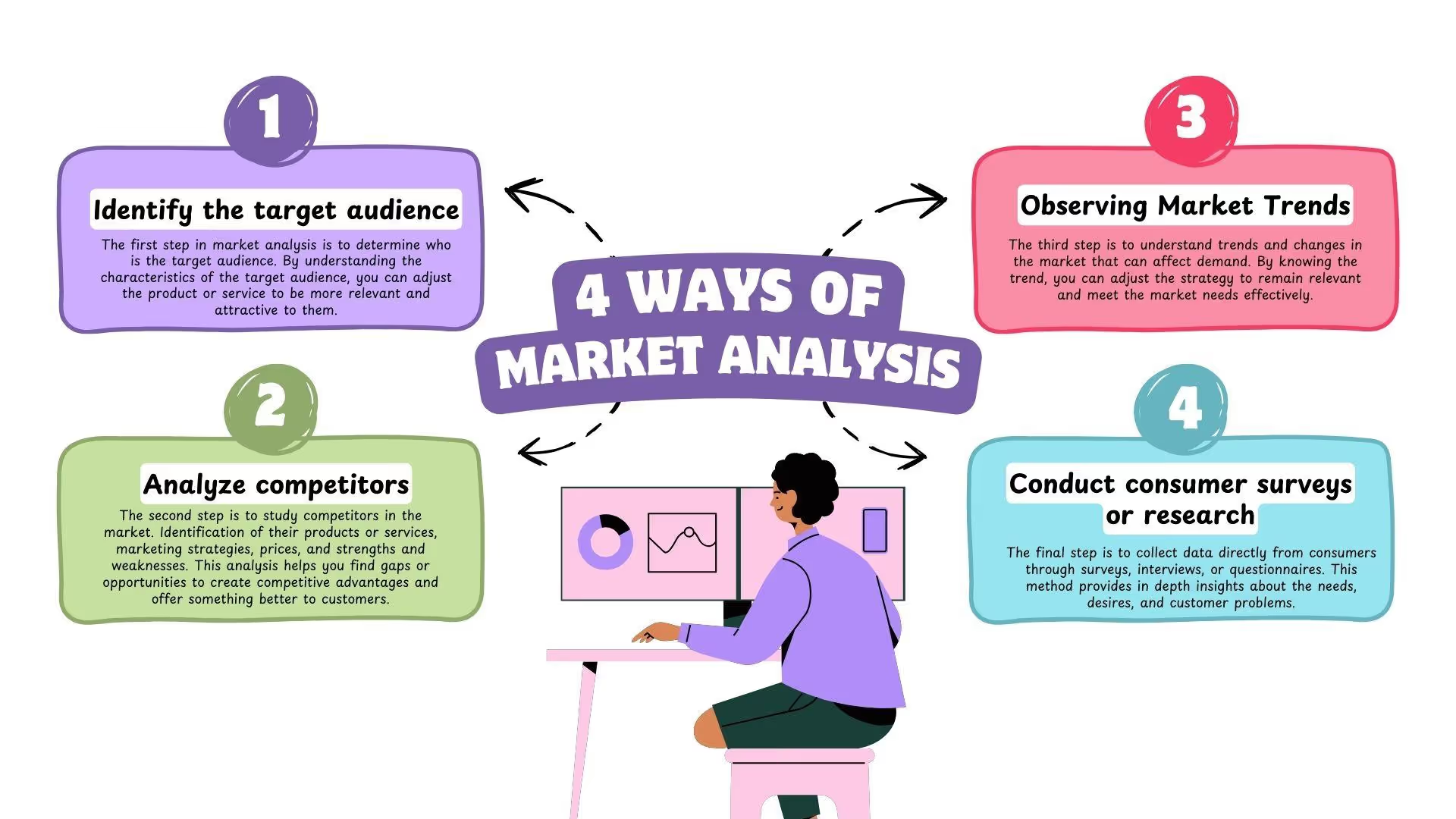
After goals, research is technically the first step in developing a creative strategy, focusing on analyzing the customers and their journey.
For starters, finding your audience involves answering two questions: who are they? And where are they? To answer the first one, you have to look beyond demographic parameters (age, gender, income) and expand your search to
- Geography: Region, country, city, and areas.
- Psychography: Hobbies, moral values, preferences, and life choices.
- Filmography: Industry, company size, workforce, and revenue.
- Funnel stage parameters: Brand awareness, existing customers, decisions, etc.
Apply these parameters to your audience and segment them. But don’t stop here. You need to go in-depth into your audience’s pain points to identify valuable and sizeable subsections. To identify these pain points, questions like these are really helpful.
What’s the audience challenge that you aim to solve?
How did the audience try and fail to solve this challenge?
What are the task sequences to solve the problem?
Your answers should not be based on intuition, but rather on quality data. This quality comes from customer surveys, focus groups, customer review analysis, and more.
An even better approach would be to identify the channels where your target audience actively engages. So, go, search through community sites like Reddit, Statista, Quora, and TikTok, and see what customers are talking about, their product preferences, experiences, etc.
At this point, you are all set to craft the creative strategy. But wait one more step and build a creative strategy that equally focuses on competitor analysis. List your competitors and see what they have been up to. Make a checklist of factors to consider during competitor analysis.
- A specific audience they are tapping into (tech-savvy college students).
- Pain points they fail to address (versatility).
- Competitive edge your brand has against others (cross-platform support).
- Gaps in their existing strategy (no interactive visuals)
- Platforms they spend their ad money on.
3. Craft a Clear Creative Strategy Statement
Comes ideation, where your creative team takes over and turns the gathered insights into narratives. Ideation involves brainstorming creative concepts based on research findings to develop effective ad angles against your business objectives, impacts, and growing needs.
During brainstorming, you must prefer quantity over quality. Get all ideas across the tablet and choose one that actually resonates with your audience. Once done, the goal is to refine the ideas into a one-sentence creative strategy statement that includes
- Target audience persona
- Core messaging
- Key propositions
- Tone of voice
- Criteria for success
Think of it as your mission statement that aligns with your business goals and is measurable. A good creative strategy example looks something like this,
The campaign targets high-tech college students on social media platforms (particularly TikTok) using interactive promotional videos that highlight our laptop’s versatility, prompting them to make a purchase.
Pro Tip: Use a mission statement generator to make your statement short, simple, and purpose-driven. Make a conscious effort to simplify it so that everyone in the organization (new hires to top management) can understand it.
4. Define Messaging Pillars and Content Themes
What differentiates conversion-focused brand creative strategies are content pillars and content themes.
For starters, content pillars are three to five key themes relevant to your brand’s niche, expertise, or value propositions. These pillars guide customers on how to think about a brand. In comparison, content themes are sub-topics that break down pillars and dictate your day-to-day content creation. Each pillar has different content themes.
Imagine a marketing academy that aims to convert students interested in skill development. The content pillars for this academy include marketing tools, industry trends, digital marketing skills, and more. Within the “marketing skills” pillar, the brand can publish blogs on SEO basics and cold email strategies.
McKinsey reports that a clear set of messages around your organization’s vision and strategy helps business leaders build repute among customers. Here is how you can do it as well.
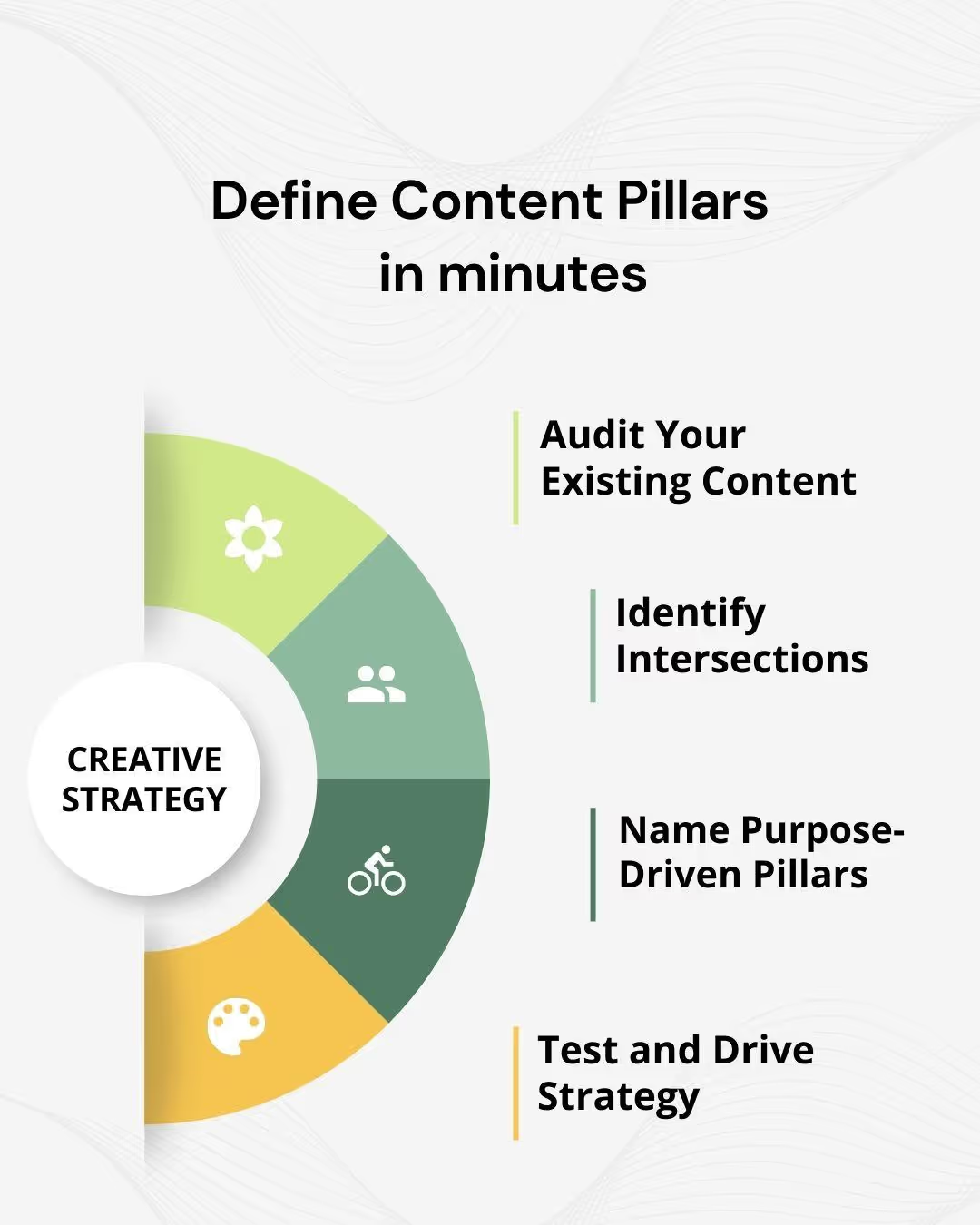
- Audit Your Existing Content: See what topics consistently spark conversations? What do people DM you about on social media? What posts get the most shares?
- Identify Intersection: Find areas where these three things overlap: audience needs, your brand propositions, and your intended solutions. Once you find recurring patterns, pillars emerge.
- Name Pillars: Instead of generic labels, define pillars, such as purpose-driven brand positioning, strategy clarity for customers, etc. Targeted vocabulary reinforces your authority and expertise.
- Test Your Pillars: Evaluate if your defined content pillars will stay relevant in the future, support numerous subtopics, and align with your brand’s growing vision. If it fulfils these three requirements, the pillar deserves to be in your brand creative strategy.
- Use Pillars to Drive Strategy: Once defined, use pillars to decide your content strategy, including topic clusters and blog posts.
Pro Tip: To speed up the drafting content pillars process, use AI SEO agents. These agents do competitor analysis to identify clusters with the highest search demand and lowest competition. You can also use these agents to sort content topics into semantic clusters and detailed blog outlines for better visibility on search engines.
5. Choose Channels and Creative Formats
Decide where your message will appear. The channel for creative strategy in advertising should focus on where your audience is and not everywhere. For instance, a B2B business will most likely excel on industry blogs or professional platforms such as LinkedIn. Whereas interactive visuals work best on TikTok, and deep, emotional stories do better on YouTube.
Here are some things to keep in mind when choosing the channel for your creative assets.
- Think beyond popular platforms like Google and Meta ads. While they deliver when you aim to scale content production, it’s better to include them in the broader mix.
- Traditional channels are considered dead creative tactics in advertising. But it’s not true. Conventional platforms (radio, advertorials, and billboards) are highly effective in building demand.
- Micro influencers are a great way to reach new but relevant audiences and can strengthen your influencer campaign strategy by driving conversions for an impulsive audience better than paid ads.
- Match the message to the medium. High-impact visuals work better on social media, while emails are great for urgent updates and personal content to build trust.
That’s not it. Identifying what formats to choose for each channel can be resource-intensive. Things will not go viral on their own. There are numerous planning sessions involved. You need to familiarize yourself with each format, its unique requirements, data-driven success, and more.
For marketing managers struggling with fewer resources, role-based agents (AI social media managers) might sound like a good idea. These agents analyze your content themes and recommend formats that serve each theme, based on historical data. For instance, a short video tends to drive more shares for how-to themes. You can also employ them to prevent the same content from appearing in the same format across platforms.
Pro Tip: Once the launch channel and format are decided, AI social media agents can help you generate content. As they run on centralized business memory, the result resonates with your specific audience. Enter a prompt, generate a visual, review it, and schedule it for posting. It’s as easy!
6. Test, Measure, and Optimize Continuously
Your job is not done once the campaign goes live. Crafting creative strategies is one thing, but active testing validates your performance. As you develop creative assets, gathering insights on the creative strategy after launch is essential for continuous improvement. Hence, marketing teams must set KPIs (key performance indicators) that will track the performance of their strategy goals.
These include your social media comments and shares, conversion rates, organic website traffic, click-through rates, subscribers, and more. Remember to choose KPIs that strongly align with your goals. Let’s say your goal was to tap into new customer bases via Instagram; the appropriate KPI would be the follower count.
Now, perform A/B tests to analyze these metrics in real time. Let’s say you are launching an outreach campaign to reach a new audience. Use an AI email assistant to generate multiple subject lines, different text variations, and visuals. Track what is driving clicks and conversions. Analyze the messaging perspective, the tone of voice, content format, and CTAs.
Performance data is only useful when you actively review it. So, establish feedback loops and analyze testing data weekly or monthly. Adjust your creative strategy planning accordingly. Always remember! The best strategies are flexible and adaptable.
Creative Strategy Example (Putting It All Together)
See this creative strategy example below and analyze how businesses are using these practical steps to develop a winning creative marketing strategy.
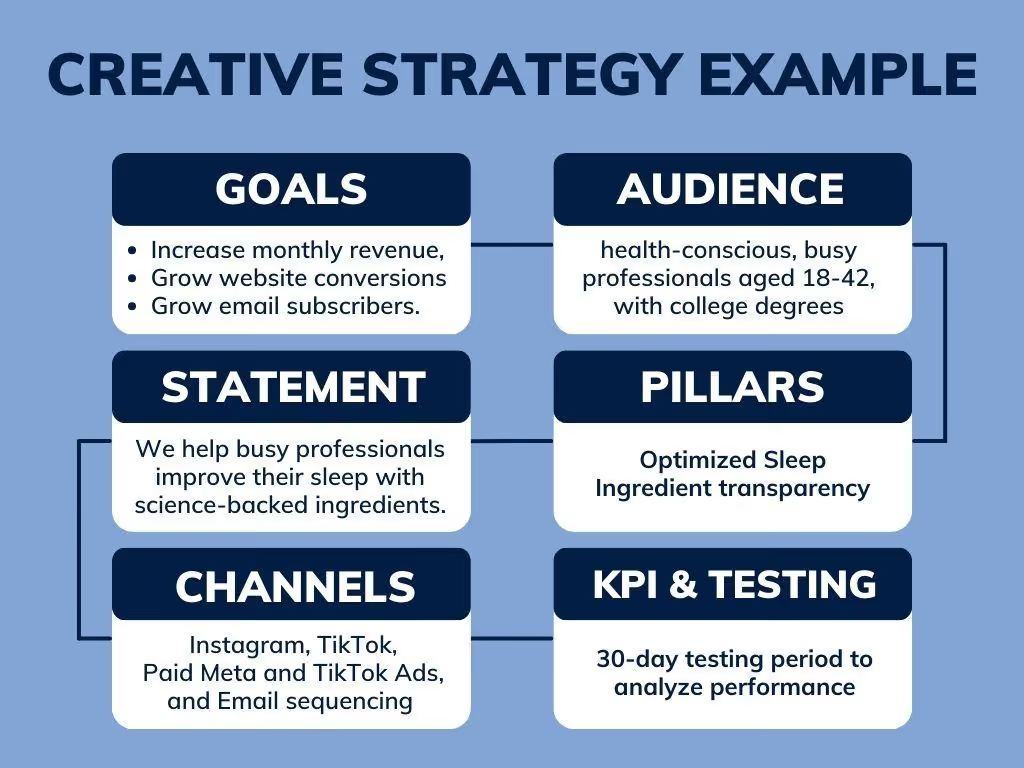
Brand Information
Imagine a wellness business that sells melatonin-free supplements to help burned-out professionals between the ages of 28 and 42. The tablets were launched one year ago and have strong product reviews. However, the brand is struggling with inconsistent brand messaging and stagnant growth.
Define Clear Goals
- Increase monthly revenue from $200K to $300K within the next six months,
- Grow website conversion rate to 3%,
- Grow approximately 12000 new email subscribers through outreach.
Understand Your Target Audience
Demographics include health-conscious, busy professionals aged 18-42, working in finance, healthcare, and creative industries, with college degrees.
In addition, the psychographic persona involves someone putting effort into most parts of their lifestyles (tracking steps, taking invitations, working out, prepping meals). But sleep is what they are struggling with the most.
Write a Creative Strategy Statement
We intend to help busy professionals improve their sleep quality with science-backed ingredients. To build a reputation with customers, we focus on being transparent, building authority, and collecting testimonials.
An effective creative engagement strategy uses emotional storytelling, interactive visual experience, and hyper-personalization to turn customers into brand loyalists. An AI copywriter that understands your brand, its objectives, and value propositions can be a great help at this stage.
Content Pillars and Themes
Content Pillar 1: Optimized and Performance-Oriented Sleep
- Theme: Understanding the Science Behind Sleep
- Theme: How Recovery-Focused Sleep Helps Focus and Creativity
- Theme: How Our Supplements Help Your Routine?
Content Pillar 2: Transparency Around Ingredients
- Theme: Deeper Understanding of Science-Backed Ingredients
- Theme: Side-by-Side Comparison with Competitors
- Theme: Composition of Our Scientifically-Proven Supplements
Choose Channels and Formats
- Instagram and TikTok, including reels for hook-focused videos, carousel ads for education, and static posts for customer quotes.
- Paid Meta and TikTok Ads, including static visuals (highlighting CTAs, copy, etc) and video ads for customer testimonials.
- Email sequencing, including welcoming messages, weekly newsletters, and behavioral action triggers (purchases, post-purchase education, etc).
- SEO and Long-Form Content, including long-form articles, explainers, and comparison guides.
Set Up KPIs, Test, and Optimize
Connect performance analytics and feedback-driven tools using AI integrations. Allocate a 30-day testing period, focused on identifying which platform engaged most customers, which format gets most shares, and which pillar drives most engagement? Readjusting the strategy based on results.
Common Mistakes in Creative Strategy Development
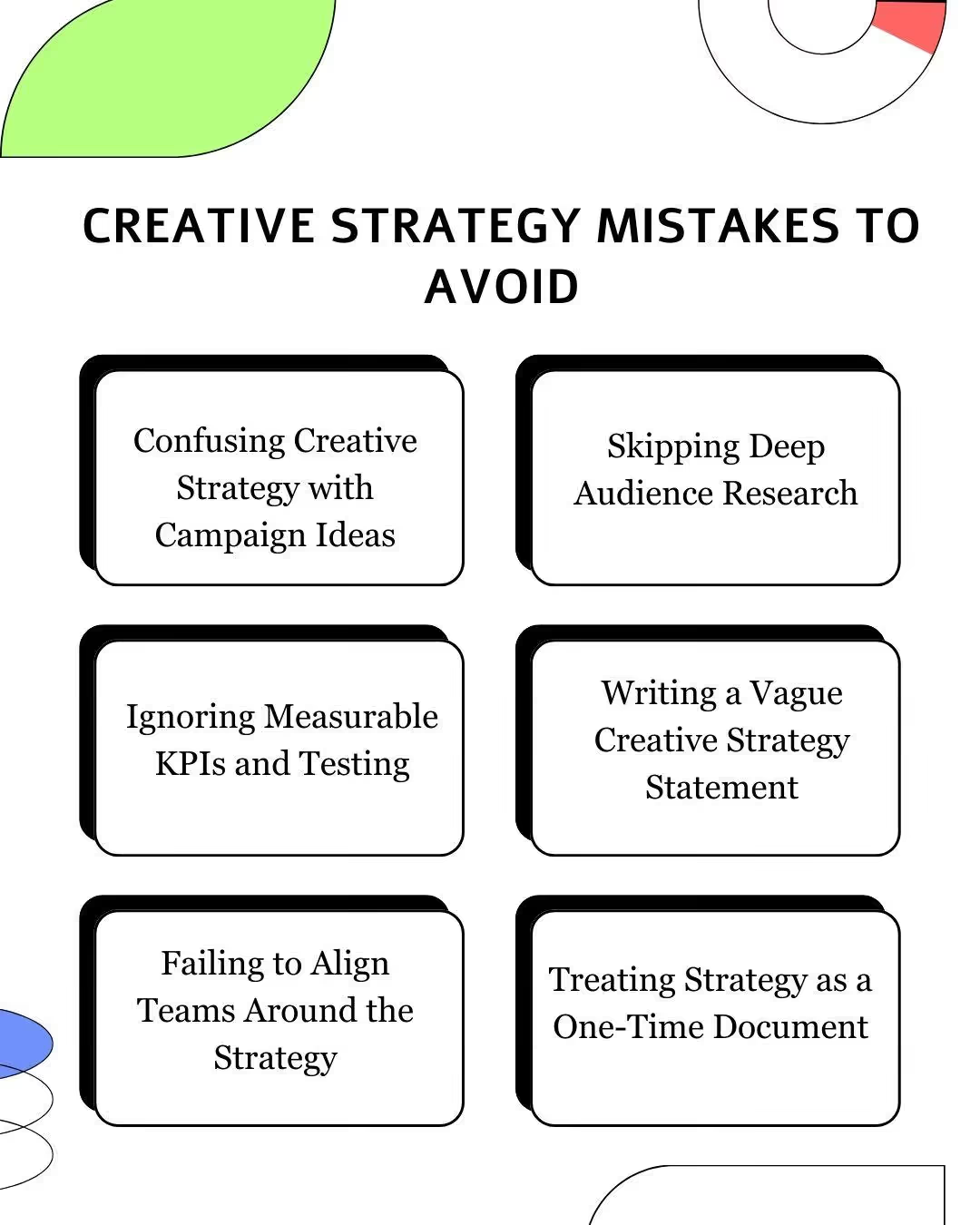
No one is immune to making mistakes in the lengthy process of developing creative strategies, even seasoned marketers with years of experience. But knowing common pitfalls can help you avoid them.
Mistake 1: Confusing Creative Strategy with Campaign Ideas
Creative directors often tend to confuse creative strategy with the campaign idea. Unfortunately, it compromises your brand’s growth and reach to a new audience.
Simply put, creative strategy definition goes to long-term planning, answering why and what to put across to achieve your business goals. Think of it as your business’s blueprint that focuses on deep research about key messaging, brand positioning, and target groups.
In comparison, campaign ideas are specific creative projects that bring your creative strategy to life. These projects involve building creative assets for specific products and marketing them.
Imagine a coffee brand intending to position its coffee as an essential, self-care ingredient for corporate officials. This is the creative strategy. To achieve this goal, the brand runs a “Your Go-To Morning Escape” campaign, featuring macro influencers sharing their experience and coffee experience.
Mistake 2: Skipping Deep Audience Research
Another common mistake in creative marketing strategy is trying to appeal to everyone. While marketers do fill their “target audience” box, they usually give a target persona document. These documents usually carry unnecessary information that adds no value to your strategy. It results in your brand messaging being too generic to resonate with any specific group.
While many undermine it, defining your target audience is crucial to the success of your creative strategy. It helps you personalize your content to highlight specific interests, needs, and pain points. Plus, it improves chances of engagement and shares across platforms.
Mistake 3: Writing a Vague Creative Strategy Statement
Your marketing efforts go to waste without a well-defined strategy, and this is reflected in your creative strategy statement. The target group is too diverse. Their stated needs are unspecified. The business goals are unclear. Or, the standout features are weak for the target group.
What differentiates a strong statement from a weak one is the scope, focus, and purpose. You will find a well-written statement to be specific, emotionally resonating, and benefits-driven.
Weak Statement - We aim to sell more laptops, as they are versatile.
Strong Statement - We position our laptops as portable solutions for university students, highlighting the long battery life, built-in note-taking features, and adequate storage, with an emphatic and persuasive tone, using interactive visuals.
This is often the result of a product strategy derived from intuition or past experiences. A CEO or influential creative director would have come up with the idea. He may be confident about it, but the idea is not grounded in evidence. And, it shows once you start drafting the statement.
Mistake 4: Ignoring Measurable KPIs and Testing
Your creative strategic planning should always start with one key question: What is success for you? Unfortunately, this is not a common practice.
Marketing managers think they know what the objective of their creative strategy is, but they are often careless with it. You will often see objectives outlined as increasing sales, improving awareness, or building loyalty. These can be your marketing goals, but not strategy objectives.
With such vague or misunderstood goals, setting up KPIs is almost impossible. And, when you underestimate KPIs, the result is a strategy that is not informed but speculative. Eventually, you end up with wasted resources and missed opportunities.
Mistake 5: Failing to Align Teams Around the Strategy
When every department of your business is operating in a silo, your brand creative strategy becomes fragmented. Think of it like this. Each team has a designated space in the process. Marketing begins with a promise to customers. The sales convert this promise into a conversation. And support in delivering the commitment made by marketers.
But when each tells a different story,
- The message contradicts itself.
- The creative assets become inconsistent.
- The brand voice feels incoherent.
To avoid this, AI business strategists help you build shared inventory with consistent context awareness and coherent messages. These strategists store important business documents, including target personas, brand positioning, and value propositions. With this as context, everyone in the workspace knows how to speak, what to offer, and how to build a reputation.
Mistake 6: Treating Strategy as a One-Time Document
A creative strategy in marketing is not a one-time document. And, thinking of it as one is a big mistake. A strategy is an ongoing process of discovery that goes through several stages, from planning to testing, learning, and optimizing.
Every test, data point, ad format, and feedback loop adds a layer to your understanding of what works with the audience. Hence, your priority should not be to chase trends but rather to find evidence, detect patterns, and adapt accordingly.
Turning Creative Strategy into Consistent Execution
Developing a creative strategy is one thing, but constantly coming up with visuals, stories, and narratives can be exhausting for the team that is already putting their efforts into planning. As demand for content accelerates, AI-driven automations help you.
Role-based AI employees help you scale content production and promote communication across departments, without increasing the headcount. These employees share a centralized business memory that carries everything from your audience details to marketing goals and product information.
This memory acts as a context for your AI assistants to work. The marketing assistant crafts creative statements using your audience details, while the social media manager generates visuals, and the copywriter crafts compelling copy. The best part: the messaging, tone, and language remain consistent across the board.
Ready to Operationalize Your Creative Strategy?
There you have it - all about developing a winning, creative marketing strategy in six simple steps. While crafting one, you must be flexible and open to changes. This is because marketing is always changing, and as new technologies enter the market, you should be prepared.
Thankfully, role-based AI helpers from Sintra are here to help. Think of them as your creative partners who help you analyze business data for audience insights, generate many concepts in minutes, and personalize content to your audience at scale. All these helpers share a centralized memory, so no more issues with context or consistency.
Get started today with Sintra and see how it works for you.
Creative Strategy FAQs
What is a creative strategy in marketing?
A creative strategy is a written plan that guides businesses on how to promote their services through compelling visuals and emotional storytelling to achieve broader goals. An approach of performance marketing, this strategy helps brands refine their messaging for better conversions.
How is a creative strategy different from a marketing strategy?
A marketing or brand strategy defines the business's core identity, including its mission, values, and long-term goals. It is a framework that guides businesses on who to target, where to reach them, and what their goals are. In comparison, a creative strategy defines how the brand communicates its messages to achieve goals outlined in the marketing strategy. Here, the Big Idea is the central creative concept or story that unites all marketing materials.
What should a creative strategy statement include?
A carefully crafted creative strategy statement must include the purpose of the strategy (marketing objectives), who it is for (target audience), and what value it brings (for the audience and business). It should be specific and benefits-driven.
How do you measure the success of a creative strategy?
To measure the success of a creative strategy, teams set specific KPIs (key performance indicators) that align with their marketing goals. Common KPIs for marketing strategy success include tracking conversion rates, web traffic, and brand sentiments.
What are examples of creative strategies in advertising?
Examples of creative strategies in advertising include Apple’s “Shot on iPhone”, Old Spice’s “The Man Your Man Could Smell Like”, Red Bull’s “Space Jump”, and Dove’s “Real Beauty” campaign strategies.
Related articles





.avif)