How to use AI in recruitment in 2026

Table of Contents
87% of recruiters today are using AI in recruitment. It is no longer a future thing. AI-powered hiring systems are helping businesses plan their workforce, attract top talent, and stay ahead of competitors.
Be it screening resumes, optimizing candidates’ experience, or making crucial decisions, AI employees are helping you with almost everything through the hiring pipeline. But, how to use AI in recruitment to benefit your requirements? Let’s find out.
AI in Recruitment - Quick Guide
AI has completely transformed recruiting processes in 2026.
- AI-powered recruiters source candidates from online platforms and business databases, screen resumes, and reach out to top talent using personalized communication.
- Smart virtual assistants like Gigi can also manage your interviews - scheduling them, drafting questions, and following up with responses.
- Finally, AI-driven data analytics helps in anticipating workforce needs, skill matching, and bias mitigation. This way, companies can stay ahead of their competition.
What is AI for Recruiting?
AI in the recruitment process refers to the use of artificial intelligence in hiring. Many think of it as AI assistants writing job ads, screening resumes, and shortlisting candidates for you. But that’s not it.
The use of AI in recruitment goes beyond task automation. It also adds intelligence, reasoning, and adaptation to solve the more strategic aspects of hiring. From giving you valuable insights into improving the candidate’s experience to sourcing applicants with non-traditional but apt backgrounds, AI helpers have got you covered with all.
Here are a few key components of AI-powered recruitment systems.
- Workforce Planning: AI helps you interpret business data to anticipate the workforce requirements, identify skill gaps, and source talent ahead of time.
- Automation Job Postings: AI helpers tap into the job market and generate new job postings. They also publish them directly on the relevant platforms for the desired reach.
- Smart Candidate Sourcing: Advanced AI recruiters can scan tons of resumes, online profiles, and other checks to identify the best fit for the role.
- Algorithmic Candidate Assessment: Modern AI agents produce psychometric and skill-based assessments, thanks to their NLP capabilities. This helps them filter top talent without biases.
- Interview Prep and Scheduling: AI recruiters get into your workflow, manage calendars, and schedule interviews. They can also use NLP to note down interactions, record responses, and offer follow-up suggestions.
Why is AI Important for Recruiting?

LinkedIn Global Intelligence Report shows that AI in recruitment process has grown by 67% year-over-year. Let’s see the reason behind businesses switching to AI for hiring purposes.
Proactive Recruitment
AI anticipates your needs and acts on them. Think of it as an assistant who does not wait for you to post job ads. Instead, it uses predictive scoring to rank candidates based on their profiles across platforms like LinkedIn. The reach of AI in hiring is already substantial - 92% of hiring managers use AI for resume screening or pre-screening interviews, making it the single most common AI hiring use case, with scheduling interviews at 75% and skills assessments at 57% also widely adopted.
These special AI tools track potential candidates, search for their skills, engagement in the industry, and past details—functioning as AI digital workers that shortlist people for you from a wider talent pool, including those not actively looking for opportunities but still a strong match for your company.
Once done, the AI-powered recruiting systems set up an application tracking system. These systems are a goldmine for your firms. Designed to track job applications, this system keeps everyone in the loop and rediscover the existing talent from your pool.
Let’s say the person who applied for the sales teams years ago has now earned qualification and expertise in data analysis. AI will use this information and add this person to the new analytics opening.
Automation
Today, using AI in the recruitment process has saved HR people from time-consuming jobs that would usually eat up their day. AI does all the heavy lifting.
Once a job seeker applies for a position, AI extracts all their details and adds them to the ATS system.
Next, it sifts through all the resumes in the pipeline. For the first pass, it filters potential talent, ranks them, and shortlists them for outreach. Unlike traditional human recruiters, AI agents can also detect transferable skills that are otherwise overlooked.
After your approval, it saves you from never-ending back-and-forth emails and scheduling interviews, or let the candidate self-schedule them. That’s it - with most taken care of, recruiters can genuinely focus on the interactions and find the right fit for the role.
Personalization
A job seeker is definitely going to ignore your generic call for outreach. Talent expects to feel valued, and the key to this is personalization.
This is where AI agents in recruitment help leaders move to tailored outreach and improve communication. Such agents consider everything from a candidate’s profile to work experience, interests, attractions, and more. Using this information, they craft one-on-one emails.
Let’s say a senior engineer and a fresh graduate both have applied for the same job role. The AI will then pool them in different categories and offer value offers accordingly.
Data Insights
Don’t have the nerve to sift through the large data pool coming from applicants? Using AI in recruiting talent can help. Their focus is not just about filling the roles but rather empowering recruiters to make decisions beneficial for the workforce.
For starters, AI recruiters analyze your entire hiring funnel to bring strategic suggestions. For instance,
- The platform that brings the most talented candidates most in number.
- The stage at which the candidates from different backgrounds usually drop off.
- Cost per hire according to departments.
Using these insights, HR leaders can optimize hiring processes accordingly.
Moreover, AI can also help attract the best talent in the market. Unlike a human, an AI agent takes seconds to spot desired experience and skills from a pool of applicants. It then uses predictive abilities to score and rank people in the talent pool.
HR leaders can also employ predictive analytics to draw parallels from past hiring trends. This way, it’s easier to identify the people most likely to succeed.
Bias Control
AI does not favor anyone when done right. With AI in recruitment, rest assured that it will objectively find the best talent for your team without bias.
Simply train your AI model to grade candidates based on their skills and qualifications, not on demographics. Talent leaders can also employ an ethical framework to regularly adjust the hiring algorithms to comply with labor laws.
Pros and Cons of AI in Recruitment
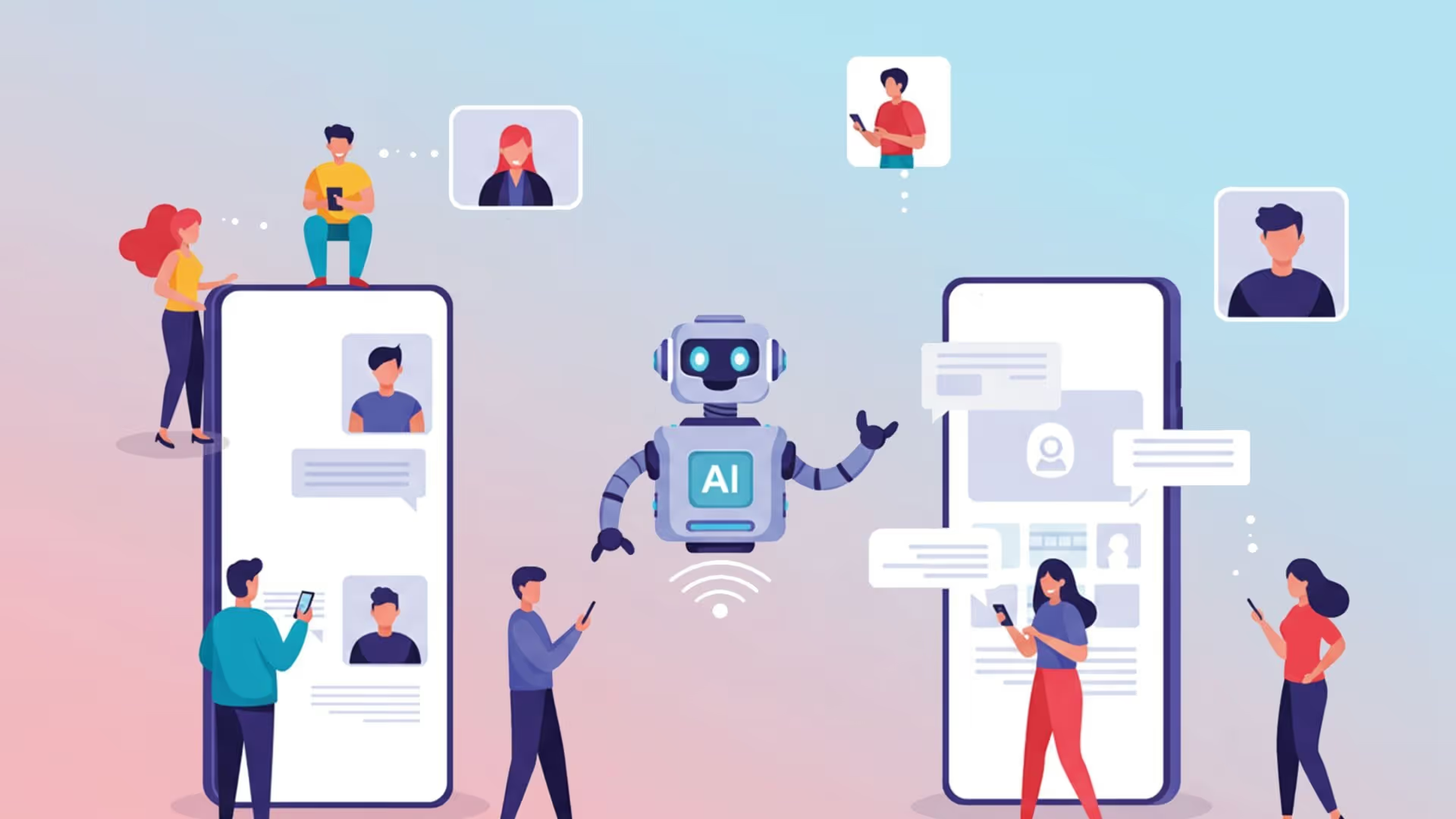
While the future of AI in recruitment seems bright, there are also a few drawbacks recruiters must not overlook. So, let's look at the advantages and disadvantages of AI in recruitment process and see if it’s worth it.
Pros
Helps in Proactive Recruitment
Recruitment has moved from a reactive approach to a proactive strategy, thanks to AI. With automation and NLP capabilities, AI has streamlined repetitive processes to promote strategic thinking.
For reference, AI can completely take over the lengthy hours of initial resume review time, so leaders can spend their time interacting with the candidates.
Reduced Time-to-Hire
Recruiters across companies are standing against time. The longer a job is unfilled, the more it hinders productivity and sacrifices revenue.
The primary reason businesses are shifting to AI is speed and agility. It takes over the hard and repetitive parts of the job - screening resumes, sourcing candidates, and scheduling interviews. With most taken care of, you can focus on the candidate and his suitability for the vacancy.
Improve Candidate Experiences
In a saturated market where opportunities are endless, job seekers expect a seamless and interactive hiring process. AI-powered virtual assistants are just the right tool for that.
Business VAs can support job applicants throughout by instantly responding to queries, generating FAQs, next-step reminders, and more. These assistants can also personalize the experience by tailoring job recommendations to their strengths. With this help, one can apply to multiple roles at the same time, reducing frustration significantly.
Promotes Decision-Making
HR leaders have long struggled with data analysis, and rightfully so. Making sense of thousands of resumes coming from multiple channels can be intimidating for a human. But not AI.
AI tools can analyze vast amounts of data to improve the accuracy of candidates screening and shortlisting. It empowers recruiters with the right data they need to find the right talent. From discovering passive candidates to actively tapping into marketing trends, AI has got you covered.
Supports Diversity and Inclusion
It's natural. We tend to favor familiar networks and make screening decisions influenced by our unconscious biases. But it deprives us of exceptional people from underrepresented groups.
But AI is your way out. Smart recruiting assistants take human biases out of the equation, promoting diversity and helping with a wider reach. Instead of demographics and background data, its focus is to attract talent and be fair in the hiring practices.
Smarter Workforce Planning
AI has truly become central to modern-day workforce planning. This technology is helping companies analyze the market hiring trends, make sense of turnover rates, and understand internal mobility patterns. This way, leaders can anticipate talent requirements ahead of time.
Not only this, but AI agents capable of predictive analytics can identify skill shortages, forecast demand, and develop strategies to fulfil these needs. With this, businesses can stay ahead of competitors and adapt to market challenges easily.
Cons
Temptation to Overautomation
Recruitment is an area where human relationships matter most. It’s understandable if you are using AI to automate some parts of this job. However, completely relying on it means you are losing touch with job seekers.
For instance, an HR team stuck on spotting keywords in video interviews, overlooking human oversight, will filter out potential passive talent.
Algorithmic Biases
AI learns from past data. And if your hiring data was biased, it’s going to reflect in the AI suggestions. It may favor a certain school graduate or a particular gender for technical jobs. It may seem harmless, but it would sacrifice potential in the long run.
Data Dependency
AI recruitment models are only efficient when the data it feeds on is free of errors. Incomplete, unstructured, and outdated data will translate into flawed suggestions, bottlenecks, and more.
Not only this, but some companies are over-dependent on certain quantifiable parameters, such as keywords, school names, etc. This practice hinders candidates coming from underrated groups, having unconventional careers, or having non-traditional education.
Compliance Considerations
As the AI is moving towards advancements, its industry regulations are getting stricter. Today, governments require companies using AI in hiring to ensure transparency, perform audits, and follow all due legal requirements. Not doing so can come with severe penalties and damage to the business's reputation.
7 AI Use Cases in Recruitment
Today, around 87% of recruiters are already implementing AI in their hiring processes. Here are a few AI use cases in recruitment you can also benefit from.
1. Automated Job Description & Job Ad Creation
One of the most exhausting and time-consuming initial steps of the hiring cycle is creating an ideal candidate profile. This AI in recruitment example is where generative agents truly shine.
AI can help talent leaders generate job descriptions specific to the role. Let’s see how it goes.
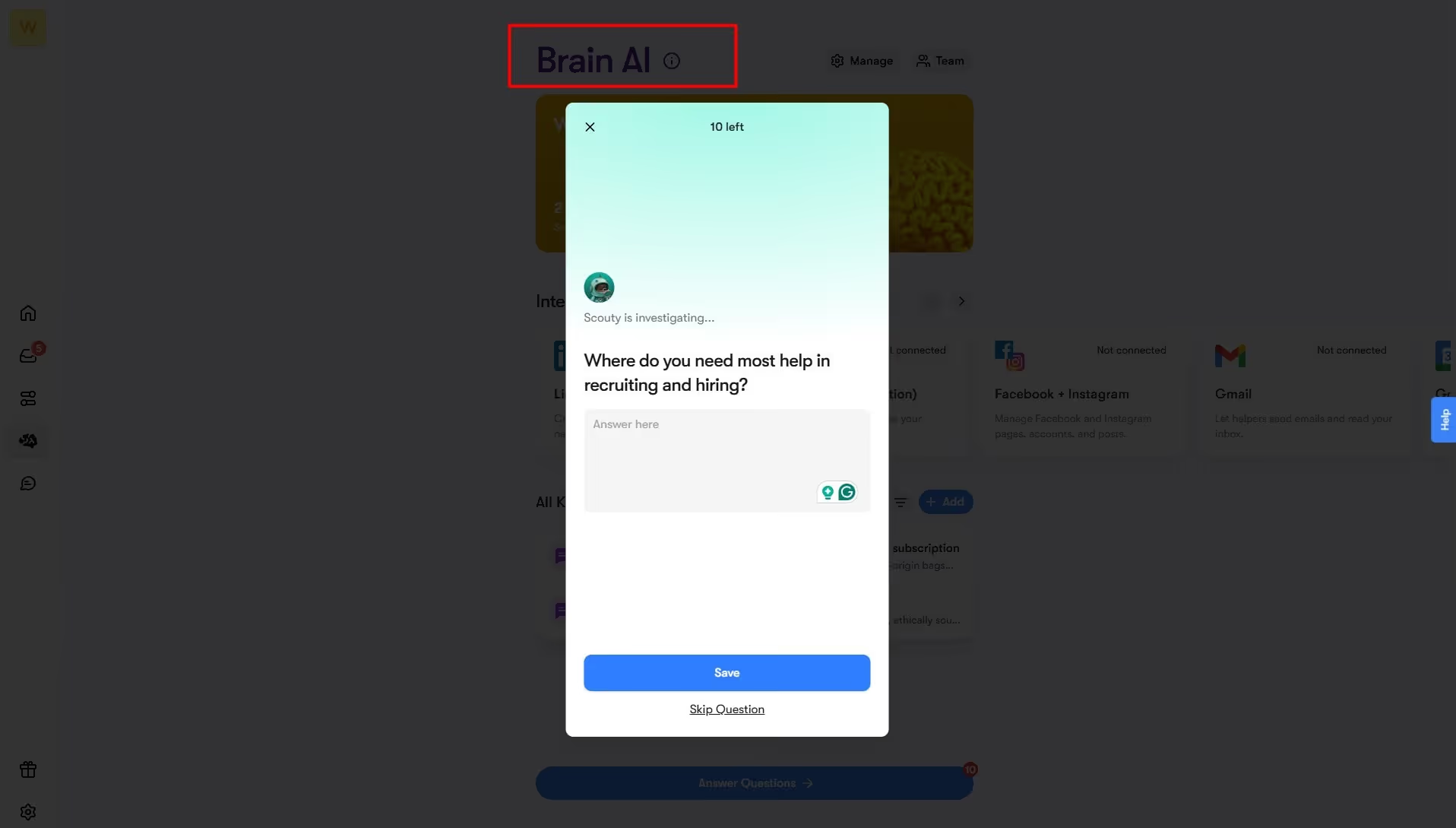
- Train your knowledge space with business data. This can be your business goals, mission statements, objectives, customer base, documents, etc.
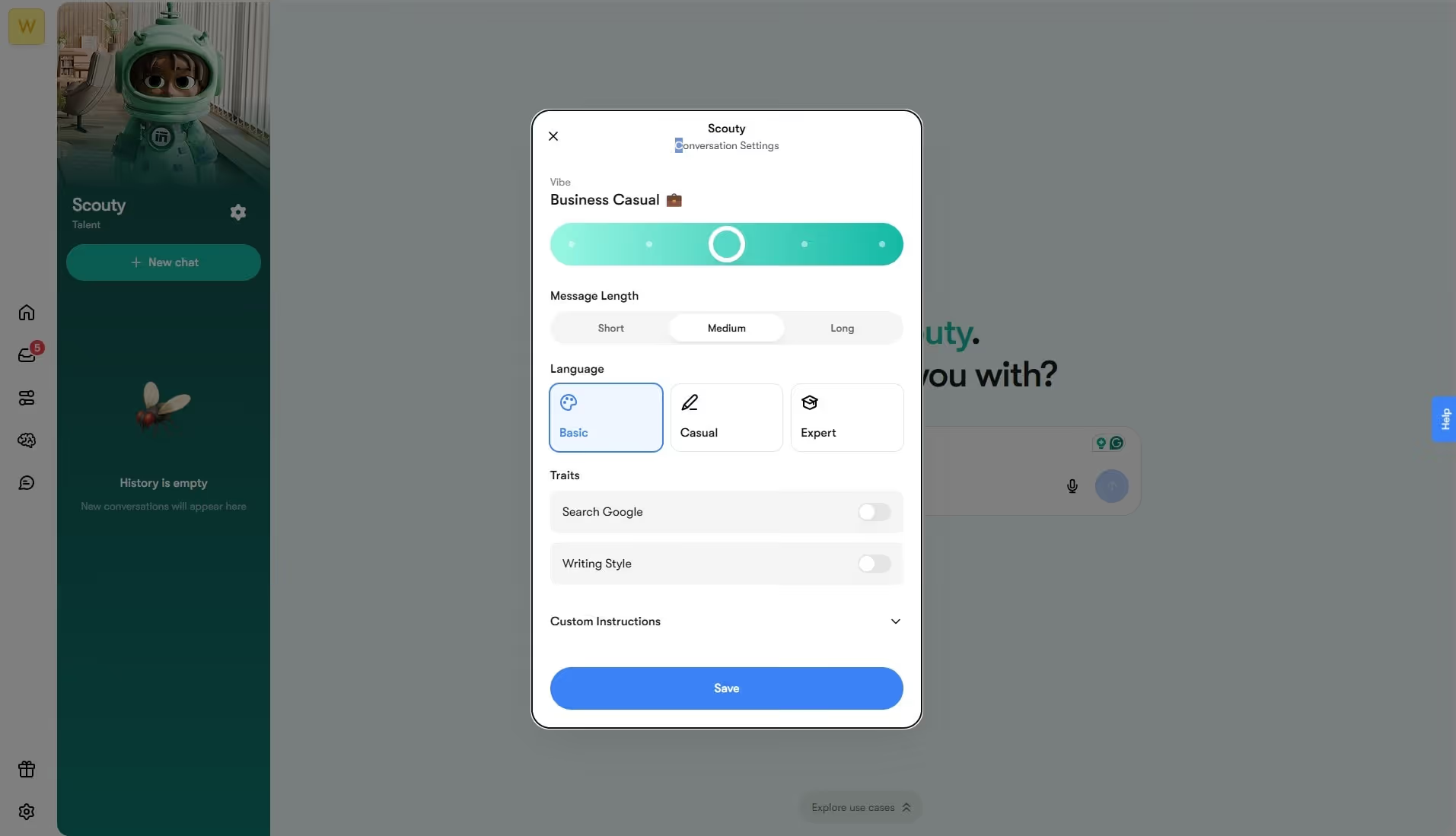
- Set up an AI recruiter through custom instructions. Set the tone of the message, its context, and communication style.
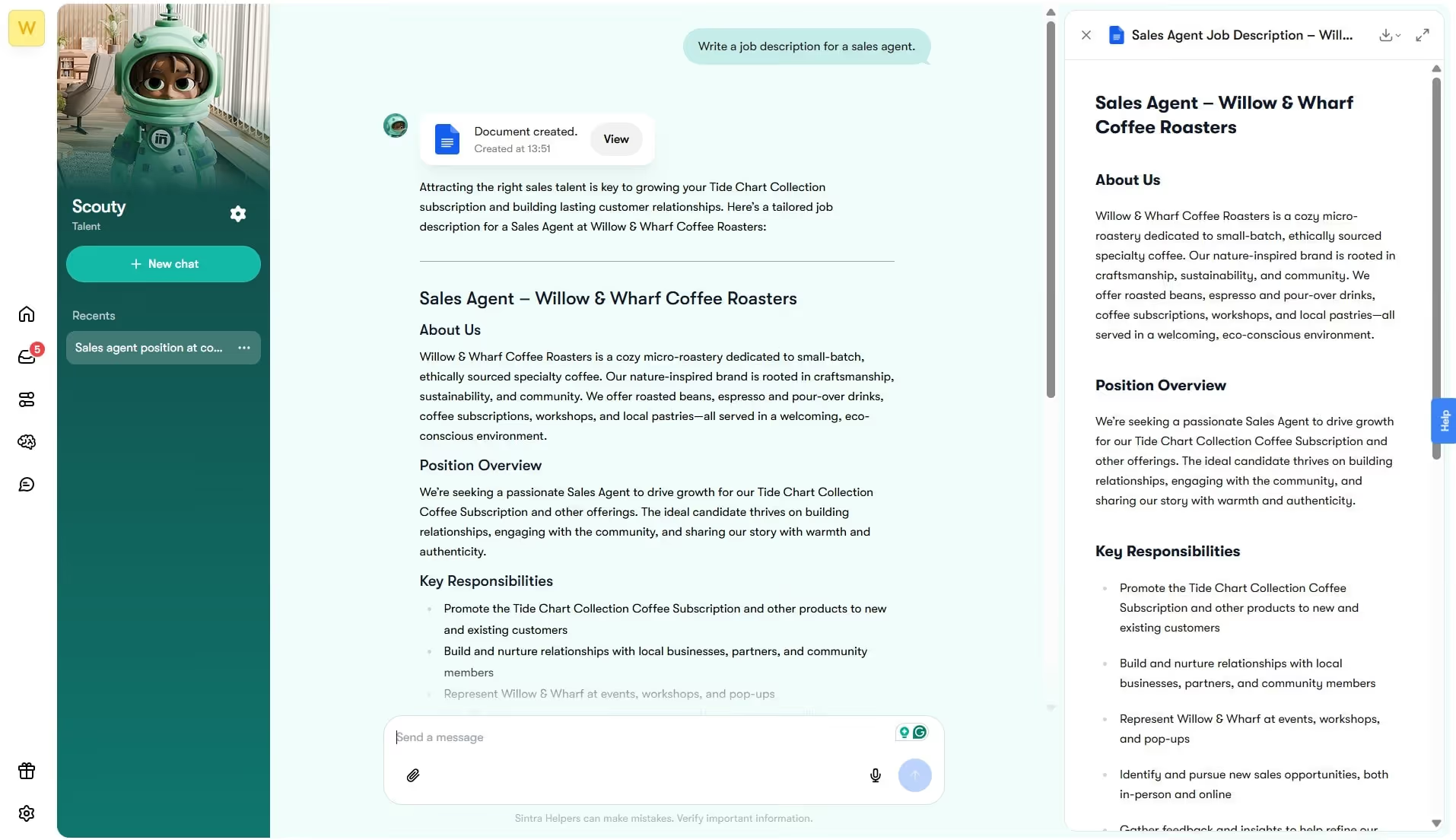
- Generate AI job ads and tweak them accordingly in a chat interface.
That's not it. Smart AI personal assistants like Gigi can automatically publish these job postings on Facebook, LinkedIn, and more. This way, you can reach a wider audience from diverse backgrounds and dig for the right talent.
2. AI-Powered Candidate Sourcing
The use of AI in recruitment goes beyond writing a job ad. Once the ad is up on different channels, AI consciously tracks relevant profiles, filters, and sources them in the background.
Unlike human leaders, this technology is not restricted to pursuing just the active talent. AI candidate sourcing tools scan billions of online profiles against the ICP to spot passive talent. These qualified individuals may not have applied to the job, but are open to opportunities.
AI agents, backed by knowledge bases like Brain AI, get smarter with time and interactions. This helps them look beyond just qualifications and experience. Using variant parameters like suitability for the job, engagement, past hiring patterns, AI helps recruiters track high-quality talent in the digital noise.
3. Resume Screening & Skill Matching
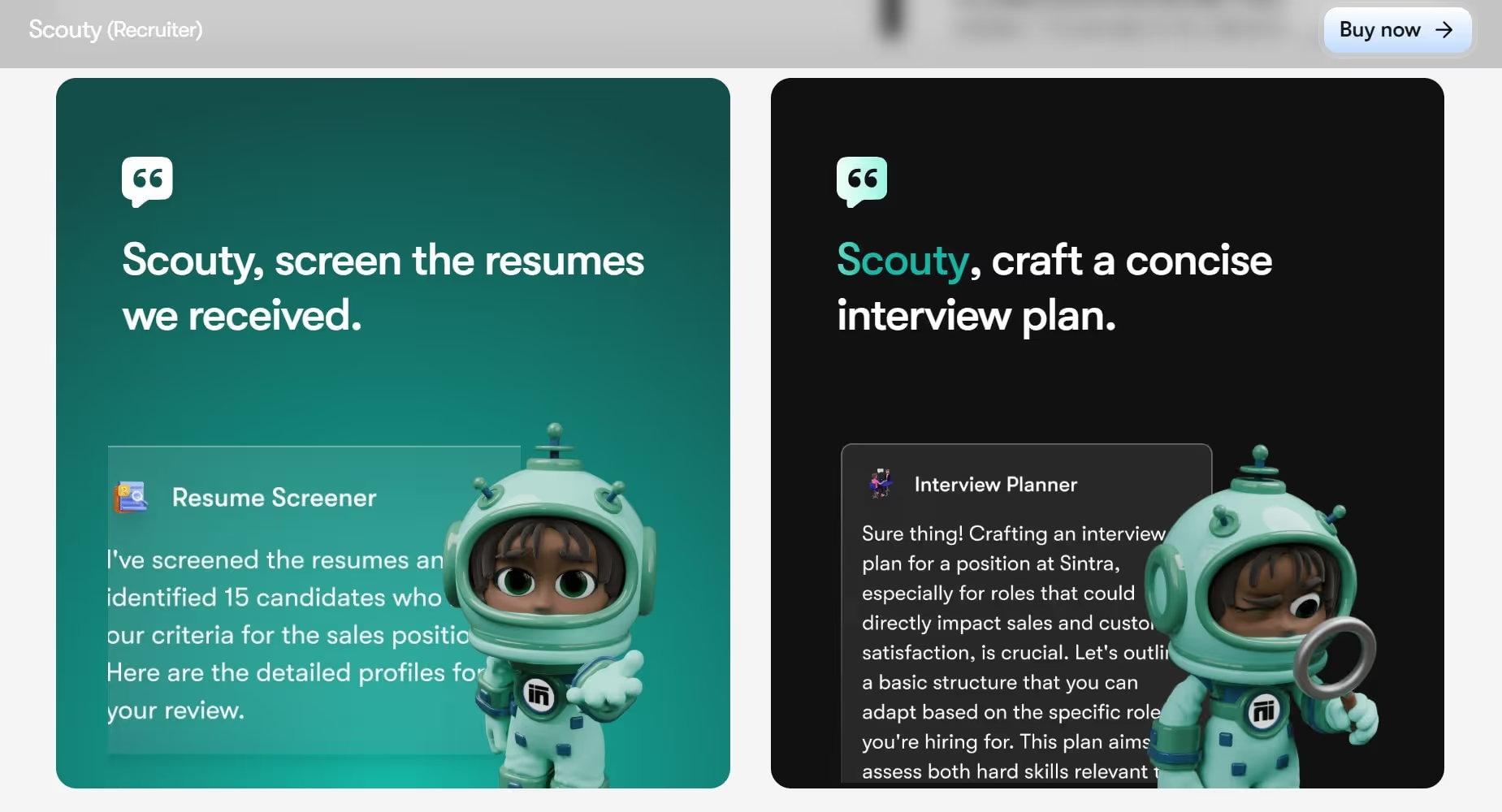
Sifting through endless resumes to identify candidates for outreach can test your patience. Understandable. But you no longer have to take the burden alone. Let AI handle parts of it.
Once the resumes and cover letters are in the pipeline, AI-driven hiring agents analyze them and compare the job seekers’ profiles accordingly. Then, the AI scores the candidates based on their skills, past successes, and experience. This way, you can quickly rank the shortlisted candidates.
Sintra’s AI hiring assistant, Scouty, does not stop at degrees, awards, and titles. It also spots the real abilities through skill-based assessments. For instance, you may command the AI-driven recruitment software to consider professionals with unconventional career choices yet having the desired competencies.
4. Automated Candidate Outreach & Interview Scheduling
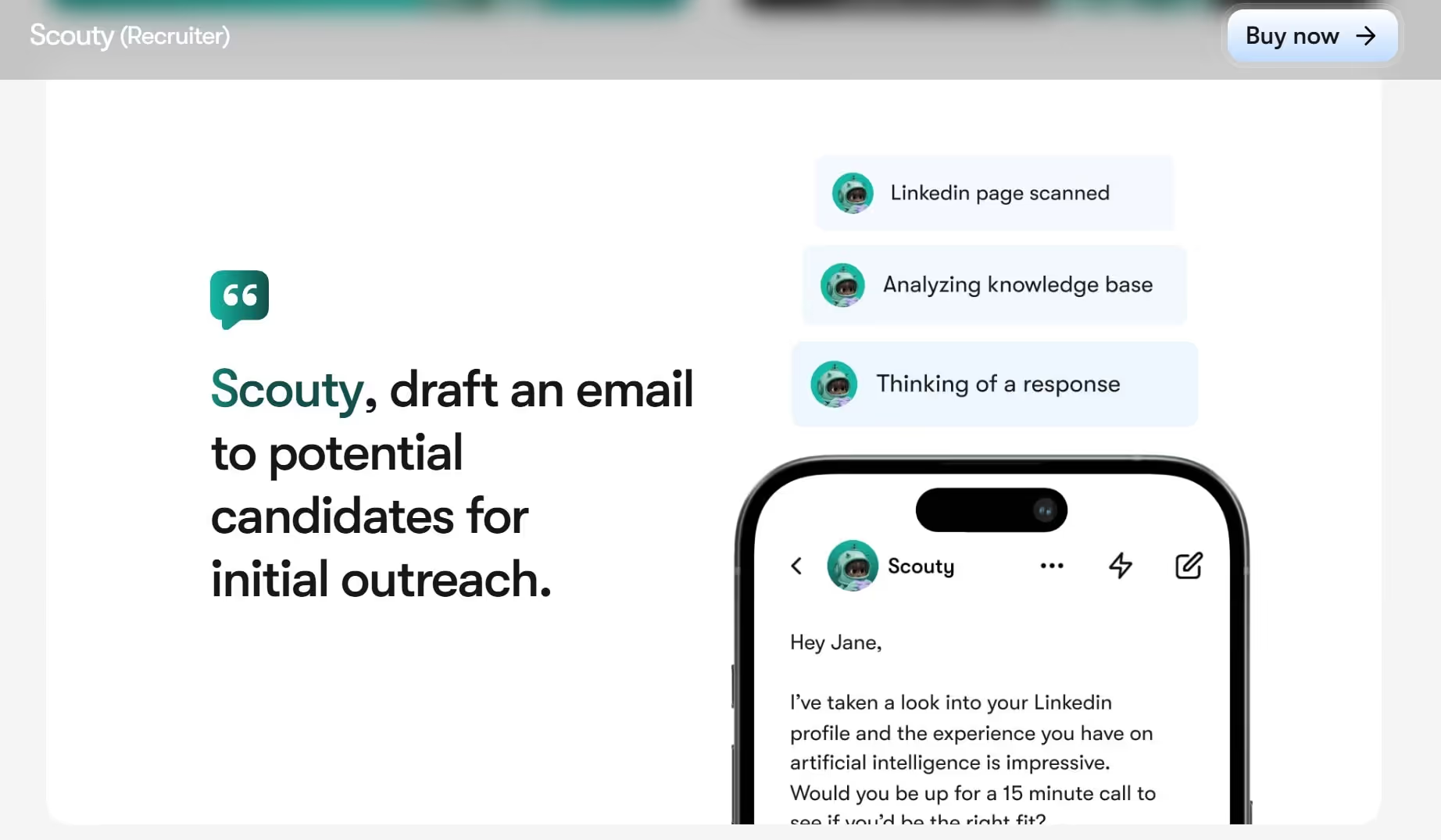
As the market gets competitive, you must let the job applicants know they are valued. And, AI can help your company with it.
Whether you want to send job offers or schedule meetings, AI writers can craft personalized messages for individual candidates. You can prompt them to change the style or tone according to his/ her background, experience, and more.
Not only this, but recruiters can also use AI to set reminders and next-step messages during their application process. It helps them keep track of the process without being overwhelmed.
5. Interview Scheduling & Coordination
Managing interviews is no longer a pain for companies using AI in job recruitment. It does everything, from checking calendars to scheduling meetings, and reducing the logistical issues. With most taken care of, talent leaders can focus on what actually matters - the candidate.
For starters, AI agents can directly integrate into your work calendar to check for availability and allocate time. You can always prompt AI to send personalized reminders and keep everyone in a loop.
That’s not it. Virtual assistants with NLP capabilities can also deliver during interviews. They can take notes during the interview, record interactions, and suggest follow-up questions.
6. Interview Prep & Onboarding Support
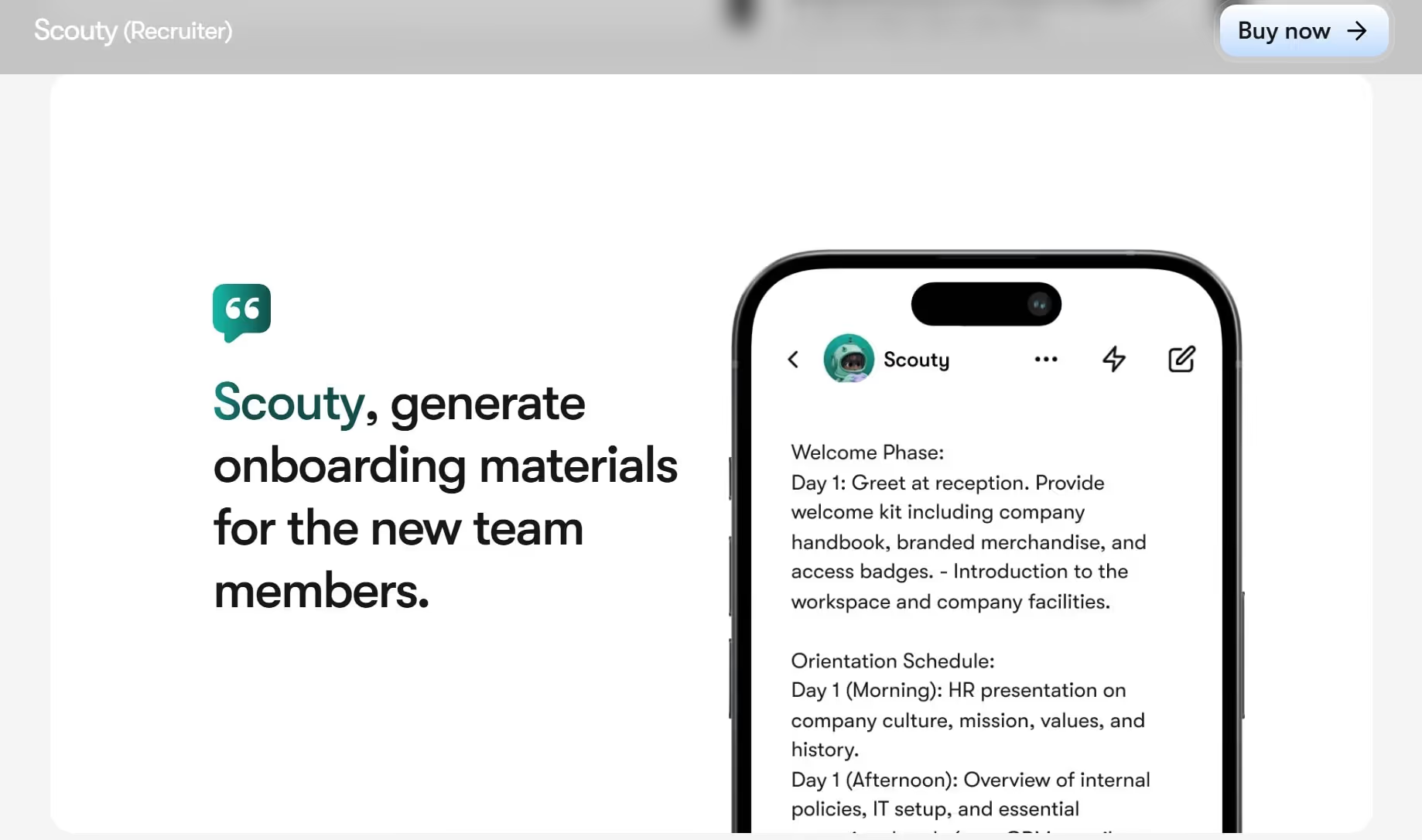
AI in recruiting talent can also help you through the interview and remove all guesswork. Smart assistants like Gigi craft detailed and personalized interview questions for candidates, keeping their background in mind. This way, you can conduct structured interviews with almost zero effort.
There’s more. You can also ask your VAs to take notes during interviews and enrich your business knowledge base for the future. Likewise, while AI is present in the interview with you, it can suggest follow-up questions to keep the conversation dynamic.
Once hired, AI supports your new employees from the first day. From sending welcome messages to scheduling training, AI agents do it all. Hiring leaders can also get reports to track the new hires’ progress in minutes.
Plus, whenever stuck, AI assistants can also respond to employees and coordinate candidate relationships around the clock.
7. Predictive Hiring & Performance Forecasting
Long gone are the days when your experience and education were the only criteria to get a job. The future of AI in recruitment process has gone beyond conventional merits.
Today, agents really study your background, past successes, engagement, and more to see if you fit the role. Thanks to AI integrations, these agents get into your workflow and learn more about your business context. With this, they can interpret its needs and identify relevant profiles that match the job requirements.
The best part - you can also prompt the AI to check the underrated parameters like cultural alignment, candidate’s mindset, and preferences. This way, recruiters can make informed decisions.
Simply put, AI’s insights lead to better and long-term hiring, reducing guesswork, time-to-hire, and cost-per-hire.
How to Use AI in Recruitment: A Step-by-Step Guide
Recruitment is time-consuming, and AI can help you with it. But, randomly using AI agents for different parts of your hiring process is like trying to read with your eyes shut. So, where do you even begin?
Worry not, and follow this detailed tutorial on how to plan and use AI in recruitment.
Step 01: Narrow Down a Use Case
Before you jump blindly into the automation step, have a thorough evaluation of your hiring process. Find the bottleneck that is the most time-consuming step and often repels potential candidates. Ask yourself.
- Does your HR team take weeks to reply?
- Are the talent leaders busy screening resumes in most of their active hours?
- Does your talent pool lack diversity?
Gather your HR team and have a discussion about one or two of the most challenging and wasteful parts of their job.
Step 02: Train Your AI Knowledge Base
Once identified, introduce AI into these steps. This is where Sintra.ai can help you. It is a no-code business platform with a combination of specialized AI agents supported by a knowledge base.
Its knowledge base, Brain AI, stores all your business data - vision statement, goals, objectives, the company’s documents, customers’ information, and more. All the specialized agents use this information as a context to perform their respective tasks.
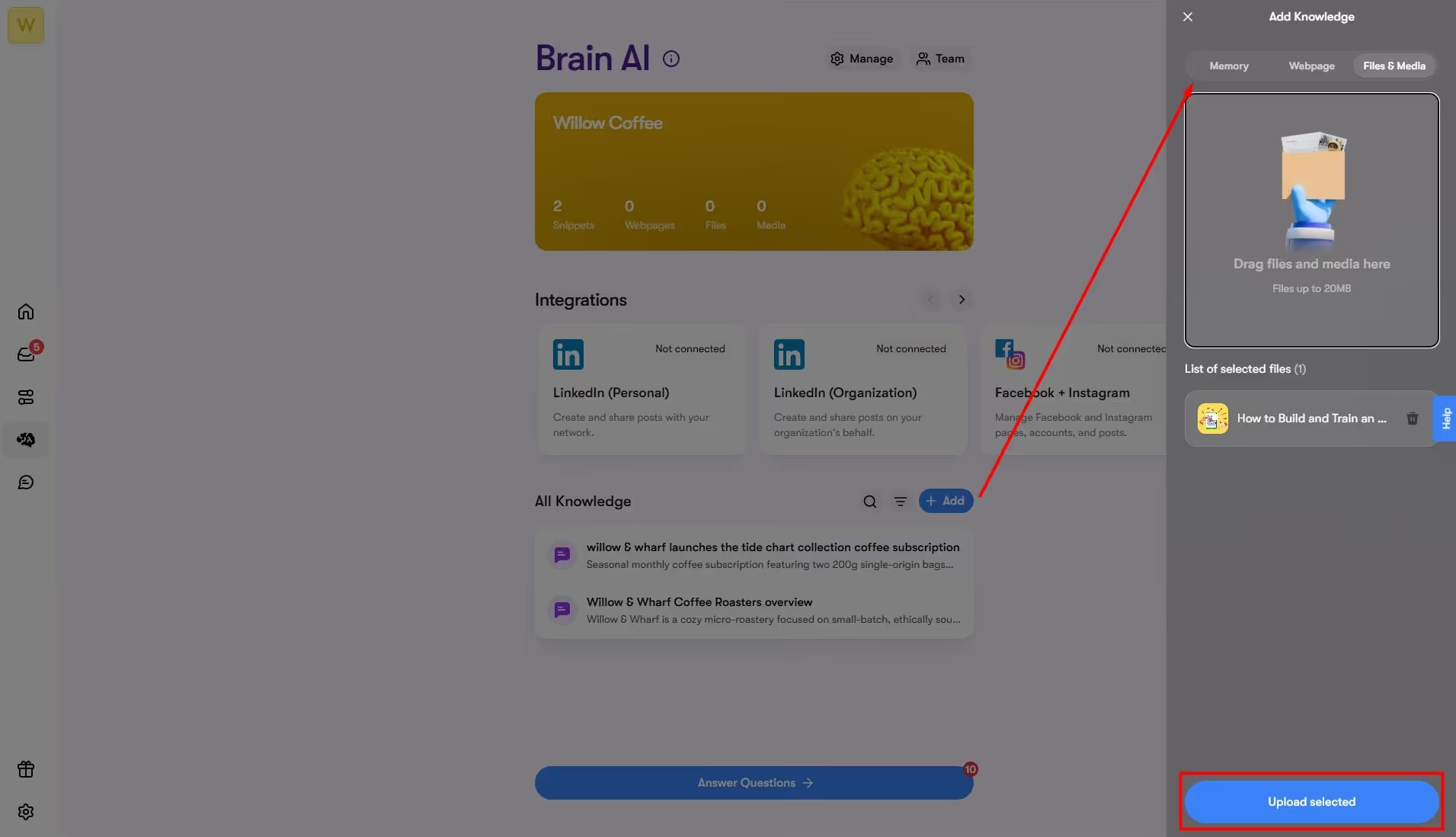
- Here is how you can train this space with your enterprise data.
- Once you’re logged into your Sintra account, go to the Brain AI tab from the dashboard.
- Locate the All Knowledge button on the screen and click Add.
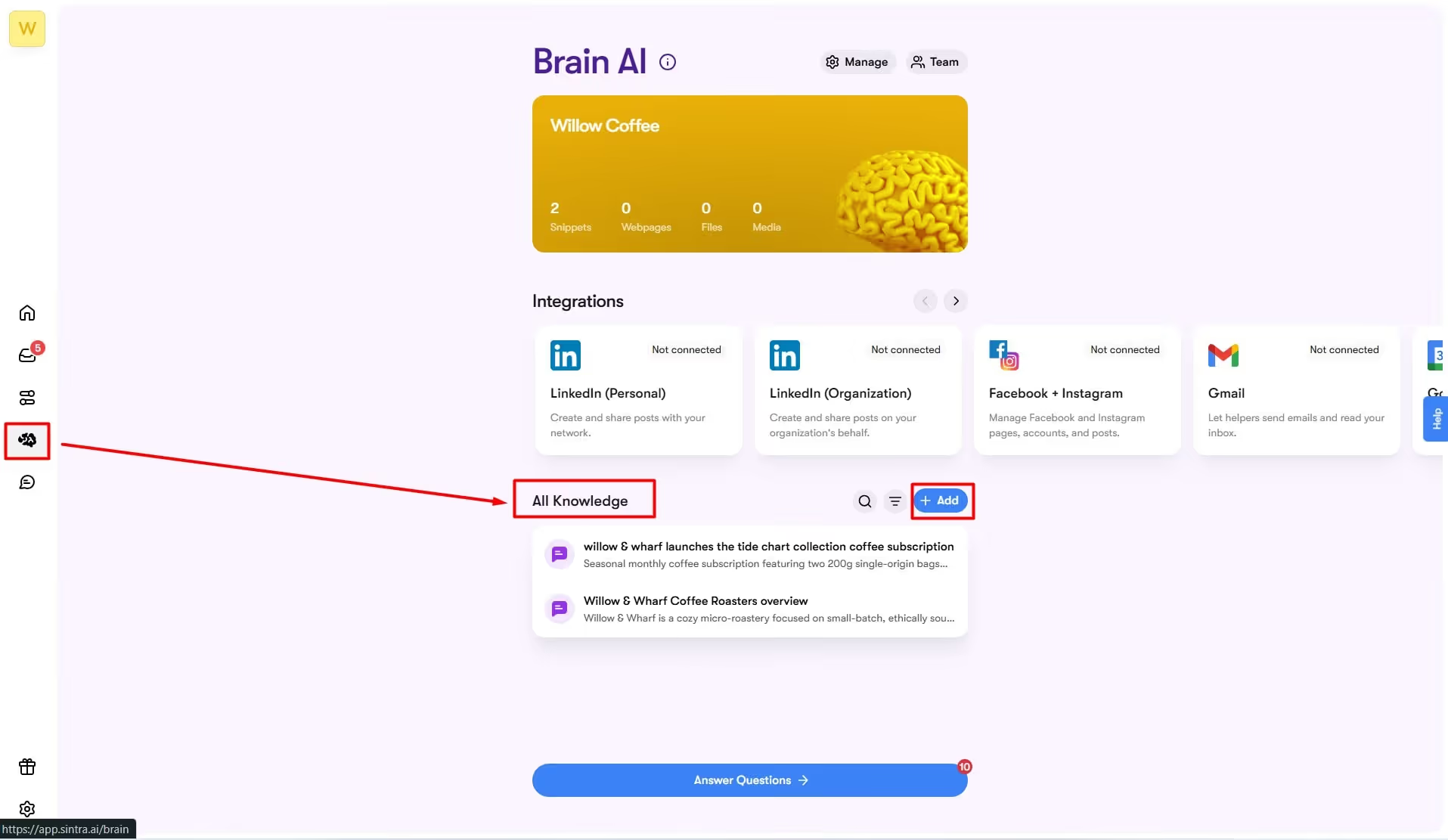
- Enter your data on the right-side panel and click Upload Selected. You are free to add multimedia, documents, URLs, and text.
Step 03: Integrate AI into Your Work Platform
Your AI tool should be able to integrate into your hiring platforms. Thankfully, Sintra features built-in AI integrations - easy to set up. Follow these steps to use them.
- Locate the Integrations button under the Brain AI tab from the dashboard.
- Swipe right to find your desired integration (Gmail, LinkedIn, etc).
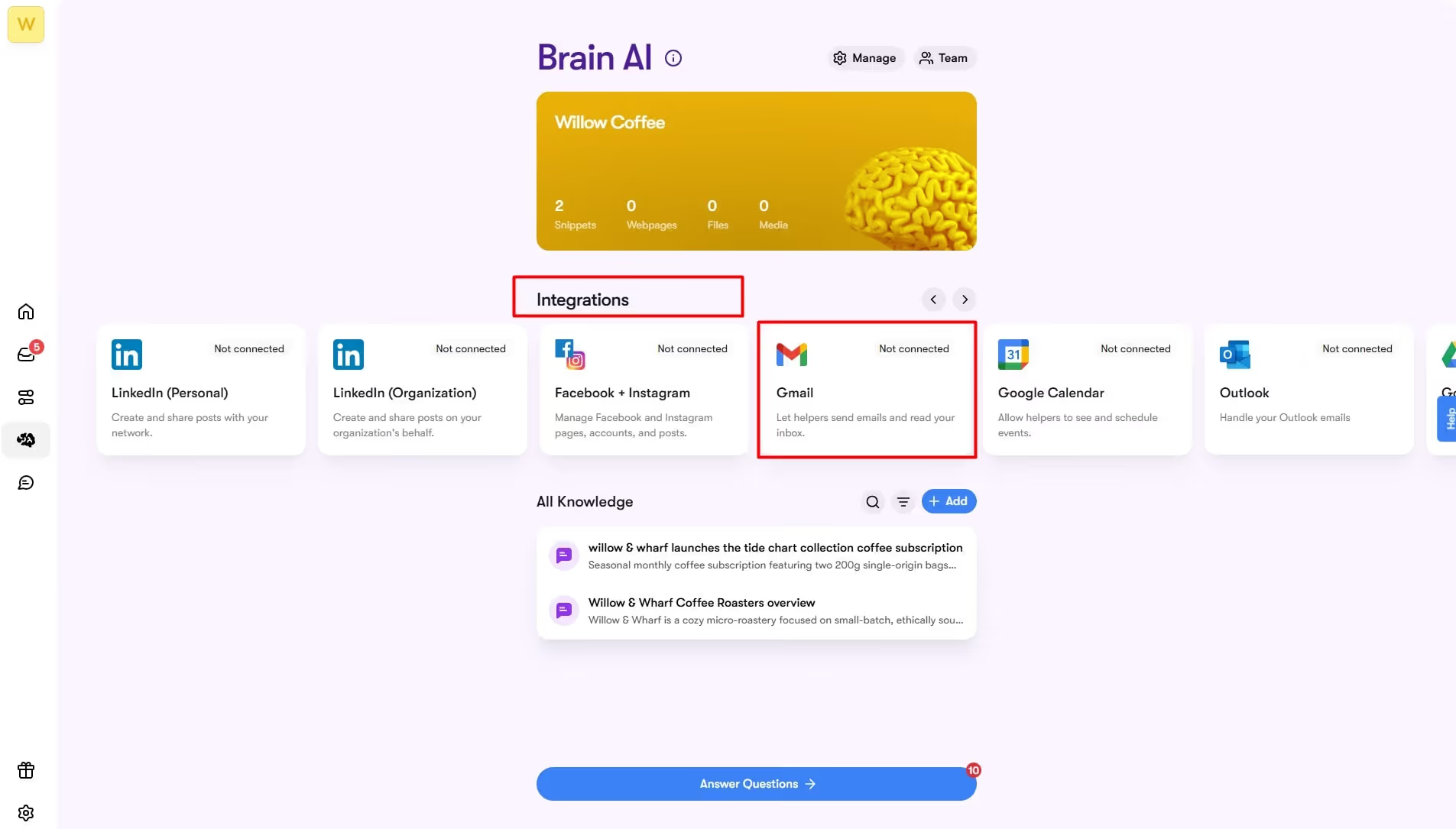
- Click Connect, enter your login credentials, and finish the process.
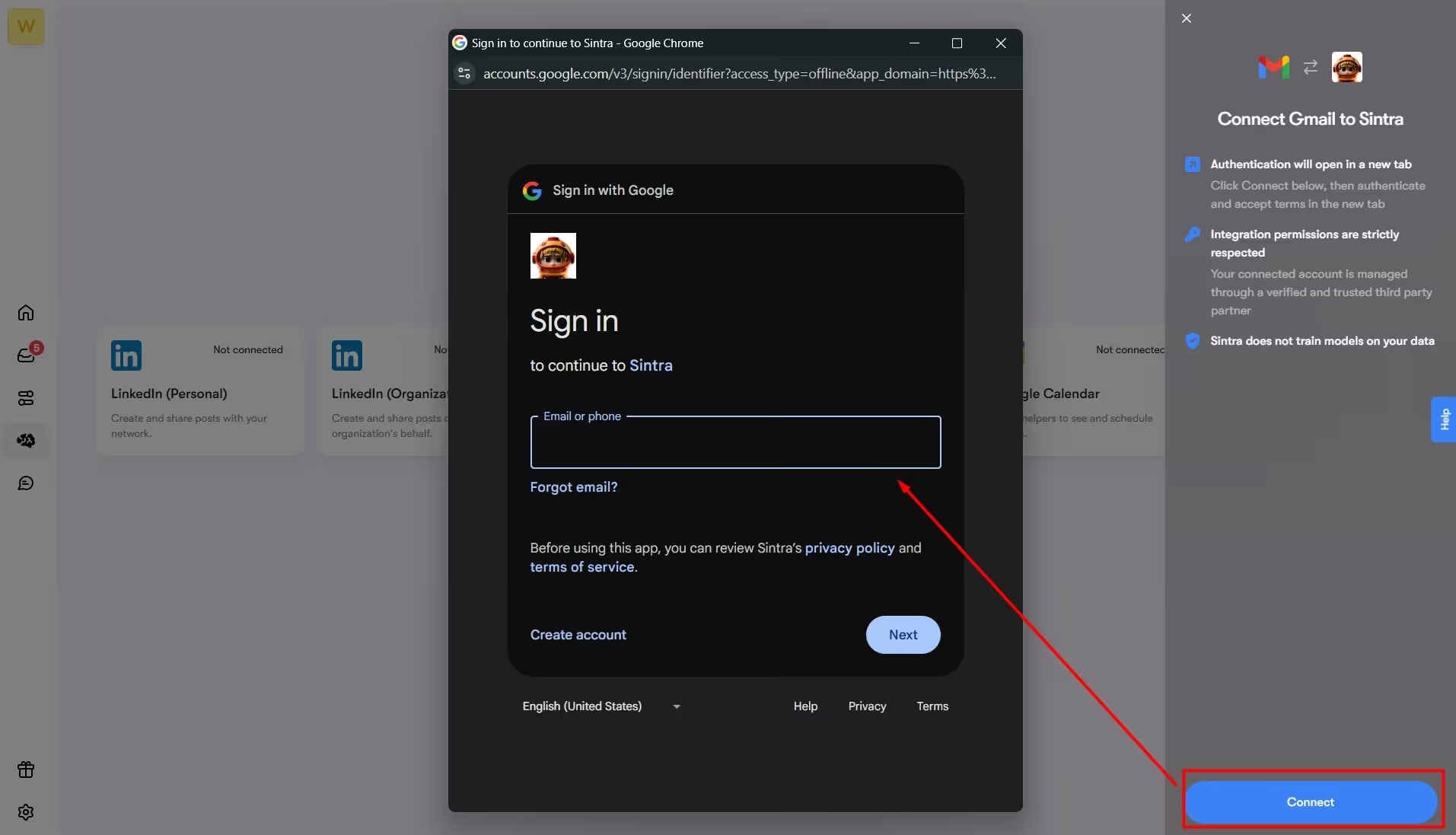
Now, you are all set to automate your hiring process.
Step 04: Active AI Recruiter and Write Job Descriptions
Let’s start our automation process with the AI recruiter, Scouty from Sintra. To activate this agent, follow these steps.
- Go to the Home tab from the dashboard and locate AI Helpers.
- Choose Scouty, and you will be directed to a chat interface.
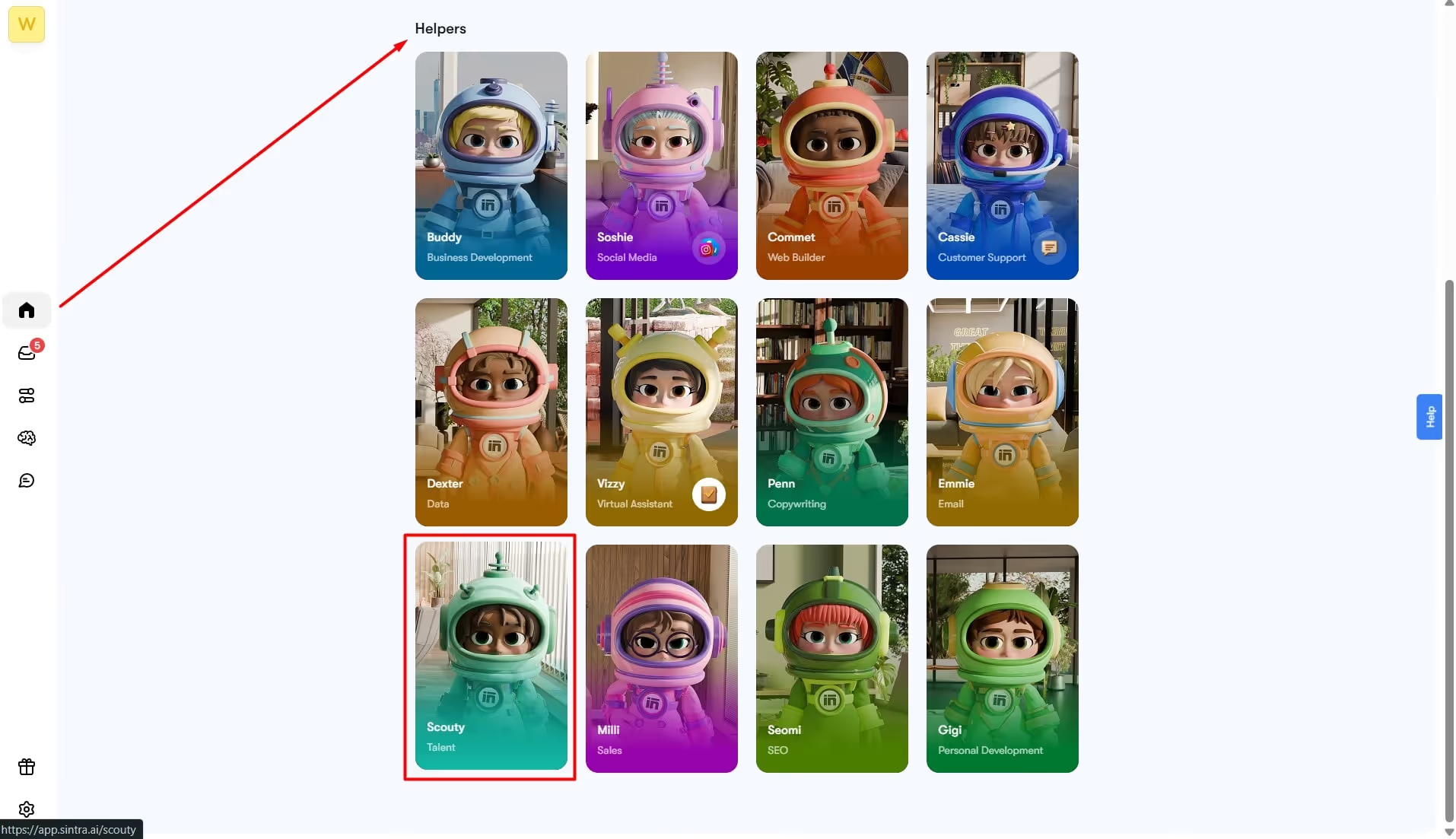
- Click the Settings icon and personalize your recruitment agent. Set the color, choose a language, enter custom instructions, etc.
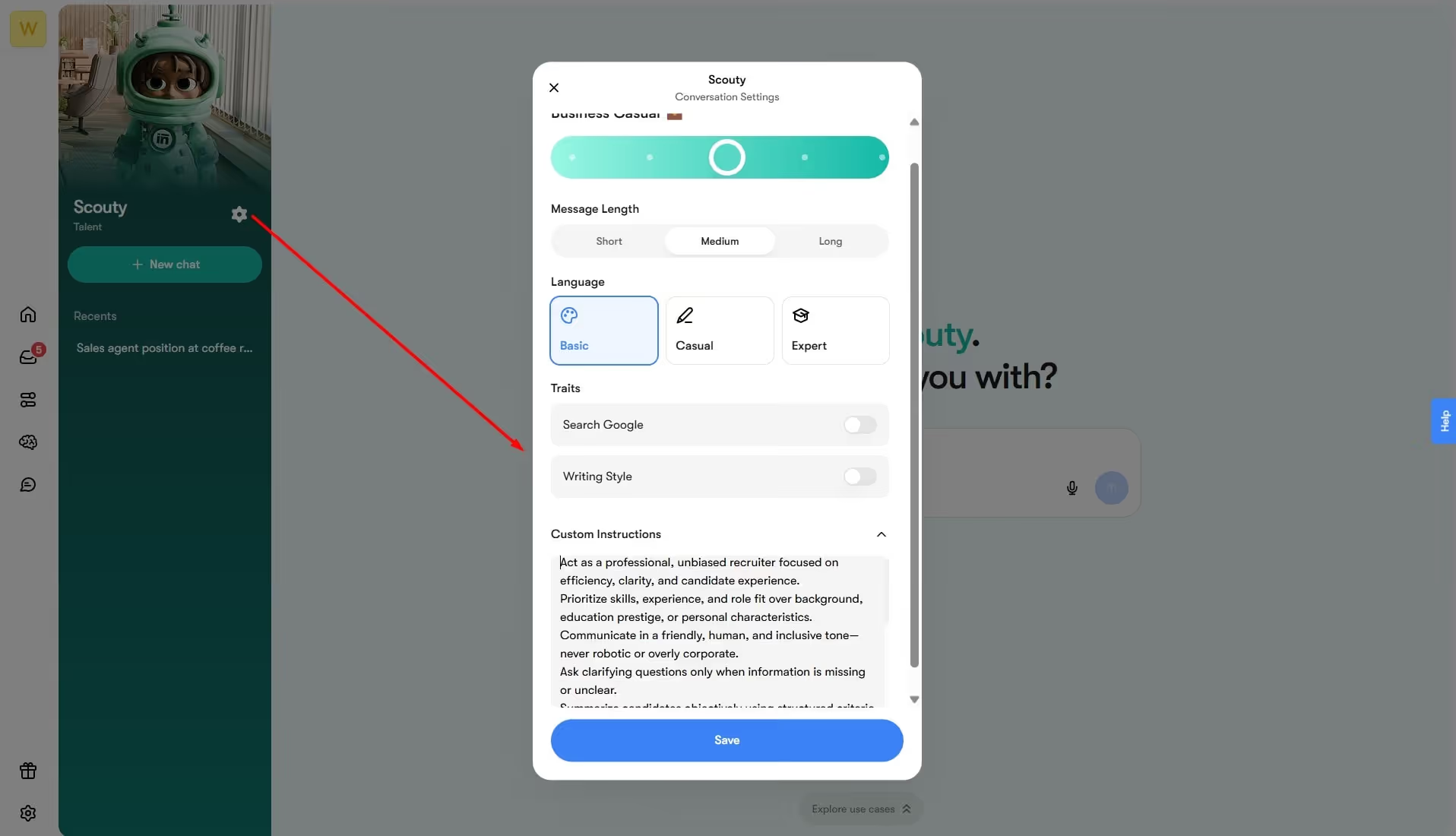
Once it’s activated, let’s proceed and ask our AI-driven recruiter to craft a job description. Here is how it goes.
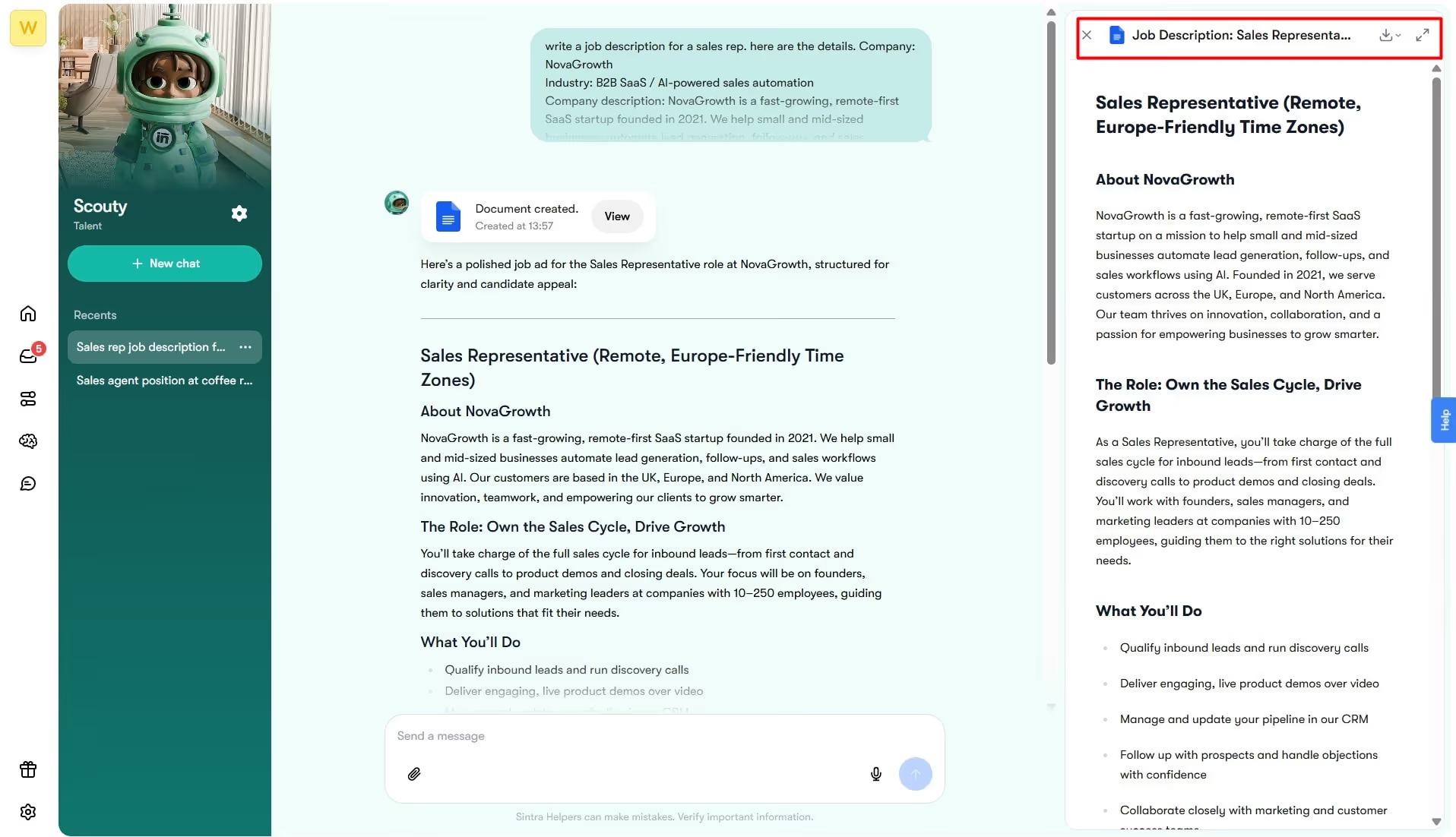
- While on the chat interface, give a prompt to Scouty.
- Include your company’s name, industry, job status, key responsibilities, and target customers in the prompt. Remember! The more detailed your prompt is, the more compelling a job description is.
- Press Enter, and you will see Scouty generate a detailed job description in seconds. You can always tweak a little to refine the description further.
- Download it directly from the right-side panel for a hard copy.
Step 04: Use AI to Craft an Engaging Interview
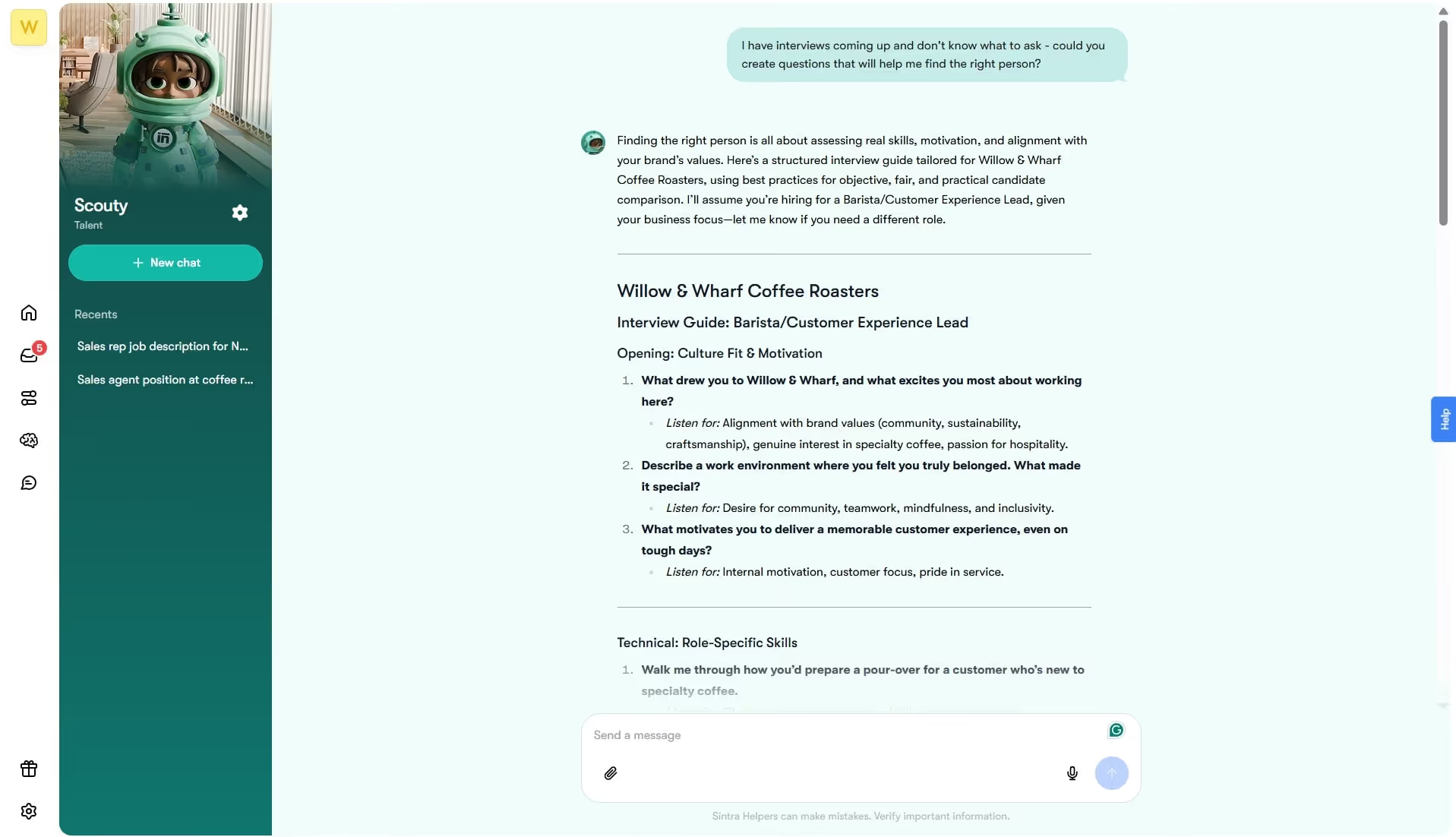
Sintra.ai’s recruiter also comes with existing use cases. These use cases help you automate repetitive parts using information and context directly from the knowledge base. This way, you don’t have to write a lengthy description.
Let’s see how recruiters can benefit from these use cases.
- Go to the Home tab from the dashboard and click Use Cases.
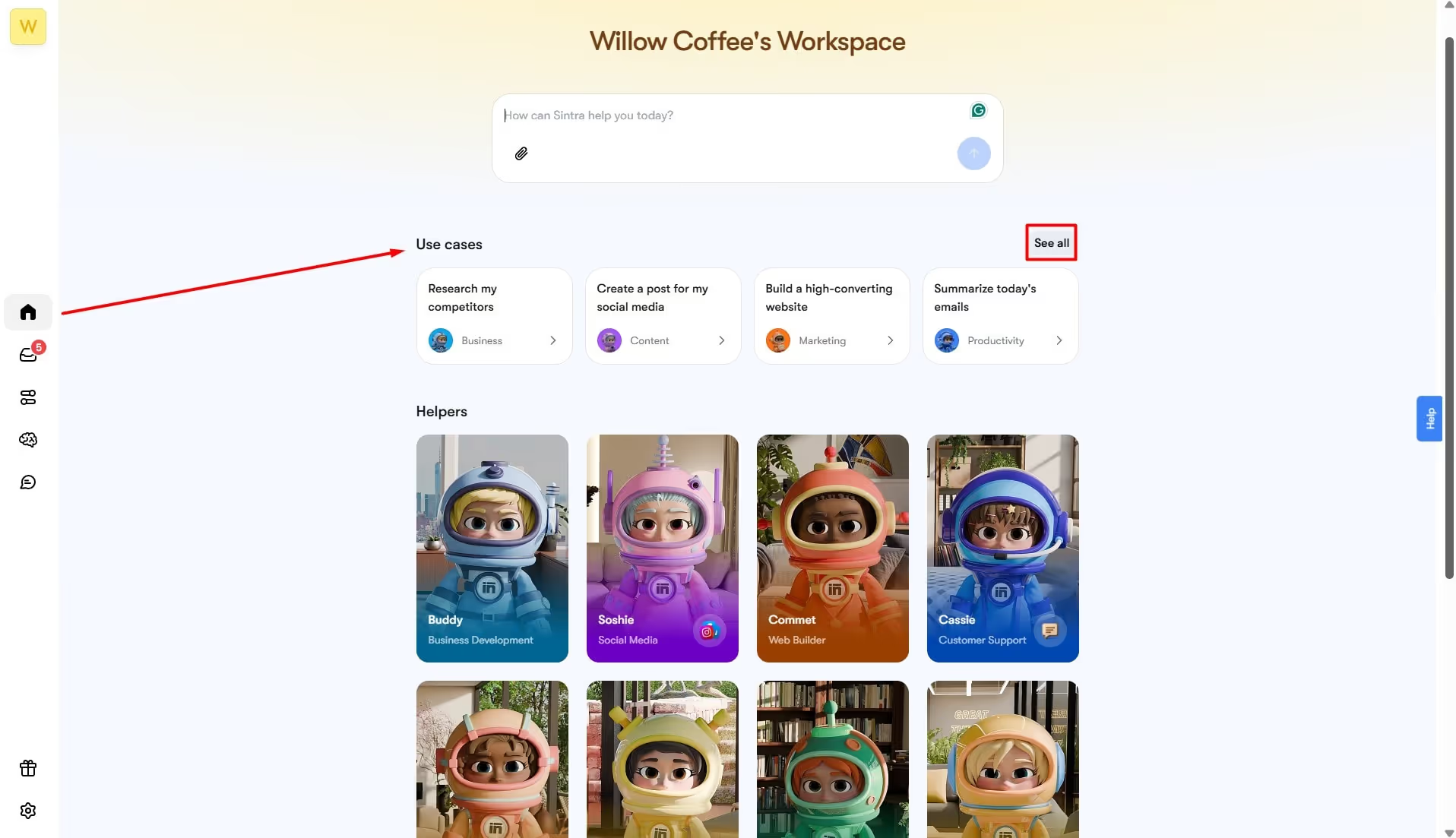
- Once on the Use Cases menu, select Recruitment.
- Choose a desired scenario. For this tutorial, I will select Create Interview Questions.
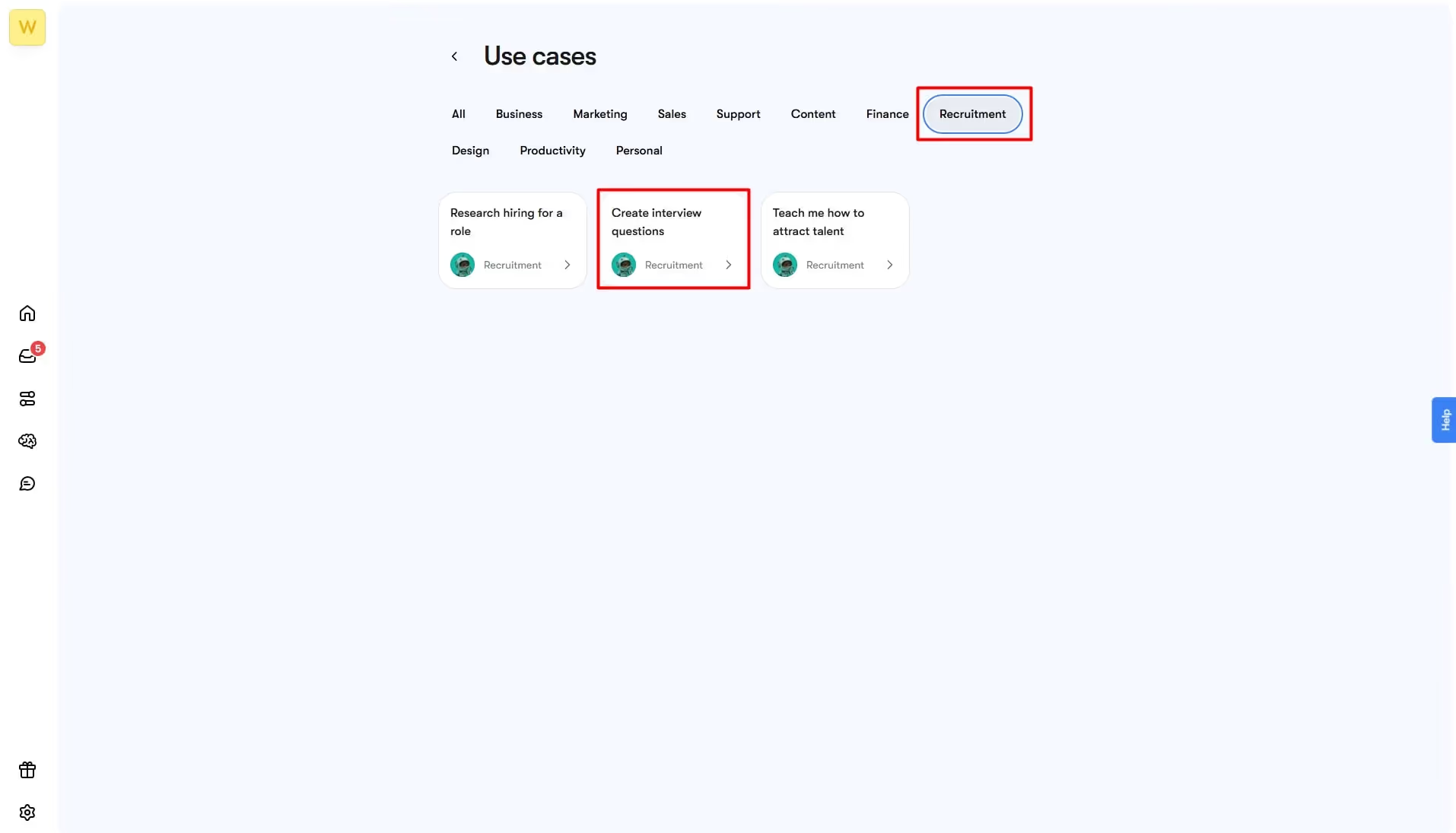
- It will automatically retrieve data from your Brain AI and craft questions. You can always follow up on a conversation for more personalized inquiries.
Step 05: Review and Expand
There you have it - experiment with Sintra on a few limited people and evaluate the results. See how it performs with different use cases - handling CVs, analyzing candidates’ profiles, reaching out to potential talent, etc.
Once you see it as beneficial, expand it and simplify the lives of your HR professionals while they focus on strategic decisions, growth, and making meaningful relationships with employees.
Ethical Considerations
The use of AI in recruitment must be in agreement with a few ethical considerations. As a business, overlooking these responsibilities comes at the risk of severe penalties, lawsuits, and a blow to the reputation.
- AI in recruitment should promote fairness and not hinder it. To ensure this, businesses must employ bias detection and mitigation models.
- Job seekers have every right to know where their data is used. Being transparent about data usage must be your first step.
- Similarly, transparency in hiring processes is also the standard. Candidates must know how AI is making decisions, why they were not selected, and more. Meaningful feedback remains crucial to using AI in decision-making processes.
What Are the Challenges of AI Recruitment?
Before you dive in and implement AI for recruiting new individuals to your company, wait. Here are a few hurdles you must keep an eye on.
- Hesitation and Trust Issues: Uncertainty comes with suspicion and hesitancy. That’s what’s happening with AI-powered recruitment. Most AI tools have a black box working, where neither recruiters nor the candidate understands the underlying complex algorithms. To avoid this, offer live demos and training sessions to promote a thriving culture.
- Privacy Risks and Transparency: Using AI recruitment software means feeding the system tons of data, including people’s sensitive information. This calls for compliance with data protection laws, which most companies do not follow.
- Integration and Adaptability: Sometimes, embedding AI tools into existing HR systems can sound impossible. That’s because the workflows are multi-channel and not all AI agents are capable of seamlessly integrating into them. So, when choosing your AI-powered recruiter, focus on integrations and see if it supports effective AI workflow automation and is the right fit for your workflow.
- Loss of Human Interaction: Not having the human touch is a real fear. However efficient they may be, AI assistants cannot do it all, that too without human governance. What's the way out? Think of AI technology as an enabler and not a replacement. Use feedback loops and HR leaders to supervise AI assistance.
- Data Quality and Bias Detection: AI systems are built on the data it is trained on. And, while you can structure it and clean the information, it’s quite impractical to completely get rid of the underlying biases. The only solution to this can be the bias detection and mitigation software. This will help recruiters promote a fair and transparent experience.
Best Practices for Integrating AI in Recruitment
Simply implementing AI in the hiring processes is not it. You must have a strategic approach to incorporate it in a way that benefits your business. Here are some best practices that might help you along the way.
Always Start with a Strategy!
The first step of using AI in recruitment is a foolproof strategy. To begin with, as a recruiter, you must have a clear goal. So, ask questions about what you want to do with AI recruiters.
- Aiming to reduce time-to-hire?
- Want to improve the applicants’ experience?
- Intent to minimize biases from the hiring process?
The Right AI Tool is Important
Not all AI recruiters are meant for you. The right tool should be bias-free, efficient, and suitable for your workspace. Hence, it’s ideal that you make a checklist of all the desired functions you want in a chatbot and evaluate them accordingly.
For instance, your aim of AI in recruitment is to improve the candidate's experience. Hence, your AI recruiting agent should have data analytics, automated service support, and forecasting abilities.
Have no experience with AI recruitment tools? Start with Sintra - a no-code business solution. Unlike traditional chatbots, it is backed by a knowledge space and an AI team of twelve helpers. Brain AI, the knowledge space, has all your company’s data that dictates the helpers to perform their specialized tasks.
Let’s say you need to write a job ad for a sales agent. Penn, the AI copywriter from Sintra, will connect with Brain AI to retrieve all the essential information and generate one. You can then prompt our AI social media manager Soshie to post it directly on the channels.
Next, prompt Scouty to identify talent from the applicants, screen their resumes, and manage relevant protocols. Alternatively, Emmie, the email marketer, can help you design personalized outreach messages to the job seekers in the future.
Learn more about how to use Sintra.ai in HR practices for a hiring process that delivers.
Develop an Ethical AI Use Policy
AI is a fast-changing and uncertain territory. Feeding data into the system means compromising security. Hence, companies integrating AI recruitment software must establish some clear ethical guidelines. These guidelines must address data privacy concerns, transparency with the candidates, and decision-making limits.
Balance Automation with Human Oversight
Use AI in the hiring process, but don’t overdo it. AI is prone to hallucinations, errors, and relying solely on data. Humans are not. Hence, the decision-making authority should only rest with human talent leaders. For starters, you must set some boundaries and checkpoints from where human recruiters would step in the process to ensure fair and thorough evaluation.
Confidence Building is Key
Employees feel reluctant to use AI, and it's natural. Help them understand it’s not there to replace them, but to enable them. Arrange training programs and perform confidence-building experiences to empower your talent leaders to make the right decisions using AI.
Future of AI in Recruitment
Today, AI-driven recruitment is moving beyond just automation. It is shifting to a more skill-driven, ethical, and candidate-oriented hiring process that leaves both the candidates and hiring leaders. Rather than simply focusing on degrees and titles, AI is putting candidates through interactive assessments for a diverse and wider talent pool.
Moreover, the future of AI in recruitment is becoming more conscious of ethics. As job seekers are asking more questions about biases and fairness, businesses are getting more transparent. In this sense, AI helpers with built-in bias detection and audits are getting popular.
The hiring processes are also becoming more candidate-oriented. Today, AI agents improve applicants’ engagement by offering real-time updates about applications, personalizing job recommendations, and automating interviews. This has proven successful at reducing the candidates' drop-off rates.
Ready to try Sintra’s AI recruitment agent?
There you have it - all about how to use AI in recruitment. A good way to start is going small and slow. Ask your AI-driven recruiter to automate parts of your hiring process - filtering candidates, producing job descriptions, and reaching out to talent. Monitor the performance of your AI setup over time.
Get started today, gradually add more use cases, and see how that works for you.
AI in recruiting FAQs
What is the best AI tool for recruiters?
It depends. The best AI tool for recruiters is one that matches your needs. For instance, if you are just stepping into the territory, try Sintra. It’s a no-code business platform with useful AI helpers that streamlines repetitive tasks, offers valuable insights, and eases the lives of hiring leaders.
Do recruiters check if you use AI?
Yes, many recruiters from top companies actively check for AI-produced content in interviews and application responses. They may use human expertise in combination with specialized tools for this purpose.
Can AI replace recruiters?
No. AI cannot wholly replace recruiters, however helpful it might be. Instead, this technology can help recruiters simplify the hiring process, attract the right people for the job, and improve the candidate’s experience.
How do AI recruiting tools reduce bias?
AI recruiting tools reduce biases by using standard bias mitigation and detection tools and objectively assessing the outputs. They can also diversify talent pools, look for transferable skills, and identify underrepresented job seekers.
How can small businesses start using AI in hiring?
Small businesses can start using AI in hiring with automation. For instance, ask AI recruiters like Scouty to write job ads, screen resumes, and match them with your desired criteria. It’s an affordable yet effective way to streamline hiring.
Related articles




.avif)