What is an Implementation Plan, and How Do You Create One?

Table of Contents

Quick Answer: What is an Implementation Plan?
An implementation plan is a documented, step-by-step roadmap for executing a strategy. While a strategy defines what you want to achieve and why, an implementation plan clarifies how the work will be carried out, who is responsible, when tasks happen, and what resources are required.
A strong implementation plan example shows how objectives are broken into concrete actions by defining goals and measurable outcomes, scope boundaries, sequenced deliverables, ownership, timelines and dependencies, and key risks.
Without an implementation plan, teams lose alignment, ownership becomes unclear, and progress is difficult to measure.
Projects need more than good ideas to succeed. Without a clear plan, even well-intentioned initiatives can turn into confusion, rework, and missed deadlines. The clarity gap is a real problem inside organizations - 56% of executives say they're clear on their organization's must-win battles, but that drops to 44% of senior managers and just 27% of middle managers, and leaders with clarity are more confident in rapid adaptability at 31% versus 14%. Teams may agree on the goal, but if there is no shared roadmap, progress becomes inconsistent and hard to manage.
Think about building a house without a blueprint. You could start laying bricks and installing walls, but the end result would be unpredictable and likely unstable. The same principle applies to business initiatives. An implementation plan acts as the blueprint that guides how a strategy turns into real work.
In this article, you will learn what an implementation plan is, what it should include, and how to create one that helps teams execute with clarity and confidence.
When You Need an Implementation Plan
You need an implementation plan whenever work involves multiple steps, multiple contributors, or a defined sequence. It clarifies responsibility, surfaces dependencies, and establishes a clear path from start to finish.
Teams typically need a project implementation plan when:
- Work Spans Functions or Roles: When multiple groups contribute to the same outcome, responsibilities and handoffs must be clearly defined.
- Processes or Systems Are Changing: Updates fail when teams implement changes differently or out of order.
- Tasks Have Technical or Operational Dependencies: Work must happen in a specific sequence to avoid rework and delays.
- Timelines Are Fixed or High-Risk: Time-sensitive initiatives require precise coordination around who does what and when.
- Lean Teams Need Structure: Small teams and founders still need clear sequencing and ownership when rolling out changes.
If execution relies on more than one person or step, an implementation plan is needed.
Key Components of an Implementation Plan
An implementation plan brings together the essential details that guide execution from start to finish. It typically outlines:
Goals, Scope, and Outcomes
A solid project implementation plan keeps three things distinct: goals define direction, scope defines boundaries, and outcomes define what success looks like.
The most common mistake is conflating activity with outcome. Knowing what you want to achieve, by when, and how you will measure it is what gives teams a basis for making decisions when priorities shift. Without that clarity, execution stalls because there is no shared reference point for what done actually means.
Scope defines what is included and what is not. Without it, work expands until the original objectives are at risk.
Roles, Ownership, and Accountability
Clear ownership keeps execution on track. Each major outcome needs one person responsible for coordination, decisions, and raising blockers early. Execution can be shared across contributors, but ownership should stay singular. Roles should reflect function, and accountability for each outcome should be clearly assigned, regardless of team size.
Timelines, Dependencies, and Constraints
Timelines in a strong planning and implementation process exist to show sequence and coordination, not to lock teams into dates that become outdated.
Most timelines fail because dependencies are not clarified up front. When teams don’t know what must happen before something else can begin, small delays turn into major slowdowns. Constraints like budget, staffing, and tool access define what is realistically achievable. Ignoring these realities creates plans that look solid on paper but collapse in execution.
Steps to Create an Implementation Plan
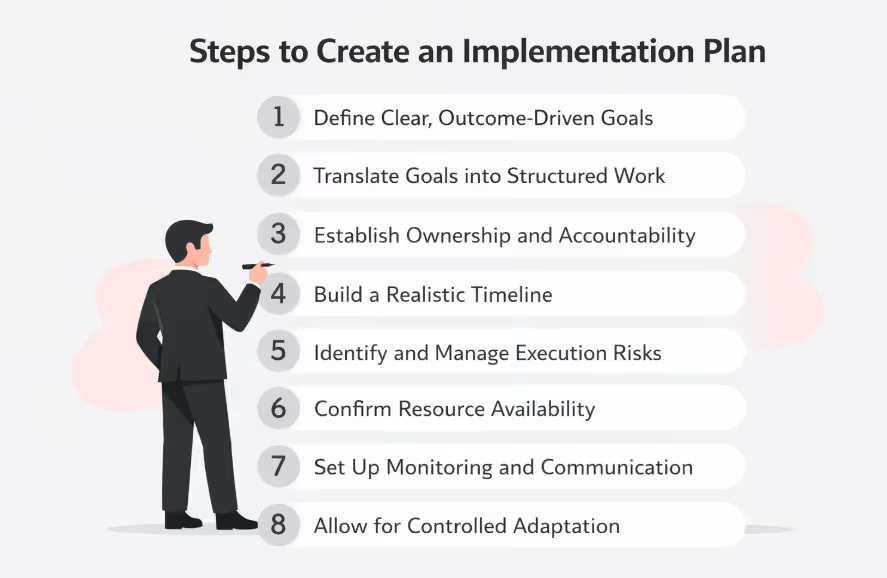
A strong plan covers the right components in the right order. The following implementation steps provide a clear structure for building a plan that holds up through execution.
1. Define Clear, Outcome-Driven Goals
Every implementation plan starts with goals that describe outcomes. Strong goals specify what will change, who benefits, and how success will be measured, keeping execution tied to real business impact.
Well-defined goals cover three things: the business problem being solved, the desired end state, and the measurable indicators of success.
Goals also set boundaries. When new requests come in, teams can quickly assess whether they support or distract from the original objective.
2. Translate Goals into Structured Work
Once goals are set, break them into concrete deliverables and tasks. Large initiatives should be decomposed into logical components that can be planned, resourced, and executed independently.
This creates clarity around what work needs to get done, what each phase produces, and how the pieces connect. It also prevents hidden work from surfacing late and ensures nothing critical gets missed.
3. Establish ownership and accountability
Each major deliverable needs a single owner, someone accountable for results even when multiple people contribute. Clear ownership defines who makes decisions, who manages dependencies, and who is responsible for quality and delivery. Without it, handoffs create friction and progress becomes unpredictable.
4. Build a Realistic Timeline
Timelines in the implementation process should reflect how work actually happens. Sequence tasks based on dependencies and resource availability, then group them into meaningful milestones that act as checkpoints for review and adjustment.
Build in buffer time. Some variation is inevitable, and a strong implementation process allows the plan to absorb it without going off track.
5. Identify and Manage Execution Risks
Risk management starts during planning and continues throughout execution. For each significant risk, document what it is, how likely it is, what the impact would be, and how you'll respond if it happens. This converts uncertainty into something manageable rather than something disruptive.
6. Confirm Resource Availability
A plan only works if the resources it depends on are actually available. Before execution begins, confirm who is dedicated versus shared, what budget is approved, and what tools or systems are required. If gaps exist, adjust the plan. Starting without confirmed resources reliably causes delays.
7. Set Up Monitoring and Communication
Teams need a consistent way to track progress, surface blockers, and communicate status. Effective monitoring focuses on milestone completion, variance from plan, and emerging risks. Communication should be structured, predictable, and tied to decision-making.
8. Allow for Controlled Adaptation
Good implementation plans are stable. When changes arise, evaluate their impact on goals, timeline, and resources, then formally incorporate them. This keeps the project evolving deliberately rather than drifting away from its original intent.
Benefits of Having an Implementation Plan
Most projects fail due to weak execution. A business implementation plan turns strategy into clear, actionable steps and provides a structured path to results. Here’s why a project implementation plan matters.
Creates a Shared Starting Point
Projects can range from straightforward to highly complex. As complexity increases, so does the risk of misalignment.
An implementation plan for a project establishes a common baseline. Goals, scope, timelines, responsibilities, and priorities are documented and visible to everyone from the start. This reduces assumptions, prevents conflicting interpretations, and minimizes rework later in the project.
Teams implement plans with a shared understanding of what needs to happen and why.
Establishes Clear Ownership and Accountability
When responsibilities are formally defined, accountability becomes concrete.
Each major deliverable has an owner. Each task has a responsible party. There is no ambiguity about who is accountable for progress or outcomes. This clarity is especially important when projects encounter pressure, tight deadlines, or competing priorities.
Surface Risks Before They Disrupt Execution
Experienced team members can often identify risks early, but those risks only become useful when they are documented and planned for.
An implementation plan captures potential risks and outlines mitigation strategies in advance. This allows teams to respond quickly when issues arise instead of reacting under pressure.
Addressing risks during planning is significantly less costly than managing crises during plan implementation.
Aligns Resources With Actual Needs
Projects rely on finite resources: people, budget, tools, and time.
A program implementation plan clarifies what resources are required, when they are needed, and where they will be applied. This visibility prevents over-allocation, finds out gaps early, and reduces bottlenecks.
Provides a Central Source of Truth
Implementation plans centralize key project information in one place. Instead of searching through emails, messages, or meeting notes, stakeholders can reference the plan to understand status, responsibilities, timelines, and decisions. This improves communication, reduces misunderstandings, and supports faster decision-making.
Makes Progress Measurable
Milestones and success metrics built into the plan create clear checkpoints. Teams can quickly assess whether work is on track, behind, or ahead of schedule. Dependencies are visible, so tasks are completed in the correct sequence.
Connects Daily Work to Strategic Goals
An implementation plan links individual tasks to larger objectives. Team members can see how their work contributes to the overall outcome, not just what they are responsible for today. This alignment improves focus, prioritization, and motivation.
Why Most Implementation Plans Fail in Practice?
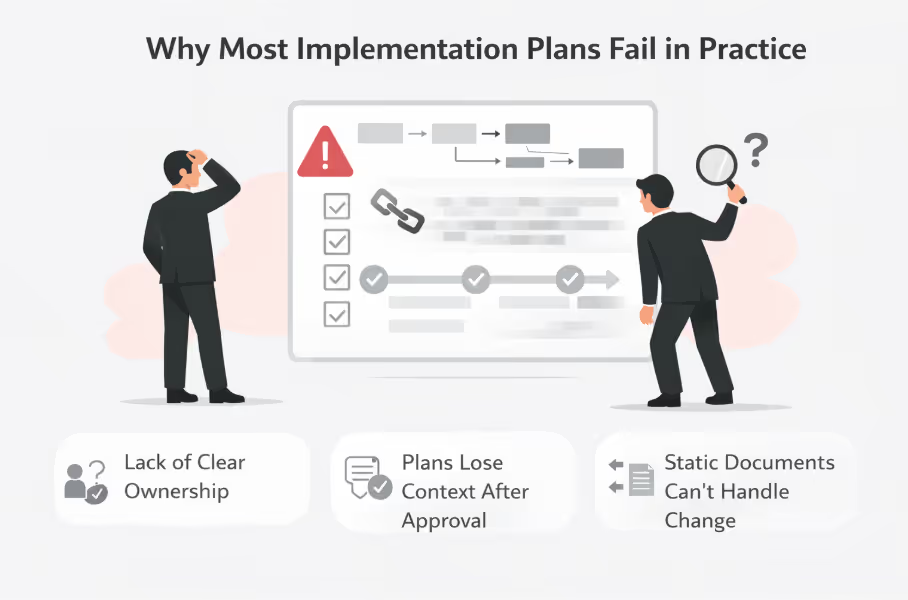
Project implementation plans rarely fail because of bad planning. They fail because execution realities are ignored. Many plans look solid on paper but start breaking down once work begins. Inadequate planning is a major cause of project failure, and even with formal plans in place, roughly 70% of projects fail to deliver what was promised.
This is not a people issue, but a systems issue. Plans collapse when ownership is unclear, context disappears after approval, timelines cannot absorb change, and progress is surfaced too late to fix problems.
Lack of Clear Ownership
Assigning tasks is not the same as assigning ownership. When no single person is accountable for a task, follow-through weakens. Everyone assumes someone else is handling it.
Shared responsibility without a clear owner leads to stalled execution. Important work can sit untouched simply because no one feels responsible for moving it forward.
Plans Lose Context After Approval
Many implementation plans are approved, documented, and then forgotten. Teams execute tasks without understanding the original intent. The focus shifts to completing items instead of achieving outcomes.
This happens when planning and execution are treated as separate phases. The people doing the work were not part of the original planning, so the key context never reached them.
Static Documents Can’t Handle Change
Most plans are built on assumptions about scope, timing, and resources. When those assumptions change, fixed plans become outdated.
Effective execution requires adaptability, not strict adherence to old timelines. Customer needs evolve, resource availability shifts, and new dependencies emerge that were not visible during planning. Plans that cannot adjust to these realities stop guiding work and start slowing it down.
The Strategy-to-Execution Handoff Breaks Down
High-level goals often fail to translate into clear, actionable steps. Teams are left to interpret what the plan means in practice.
When planners and executors are different groups, strategic intent gets lost. Execution starts with guesswork instead of clarity.
Progress Is Measured Too Late
Many teams only review progress during scheduled status meetings. By then, delays have already compounded.
Effective execution requires continuous visibility. When blockers surface early, teams can adjust quickly. When they surface late, timelines are already at risk.
Ready to Turn Your Implementation Plan Into Action?

A well-structured implementation plan gives teams the foundation to manage complexity without friction. Clear goals anchor decisions, defined ownership keeps work moving, and realistic timelines provide flexibility without losing momentum. Together, these elements turn strategy into consistent execution.
Sintra supports this by providing a single workspace with specialized AI assistants for core business functions like operations, marketing, support, and content. Instead of juggling multiple tools, teams can centralize work, automate routine tasks, and keep execution moving with less manual effort.
If execution has been the bottleneck, start with a strong plan and a system that supports it. Get started with Sintra.
Implementation Plan FAQs
What is the difference between an implementation plan and a project plan?
A project plan outlines what will be done across the full project. An implementation plan focuses on how the work will be executed. Think of the project plan as the big picture and the implementation plan as the execution guide.
How detailed should an implementation plan be?
An implementation plan should be detailed enough so that someone can understand what needs to happen, in what order, and who owns each outcome. Smaller projects may need lighter detail. Complex initiatives require a more detailed plan.
Who owns an implementation plan in a small team?
One person should own the implementation plan, usually a founder, team lead, or project manager. The title matters less than having a single accountable owner who keeps the plan updated and tracks progress.
Can implementation plans change after execution starts?
Yes. Implementation plans should be updated as new information appears, risks surface, or resources change. Updates should be intentional and documented.
What tools are best for managing implementation plans?
Any tool a team uses consistently can support the implementation process. This may be a project management platform, a shared workspace, or a structured spreadsheet. What matters is that your project management implementation plan lives in one accessible place so it can guide execution effectively.
How do you keep an implementation plan from becoming outdated?
To keep an implementation plan from being outdated, review it regularly, update it when changes occur, and use it as the main reference for decisions. Assign one person to maintain it and connect it to day-to-day work.
Related articles





.avif)