Llama vs ChatGPT: Which AI Platform Is Better for Coding, Content, and Business?


Table of Contents
Quick Answer: What Is the Difference Between Llama and ChatGPT?
Llama is Meta's open-source AI model family built for developers who want flexibility, customization, and control over deployment. On the other hand, ChatGPT is OpenAI's hosted AI assistant designed for writing, research, coding, and everyday productivity. Llama gives you more control, while ChatGPT offers you a simpler user experience. Neither is a complete business execution platform out of the box.
Meta's Llama has surpassed 1 billion downloads, making it one of the most widely adopted open-weight AI model families available today. Meanwhile, ChatGPT has become deeply embedded in the workplace, with OpenAI reporting more than 1 million business customers using its tools.
With both platforms seeing massive adoption, choosing between them isn't as simple as it sounds. Llama is often the preferred choice for organizations that want open-source flexibility, customization, and control over deployment. ChatGPT is known for its ease of use, polished experience, and ability to boost productivity right out of the box.
The challenge is that businesses now need more than AI that can answer questions. They need AI employees who can help execute work across marketing, sales, customer support, and operations. This guide breaks down the key differences between Llama and ChatGPT so you can determine which platform is the better fit for your team and whether either can function as an AI employee for your business needs.
The table below explains all the differences between Llama and ChatGPT.
Llama vs ChatGPT: Core Differences Explained
Llama and ChatGPT take very different approaches to AI. Llama is Meta's open-source model family, built for developers who want to customize, fine-tune, and self-host AI. ChatGPT is a closed-source, fully managed AI service optimized for conversational tasks and everyday productivity.
The biggest distinction comes down to control versus convenience. Llama gives organizations full control over deployment, customization, and data management. ChatGPT is designed for fast adoption, allowing users to access advanced AI capabilities with minimal setup.
The contrast extends beyond deployment. Llama offers greater flexibility for custom workflows, private infrastructure, and specialized use cases. ChatGPT focuses on ease of use, built-in features, and a streamlined experience for coding, content creation, research, and business tasks.
This approach shapes everything from privacy and integrations to business adoption and long-term scalability.
Llama vs ChatGPT for Coding
Both Llama and ChatGPT are capable coding assistants, but they target different needs. ChatGPT is designed to help developers move faster through coding, debugging, and problem-solving. Llama appeals to organizations that want greater control over how AI is deployed, customized, and integrated into internal development environments.
Code Generation and Debugging
For most developers, the first test is simple: can the model write clean code, identify problems, and explain its reasoning?
ChatGPT has become one of the most widely used AI coding tools because of its ability to generate code while explaining the logic behind it. Developers often use it for debugging, refactoring, learning new frameworks, and understanding unfamiliar codebases. OpenAI reports that users send billions of messages to ChatGPT daily, with coding remaining one of its most common professional use cases.
Llama can handle many of the same coding tasks, but its advantage comes from flexibility. Because organizations can fine-tune and self-host the model, development teams can adapt it to internal coding standards, proprietary frameworks, and private repositories in ways that hosted assistants typically cannot.
To compare their coding capabilities, we tested both tools using the same prompt:
"Create a Python script that reads a CSV file containing customer orders. Generate a summary report showing total sales, top-selling products, and monthly revenue trends. Include robust error handling, optimize the code for readability, and explain the code step by step."
Llama's Performance
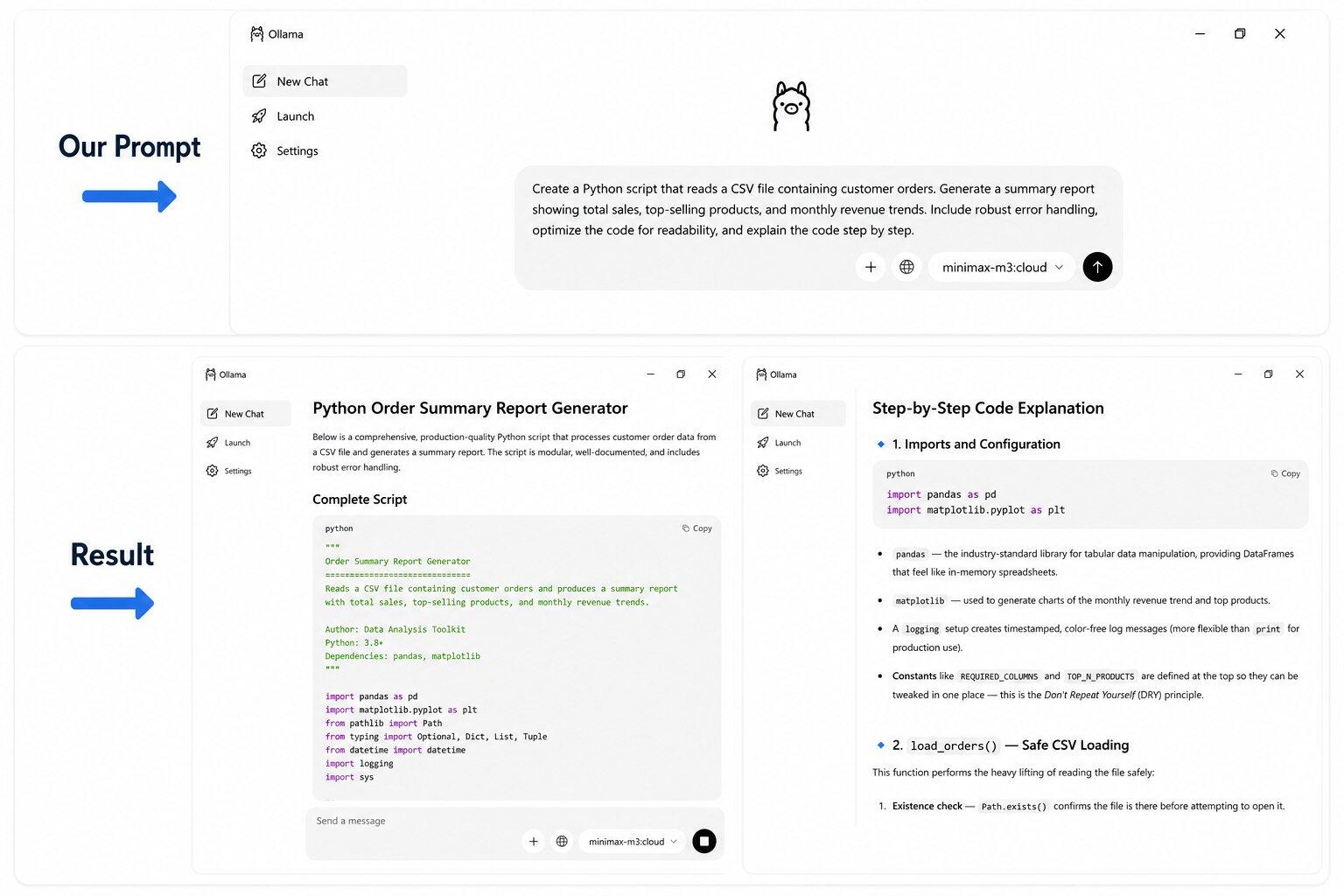
Llama produced the more comprehensive response, adding extra validation checks, reporting metrics, and stronger safeguards around data quality. Llama's code felt slightly more production-oriented, but the longer explanations and additional features also made the response more verbose than necessary for the task.
ChatGPT's Performance
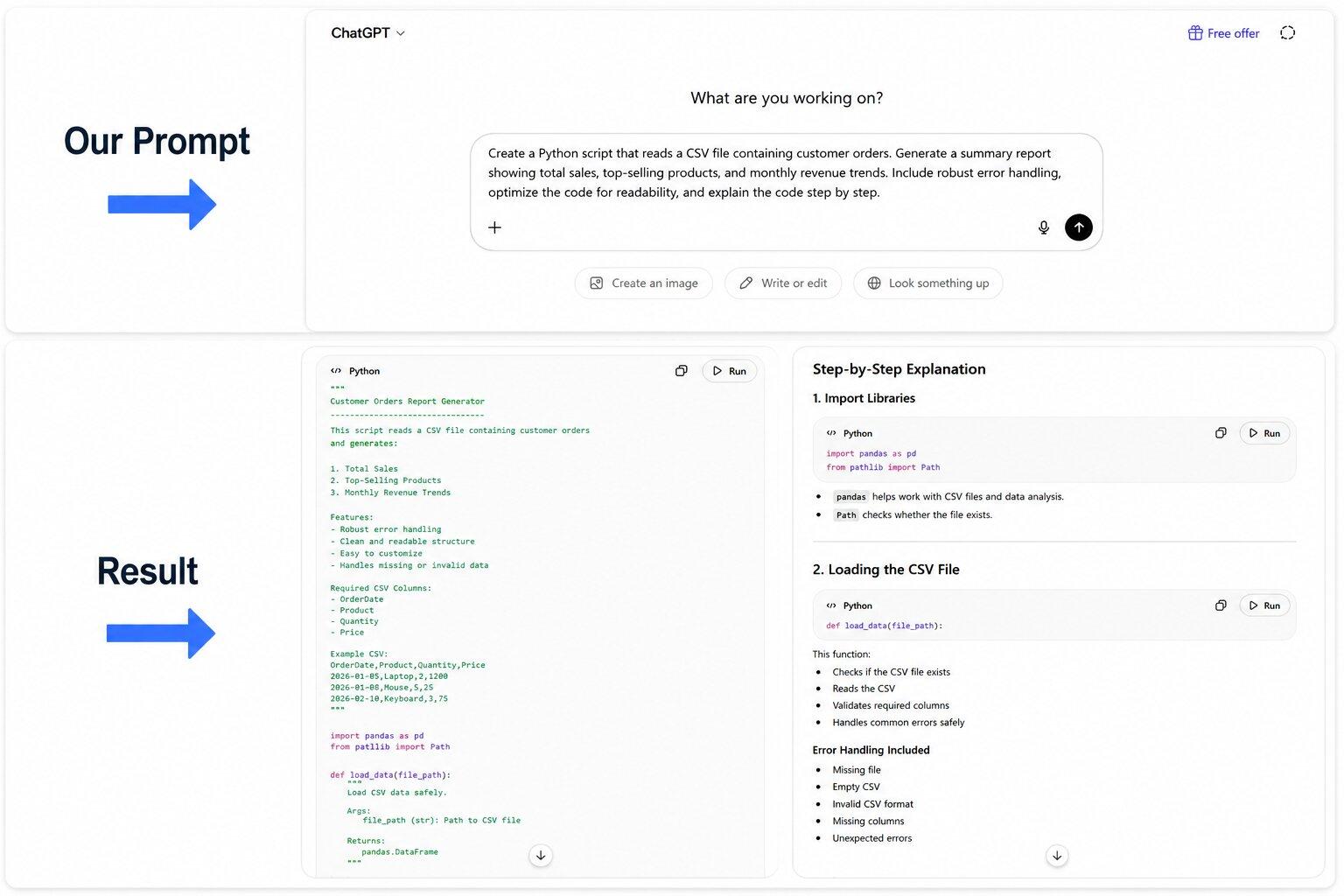
ChatGPT delivered a cleaner and more focused solution that covered all of the prompt's requirements without adding much extra complexity. Compared to Llama, the code was easier to scan, and the explanations were more concise, although it included fewer validation checks and less reporting detail.
Winner for Code Generation and Debuggin: Llama
Overall, comparing Llama vs GPT outputs, Llama wins this test by a small margin. Both models produced high-quality code, but Llama's solution was slightly more comprehensive, with stronger validation and error handling. ChatGPT's response was easier to read, but Llama delivered the more complete implementation.
Custom Coding Workflows and Deployment
Writing code is only part of the equation. Many organizations also need AI that fits their security, compliance, and infrastructure requirements.
This is where Llama's open model approach becomes a major differentiator. Meta's Llama family has surpassed 1 billion downloads, largely because organizations can deploy it on their own infrastructure, customize it extensively, and keep sensitive data within private environments.
ChatGPT takes the opposite approach. It prioritizes convenience through a managed platform and API ecosystem. That simplicity has helped OpenAI grow to more than 1 million business customers worldwide.
To test how both platforms approach a more advanced engineering challenge, we used the following prompt:
"Design an AI-powered code review assistant for a software company. Explain the system architecture, security requirements, deployment strategy, GitHub integration, database structure, and implementation roadmap."
Llama's Performance
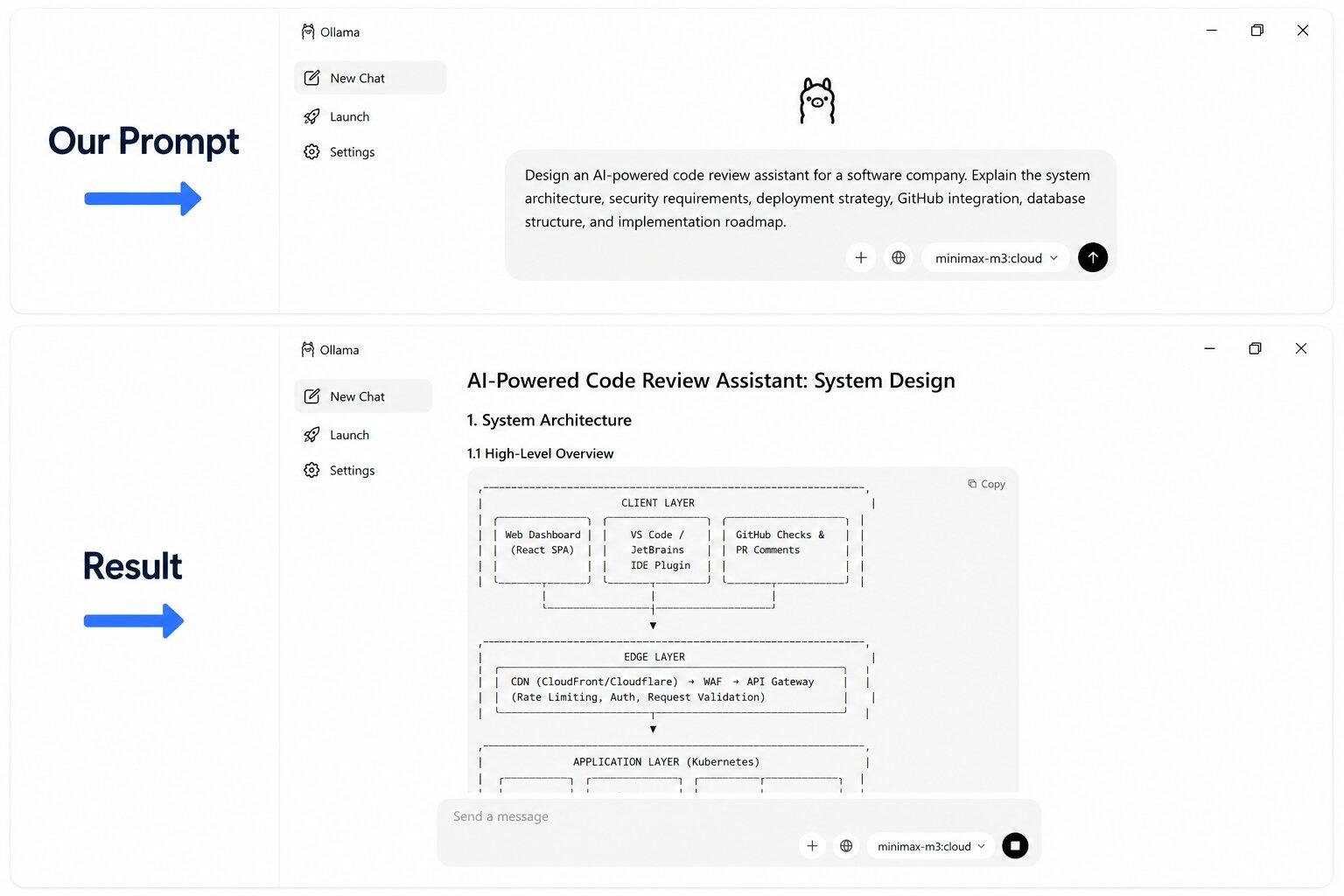
Llama delivered a highly detailed implementation plan covering architecture, security, deployment, GitHub integration, database design, scaling, observability, compliance, and cost planning. The response went beyond the prompt requirements and felt like a real technical blueprint that an engineering team could use as a starting point for development.
ChatGPT's Performance
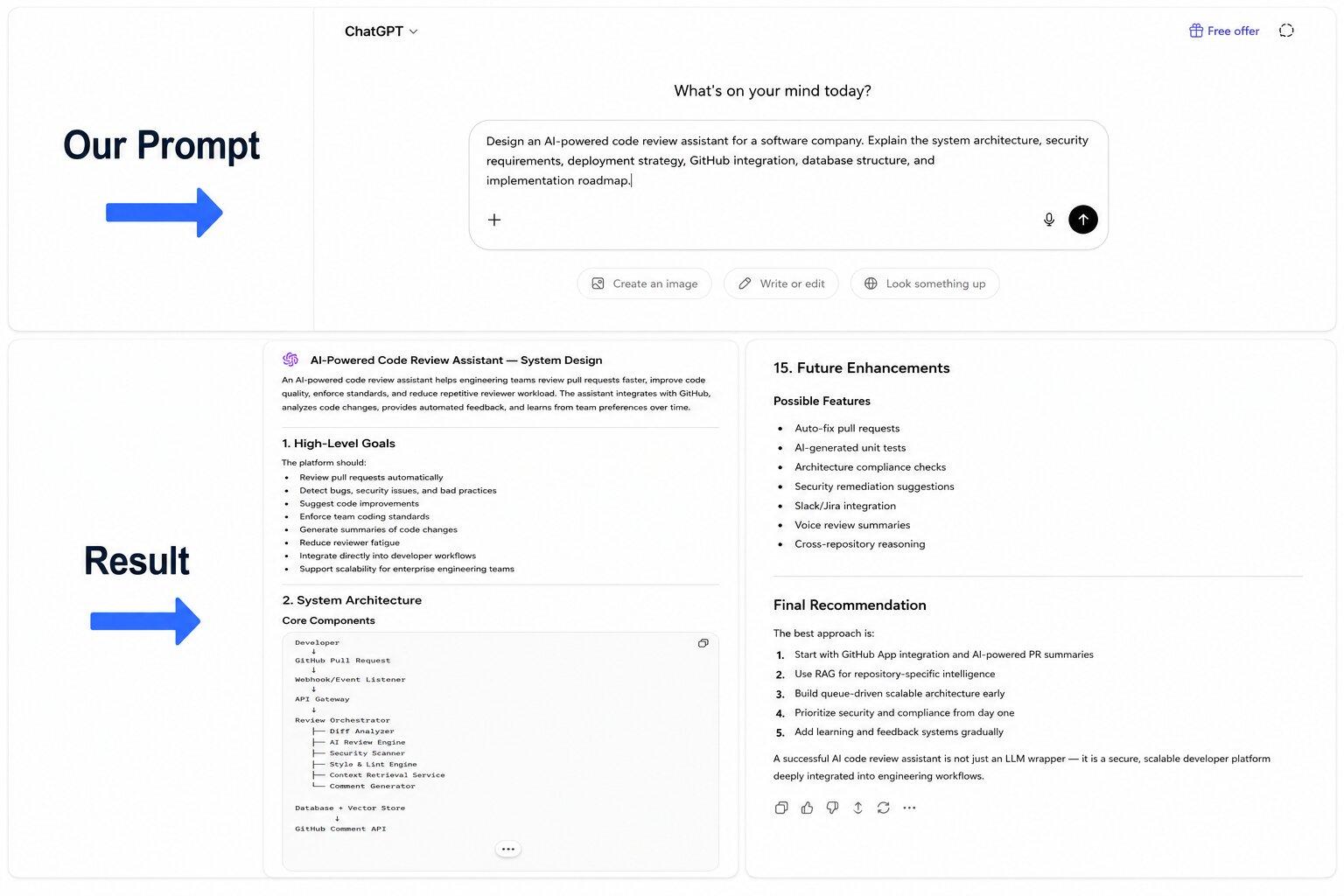
Compared to Llama, ChatGPT focused on the core requirements and presented them in a clear, easy-to-follow format. The response was well-structured and practical, but it did not reach the same level of technical depth, infrastructure planning, or implementation detail as Llama's solution.
Winner for Custom Coding Workflows and Deployment: Llama
Comparing GPT vs Llama, Llama wins this test. Both responses were strong, but Llama provided a significantly more comprehensive system design, covering deployment, security, scalability, compliance, and implementation planning in much greater detail.
Llama vs ChatGPT for Safety, Privacy, and Control
Safety, privacy, and control are some of the biggest differences between Llama and ChatGPT.
Llama gives organizations more control through self-hosting, customization, and private deployments. ChatGPT takes a managed approach, offering built-in safety systems, governance features, and easier administration.
Which one is better depends on your security requirements, compliance needs, and how much control you want over the AI environment.
Open-Source Control vs Managed AI Safety
Llama gives organizations visibility into how the model is deployed and managed. Teams can customize safeguards, control access, and build security policies around their specific requirements. This flexibility can be valuable for businesses with strict compliance rules or specialized workflows.
ChatGPT focuses on simplicity. OpenAI handles content moderation, policy enforcement, and ongoing safety updates behind the scenes. That means less configuration and fewer management responsibilities for internal teams. While ChatGPT offers some customization through its app, it operates within OpenAI's ecosystem, limiting the extent of user control compared to Llama's open-source flexibility.
The key tradeoff is control versus convenience. More control does not automatically mean more safety, and a managed platform is not automatically less secure. The outcome depends largely on how well the system is configured and governed.
Data Privacy and Deployment Options
Deployment often has the biggest impact on privacy.
With Llama, organizations can run the model entirely on their own infrastructure and keep prompts, data, and model activity inside private environments. This can be especially important for industries handling sensitive customer information, healthcare records, legal documents, or proprietary business data. Data-sensitive industries such as healthcare, finance, and defense often prefer this approach because it provides greater control over compliance, governance, and data handling.
Llama's open-source nature also allows organizations to run the model locally or on-premises rather than relying on external servers. If operating in regulated sectors, this flexibility can help meet data privacy, compliance, and governance requirements.
ChatGPT uses OpenAI's managed infrastructure. Enterprise plans include stronger data protections, administrative controls, and privacy commitments, making the platform easier to adopt without managing hardware or model deployments. However, ChatGPT's data privacy policies state that user inputs may be used to train the model unless users opt out, which raises concerns for organizations handling sensitive information.
Winner for Safety, Privacy, and Control: Llama
Overall, for organizations that need maximum control over where data is stored and processed, Llama has a clear advantage. For teams that want strong privacy protections without the complexity of managing infrastructure, ChatGPT offers a simpler path.
Llama vs ChatGPT for Business Use Cases
For most businesses, choosing between Llama and ChatGPT comes down to productivity, control, and safety. In the safety Llama ChatGPT comparison, ChatGPT focuses on speed, ease of use, and built-in safeguards, while Llama appeals to organizations that want greater customization, deployment flexibility, and control over their AI environment.
AI for Content Creation and Marketing
Content creation is one of the areas where the difference between Llama and ChatGPT becomes immediately noticeable.
ChatGPT is built for fast content generation, making it easy to create blog posts, social media content, email campaigns, ad copy, SEO briefs, and content ideas with little effort. Most users can start generating useful marketing content within minutes. Also, ChatGPT supports advanced built-in features like image generation, file analysis, and web browsing.
Llama can handle the same tasks, but its biggest advantage is customization. Also, Llama is best suited for developers wanting to train a model on highly specific domain knowledge, such as internal frameworks, proprietary codebases, or industry-specific development practices.
Organizations can fine-tune the model on their brand voice, editorial guidelines, or internal content standards. Customization options for Llama also include training the model on private data, enabling it to mimic specific brand voices and adapt to unique business needs. This makes Llama attractive for companies building large-scale content systems or running AI inside private infrastructure.
To compare both tools, we tested them using the same marketing prompt:
"Create a LinkedIn post announcing a new AI-powered customer support platform. The target audience is SaaS founders and customer success leaders. Include a strong hook, three key benefits, and a clear call to action."
Llama's Performance
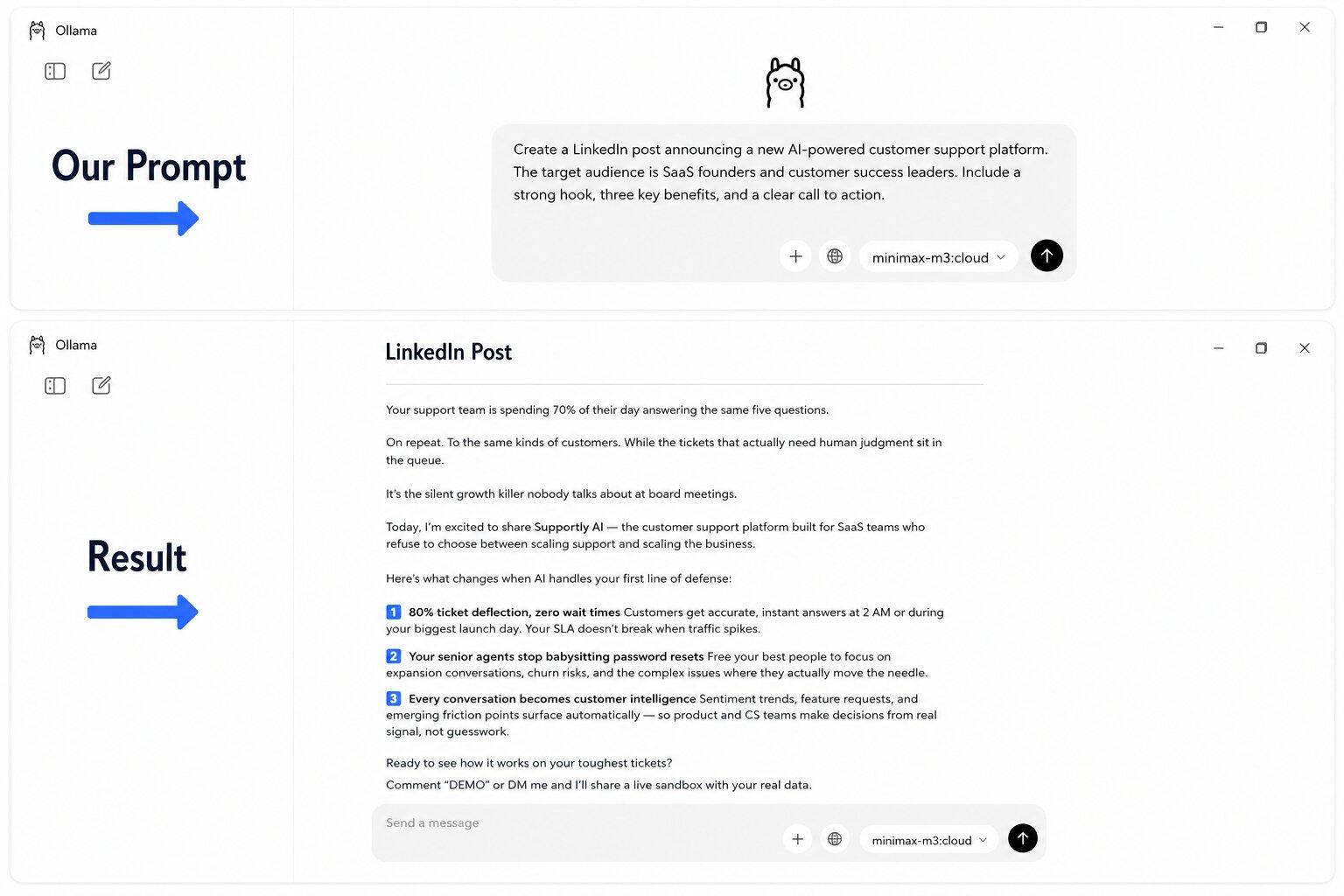
Llama delivered a strong, publish-ready LinkedIn post with a compelling hook, specific benefits, and a clear call to action. The messaging felt tailored to SaaS founders and customer success leaders, making the post more engaging and persuasive overall.
ChatGPT's Performance
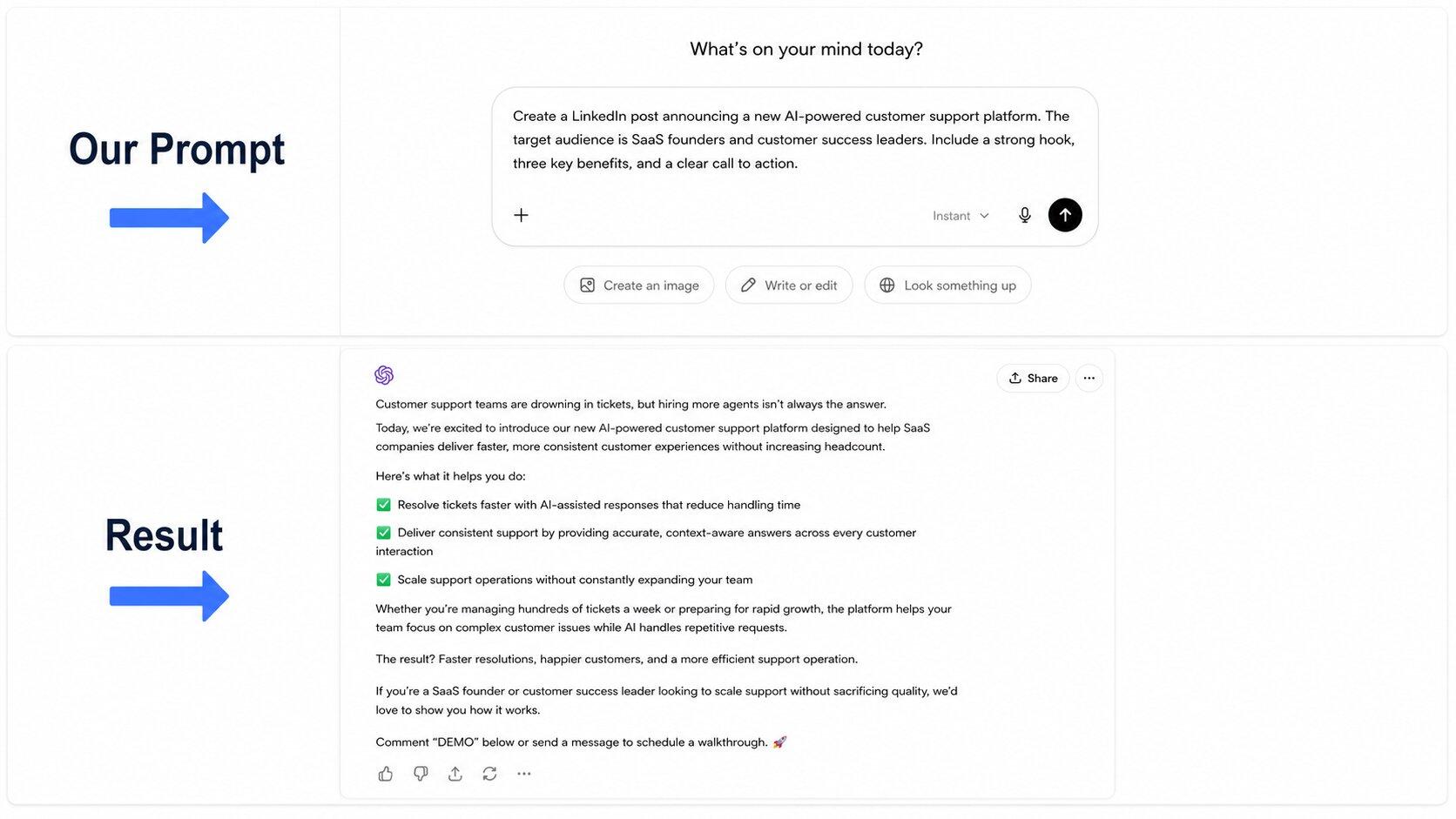
Compared to Llama, ChatGPT's response was more straightforward and concise. It covered all the key requirements and communicated the product's value clearly, but the messaging felt more generic and less targeted to the audience.
Winner for AI Content Creation and Marketing: Llama
Based on the results, Llama wins this test. Its response was more engaging, audience-focused, and better suited for a LinkedIn marketing post.
AI for Customer Support and Business Operations
Customer support highlights a different set of strengths. ChatGPT is widely used to draft support responses, summarize conversations, answer common questions, and help employees access information faster. Through APIs, integrations, and custom GPTs, it can fit into existing support workflows with relatively little setup.
Llama becomes more compelling when businesses need greater control over customer data and internal systems. Organizations can deploy the model in private environments, train it on internal documentation, and keep customer information within their own infrastructure. This flexibility is especially valuable for businesses operating in regulated industries or handling sensitive customer data.
To compare how both models handle operational tasks, we used the following prompt:
"A customer is upset because their software subscription was charged twice. Write a professional support response, explain the next steps, and create an internal summary for the billing team."
Llama's Performance
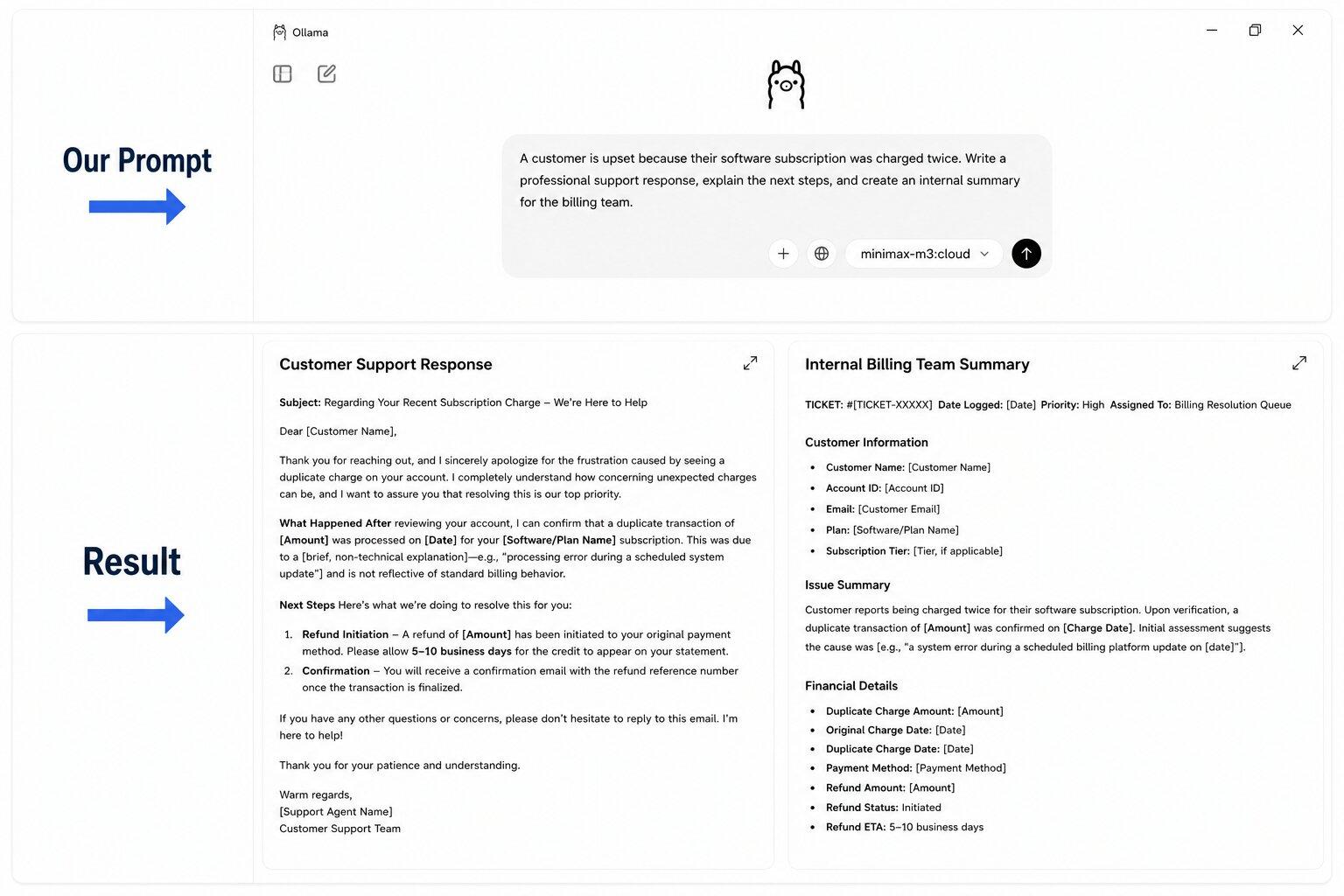
Llama gave a detailed and professional response. It was polite, easy to follow, and included a helpful summary for the billing team. However, it assumed the customer was charged twice and started talking about refunds before checking the facts. In a real support case, that could cause problems if the investigation shows something different.
ChatGPT's Performance
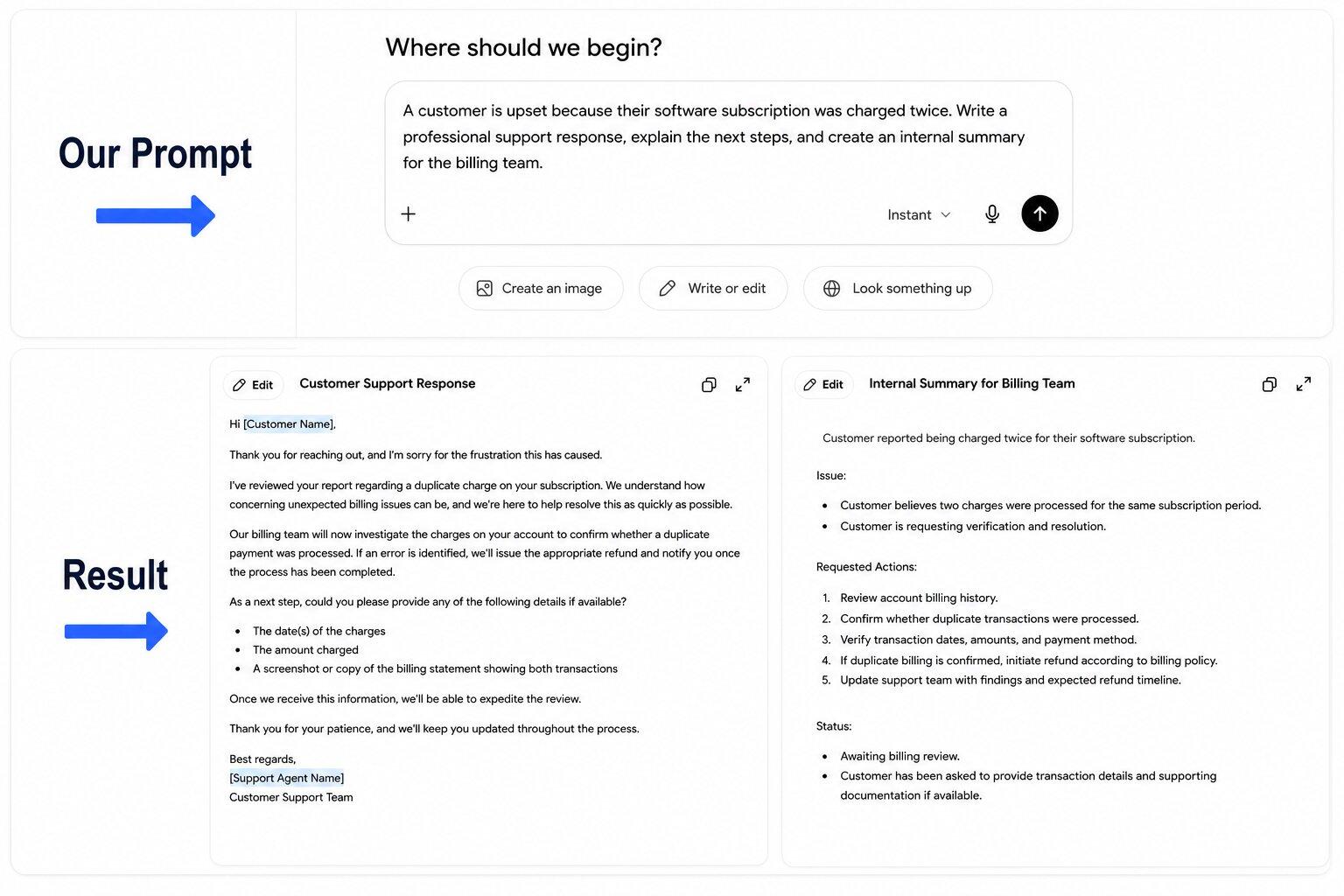
Compared to Llama, ChatGPT took a more practical support approach. It recognized the customer's concern, asked for the information needed to investigate the issue, and avoided making promises before checking the facts. The response was shorter, but it followed the same process most billing teams would use to handle a disputed charge.
Winner for AI Customer Support and Business Operations: ChatGPT
Based on these results, ChatGPT wins this test. Llama gave a more detailed response, but ChatGPT handled the situation better by checking the issue before trying to fix it. That made its answer more accurate and helpful.
Llama vs ChatGPT: Pricing
Llama and ChatGPT use different pricing models.
Llama is free to download and use under Meta's license. However, organizations still need to pay for hosting, infrastructure, and maintenance if they run it themselves.
ChatGPT offers several subscription plans:
- Free – $0/month
- Go – $8/month
- Plus – $20/month
- Pro – $200/month
OpenAI also provides Team and Enterprise plans for businesses that need extra security, administration, and collaboration features.
For most people and small businesses, ChatGPT is the easier choice because there is no infrastructure to manage. Llama is often a better fit for organizations that want more control and are willing to manage their own setup.
Why Most Businesses Need More Than a Standalone AI Model
The biggest limitation of both ChatGPT and Llama is that they are still standalone AI tools. They can answer questions and help with tasks, but most businesses need more than that.
As companies grow, they often need:
- Memory that remembers important information across projects and conversations.
- Integrations with tools like CRMs, help desks, project management platforms, and knowledge bases.
- Workflow automation that can move data and complete multi-step tasks automatically.
- AI that can take action, not just make suggestions.
- Shared workflows that connect marketing, sales, support, and operations.
- Controls such as permissions, approvals, and activity tracking.
For example, a marketing team using ChatGPT may still need to manually move content between different tools. A company running Llama may still need to build the systems that connect AI to daily business operations.
As businesses scale, the challenge is no longer getting answers from AI. The real challenge is connecting AI to workflows, data, and processes so work gets done faster and more consistently.
The Best Alternative to Llama and ChatGPT for Business Execution
Llama is the right choice for developers who need technical control and deployment flexibility. ChatGPT is the right choice for individuals and teams who need general-purpose AI productivity. Sintra AI is built for something different: business execution.
Sintra is designed around the idea that AI should complete real work, not just generate responses. Through a role-based AI team, shared company memory, ready-made use cases, and workflow support, Sintra gives businesses a way to run marketing, sales, support, admin, and operations tasks with AI that understands context, maintains consistency, and works across functions rather than in isolation.
Role-Based AI Helpers for Real Business Tasks
Sintra uses a team of specialized AI helpers. Each helper is designed for a specific job. Instead of using one chatbot for everything, businesses can assign tasks to Helpers for copywriting, customer support, admin work, design, operations, strategy, and more.
This approach helps improve results. A customer support helper works differently from a marketing helper because each is built for a specific purpose.
It also reduces the need for complex prompts and helps teams get more consistent and reliable output.
Brain AI for Shared Business Memory
One of the biggest limits of ChatGPT and many Llama setups is that they don't automatically remember your business context. Teams often have to re-enter brand guidelines, customer details, and instructions again and again.
Sintra's Brain AI gives all AI helpers access to shared company knowledge. This includes brand voice, customer information, business goals, product details, workflows, and past instructions.
As a result, teams spend less time repeating themselves. Responses stay more consistent, and the AI can work with a better understanding of the business.
AI Integrations for Connected Workflows
AI that sits in a separate chat window can slow work down. Teams often have to copy answers into emails, documents, and other tools manually.
Sintra's AI integrations connect directly with tools like Gmail, Notion, and other business apps. This lets teams manage work from one place instead of constantly switching between platforms.
As a result, work moves faster, tasks stay connected, and AI becomes part of the workflow rather than a separate tool.
Llama vs ChatGPT vs Sintra AI: Key Differences
Ready to Turn AI Into Real Business Execution?
Llama and ChatGPT have changed how businesses use AI, but they still leave teams with the same challenge: turning AI output into real business results.
Content needs to be published. Customer requests need to be handled. Sales outreach needs to be managed. Operations need to keep moving.
Sintra AI is built to bridge that gap. Instead of providing a single AI assistant, it gives businesses a team of specialized AI helpers supported by shared company memory, workflow support, and business integrations. The result is faster execution, fewer manual tasks, and more consistent work across teams.
Ready to put AI to work across your business? Get started with Sintra AI and build your own team of AI Helpers today.
Llama vs ChatGPT FAQs
What is the main difference between Llama and ChatGPT?
The biggest difference is how you use them. Llama is an AI model from Meta that companies can customize and run on their own systems. ChatGPT is an AI assistant from OpenAI that is ready to use through a website or API.
For most people, ChatGPT is easier because it works right away. Llama is better for organizations that want more control over how the AI is deployed and managed.
Is Llama better than ChatGPT for coding?
It depends on your needs. ChatGPT is usually better for writing code, fixing bugs, and explaining programming concepts. It is designed to help developers solve problems quickly.
Llama can be a good choice for companies that want to run AI coding tools on their own servers or train models on internal code. For most developers, ChatGPT is the simpler option.
Is Llama safer than ChatGPT?
Neither is automatically safer than the other. Llama gives organizations more control because it can run in private environments. However, they are also responsible for setting up their own security and safety measures.
ChatGPT comes with built-in safety features and content controls managed by OpenAI. The better choice depends on your security needs and technical requirements.
What are the limitations of ChatGPT for business workflows?
ChatGPT is great for writing, research, and answering questions. But many business tasks need more than a chat tool. Companies often need approvals, workflow automation, integrations, and shared information across different systems.
OpenAI has added workflow and automation features, but businesses still need ways to connect AI with their daily operations.
What is the best AI platform for business automation?
There is no single best option for every business. ChatGPT works well for writing, research, and general AI tasks. Llama is a good fit for organizations that want full control over deployment and customization.
For businesses that want AI to help with daily work, platforms like Sintra AI take a different approach. Sintra includes AI Helpers, shared business memory, workflow support, and integrations to help teams manage tasks across marketing, sales, customer support, and operations.
Related articles