What Is a Product Backlog, and How Do You Create One?

Table of Contents

Quick Answer
A product backlog is a prioritized dynamic list of tasks that consists of features, bug fixes, enhancements, and technical debt. It keeps on developing with the emergence of new requirements. The product owner is the superpower of the backlog and makes sure that it is clear, prioritized, and aligned with the strategic goals.
In the modern world, AI applications can be used to refine and organize backlog items and keep the team organized and focused on the most important work. Knowledge of backlogs will result in uniform delivery and quantifiable outcomes across teams.
A product backlog is a dynamic, prioritized roadmap of every requirement needed for a product. Unlike a static to-do list, it evolves based on market shifts and customer feedback to ensure teams don't waste resources on low-value features. The strategic value is significant: organizations that maintain refined backlogs are twice as likely to be top industry performers.
An effective backlog turns high-level ideas into actionable tasks, ensuring engineering efforts stay focused on the most impactful work. This disciplined approach is a primary driver of project health, as teams using agile practices to manage backlogs report a 64% higher success rate in meeting goals compared to traditional methods.
This guide explains what a product backlog is, the essential components it must include, and the step-by-step process for creating one from scratch.
What Is a Product Backlog?

A backlog is business lingo that is used to describe work that is pending completion. This may be in the form of raw sales orders, outstanding invoices, or a pile of working tasks. A backlog is seen when work is more than the capacity of a company. This is usual in the construction, manufacturing, or subscription-based SaaS companies. A backlog may reflect a high demand or an inefficient operation. Knowing what is meant by a backlog in a business will enable the leaders to make wise decisions.
A product backlog is used in software and product development. In contrast to general backlogs, such as backlog finance, backlog in accounting, or backlog payment, a product backlog systematizes all the possible development items and ranks them by value, urgency, and strategic objectives. Teams can be focused and perform effectively through the consolidation of ideas, features, and tasks into one, constantly evolving list.
Who Owns the Product Backlog?
In Agile systems such as Scrum, the owner of the product is responsible for the backlog. They make sure that every item is prioritized, transparent, and in line with the strategic objectives. In the absence of ownership, teams are confused about priorities and steps to take.
The product owner balances the inputs of the stakeholders, engineers, and customers to ensure clarity in the backlog management. To illustrate, when several stakeholders demand features simultaneously, ownership can be used to make sure that only high-priority and high-value items are included in the sprint. This helps to avoid wastage of effort and maintain uniformity in the direction of business goals.
Product Backlog vs. Sprint Backlog
A product backlog consists of all the possible work of a product lifecycle. It is long-term and strategic, changing with the change in priorities. The sprint backlog, in its turn, is concerned with a certain iteration. It is a short-term commitment that is chosen in the course of sprint planning and focuses the team on manageable tasks. Knowing the backlog's meaning here will assist the teams in decouple strategic planning and tactical execution and ensure that daily work remains actionable and focused on the broader objectives.
Product Backlog vs. Product Roadmap
A product roadmap is a plan that defines the strategic vision of a product, and the backlog is the plan that converts the strategic vision into action. To give an example, a roadmap may show a new feature of a mobile app payment, and the backlog would be the small user stories, technical work, and bug fixes needed to create it. Practically, the roadmap has backlog prioritization, so the team does not respond to urgent demands but works on the tasks that contribute to strategic goals.
Why Is a Product Backlog Important?
Backlog in business is used to refer to any pending work that may influence revenue, operations, and customer satisfaction. In the absence of structure, work accumulates, resulting in inefficiency and slowness in delivery. A backlog that is properly maintained will turn random ideas into a queue with priorities. This clarity spurs accelerated releases, less rework, and enhanced ROI. AI is already accelerating how fast teams can move through complex analytical work - Moderna reduced a core analytical step involving review of up to 300-page evidence packs from a multi-week process to hours using ChatGPT Enterprise. Backlogs are used to give visibility to cross-functional teams, align, and predict strategic execution.
Prioritize Tasks Effectively
An obvious backlog assists in prioritizing work according to value, urgency, and impact. Product owners are able to compare products instead of responding to the loudest request. The priority is given to high-value features and fixes, which do not allow wasting sprint capacity on low-impact tasks. Backlog meaning is business value attached, and teams deliver what is most important, making them more efficient and more satisfied with the customer.
Communicate Clearly with Teams and Stakeholders
A backlog is structured and serves as a source of truth. Anyone, including engineering and marketing, can see what is planned, in progress, or delayed. This openness minimizes confusion, duplication of efforts, and fosters trust. Backlogs ensure that teams remain on track since priorities are visible and measurable.
Spot and Tackle Risks Early
Dependencies and gaps are apparent with visible backlog items. Teams are able to recognize technical debt, resource constraints, or vague requirements prior to them becoming blockers. Backlog meaning is effective not only in tasks but also in risks that can slow down releases or affect quality. Risk management is proactive and minimizes disruptions, and ensures that the product development is on course.
Assign Roles and Responsibilities
Each item in the backlog is supposed to have an owner. Teams are aware of the delivery and review person. Defined roles eliminate work stoppages and misunderstandings in sprints. When backlog management is associated with ownership, the execution proceeds without any problems, and the accountability gets better throughout the organization.
Track and Measure Progress
Backlog enables teams to monitor completion, cycle time, and velocity. Leaders get an understanding of the speed of delivery and allocation of resources. Backlogs that are well managed transform abstract goals into measurable metrics, which enhance continuous improvement and predictable releases.
What Belongs in the Product Backlog?
A product backlog contains all the planned work: features, fixes, enhancements, and discovery tasks. Backlog items are business value-related tasks that are prioritized. Every item must be transparent, verifiable, and must have acceptance criteria. This helps the teams to understand when a task is done and avoid confusion in the execution. The knowledge of what backlogs are in this context makes product development structured and measurable.
Features and User Stories
Features characterize functionality that offers user or business value. They are often presented as user stories, which explain intent. Examples: As a customer, we would like to save favorite products to be able to check out faster the next time. The acceptance criteria are contained in each backlog item to specify completion. Concrete user stories secure long-term product orientation and improve teamwork.
Bugs and Fixes
Bugs are faults that prevent the functionality of products. Their inclusion in the backlog will make them visible and prioritized with new features. Unnoticed bugs undermine user confidence and create technical instability. Fixes have structured backlog items, which ensure the quality of products and customer satisfaction in the long run.
Technical Debt
Technical debt encompasses shortcuts or tradeoffs made during the development process that can slow down subsequent development. These tasks are added to the backlog to make them visible and manageable. Teams that work on technical debt on a regular basis improve fragility and scalability better. Good backlogs strike a balance between innovation and maintenance.
Research and Experiments
Not every backlog is a direct deliverable. Other tasks, such as research, testing, or validation, such as prototype testing or market analysis, should also be added to the backlog. The inclusion of these will make learning purposeful, strategic, and enhance product development. The realization of what backlogs are in this context brings out the fact that they are not only involved in execution, but also in informed development.
How to Create a Product Backlog?
The creation of a backlog is a continuous process. In a product backlog, the work is arranged in a consistent flow to ensure the teams stay in step. The four-step flow is simple to follow and works well: collect ideas, prioritize, define, and refine.
Step 1: Identify Backlog Items
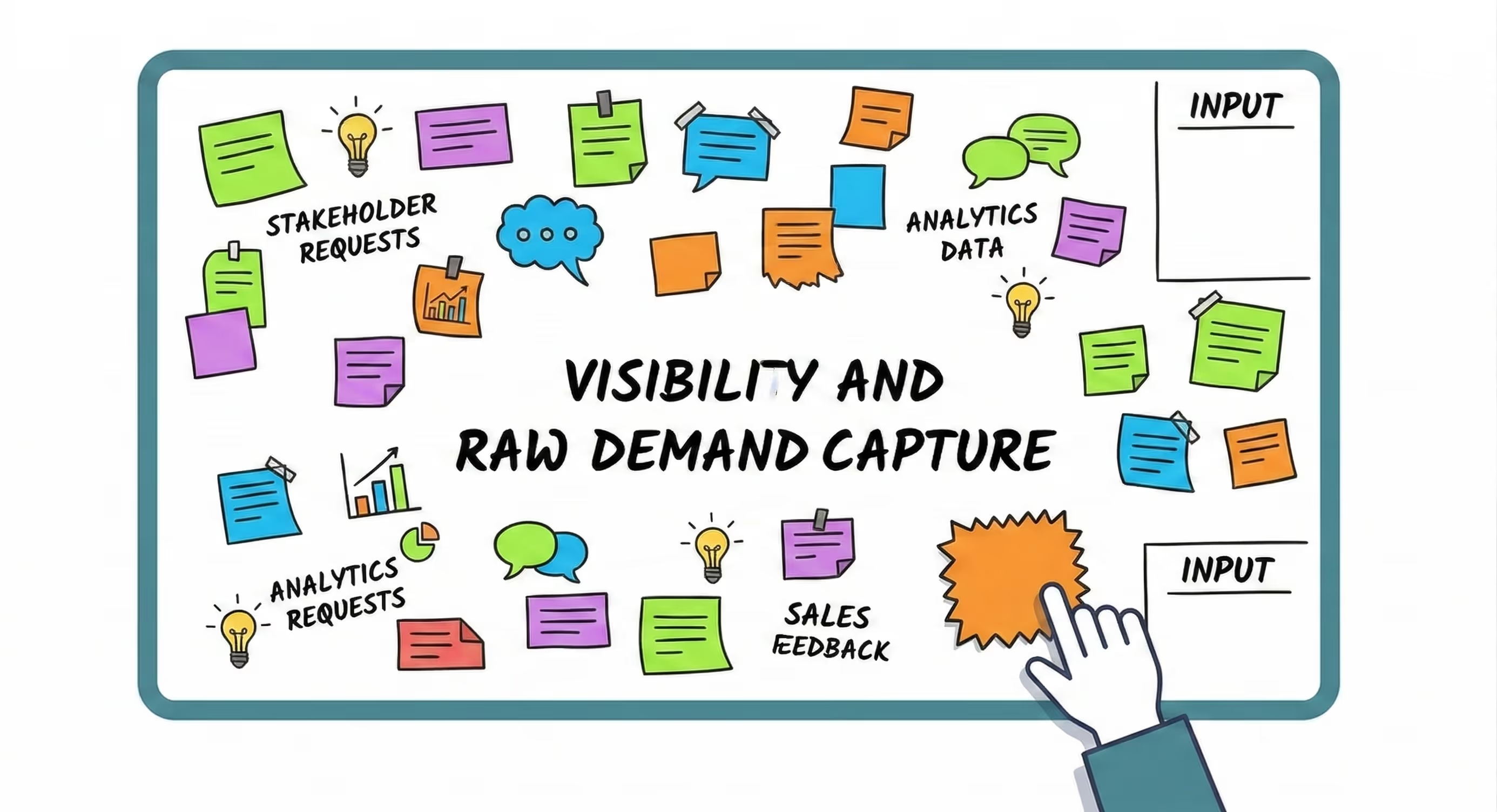
Start with the goals of stakeholder requests, analytics, customer support, sales, and research. Enter everything as crude backlog items without formatting. This is achieved by being able to see the demand and reflect the real customer requirements.
Step 2: Prioritize Backlog Items
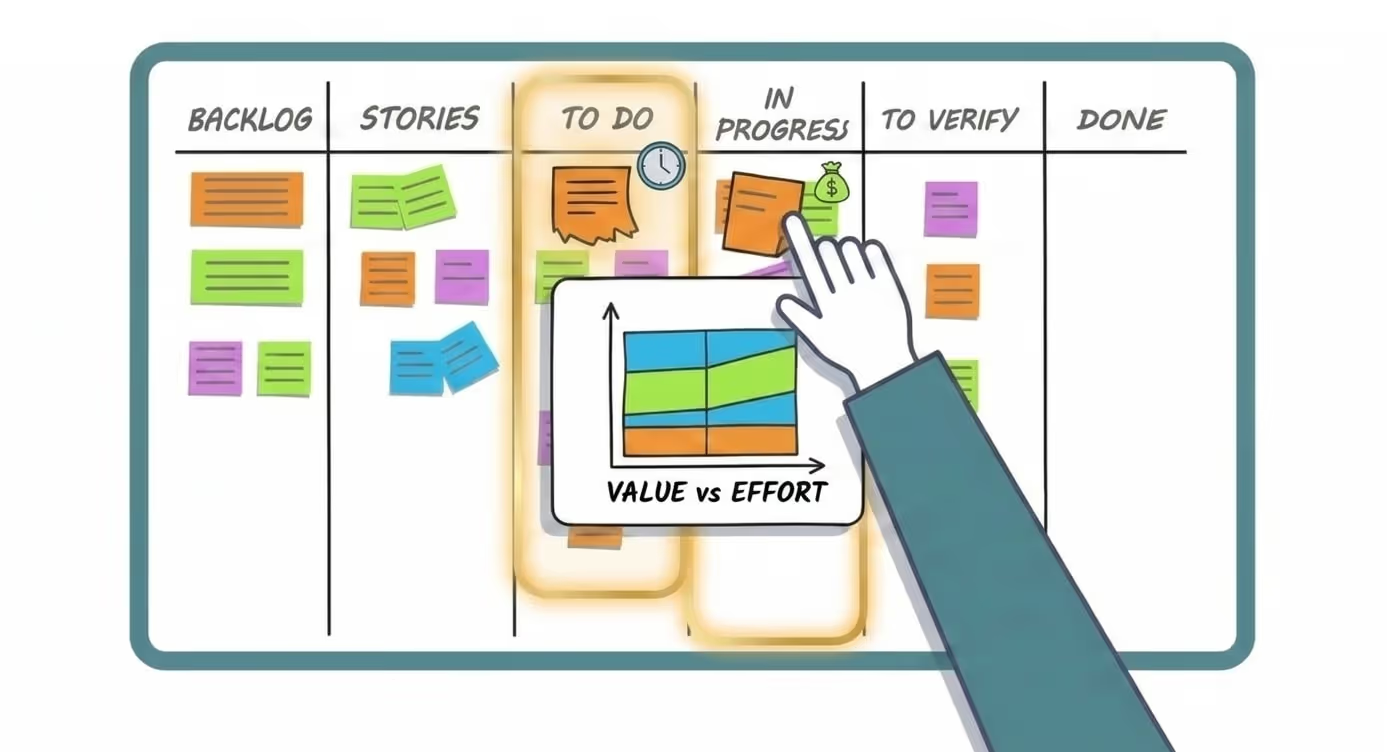
Rank the backlog items sequentially by value, urgency, and effort. Such techniques as MoSCoW or value vs. effort scoring are effective. Furthermore, prioritization helps to make sure that teams focus on the work impact, while releases are predictable, and roadmap discussions are more valuable. Prioritized backlog removes capacity wastage on activities that do not contribute to product strategy.
Step 3: Define and Estimate Work
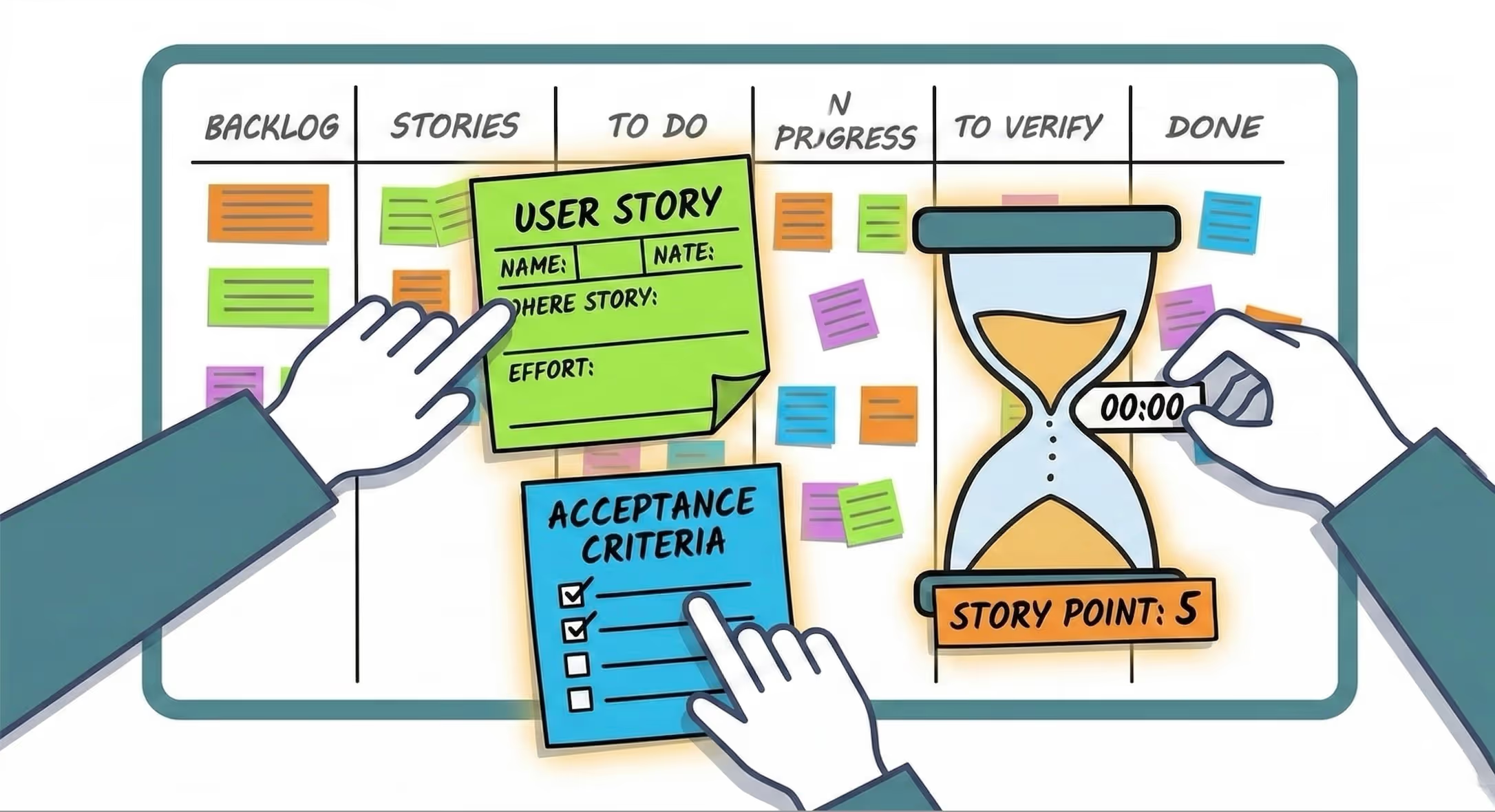
The items with the highest backlog are then prioritized and arranged into sprint-ready items. Request is elaborated using user stories, and completion is elaborated using acceptance criteria.
Step 4: Review and Refine Regularly
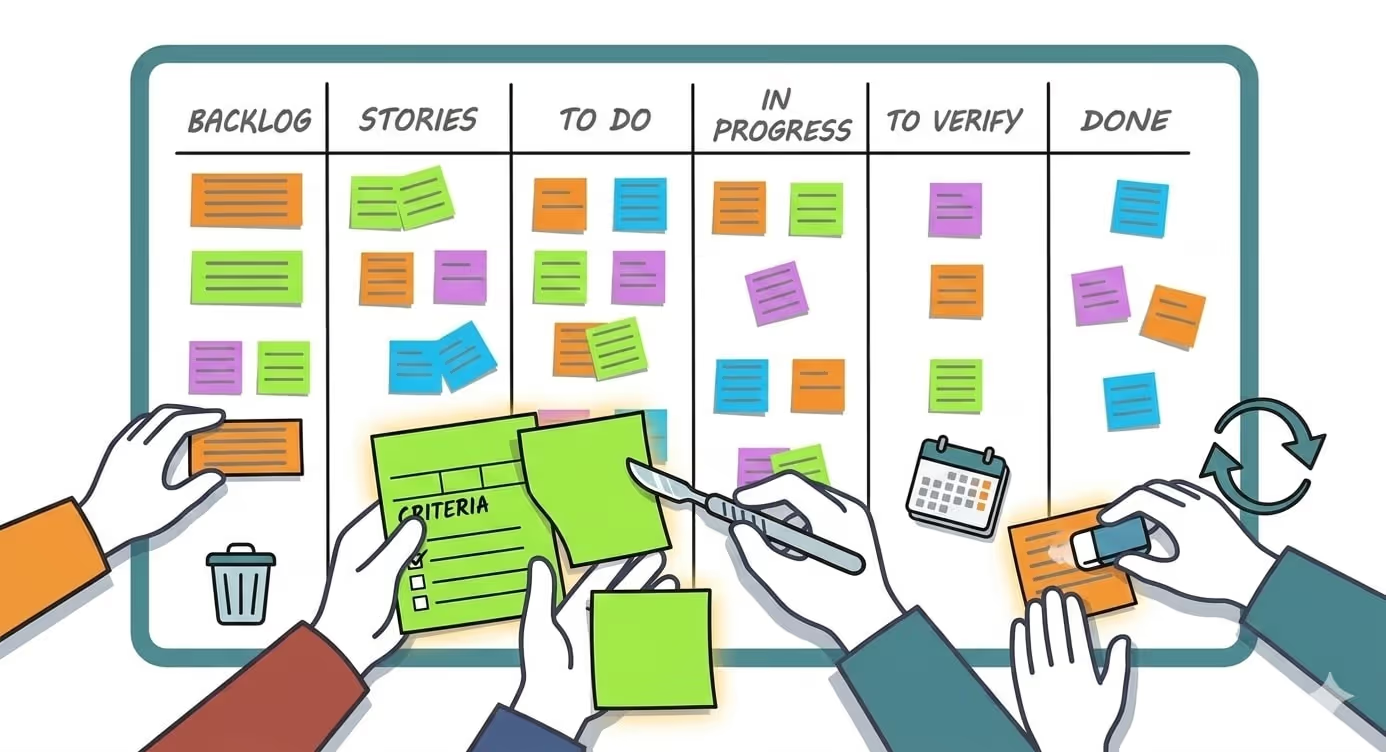
Backlog can only be effective when groomed. The teams will remove duplicates, break up large items, clarify unclear tickets, and re-prioritize in case of new information. The routine refinement reduces chaos, enhances the quality of delivery, and makes work sprint-ready.
Common Challenges in Product Backlog Management
Backlog issues occur even in experienced teams. Some of the challenges are changed priorities, misunderstood tickets, or excessive lists. These are reduced by structure, ownership, and frequent refinement. The real-life knowledge of these matters is the only way to make sure that teams are focused and deliver consistently.
Neglecting Prioritization
Everything is urgent without being prioritized. Teams are often reactive, and they do not align sprints. Whether by the business value that each backlog item has, or the framework that links them, these applications reestablish focus, minimize non-productive efforts, and enhance execution.
Poorly Defined User Stories
Unclear tickets lead to confusion and re-work. Absence of acceptance criteria means that teams do not perceive the same way of doing work. Products that have a backlog can enhance communication, minimize errors, and expedite deliveries.
Overloaded Backlogs
Teams use the backlog as a warehouse of all the ideas that have ever been mentioned. This way, the backlog in the long run is bloated and difficult to manage. Therefore, scheduling of cleaning and storage of low-value items helps in making sure that the team stays focused and useful.
Inconsistent Refinement
If grooming happens rarely, outdated or duplicate items linger, reducing clarity. Repetitive refinement is required so that the backlog remains strategy and product-focused. Regular updates enhance the discipline of backlog management in the long run.
How AI Can Help Manage and Refine Your Product Backlog?

AI is an intelligent overlay that can manage a product backlog and assist teams in transforming raw ideas into work, and maintain priorities. Tools like Sintra come in handy for such purposes and address these problems. Such tools complement platforms like Jira or Notion to make sure teams organize tasks, prioritize efficiently, and refine items without losing focus.
The automation of backlog is an essential part of the modern product management procedures. Teams can automate repetitive tasks and maintain a clear view of the events with an AI-managed product backlog.
Turning Raw Ideas into Structured User Stories
One of the biggest challenges backlog management faces is the ability to transform ideas into tangible and practical activities. AI can automatically convert these concepts into structured backlog items with well-defined acceptance criteria
To illustrate the point, a high-level requirement like the search improvement can be converted into a user story: "Since I am a customer, I would like to have the option of filtering the search results according to the price so that teams have a clue what to develop. It can be further improved by the AI Copywriter, which turns rough ideas into detailed, sprint-ready backlog entries right in the workflow.
AI-Driven Prioritization and Strategy Alignment
AI also matches the backlog items with the revenue potential, strategic focus, and growth objectives so that each team can concentrate on the work that provides the most business value.
AI makes sure that priorities represent short-term wins and long-term strategy through dependencies and trade-offs analysis. Teams can see which items matter most without manual guesswork, and AI agents like AI Sales Manager provide actionable guidance for ranking tasks while the backlog evolves continuously.
Automating Backlog Refinement
A pristine and actionable backlog must be refined on a periodic basis, and this may be time-consuming without a helper. In order to ensure that the backlog items remain relevant and actionable, AI may also summarize team conversations, detect duplicate tickets, and mark unclear ones.
This automation allows the team to spend less time on administrative tasks and more time building. AI like AI Data Analyst integrates seamlessly to keep refinement part of the regular workflow, improving sprint planning and delivery accuracy.
Bridging Customer Feedback and Product Development
AI also helps the teams to translate customer insights into tangible backlog items. The backlog can be automatically informed by feedback of support tickets, surveys, and SEO analysis to make sure that the product work is based on the actual needs of the user.
As a part of the planning process, the market signals would allow the teams to focus on the features and fixes that have the greatest effect on users. An AI SEO Agent makes this process seamless, bridging the gap between user feedback and actionable product development.
Who Should Use Backlogs?
Backlogs are not exclusive to Agile software teams. Even though they are used by product teams to organize feature development, backlogs may be helpful to any process that deals with priorities.
Founders use them to make their vision a reality. The operations leaders use structured backlog management in order to track process improvement, internal initiatives, and efficiency projects. In addition, marketing teams also use backlogs to organize campaigns, experiments, and content pipelines.
Why AI-Powered Backlog Management Improves Execution
Traditional tools only help store and organize tasks within teams, while modern ones also track tasks. The AI tools can be utilized to improve both and enhance the already existing systems by refining the backlog items, writing them down, and prioritizing. It does not replace working processes but complements them with intelligent suggestions and contextual understanding.
Besides, backlog automation makes repetitive activities such as categorization, scoring, and dependency tracking more efficient. AI-powered backlogs make decisions faster, less labor-intensive, improve the quality of decisions, and help a team to focus on what work has the most significant impact. The result is faster implementation, improved priorities, and improved coordination of strategic objectives and daily delivery.
Ready to Turn Your Backlog Into Executable Product Work?
A backlog is not merely a traditional list of tasks, but a list that is carefully maintained. When teams are focused on priorities, continuously enhance work, and match efforts with outcomes, it becomes a competitive advantage.
That is where tools like Sintra serve as an AI backlog helper that turns a list of tasks into a structured, actionable workflow. Instead of just being a storage, it improves visibility, more effective prioritization, and smarter backlog automation, and helps teams to design, optimize, and implement tasks faster and more precisely. Get started with Sintra to activate smarter backlog automation today.
Product Backlog FAQs
What is a backlog in simple terms?
A backlog is a list of tasks waiting to be completed, ranging from product features to operational work. It represents pending work that exceeds current capacity.
What does backlog mean in business?
In business, a backlog shows pending orders, tasks, or deliverables that have not been completed. It can indicate demand, inefficiency, or both.
What is the difference between a product backlog and a sprint backlog?
The product backlog contains all potential work for a product. The sprint backlog focuses on items selected for the current sprint or iteration.
Who is responsible for maintaining the product backlog?
The product owner ensures the backlog remains prioritized, clear, and actionable for the team.
What should not be included in a product backlog?
Items that are vague, irrelevant, or outside the scope of product development should not enter the backlog.
Related articles
.avif)




.avif)