ChatGPT 4o vs 4.5: What’s the Difference and Which AI Model Is Better?


Table of Contents
Quick Answer: What Is the Difference Between GPT-4o and GPT-4.5?
PT-4o is an “omni” multimodal AI large language model, optimized for faster, everyday, real-time interactions. It excels at high-volume tasks, such as content creation, brainstorming, and casual queries. In comparison, GPT-4.5 is a larger and computationally heavier model, better suited for natural and flowy conversations. It is designed for emotional nuances, context-aware answers, research, data analysis, and creative writing.
Simply put, GPT-4o offers a balance between speed, performance, and cost. Whereas GPT-4.5 is a specialized AI for conversational depth, complex tasks, and creative outputs.
Both GPT 4.5 and GPT 4o are capable large language models from OpenAI. However, they are designed for different jobs.
GPT-4o is optimized for speed-critical, high-volume tasks involving multiple input formats. Whereas GPT-4.5, as a heavier computational model, is better suited for emotional nuances and conversational depth. Professionals lean toward 4.5 when the job requires creative prospects and linguistic fluency.
Here is an in-depth ChatGPT 4o vs 4.5 comparison based on performance benchmarks, speed, business automation, writing, and more. Here is a side-by-side GPT-4o and GPT-4.5 comparison.
GPT-4o vs GPT-4.5: Core Feature Comparison
Check out this detailed ChatGPT 4.5 vs 4.o feature comparison, based on core functionality, writing quality, performance benchmarks, and pricing. So, dive right in.
Speed and Real-Time Performance
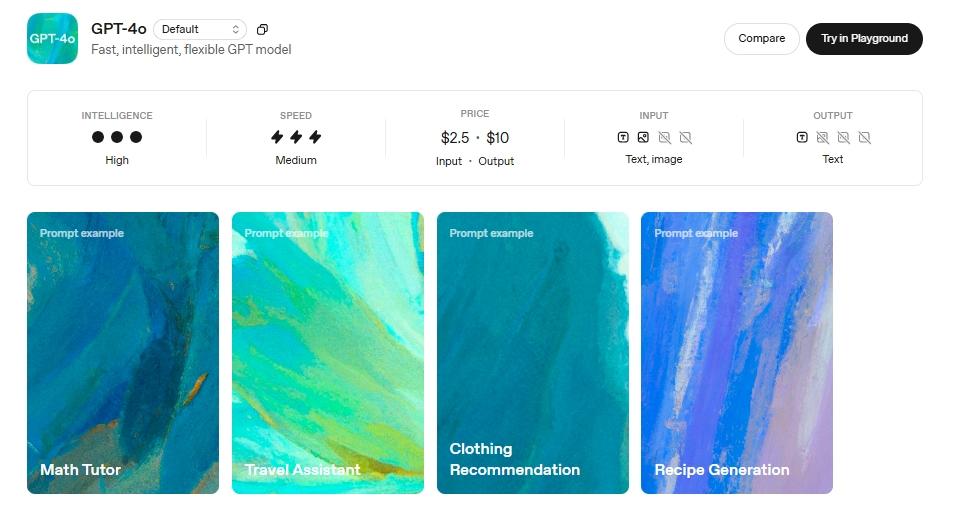
According to OpenAI, the GPT 4o model takes 0.32 seconds to generate a reply, compared to GPT-4 that takes around 5.4 seconds. For reference, the GPT-4o can answer audio queries in as little as 232 milliseconds. Even its text and image queries are noticeably faster than other models. The 4o API is especially better at vision and audio understanding.
The reason: it takes care of everything with one base model, rather than using multiple separate models working to interpret and respond to a query.
For better understanding, let’s compare it with the previous voice mode versions like ChatGPT 3.5 and ChatGPT 4.0. You ask a question, and the AI uses three different steps to answer the question. First, a speech-to-text model translates what you said into text. Then, the AI processes the text and accordingly responds by converting the text to audio.
What’s better? It does not trade off performance for speed or cost. OpenAI claims that both GPT-4o and GPT-4 have similar results in English text and coding benchmarks. Compared to GPT-3.5 Turbo, the 4o mini has better textual intelligence and multimodal reasoning.
While fast and cost-effective, GPT-4o can also be interrupted, thanks to its tendency to understand emotional depth and nuances. So, when the AI is speaking to you, you can stop it in mid-chat. The speed is similar for the image queries. It can analyze and process visuals and respond to them using one base model. The result: better context switching and real-world performance.
While doing a ChatGPT 4o vs 4.5 comparison, it’s important to note that 4.5 is a larger, text-focused, and computationally more intense model. Hence, it naturally processes inputs more slowly. In return, you get better tone, linguistic fluency, and to-the-point responses. Meaning, you can also expect it to analyze and respond to complex and lengthy prompts. In deep research, it can take several minutes to answer.
Writing Quality and Natural Conversation
ChatGPT 4o vs 4.5: which is better at writing? The answer depends on your requirements. For instance, ChatGPT 4.5 excels at high-stakes, intense creative writing, story development, and narrative building. And, GPT-4o is a faster alternative for crafting content at scale. This could be your ad copy, outreach emails, or customers’ inquiries.
The underlying reasons for their different writing strengths are their conversational quality.
GPT 4.5 is trained on massive datasets that consist of sentiments, social cues, and real-life situations. Hence, while conversing, you will find it more conversational, empathetic, and constructive. Its responses feel more natural, concise, and intuitive, making it ideal for everyday chats that sound less robotic.
In comparison, GPT 4o offers more structured and predictable replies. It leans toward a formal yet warm tone that excels in client communication, business tasks, technical writing, and reporting. Unlike GPT 4.5, this OpenAI model is faster and more extensive in its approach. The tone, structure, and length are a great combination for anyone trying to practice their language skills, mock interviews, public speaking, etc.
Multimodal Capabilities
Both GPT-4o and GPT-4.5 have multimodal capabilities. However, their approaches and strengths differ.
GPT-4o is built to process multimodal inputs, including text, audio, video, and images. GPT-4.5, though multimodal, works differently. It is a text-first model that allows visual analysis and image upload; you cannot use it for SVG, DALL-E, or audio inputs. Let’s break this down further.
Beyond text processing, GPT-4.5 has image interpretation capabilities. Meaning, you can upload pictures or diagrams for it to recognize patterns, analyze trends, and describe visual cues. Plus, like other GPT models, GPT-4.5 also supports file processing. It can parse your documents, extract data from them, and conduct analysis for meaningful insights. Professionals also use it for real-time web browsing.
However, it’s different from flagship models like GPT-5.5, ChatGPT4, and o3, which have native multimodal capabilities. You cannot use this model for audio inputs, video generation, and live screensharing.
In comparison, GPT-4o natively integrates with ChatGPT’s advanced tools, including voice mode, vision analysis, and so on. The “o” in 4o stands for omni, which simply means it can understand audio and visuals beyond traditional inputs.
Moreover, unlike previous models that take multiple models to interpret a query, it uses a single base neural network model to process multiple inputs at the same time. This is why it's fast and natural for real-time interactions.
What makes it better than GPT-4.5 is its omni processing. This means that the model can translate inputs across modalities, as it is using the same base model to process the inputs (audio, text, images). For example, you can share the camera feed in real-time for the model to respond in a natural voice or translate a foreign-language sign or menu, and more.
Reasoning and Complex Tasks
Neither ChatGPT 4o nor ChatGPT 4.5 is a dedicated reasoning model. This is where the GPT-4.5 vs 4o comparison loses to the o-series.
Both models use Generative Pre-Training. Meaning, they are general-purpose chat models that do not think before responding. And, they are trained on language intuition and pattern recognition. So, whenever you ask a query, the model goes through its training data to find relevant information and respond accordingly. This approach makes both GPT-4o and 4.5 excellent at natural conversations and everyday problems.
While the foundation is the same, the GPT-4o and 4.5 approach to solving problems is entirely different. For starters, you can train GPT-4o to generate a chain of thought. Explicitly mention in the prompt to “break down the problem step-by-step” or “explain your thought process”.
Compared to OpenAI’s reasoning models like o1 and o3-mini, which rely on multi-step logic, GPT-4.5 uses semantic analysis and learned patterns to predict your next words. Hence, they are faster and more efficient at real-time chats.
This structure-vs-knowledge contrast is evident in the performance benchmarks. For instance, GPT-4.5 had a higher accuracy (625%) in SimpleQA against o1 (47%), GPT-4o (38.2%), and o3 mini (15%). Meaning, it has better world knowledge and factual accuracy than reasoning models. Plus, as the model retrieves responses from training data, the hallucination rate is lower (37%) compared to GPT-4o (61%) and o1 (44%).
Moreover, in addition to textual data, GPT-4o was given billions of images and thousands of hours of voice recordings to parse and train from. Through this, the 4o neural networks make connections between things, their definitions, what they look like, and what they sound like. On top of that, both models use human guidance and feedback to improve and fine-tune.
GPT-4o vs GPT-4.5 Pricing: Which Model Offers Better Value?
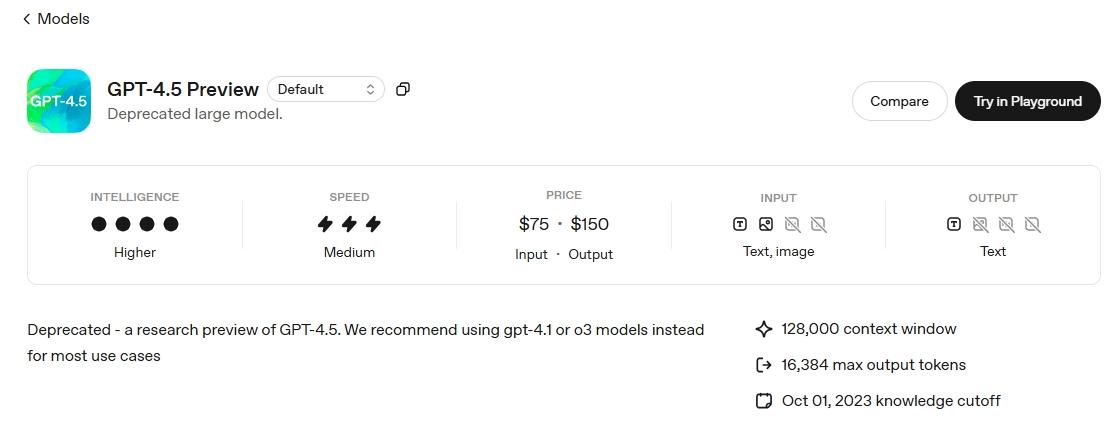
The GPT-4o is directly integrated into the ChatGPT window in free and paid plans. However, you can only get GPT-4.5 in a Plus or Pro subscription tier. Without using ChatGPT, you can also access both ChatGPT 4o vs 4.5 via Assistant APIs, Batch APIs, and Chat Completion APIs. However, because it’s a computationally-intensive and larger model, GPT-4.5 tends to be more expensive. Here is a side-by-side comparison of both models.
Both models, GPT 4.5 and 4o, have their dedicated rate limits that give you reliable access to the APIs, with caps on tokens, audio durations, and more. Here is a side-by-side comparison of both.
GPT-4o vs GPT-4.5 for Business Use
ChatGPT 4.5 and ChatGPT 4 demonstrate different work philosophies. While GPT-4o is faster and cost-effective, GPT-4.5 excels at situations where deeper thinking is required. Hence, it’s important to know when you should use each in day-to-day business operations.
Marketing and Content Creation
Marketing is all about content. But manually producing content means spending your valuable time on repetitive steps. And when your business is posting bulk articles, email sequences, and social media visuals, the demand for resources amplifies. This is where both GPT-4o and 4.5 deliver, but in different capacities.
GPT-4.5 is trained on billions of textual data points. Hence, it naturally has a benefit in flowy conversations, story development, emotional appeal, and creative projects. Meaning, it is an excellent choice for brand copywriting, ad copy, UX writing, and long-form articles. Plus, because it has fewer hallucinations, you don’t have to spend extra time refining the output.
In comparison, GPT-4o is optimized for speed and performance, which means it is a great way to produce content in bulk. But because it’s not as linguistically excellent, you might use it for technical and structured writing. Ask it to write the first batch of SEO meta tags, meta descriptions, social media captions, and email sequences, and let it handle everything quickly.
Moreover, GPT-4o, with its expansive training data, is an excellent ideation partner. It helps you explore new campaign ideas, build risk lists, and suggest content formats and channels. So, for a marketer, the ChatGPT 4o vs 4.5 choice between the two is about what they want to do with the content.
- GPT-4.5 is a good start for building assets that actually shape how customers perceive your brand.
- GPT-4o is a routine content partner for high-volume text requirements. It builds repeatable content that goes on your social media sites and websites.
Opting for a hybrid approach and using a combination of both will help you with fast workflows that help you build an online presence without compromising on your brand voice.
Sales and Customer Communication
Words matter more in sales than in any other department. What you are conveying to customers will determine how long they last and how well they perceive your brand.
A poorly written email can cool down an already nurtured prospect. A sales reply that feels robotic can prompt frustration in your customers. This is where AI models like GPT 4.5 and 4o make a difference. However, the key is to know when to use which AI to get maximum benefit.
GPT-4.5 is built on emotional intelligence. It sounds more human, picks up emotional cues, and works according to your tone. Thus, it’s a good fit for situations where building a relationship is crucial.
Imagine a sales team following up on a prospect that has been in the pipeline for quite some time. You have already invested in a few back-and-forths, and the next conversation should be a reminder that sounds less pushy and subtly persuading. GPT-4.5 will handle it better, given it picks the tone and sentiments better than 4o.
GPT-4o, however, excels in situations where priority is volume and not building loyalty. It’s faster, performance-oriented, and trainable. So, let’s say your support team handles hundreds of queries a day regarding payments, order deliveries, and troubleshooting steps. GPT-4o serves exactly this. It helps your sales agent draft replies that are accurate and sound organized.
Research, Planning, and Strategy
Before you begin campaign launches and sales, your product starts with a solid idea. The idea is the foundation of your sales decisions, revenue practices, and overall strategy. And, all of it begins with the thinking phase. This is where your team does everything: brainstorming, filtering ideas, and agreeing on an action plan.
GPT 4.5 and 4o can help you with this stage. Both models support document parsing. Meaning, you can give them a detailed industry report or competitor analysis, and they can come up with key points and insight in a few seconds. So, what was taking your analysts two to three days is now a matter of minutes. At this point, you can use either.
But the real difference between ChatGPT 4.5 and 4o shows once you dive deeper into research. For instance, GPT-4o has a web browsing function. And, when you pair it with the speed, the result is a quick mind map that pulls all the ideas onto one paper, be it market trends, rough campaign ideas, competitors' content, etc. It is a good kick starter for your brainstorming journey.
GPT-4.5 delivers when your research gets in-depth. It has a deep research function that takes 15 to 25 minutes, depending on your query. The result: it goes into the knitty gritties and gets you all the different and complex angles of one topic. Task it to go through an extensive market plan and do a SWOT analysis for your new launch. You can always carry on a conversation with it for more layered and nuanced responses.
In simple words, GPT-4o helps you start and think faster, while GPT-4.5 helps you refine those ideas and think deeper. However, while using either of the two models, be careful of the hallucinations and do not compromise on your team’s judgment. Keep your researchers, writers, developers, and other stakeholders in the loop.
GPT-4o vs GPT-4.5 vs GPT-5: What Should Readers Know?
OpenAI has officially retired the GPT-4 series from the ChatGPT’s official interface. Though you can still access them in paid versions, the free tier now includes GPT-5 variants, including GPT-5.4 and GPT-5.4 Thinking. As the fifth series is gaining momentum across the market, professionals are wondering how it compares to the older version. To answer this, here is a short ChatGPT 4 vs 5 comparison based on reasoning, coding, writing, etc.
Reasoning
The most obvious shift from GPT-4o, 4.5, and 4 to GPT-5 was the architectural change and reasoning capability. While the GPT-4 series is optimized for everyday casual queries, linear responses, and everyday tasks, GPT-5 digs deeper into multi-step reasoning.
GPT-5 has a native, multi-layered, chain-of-thought reasoning. With this, the AI breaks down your prompts into simpler steps, interprets each, and comes up with responses. Unlike the 4 series, it also asks you follow-up questions for further clarification. You will see that it takes more time to respond, especially if your prompt is complex and involves multiple details.
Moreover, it runs on a real-time router. Think of this router as a unified system that accesses your prompts, understands its complexity level, and then directs whether to use the thinking or basic model for the responses.
Multimodal Capabilities
GPT-5 also shows incredible performance gains in benchmark testing, compared to GPT-4o and 4. While the 4 series can handle multiple-format inputs, the GPT-5 goes a step further. It not only reads images but also identifies patterns, makes inferences using visual cues, and solves problems.
In the MMMU, Massive Multi-Discipline Multimodal Understanding, benchmark, GPT-5 scored 84.2% without the thinking mode and 74.4% with the thinking mode. Both these values are better than GPT-4o, which scored 72% in the same test.
Coding
GPT-5 is a multi-step reasoning model that uses chain-of-thought logic. Meaning, it has better context awareness and coding experience. Beyond writing code, it can generate front-end UI, debug complex repositories, and generate aesthetically appealing web designs. It scored 88% on the Aider Polyglot benchmark against GPT-4.1, which scored 52%.
Natural Interactions
In a ChatGPT 4o vs ChatGPT 5 conversation comparison, GPT-5 lags slightly behind the omni model. Compared to the snappy and quick responses of GPT-4o, the GPT-5 focuses on deeper understanding and extended thinking, which sometimes shows as delayed responses. That said, it also has a turbo variant that responds faster like the GPT-4o. This variant works great for everyday queries, such as summaries, data analysis, and writing.
Content Creation
GPT-4o and 4.5 are warm and conversational. Hence, to some extent, both models are traditionally creative and write stuff that resonates with audiences on an emotional level. In comparison, GPT-5 emphasizes clarity. Its content leans more toward the GPT-4.5: direct, formal, and context-aware. Hence, unlike GPT-4 that excels in creative writing, the 5 series works best for formal communication, technical blogs, report writing, etc.
Pricing
You can easily access the GPT-5.5 Instant and Thinking mini within the ChatGPT interface. Compared to the 4th series model, GPT-5 i a bit expensive. Its API pricing starts at $5 per 1M tokens compared to GPT-4o that starts at $2.5 per 1M tokens. Similarly, the GPT-5.4 Mini version starts at $0.75 against the GPT-4o Mini, starting at $0.15.
Limitations of GPT-4o and GPT-4.5
In a ChatGPT 4o vs ChatGPT 4.5 debate, it’s equally important to know the deal breakers as much as their strengths. So, here are a few things you must consider before employing them in your work.
They Still Need Human Review
However advanced your AI chatbot is, the problem is: it cannot be always 100% accurate. So, despite years of advancement, you still need human oversight for the AI-generated responses before they go out into your workflows.
Think of them as your interns. They are well-read and useful but still learning. You can ask them to draft emails, document procedures, summarize research, and generate content. But just like an intern can make blenders, AI can also get things wrong. Both GPT 4o and 4.5 are no different and have a higher hallucination rate.
For instance, in benchmark results, OpenAI found that its faster 4o model has a hallucination rate of 61.8% specially when it is connected with internet sources. The 4.5 model has it better, as it uses its Training data to form responses, resulting in a lower hallucination rate at 37.1%. Still, you cannot ignore the figure. Whatever model you are using, the AI will make false claims and fabricate information, especially when you are working with niche topics.
However, this does not mean you should stop using these AI models or API keys. They are actually useful for everyday tasks. The solution is to know how to spot hallucinations.
So, how do these hallucinations look in practice? For starters, they are always hiding behind confident statements, stats, research citations, studies, quotes, etc. Here are a few things you should look for while doing reviews of AI-generator work.
- Make sure the facts, figures, dates, and references quoted in the AI answer are actually correct and go back to trusted, authoritative sources.
- See if the content your AI has generated sounds like a real person and not overly robotic, with no sense of formal and casual connotations.
- Analyze if the content you have generated using AI matches your brand fit, values, and client guidelines.
- Spot if there is anything that may create legal or reputational harm to your business.
They Do Not Run Full Business Workflows Alone
Both GPT 4o and GPT 4.5 AI models, when used within the ChatGPT interface, are marketed towards individual professionals, and not entire teams. These models are truly exceptional at assisting you with everyday tasks: drafting emails, briefings, and content planning, strategizing, and brainstorming. However, it is important to understand what they are not meant for.
As long as you are not buying their APIs curated to support one or two of your business workflows, do not expect them to handle a full operational workflow. They are not for task execution, from beginning to end. And, this is where the limitations become very obvious.
Think of something your team does almost every day, such as managing your company's social media. Both GPT 4o and GPT 4.5 can help you draft content for this page. They can write your ad copy, generate compelling images for social media, draft captions, and brainstorm reel ideas.
However, they cannot log into your team scheduling platforms, assign responsibilities to individual team members, and publish them at the right time. You also cannot expect them to monitor your engagement. Each of these steps requires human action.
This is not a flaw, but rather a structural reality. GPT 4.5 and 4o are language models designed to help you with thinking and writing parts of the work. And do not execute the entire work sequence.
You can choose to use them correctly with other individual tools. Still, the result will be constant context switches, juggling between multiple tools, and getting inconsistent content. So, it's better to treat them as a capable assistant who can help you get through the task on your own and not execute on your behalf
Who Should Use GPT-4o vs GPT-4.5?
Knowing whether you should use ChatGPT 4o vs 4.5 depends on your routine workload, type of tasks, and complexity level. Here is a quick rundown of who should use which model.
GPT-4o for Fast-Moving Teams and Multimodal Workflows
Some teams give their valuable hours to repetitive tasks, leaving no time to grow and strategize. They don’t just need AI, but something that is fast and reliable. For such teams, GPT-4o is a good match.
Take an example of a social media management team. They are handling several accounts across channels. To maintain this, someone is responding to a comment, the other person is reformatting the visuals, and the third one is making sure the caption matches the brand voice. None of these tasks requires detailed thinking and planning.
The same logic applies to the operational staff. They are managing client communication, processing information (charts, graphs, etc), and converting raw data (visual, textual, audio) into actionable insights. Such teams can also benefit from GPT-4o’s speed and knowledge combination. This is also where its multimodal capabilities become useful.
Here are a few situations where GPT-4o does better.
- You need multimodal capabilities directly embedded into the ChatGPT interface.
- Cost matters. GPT-4o is 30 times cheaper than GPT-4.5, making it suitable for high-volume tasks.
- Consistency is a priority. It offers structured and organized outputs.
- You are building on an API for your high-volume, faster business workflows.
GPT-4.5 for Writers, Strategists, and Customer-Facing Teams
In contrast to teams working at a high pace, some teams measure success by quality. To them, it does not matter how much they produce, but rather, how well you’ve done in convincing your audiences or drafting a strategy. For such a team, GPT-4.5 is the way to go.
Imagine a brand copywriter is trying out different text versions to build a brand voice. This will represent their business publicly to the audience. And, this voice should be reflected in the ad copy for the new product line, the long-form content, and social media captions. While doing so, GPT-4.5’s linguistic excellence comes into play.
Another example of such a workflow would be an enterprise-grade sales team reaching out to individual leads. GPT-4.5’s communication style and emotional cues can help you write compelling email sequences. Just tell the AI you want to include each prospect’s details and want to maintain a specific tone, and that’s it.
GPT-4.5 is a natural in situations where the following are the requirements.
- Conversational flow matters, especially in client communication, customer support queries, and creative writing.
- Factual accuracy is the priority. GPT-4.5’s hallucination rate is lower, which means it can be used for businesses with minimal legal and financial issues.
- Research is a part of an everyday job. Its deep research function in the Pro and Plus tiers helps businesses conduct lengthy searches in minutes.
When Neither Model Is Enough?
There is no doubt that both ChatGPT 4.5 vs 4 can add value to your workflows. One is fast for quick queries, while the other gives you detailed insights into extensive documents. However, it’s important to note that they are not meant for running coordinated businesses.
Both GPT-4o and GPT-4.5 are single-interaction AI models. You give them a query, it responds accordingly, and that's it. Once a conversation ends, and you want to continue with the same details, that does not happen. It does not have any idea of the memory of the previous conversation, your style preferences, client guidelines, or project details.
It may remember a few details about you here and there, but not the entire repository about your business. This is where the gap between an assistant model and an execution model becomes apparent.
Another problem teams may face with these AI models is the lack of a shared memory. When multiple employees use the same AI model independently, there needs to be a centralized memory space that retrieves context for your tasks. ChatGPT does not have shared memory. When individual employees are given prompts for different tasks, the GPT models interpret them differently every time and give you inconsistent results.
This is where businesses need to realize that what they actually need is an AI model that bridges the gap between assistance and execution.
Sintra AI as the Best All-in-One Alternative to GPT-4o and GPT-4.5
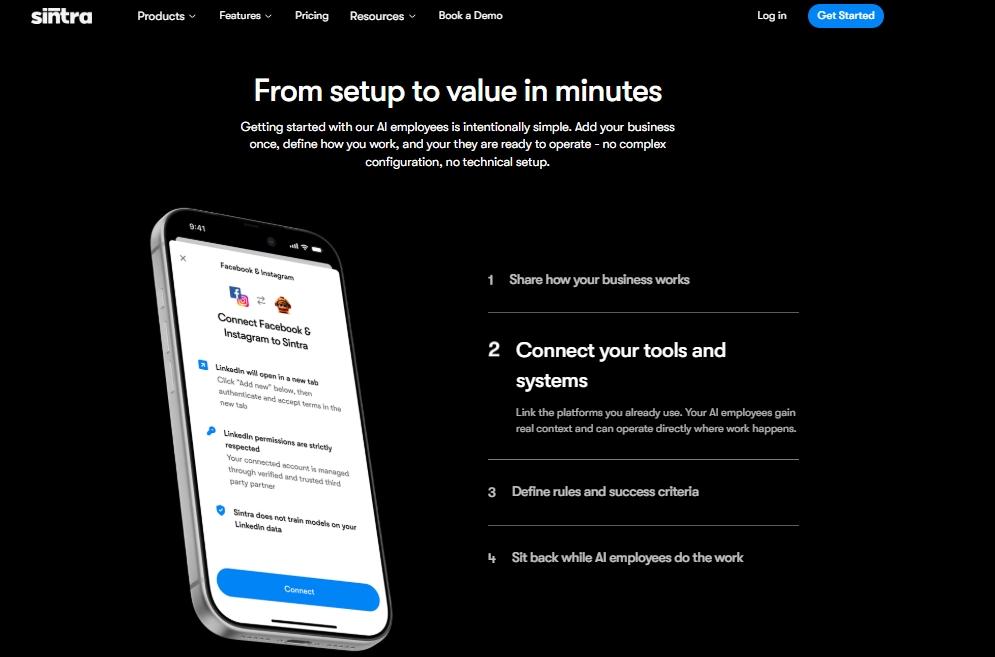
If you are running a business on GPT-4.5 and 4o and struggling with context switches, it’s time to upgrade to an execution layer like Sintra AI. It is an advanced business automation layer with a multi-agent setup that streamlines your routine operations. Here is how it works compared to GPT-4o and 4.5
Role-Based AI Helpers for Real Business Tasks
The most frustrating part of using AI models within ChatGPT is the setup you have to go through before every conversation. Once you open the chat window, you have to explain who you are, what your brand is about, what the task will be, what format you want to follow for this output, and so on. This includes a lot of effort and time. And, even after doing all of that, you are not sure whether the output will be consistent with your brand voice or not.
Sintra AI approaches the workflows differently. It has a specialized AI team of twelve employees, each trained in a specific business domain. There is a helper for social media, and another one for copyrighting, one for replying to your customer queries, and so on.
Once everyone knows what their defined roles are, the workflows run consistently. The team member using the copywriter doesn’t have to explain what a good copy looks like or brief on the tone every time. These role-based helpers are already trained on thousands of real-world data points and best practices in that specific domain.
The result: faster and consistent outputs, regardless of who is using the AI. The junior intern and senior manager will get the same results when prompting the helpers to write ad copy or a long-form article.
Brain AI Keeps Brand Context Consistent
If your team has ever used an AI chatbot for a few weeks, like ChatGPT, you would know how difficult it is to maintain a similar voice across outputs. The support person writing a reply to a customer query will sound completely different from a marketer writing a casual social media caption. The problem lies in not having a shared context.
This is where Brain AI comes in. It is a centralized knowledge space for your system. You can feed it whatever you want, from project documents to your brand’s vision statement, client guidelines, style preferences, audience details, previous decisions, and so on. It’s a working memory that keeps reminding your helpers what tone and information to use every time they are tasked to do something.
With Brain AI holding the shared context, your customer agent, email assistant, social media manager, and copywriter’s outputs are shaped by the same understanding of the brand. The support reply sounds warm and direct while keeping the brand identity intact. Social media has a subtle yet compelling tone. What the MAS (multi-agent system) is trying to attempt to remove the burden of brand consistency from the individual and the team.
AI Integrations Help Teams Move Faster
Generating a good output does not do the job. There is still a major part left: executing it directly from the platform.
A supporter agent drafts the reply, pastes it into the helpdesk, formats it, and logs the conversation into the CRM. A social media manager brainstorms ideas, writes them down, builds visuals accordingly, write captions. Once the deliverable is ready, it opens the scheduling app and sets the publishing date and time. For this, Sintra AI uses third-party AI integrations.
Once you enable an integration, it connects with your desired tool, accesses your data, and executes the task accordingly. This way, your AI is layered into the apps your business is already running on, including Google Drive, Gmail,
In practice, this looks something like this. The email is no longer sitting in the chat window, waiting for someone to paste it into the recipient’s chat. The content idea AI has come up with does not need to go through extra trials. It directly goes to your social media manager for content production. And the list goes on. No context switches, no inconsistencies, and no human intervention required.
Which Should You Choose: GPT-4o, GPT-4.5, or Sintra AI?
ChatGPT 4o vs 4.5 vs Sintra AI: the right choice comes down to what you actually need, rather than what is more capable.
For instance, a team running at high pace with high-volume tasks, GPT-4o is the right fit. It is fast, efficient, and affordable with native multimodal capabilities. However, if your preference is quality, GPT-4.5’s delayed thinking and linguistic excellence are the way to go. In comparison, Sintra AI is a good way for businesses to automate their entire operational workload.
Here is how the three AIs compare side by side.
Ready to Turn AI Into Real Business Workflows?
Here was all about ChatGPT 4o vs 4.5 - their performance benchmarks and writing quality. Both large language models help you with everyday productivity, including parsing documents, generating content, producing summaries, and so on. However, using them in a team can be challenging, as it demands prompt engineering, context switches, and prior experience.
If you do not want to struggle with these efforts, an automation layer like Sintra AI might be of help. It is a multi-agent system that has a specialized AI team and a working business memory that automates entire task sequences, ensuring consistency and brand voice. Get started with Sintra AI today and see how it works for you.
ChatGPT 4o vs 4.5 FAQs
What is the main difference between GPT-4o and GPT-4.5?
The main difference between ChatGPT 4o vs 4.5 is that GPT-4o is a fast, affordable, and performance-focused multimodal model, optimized for volume. Whereas GPT-4.5 is a larger, heavier, and computationally intense model for nuanced conversations, emotional intelligence, and research capabilities.
Is GPT-4.5 better than GPT-4o?
GPT-4.5 is a heavier model, designed for factual accuracy, emotional nuance, and domain expertise (writing, coding, etc). In comparison, GPT-4o is an affordable alternative for speed and everyday multitasking. Both models have their strengths, meaning neither is better.
Is GPT-4.5 available for free?
No, GPT-4.5 is not available for the free tier. You can only access it via paid plans, including Pro and Plus. Apart from the ChatGPT use, the GPT-4.5 also has batch APIs, assistant APIs, and chat completion APIs.
What is the difference between ChatGPT and GPT-4?
ChatGPT is an AI chatbot with a conversational interface, developed by OpenAI. Whereas GPT-4 is the large language model that powers ChatGPT. Simply put, ChatGPT is where you type a question and get answers, and GPT-4 is what processes your prompts and responds behind the scenes.
How does GPT-4 compare with GPT-5?
GPT-5 and GPT-4 are two large language models from OpenAI, each having varying reasoning depths, multimodal capabilities, and speed. GPT-5 is a faster and more efficient AI that can process complex, multi-step instructions. In contrast, GPT-4 is optimized for casual queries, everyday questions, and creative projects.
Related articles