Comparing ChatGPT vs ChatGPT Plus: Features, Pricing, and Performance

Table of Contents
Quick Answer: What Is the Difference Between ChatGPT and ChatGPT Plus?
The core difference comes down to model quality, speed, data freshness, and how much you can actually do before hitting a wall.
ChatGPT Free uses GPT-5.5 Instant in a limited capacity; roughly 10 messages every 5 hours during peak times before dropping to a lighter fallback model. It runs ads in some regions and uses a delayed search index that can lag current events by 24–48 hours.
ChatGPT Plus ($20/month) gives you access to GPT-5.5 Thinking, the reasoning-focused version that verifies its logic before responding. You also get higher message limits, HD video generation, deeper research tools, real-time web access via SearchGPT, priority server access, and stronger data privacy controls.
You upgraded to ChatGPT Plus, expecting the friction to go away. It didn't. You're still re-explaining your business every session, manually moving outputs into your actual tools, and hitting walls you didn't even know existed before you paid. The real ChatGPT vs ChatGPT Plus comparison isn't free vs. paid; it's limited vs. less limited, and knowing exactly where that line sits changes everything.
We've tested both versions hard, and what we've learned is that the gap is real, but not where most people expect it. This piece covers every meaningful difference: where Plus genuinely earns its $20, and how AI teams are filling that gap by turning AI outputs into actual execution; the move from "AI brain" to "AI hands."
Here's the full breakdown:
ChatGPT Free vs Plus: Feature Comparison
The feature gap affects the quality of work you can actually produce, especially in writing, research, and other tasks that require sustained, accurate back-and-forth.
Model Access and Capabilities
Most people assume ChatGPT runs one model for everyone. In 2026, that's no longer true. OpenAI shifted to a "Model by Mode" system; speed-focused models for quick tasks, reasoning-focused models for complex ones. This is also why the free version sometimes feels sharp and other times feels noticeably off. Here's exactly what's running under the hood:
Free Tier
- GPT-5.3 Mini: The default engine. Fast and capable for simple tasks, but lacks the deep logic needed for coding, strategy, or anything multi-step
- GPT-5.5 Instant (Limited): Free users get 10 messages every 5 hours on this model. Once used up, the system silently downgrades back to Mini with no warning
- Legacy Fallback: During peak server load, free users get moved to GPT-4o Mini automatically. This is why responses sometimes feel noticeably "dumber" without any explanation
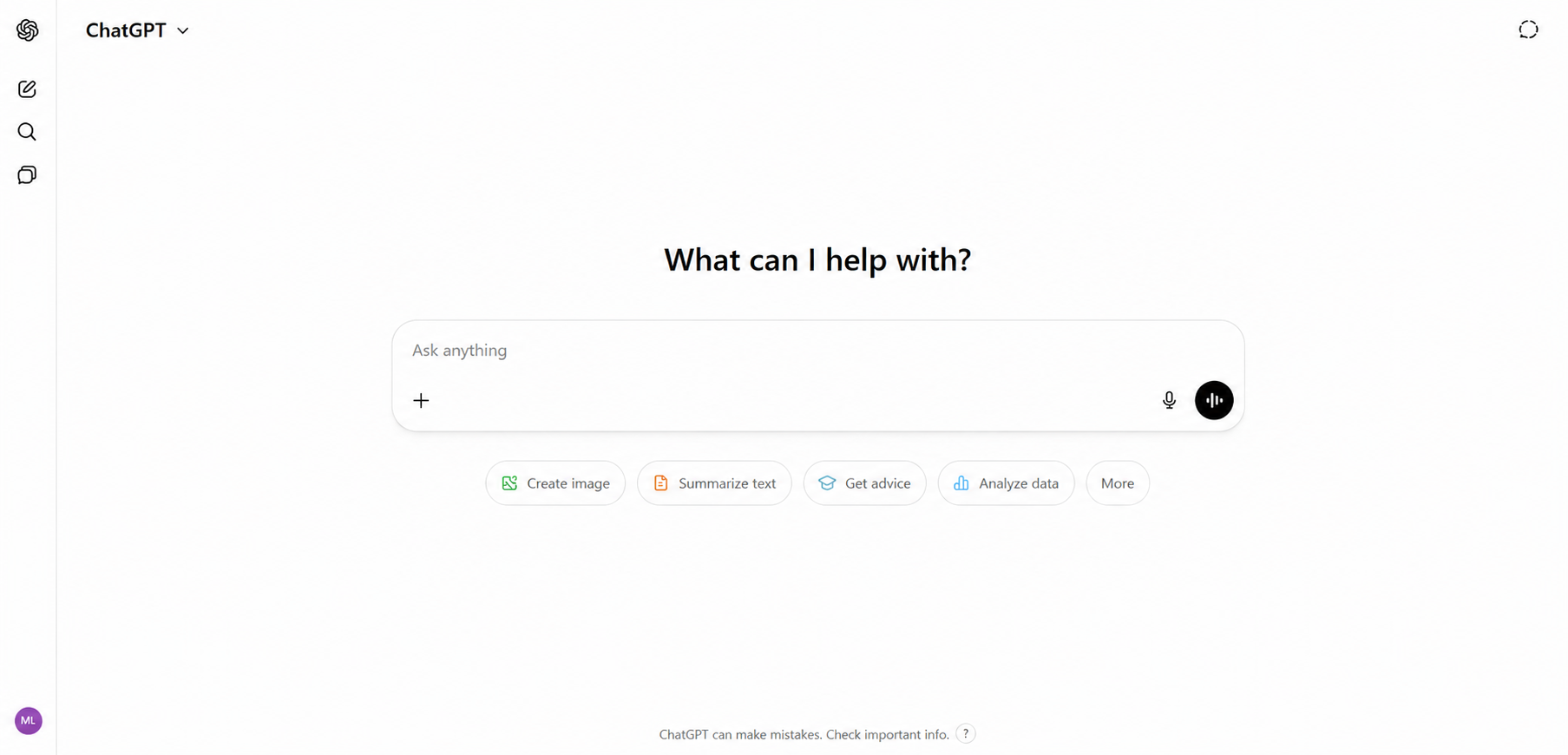
For casual questions, the Instant model is fine. For complex code, legal analysis, or nuanced content strategy, it often rushes and produces errors. What we've seen in testing is that the hallucination rate on multi-step reasoning tasks is noticeably higher with Instant compared to Thinking mode.
Plus Tier ($20/mo)
- GPT-5.5 Flagship: Full-speed access to the primary professional model with a 128K context window and consistent performance throughout the session
- GPT-5.4 Thinking: The reasoning model. It pauses before responding to verify its own logic, making it the right choice for debugging, math, legal analysis, and nuanced content strategy
- Deep Research Mode: Runs 200+ live web searches to build cited, comprehensive reports. Plus users get roughly 25–50 runs per month
- Sora 2 HD: Unlocks 720p and 1080p video generation with consistent frame quality

Quick tip: If your Plus responses suddenly feel shallow or the Thinking toggle disappears mid-session, you've likely hit your cap and been moved to the Instant model.
According to OpenAI's documentation, the Thinking model is specifically built for tasks requiring multi-step, agentic reasoning. ChatGPT Plus is better suited for complex projects such as detailed reports and long-form content creation, due to its larger token limits and significantly lower error rate on structured tasks.
For simple brainstorming or quick Q&A, GPT-5.3 Mini on the free tier handles things well enough, as long as you haven't burned through your Instant allowance for the hour.
Availability and Reliability
ChatGPT Plus users enjoy priority access during peak times, ensuring they can use the service without delays when demand is high. Free users don't get that guarantee.
For occasional use, this isn't a dealbreaker. But if you depend on ChatGPT for client work, daily content production, or anything time-sensitive, unreliable access becomes an operational risk. During peak usage times, ChatGPT Free users may experience longer wait times and slower response rates, and the system may cap them entirely until demand drops.
Plus also removes ads, which free users in certain regions now see between interactions.
Real-Time vs. Delayed Web Access
This is one of the most underreported differences in 2026, and it directly impacts the quality of any research or market analysis you do.
ChatGPT Free uses a delayed search index. In practice, results can be 24–48 hours behind on fast-moving topics like earnings reports, product launches, or breaking news. Ask it about something that happened yesterday, it may not know.
ChatGPT Plus uses SearchGPT as its native search engine, pulling live data often from minutes ago. This makes a real difference for:
- Competitor monitoring and market research
- Current news analysis
- Pricing, availability, or recent policy lookups
- Any research where "as of today" actually matters
In our testing, we ran the same research prompt on both versions the morning after a major tech announcement. The free version returned results from two days prior. The Plus version had same-day coverage.
ChatGPT Plus vs Pro: Is There a Difference?
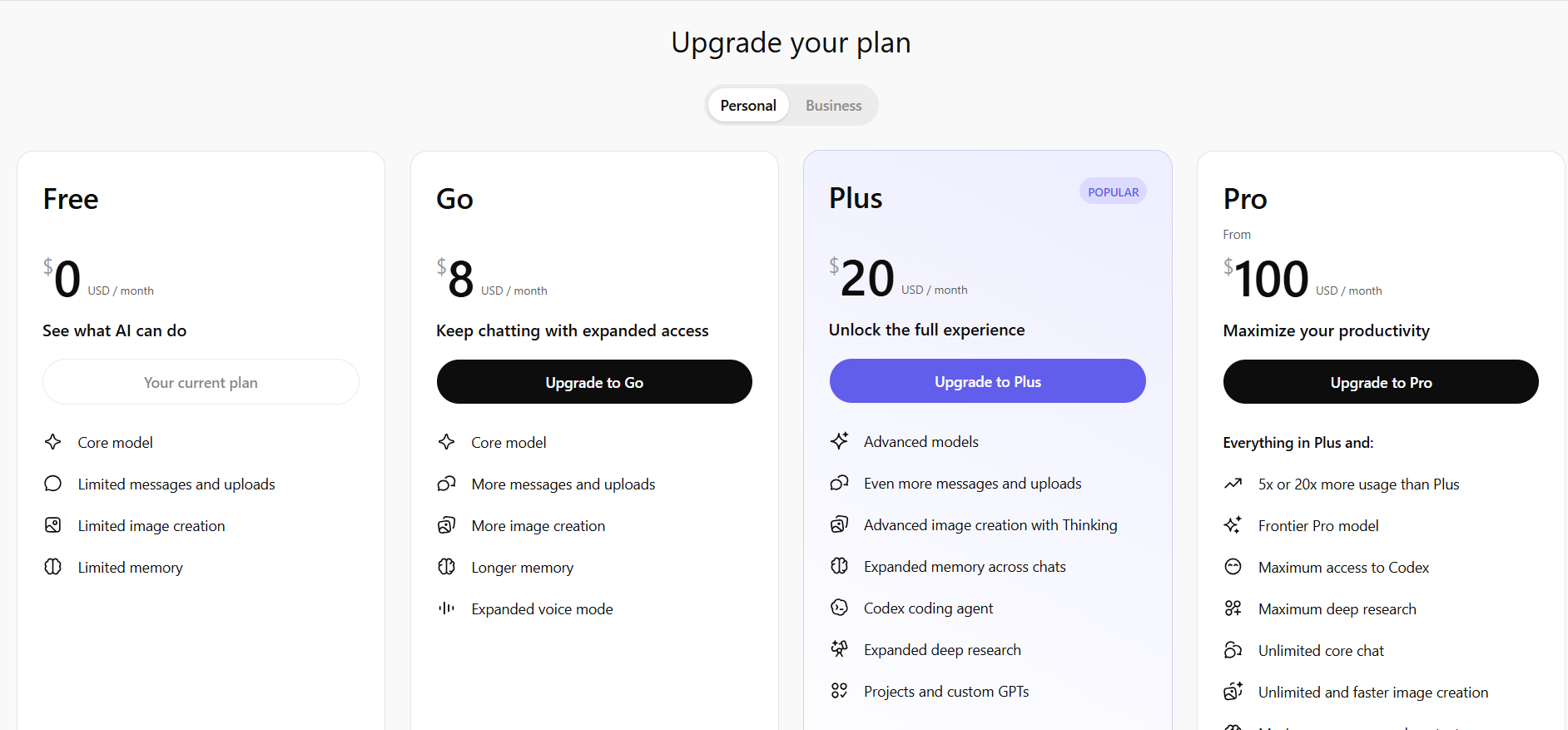
There's a lot of confusion around "ChatGPT Pro vs Plus", mainly because older articles used "Pro" loosely to mean any paid plan. Here's what's actually true in 2026:
ChatGPT Plus = $20/month. The standard paid plan. Includes GPT-5.5 Thinking, HD Sora 2 video, 25+ Deep Research runs per month, SearchGPT real-time access, and data privacy controls. The right tier for most professionals.
ChatGPT Pro = $200/month. A separate tier built for elite developers and researchers. ChatGPT Pro features o1-Pro mode, which uses parallel computing to solve math and engineering problems beyond what the $20 tier can handle. Includes a 1-million-token context window and virtually unlimited reasoning capacity. For the vast majority of business users, Pro is overkill.
ChatGPT Go = $8/month. A middle tier for light professional use; more volume than free, without the Thinking model, Deep Research, or HD video. Good for students or part-time freelancers who just want to stop hitting the message cap.
ChatGPT offers four tiers — Free, Go, Plus, and Pro. "Pro" is not just a name for the paid version. It's a distinct, enterprise-level product.
Data Privacy: The Hidden Reason Professionals Upgrade
This doesn't get nearly enough coverage in comparison articles, but it's one of the most practical reasons business owners choose Plus.
By default, when you use ChatGPT Free, your conversations may be used to train OpenAI's models. The strategy you drafted, the client proposal you outlined, and the internal process you described could, in theory, inform future model outputs.
ChatGPT Plus gives you access to stronger data controls:
- Temporary Chat mode: conversations that aren't saved and don't train the model
- Opt-out of model training by default on Plus and higher tiers
- More granular control over what OpenAI retains
For business owners handling client data, proprietary strategies, or sensitive operational details, this isn't a minor feature. In our experience working with operators, data sovereignty concerns come up far more often than people expect, especially once they've been using ChatGPT for anything beyond personal curiosity.
Limitations of ChatGPT (Free and Paid)
Here's where most comparison articles stop short. Both versions of ChatGPT share the same structural limitation: they're reactive tools. They wait for you to type something. They don't run in the background, connect to your tools, or remember your business between sessions unless you actively manage that yourself.
No Built-In Workflow Automation
ChatGPT generates text. It cannot move that text anywhere on its own.
If you use it to write a marketing email, you still have to:
- Copy the output
- Paste it into your email platform
- Edit it for your specific audience segment
- Schedule or send it manually
This is the copy-paste tax. Every output requires a human to carry it somewhere. For occasional use, manageable. At scale, 30 campaigns a month, weekly blog posts, and ongoing lead outreach, it becomes a serious friction point.
When comparing ChatGPT vs ChatGPT Plus on automation, the honest answer is that neither version solves this. The execution gap between them is zero.
Limited Memory and Context Retention
The context window for ChatGPT Free sits at 16K tokens, while Plus users get 128K–256K, depending on the model. That's a meaningful difference for long sessions, you can hold more conversation history, reference earlier documents, and avoid the "it forgot what we were doing" problem mid-task.
But here's what a larger context window doesn't fix: cross-session memory. Every new chat starts fresh. In practice, this means:
- Repeating your brand voice at the start of every session
- Re-explaining customer personas and business context each time
- Rebuilding project context when switching between work threads
Free users hit this wall immediately. Plus users get longer in-session continuity, but the cross-session gap remains. If you're managing ongoing campaigns, client accounts, or content calendars, this inconsistency compounds.
Not Designed for Continuous Operations
ChatGPT only works when you're actively prompting it. It won't:
- Monitor competitor pricing overnight
- Update your CRM when a lead responds
- Automatically post scheduled content
- Flag data anomalies without being asked
This is a structural limitation, not something the Plus upgrade addresses. The difference between ChatGPT and ChatGPT Plus doesn't change the fundamental architecture. Both require a human in the loop at every step.
Who Should Consider Upgrading to ChatGPT Plus?

The upgrade pays for itself when AI is part of your daily workflow, not something you open twice a week to rephrase an email. If you're hitting the message cap regularly or finding outputs imprecise on complex tasks, Plus is worth the $20.
Developers and Technical Users
The Thinking model handles multi-step logic in ways the Instant model can't sustain reliably. What we've found in testing is that the free version often drops a requirement mid-way through a complex function; it forgets a condition, mishandles error logic, or produces clean-looking code that breaks on edge cases. The Thinking model builds a logical structure before it starts writing, significantly reducing the need for rewrites.
Plus is the better choice for:
- Generating longer, more accurate functions with consistent logic
- Debugging with full context retained across the entire file
- Explaining code step-by-step without losing the thread
- Handling complex data structures without hallucinating field names
Content Creators and Writers
Plus improves long-form writing consistency. With a larger token limit and the Thinking model's ability to plan before drafting, it holds your brand voice and structural intent across longer pieces.
ChatGPT Plus allows for higher message limits, which matters practically for writers iterating through multiple drafts in a single session. For professionals who require reliable access and faster response times, ChatGPT Plus is recommended, as it enhances productivity for output-heavy work.
Use cases where Plus noticeably outperforms free:
- Blog posts over 1,500 words where tone consistency matters across the whole piece
- Email sequences requiring a connected narrative across 5–7 emails
- Scripts and long-form content need structural planning before any drafting
Business Owners and Operators
For daily business tasks such as research, proposal drafting, competitor analysis, and communication templates, Plus delivers faster, more reliable outputs. The real-time SearchGPT access is especially valuable here. When you need current market data or competitor pricing, the 24–48 hour delay on the free tier becomes a genuine problem.
Advanced data analysis tools are available to ChatGPT Plus users, enabling more complex data interpretation than the free version, which is especially useful when working with spreadsheets, revenue data, or structured datasets.
Researchers and Knowledge Workers
The Thinking model handles complex, multi-step reasoning better than the Instant model. For researchers, this shows up in:
- More accurate synthesis of long documents without losing key details
- Better structured summaries that preserve nuance
- Fewer logical gaps in analysis across multiple sources
The Deep Research mode is available at full capacity only on Plus, which performs 200+ live web searches to generate a cited report in a single run. Free users get a light version with just 5 runs per month, which often misses the granular detail needed for competitive market analysis.
When ChatGPT Free Is Enough
Not everyone needs Plus. The free version works well for:
- Occasional brainstorming or idea generation
- Quick rewrites of short content
- Casual questions and one-off lookups
- Anyone who opens ChatGPT once or twice a week for low-stakes tasks
ChatGPT Free is suitable for basic tasks such as drafting emails, brainstorming ideas, and casual conversations, making it a solid option for light, infrequent use.
Which Plan Should You Actually Pick?
If you want a fast answer before diving deeper, here's the decision tree we'd use:
Pick Free if:
You use AI fewer than 3 times a day for casual tasks, such as brainstorming, quick questions, and personal writing. You don't mind occasional slowdowns or the 24-hour data lag.
Pick Go ($8/mo) if:
You're a student or light freelancer who keeps hitting the message cap but doesn't need deep research, HD video, or real-time data. You want more volume at a low price.
Pick Plus ($20/mo) if:
You use AI daily for professional work. The time savings from faster responses, fewer rewrites, and real-time SearchGPT access alone cover the cost multiple times over. A realistic estimate: Deep Research and lower latency save most Plus users 8–10 hours per month.
The Best Alternative to ChatGPT for Business Automation
ChatGPT is the "Brain." It thinks, writes, reasons, and researches. But it isn't the "Hands." The moment you need AI to actually send, post, update, or trigger something inside your real tools, a chat interface hits a dead end.
This is where Sintra AI operates as a genuine execution layer. Instead of a single chat interface you prompt manually, it deploys as a team of AI employees working continuously in the background, handling specific business functions without requiring you to drive every interaction.
ChatGPT gives you a brilliant answer. Sintra ensures the answer actually becomes work.
What Are AI Helpers?
Sintra's AI team includes 12 specialized Helpers, each built for a specific business function:
- Soshie: Social Media Manager
- Cassie: Customer Support
- Dexter: Data Analyst
- Buddy: Business Strategist
- Emmie: Email Marketer
- Gigi: Personal Growth
- Scouty: Recruiter
- Penn: Copywriter
- Commet: eCom Specialist
- Milli: Sales Strategist
- Seomi: SEO Mastermind
- Vizzy: Virtual Assistant
Each Helper operates with a defined role, closer to a trained team member than a generic chatbot. You don't prompt them from scratch every time. You set up their function once, and they run with it, replacing the need for multiple standalone tools or extra hires.
How Brain AI Personalizes Your Business
The Brain AI feature keeps Sintra's Helpers useful over time and makes it structurally different from ChatGPT's model, which resets every session.
Brain AI stores your:
- Brand voice and tone guidelines
- Customer personas and target segments
- Campaign history and business objectives
- Product details and messaging frameworks
Every Helper pulls from Brain AI automatically. When your Content Helper writes a blog post next Tuesday, it already knows your tone, audience, and priorities. No re-prompting required. This is the long-term business memory that neither ChatGPT Free nor Plus currently offers across sessions.
Seamless AI Integrations Across Your Tools
Through AI integrations, Sintra connects directly to 5,000+ apps, including your CRM, email platform, CMS, and social channels. The difference between "generated a draft" and "published the post":
- Finished blog post pushed directly to WordPress
- Follow up logged in your CRM after a sales interaction
- Social content is scheduled and posted without manual export
- Email sequences are triggered based on lead behavior
ChatGPT produces the output. Sintra moves it. That's the autonomous agency model, and for businesses running ongoing operations, that's the gap $20/month doesn't close.
ChatGPT vs ChatGPT Plus vs Sintra AI: Key Differences
The core gap here isn't about which AI produces better sentences. ChatGPT Plus produces excellent outputs. The question is what happens to those outputs next. If the answer is "a human carries them somewhere manually," that's a workflow problem, and no chat tier upgrade solves it.
Ready to Turn AI Into Real Work Output?
Generating great answers is only half the job. For most businesses, the other half, i.e., execution, still runs on manual effort. ChatGPT Plus is one of the best tools available for thinking, writing, and researching. For the right user, it's worth every dollar of the $20/month.
But if your goal is to scale operations, maintain brand consistency, and execute across channels without adding headcount or becoming a full-time AI wrangler, a chat interface isn't the right foundation.
Get started with Sintra AI and see what it looks like when your AI team handles the execution while you focus on the decisions that actually need a human.
ChatGPT vs ChatGPT Plus FAQs
What is the difference between ChatGPT and ChatGPT Plus?
ChatGPT Free uses GPT-5.5 Instant with a cap of roughly 10 messages every 5 hours during peak times, a delayed search index (24–48 hours behind on current events), and standard data privacy settings.
ChatGPT Plus ($20/month) gives you GPT-5.5 Thinking mode, 160 messages per 3-hour window, real-time SearchGPT access, HD Sora 2 video, 25+ Deep Research runs per month, and data controls, including opt-out from model training. The practical differences are model quality, data freshness, reliability, and how much work you can complete in a single focused session.
What features does ChatGPT Plus include?
ChatGPT Plus includes: GPT-5.5 Thinking and Flagship model access, 160 messages per 3-hour window, Deep Research (25+ full-depth tasks per month), Sora 2 HD video generation (720p–1080p), unlimited file uploads, unlimited Advanced Voice with video mode, a 128K–256K token context window, real-time SearchGPT web access, priority availability during peak times, and ad-free access.
Plus subscribers also receive early access to new features and improvements, including advancements in voice mode and real-time capabilities, as well as stronger data privacy controls, including the option to opt out of model training.
Is ChatGPT Plus worth it in 2026?
For frequent users such as developers, content creators, researchers, and business operators, the answer is yes. The Thinking model produces noticeably more accurate outputs on complex tasks. Real-time SearchGPT access makes research meaningfully better. Higher message limits and priority access make daily professional use reliable. If you use ChatGPT only a few times a week for low-stakes tasks, the free tier is sufficient.
Can ChatGPT automate business workflows?
No. ChatGPT can generate the content, research, and ideas that feed into workflows, but it cannot execute tasks independently. It doesn't connect to your tools, send communications, update systems, or run in the background without being prompted. For actual workflow automation and agentic operations, you need a platform built for execution.
What is better than ChatGPT for business automation?
Platforms like Sintra AI are built specifically for business execution, not just generation. Its AI employees work continuously through direct integrations with your existing tools, so nothing needs to be moved manually. And with Brain AI storing your business context permanently, the fresh-start-every-session problem that affects both versions of ChatGPT simply doesn't exist.
Related articles



.avif)